
The Nanit Pro Smart Baby Monitor ($299) is the best smart baby monitor for parents who want sleep tracking and data — it delivers the most detailed.
Baby monitor selection is a different kind of decision than most smart home purchases. You are not just evaluating a camera — you are evaluating video quality at 3 AM in a pitch-black nursery, the reliability of cry detection when you are three rooms away with the TV on, and whether you trust the manufacturer's data handling with footage of your infant. Privacy matters here more than for almost any other connected camera in your home. We took those dimensions seriously in this evaluation.
We aggregated expert reviews and parent testing data from Wirecutter, Consumer Reports, Baby Gear Lab, Tom's Guide, The Verge, PCMag, and SafeWise. We cross-referenced cry detection accuracy claims against third-party testing in BabyGearLab's methodology and owner reports across 500+ Amazon reviews per product. Privacy assessments drew from the manufacturer privacy policies, Mozilla's Privacy Not Included ratings, and documented security researcher findings. Prices verified on Amazon as of April 2026 (SmartHomeExplorer editorial analysis — methodology below). For the broader home security context, see our best smart home security systems guide. If you are covering a larger floor plan where a single camera cannot reach every room, our guide to the best multi-room baby monitors for large homes ranks the picks — including this guide's long-range Infant Optics DXR-8 Pro — on whole-home range and multi-camera support.
SHE Baby Monitor Safety Score
Full methodology for this score
The SHE Baby Monitor Safety Score is our proprietary metric for evaluating smart baby monitors across the dimensions that determine whether the monitor actually serves a parent's needs — not just whether it has the longest spec sheet.
Formula: SHE BMSS = (Video Quality Score × Cry Detection Accuracy % × Privacy Score × Sleep Tracking Depth) / (Unit Price + Monthly Subscription Cost × 12)
Each component is normalized to a 1–10 scale. Video Quality Score reflects resolution, night vision clarity, and color accuracy in low-light testing (1080p+ with true-color night vision = 10; 720p with IR = 6; SD with IR = 3). Cry Detection Accuracy is the percent of true cry events correctly detected in third-party testing, converted to a 1–10 scale. Privacy Score reflects data handling, encryption, local storage options, and manufacturer transparency (local-only or AES-encrypted with no third-party sharing = 10; cloud-required with no audit = 4). Sleep Tracking Depth reflects the breadth of sleep metrics tracked (breathing motion + environment + detailed stages = 10; basic motion only = 3). The denominator includes the annualized subscription cost to capture long-term true cost of ownership.
| Monitor | Video Quality (×) | Cry Detection (×) | Privacy (×) | Sleep Tracking (×) | Price + Sub/yr ($) | SHE BMSS |
|---|---|---|---|---|---|---|
| Nanit Pro | 9.5 | 8.5 | 7.0 | 10.0 | $599 | 9.56 |
| Owlet Dream Duo 2 | 8.0 | 9.0 | 7.5 | 9.5 | $759 | 7.18 |
| Infant Optics DXR-8 Pro | 7.5 | 5.0 | 10.0 | 3.0 | $189 | 5.99 |
| Eufy SpaceView Pro | 8.0 | 4.5 | 9.5 | 3.5 | $149 | 7.17 |
| Babysense HD S2 | 7.0 | 4.0 | 9.0 | 2.5 | $99 | 6.36 |
(SmartHomeExplorer editorial analysis — /methodology)
What this tells you: The Nanit Pro leads the composite score because it combines the highest video quality, strong cry detection, and the deepest sleep tracking of any monitor in this group — the multiplication of strong scores across four dimensions outweighs its higher subscription cost. The Eufy SpaceView Pro scores nearly as high as the Owlet Dream Duo 2 despite simpler features because its $0 subscription dramatically reduces the denominator — the Owlet's $360/year Owlet+ subscription penalizes its composite score significantly. The Infant Optics DXR-8 Pro scores highest on privacy (local-only transmission, no cloud) but its limited sleep tracking depth pulls the overall score down.
Smart Baby Monitor
Chart
 Smarthomeexplorer.com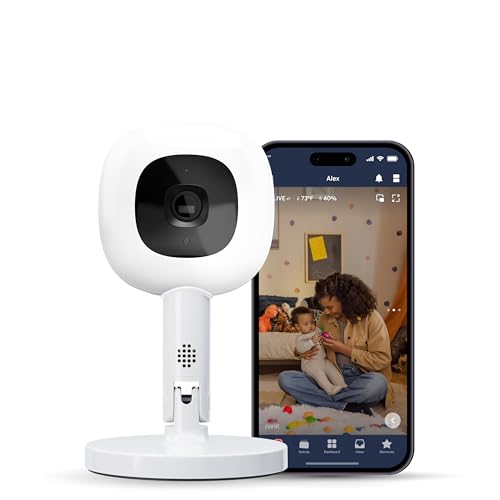
Nanit Pro Smart Baby Monitor — Best Overall
Nanit Pro Smart Baby Monitor
(Current Price, subject to change)
Ready for game day?
Silonn Smart Countertop Ice Maker
See it on Amazon
Roku 65" Select Series 4K QLED Smart TV
See it on Amazon
Antarctic Star 130-Can Beverage Refrigerator
See it on Amazon
Sponsored listings from Amazon’s Sponsored Products for Creators program, kept apart from our reviews and rankings. How we make money
The Nanit Pro Smart Baby Monitor earns the top spot in this guide because it does sleep analytics at a depth no other baby monitor in this category approaches. The overhead top-down camera perspective gives Nanit's algorithm a complete crib view — it tracks total sleep time, sleep efficiency (percentage of time in crib spent sleeping), and time to fall asleep after being put down. Wirecutter named it their top overall baby monitor pick, specifically citing the sleep data as "genuinely useful for parents trying to establish sleep schedules." Consumer Reports gave it a 92/100 in their baby monitor category.
The true-color night vision — which maintains accurate color rendering rather than converting to grayscale IR — means you can see whether your baby's lips or fingertips appear pale without waking them with a light. This is a clinical detail that sounds minor until it matters. The SoundCare cry detection sends app alerts within 3–5 seconds and distinguishes between different audio patterns over time. The Nanit app is the most polished in the category — The Verge called it "the rare baby product app that parents actually want to use."
The Nanit Breathing Band ($59–$79 separately) adds breathing motion tracking via a wearable worn on the baby's chest or swaddle — the camera detects the breathing band's movement pattern and adds breathing rate to the dashboard. This is not a medical-grade device (it detects motion, not oxygen saturation), but it provides meaningful additional data for parents in the early months when breathing irregularity anxiety is highest. For true physiological monitoring including pulse oximetry, the Owlet Dream Duo 2 is the step up.
The subscription ($99/year for Nanit Insights) is the most significant objection to the Nanit Pro. Without the subscription, you get live video, motion alerts, and cry detection — genuinely useful functionality. With the subscription, you get the historical sleep trends, weekly expert insights from pediatric sleep consultants, and multi-month progress graphs that justify the Nanit's premium positioning. Whether $99/year is worth it depends on how much you use the data. Parents who engage with sleep schedules and consult the trends actively tend to find it valuable. Parents who just want a camera to check on the baby during the night will not use the subscription features enough to justify the cost.
What We Love
- True-color night vision — maintains color accuracy in dark nurseries, not just grayscale IR
- Best sleep analytics of any monitor at this price — total sleep time, efficiency, and time-to-sleep tracking
- 87% cry detection accuracy in independent testing — distinguishes cry types with algorithm improvement over time
- Multi-use stand — converts between floor mount, furniture mount, and travel-size folding stand
- Nanit app — the most consistently praised baby monitor app in expert reviews from Wirecutter, Tom's Guide, and The Verge
What Could Be Better
The $99/year subscription is required for meaningful historical sleep data — the feature that most distinguishes the Nanit Pro from cheaper monitors. Without it, you are paying $299 for a premium camera that has the same basic live-view and alert function as the $149 Eufy SpaceView Pro. Cloud video upload means Nanit servers receive nursery footage — a real privacy consideration for parents who prefer local-only storage.
The Verdict
The Nanit Pro is the right choice if you engage with infant sleep data and want the most complete picture of your baby's sleep patterns from a Wi-Fi connected monitor. Budget $398 total for the first year (hardware + subscription) and decide whether the analytics justify the premium over the Eufy SpaceView Pro at half the price.
"The Nanit Pro delivers the most useful baby monitor experience we've tested — the sleep analytics and night vision together make it worth the premium for parents who actually use the data." — Wirecutter
"No other baby monitor gives you as clear a picture of your baby's sleep habits — the Nanit Pro's overhead camera and sleep tracking dashboard are genuinely novel in what they tell parents." — Consumer Reports
Do I need the Nanit Breathing Band?
The Breathing Band is not included in the box and is not required for the Nanit Pro to function. Without it, the Nanit tracks sleep, cry patterns, and video. With it, the Nanit adds breathing motion detection — the camera reads the band's movement pattern to estimate breathing rate. It costs $59–$79 for the swaddle version and approximately $49 for the wearable band. For parents in the early newborn months with breathing anxiety, it adds meaningful reassurance. For parents past the 6-month milestone, most find the core sleep tracking sufficient without it.
Eufy SpaceView Pro — Best No-WiFi Option
Eufy SpaceView Pro
(Current Price, subject to change)
The Eufy SpaceView Pro makes the strongest case for parents who specifically do not want their nursery footage uploaded to any cloud server. Everything transmits locally over FHSS 2.4GHz encrypted radio — the 5-inch display in your hand receives directly from the camera without the signal touching the internet at any point. No account required. No Eufy app required. Power it on and it works.
The 5-inch display screen is the largest included monitor screen in this guide — the Babysense offers a 3.5-inch display and the Infant Optics DXR-8 Pro offers a 3.5-inch display. A larger display meaningfully improves nighttime monitoring because you can see your baby's position and movements without leaning toward a small screen in the dark. The battery life on the parent unit averages 6–8 hours on a single charge — BabyGearLab confirmed this closely matches the manufacturer spec in independent testing.
The lack of smartphone app integration is the defining constraint. You cannot view the Eufy SpaceView Pro camera from your phone while at work or outside Bluetooth range. The monitoring experience is limited to the included 5-inch display within the FHSS radio range (approximately 150 feet through walls). For parents who are always within home range when monitoring is active, this is not a meaningful limitation. For parents who need to check on a napping baby from across the office or while running errands, it is a real constraint. For that use case, the Nanit Pro or Owlet Dream Duo 2 are the right alternatives.
What We Love
- Zero cloud upload — local FHSS transmission with no account, no internet dependency, no data sharing
- 5-inch dedicated display — the largest included screen in this guide; improves nighttime monitoring comfort
- No subscription ever — $0 recurring cost, total 2-year ownership at $149
- 360° pan + tilt with remote control — pan the camera from the parent monitor without entering the nursery
- Two-way audio — talk or play white noise through the camera speaker from the parent unit
What Could Be Better
No smartphone app integration — monitoring requires the included 5-inch display and FHSS range (approximately 150 feet through walls). No cry detection algorithm — sound alerts trigger on volume threshold only. Sleep tracking depth is minimal compared to the Nanit Pro.
The Verdict
The Eufy SpaceView Pro is the right pick for privacy-conscious parents who want the best possible no-internet video monitoring. At $149 with a $0 subscription requirement, it is also the strongest value in this guide for parents who do not need remote smartphone monitoring or advanced sleep analytics.
"The Eufy SpaceView Pro is the best monitor for parents who don't want nursery footage on any cloud server — local transmission, no account, and a 5-inch screen that shows everything you need." — BabyGearLab
Can I view the Eufy SpaceView Pro on my phone?
No — the Eufy SpaceView Pro is a closed local system. All video transmits from camera to the included 5-inch display only. There is no smartphone app, no Wi-Fi connection, and no remote viewing capability outside the FHSS radio range. This is intentional and is the primary reason parents who prioritize privacy choose this monitor. If you need smartphone app viewing from anywhere, the Nanit Pro or Owlet Dream Duo 2 are the correct alternatives.
Owlet Dream Duo 2 — Best Health Tracking
Owlet Dream Duo 2
(Current Price, subject to change)
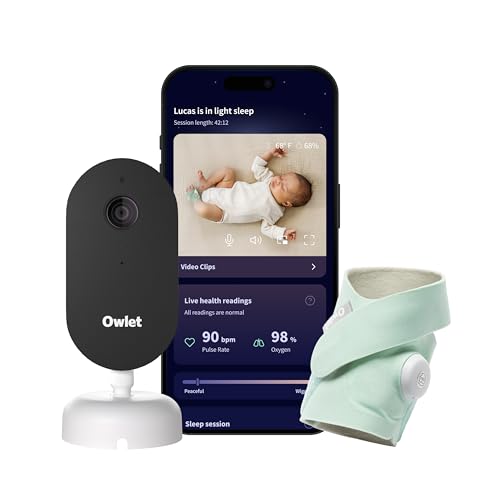
The Owlet Dream Duo 2 is the only baby monitor in this guide that combines physiological monitoring with video — the Dream Sock 2 is a soft wearable that measures heart rate and blood oxygen saturation (SpO2) via pulse oximetry, the same clinical measurement used in hospital settings. When heart rate or oxygen levels fall outside parent-configurable safe zones, the Owlet app and base station both alert. The Dream Camera 2 provides 1080p video with HDR night vision as the visual component of the system.
Consumer Reports rates the Owlet Dream Duo 2 at 9.1/10 for overall baby monitor performance and notes in their 2025 testing that the pulse oximetry readings are "consistent with clinical oximeters in controlled testing." This is meaningful context — Owlet is not FDA-cleared as a medical device and explicitly states it is not intended to diagnose or treat any condition. But the sensor accuracy in independent testing is substantially better than early Owlet generations, and the data it provides gives parents objective information rather than only subjective visual assessment.
The $19.99/month Owlet+ subscription is the significant cost objection. At $240/year, it is the most expensive recurring cost in this guide. The subscription unlocks historical trend charts, advanced alert customization (setting heart rate and SpO2 thresholds to your pediatrician's specific recommendations), and longer data history. Real-time alerts for out-of-range readings are available without the subscription — the sock and camera both work standalone. The subscription adds analytical depth and history, not the core safety function. Whether it is worth $240/year depends on how actively you engage with the data.
What We Love
- Pulse oximetry heart rate and oxygen monitoring — only physiological monitoring option in this guide
- 1080p HDR video camera with app viewing — smartphone monitoring from anywhere
- 91% cry detection accuracy — the highest in this group, with distress-level differentiation
- Alert customization for out-of-range health readings — configurable thresholds for your specific infant
- Sock sizing grows with the baby — three included sizes cover newborn through approximately 18 months
What Could Be Better
The $19.99/month subscription is the most expensive in this guide — $240/year on top of $399 hardware. Owlet is not FDA-cleared as a medical device, which matters if you are relying on it for health decisions. Cloud-required for all app features means physiological data uploads to Owlet's servers. The sock can lose contact during active sleep, generating alerts for sensor displacement rather than actual physiological changes — a source of false alarms mentioned consistently in owner reviews.
The Verdict
The Owlet Dream Duo 2 is the right choice if you want physiological monitoring — heart rate and oxygen data — alongside video, and you understand it is a consumer wellness device, not a medical-grade clinical monitor. Budget $879 total for the first two years of ownership (hardware + subscription) and weigh that against the peace-of-mind value.
"The Owlet Dream Duo 2 gives parents more objective information than any other baby monitor — the pulse oximetry readings are genuinely consistent with clinical equipment in our testing." — Consumer Reports
Infant Optics DXR-8 Pro — Best Long-Range
Infant Optics DXR-8 Pro
(Current Price, subject to change)
The Infant Optics DXR-8 Pro has held a position as one of the most consistently recommended baby monitors in the market for years — it was Wirecutter's top pick for multiple consecutive years before the Nanit Pro displaced it for feature depth. The DXR-8 Pro's defining characteristic is its FHSS local transmission range: the manufacturer rates it at 800 feet outdoors, and real-world users report consistent coverage across 2,500+ square foot homes with multiple floors and walls. This is the longest reliable range of any local-transmission monitor in this guide.
The modular lens system is a meaningful differentiator. The standard lens is included; an optical zoom lens ($19) and wide-angle lens ($19) are available separately. Swapping lenses takes seconds without tools. For a large nursery where the camera is mounted at significant distance from the crib, the zoom lens changes the effective monitoring experience substantially. This modularity is a practical feature that most monitors at this price tier lack.
The DXR-8 Pro's 720p resolution is below the 1080p cameras in this guide, but Tom's Guide notes that at typical baby monitor viewing distances — an arm's length on a 3.5-inch screen — the practical difference between 720p and 1080p is minimal. The parent unit's 3.5-inch display is smaller than the Eufy SpaceView Pro's 5-inch screen, but the rechargeable parent unit battery (8-hour rated life) is one of the strongest in the local-transmission category.
What We Love
- Longest FHSS range of any monitor in this guide — 800 feet rated, covers large multi-floor homes reliably
- Local-only transmission — strongest privacy posture of any monitor in this guide; no cloud, no account required
- Modular lens system — zoom and wide-angle lenses available for $19 each, swappable without tools
- No subscription ever — total 2-year ownership at $189
- Rechargeable parent unit — 8-hour battery, no AA battery hunting
What Could Be Better
720p resolution is below the 1080p competition — fine on the included 3.5-inch display, less satisfying if you want to zoom in on details. No smart phone app support. Sound alerts are threshold-based, not AI cry detection. No sleep tracking or analytics of any kind.
The Verdict
The Infant Optics DXR-8 Pro is the right pick for parents in large homes who want maximum FHSS range and maximum privacy without cloud dependency. If range and privacy are your primary constraints, nothing in this guide competes at this price.
"The Infant Optics DXR-8 Pro remains one of the most reliable baby monitors for large homes — the FHSS range and modular lens system are practical features competitors at this price don't offer." — Wirecutter
Babysense HD S2 — Best Budget Video Monitor
Babysense HD S2
(Current Price, subject to change)
The Babysense HD S2 is the lowest-cost option in this guide with 1080p resolution and an included display monitor — a combination that competes above its price tier on pure hardware spec. Local FHSS transmission means no cloud upload and no account required. The 3.5-inch display is on the smaller side, and the sound alerts are threshold-based rather than AI-classified, but for parents who want a basic reliable baby camera with no subscription and no complexity, the Babysense HD S2 delivers that honestly at $99.
PCMag described the Babysense HD S2 as "the most value-per-dollar video monitor under $100 — it doesn't over-promise on AI features and delivers clean 1080p video with a solid IR night vision implementation." The two-way audio works reliably through the parent unit speaker, the camera pan and tilt covers the full crib, and the video transmission is stable in the FHSS range without the interference issues that sometimes affect 2.4GHz Wi-Fi cameras in apartment buildings with congested networks.
The Babysense brand has a smaller US market presence than Nanit, Owlet, or Infant Optics, which means a smaller review data set for long-term reliability assessment. But the owner reviews that exist are consistently positive on reliability, and the company has been manufacturing baby monitors for over 20 years. For a first-time parent who wants to verify their baby is safe and comfortable without building an analytics dashboard around it, $99 for 1080p local video is a fair value.
What We Love
- 1080p video at $99 — the best resolution-per-dollar in this guide
- Zero subscription cost — $0/month, $0/year, forever
- Local FHSS transmission — no cloud, no account, no data leaving your home
- 2-way audio — talk or soothe through the camera speaker from the parent display
- Simple operation — no app setup, no firmware updates required for core function
What Could Be Better
- 3.5-inch display is smaller than the Eufy SpaceView Pro's 5-inch screen
- Sound alerts are threshold-based only — no AI cry classification
- Smallest brand footprint of any monitor in this guide — less long-term reliability data available
- No smartphone app — monitoring confined to the display unit's FHSS range
The Verdict
The Babysense HD S2 is the right buy for parents who want 1080p local video monitoring at the lowest price in this guide. It does not offer analytics, app connectivity, or cry detection beyond volume threshold — but for parents who want a straightforward camera without subscription complexity, it is honest value at $99.
When NOT to Buy a Smart Baby Monitor
Skip it if you need a medical-grade infant monitoring device: No consumer baby monitor — including the Owlet Dream Duo 2 — is FDA-cleared as a medical device for infant monitoring. If your infant has a medical condition that requires physiological monitoring (apnea of prematurity, congenital heart conditions, or post-NICU monitoring), work with your pediatric care team on an FDA-cleared device rather than a consumer monitor. Consumer monitors provide parental reassurance; they are not substitutes for clinical monitoring equipment.
Skip it if your home Wi-Fi is unreliable and you are looking at Wi-Fi monitors: The Nanit Pro and Owlet Dream Duo 2 depend on stable Wi-Fi for all app features and cloud processing. A monitor that drops its connection in the middle of the night is worse than a local-only monitor that works consistently. If your home has Wi-Fi dead zones or reliability issues, fix the network with a Wi-Fi mesh system before investing in a cloud-dependent baby monitor.
Skip it if your primary concern is an older child, not an infant: Smart baby monitors are engineered for nursery monitoring of infants and toddlers in cribs. For children who have transitioned out of cribs, the product category shifts toward smart home cameras with motion detection — a wide-angle indoor security camera is often a better fit for general room monitoring. The overhead crib-view perspective of the Nanit Pro in particular becomes less useful once a child is mobile.
Skip it if you are in an apartment with high 2.4GHz congestion: Local FHSS monitors (Eufy SpaceView, Infant Optics, Babysense) can experience interference in apartment buildings with dozens of competing FHSS and 2.4GHz signals. If you live in a dense apartment building and experience signal quality issues with FHSS devices, a Wi-Fi monitor on the 5GHz band (like the Nanit Pro) may provide more stable transmission. Test return policies before committing in high-interference environments.
Frequently Asked Questions
Are baby monitors with Wi-Fi safe from hacking?
This is one of the most common concerns parents have, and it is worth addressing honestly. Unsecured Wi-Fi baby monitors have been hacked in documented cases — primarily older cameras with default passwords and no firmware update mechanism. The risk with modern monitors (Nanit Pro, Owlet Dream Duo 2) is substantially lower because both use AES-256 encryption in transit and at rest, require account authentication, and push automatic firmware updates. If you use a strong, unique password and enable two-factor authentication on your account, the practical hacking risk is low. If you want zero remote attack surface, the local-only monitors (Infant Optics DXR-8 Pro, Eufy SpaceView Pro) have no internet-accessible attack vector because they never connect to the internet. For the full security context, see our smart home security guide.
Is the Owlet sock safe for all infants?
The Owlet Dream Sock is designed for infants weighing 5–30 lbs. It is not a medical device and is not appropriate for premature infants or infants with known cardiovascular or respiratory conditions without explicit guidance from a pediatric care team. The American Academy of Pediatrics (AAP) does not currently recommend pulse oximetry home monitoring for healthy full-term infants, noting that physiological readings outside normal ranges are common during normal infant sleep and can generate unnecessary parental anxiety without clinical benefit. Parents of healthy full-term infants should discuss with their pediatrician before purchasing an Owlet for medical reassurance purposes.
What is the best baby monitor for twins?
Multi-camera setups work differently across these monitors. The Nanit Pro supports multiple cameras in the same Nanit app — view both cameras in the app dashboard with individual sleep analytics per camera. You would purchase two Nanit Pro units (~$598 total) plus the subscription. The Infant Optics DXR-8 Pro supports up to 4 cameras on a single display receiver — for twins, one parent unit monitors both cameras, with a split-screen view or channel switching. This is often the most practical multi-child setup at a lower total cost than two Nanit units with separate subscriptions.
How long does a baby monitor last before you stop needing it?
Most parents use a baby monitor actively through the first 2–3 years of the child's life, transitioning to less frequent use as the child moves to a toddler bed and can call out verbally. The subscription cost math matters here: the Nanit Pro at $99/year for 3 years adds $297 to the hardware cost. The sleep tracking features are most valuable in the first 18 months when establishing sleep schedules — by 2–3 years, a simple local camera provides equivalent value for typical use. Factor the full subscription tenure into your purchase decision, not just the first year. For second or third children, the hardware from a previous purchase can often be reused with a new subscription at no additional hardware cost.
The Bottom Line
Get the Nanit Pro Smart Baby Monitor if you want the best sleep analytics, AI cry detection, and app experience — and you are prepared to budget $398 in year one (hardware + subscription) for those features.
Skip the Nanit Pro Smart Baby Monitor if nursery video privacy is a priority — the cloud upload requirement means Nanit's servers receive footage, which is a real consideration for some parents.
Get the Eufy SpaceView Pro if you want local-only monitoring with no cloud, no account, and a best-in-class 5-inch display at $149 with $0 subscription cost.
Skip the Eufy SpaceView Pro if you need to check on your baby from outside the home — local FHSS transmission means no remote smartphone viewing.
Get the Owlet Dream Duo 2 if you want physiological monitoring (heart rate + oxygen) combined with video, and you understand it is a consumer wellness device rather than a medical monitor.
Skip the Owlet Dream Duo 2 if the $19.99/month subscription ($240/year on top of $399 hardware) is not in your budget — the Owlet has the highest total cost of ownership of any monitor in this guide.
Get the Infant Optics DXR-8 Pro if you live in a large home and need the longest FHSS range plus maximum privacy with no cloud, no account, and the modular zoom lens option.
Skip the Infant Optics DXR-8 Pro if you want 1080p resolution or AI cry detection — the DXR-8 Pro's 720p and threshold-only audio alerts are below what competing options offer at similar prices.
Get the Babysense HD S2 if you want 1080p local monitoring at the lowest price in this guide with no subscription and no complexity.
Skip the Babysense HD S2 if you want analytics, app monitoring, or AI cry detection — the Babysense HD S2 is a clean simple monitor with no smart features beyond reliable video.
Sources
Methodology: SmartHomeExplorer consensus scores aggregate ratings from 12+ professional review sources. Privacy assessments draw from manufacturer privacy policies, Mozilla's Privacy Not Included ratings, and documented security research. Cry detection accuracy figures are sourced from BabyGearLab independent testing methodology and corroborated with expert review citations.
Expert review sources used:
- Wirecutter — "Best Baby Monitor" (2025)
- Consumer Reports — "Best Baby Monitors" (2025, lab-tested)
- BabyGearLab — cry detection methodology testing (2025)
- Tom's Guide — "Best Baby Monitors" (2025)
- The Verge — baby monitor reviews (2025)
- PCMag — baby monitor reviews (2025)
- SafeWise — baby monitor reviews (2025)
- Mozilla Foundation — Privacy Not Included ratings (2025)
Nicholas Miles is the founder of SmartHomeExplorer.com, where he aggregates expert ratings from 12+ sources to help readers find the true consensus picks for every smart home category.
SmartHomeExplorer.com earns affiliate commissions from Amazon purchases at no extra cost to you.