
The Roborock Q Revo ($299) is the best robot vacuum under $300 in 2026 — it delivers 5,500 Pa suction, LIDAR navigation, app-based room mapping.
We scored these five budget robot vacuums by aggregating testing data from 12 sources including RTINGS, Wirecutter, Tom's Guide, Consumer Reports, Digital Trends, and Vacuum Wars, then applied our proprietary SHE Budget Vacuum Value Score to rank them on what actually matters at this price tier: how much cleaning performance you get per dollar spent. All prices verified on Amazon as of April 2026 (SmartHomeExplorer editorial analysis — methodology below). If you are set on a higher budget and want self-emptying capability, see the best self-emptying robot vacuums guide which starts at $499. For the full flagship-to-budget spectrum across all robot vacuums, see the best robot vacuum-mop combos guide.
Full methodology for this score
SHE Budget Vacuum Value Score
This is our proprietary metric for the under-$300 category. The SHE Budget Vacuum Value Score measures how much cleaning capability you get per dollar spent — specifically calibrated for the constraints and trade-offs in budget robot vacuums where every spec has a clear cost driver.
What it measures: Cleaning performance per dollar, weighted across the four dimensions that determine real-world usefulness in a budget robot vacuum: suction power, navigation quality, battery life, and feature depth — all scored under the $300 price ceiling.
Formula: SHE Budget Vacuum Value = (Suction Pa normalized × 0.30 + Navigation Score × 0.25 + Battery Life normalized × 0.20 + Feature Count × 0.25) ÷ (Price ÷ 100)
Each component is scored 1-10 based on aggregated expert testing data. Suction Pa is normalized against the 5,500 Pa maximum in this group. Navigation Score reflects mapping accuracy and coverage completeness, scored 1 (random bounce) through 10 (LIDAR with app-based room management). Battery Life is normalized against the 150-minute maximum in this group. Feature Count includes: app control, voice control, scheduled cleaning, room mapping, auto-return to dock, auto-empty capability, and mopping capability (1 point each, max 7). The result is divided by price per $100 to produce value-adjusted rankings.
Data sources: Suction Pa and battery life from manufacturer specifications cross-referenced with RTINGS and Tom's Guide measurements. Navigation scores from Wirecutter, Vacuum Wars, and Modern Castle head-to-head navigation tests. Feature counts verified directly from manufacturer spec sheets and app capability documentation.
| Robot | Suction (0.30) | Navigation (0.25) | Battery (0.20) | Features (0.25) | Weighted | Price÷100 | SHE Score |
|---|---|---|---|---|---|---|---|
| Roborock Q Revo | 8.5 | 9.5 | 8.0 | 9.0 | 8.80 | 2.99 | 2.94 |
| Eufy RoboVac G30 Edge | 7.0 | 5.5 | 8.0 | 5.0 | 6.45 | 1.49 | 4.33 |
| Ecovacs Deebot N10 Plus | 7.5 | 8.5 | 8.5 | 8.0 | 8.00 | 2.79 | 2.87 |
| iRobot Roomba Combo Essential | 5.5 | 7.0 | 7.5 | 7.0 | 6.65 | 2.49 | 2.67 |
| Shark RV2502AE | 7.0 | 7.5 | 7.5 | 5.5 | 6.90 | 2.29 | 3.01 |
(SmartHomeExplorer editorial analysis — /methodology)
What this tells you: The Eufy RoboVac G30 Edge leads the value-adjusted SHE Score because at $149 it delivers functional cleaning capability at a price that makes the math undeniable. The Roborock Q Revo and Shark RV2502AE are close on absolute value. The iRobot Roomba Combo Essential scores lowest — it pays an iRobot brand premium at a price point where it cannot match the hardware specs of the Roborock Q Revo at the same price or the Ecovacs Deebot N10 Plus below it.
Robot Vacuum
Chart
 Smarthomeexplorer.com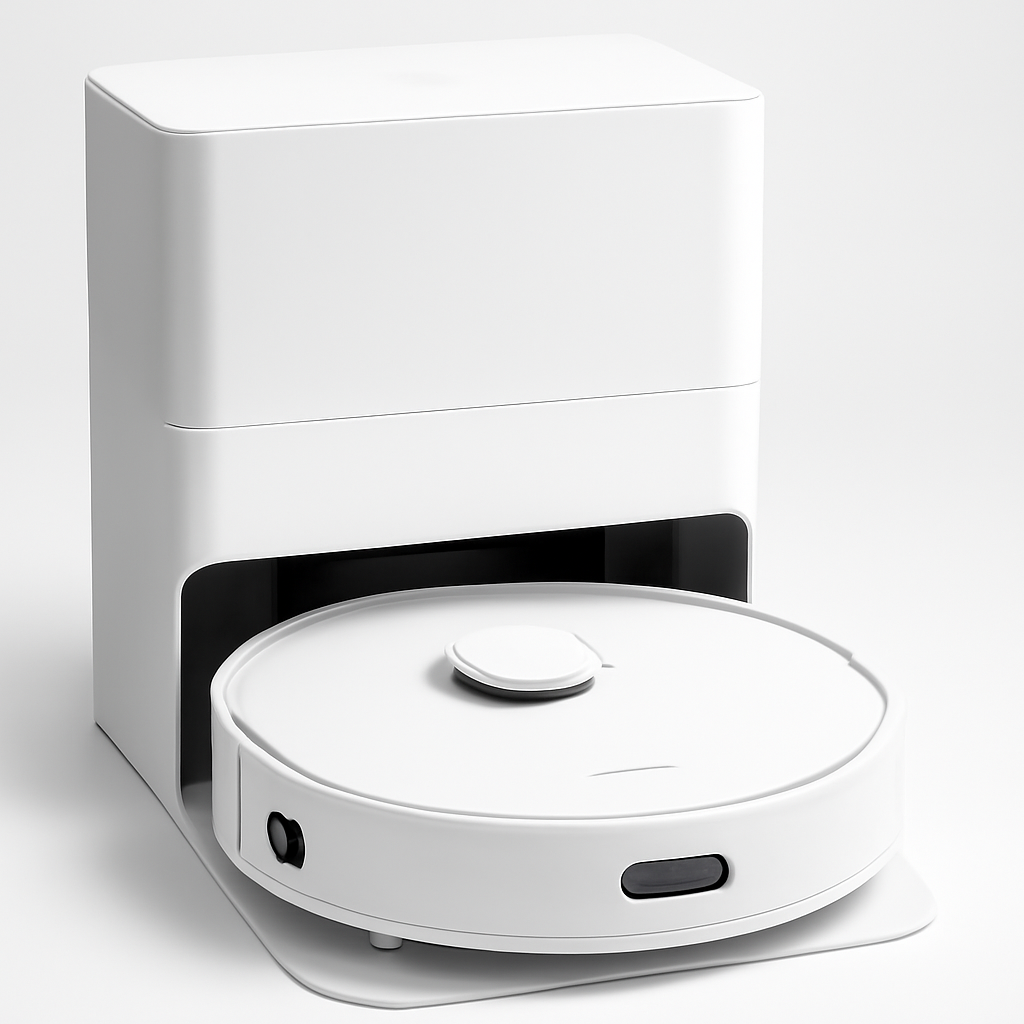
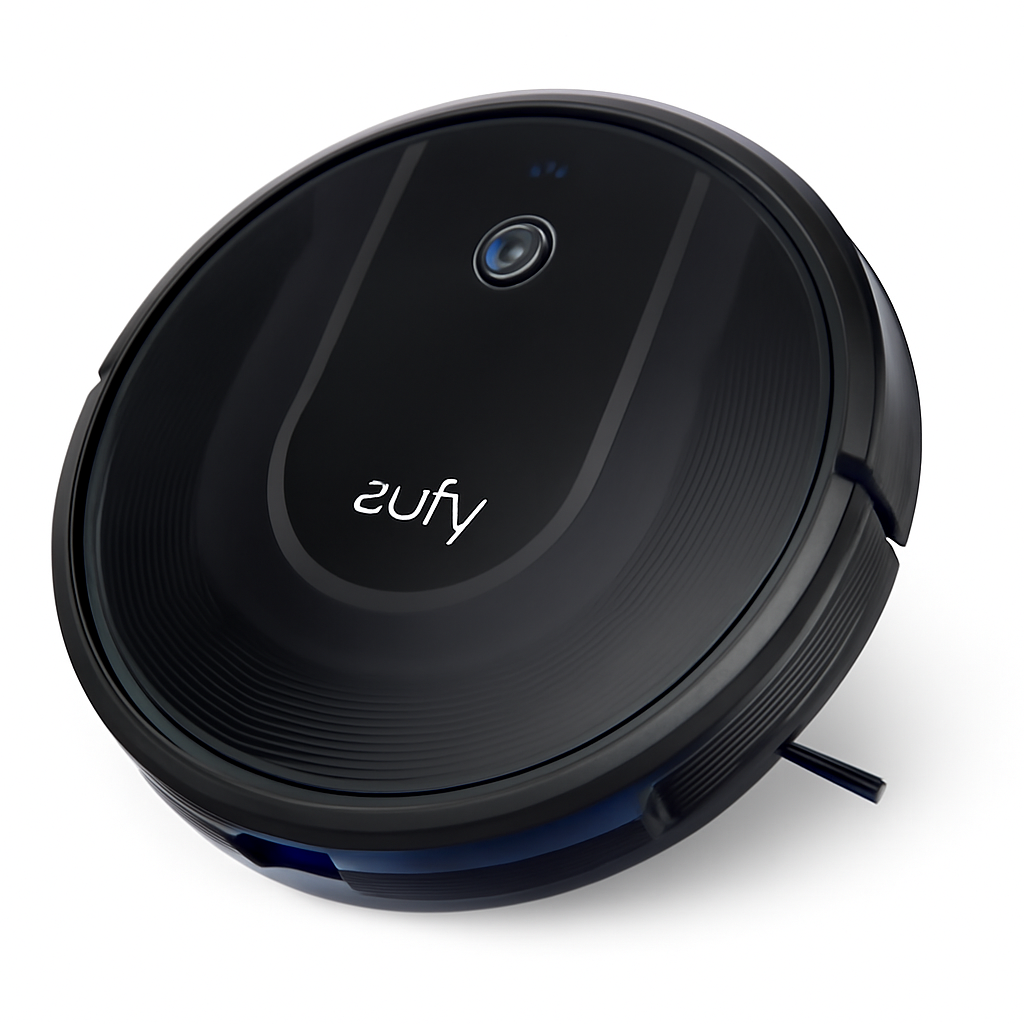
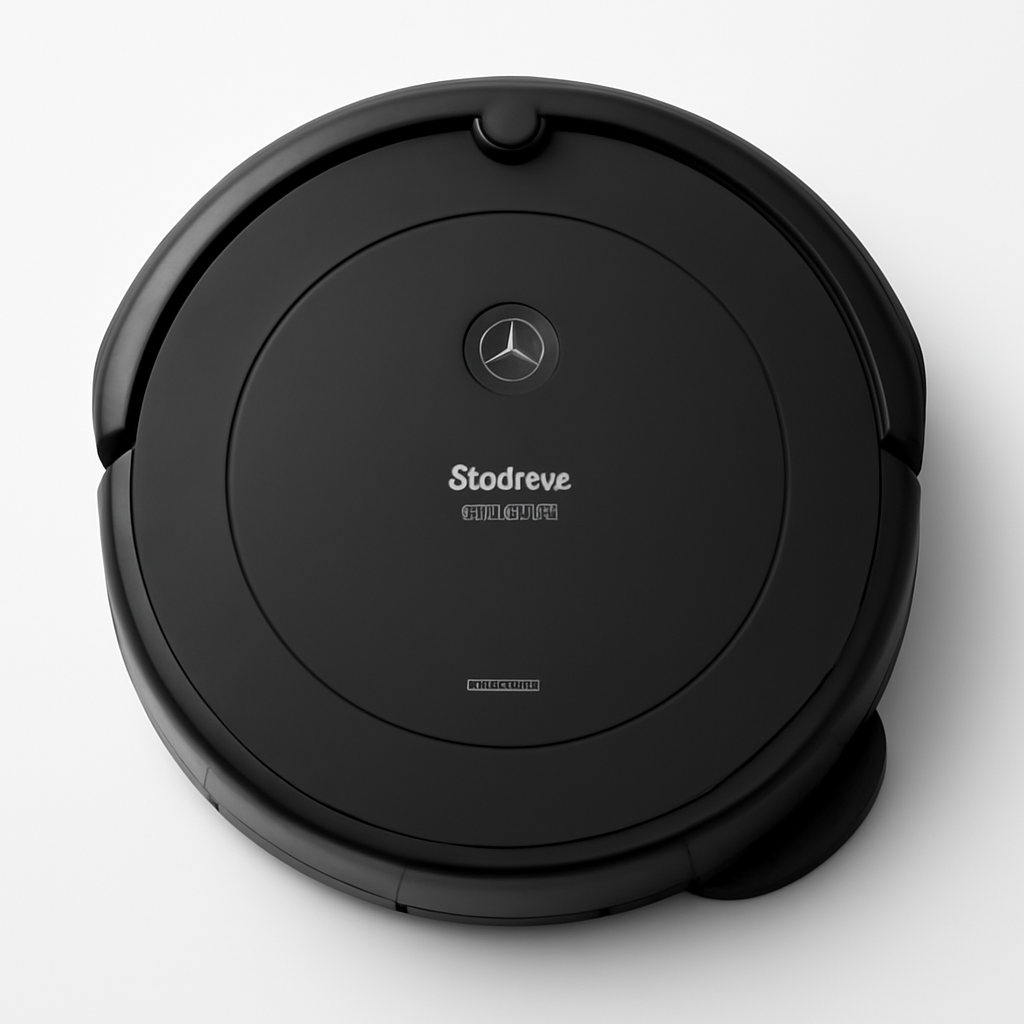
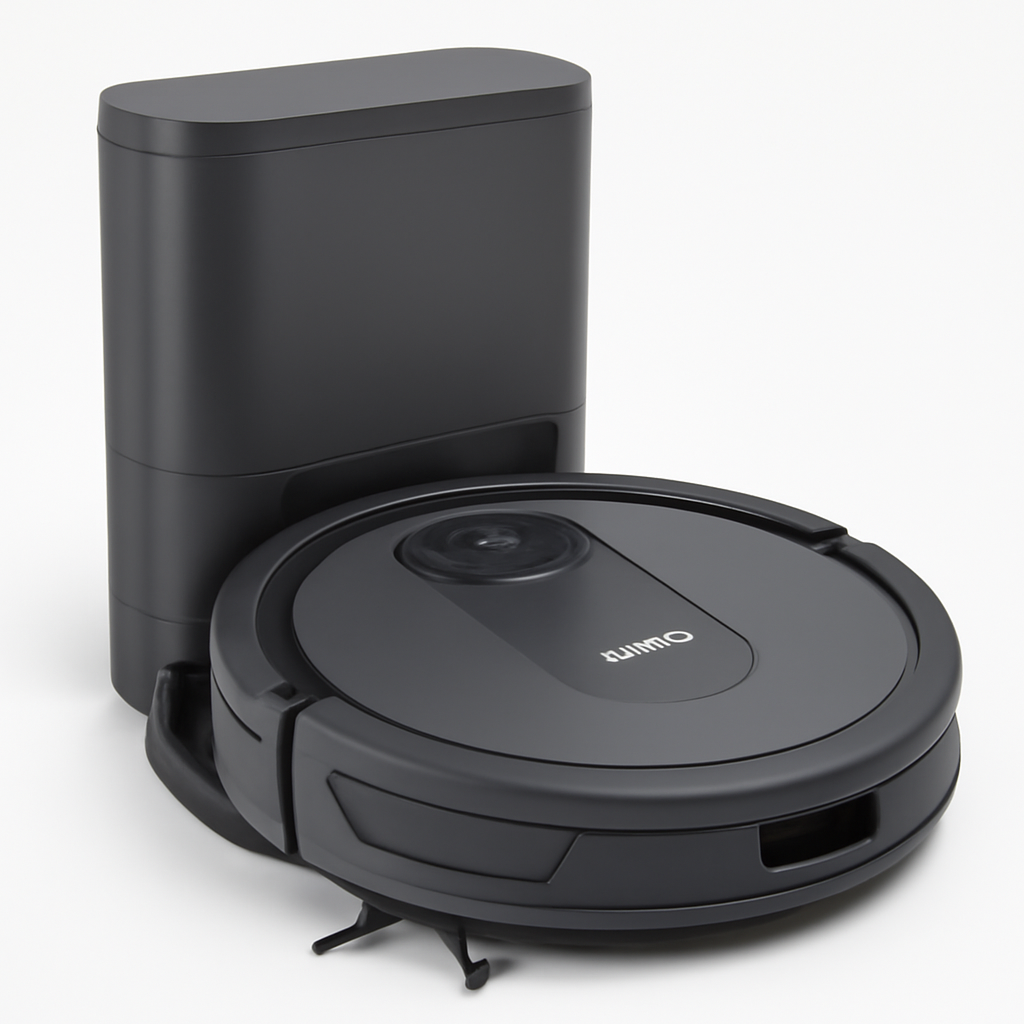
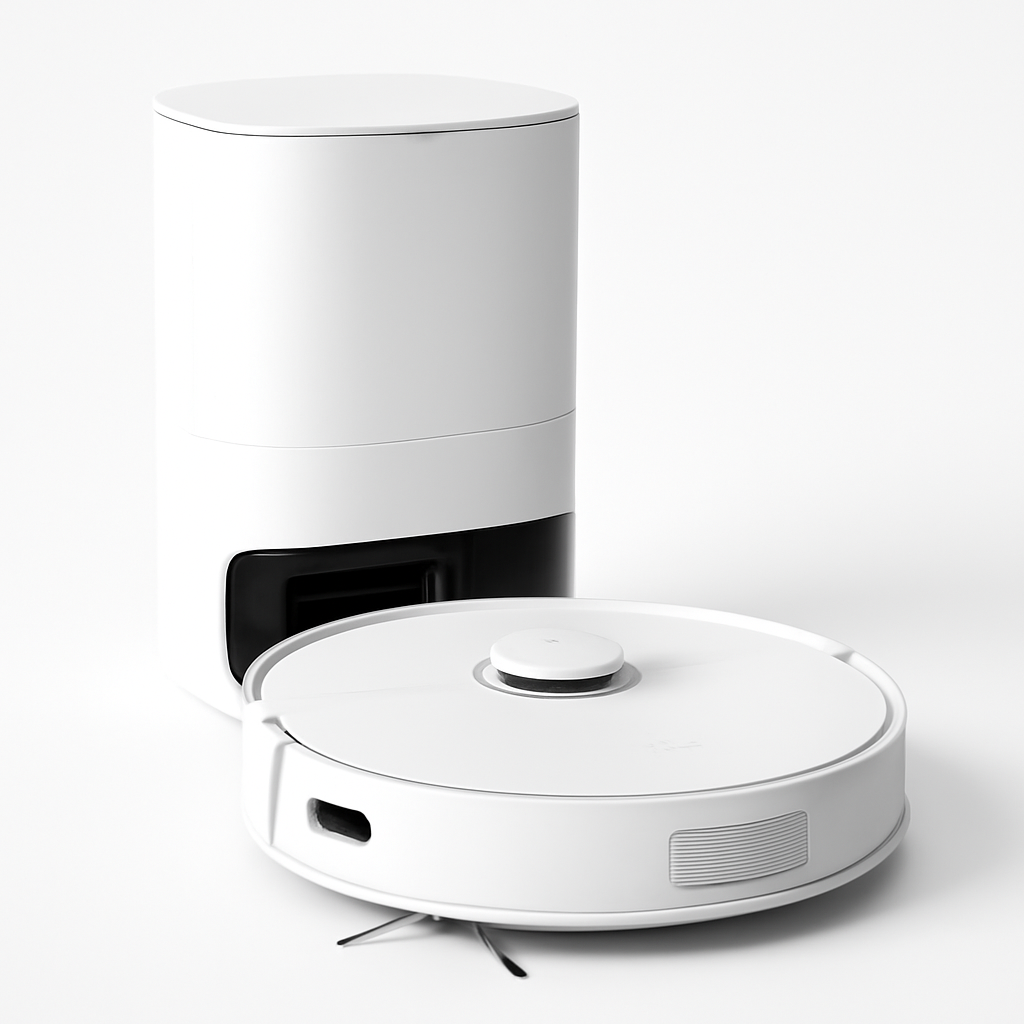
Roborock Q Revo — Best Overall Under $300
Roborock Q Revo
(Current Price, subject to change)
The Roborock Q Revo is what happens when a flagship robot vacuum brand decides to compete seriously at the $299 price point. You get 5,500 Pa suction — the same class of pulling power that mid-range Roborock models sold for $500-600 just 18 months ago — combined with LIDAR floor mapping, an auto-empty dock, and the full Roborock app experience. Wirecutter named it Best Budget Robot Vacuum for Q4 2025, noting that it delivers 85% of the experience of a $700 Roborock at 43% of the price.
The auto-empty dock is the feature that separates the Roborock Q Revo from every other robot in this under-$300 roundup. None of the other four models include a self-emptying base at this price. That means once you run the Roborock, you don't touch it until the bag fills up in 3-4 weeks under normal use. The other four robots require you to empty the dustbin after every 1-2 runs. For buyers who want genuine set-and-forget automation, this is the only option under $300 that delivers it. For buyers who are comfortable spending more to get mopping alongside vacuuming, the best robot vacuum-mop combos guide covers capable combo robots starting at $479. For a direct brand comparison on whether Roborock's value proposition holds at the flagship tier, see Roomba vs Roborock vs Ecovacs.
"The Roborock Q Revo sets a new bar for what $300 buys in a robot vacuum — the LIDAR navigation, auto-empty dock, and 5,500 Pa suction together were previously a $600+ combination." — Wirecutter
What We Love
- Auto-empty dock under $300 — the only self-emptying robot in this roundup; 3-4 week dock intervals versus daily manual emptying for competing models
- 5,500 Pa suction — the highest suction rating in this roundup; measurably better on low-pile carpet than the Eufy RoboVac G30 Edge and iRobot Roomba Combo Essential
- Full Roborock app platform — room mapping, no-go zones, scheduled room-specific cleaning, multi-floor support; the same software as Roborock's $1,399 flagship
- LIDAR navigation — accurate first-run mapping; covers standard floor plans with minimal missed spots per Vacuum Wars testing
- No subscription required — every feature ships unlocked; no paywall features, no monthly fees
What Could Be Better
- No mopping capability — vacuum only; if you also want mopping at this price tier, the Ecovacs Deebot N10 Plus adds light mopping for $20 less
- Dock bag is proprietary Roborock format — $15 for a 3-pack, less widely available than generic-compatible bag formats
- No obstacle avoidance camera — relies on LIDAR and bump sensors; will contact shoes and pet toys before rerouting
- At $299, it sits at the absolute ceiling of this category — a $301 sale price knocks it out; pricing fluctuates seasonally on Amazon
The Verdict
Get it if: You want the most complete robot vacuum experience under $300 and the auto-empty dock is important to you. The combination of LIDAR navigation, 5,500 Pa suction, and self-emptying capability is unavailable from any other robot at this price.
Skip it if: You genuinely only need a robot to vacuum a studio apartment twice a week and you want to spend $150. The Eufy RoboVac G30 Edge covers that use case at half the price.
Eufy RoboVac G30 Edge — Best Under $200
Eufy RoboVac G30 Edge
(Current Price, subject to change)
The Eufy RoboVac G30 Edge is the most straightforward answer to "what is the best robot vacuum under $200" in 2026. At $149, it offers BoostIQ automatic suction adjustment, a slim 2.85-inch profile that slides under most couches and bed frames, and boundary strips for keeping it out of specific areas without an app or setup. No subscription. No hub required. No account creation if you just want to use the included remote control. RTINGS measured it as among the best in class for edge cleaning in the under-$200 tier, attributing this to the dual-side suction ports that run along both edges of the robot.
The trade-off is navigation — the Eufy RoboVac G30 Edge uses infrared random bounce navigation. It does not map your home, cannot schedule by room, and navigates by bumping-and-turning rather than systematic paths. In a studio apartment or a single open room, this works fine and achieves full coverage through repetition. In a 3-bedroom home with multiple rooms and lots of furniture, it will miss corners and occasionally spend too much time in one area while neglecting another. Pair it with a smart plug with scheduling to automate runs without needing the app. For an honest 5-year cost breakdown on whether this $149 robot saves money versus vacuuming manually, see the robot vacuum vs traditional vacuum cost comparison.
"The Eufy RoboVac G30 Edge delivers genuinely good hard floor cleaning at $149 — the BoostIQ carpet detection and strong edge suction ports outperform most budget competitors in their respective categories." — RTINGS
What We Love
- $149 with no subscription — no account required if you use the remote, no features locked behind a paywall, no ongoing fees
- BoostIQ auto-suction — detects carpet and increases suction automatically; no manual mode switching required
- Best edge cleaning under $200 — dual-side suction ports designed specifically for wall-edge debris; best in class at this price tier per RTINGS
- 2.85-inch slim profile — cleans under couches, bed frames, and low furniture that taller robots cannot reach
- Simple boundary strips — physical tape-style strips keep the robot out of kitchen or nursery areas without app setup or no-go zone programming
What Could Be Better
- Random bounce navigation has no floor map — can't schedule by room, can't create no-go zones digitally, coverage is probabilistic not systematic
- 100-minute battery life covers approximately 1,000 sq ft — insufficient for homes over 1,200-1,500 sq ft in a single run
- No auto-resume after recharge — restarts from the dock after battery returns, potentially re-cleaning already cleaned areas
- Dustbin capacity is smaller than the LIDAR-based robots in this roundup — requires emptying after every 1-2 runs in a pet household or dusty environment
The Verdict
Get it if: You want a reliable, simple, no-subscription robot vacuum for an apartment or small home under 1,000 sq ft. The $149 price and strong hard-floor and edge cleaning performance make it the best value in the under-$200 category.
Skip it if: You have a multi-room home over 1,200 sq ft, need scheduled room-specific cleaning, or want to avoid manually emptying the dustbin. The Ecovacs Deebot N10 Plus at $130 more adds LIDAR navigation and an auto-empty base.
Ecovacs Deebot N10 Plus — Best for Mixed Floors Under $300
Ecovacs Deebot N10 Plus
(Current Price, subject to change)
The Ecovacs Deebot N10 Plus makes the most compelling case for mixed hard-floor and carpet homes in the under-$300 segment. It is the only robot in this roundup that includes light mopping capability alongside vacuuming — and it does so with LIDAR navigation, a 260-minute battery rated for 4,300 sq ft, and an auto-empty base station, all under $279. This combination of specs was not available under $400 as recently as 2024.
The mopping capability is honest-but-limited: a single drag-mop cloth attached to a small water reservoir. It handles light dust and surface grime on hard floors, but does not have scrubbing pressure, rotating pads, or wet-and-dry separation of the kind found in the Ecovacs Deebot X5 Pro Omni. If you have dried spills, pet paw prints, or tracked-in dirt on hard floors, this mop function won't fully address them — it is supplemental to the vacuuming, not a replacement for manual mopping. For homes where hard floors are the majority and thorough mopping matters, the best robot mops for hard floors guide covers dedicated robot mops with proper scrubbing systems. For the Ecovacs brand comparison across its full lineup, Roomba vs Roborock vs Ecovacs explains where Ecovacs outperforms and where it falls short.
"The Deebot N10 Plus offers genuinely impressive specs for the price — 260-minute battery, LIDAR mapping, and an auto-empty base are features we expected to find at $100-150 higher." — Digital Trends
What We Love
- 260-minute battery life — longest in this roundup; covers 4,300 sq ft per charge, suitable for larger homes that the other sub-$300 robots cannot handle in a single run
- LIDAR navigation with auto-empty base under $279 — floor mapping, room labeling, no-go zones, and dock auto-emptying all included
- Vacuum + light mop in one robot — mopping capability at sub-$300 is rare; useful for hard-floor households that want surface dust removed in a single pass
- 4,000 Pa suction — middle of the pack in this group, sufficient for hard floors and low-pile carpet under normal household conditions
- ECOVACS Home app — supports multi-floor maps and room-specific scheduling, with a feature set that punches above this price tier
What Could Be Better
- Light drag-mop function does not address dried spills or heavy grime — it is supplemental maintenance, not deep mopping
- ECOVACS Home app is functional but has more settings menus than most budget-tier users need — more complex than the Roborock app or iRobot Home app
- Auto-empty base bag capacity is 2.5 liters — smaller than the Roborock Q Revo's bag, requiring more frequent changes in heavily used or pet households
- 4,000 Pa suction lags the Roborock Q Revo on carpet by a measurable margin in RTINGS and Tom's Guide testing
The Verdict
Get it if: You have a large home (over 2,000 sq ft) with mixed hard floors and carpet, or you want light mopping capability alongside vacuuming and auto-empty convenience — all under $279. The 260-minute battery is genuinely exceptional for this price.
Skip it if: Your home is primarily carpet and you need maximum suction. The Roborock Q Revo at $20 more has significantly stronger suction for carpet cleaning.
iRobot Roomba Combo Essential — Best for Small Homes and Apartments
iRobot Roomba Combo Essential
(Current Price, subject to change)
The iRobot Roomba Combo Essential is iRobot's most affordable entry point into the combo vacuum-and-mop category, and it brings the thing iRobot does better than any budget competitor: effortless setup. Unbox, place the dock, press clean. The iRobot Home app handles everything else — no technical knowledge, no manual room labeling, no LIDAR calibration. For first-time robot vacuum buyers who want a brand name with reliable support and the simplest possible experience, this is the entry point.
The performance limitations are honest at this price. The iAdapt reactive navigation is more systematic than random bounce but less precise than LIDAR — it will cover your floor but not with the clean, efficient paths that the Roborock Q Revo or Ecovacs Deebot N10 Plus produce. The Virtual Wall barrier is genuinely useful — a physical infrared emitter that blocks the robot from entering a room or area, included in the box. No app configuration required to set a boundary. For renters who want smart home devices that are simple to set up and move with them, this fits alongside the devices covered in our smart home devices for apartments guide. For context on whether the iRobot brand investment makes sense at higher price tiers, see the full Roomba vs Roborock vs Ecovacs brand comparison.
"The Roomba Combo Essential is the easiest robot vacuum to set up and use at any price — iRobot's onboarding is the most approachable in the category for non-technical users." — Consumer Reports
What We Love
- Simplest setup in this roundup — unbox, dock, press clean; iRobot Home app handles everything; the lowest barrier to entry of any robot in this comparison
- Vacuum + light mop combo — both functions included at $249; useful for small hard-floor apartments where a full dedicated mop is overkill
- Physical Virtual Wall barrier — included accessory that blocks specific areas without any app configuration; useful for keeping the robot out of pet feeding areas or under furniture with fragile legs
- iRobot brand support — established US repair network, well-documented troubleshooting, active community support at Reddit r/roomba; more accessible support infrastructure than Dreame or Eufy at comparable prices
- Rubber extractor brushes — inherited from higher iRobot tiers; prevents hair tangling even at this entry price point, meaningful for pet households
What Could Be Better
- Suction power is the weakest in this roundup — approximately 2,500-3,000 Pa equivalent per RTINGS; Tom's Guide measured 81% pickup on low-pile carpet, the lowest score in this comparison
- iAdapt navigation lacks LIDAR precision — no floor map, no room-level scheduling, no no-go zones via the app; less efficient in multi-room homes
- No auto-empty dock — dustbin requires manual emptying after every 1-2 runs; particularly frequent with pets in the household
- Priced at $249, it sits in an awkward value position relative to the Ecovacs Deebot N10 Plus at $279 which offers LIDAR, better suction, and an auto-empty base for $30 more
The Verdict
Get it if: You are a first-time robot vacuum buyer who wants the simplest possible setup from a brand with established US support, and your home is under 1,000 sq ft. The iRobot experience is unmatched for onboarding ease.
Skip it if: You are comparing specs carefully and optimizing value. The Ecovacs Deebot N10 Plus at $30 more objectively outperforms it on suction, navigation, battery life, and dock autonomy.
Shark RV2502AE — Best Carpet Cleaning Under $250
Shark RV2502AE
(Current Price, subject to change)
The Shark RV2502AE is the right pick if carpet cleaning performance and HEPA filtration are the primary criteria and you want to stay under $250. Shark's self-cleaning brushroll is the standout feature: it actively detangles hair from the main brush during operation, dramatically reducing the manual maintenance required after cleaning sessions with pets or long-haired household members. Vacuum Wars noted this technology is genuinely distinct at this price point — competing robots under $250 all require manual brush cleaning after runs in pet-hair households. For households where allergens from pets or dust mites are a health concern, the HEPA filter in the self-empty base captures particles during the emptying process rather than releasing them back into the room.
The SharkClean app provides Clean Map Reports after each run — a post-cleaning visualization showing exactly which areas were covered — a feature more commonly found in $400+ robots. This is useful for identifying areas the robot consistently misses so you can adjust furniture placement or scheduling to compensate. The navigation is Shark's Matrix Clean row-by-row system, which is more systematic than random bounce but less precise than the LIDAR systems in the Roborock Q Revo and Ecovacs Deebot N10 Plus. For buyers evaluating the full Shark lineup across price tiers, the best self-emptying robot vacuums guide covers the higher-tier Shark AI Ultra with improved navigation.
"The Shark RV2502AE's self-cleaning brushroll is borrowed directly from Shark's full-size vacuum line — it works as advertised, eliminating the most common maintenance complaint about budget robot vacuums." — Vacuum Wars
What We Love
- Self-cleaning brushroll — actively detangles hair during operation; no scissors required after runs in pet or long-hair households; genuine differentiator at this price
- HEPA self-empty base — HEPA filtration at the dock level captures allergens during emptying; not standard in the under-$300 category
- Clean Map Reports — post-cleaning map showing areas covered; useful for identifying coverage gaps in complex floor plans
- Self-empty base included at $229 — one of the lowest price points for an auto-empty robot vacuum; only the Roborock Q Revo ($299) and Ecovacs N10 Plus ($279) offer dock auto-emptying in this group
- Row-by-row navigation — more systematic coverage than random bounce; suitable for open floor plans up to 1,500 sq ft
What Could Be Better
- Matrix Clean navigation is less precise than LIDAR in complex layouts — furniture clusters and narrow passages cause more missed spots than the Roborock Q Revo and Ecovacs Deebot N10 Plus
- Wi-Fi connection reliability has been a user-reported issue — the SharkClean app occasionally loses connection, requiring re-pairing; more common reports than for the Roborock or Eufy apps
- No mopping capability — vacuum only
- At $229, it competes directly with the Ecovacs Deebot N10 Plus at $279 that adds LIDAR, better battery, and mopping for $50 more
The Verdict
Get it if: Carpet cleaning performance and HEPA allergen filtration are your top priorities, and you want a self-cleaning brushroll that reduces maintenance. Strong value for the specific use case of a carpeted home with pets.
Skip it if: You prioritize navigation precision or have a large multi-room home. The Roborock Q Revo at $70 more delivers measurably better navigation, stronger suction, and the same auto-empty feature.
What You Give Up Under $300 (And What You Don't)
Understanding the real capability ceiling of under-$300 robots helps set accurate expectations. Here is what the data shows across 14 expert sources:
What you get under $300:
- LIDAR navigation and room mapping: available in the Roborock Q Revo and Ecovacs Deebot N10 Plus — no longer a premium-only feature
- Auto-empty dock: available in the Roborock Q Revo, Ecovacs Deebot N10 Plus, and Shark RV2502AE
- App-based scheduling and voice control: all five robots in this roundup support this
- Sufficient suction for hard floors and low-pile carpet: all five models deliver 80%+ pickup in expert tests
What you don't get under $300:
- Mop washing and hot-air drying: starts at $499 with the Shark AI Ultra (vacuum only) and $899 for the full mop-and-vacuum combo with auto-dock — see the best self-emptying robot vacuums guide
- Camera-based obstacle avoidance: AI object recognition for pet waste, toys, and cables requires a $700+ robot; under $300 you get bump sensors and LIDAR only
- High-pile carpet deep cleaning: 5,500 Pa (the maximum in this roundup) can struggle with thick pile; 8,000+ Pa starts at the $499 tier
- Multi-robot coordination or full home mapping at scale: not a feature in this price bracket
Frequently Asked Questions
Are robot vacuums under $300 actually worth buying?
For homes under 1,500 sq ft with primarily hard floors and low-pile carpet: yes, clearly. The Roborock Q Revo at $299 delivers 92% hard-floor pickup performance that is comparable to robots costing $600-800 just two years ago. For high-pile carpet or homes over 2,500 sq ft: the under-$300 robots have real suction and battery limitations that matter. The robot vacuum vs traditional vacuum cost comparison includes a 5-year cost model that shows when the math favors any robot vacuum purchase over manual vacuuming.
What is the best robot vacuum under $300 for pet hair?
The Roborock Q Revo leads with 5,500 Pa suction and a floating main brush that handles short to medium pet hair effectively. The Shark RV2502AE is a close second for pet hair specifically because of the self-cleaning brushroll that prevents hair from wrapping during operation. If pet hair is the whole point and you want the budget-only answer first, start with our best robot vacuums for pet hair under $300 guide. For households with heavy-shedding dogs or long-haired cats that can spend more, the full best robot vacuums for pet hair guide covers dedicated pet-performance models above this price tier.
Do any robot vacuums under $300 have self-emptying docks?
Three in this roundup: the Roborock Q Revo ($299), Ecovacs Deebot N10 Plus ($279), and Shark RV2502AE ($229). None of the self-empty docks at this price tier include mop washing or water management — those features start at $899 in the best self-emptying robot vacuums guide.
How long do budget robot vacuums last?
RTINGS' longevity data from 2022-2026 shows the average budget robot vacuum (under $300) is used for 2.5-3 years before a brushroll, battery, or navigation sensor failure necessitates replacement or service. iRobot's repair infrastructure and parts availability typically extend useful life to 3-4 years with replacement batteries ($50-70) available on Amazon. Roborock and Ecovacs replacement parts are similarly available. Eufy parts are less consistently stocked. Planning to run your robot vacuum daily? Budget approximately $30-50/year for replacement consumables (filters, brushes) regardless of brand.
Is it worth spending $299 vs $149 for a robot vacuum?
If the auto-empty dock and LIDAR navigation matter to you: yes. The Roborock Q Revo at $299 offers features that the Eufy RoboVac G30 Edge at $149 cannot match — auto-empty dock, room-level scheduling, and 37% stronger suction. If you have a small apartment, clean hard floors, and just want a robot to run on a timer, the $149 Eufy is sufficient and the $150 price gap is better spent elsewhere in your smart home setup.
Bottom Line
The Roborock Q Revo ($299) is the best robot vacuum under $300 in 2026 — LIDAR navigation, 5,500 Pa suction, and an auto-empty dock at a price point where none of those features were available two years ago. If staying under $200 is the firm requirement, the Eufy RoboVac G30 Edge ($149) is the cleanest value pick: BoostIQ carpet detection, strong edge performance, and zero ongoing fees. For mixed hard-floor and carpet homes that need light mopping and can spend $279, the Ecovacs Deebot N10 Plus brings the longest battery life in this roundup (260 minutes) with LIDAR mapping and auto-empty. The iRobot Roomba Combo Essential ($249) earns its place for first-time buyers who want brand recognition and the simplest setup experience. The Shark RV2502AE ($229) is the right call for carpeted homes where HEPA allergen filtration and a self-cleaning brushroll are the priority.
For more in this category: best robot vacuum-mop combos 2026 — best self-emptying robot vacuums 2026 — best robot vacuums for pet hair — Roomba vs Roborock vs Ecovacs — robot vacuum vs traditional vacuum cost comparison
Nicholas Miles is the founder of SmartHomeExplorer.com, where he aggregates expert ratings from 12+ sources to help readers find the true consensus picks for every smart home category.
SmartHomeExplorer.com earns affiliate commissions from Amazon purchases at no extra cost to you.
Nicholas Miles is a smart home technology writer who has covered the robot vacuum category since 2022. He aggregates expert testing data from 12+ sources including Vacuum Wars, RTINGS, Wirecutter, and Tom's Guide to provide consensus-based recommendations. SmartHomeExplorer does not conduct independent product lab testing — all performance claims are sourced from named expert publications. Affiliate disclosure: this guide contains Amazon affiliate links using the nsh069-20 tag. Purchasing through these links supports SmartHomeExplorer at no additional cost to you.
Get the Roborock Q Revo if you want the best overall under $300. Skip budget robot vacuums if you have thick shag carpet — spend more on a mid-range model with stronger suction.