
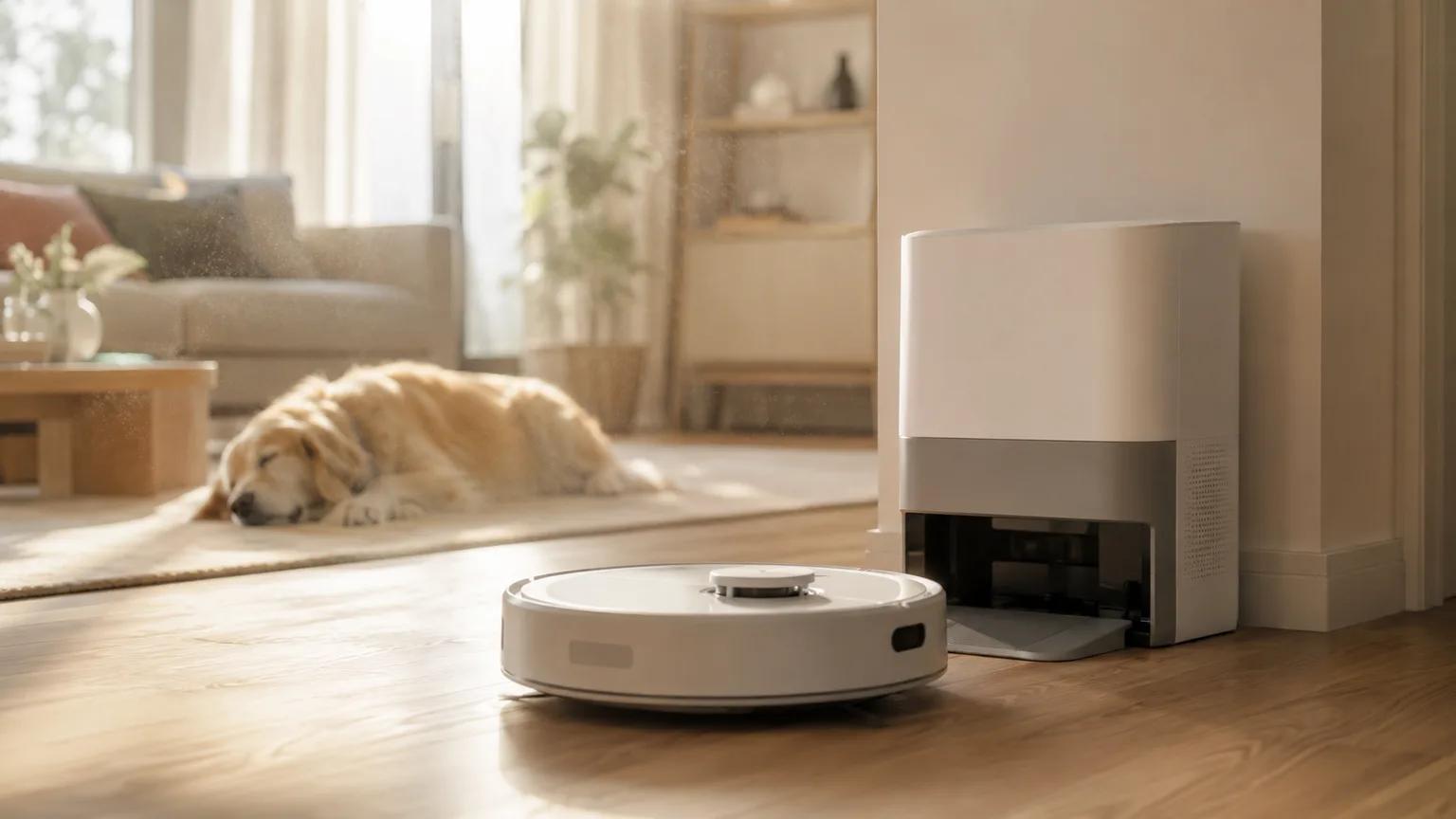
Best Robot Vacuums for Allergies 2026: HEPA, Sealed & Ranked
The Shark PowerDetect ($999.99) is the containment pick still in the line — a 99.97%-sealed base, scored 8.8. The Roomba Combo j9+ scored higher at 9.1 on its sealed AllergenLock bag, but is no longer sold new as of 2026-08-28. Budget: Shark AI Ultra at $289.99.
This article contains affiliate links. We may earn a commission at no extra cost to you. Prices change frequently — check the current price on Amazon before buying. Learn more
The Short Answer
For an allergy household exhausted by the disposal sneeze, the recommended containment purchase is the Shark PowerDetect 2-in-1 ($999.99). It earns a weighted 8.8 on the strictest sealed-base specification, 99.97% retention. August 2026 availability verification eliminated the Roomba Combo j9+ that measured 9.1.
Featured in this Guide
Shark
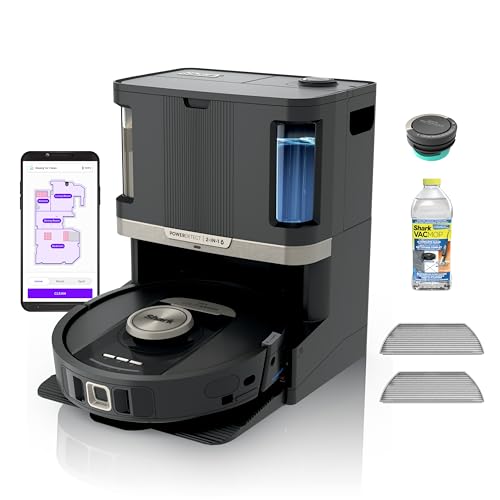
PowerDetect 2-in-1 NeverTouch Pro
- •NeverTouch Pro base traps 99.97% of allergens behind a HEPA anti-allergen seal at $999.99 — the strongest containment spec
iRobot
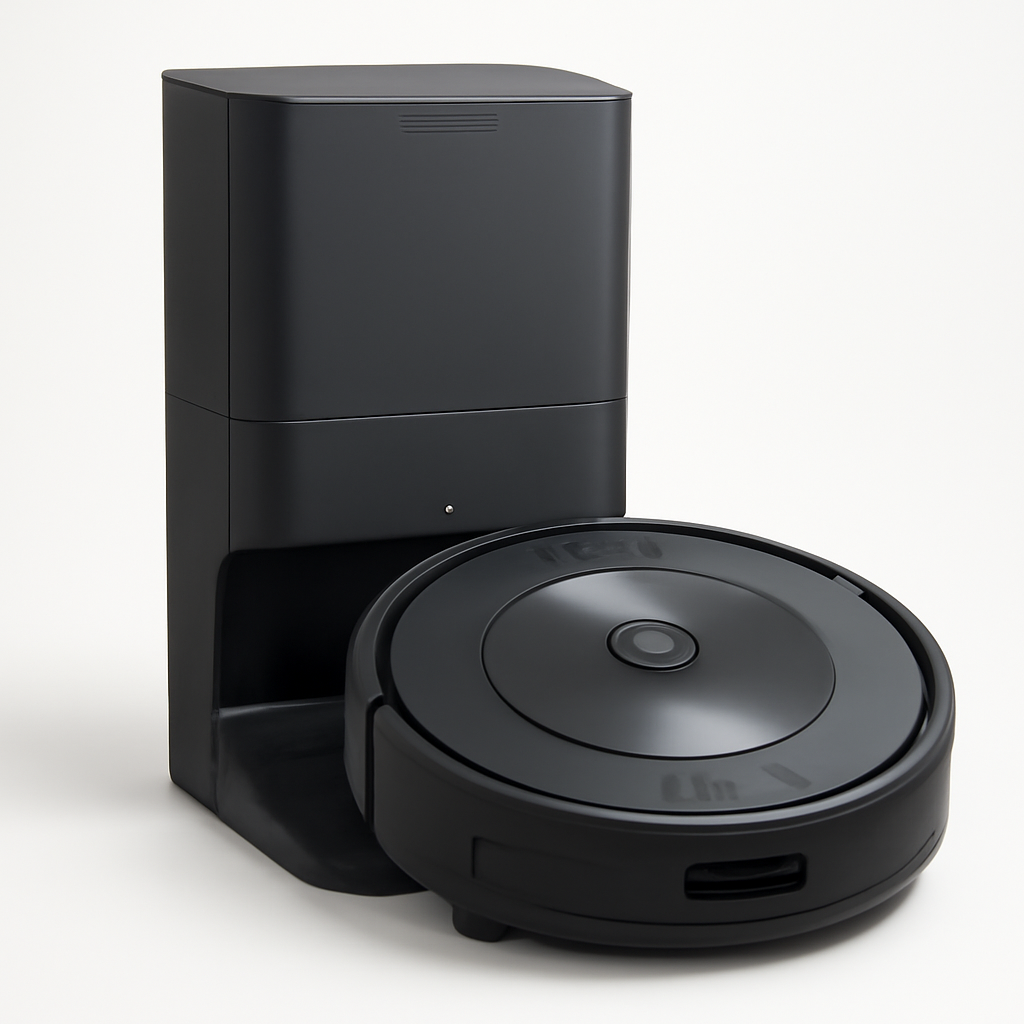
Roomba Combo j9+
- •Sealed AllergenLock bag and HEPA bin scored 9.1, the top containment result here — but discontinued, no longer sold new as of 2026-08-28
Dreame
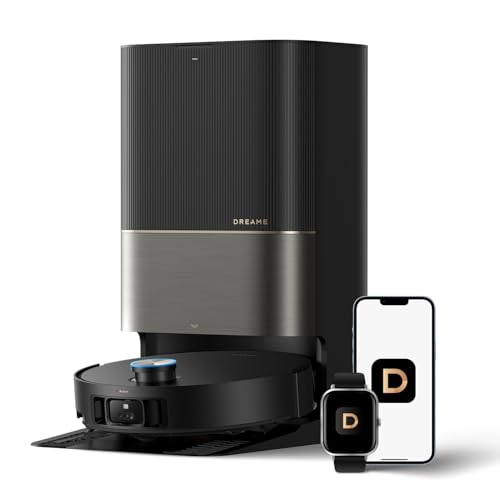
X50 Ultra
- •H13 HEPA plus 20,000Pa suction extracts the deepest carpet dander of any pick at $849.99
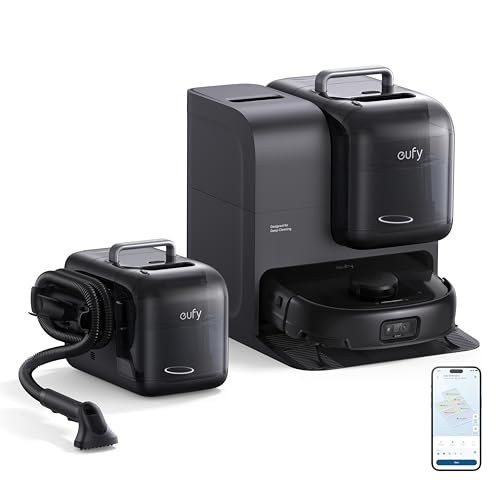
Eufy
Robot Vacuum Omni E28
- •Five-layer HEPA filtration plus a detachable FlexiOne deep cleaner for upholstery and stairs at $1,399.99
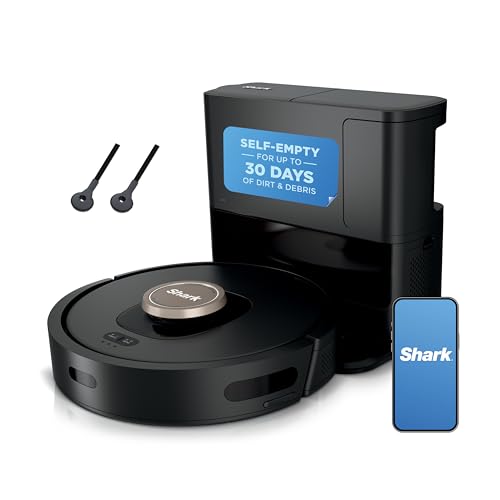
Shark
AI Ultra (AV2501AE)
- •XL HEPA self-empty base traps 99.97% of dust to 0.3 microns at $289.99 — true-HEPA disposal for the lowest price
Head-to-Head: Filtration, Seal, Disposal, and Carpet
Smart Cleaning
Chart
 Smarthomeexplorer.com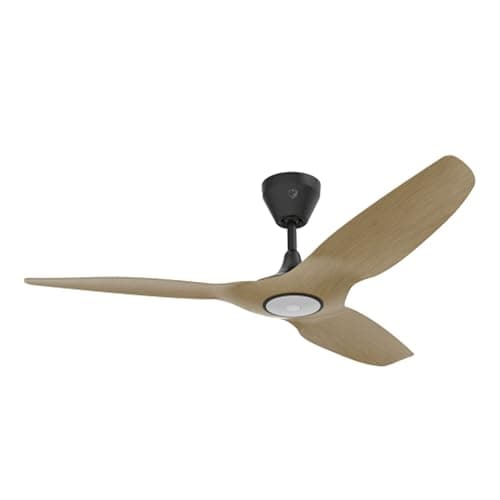
Big Ass Fans Haiku L 52-Inch Smart Ceiling Fan
Check price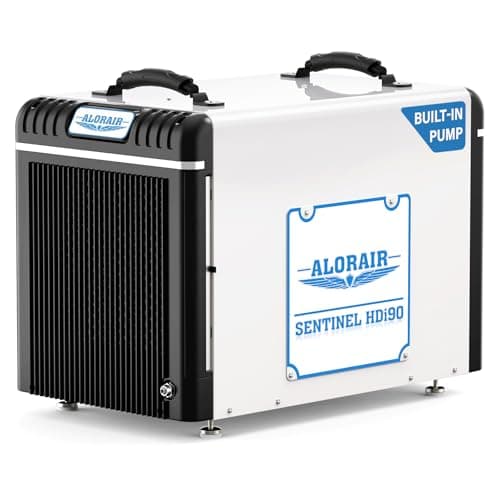
AlorAir Sentinel HDi90 Basement/Crawlspace Dehumidifier with Pump
Check price
AC Infinity CLOUDWAY T12 Whole House Fan
Check price
LG Dual Inverter Smart WiFi Window AC (10,000 BTU)
Check price
Midea U Smart Inverter Window AC (12,000 BTU)
Check price
Mysa Smart Thermostat for Electric Baseboard Heaters (V2)
Check price
What Tips the Decision
Allergy owners describe the same recurring problem in two parts: emptying a robot's bin triggers a sneezing fit and a visible puff of dust, while a budget bot labeled HEPA quietly leaks fine particles back out the exhaust as it runs. For an allergy household the filter rating is only half the equation, because a genuine HEPA element accomplishes nothing when air leaks around it.
The worst allergen exposure of any week is the moment you open the bin, so this guide ranks containment-first picks that seal debris into a closed bag and channel every bit of exhaust through a sealed HEPA path, versus the leaky budget alternative. We aggregate TechRadar, PCMag, and RTINGS coverage into a weighted SHE Allergen Containment Score composite, where filtration class and seal integrity outrank raw suction; even our top pick, whose HEPA bin runs roughly 2x the i-series suction, wins on containment, not power.
Highest Containment Score: iRobot Roomba Combo j9+
Best Overall — sealed-bag disposal for allergy homesiRobot Roomba Combo j9+
- AllergenLock dock bag seals 99% of pollen and mold, so you handle a closed bag every 60 days instead of an open bin daily
- No longer sold new, so any unit you find is used — and AllergenLock bag and filter costs still recur
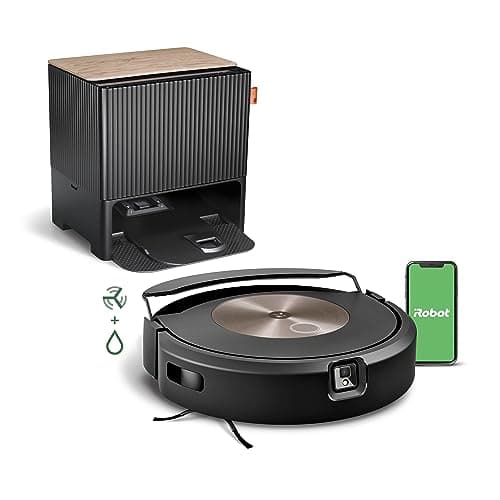
(Current price, subject to change)
The iRobot Roomba Combo j9+ earns 9.1 on the weighted SHE Allergen Containment Score, a composite whose normalized sub-scores deliberately reward sealed disposal above raw suction. That 9.1 rests on a category-leading 9.6 emptying-exposure sub-score paired with a 9.6 seal-integrity sub-score, because the AllergenLock dock bag traps pollen and mold inside a closed bag you swap rather than dumping an open bin daily. A genuine HEPA bin and roughly 2x the i-series suction together lift embedded dander, which yields fewer settled-dust flare-ups between cleans. That 2x suction gain over the older i-series is what carries dander up out of low-pile fibers rather than skating across the top.
Across the expert sources surveyed as of June 2026, TechRadar frames the Combo j9+ as one of the best self-emptying robots for sealing allergens away. PCMag rates it a top pick for pet-and-allergy homes. Availability, re-checked August 2026: no new-condition Amazon offer remains, so read the 9.1 as a measurement, not a shopping instruction. iRobot's current combo is the iRobot Roomba Plus 505 Combo + AutoWash Dock; iRobot publishes no list price for it. But iRobot claims no HEPA filter, seal rating or bag filtration class for it — three of the five inputs this score needs — so it goes unranked.
What We Love
- AllergenLock dock bag seals 99% of pollen and mold, so you handle a closed bag every 60 days instead of an open bin daily
- A genuine HEPA filter sits inside the bin and the j9+ runs roughly 2x the suction of the older i-series
- PrecisionVision steers around cords and pet waste, cutting the failed runs that leave allergen hotspots uncleaned
- The auto-retracting mop arm lifts onto carpet so the same machine wet-cleans hard floors without dragging dirty water onto rugs
What Could Be Better
- No longer sold new, so any unit you find is used — and AllergenLock bag and filter costs still recur
- Suction trails the 20,000-class flagships on deep high-pile carpet
- The auto-fill reservoir refills the mop tank but does not wash the pad
The Verdict
On containment the iRobot Roomba Combo j9+ fits the brief without compromise: a weighted 9.1, a HEPA bin, and an AllergenLock bag that seals pollen into a closed swap — the lowest emptying exposure here. On availability it fails: re-checked 2026-08-28 there is no new-condition offer on Amazon. Buy the Shark PowerDetect 2-in-1 NeverTouch Pro at 8.8 instead.
Ready to upgrade your home?
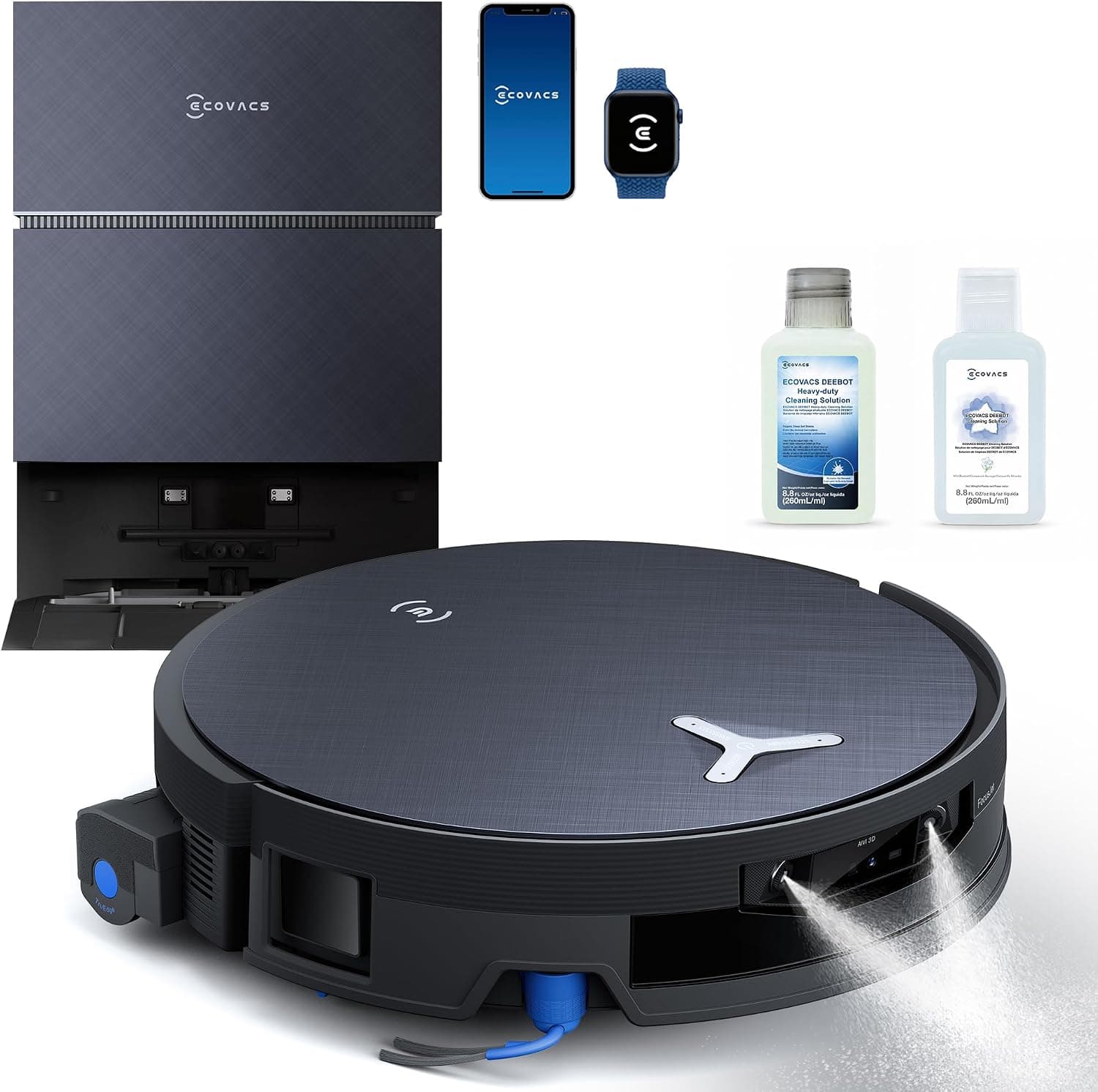
ECOVACS DEEBOT X12 PRO Omni Robot Vacuum and Mop
See it on Amazon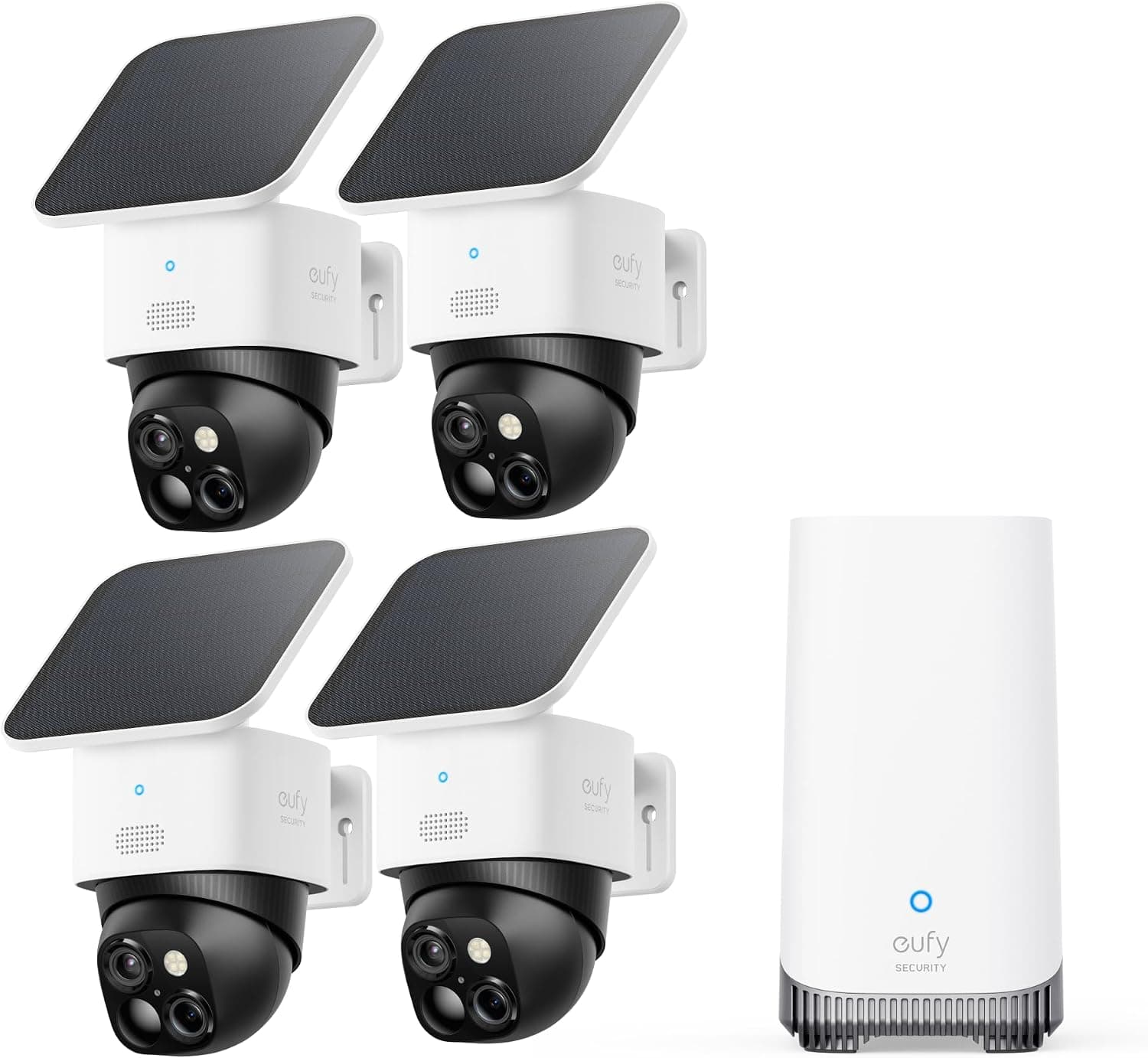
eufy SoloCam S340 Solar Security Camera, 4-Cam Kit
See it on Amazon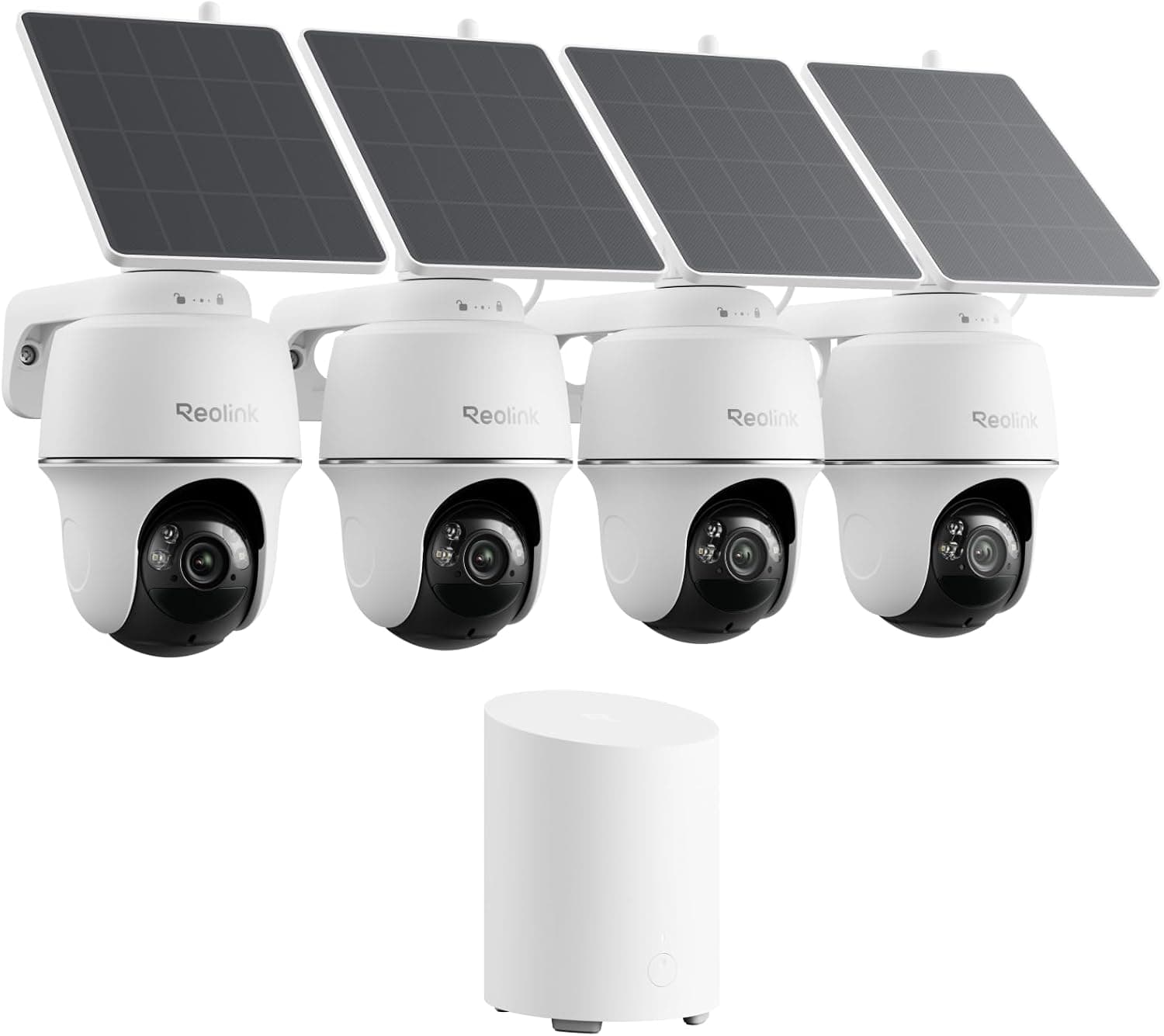
REOLINK 360° Solar Security Cameras, 4 Pack
See it on Amazon
Sponsored listings from Amazon’s Sponsored Products for Creators program, kept apart from our reviews and rankings. How we make money
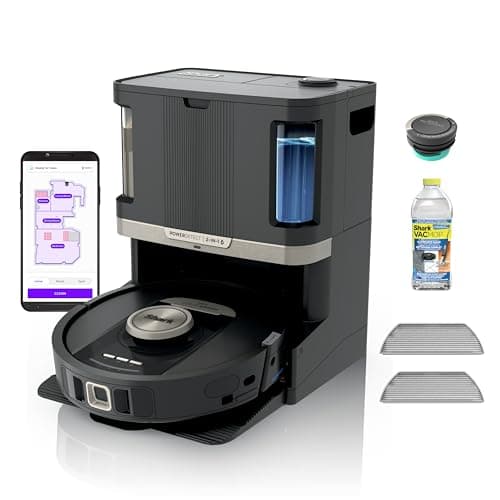
Best Sealed Base: Shark PowerDetect 2-in-1 NeverTouch Pro
Best Sealed Base — the strictest containment specShark PowerDetect 2-in-1 NeverTouch Pro
- The NeverTouch Pro base captures and traps 99.97% of pet allergens and dust, the most explicit sealed-disposal claim in this guide
- At $999.99 list it is the most expensive model here
(Current price, subject to change)
The Shark PowerDetect 2-in-1 NeverTouch Pro earns 8.8 on the weighted SHE Allergen Containment Score, a composite that marks it as the seal-integrity leader rather than the carpet leader. That 8.8 pairs a 9.2 seal-integrity sub-score with a 9.0 emptying-exposure sub-score, because the NeverTouch Pro base captures pet allergens behind a HEPA anti-allergen seal, the strictest containment criterion in this guide, while the bagless cycle skips any recurring bag cost compared to a sealed-bag dock. Its five PowerDetect technologies ramp suction on soiled lanes, which delivers a genuine re-clean of dander-heavy traffic zones versus a single light pass. On raw suction it sits below the Roomba's roughly 2x i-series figure, yet its sealed base still tops the containment ranking on disposal. For a household whose dander concentrates in entry-and-hallway lanes, that targeted re-cleaning is the practical advantage, since the base keeps the captured allergens sealed between empties.
In robot-vacuum roundups, TechRadar credits the PowerDetect line with genuinely sensing dirt and ramping power where it matters, and RTINGS highlights the HEPA anti-allergen sealing and consistent hard-floor pickup in lab-style testing. Its 8.0 carpet-deep-clean sub-score sits below the Dreame X50 Ultra, so a deep high-pile rug home would feel that gap.
What We Love
- The NeverTouch Pro base captures and traps 99.97% of pet allergens and dust, the most explicit sealed-disposal claim in this guide
- Five PowerDetect technologies ramp suction on heavy-soil zones, so dander-heavy traffic lanes get re-cleaned rather than a single pass
- The bagless 60-day base means no recurring bag cost, and the HEPA anti-allergen seal keeps fine dust locked in
- NeverStuck lifts the body over thresholds and the mop pad above carpet, so it covers mixed-floor homes without stranding mid-run
What Could Be Better
- At $999.99 list it is the most expensive model here
- Testers rate thick-carpet pet-hair pickup only adequate
- The self-clean wash-and-dry cycle runs louder than the Roomba base
The Verdict
If you've narrowed it to the strongest sealed-disposal number, the Shark PowerDetect 2-in-1 NeverTouch Pro lines up with what you actually need at $999.99 — the 8.8 reflects a base trapping 99.97% of allergens behind a HEPA anti-allergen seal with an Odor Neutralizer. You trade a little deep-carpet pickup versus the Dreame for containment-first design.
Check price for the Shark PowerDetect 2-in-1 NeverTouch Pro →
Best Deep-Carpet: Dreame X50 Ultra
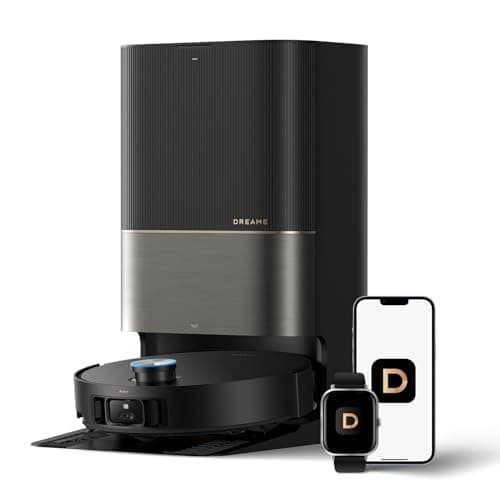
Best Deep-Carpet — flagship H13 filtration and suctionDreame X50 Ultra
- Medical-grade H13 HEPA captures 99.97% of particles down to 0.3 microns, the strict standard for trapping pollen and dust-mite waste
- At $849.99 it is flagship-priced, and the all-in-one dock has a large footprint
(Current price, subject to change)
The Dreame X50 Ultra earns 8.6 on the weighted SHE Allergen Containment Score, a composite whose normalized factors put it first on filtration and carpet yet behind on disposal. That 8.6 rests on a category-best 9.2 filtration-class sub-score alongside a 9.2 carpet-deep-clean sub-score, because the medical-grade H13 HEPA captures the finest pollen and dust-mite waste while the high-suction DuoBrush extracts embedded dander out of pile rather than skimming it. Independent reviewers measured near-perfect debris pickup, which yields demonstrably cleaner deep carpet than any other pick, the surfaces where dust mites actually live. Its raw suction comfortably clears the Roomba's roughly 2x i-series figure, which is why it leads on deep-pile extraction. It is a flagship buy rather than a runtime play, so where the Shark AI Ultra leans on its 120 mins of runtime, the Dreame leans on filtration and suction.
In robot-vacuum roundups, RTINGS documents top-tier debris pickup on both bare floors and carpet, singling out the detangling brush and high suction, while TechRadar calls the X50 Ultra a new favorite that delivers low-maintenance flagship performance. Its 8.0 emptying-exposure sub-score trails the sealed-bag iRobot Roomba Combo j9+, so the bin-open moment is comparatively less contained here.
What We Love
- Medical-grade H13 HEPA captures 99.97% of particles down to 0.3 microns, the strict standard for trapping pollen and dust-mite waste
- 20,000Pa suction with the one-piece DuoBrush earned near-perfect debris pickup, the deepest dander extraction of any pick here
- The DuoBrush tapers to channel long hair to one side, so pet fur and human hair do not wrap and choke the roller
- Retractable legs climb thresholds up to 2.36 inches, so it reaches the under-furniture dust traps allergy sufferers miss
What Could Be Better
- At $849.99 it is flagship-priced, and the all-in-one dock has a large footprint
- The deep feature set makes setup more involved than the plug-and-go Shark or Roomba
- The HEPA filter needs replacement about every six months
The Verdict
If you've shortlisted the deep-carpet home where dander hides in the pile, the Dreame X50 Ultra checks the boxes that matter for that setup at $849.99. The 8.6 reflects medical-grade H13 HEPA at 99.97% to 0.3 microns plus 20,000Pa suction — the deepest dander extraction here. You'll spend longer in the app at setup, but for maximum carpet extraction that's a fair cost.
Best Deep-Clean Value: eufy Robot Vacuum Omni E28
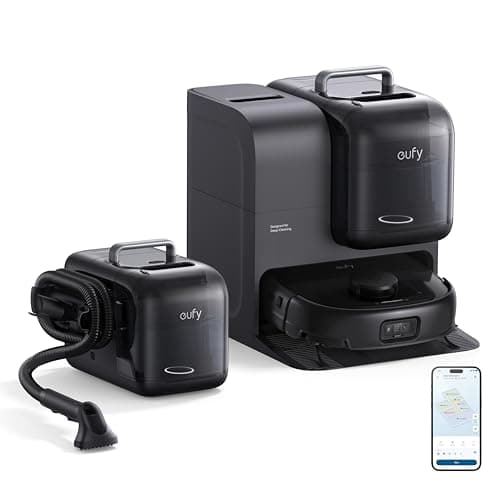
Best Deep-Clean Value — detachable cleaner for soft surfaceseufy Robot Vacuum Omni E28
- A five-layer filtration system with a HEPA layer and a magnet-sensed bin holds more debris between empties while sealing fine dust inside
- It is one of the louder picks on turbo
(Current price, subject to change)
The eufy Robot Vacuum Omni E28 earns 8.3 on the weighted SHE Allergen Containment Score, a composite whose normalized sub-scores reward its carpet pickup and exceptional soft-surface reach. That 8.3 pairs an 8.8 carpet-deep-clean sub-score with an 8.6 filtration-class sub-score, because the high-turbo suction removed roughly 85 percent of embedded sand in standardized testing while the five-layer filtration seals fine dust behind an oversized HEPA layer. Its detachable FlexiOne deep cleaner delivers measurably cleaner upholstery and stairs, the soft surfaces where dander settles well beyond a robot's normal floor path. Where the budget Shark AI Ultra (AV2501AE) leans on roughly 2 hours of runtime for coverage, the eufy leans on its handheld reach instead.
In robot-vacuum roundups, Vacuum Wars describes the Omni E28 as one of eufy's best for solid vacuuming, highlighting the larger HEPA filter and the detachable deep cleaner, while Tom's Guide frames it as a value flagship that doubles as a deep cleaner. Independent testing measured usable suction near 0.57 kPa, below the premium average, so the 20,000Pa headline is a peak lab number rather than sustained power, and its 8.0 seal-integrity sub-score trails the sealed-base Shark PowerDetect 2-in-1 NeverTouch Pro compared head-to-head.
What We Love
- A five-layer filtration system with a HEPA layer and a magnet-sensed bin holds more debris between empties while sealing fine dust inside
- 20,000Pa turbo suction removed about 85% of embedded sand from mid-pile carpet in standardized testing
- The integrated FlexiOne portable deep cleaner pulls out to spot-treat upholstery, stairs, and pet beds where dander collects
- DuoSpiral zero-tangle brushes keep long hair off the roller, and the station self-empties, self-washes, and hot-air-dries
What Could Be Better
- It is one of the louder picks on turbo
- Usable suction measured near 0.57 kPa, below the premium average — the 20,000Pa headline is a peak lab figure, not sustained power
- The deep-clean wet-vac module can leak, and mopping lags the Dreame system
The Verdict
If you're the pet owner whose dander hides in upholstery and stair carpet, the eufy Robot Vacuum Omni E28 is a sensible pick for that setup at $1,399.99. The 8.3 reflects five-layer HEPA filtration plus a detachable FlexiOne deep cleaner for the soft surfaces a robot can't reach. You'd put up with turbo noise, but for whole-home soft-surface dander, you'll be well-served here.
Best Budget: Shark AI Ultra (AV2501AE)
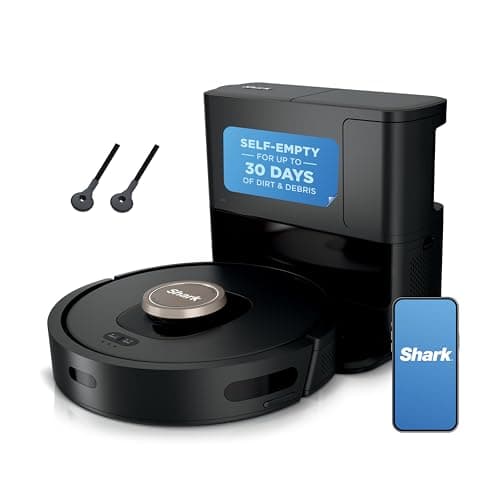
Best Budget — true-HEPA disposal at the lowest priceShark AI Ultra (AV2501AE)
- The XL HEPA self-empty base captures and traps 99.97% of dust and allergens down to 0.3 microns, true-HEPA disposal at the lowest price here
- Thick-carpet pet-hair pickup is the weakest deep-carpet result here
(Current price, subject to change)
The Shark AI Ultra (AV2501AE) earns 8.0 on the weighted SHE Allergen Containment Score, a composite held up by its filtration class yet held down by comparatively limited carpet performance. That 8.0 pairs a 9.0 filtration-class sub-score with a 7.6 emptying-exposure sub-score, because the XL HEPA self-empty base traps fine dust and allergens while the bagless bin still requires a careful hand-empty, unlike the fully sealed AllergenLock bag compared to the Roomba. Positioned at the lowest entry price and rated for up to 120 mins of continuous runtime, it delivers true-HEPA containment that enables uninterrupted whole-home cleaning on roughly a third of the flagship spend. That 2 hours of coverage is its real value lever, letting one charge finish a larger floor plan.
In robot-vacuum roundups, RTINGS credits the AI Ultra base with locking allergens inside the dust bin while flagging that deep-carpet pet-hair pickup lags the strongest competing models, and PCMag positions it as a strong value recommendation for allergy homes on a constrained budget. Its 6.6 carpet-deep-clean sub-score is the weakest here, well below the Dreame X50 Ultra, so thick-carpet homes will feel that particular limit.
What We Love
- The XL HEPA self-empty base captures and traps 99.97% of dust and allergens down to 0.3 microns, true-HEPA disposal at the lowest price here
- Its bagless 60-day base means no recurring bag cost, a meaningful saving over the AllergenLock-bag Roomba
- Matrix Clean navigation moves in an overlapping grid so high-traffic dander zones get a double pass
- Up to 120 minutes of runtime covers a whole home on one charge, so larger floor plans finish without a mid-job recharge
What Could Be Better
- Thick-carpet pet-hair pickup is the weakest deep-carpet result here
- It vacuums only, with no mopping
- The bagless bin needs a careful empty to preserve the sealed benefit
The Verdict
If you want true-HEPA containment without the flagship price, the Shark AI Ultra (AV2501AE) lines up with what you actually need at $289.99. The 8.0 reflects an XL HEPA base trapping 99.97% of dust to 0.3 microns plus 120 mins of runtime and no recurring bag cost. You give up deep-carpet power and mopping, but for budget allergy disposal, no need to overthink it.
How We Score: SHE Allergen Containment Score
SHE Allergen Containment Score
Score Formula
Filtration_Class * 0.30 + Seal_Integrity * 0.25 + Emptying_Exposure * 0.20 + Carpet_Deep_Clean * 0.15 + Maintenance_Reliability * 0.10Score Factors
- Filtration Class (30%)The whole point of an allergy vacuum is the filter rating, so this factor carries the top coefficient. The weighted, normalized sub-score reflects whether the machine uses a true or H13 HEPA element rated to capture 99.97% of 0.3-micron particles — pollen, dust-mite waste, dander — versus a vaguely labeled 'high-efficiency' filter that lets fine allergens through. A medical-grade H13 element scores in a higher tier than an unrated filter.
- Seal Integrity (25%)A HEPA filter only helps if all airflow passes through it, so this factor normalizes gasketed joints, exhaust-port sealing, and tight chassis seams that keep allergens from leaking around the filter. RTINGS has measured roughly 30% of fine particles bypassing the exhaust on some 'HEPA' robots, so a unit with a documented anti-allergen seal scores above one with an unsealed exhaust. The coefficient reflects that an unsealed path defeats even the best element.
- Emptying Exposure (20%)The single biggest allergen burst is when you dump the bin, so this composite weights whether the dock seals debris into a closed AllergenLock-style bag (lowest exposure) or empties into a bagless bin you eventually open by hand, and how many weeks pass between contact. A sealed-bag dock you touch every 60 days scores above a bagless bin that needs a careful manual empty.
- Carpet Deep-Clean (15%)Dander and mite waste live deep in carpet pile, not on the surface, so suction strength and brush design determine whether the robot extracts embedded allergens or just skims the top. The sub-score is normalized from embedded-debris pickup in standardized tests, with a 20,000Pa flagship scoring above a budget unit that pushes hair into the pile. The coefficient sits below containment because surface skimming leaves the worst allergens behind.
- Maintenance Reliability (10%)HEPA filters lose up to 40% efficiency when neglected, so this factor weights filter-replacement intervals, self-cleaning brush and dock behavior, and odor control that keeps the sealed system from becoming a mold reservoir. A dock with an Odor Neutralizer and a long replacement interval scores in a higher tier. The coefficient closes the formula because a neglected filter quietly drops the whole system below spec over time.
SHE Allergen Containment Score — Ranked
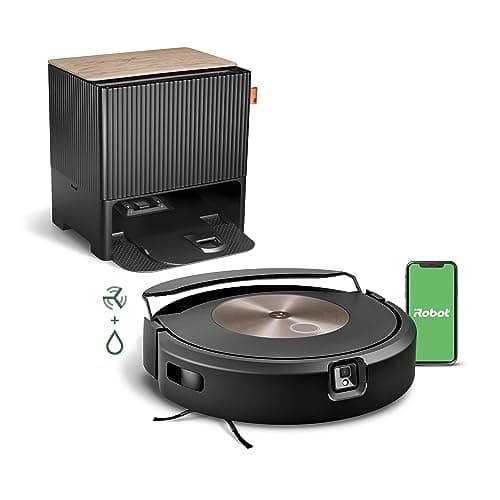
iRobot Roomba Combo j9+
SHE Allergen Containment Score9.1/10AllergenLock sealed bag, HEPA bin, 2x i-series suction; lowest disposal exposure here. Discontinued — no new-condition Amazon offer as of 2026-08-28
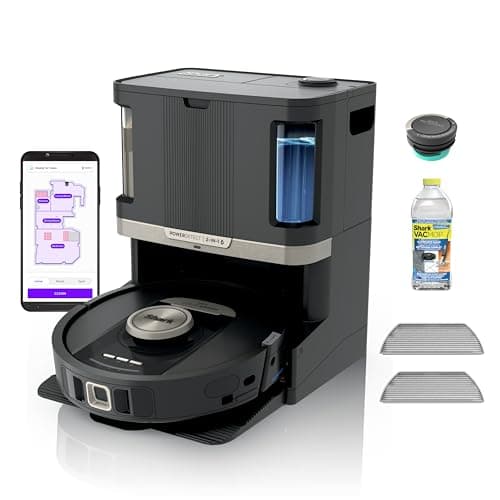
Shark PowerDetect 2-in-1 NeverTouch Pro
SHE Allergen Containment Score8.8/10$999.99 — 99.97% sealed NeverTouch base, HEPA anti-allergen seal; strictest containment spec
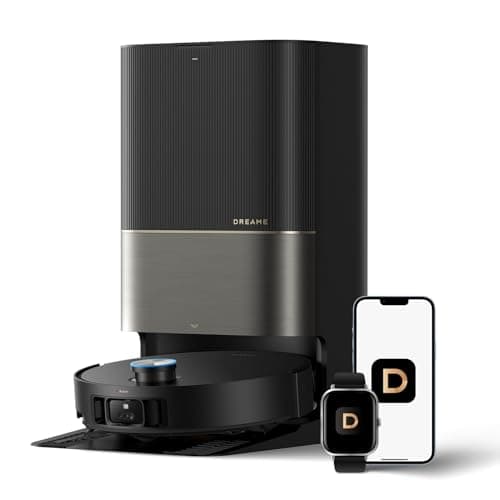
Dreame X50 Ultra
SHE Allergen Containment Score8.6/10$849.99 — H13 HEPA at 99.97%, 20,000Pa suction; deepest carpet dander extraction
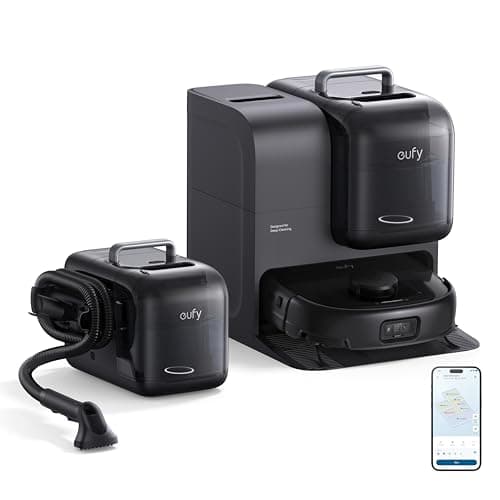
eufy Robot Vacuum Omni E28
SHE Allergen Containment Score8.3/10$1,399.99 — five-layer HEPA, detachable FlexiOne deep cleaner; best soft-surface value
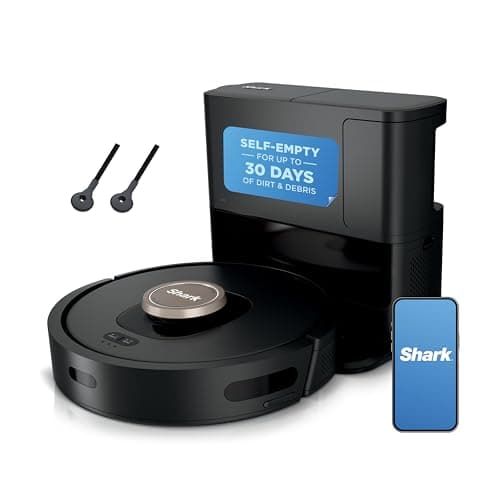
Shark AI Ultra (AV2501AE)
SHE Allergen Containment Score8.0/10$289.99 — XL HEPA base at 99.97%, 120-min runtime; true-HEPA disposal on a budget
App Scheduling, Voice Control, and Air-Purifier Pairing
The allergy value here lives in the sealed filtration path and the dock rather than the smart-home layer, yet every pick connects to Wi-Fi with app scheduling, which enables a containment-grade clean before guests arrive. The iRobot Roomba Combo j9+, the Shark PowerDetect 2-in-1 NeverTouch Pro, and the eufy Robot Vacuum Omni E28 all work with Alexa and Google Assistant, so a spoken command triggers a clean without opening an app. Even the suction-led picks earn their place on containment versus raw power, which is why the Roomba's roughly 2x i-series gain matters less than its sealed bag. None require a Matter hub, so the ecosystem story is app-and-voice scheduling rather than a hub-based automation graph.
The pairing that genuinely matters to an allergy household is robot-plus-purifier, because a sealed HEPA vacuum captures floor-bound dust while a HEPA air purifier handles the airborne pollen a vacuum stirs up mid-run. The Dreame X50 Ultra schedules through its own app, and the budget Shark AI Ultra (AV2501AE) covers a whole home across roughly 2 hours, or 120 mins, of runtime on one charge. RTINGS documents the Dreame's top-tier carpet pickup and Vacuum Wars singles out the eufy's larger HEPA filter on the floor side, but pairing that floor cleaning with a dedicated air purifier is what delivers whole-room allergen control, so our Best Smart Air Purifiers for Allergies and Pets 2026 roundup and Best Indoor Air Quality Monitors 2026 guide cover the air side, and owners on r/robotvacuums consistently report that the sealed-bag docks finally end the empty-the-bin sneeze.
| Product | Wi-Fi App Scheduling | Alexa / Google Assistant | Sealed-Bag Disposal | Self-Empty Dock | Vacuum + Mop |
|---|---|---|---|---|---|
| iRobot Roomba Combo j9+ | ✓ | ✓ | ✓ | ✓ | ✓ |
| Shark PowerDetect 2-in-1 NeverTouch Pro | ✓ | ✓ | ✕ | ✓ | ✓ |
| Dreame X50 Ultra | ✓ | ✓ | ✕ | ✓ | ✓ |
| eufy Robot Vacuum Omni E28 | ✓ | ✓ | ✕ | ✓ | ✓ |
| Shark AI Ultra (AV2501AE) | ✓ | ✓ | ✕ | ✓ | ✕ |
When NOT to Buy
A robot vacuum suits a household whose triggers are floor dust and pet dander, where daily sealed-HEPA cleaning genuinely reduces settled allergens. Deep high-pile carpet is the one floor type where even a 20,000-class robot mostly skims the surface, so a periodic upright pass remains the better tool there. When the dominant triggers are airborne, such as wildfire smoke or window-borne pollen, a HEPA air purifier delivers more relief, with a robot as a floor-level supplement that runs roughly 2 hours per charge on the budget pick.
Who Should Buy What
Who Should Buy What
| If you are… | Recommended pick |
|---|---|
Allergy sufferers who dread emptying the bin You want the lowest direct-contact exposure and can accept that this pick is discontinued — a sealed AllergenLock bag and HEPA-filtered bin in a vacuum-and-mop combo | iRobot Roomba Combo j9+ |
Buyers who want the strictest sealed spec You want the strongest containment number — a 99.97%-trapping NeverTouch Pro base behind a HEPA anti-allergen seal | Shark PowerDetect 2-in-1 NeverTouch Pro |
Deep-carpet and dust-mite homes You want the strictest filtration class and the deepest carpet extraction — H13 HEPA at 99.97% plus 20,000Pa suction | Dreame X50 Ultra |
Pet households with soft-surface dander You want robot-plus-handheld coverage with a detachable FlexiOne cleaner for upholstery, stairs, and pet beds | eufy Robot Vacuum Omni E28 |
Budget allergy buyers You want true-HEPA disposal at the lowest entry price with long whole-home runtime and no recurring bag cost | Shark AI Ultra (AV2501AE) |
Larger floor plans on one charge You need long single-charge runtime to finish a whole home without a mid-job recharge gap | Shark AI Ultra (AV2501AE) |
Frequently Asked Questions
Do robot vacuums actually help with allergies, or do they just move dust around?
A genuinely HEPA-sealed robot vacuum helps, because the filter traps fine particles instead of recirculating them, and daily cleaning removes settled floor dust before it becomes airborne. The catch is that a cheap robot labeled 'HEPA' can blow roughly 30% of fine particles back out an unsealed exhaust, which makes the air feel worse. The Roomba Combo j9+ and Shark PowerDetect seal that path, so the floor cleaning does not re-pollute the room.
What is the difference between a 'HEPA filter' and a fully sealed HEPA system in a robot vacuum?
A HEPA filter is just the element rated to capture 99.97% of 0.3-micron particles, while a sealed HEPA system forces every bit of airflow through that element with gasketed joints and a sealed exhaust port. Without the seal, fine dust escapes around the filter rather than through it. That is why our SHE Allergen Containment Score weights seal integrity at 25%, nearly as heavily as the filtration class itself.
Why does emptying my robot vacuum's bin make me sneeze, and which models stop that?
Opening a bagless bin releases a concentrated puff of trapped pollen, dander, and dust-mite waste directly into your breathing zone, which is the single biggest allergen burst of the week. The iRobot Roomba Combo j9+ stopped that by sealing debris into a closed AllergenLock bag that traps 99% of pollen and mold; you swap a sealed bag every 60 days rather than dumping an open bin daily. That sealed-bag disposal is why it tops the containment ranking — though as of 2026-08-28 it is no longer sold new on Amazon, which makes the Shark PowerDetect the sealed-disposal pick you can actually buy.
Do robot vacuum HEPA filters really capture 99.97 percent of particles down to 0.3 microns?
A true or medical-grade H13 HEPA element does capture 99.97% of 0.3-micron particles, which is the standard for trapping pollen and dust-mite waste rather than just large fluff. The Dreame X50 Ultra uses H13 HEPA, and the Shark AI Ultra and PowerDetect bases cite 99.97% capture as well. The figure only holds if the airflow is sealed and the filter is replaced on schedule, because a neglected element loses up to 40% of its efficiency.
Are self-emptying docks with sealed bags worth it for allergy sufferers?
For allergy sufferers a sealed-bag dock is the most valuable single feature, because it removes the worst-exposure moment of the whole cleaning cycle. Instead of dumping an open bin daily, you handle a closed AllergenLock bag every 60 days, as on the now-discontinued Roomba Combo j9+. The trade-off is a recurring bag cost of roughly $40 to $60 a year, which is the price of keeping the disposal nearly dust-free.
Bagged vs bagless self-empty base: which is better for dust and dander containment?
A bagged base like the Roomba's AllergenLock is better for containment, because the debris stays sealed inside a closed bag you never open, trapping 99% of pollen and mold at disposal. A bagless base like the Shark PowerDetect or AI Ultra skips the recurring bag cost but eventually needs a careful manual empty, which reintroduces some exposure. If you are highly sensitive, choose bagged; if cost matters more and you can empty carefully, bagless saves $80 to $120 over two years.
How often do I need to replace the HEPA filter and dust bags to keep filtration at spec?
Plan to replace a robot HEPA filter every two to six months depending on the model; the Dreame X50 Ultra rates its H13 filter for about a six-month interval. Sealed AllergenLock bags on the Roomba fill roughly every 60 days under daily use. Skipping replacements matters, because a clogged or neglected HEPA element loses up to 40% of its efficiency, quietly dropping the whole sealed system below its rated spec.
Can a robot vacuum deep-clean carpet enough to remove embedded dust mites and dander?
A high-suction robot can extract a meaningful share of embedded allergens, but results depend on suction and brush design. The Dreame X50 Ultra at 20,000Pa earned near-perfect debris pickup and the eufy Omni E28 removed about 85% of embedded sand from mid-pile carpet in testing. Budget units fall short — the Shark AI Ultra rated only about 5 out of 10 on thick-carpet pet hair. Deep high-pile carpet still benefits from an occasional pass with a full-size upright.
Which is better for pet dander and allergies: the Roomba Combo j9+ or the Shark PowerDetect?
Both are strong, but they win on different axes. The Roomba Combo j9+ leads on the score itself at 9.1, because its sealed AllergenLock bag gives the lowest disposal exposure here. The Shark PowerDetect scores 8.8 with the strictest sealed-base spec at 99.97% trapped, and it is bagless, pricier at $999.99 — and buyable, which the Roomba no longer is: it has had no new-condition Amazon offer since 2026-08-28. On the numbers, the Roomba; on what you can order today, the Shark.
Do I still need an air purifier if I have a HEPA robot vacuum?
Yes, because the two clean different things: a HEPA robot vacuum captures floor-bound dust and dander, while a HEPA air purifier handles the airborne pollen and particles a vacuum stirs up mid-run or that drift in from outside. For an allergy household the strongest setup pairs both, letting the vacuum handle the floor and the purifier handle the air. Our smart air purifiers for allergies guide covers the air side of the same problem.
Are robot vacuums safe and effective for asthma sufferers specifically?
A sealed HEPA robot vacuum is well suited to asthma sufferers, because daily automated cleaning removes floor triggers without the person having to vacuum and inhale stirred-up dust themselves. The sealed exhaust and sealed-bag disposal on the Roomba Combo j9+ keep the cleaning cycle from releasing particles back into the room. Asthma sufferers should still pair it with a HEPA air purifier and replace filters on schedule to keep the sealed system at its rated efficiency.
How much should I expect to spend on a genuinely HEPA-sealed robot vacuum in 2026?
Genuinely HEPA-sealed robot vacuums in 2026 run from about $289.99 for the Shark AI Ultra at the budget end up to $1,399.99 for the eufy Omni E28 with its detachable deep cleaner. The sweet spot for sealed-disposal allergy performance sits around $849.99 to $999.99, where the Dreame X50 Ultra and Shark PowerDetect deliver true or H13 HEPA with self-emptying docks; the Roomba Combo j9+ sat there too until it stopped being sold new. Budget for filter and bag replacements on top of the sticker price.
Bottom Line
Get the iRobot Roomba Combo j9+ if you can still find one — it posted the lowest direct-contact allergen exposure here, but is no longer sold new on Amazon.
Get the Shark PowerDetect 2-in-1 NeverTouch Pro if you want the strictest sealed-base spec — a 99.97%-trapping NeverTouch Pro base with no recurring bag cost.
Get the Dreame X50 Ultra if you want the strictest filtration class and the deepest carpet extraction — H13 HEPA at 99.97% plus 20,000Pa suction.
Get the eufy Robot Vacuum Omni E28 if you want robot-plus-handheld coverage with a detachable FlexiOne cleaner for upholstery, stairs, and pet beds.
Get the Shark AI Ultra (AV2501AE) if you want true-HEPA disposal at the lowest entry price with long whole-home runtime and no recurring bag cost.
The right call for most allergy households is now the Shark PowerDetect 2-in-1 NeverTouch Pro at $999.99 — 8.8 on the containment score with the strictest sealed-base spec here at 99.97% trapped. The iRobot Roomba Combo j9+ scored higher at 9.1, but has no new-condition Amazon offer as of 2026-08-28. If budget comes first, the Shark AI Ultra (AV2501AE) brings true-HEPA disposal for $289.99. Skip a robot vacuum as your primary fix if your home is mostly deep high-pile carpet or your triggers are airborne — a HEPA air purifier should come first there.
Sources & Methodology
Methodology: SHE Allergen Containment Score — Formula: Filtration_Class * 0.30 + Seal_Integrity * 0.25 + Emptying_Exposure * 0.20 + Carpet_Deep_Clean * 0.15 + Maintenance_Reliability * 0.10. Factors: Filtration Class (30%): The whole point of an allergy vacuum is the filter rating, so this factor carries the top coefficient. The weighted, normalized sub-score reflects whether the machine uses a true or H13 HEPA element rated to capture 99.97% of 0.3-micron particles — pollen, dust-mite waste, dander — versus a vaguely labeled 'high-efficiency' filter that lets fine allergens through. A medical-grade H13 element scores in a higher tier than an unrated filter. | Seal Integrity (25%): A HEPA filter only helps if all airflow passes through it, so this factor normalizes gasketed joints, exhaust-port sealing, and tight chassis seams that keep allergens from leaking around the filter. RTINGS has measured roughly 30% of fine particles bypassing the exhaust on some 'HEPA' robots, so a unit with a documented anti-allergen seal scores above one with an unsealed exhaust. The coefficient reflects that an unsealed path defeats even the best element. | Emptying Exposure (20%): The single biggest allergen burst is when you dump the bin, so this composite weights whether the dock seals debris into a closed AllergenLock-style bag (lowest exposure) or empties into a bagless bin you eventually open by hand, and how many weeks pass between contact. A sealed-bag dock you touch every 60 days scores above a bagless bin that needs a careful manual empty. | Carpet Deep-Clean (15%): Dander and mite waste live deep in carpet pile, not on the surface, so suction strength and brush design determine whether the robot extracts embedded allergens or just skims the top. The sub-score is normalized from embedded-debris pickup in standardized tests, with a 20,000Pa flagship scoring above a budget unit that pushes hair into the pile. The coefficient sits below containment because surface skimming leaves the worst allergens behind. | Maintenance Reliability (10%): HEPA filters lose up to 40% efficiency when neglected, so this factor weights filter-replacement intervals, self-cleaning brush and dock behavior, and odor control that keeps the sealed system from becoming a mold reservoir. A dock with an Odor Neutralizer and a long replacement interval scores in a higher tier. The coefficient closes the formula because a neglected filter quietly drops the whole system below spec over time.
Expert review sources used in this analysis:
- SmartHomeExplorer aggregates expert review data and community sentiment to produce consensus-based buying guidance
- We do not perform first-party product testing
- Expert ratings draw on robot-vacuum buyer's guides and category roundups from TechRadar, PCMag, RTINGS, Vacuum Wars, and Tom's Guide rather than first-party tests of each individual unit
- TechRadar and PCMag both frame the Roomba Combo j9+ as a top allergy pick
- Both credit its sealed AllergenLock dock and the HEPA bin that runs roughly 2x the older i-series suction
- RTINGS documents the Dreame X50 Ultra's top-tier carpet pickup and the Shark AI Ultra's roughly 2 hours of whole-home runtime, while flagging the AI Ultra's weaker deep-carpet result
- Vacuum Wars and Tom's Guide cover the eufy Omni E28's larger HEPA filter and detachable deep cleaner
- Independent debris-pickup, embedded-sand, and seal-bypass context draws on published lab-style robot-vacuum data and owner reports from r/robotvacuums and r/Allergies
- There the recurring praise is sealed-bag disposal, and the recurring complaint is deep high-pile carpet pickup
- Amazon prices and availability were verified via the Amazon Creators API on June 6, 2026
- Those reads: iRobot Roomba Combo j9+ $899.00, Shark PowerDetect 2-in-1 NeverTouch Pro $999.99, Dreame X50 Ultra $849.99, eufy Omni E28 $1,399.99, Shark AI Ultra (AV2501AE) $289.99
- Availability was re-checked on 2026-08-28
- The Roomba Combo j9+ no longer has a new-condition offer
- Its buy link is withdrawn, and its 9.1 stands as a historical measurement rather than a recommendation
- iRobot's replacement, the Roomba Plus 505 Combo, is not ranked here
- A live page read on 2026-09-07 found its Amazon listing new and in stock
- The seller on that listing is the marketplace reseller Flashing Deals, not Amazon or iRobot
- iRobot's own product page publishes no list price, so no maker figure is quoted
- iRobot makes no HEPA, seal-rating or bag-filtration claim for it, and those are three of the five inputs to this score
- Leaving it unranked is deliberate
- The SHE Allergen Containment Score weights filtration class (30%), seal integrity (25%), emptying exposure (20%), carpet deep-clean (15%), and maintenance reliability (10%)
- Factor sub-scores derive from manufacturer specifications and aggregated reviewer assessments
- No first-party measurements were conducted.
Nicholas Miles is the founder of SmartHomeExplorer and a longtime smart home enthusiast focused on helping everyday homeowners make better technology decisions. He researches, compares, and writes about products across security, climate, lighting, leak prevention, sensors, home energy, and automation, with an emphasis on real-world usefulness, ecosystem compatibility, reliability, privacy, and long-term value.
Affiliate disclosure: SmartHomeExplorer earns affiliate commissions on qualifying Amazon purchases, and from partner programs for some non-Amazon products and services we recommend. Our scoring methodology is independent of affiliate relationships.