
Best Premium Flagship OLED TVs (2026)
You're spending anywhere from roughly $1,000 to $3,500 on the TV that anchors your living room. The LG G5 is the brightest WOLED you can buy; the Samsung S95F wins any room with a window.
This article contains affiliate links. We may earn a commission at no extra cost to you. Prices change frequently — check the current price on Amazon before buying. Learn more
The Short Answer
The LG G5 suits most premium buyers because its RGB Tandem panel reaches approximately 2,400 nits, the brightest WOLED RTINGS has measured. Its principal constraint remains reflected glare; consequently, buyers positioning a television beneath a window should instead choose the matte Samsung S95F.
Featured in this Guide
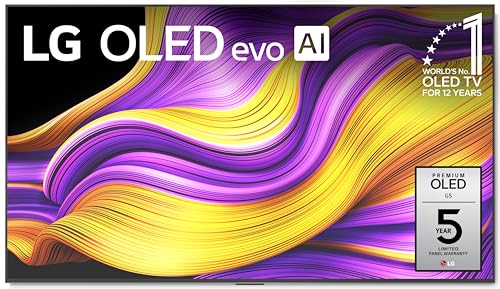
LG
OLED evo G5 (OLED65G5WUA, 65-inch)
- •Brightest WOLED measured, four 165Hz HDMI 2.1 ports, and a near-flush wall mount included
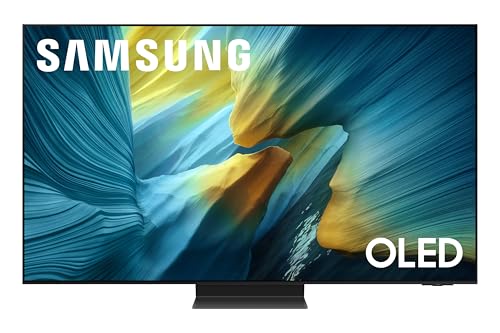
Samsung
S95F OLED (QN65S95FAFXZA, 65-inch)
- •Matte glare-free QD-OLED holds contrast under a window where glossy panels reflect and wash out
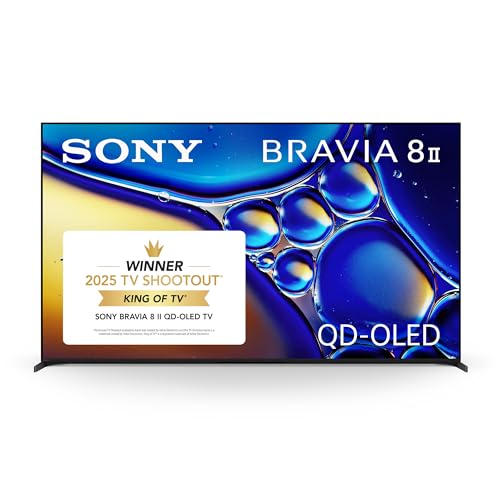
Sony
BRAVIA 8 II QD-OLED (K-65XR80M2, 65-inch)
- •Reference-grade color from XR Triluminos Max and Acoustic Surface Audio+, the best TV sound here
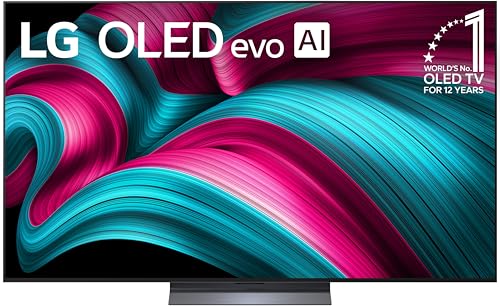
LG
OLED evo C5 (OLED65C5PUA, 65-inch)
- •Near-G5 picture and a full four-port HDMI 2.1 gaming spec, routinely near $1,299 at 65 inches
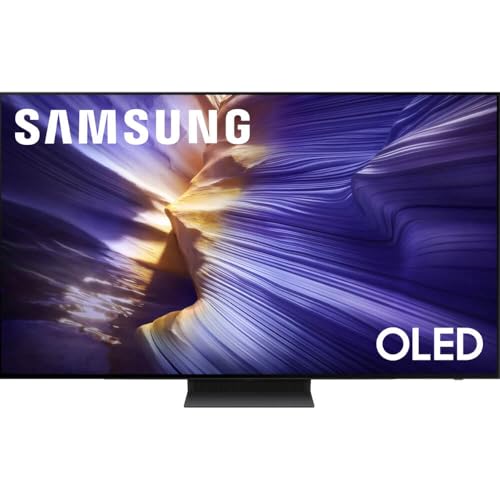
Samsung
S90F OLED (QN65S90FAFXZA, 65-inch)
- •Most of the S95F's QD-OLED color at often half the price, with four HDMI 2.1 ports intact
Head-to-Head: Brightness, Gaming, Glare, and Value
Smart Tvs
Chart
 Smarthomeexplorer.com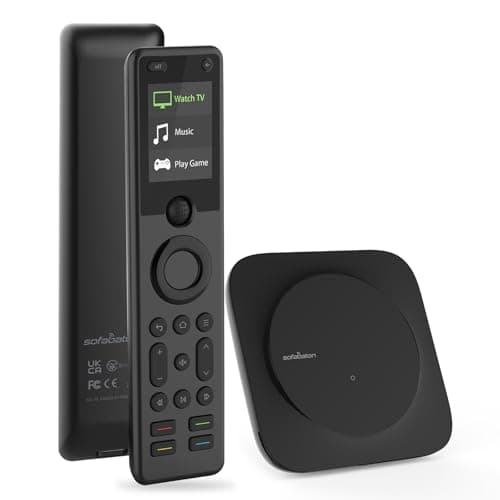
SofaBaton X1S Universal Remote (with Hub)
Check price
VTOMAN X7 4250A Jump Starter with 160PSI Air Compressor
Check price
What Separates a Flagship OLED
Because every set here is an OLED, every set already produces a perfect black, which precisely explains why manufacturers' inflated brightness figures become essentially meaningless when a discerning buyer evaluates a value panel against one approaching triple the investment. The differences justifying that considerable expenditure reduce to three measurable characteristics RTINGS and TechRadar quantify under controlled laboratory conditions: genuine HDR brightness on a 10% window, how aggressively the screen finish counteracts reflected glare, and whether the complete gaming specification appears consistently across 4x HDMI inputs.
Two different panel technologies divide this slate, and that distinction dictates which model suits a given room. WOLED, in the LG OLED evo G5 (OLED65G5WUA, 65-inch) and LG OLED evo C5 (OLED65C5PUA, 65-inch), stacks additional emissive layers to push luminance, making the G5's RGB Tandem panel the brightest OLED measured. QD-OLED, in the Samsung S95F OLED (QN65S95FAFXZA, 65-inch), Sony BRAVIA 8 II QD-OLED (K-65XR80M2, 65-inch), and Samsung S90F OLED (QN65S90FAFXZA, 65-inch), introduces a quantum-dot layer for substantially greater color volume that Samsung compounds with a glare-resistant matte coating.
Best for most premium buyers: LG OLED evo G5 (OLED65G5WUA, 65-inch)
LG OLED evo G5 (OLED65G5WUA, 65-inch)
- Four-stack RGB Tandem panel hits roughly 2,400 nits on a 10% window — the brightest WOLED measured
- Built-in 2.2-channel audio still needs a soundbar for a real home-theater room
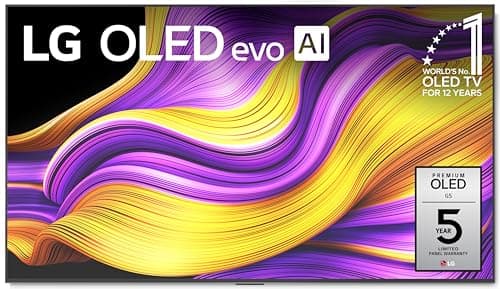
RTINGS calls the LG OLED evo G5 (OLED65G5WUA, 65-inch) the brightest OLED it has ever tested, and TechRadar praised the most complete gaming feature set of any premium television, which together explain why it earns a composite 9.2 on our weighted SHE Flagship OLED Value Score — near the top, kept off the peak only by a $3,399 launch price. Three measured facts anchor that placement: a four-stack RGB Tandem panel reaching roughly 2,400 nits on a 10% window, 4x HDMI 2.1 inputs running 165Hz with VRR on every port, and a 5-year panel warranty that is the longest in this group.
Practically, that 9.2 translates into HDR highlights that genuinely punch precisely where comparatively dimmer panels visibly flatten the identical sequence. Compared to the Samsung S95F OLED (QN65S95FAFXZA, 65-inch), you trade Samsung's matte glare control for higher peak luminance and that 5-year warranty against Samsung's 1-year coverage. Versus the LG OLED evo C5 (OLED65C5PUA, 65-inch), the roughly $1,000 premium buys the Brightness Booster panel and the flush wall mount that the cheaper C5 omits entirely. The honest constraints remain genuine, because the glossy screen reflects aggressively under a window and the thin 2.2-channel speakers still require a soundbar. For a controlled-light media room, those are precisely the right tradeoffs to accept.
What We Love
- Four-stack RGB Tandem panel hits roughly 2,400 nits on a 10% window — the brightest WOLED measured
- Four HDMI 2.1 ports at 165Hz with VRR and ALLM, the full gaming spec on every input
- Alpha 11 AI Gen2 processor is near-reference accurate in Filmmaker Mode with no calibration
- Flush wall mount in the box sits the panel nearly flat to the wall
What Could Be Better
- Built-in 2.2-channel audio still needs a soundbar for a real home-theater room
- Glossy screen shows more glare in a bright room than Samsung's matte QD-OLED
- At its $3,399 launch price it is the priciest non-Sony pick before discounts
- No ATSC 3.0 tuner, a step back from the previous generation
The Verdict
If you want the most capable flagship and your room isn't flooded with daylight, the LG OLED evo G5 (OLED65G5WUA, 65-inch) fits the brief without compromise. RTINGS measured it as the brightest WOLED to date, and four 165Hz HDMI 2.1 ports cover any console or PC. This checks the boxes that matter for a premium living-room build. The honest cost is glare in a sun-lit room and a soundbar you'll still want.
Best for bright rooms: Samsung S95F OLED (QN65S95FAFXZA, 65-inch)
Samsung S95F OLED (QN65S95FAFXZA, 65-inch)
- Matte glare-free QD-OLED beats every glossy rival in a bright, window-lit room
- The matte coating slightly softens black depth in a fully dark room versus glossy WOLED
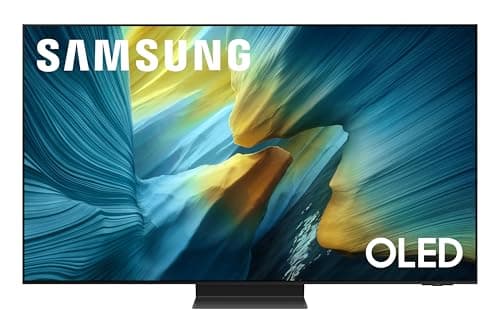
RTINGS rates the Samsung S95F OLED (QN65S95FAFXZA, 65-inch) the best OLED for a bright room by a wide margin, and Tom's Guide calls its anti-glare screen a genuine breakthrough for daytime viewing, which is why it lands a composite 8.9 on our weighted SHE Flagship OLED Value Score — just behind the G5. Three measured facts define it: a QD-OLED panel whose matte finish holds contrast under a window, roughly 2,100 to 2,300 nits on a 10% window that is the highest of any QD-OLED measured, and 4x HDMI 2.1 ports running 165Hz alongside a One Connect box that routes every cable off the panel.
Practically, that 8.9 means the picture remains entirely watchable at noon, because the matte coating constitutes the entire argument here. Where the LG OLED evo G5 (OLED65G5WUA, 65-inch) mirrors a window straight back at the viewer, the S95F instead diffuses that reflection across the panel. Compared to the cheaper Samsung S90F OLED (QN65S90FAFXZA, 65-inch), the premium buys the brighter flagship panel, the matte coating, and the cable-routing One Connect box. The honest costs are the absence of Dolby Vision, a Tizen interface heavier on advertising than LG's webOS, and a one-year panel warranty against LG's five-year coverage. For any room with genuine daylight, those are the right tradeoffs.
What We Love
- Matte glare-free QD-OLED beats every glossy rival in a bright, window-lit room
- Roughly 2,100 to 2,300 nits on a 10% window, the brightest QD-OLED measured
- 165Hz across all four HDMI 2.1 ports for high-frame-rate PC and console play
- One Connect box routes every cable away from the panel for a clean wall mount
What Could Be Better
- The matte coating slightly softens black depth in a fully dark room versus glossy WOLED
- No Dolby Vision, only HDR10+, which limits some streaming HDR titles
- Tizen pushes more ads and store tiles than LG's webOS
- One-year panel warranty against LG's five years
The Verdict
If your TV lives under a window or facing a lamp, the Samsung S95F OLED (QN65S95FAFXZA, 65-inch) lines up with what you actually need. RTINGS calls its matte QD-OLED the best OLED for a bright room by a wide margin, and it's still the brightest QD-OLED measured. For a sun-lit living room this is a sensible pick. The tradeoff is no Dolby Vision and slightly softer blacks in a fully dark theater.
Check price for the Samsung S95F OLED (QN65S95FAFXZA, 65-inch) →
Best picture and built-in sound: Sony BRAVIA 8 II QD-OLED (K-65XR80M2, 65-inch)
Sony BRAVIA 8 II QD-OLED (K-65XR80M2, 65-inch)
- Acoustic Surface Audio+ vibrates the screen as the speaker — the best built-in TV sound here, no soundbar needed
- Only two of four HDMI ports are 2.1, so a console plus a PC fills the high-bandwidth inputs
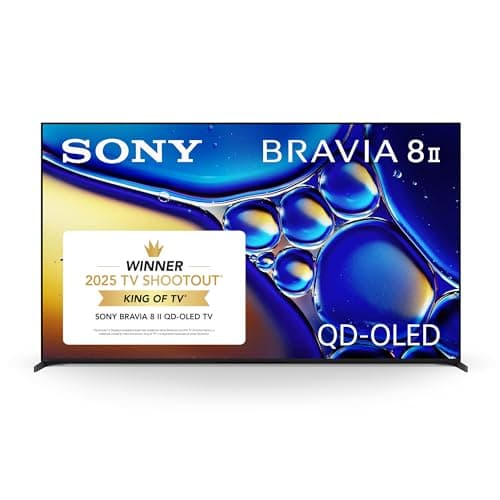
TechRadar's 4.5-star review finds the Sony BRAVIA 8 II QD-OLED (K-65XR80M2, 65-inch)'s impressive brightness, color and contrast plus a detailed, accurate picture make it especially easy on the eyes, and the five-star What Hi-Fi review calls it one of the best-sounding TVs tested, earning a composite 7.8 on our weighted SHE Flagship OLED Value Score. Three facts anchor that placement: Acoustic Surface Audio+ vibrating the screen itself to produce the best built-in sound, XR Triluminos Max for the most natural color here, and a QD-OLED panel TechRadar measured at 1,439 nits on a 10% window — roughly 1,630 to 1,700 nits in independent labs.
That 7.8 reflects deliberate priority, not weakness: Sony optimized for fidelity over raw output and needs almost no calibration after unboxing. Against the LG OLED evo G5 (OLED65G5WUA, 65-inch) and its 4x HDMI 2.1 inputs, you surrender roughly 650 nits at a 10% window — Tom's Guide's head-to-head measured 2,296 against 1,633 nits — and drop to 2x HDMI 2.1 ports, while the panel tops out at 120Hz versus 165Hz. The honest limits are that refresh rate, the two-port count, and the highest price here before discounts; for a room built around films rather than frame rates, it earns the premium.
What We Love
- Acoustic Surface Audio+ vibrates the screen as the speaker — the best built-in TV sound here, no soundbar needed
- XR Triluminos Max gives the most natural, reference-grade color and motion of any pick
- QD-OLED panel measured at 1,439 nits by TechRadar on a 10% window, with independent labs recording roughly 1,630 to 1,700 nits
- Near-perfect out-of-box accuracy, so it needs almost no calibration
What Could Be Better
- Only two of four HDMI ports are 2.1, so a console plus a PC fills the high-bandwidth inputs
- 120Hz panel rather than the 165Hz on the LG and Samsung flagships
- The most expensive pick in this guide before discounts
- Sold only in 55-inch and 65-inch sizes, with no 77-inch option
The Verdict
If picture accuracy and built-in sound matter more than raw brightness or 165Hz gaming, the Sony BRAVIA 8 II QD-OLED (K-65XR80M2, 65-inch) is a sensible pick for that setup. What Hi-Fi calls it the benchmark for picture authenticity with the finest built-in sound of any flagship TV. For a movie-first room with no soundbar, you'll be well-served here. The tradeoff is two HDMI 2.1 ports and a top price.
Check price for the Sony BRAVIA 8 II QD-OLED (K-65XR80M2, 65-inch) →
Best value flagship: LG OLED evo C5 (OLED65C5PUA, 65-inch)
LG OLED evo C5 (OLED65C5PUA, 65-inch)
- Full four-port HDMI 2.1 at 144Hz with VRR, ALLM, and Dolby Vision gaming at a mid-flagship price
- Measures around 1,100 to 1,200 nits peak, noticeably dimmer than the G5 and S95F in bright rooms
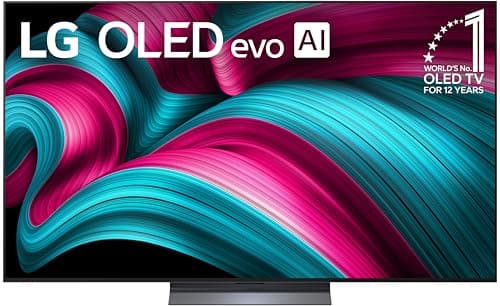
Tom's Guide calls the LG OLED evo C5 (OLED65C5PUA, 65-inch) the best OLED for most people, and RTINGS praises its outstanding overall value with perfect blacks and a complete gaming suite for hundreds less, which explains the composite 9.4 it earns on our weighted SHE Flagship OLED Value Score. Three facts anchor that leading placement: 4x HDMI 2.1 ports running 144Hz with VRR and Dolby Vision gaming, an Alpha 9 AI Gen8 processor delivering color very close to the G-series, and a street price routinely near $1,299 to $1,499.
That 9.4 is fundamentally the per-dollar story, because you get color very close to the pricier G-series for about half to two-thirds of the money. The factor you pay down for is brightness, since at roughly 1,100 to 1,200 nits the C5 trails both the LG OLED evo G5 (OLED65G5WUA, 65-inch) and the Samsung S95F OLED (QN65S95FAFXZA, 65-inch) noticeably under daylight, and it omits the Brightness Booster panel and the flush mount the G5 includes. Compared to the Samsung S90F OLED (QN65S90FAFXZA, 65-inch), you gain Dolby Vision support and the cleaner webOS interface for a modest premium. The honest limit remains the dimmer panel, yet in a controlled-light room you will rarely notice it, which is precisely what establishes the C5 as the value pick.
What We Love
- Full four-port HDMI 2.1 at 144Hz with VRR, ALLM, and Dolby Vision gaming at a mid-flagship price
- Alpha 9 AI Gen8 processor lands accurate, film-faithful color very close to the pricier G-series
- Routinely the best price-to-performance flagship OLED, often near $1,299 to $1,499 at 65 inches
- Dolby Vision and HDR10 support, broader HDR coverage than Samsung's HDR10+-only sets
What Could Be Better
- Measures around 1,100 to 1,200 nits peak, noticeably dimmer than the G5 and S95F in bright rooms
- No Brightness Booster, so HDR highlights have less punch than the G-series
- Built-in audio is adequate but not in the Sony's class
- Pedestal stand rather than the flush wall mount the G5 includes
The Verdict
If you want flagship picture quality without flagship spend, the LG OLED evo C5 (OLED65C5PUA, 65-inch) is the path of least friction. Tom's Guide calls it the best OLED TV for most people, pairing reference picture with the full gaming spec at a friendlier price. For the buyer who doesn't need the brightest panel, you can stop the search here. The tradeoff is lower peak brightness in a bright room.
Best budget QD-OLED: Samsung S90F OLED (QN65S90FAFXZA, 65-inch)
Samsung S90F OLED (QN65S90FAFXZA, 65-inch)
- QD-OLED color volume close to the flagship S95F at often half the street price, near $1,040 at 65 inches
- Glossy screen reflects more in a bright room than the matte S95F
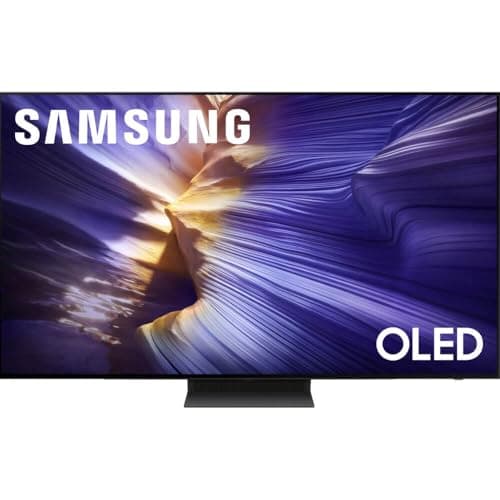
RTINGS calls the Samsung S90F OLED (QN65S90FAFXZA, 65-inch) the value QD-OLED to beat, and Tom's Guide notes nearly flagship picture quality for hundreds less with the full gaming spec intact, which earns it a composite 9.0 on our weighted SHE Flagship OLED Value Score. Three facts anchor that strong placement: a QD-OLED panel bringing color volume close to the flagship S95F, a street price near $1,040 that is the cheapest genuine flagship-tier OLED here, and 4x HDMI 2.1 ports running 144Hz with VRR for the complete gaming spec.
That 9.0 is fundamentally the value case, because you receive genuine QD-OLED color for roughly the price of a step-down LED set, with the glossy panel as the catch worth weighing carefully. In a dark home theater its black-level pop actually beats the matte Samsung S95F OLED (QN65S95FAFXZA, 65-inch), yet under a window it reflects where the pricier S95F diffuses instead. Compared to the LG OLED evo C5 (OLED65C5PUA, 65-inch), you gain QD-OLED color saturation but surrender Dolby Vision and webOS. The honest limits are that glare, the roughly 1,300 to 1,500 nit peak, and a panel that trails the true flagships in this guide on brightness; for a darker room on a budget, the per-dollar math is genuinely hard to beat.
What We Love
- QD-OLED color volume close to the flagship S95F at often half the street price, near $1,040 at 65 inches
- Four HDMI 2.1 ports at 144Hz with VRR and ALLM for full-spec gaming
- NQ4 AI Gen3 processor brings wide-gamut color and strong upscaling to a value price
- Glossy QD-OLED gives deeper black-level pop than the matte S95F in a dark home theater
What Could Be Better
- Glossy screen reflects more in a bright room than the matte S95F
- Peaks around 1,300 to 1,500 nits, below the true flagships
- No Dolby Vision, HDR10+ only
- No One Connect box, so cables route straight to the panel
The Verdict
If you want real QD-OLED color at the lowest entry into this tier, the Samsung S90F OLED (QN65S90FAFXZA, 65-inch) fits the brief without compromise on the gaming spec. RTINGS calls it the value QD-OLED to beat, bringing most of the S95F's color to a far lower price. For a dark-room setup on a tighter budget, you can stop the search here. The tradeoff is more glare and lower peak brightness than the flagships.
Check price for the Samsung S90F OLED (QN65S90FAFXZA, 65-inch) →
How We Score: SHE Flagship OLED Value Score
SHE Flagship OLED Value Score
Score Formula
(Measured_Brightness × 0.30 + Gaming_Readiness × 0.25 + Picture_Accuracy × 0.20 + Built_In_Audio × 0.15 + Price_To_Performance × 0.10), normalized to a 0-10 scale across the slateScore Factors
- Measured HDR BrightnessReal measured nits on a 10 percent HDR window from RTINGS and TechRadar, not the inflated peak number on the box. The LG G5's roughly 2,400 nits and the Samsung S95F's 2,100-plus lead; the C5 and S90F trail at 1,100 to 1,500.
- Next-Gen Gaming ReadinessHDMI 2.1 port count multiplied by maximum refresh rate and adjusted for input lag. The G5, S95F, C5, and S90F all carry four HDMI 2.1 ports; the Sony's two-port count and 120Hz cap pull it down despite excellent lag.
- Picture Processing and Color AccuracyOut-of-box and calibrated color fidelity. The Sony BRAVIA 8 II tops this factor on XR Triluminos Max tuning, with the LG processors close behind; it is the axis that separates reference sets from merely bright ones.
- Built-In Audio QualityHow usable the TV sounds without a soundbar. The Sony's Acoustic Surface Audio+, which vibrates the screen as the driver, leads by a wide margin; the others assume you will add a soundbar for a real theater.
- Price-to-PerformanceDelivered picture and gaming spec per dollar of verified street price. This is the factor that lifts the discounted LG C5 and Samsung S90F to the top of the index and tempers the high-MSRP flagships.
- 0-10 NormalizationThe weighted factor sum is min-max normalized across the five TVs onto a readable 0-10 band, using street prices verified live via the Amazon Creators API on 2026-06-14.
SHE Flagship OLED Value Score — Ranked
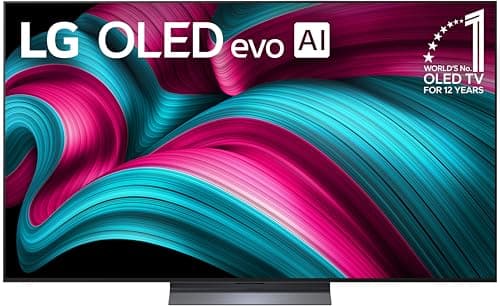
LG OLED evo C5 (OLED65C5PUA, 65-inch)
SHE Flagship OLED Value Score9.4/10Near-G5 picture and the full HDMI 2.1 gaming spec near $1,299 — the value leader
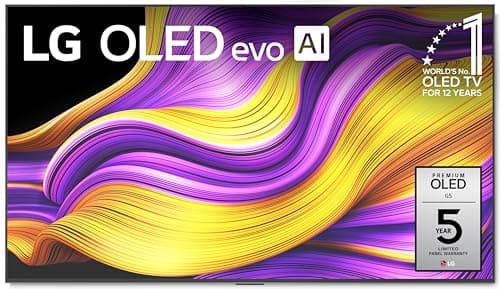
LG OLED evo G5 (OLED65G5WUA, 65-inch)
SHE Flagship OLED Value Score9.2/10Brightest WOLED measured and the most complete gaming spec, held off the top only by a high launch price
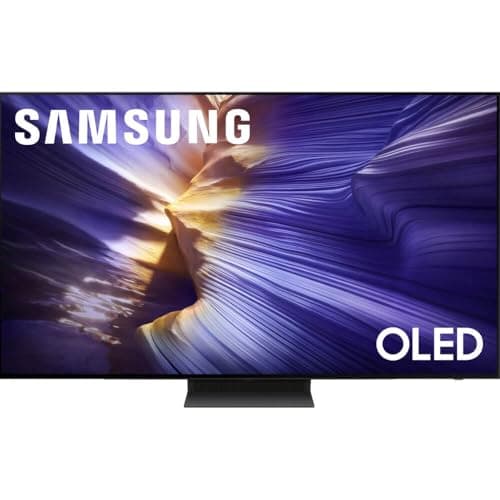
Samsung S90F OLED (QN65S90FAFXZA, 65-inch)
SHE Flagship OLED Value Score9.0/10QD-OLED color and four HDMI 2.1 ports near $1,040, the cheapest flagship-tier OLED here
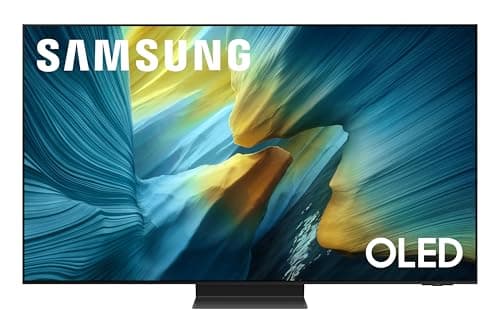
Samsung S95F OLED (QN65S95FAFXZA, 65-inch)
SHE Flagship OLED Value Score8.9/10Brightest QD-OLED and matte glare control, just behind the G5 on raw peak brightness
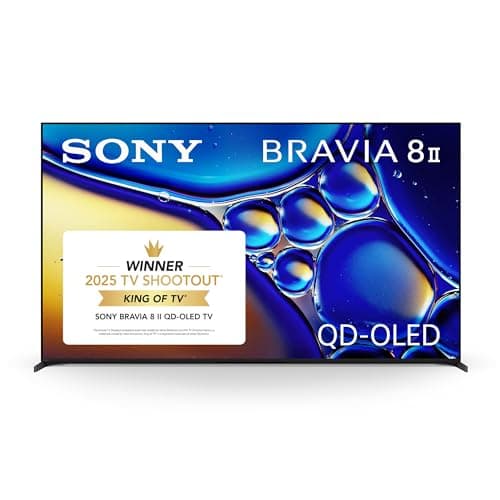
Sony BRAVIA 8 II QD-OLED (K-65XR80M2, 65-inch)
SHE Flagship OLED Value Score7.8/10Tops picture accuracy and built-in sound, but two HDMI 2.1 ports and a top price drag the index down
Ecosystem Fit: Smart Platform, Casting, and HDMI
All five TVs run their own smart platform — LG's webOS, Samsung's Tizen, and Sony's Google TV — and all five answer to both Alexa and Google Assistant for voice, so no pick locks you out of a voice ecosystem you already use. The platform differences are about feel and friction, not capability: webOS on the LG OLED evo G5 (OLED65G5WUA, 65-inch) and LG OLED evo C5 (OLED65C5PUA, 65-inch) is the cleanest and lightest on ads, Google TV on the Sony BRAVIA 8 II QD-OLED (K-65XR80M2, 65-inch) has the deepest app catalog and built-in Chromecast, and Tizen on the Samsung S95F OLED (QN65S95FAFXZA, 65-inch) and Samsung S90F OLED (QN65S90FAFXZA, 65-inch) is the most ad-heavy but adds SmartThings as a genuine smart-home hub. For Apple households, the LG and Sony sets carry AirPlay 2 and HomeKit support, so they cast from an iPhone and appear in the Home app; the Samsung QD-OLEDs do AirPlay 2 casting but are not HomeKit accessories.
On the wired side, HDMI 2.1 connectivity is the specification that genuinely matters for a current-generation console or gaming computer, and it is precisely where the value selections quietly prevail. The LG OLED evo G5 (OLED65G5WUA, 65-inch), Samsung S95F OLED (QN65S95FAFXZA, 65-inch), LG OLED evo C5 (OLED65C5PUA, 65-inch), and Samsung S90F OLED (QN65S90FAFXZA, 65-inch) each incorporate 4x HDMI 2.1 ports, accommodating a PlayStation 5, an Xbox Series X, and a gaming computer simultaneously with a connection remaining. The Sony BRAVIA 8 II QD-OLED (K-65XR80M2, 65-inch) provides only 2x HDMI 2.1 ports, so a console plus a computer saturates both inputs and a second console must share the eARC connection with your soundbar — a configuration worth verifying against your equipment beforehand. For developing the remainder of the room, our Best Flagship Dolby Atmos Soundbars (2026) guide pairs a matched soundbar to any of these panels, while Best Smart AV Receivers for Home Theater 2026: 8 Ranked covers the separates approach if you prefer discrete loudspeakers instead. And if the gaming happens at a desk rather than a couch, the QD-OLED desk panels in Best OLED & QD-OLED Gaming Monitors 2026 apply this identical 4K high-refresh logic at 27-to-32-inch viewing distances. The decision that genuinely matters, verified June 2026, is enumerating your HDMI 2.1 devices against the available port count before committing.
When NOT to Buy
A flagship OLED is the wrong buy for a bright sunroom with no shades, where ambient light washes out even the matte S95F and a high-end Mini LED set looks better for the same money. It is also overkill for a casual bedroom where you watch an hour of news a day, since a mid-range OLED delivers most of the perceived benefit for far less. And a viewer who leaves a static news ticker or gaming HUD on for many hours daily is genuinely better served by an LED panel that cannot burn in at all.
Who Should Buy What
Who Should Buy What
| If you are… | Recommended pick |
|---|---|
Controlled-light premium buyer You watch in a room with shades or controlled lighting and want the brightest, most capable WOLED for HDR and gaming | LG OLED evo G5 (OLED65G5WUA, 65-inch) |
Bright-room viewer Your TV faces a window or sits under bright light and you need a panel that fights glare without washing out | Samsung S95F OLED (QN65S95FAFXZA, 65-inch) |
Movie-first purist You prize reference color accuracy and want genuinely good built-in sound without adding a soundbar | Sony BRAVIA 8 II QD-OLED (K-65XR80M2, 65-inch) |
Value flagship shopper You want most of the flagship picture and the full gaming spec while paying hundreds less, in controlled light | LG OLED evo C5 (OLED65C5PUA, 65-inch) |
Budget QD-OLED gamer You want genuine QD-OLED color and four HDMI 2.1 ports at the lowest price, ideally in a darker room | Samsung S90F OLED (QN65S90FAFXZA, 65-inch) |
Frequently Asked Questions
Should I worry about OLED burn-in on a flagship TV I'll keep for years?
For normal mixed viewing, no. Every TV here runs pixel-shifting, logo-dimming, and panel-refresh routines that prevent burn-in under typical movie, streaming, and gaming use, and RTINGS' long-term burn-in testing shows modern OLEDs hold up over years of varied content. The real risk is narrow: many hours a day of the same static element, like a news ticker or a single channel's logo, left on continuously. If that describes your viewing, an LED set is the safer call. For everyone else, burn-in is no longer the reason to skip OLED.
Is the brightest TV always the best, or does glare matter more?
It depends entirely on your room. In a controlled-light room, the LG G5's roughly 2,400 measured nits give HDR the most punch and it is the better buy. But in a room with a window or overhead light, the Samsung S95F's matte anti-glare screen matters more than peak nits, because a glossy panel that reflects the window back at you looks worse than a slightly dimmer one that does not. Measure the light in your actual room before you optimize for brightness alone.
What's the real difference between WOLED and QD-OLED?
WOLED, used in the LG G5 and C5, stacks white-emitting OLED layers with a color filter and now pushes the highest peak brightness of any OLED. QD-OLED, used in the Samsung and Sony sets, adds a quantum-dot layer for richer color volume, especially in bright, saturated scenes. In practice the gap is small and both look excellent; WOLED tends to win on raw brightness and QD-OLED on color saturation and off-angle viewing. Your room lighting and whether you want Dolby Vision matter more than the panel type.
Do the Samsung OLEDs really not support Dolby Vision?
Correct. The Samsung S95F and S90F support HDR10 and HDR10+ but not Dolby Vision, which Samsung has declined to license. The LG G5, LG C5, and Sony BRAVIA 8 II all support Dolby Vision. If most of your streaming and 4K Blu-rays use Dolby Vision, an LG or Sony set will play that format natively; on the Samsungs those titles fall back to HDR10, which still looks very good but skips Dolby Vision's scene-by-scene tone mapping.
Do I need a soundbar, or are the built-in speakers good enough?
For most of these, plan on a soundbar. The LG and Samsung sets have thin built-in audio that is fine for news and casual viewing but underwhelming for movies. The clear exception is the Sony BRAVIA 8 II, whose Acoustic Surface Audio+ vibrates the screen itself and produces genuinely good sound on its own. If you are buying any of the others for a home theater, budget for a soundbar in the same purchase; our premium soundbar guide covers matched options.
Is it worth waiting for a 2026 model or buying a discounted 2025 flagship now?
Buy the discounted 2025 flagship in most cases. The 2026 flagships were not broadly available on Amazon at the time of writing, and the 2025 LG G5, Samsung S95F, and Sony BRAVIA 8 II already deliver class-leading picture. A 2025 G5 or S95F now sells for far less than its launch price, and those two panels still hold the measured-brightness records in their classes — the brightest WOLED and the brightest QD-OLED yet tested. Unless you specifically need a feature only a 2026 set adds, the value math favors the current discounted flagship today.
Bottom Line
Get the LG OLED evo G5 (OLED65G5WUA, 65-inch) if you want the brightest, most capable WOLED for HDR and 165Hz gaming and have controlled room lighting.
Get the Samsung S95F OLED (QN65S95FAFXZA, 65-inch) if your TV faces a window or bright light and you want QD-OLED color without glare.
Get the Sony BRAVIA 8 II QD-OLED (K-65XR80M2, 65-inch) if you prize reference color accuracy and want genuinely good built-in sound without a soundbar.
Get the LG OLED evo C5 (OLED65C5PUA, 65-inch) if you want most of the flagship picture and the full gaming spec for hundreds less, in controlled light.
Get the Samsung S90F OLED (QN65S90FAFXZA, 65-inch) if you want genuine QD-OLED color and four HDMI 2.1 ports at the lowest price, in a darker room.
For most premium buyers the LG OLED evo G5 (OLED65G5WUA, 65-inch) is the right call, with the Samsung S95F OLED (QN65S95FAFXZA, 65-inch) better the moment your room has a window. Choose the LG OLED evo C5 (OLED65C5PUA, 65-inch) if value matters more than the last bit of brightness. Skip this whole tier if your room is a bright sunroom with no shades, where a high-end Mini LED set looks better for the money, or if you watch many static-content hours a day.
Related deep-dives
Sources & Methodology
Methodology: SHE Flagship OLED Value Score — Formula: (Measured_Brightness × 0.30 + Gaming_Readiness × 0.25 + Picture_Accuracy × 0.20 + Built_In_Audio × 0.15 + Price_To_Performance × 0.10), normalized to a 0-10 scale across the slate. Factors: Measured HDR Brightness: Real measured nits on a 10 percent HDR window from RTINGS and TechRadar, not the inflated peak number on the box. The LG G5's roughly 2,400 nits and the Samsung S95F's 2,100-plus lead; the C5 and S90F trail at 1,100 to 1,500. | Next-Gen Gaming Readiness: HDMI 2.1 port count multiplied by maximum refresh rate and adjusted for input lag. The G5, S95F, C5, and S90F all carry four HDMI 2.1 ports; the Sony's two-port count and 120Hz cap pull it down despite excellent lag. | Picture Processing and Color Accuracy: Out-of-box and calibrated color fidelity. The Sony BRAVIA 8 II tops this factor on XR Triluminos Max tuning, with the LG processors close behind; it is the axis that separates reference sets from merely bright ones. | Built-In Audio Quality: How usable the TV sounds without a soundbar. The Sony's Acoustic Surface Audio+, which vibrates the screen as the driver, leads by a wide margin; the others assume you will add a soundbar for a real theater. | Price-to-Performance: Delivered picture and gaming spec per dollar of verified street price. This is the factor that lifts the discounted LG C5 and Samsung S90F to the top of the index and tempers the high-MSRP flagships. | 0-10 Normalization: The weighted factor sum is min-max normalized across the five TVs onto a readable 0-10 band, using street prices verified live via the Amazon Creators API on 2026-06-14.
Expert review sources used in this analysis:
- SmartHomeExplorer aggregates expert review data and manufacturer specifications to produce consensus-based buying guidance; we do not perform first-party product testing
- Verdicts lean on the outlets that actually reviewed each set — RTINGS, TechRadar, Tom's Guide, CNET, and What Hi-Fi for the LG G5; RTINGS, Tom's Guide, TechRadar, and What Hi-Fi for the Samsung S95F; TechRadar, RTINGS, What Hi-Fi, and Tom's Guide for the Sony BRAVIA 8 II; Tom's Guide, RTINGS, TechRadar, CNET, and FlatpanelsHD for the LG C5; and RTINGS, Tom's Guide, and TechRadar for the Samsung S90F
- Measured brightness figures are real 10-percent-window nits from RTINGS and TechRadar laboratory testing, not manufacturer peak claims
- Prices were verified live via the Amazon Creators API on 2026-06-14
- The SHE Flagship OLED Value Score weights measured HDR brightness, next-gen gaming readiness, picture accuracy, built-in audio, and price-to-performance, normalized to a 0-10 scale; no first-party measurements were conducted.
Nicholas Miles is the founder of SmartHomeExplorer and a longtime smart home enthusiast focused on helping everyday homeowners make better technology decisions. He researches, compares, and writes about products across security, climate, lighting, leak prevention, sensors, home energy, and automation, with an emphasis on real-world usefulness, ecosystem compatibility, reliability, privacy, and long-term value.
Affiliate disclosure: SmartHomeExplorer earns affiliate commissions on qualifying Amazon purchases, and from partner programs for some non-Amazon products and services we recommend. Our scoring methodology is independent of affiliate relationships.