
Best Large-Format 3D Printers 2026
Big build volumes tempt shoppers into machines that weigh 24 to 40 kg and need a sturdy bench before the first print. This guide ranks three large-format printers by expert consensus, and the Creality K2 Plus Combo 3D Printer leads.
This article contains affiliate links. We may earn a commission at no extra cost to you. Prices change frequently — check the current price on Amazon before buying. Learn more
The Short Answer
The Creality K2 Plus Combo 3D Printer leads the SHE Large-Format 3D Printer Score because TechRadar and Tom's Hardware both rated it highly. The Anycubic Photon Mono M7 Max costs least but ranks last on expert consensus, and its trade-offs are slower resin prints and a refill system that failed in review.
Featured in this Guide
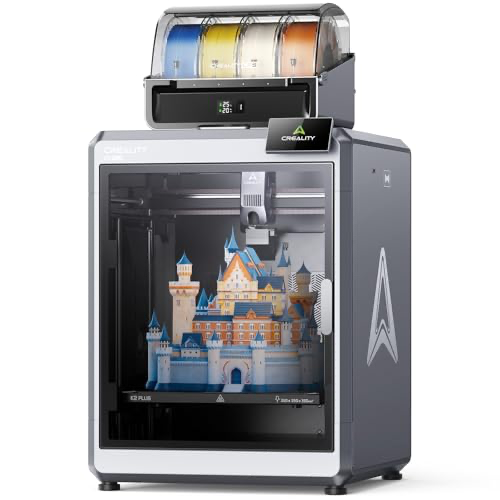
Creality
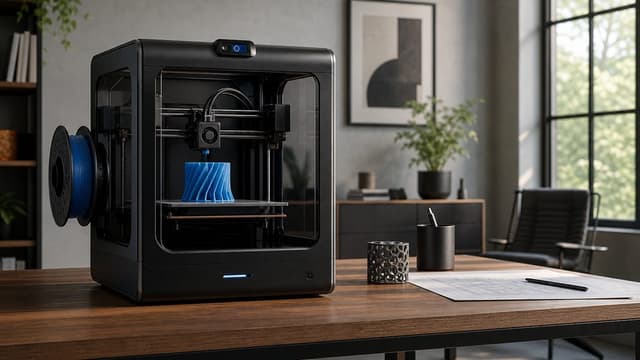
K2 Plus Combo 3D Printer
- •Highest expert consensus here at 9.0/10 from 2 reviews
- •TechRadar logged an 11-minute test print
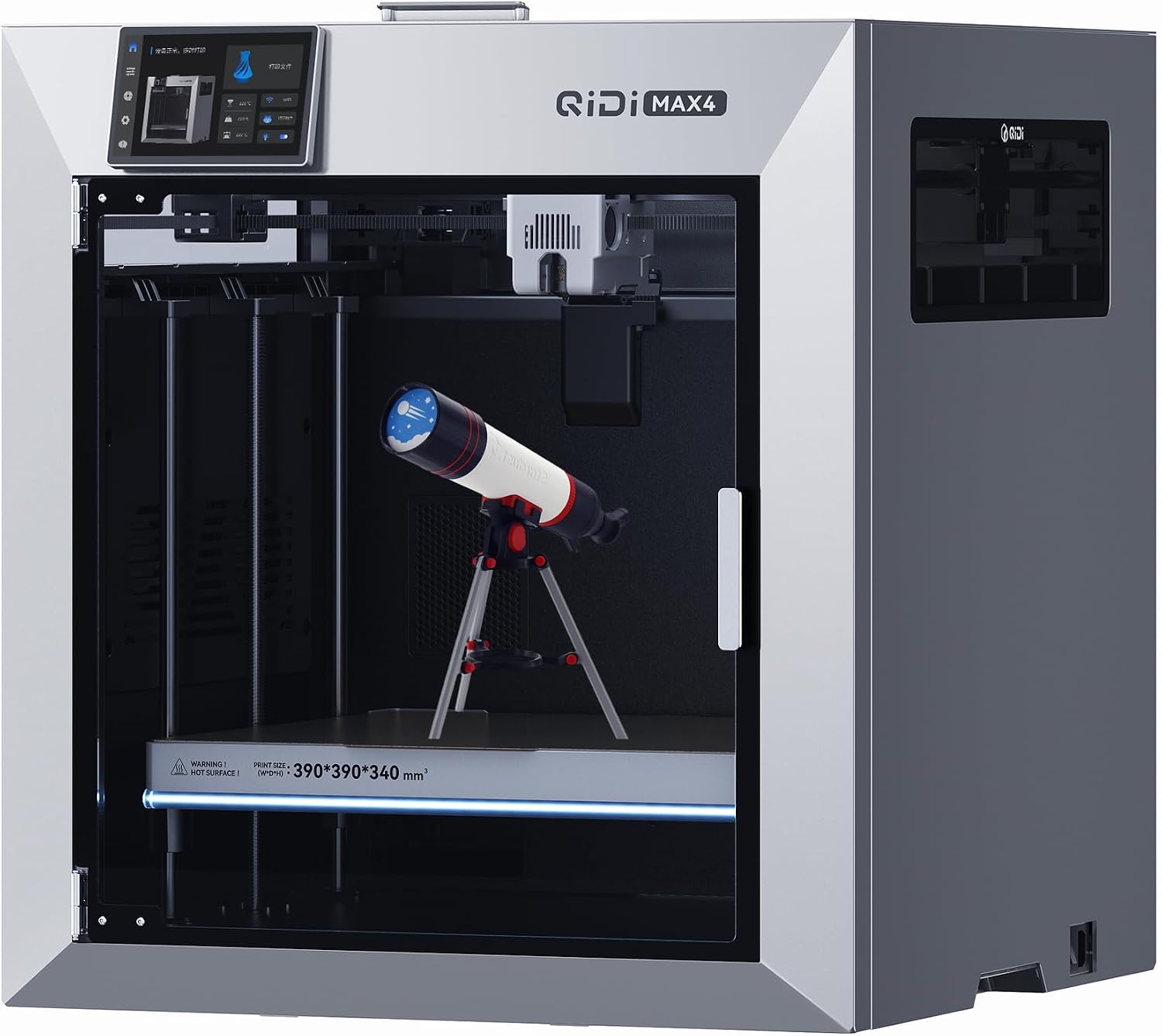
QIDI
Max4 High-Temp 3D Printer
- •370°C print head and 65°C heated chamber
- •Widest build plate here at 390 x 390 mm
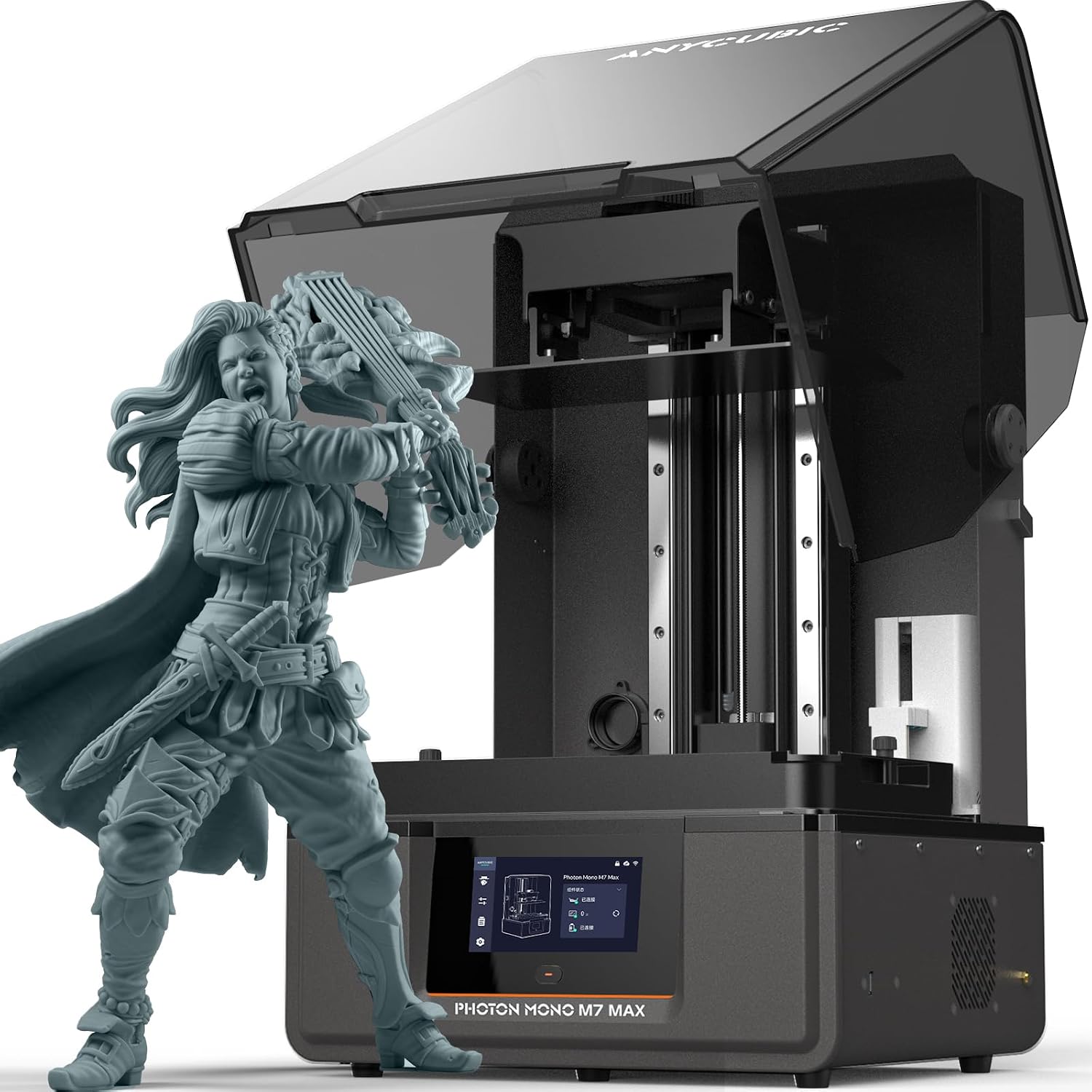
Anycubic
Photon Mono M7 Max
- •Lowest Amazon price of the three at $829.99 (as of Sep 29, 2026)
- •Fine 7K resin detail for the money
Head-to-Head: Consensus, Setup, Test-Print Speed and Weight
Office
Chart
 Smarthomeexplorer.com
Tap any pick to check its live price on Amazon.
Moen Flo Smart Water Monitor
RecommendedCheck price
Flo by Moen Smart Water Monitor
Must BuyCheck price
What the Consensus Score Actually Measures
The SHE Large-Format 3D Printer Score reports each model's expert consensus, meaning the weighted average of its verified outlet ratings on a 10-point scale, published without rescaling. Documented test-print speed, Amazon price and machine weight appear beside it as comparison factors, although no factor alters the ranking or the composite itself. Consequently the Creality K2 Plus Combo 3D Printer ranks first, because TechRadar and Tom's Hardware both awarded it four and a half out of five. The Anycubic Photon Mono M7 Max ranks last, although it delivers the lowest price and the lightest chassis relative to the filament machines. A resin printer and two filament printers serve different workflows, so the consensus compares documented reviewer satisfaction rather than identical capabilities.
Best Overall: Creality K2 Plus Combo 3D Printer
Creality K2 Plus Combo 3D Printer
- Arrives fully assembled and auto-levels right after power-on
- High-flow nozzle wastes more filament on color swaps, per Tom's Hardware
(Current price, subject to change)
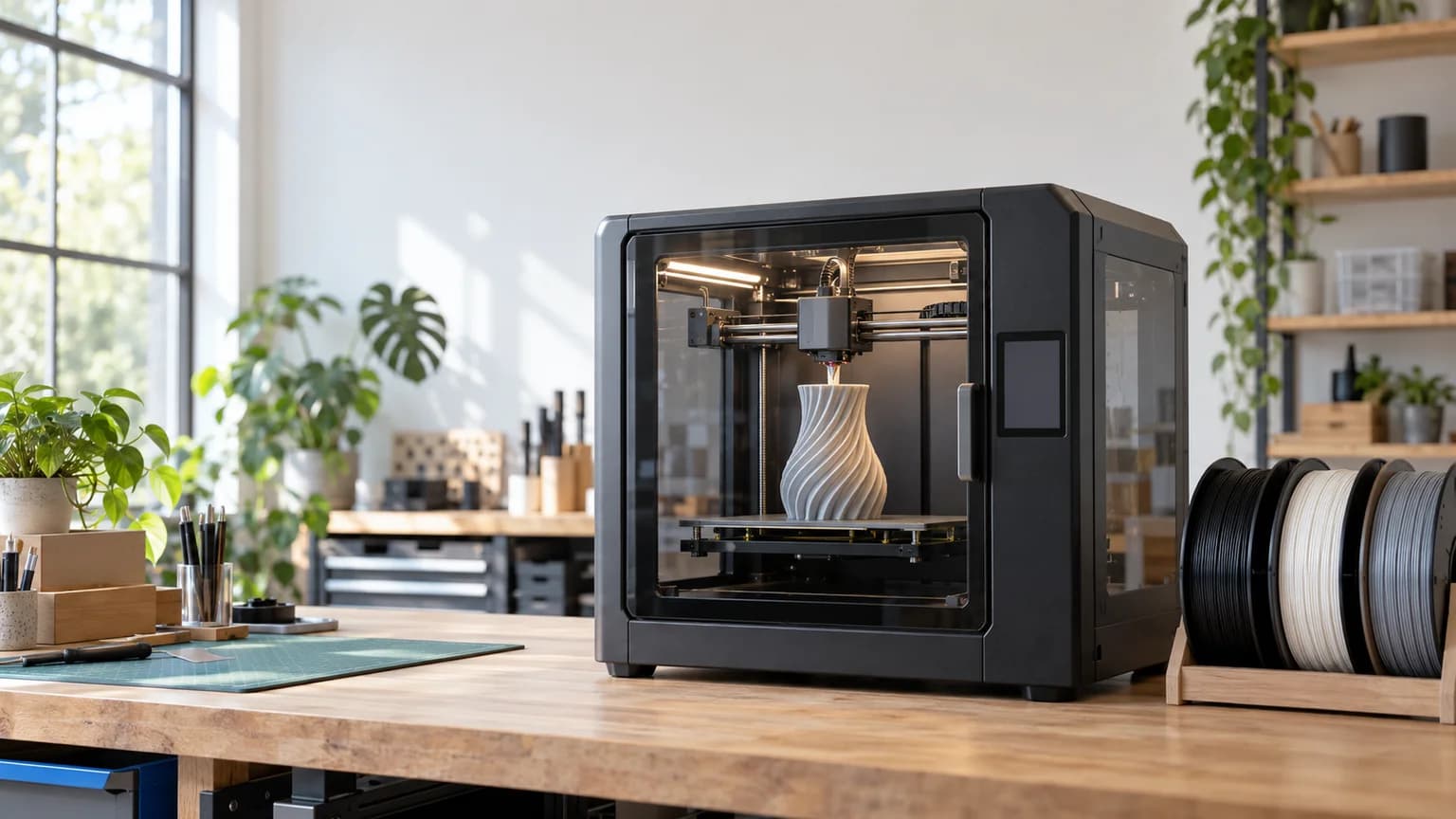
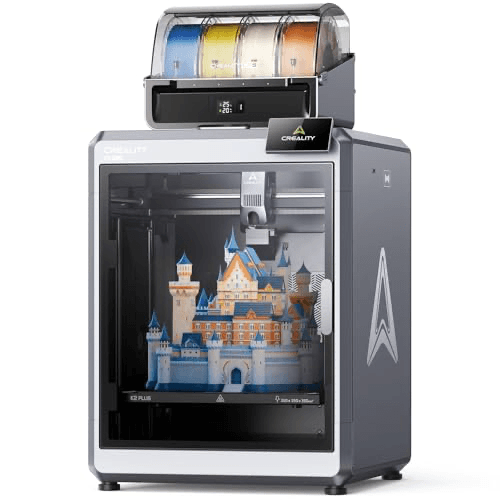
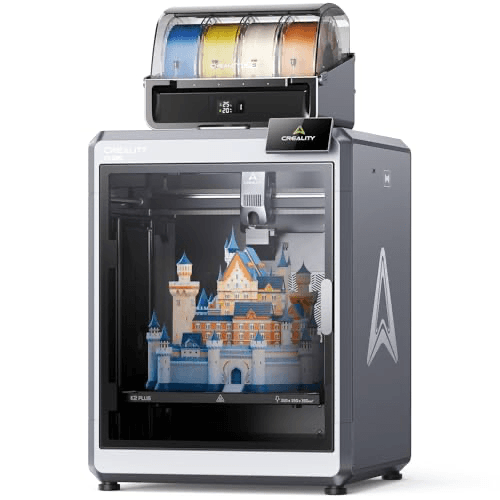
The Creality K2 Plus Combo 3D Printer suits makers who want large multicolor filament projects with minimal preparation, because it arrives fully assembled and automatically levels immediately after power-on. Its SHE Large-Format 3D Printer Score reflects the highest consensus here, since TechRadar and Tom's Hardware both rated it four and a half out of five.
TechRadar documents a 350 x 350 x 350 mm build volume, a 60°C actively heated chamber and a filament system expandable to 16 materials. Its reviewer produced a Benchy in 11 minutes at maximum velocity, and the multicolor Creality K2 Plus Combo operates at just 45 dB at 300 mm/s.
Tom's Hardware reports that the high-flow nozzle purges noticeably more filament during color changes than a Bambu Lab P1P, and the heated bed requires about 15 minutes of warming. At 35 kg it outweighs the Anycubic Photon Mono M7 Max, although it remains lighter than the QIDI Max4 High-Temp 3D Printer, and it carries the highest price here.
What We Love
- Arrives fully assembled and auto-levels right after power-on
- TechRadar logged an 11-minute Benchy at 600 mm/s
- Heated chamber reaches 60°C for tougher filaments
- Filament system expands to 16 materials with three more units
What Could Be Better
- High-flow nozzle wastes more filament on color swaps, per Tom's Hardware
- Heated bed needs about 15 minutes to warm up
- Print quality drops at the fastest 600 mm/s setting
The Verdict
If you want the widest expert approval with multicolor filament printing, Creality K2 Plus Combo 3D Printer fits the brief. Budget for extra filament, since Tom's Hardware found its high-flow nozzle purges more during color swaps.
Best for Engineering Filaments: QIDI Max4 High-Temp 3D Printer
QIDI Max4 High-Temp 3D Printer
- Print head reaches 370°C for engineering filaments
- Optional Polar Cooler makes operation noisy, per AppleInsider
(Current price, subject to change)
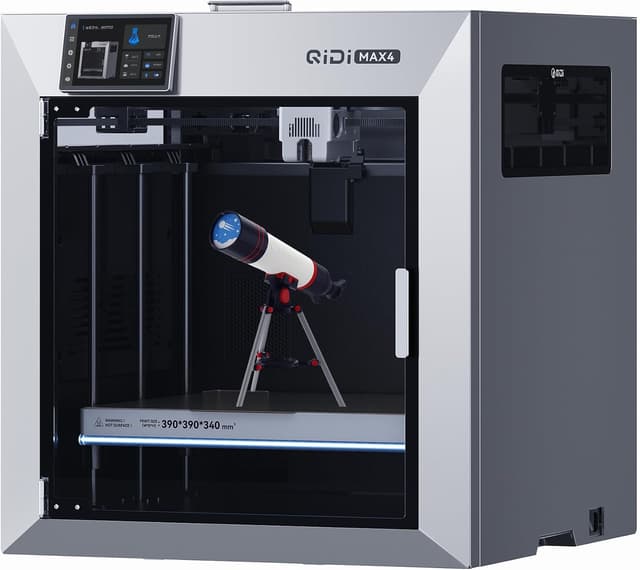
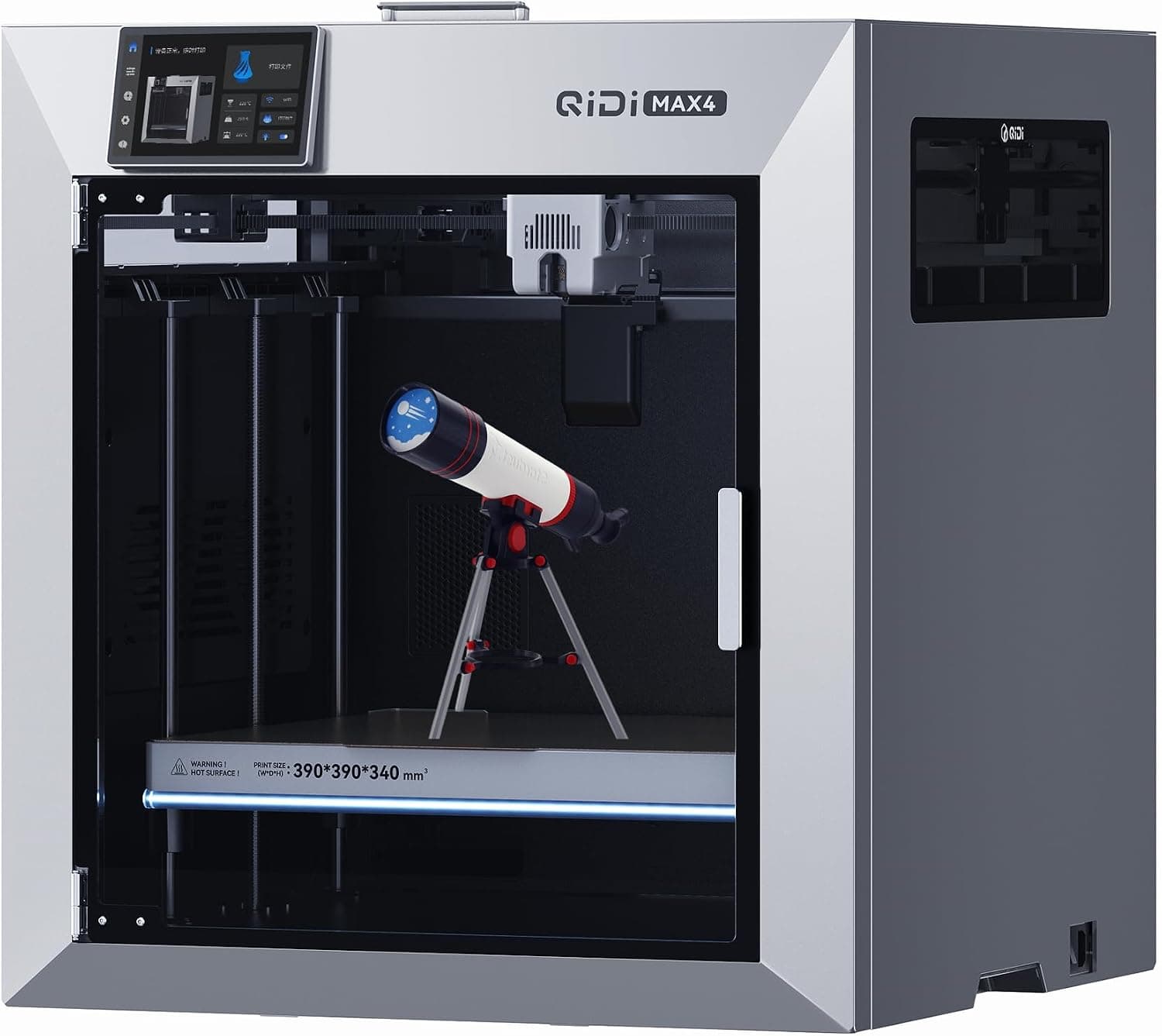
The QIDI Max4 High-Temp 3D Printer suits engineers and hobbyists who print demanding materials, because its print head reaches 370°C and its independent chamber heater reaches 65°C. Its SHE Large-Format 3D Printer Score places it second, because AppleInsider rated it four and a half out of five while 3D Printed Decor scored it slightly lower.
Beyond temperature, QIDI lists a 390 x 390 x 340 mm build volume, an 800 mm/s tool head and hands-free load cell leveling integrated into the hotend. The AppleInsider reviewer found the on-screen prompts made initial setup and calibration easy, and the Klipper-based QIDI Max4 accepts OrcaSlicer and PrusaSlicer profiles.
AppleInsider cautions that the optional Polar Cooler accessory makes operation noisy, so the cooling upgrade carries an acoustic penalty. At 40 kg it is also the heaviest printer in this guide, compared to 35 kg for the Creality K2 Plus Combo 3D Printer. No retailer box list was located for this model, so its package contents remain undocumented here.
What We Love
- Print head reaches 370°C for engineering filaments
- Independent chamber heating up to 65°C
- Widest build plate here at 390 x 390 mm
- Load cell auto-leveling and guided on-screen setup
What Could Be Better
- Optional Polar Cooler makes operation noisy, per AppleInsider
- Heaviest printer here at 40 kg
- Slower reported test print than the Creality, at 18 minutes
The Verdict
For workshops that print high-temperature engineering filaments, QIDI Max4 High-Temp 3D Printer lines up with what you actually need. Its 370°C print head and 65°C chamber exceed the documented limits of the Creality K2 Plus Combo 3D Printer.
Best Value: Anycubic Photon Mono M7 Max
Anycubic Photon Mono M7 Max
- 7K monochrome LCD with 46 × 46μm X/Y resolution
- Auto refill failed on the Tom's Hardware review unit
(Current price, subject to change)
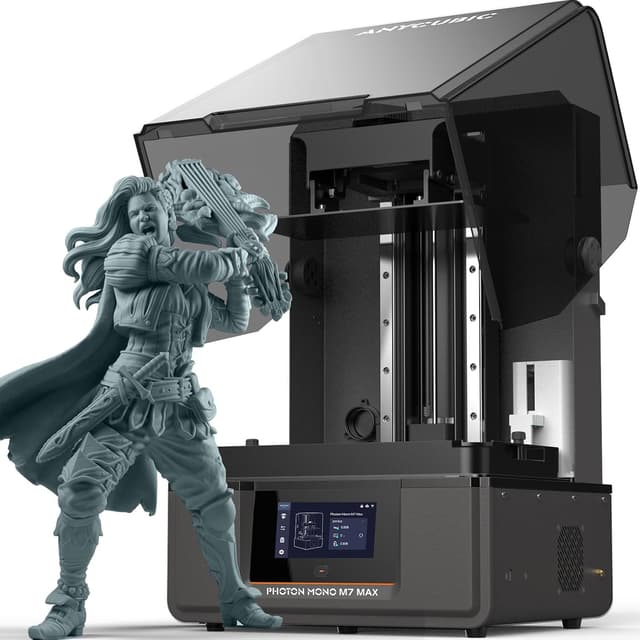
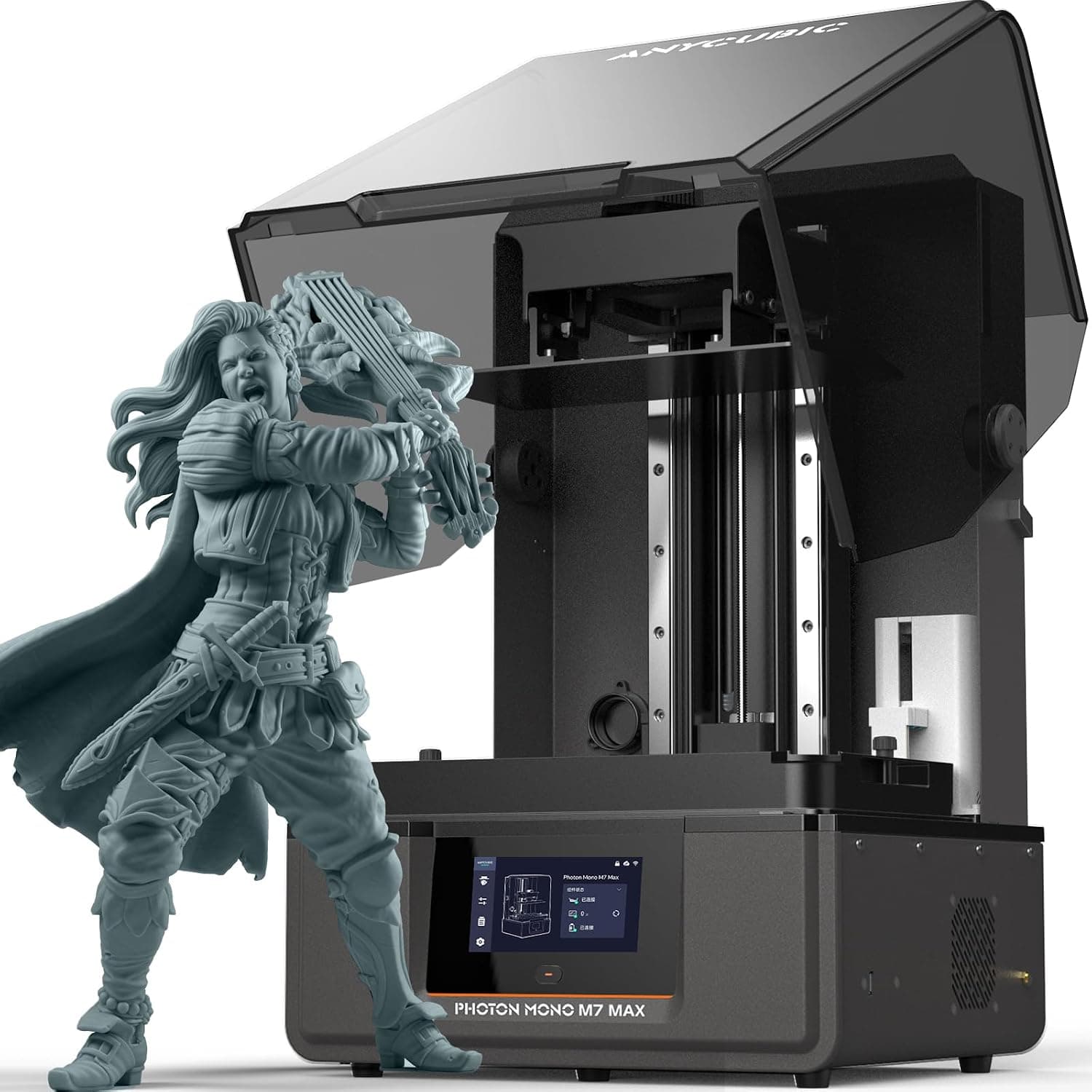
The Anycubic Photon Mono M7 Max suits buyers who value fine resin detail over raw build size, because its 7K monochrome screen resolves 46 × 46μm horizontal detail. Its SHE Large-Format 3D Printer Score ranks last in this guide, because Tom's Hardware rated it four out of five and 3DWork rated it lower.
Anycubic lists resin temperature control from 20 to 40°C, and CGMagazine documents sensors for failed prints, low resin levels and worn vat film. Tom's Hardware confirms that this Anycubic resin printer ships factory-leveled with manual adjustment available, and at 24 kg it is the lightest machine here.
Anycubic lists a 298 x 164 x 300 mm print volume, which is narrower than either filament machine in this guide. Tom's Hardware reports that the automatic refill system failed on its review unit, which weakens the convenience argument for unattended printing. Its fastest measured model took 1 hour 21 minutes with fast resin, versus 2 hours 55 minutes with standard resin, although it remains the least expensive printer here.
What We Love
- 7K monochrome LCD with 46 × 46μm X/Y resolution
- Lightest machine here at 24 kg
- Ships factory-leveled, per Tom's Hardware
- Sensors flag failed prints, low resin and worn vat film
What Could Be Better
- Auto refill failed on the Tom's Hardware review unit
- Slowest test print here at 1 hour 21 minutes
- Narrower 298 x 164 mm footprint than the filament machines
The Verdict
When fine resin detail matters more than raw speed, Anycubic Photon Mono M7 Max is a sensible pick for that setup. It is the least expensive printer here, though its automatic refill failed on one review unit.
How We Score: SHE Large-Format 3D Printer Score
SHE Large-Format 3D Printer Score
Score Formula
Products are ranked by Expert consensus, the weighted average of the verified outlet scores for each model on a 10-point scale, shown as is. A tie goes to the model with more outlet reviews, then to the better Fastest measured test print, then to research order. The other factors never change the rank; each one with a role gives that role to the model that leads on it.Score Factors
- Expert consensusThe weighted average of verified outlet scores on a 10-point scale; the Creality K2 Plus Combo 3D Printer leads at 9.0, the QIDI Max4 High-Temp 3D Printer follows at 8.8 and the Anycubic Photon Mono M7 Max trails at 7.7.
- Fastest measured test printThe shortest small test print an outlet reported: 11 minutes for the Creality K2 Plus Combo 3D Printer, 18 minutes for the QIDI Max4 High-Temp 3D Printer and 81 minutes for the resin Anycubic Photon Mono M7 Max. It never changes the rank.
- Amazon priceThe Amazon price as checked on September 29, 2026: the Anycubic Photon Mono M7 Max costs the least and takes Best Value, while the Creality K2 Plus Combo 3D Printer costs the most. It never changes the rank.
- Printer weightMachine weight from the maker or an outlet spec sheet: 24 kg for the Anycubic Photon Mono M7 Max, 35 kg for the Creality K2 Plus Combo 3D Printer and 40 kg for the QIDI Max4 High-Temp 3D Printer.
SHE Large-Format 3D Printer Score — Ranked
Built from published specs and outlet reviews read for this guide, with prices checked on September 29, 2026; it is not a first-party performance or reliability test.
Creality K2 Plus Combo 3D Printer
SHE Large-Format 3D Printer Score9.0/10Highest consensus from TechRadar and Tom's Hardware, fastest reported test print and a fully assembled build.
QIDI Max4 High-Temp 3D Printer
SHE Large-Format 3D Printer Score8.8/10Close second, with the hottest print head and chamber here and Klipper slicer freedom.
Anycubic Photon Mono M7 Max
SHE Large-Format 3D Printer Score7.7/10Lowest price and lightest machine, held back by slower resin prints and a failed auto refill.
Slicers, Connections and Materials Each Printer Supports
As of September 2026, nothing in the documentation gathered for this guide mentions Alexa, Google Home, HomeKit or Matter support, so compatibility means slicer software, network connections and printable materials. The QIDI Max4 High-Temp 3D Printer runs Klipper firmware, accepts OrcaSlicer and PrusaSlicer, and connects through dual-band Wi-Fi, Ethernet and USB. Tom's Hardware used Creality Slicer for its multicolor purge comparison, and the Creality K2 Plus Combo 3D Printer offers firmware updates once connected to Wi-Fi.
The most consequential compatibility catch is material type: the Anycubic Photon Mono M7 Max cures liquid resin, so it accepts none of the filament spools the other two printers consume. Shoppers who want a smaller first machine can compare our Best 3D Printers for Beginners 2026 and Best Smart 3D Printers 2026: Bambu A1 Wins at $299 guides, while makers expanding into engraving can review Best Portable Laser Engravers 2026.
When NOT to Buy
Skip the category if you mostly print small brackets, toys or replacement parts, because a compact beginner printer saves bench space compared to these 24 to 40 kg machines. Skip the Anycubic Photon Mono M7 Max if you cannot ventilate a room for liquid resin handling, since its box even includes disposable masks. Skip the Creality K2 Plus Combo 3D Printer if single-color printing is enough, because its multicolor system purges extra filament on color changes. Skip the QIDI Max4 High-Temp 3D Printer if the room is shared, since AppleInsider flags noise with the optional Polar Cooler.
Who Should Buy What
Who Should Buy What
| If you are… | Recommended pick |
|---|---|
Multicolor maker You want the strongest expert consensus, a fully assembled machine and a filament system that expands to 16 materials. | Creality K2 Plus Combo 3D Printer |
Engineering-filament printer You print high-temperature materials and want a 370°C print head, a 65°C chamber and Klipper slicer freedom. | QIDI Max4 High-Temp 3D Printer |
Budget resin detailer You want the lowest price here and fine 7K resin detail, and you can accept much slower prints. | Anycubic Photon Mono M7 Max |
Frequently Asked Questions
Which large-format 3D printer has the best expert consensus?
The Creality K2 Plus Combo 3D Printer leads with a consensus of 9.0/10 from 2 reviews. TechRadar and Tom's Hardware both rated it four and a half out of five. The QIDI Max4 High-Temp 3D Printer follows at 8.8/10, and the Anycubic Photon Mono M7 Max trails at 7.7/10. No outlet score was adjusted or rescaled for this guide.
Is a resin printer like the Anycubic Photon Mono M7 Max slower than these filament printers?
In the test prints collected here, yes. Tom's Hardware timed a model at 1 hour 21 minutes with fast resin on the Anycubic Photon Mono M7 Max. TechRadar printed a Benchy on the Creality K2 Plus Combo 3D Printer in 11 minutes, and AndroidPCTV printed one on the QIDI Max4 High-Temp 3D Printer in 18 minutes. The test models differ, so these times reflect outlet results rather than a shared benchmark. Anycubic states up to 86mm/h with high-speed resin at 0.1mm layers.
Which printer handles high-temperature filaments best?
The QIDI Max4 High-Temp 3D Printer lists a print head up to 370°C and independent chamber heating up to 65°C. The Creality K2 Plus Combo 3D Printer reaches 350°C at the nozzle and 60°C in its heated chamber. 3DPrintedDecor reports clean QIDI overhangs up to 80°. The Anycubic Photon Mono M7 Max prints resin, so it does not use filament at all.
How hard is setup for these large printers?
The Creality K2 Plus Combo 3D Printer arrives fully assembled, and you remove packing foam, three screws and fit the screen and filters. It then starts auto-leveling right after power-on. The QIDI Max4 High-Temp 3D Printer uses load cell leveling, and AppleInsider found its on-screen prompts made setup easy. The Anycubic Photon Mono M7 Max ships factory-leveled, though CGMagazine's full setup with settings took about 30 minutes.
How much do these large-format printers cost?
The Anycubic Photon Mono M7 Max is the least expensive at $829.99 (as of Sep 29, 2026), which earns it Best Value. The QIDI Max4 High-Temp 3D Printer sits in the middle at $1,099.00 (as of Sep 29, 2026). The Creality K2 Plus Combo 3D Printer costs the most at $1,410.99 (as of Sep 29, 2026). Prices were checked on September 29, 2026 and can change. Price never moves the ranking, which follows expert consensus alone.
How much space and weight should I plan for?
The QIDI Max4 High-Temp 3D Printer weighs 40 kg and lists a 390 x 390 x 340 mm build volume. The Creality K2 Plus Combo 3D Printer weighs 35 kg with a 350 mm cube of build space. The Anycubic Photon Mono M7 Max is the lightest at 24 kg, with a 298 x 164 x 300 mm print volume. Any of the three needs a sturdy, level bench.
Bottom Line
Get the Creality K2 Plus Combo 3D Printer if you want the highest expert consensus here and multicolor filament printing from a fully assembled machine.
Get the QIDI Max4 High-Temp 3D Printer if you print engineering filaments and want a 370°C print head with a 65°C heated chamber.
Get the Anycubic Photon Mono M7 Max if you want fine resin detail at the lowest price here and can accept slower prints.
Sources & Methodology
Methodology: SHE Large-Format 3D Printer Score — Formula: Products are ranked by Expert consensus, the weighted average of the verified outlet scores for each model on a 10-point scale, shown as is. A tie goes to the model with more outlet reviews, then to the better Fastest measured test print, then to research order. The other factors never change the rank; each one with a role gives that role to the model that leads on it.. Factors: Expert consensus: The weighted average of verified outlet scores on a 10-point scale; the Creality K2 Plus Combo 3D Printer leads at 9.0, the QIDI Max4 High-Temp 3D Printer follows at 8.8 and the Anycubic Photon Mono M7 Max trails at 7.7. | Fastest measured test print: The shortest small test print an outlet reported: 11 minutes for the Creality K2 Plus Combo 3D Printer, 18 minutes for the QIDI Max4 High-Temp 3D Printer and 81 minutes for the resin Anycubic Photon Mono M7 Max. It never changes the rank. | Amazon price: The Amazon price as checked on September 29, 2026: the Anycubic Photon Mono M7 Max costs the least and takes Best Value, while the Creality K2 Plus Combo 3D Printer costs the most. It never changes the rank. | Printer weight: Machine weight from the maker or an outlet spec sheet: 24 kg for the Anycubic Photon Mono M7 Max, 35 kg for the Creality K2 Plus Combo 3D Printer and 40 kg for the QIDI Max4 High-Temp 3D Printer.
Expert review sources used in this analysis:
- The SHE Large-Format 3D Printer Score formula and factor definitions follow word for word
- Products are ranked by Expert consensus, the weighted average of the verified outlet scores for each model on a 10-point scale, shown as is
- A tie goes to the model with more outlet reviews, then to the better Fastest measured test print, then to research order
- The other factors never change the rank; each one with a role gives that role to the model that leads on it
- Expert consensus: The weighted average of the verified outlet scores for this model, on a 10-point scale
- Fastest measured test print: The shortest print time a review outlet reported for a small test model, standing in for speed because no shared benchmark covers resin and filament printers
- Amazon price: The Amazon price for this model when we last checked, with prices checked on September 29, 2026
- Printer weight: The machine weight from the maker or a review outlet spec sheet
- Creality K2 Plus Combo 3D Printer: rated by TechRadar and Tom's Hardware, both on the site's outlet list, with specs from TechRadar and 3DWithUs
- QIDI Max4 High-Temp 3D Printer: rated by AppleInsider and 3D Printed Decor, with specs from the QIDI product page and figures from AndroidPCTV
- Anycubic Photon Mono M7 Max: rated by Tom's Hardware and 3DWork, with specs from the Anycubic store, CGMagazine and 3DWithUs
- Coverage shortfall: the site's outlet list covers fewer than 2 verified outlets for the QIDI Max4 High-Temp 3D Printer and the Anycubic Photon Mono M7 Max
- Because of that shortfall, the owner left the evidence callouts out of this guide rather than show a finding with a single source
- No box list was found for the QIDI Max4 High-Temp 3D Printer, so its package contents are not listed
- Prices checked on September 29, 2026 from each product's Amazon listing
- No first-party testing or measurement was conducted for this guide, and none is implied; every figure comes from maker specifications or the named outlets.
Nicholas Miles is the founder of SmartHomeExplorer and a longtime smart home enthusiast focused on helping everyday homeowners make better technology decisions. He researches, compares, and writes about products across security, climate, lighting, leak prevention, sensors, home energy, and automation, with an emphasis on real-world usefulness, ecosystem compatibility, reliability, privacy, and long-term value.
Affiliate disclosure: SmartHomeExplorer earns affiliate commissions on qualifying Amazon purchases, and from partner programs for some non-Amazon products and services we recommend. Our scoring methodology is independent of affiliate relationships.