
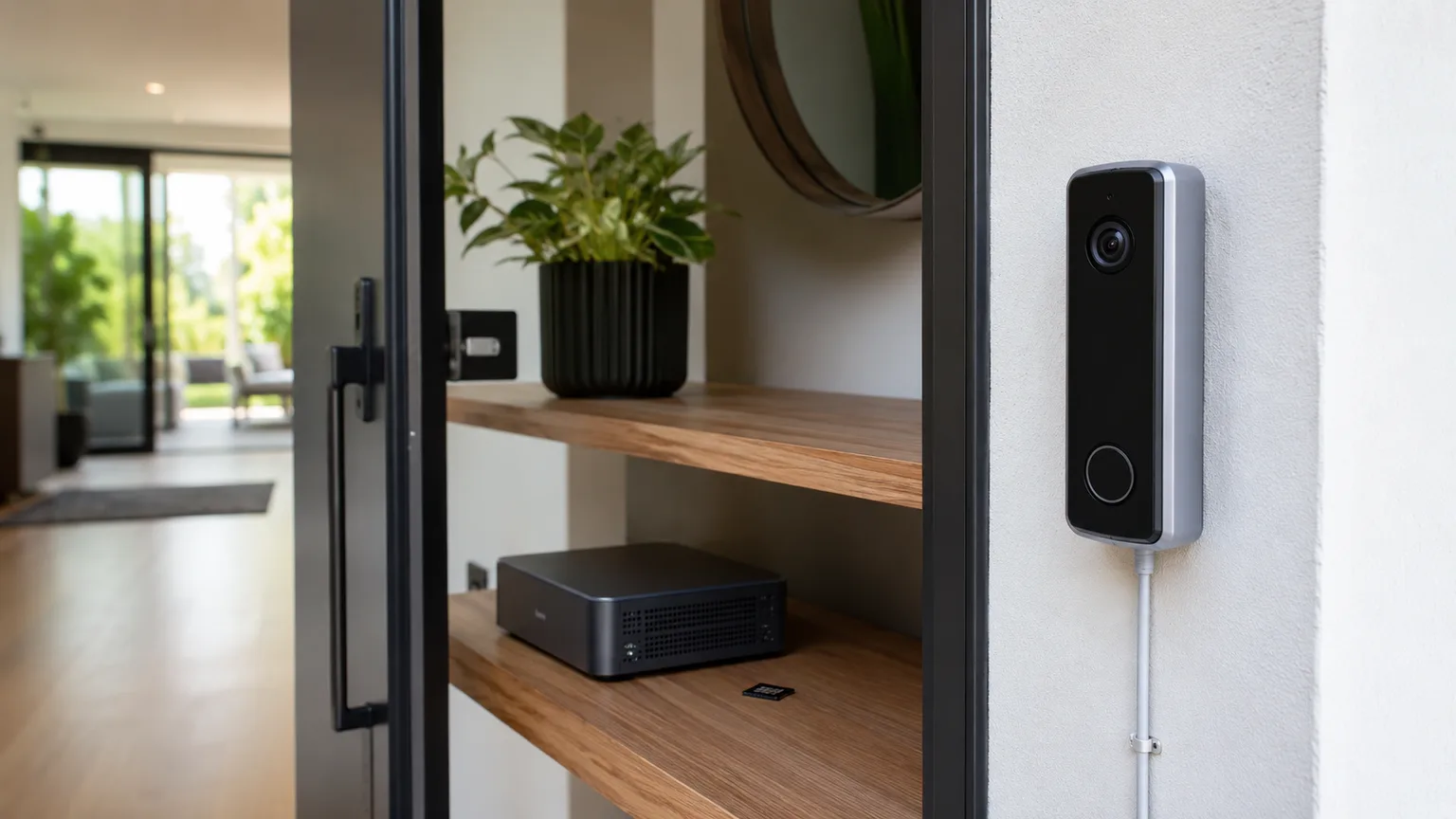
Best Local-NVR Doorbell Cameras 2026: No Cloud, RTSP
Reolink Video Doorbell PoE ($109.99) wins overall — one Ethernet cable, a real RTSP and ONVIF stream into Frigate or Blue Iris, and a Home Assistant doorbell-press event, with no subscription. The Reolink WiFi is the easy retrofit at $119.99.
This article contains affiliate links. We may earn a commission at no extra cost to you. Prices change frequently — check the current price on Amazon before buying. Learn more
The Short Answer
For the Home Assistant owner operating a local recorder who refuses a doorbell subscription, the Reolink Video Doorbell PoE ($109.99) remains the recommended selection, since it delivers a genuine RTSP and ONVIF stream into Frigate, which Security.org corroborates, earning the highest 9.4 SHE Self-Host Doorbell Score.
Featured in this Guide
Reolink
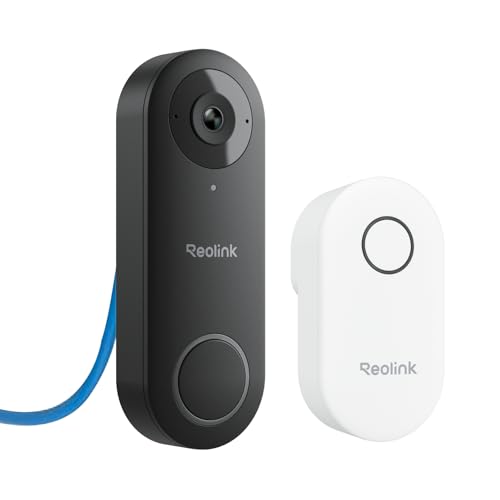
Video Doorbell PoE
- •RTSP, ONVIF, and a Home Assistant doorbell-press event over one PoE cable at $109.99 — the most reliable self-host feed here

Reolink
Video Doorbell WiFi
- •Same RTSP and ONVIF stack on existing 16-24V doorbell wiring at $119.99 — no Ethernet run, no battery to recharge
Lorex
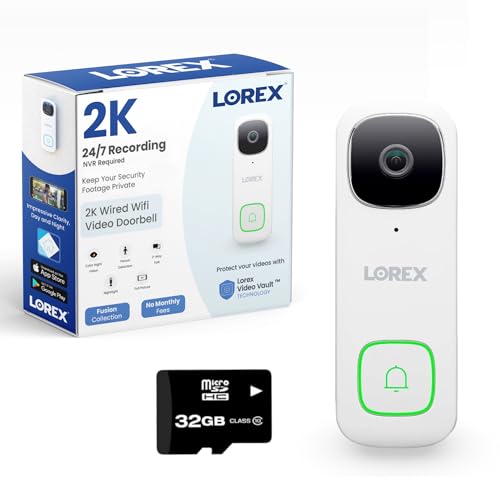
2K Wired Video Doorbell
- •RTSP main and substream into a Lorex Fusion NVR or Blue Iris at $170.00, bundled 32 GB microSD, no ONVIF auto-discovery
Reolink
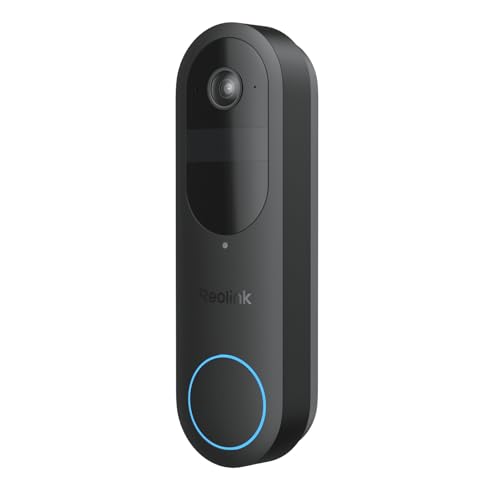
Battery Video Doorbell (2nd Gen)
- •Fully local battery doorbell at $129.99 that exposes RTSP and ONVIF through the Reolink Home Hub for renters
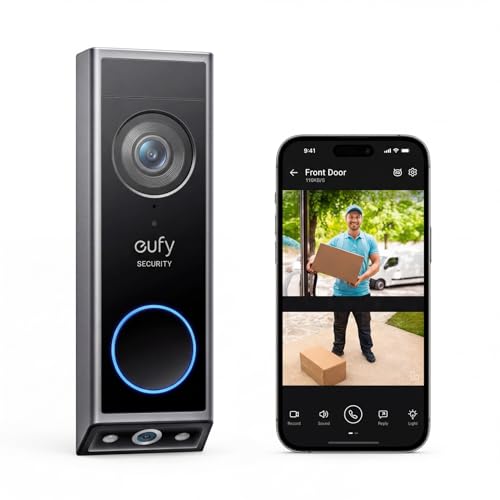
Eufy
Video Doorbell E340
- •Dual-camera local recording with no cloud at $149.99, but locked to eufy's HomeBase with no RTSP out
Head-to-Head: Streams, NVR, Power, Score
Smart Security
Chart
 Smarthomeexplorer.com
What Tips the Decision
You add a self-host doorbell to Frigate over RTSP, and the button stops working: the press stops notifying and the chime goes silent, because pulling the stream tips the camera into call mode. That failure, not megapixels, is the actual buying decision here.
That integration reliability is precisely what our SHE Self-Host Doorbell Score quantifies, since a doorbell surrendering its button event the instant a recorder connects has forfeited its primary responsibility, and in this guide every contender is scored against that failure. The Reolink Video Doorbell PoE leads because a single Cat5e/Cat6 run simultaneously delivers 802.3af power while exposing a genuine RTSP stream alongside ONVIF, recording continuously to a microSD card up to 256 GB, approximately 8x the bundled 32 GB Lorex capacity, at $109.99. The Reolink WiFi is the simpler retrofit at $119.99, roughly 1.1x the PoE price, complementing our Best PoE Video Doorbells Without Cloud Subscription (2026) and Best Video Doorbell 2026: Ring vs Nest vs Eufy Compared guides.
Best Overall: Reolink Video Doorbell PoE
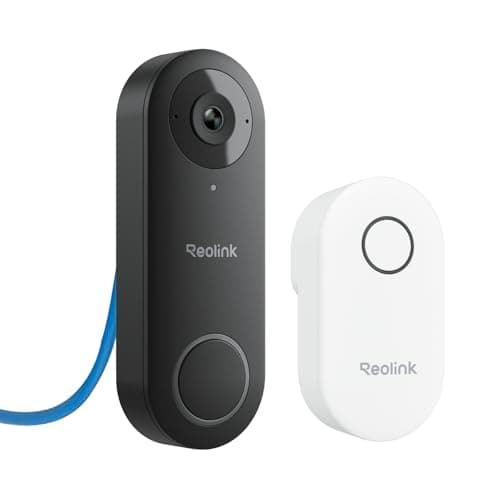
Reolink Video Doorbell PoE
- Real RTSP main stream and ONVIF profile drop into Frigate, Blue Iris, or Scrypted with no cloud
- Pulling RTSP in an NVR while the app or HA also streams can drop the connection
(Current price, subject to change)
The Reolink Video Doorbell PoE earns 9.4 on the weighted SHE Self-Host Doorbell Score, a composite identifying a doorbell you can record locally without continuously fighting the integration, an assessment TechHive and CNET corroborate. That 9.4 rests on a category-leading 9.5 stream-openness sub-score alongside a strong 9.4 NVR-recording sub-score, because a single Cat5e/Cat6 run simultaneously carries power and data over 802.3af PoE while the camera exposes a genuine RTSP stream plus an ONVIF profile that Frigate and Blue Iris automatically discover. Priced at $109.99 — where the Lorex costs roughly 1.5x and the eufy 1.4x — it records continuously to microSD up to 256 GB, approximately 8x the bundled Lorex card.
Across the expert sources surveyed as of June 2026 the consensus settles near 9.2, since outlets like TechHive, CNET, and Reviewed consistently rank no-fee local recording as the headline feature of the 5MP 2K+ sensor. That same consensus holds that PoE single-cable power delivers a measurably steadier feed than the battery alternative at roughly 1.2x the price. Although running the app and an NVR simultaneously can interrupt the stream, go2rtc resolves the contention by serving one feed to several consumers, so the doorbell-press notification keeps firing where the eufy Video Doorbell E340 never exposes one.
What We Love
- Real RTSP main stream and ONVIF profile drop into Frigate, Blue Iris, or Scrypted with no cloud
- Single PoE cable carries power and data, removing transformer and Wi-Fi reliability problems
- 5MP 2K+ sensor at 4:3 frames a standing visitor and a doorstep package in one shot
- First-party Home Assistant integration keeps the doorbell-press event firing for automations
What Could Be Better
- Pulling RTSP in an NVR while the app or HA also streams can drop the connection
- PoE means running an Ethernet cable to a door that may only have 16-24V wiring
The Verdict
For the owner who runs a local NVR and refuses a doorbell subscription, the Reolink Video Doorbell PoE fits the brief without compromise at $109.99. The 9.4 means a clean RTSP and ONVIF hand-off to Frigate, microSD or NVR recording with no fee, and a button that keeps ringing after the recorder grabs the stream — the PoE reliability the WiFi model trades away.
Ready to upgrade your home?
roborock Qrevo 2 Pro Robot Vacuum and Mop
See it on Amazon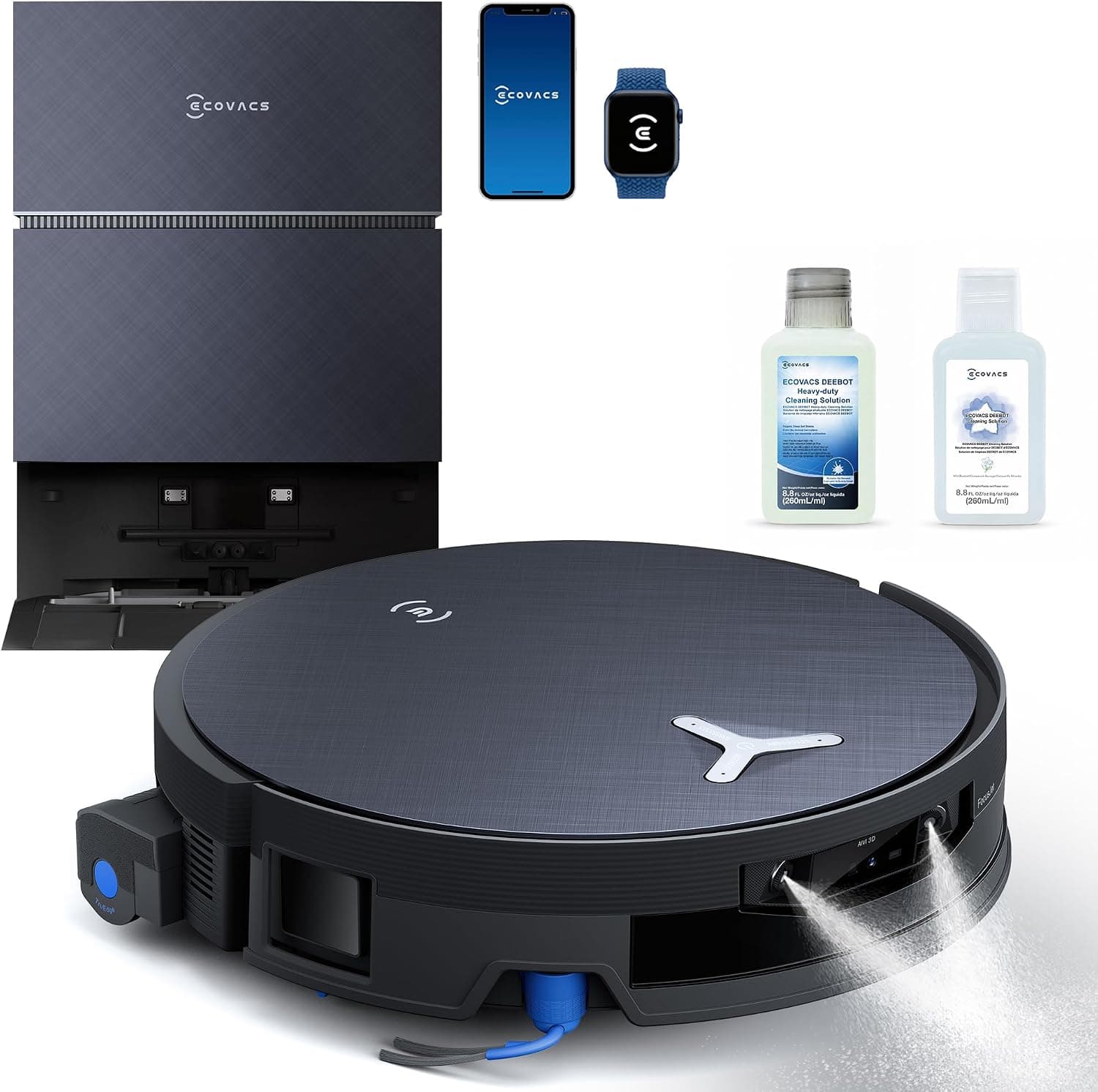
ECOVACS DEEBOT X12 PRO Omni Robot Vacuum and Mop
See it on Amazon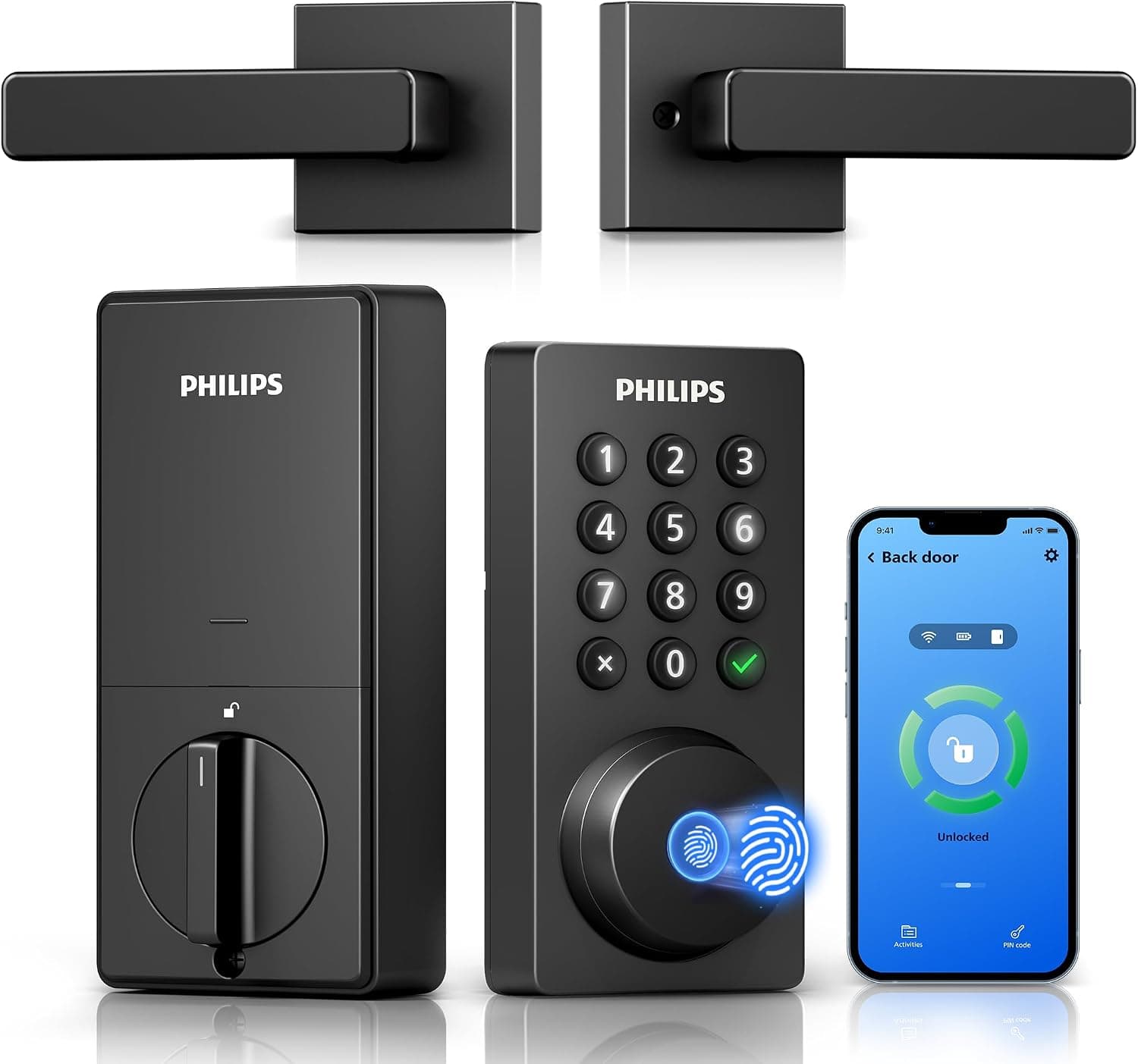
Philips Wi-Fi Keypad Deadbolt with Handle
See it on Amazon
Sponsored listings from Amazon’s Sponsored Products for Creators program, kept apart from our reviews and rankings. How we make money
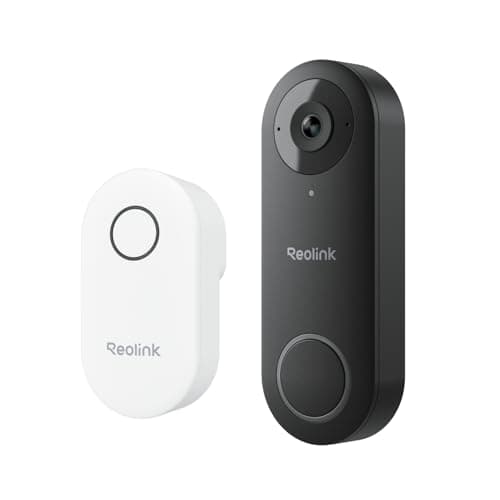
Best Wired Retrofit: Reolink Video Doorbell WiFi
Reolink Video Doorbell WiFi
- Same RTSP and ONVIF support as the PoE model, recording into Frigate or Blue Iris with no fee
- 5GHz range at an exterior door is short, dropping it to slower 2.4GHz
(Current price, subject to change)
The Reolink Video Doorbell WiFi earns 9.1 on the weighted SHE Self-Host Doorbell Score, a composite identifying the easiest wired retrofit rather than the most reliable feed. That 9.1 pairs a strong stream-openness sub-score with a slightly lower NVR-recording sub-score, because it carries the identical RTSP and ONVIF support as the PoE model while operating on existing 16-24V transformer wiring, eliminating the Ethernet pull. Positioned at $119.99 — about 1.1x the PoE price, where the Lorex runs 1.4x — it records to microSD up to 256 GB, the same 8x-the-Lorex capacity, exposing the doorbell-press event through Home Assistant.
In subscription-free-doorbell roundups, outlets like TechHive and Reviewed frame this model as the easiest wired retrofit that still hands a real RTSP stream to a recorder, while CNET credits its no-subscription value on the same 5MP 2K+ sensor. The catch is range, because 5GHz reception at an exterior door is inherently short, so a weakened signal forces the camera onto the slower 2.4GHz band and can stutter a continuous 24/7 NVR feed. As verified June 7, 2026, at $119.99 it records continuously to that 256 GB card. Relative to the Reolink Video Doorbell PoE, the WiFi configuration trades single-cable power for an easier installation on existing doorbell wiring.
What We Love
- Same RTSP and ONVIF support as the PoE model, recording into Frigate or Blue Iris with no fee
- Wired transformer power means no Ethernet run and no battery to recharge
- Dual-band 2.4GHz and 5GHz Wi-Fi keeps the 2K+ stream stable for continuous recording
- First-party Home Assistant integration surfaces the doorbell-press event for automations
What Could Be Better
- 5GHz range at an exterior door is short, dropping it to slower 2.4GHz
- Simultaneous RTSP pulls from the app, HA, and an NVR can stutter the feed
The Verdict
If you've narrowed to a self-host doorbell but cannot pull Ethernet to the door, the Reolink Video Doorbell WiFi is a sensible pick for that setup at $119.99. The 9.1 reflects the same RTSP and ONVIF stack as the PoE model on existing doorbell wiring, with continuous microSD recording and the doorbell-press event intact — the easiest retrofit path here.
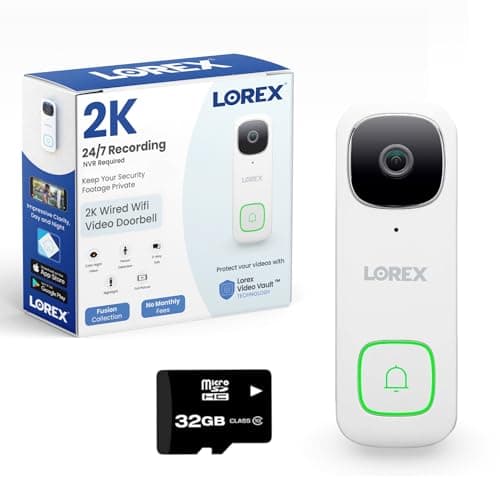
Best for Lorex NVRs: Lorex 2K Wired Video Doorbell
Lorex 2K Wired Video Doorbell
- RTSP main stream and substream on port 554 record 24/7 in Blue Iris or Frigate with no fee
- No ONVIF, so third-party NVRs cannot auto-discover it
(Current price, subject to change)
The Lorex 2K Wired Video Doorbell earns 8.2 on the weighted SHE Self-Host Doorbell Score, a composite that marks the recorder-native pick rather than the openness leader. That 8.2 pairs a mid-tier stream-openness sub-score with a stronger NVR-recording sub-score, because it publishes an RTSP main stream and a substream on port 554 with Dahua-style paths, yet exposes no ONVIF, so a recorder cannot auto-discover it and you enter the URL by hand. Positioned at $170.00 with a bundled 32 GB microSD card — 4x the eufy's 8 GB capacity — it records 2K QHD over existing doorbell wiring.
In subscription-free-doorbell coverage, outlets like CNET, TechHive, and Reviewed emphasize its no-fee local recording, with footage saved to the bundled 32 GB card or a Lorex NVR rather than a paid plan. Expert roundups note it pairs hardwired reliability and smart security lighting with local storage against cloud-locked mainstream brands. The IP65 body stays always-on rather than sleeping between events, and at $170.00 it is the priciest pick here — roughly 1.5x the $109.99 PoE and 1.4x the WiFi — before an NVR offload removes the card cap. Relative to the Reolink Video Doorbell PoE, the Lorex yields ONVIF auto-discovery for native fit inside a Lorex Fusion recorder.
What We Love
- RTSP main stream and substream on port 554 record 24/7 in Blue Iris or Frigate with no fee
- Ships with a 32 GB microSD card and integrated smart security lighting
- Slots natively into Lorex Fusion 4K NVRs inside its own recorder ecosystem
- IP65 weatherproofing and a hardwired connection make it a durable always-on camera
What Could Be Better
- No ONVIF, so third-party NVRs cannot auto-discover it
- At $170.00 it is the most expensive pick here
The Verdict
For the Blue Iris owner comfortable typing an RTSP URL by hand, or anyone on a Lorex Fusion NVR, the Lorex 2K Wired Video Doorbell checks the boxes that matter for that recorder-first setup at $170.00. The 8.2 reflects a real RTSP main and substream that records 24/7 with no fee, plus a bundled 32 GB card — you give up ONVIF auto-discovery, but the manual URL entry is a one-time step.
Best No-Wiring Pick: Reolink Battery Video Doorbell (2nd Gen)
Reolink Battery Video Doorbell (2nd Gen)
- Records 2K 4MP locally to microSD or a Reolink Home Hub with no monthly fee
- RTSP and ONVIF require the separately considered Reolink Home Hub
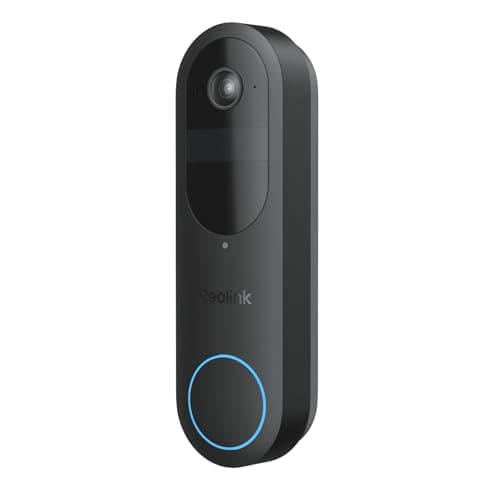
(Current price, subject to change)
The Reolink Battery Video Doorbell (2nd Gen) earns 7.9 on the weighted SHE Self-Host Doorbell Score, a composite reflecting the renter-friendly no-wiring pick rather than the always-on leader. That 7.9 rests on an 8.0 stream-openness sub-score and a 6.8 power-reliability sub-score, because RTSP and ONVIF arrive only through the separately considered Reolink Home Hub, and the battery sleeps between events rather than holding a continuous feed. Positioned at $129.99 — about 1.2x the PoE price and 1.1x the WiFi — it records 2K 4MP locally to microSD or the Home Hub with no fee, and a 150-degree head-to-toe view frames a visitor and a doorstep package.
In no-fee battery-doorbell coverage, outlets like TechHive, TechRadar, and CNET stress its subscription-free local storage and 150x150 degree head-to-toe field of view, framing it as a flexible renter-friendly pick where the Home Hub unlocks deeper local integration. Expert roundups note that the battery lasts roughly 5 months per charge, so periodic recharging becomes the unavoidable cost of no wiring at $129.99, still only 1.2x the PoE configuration. Event-only wake-up can additionally miss fast doorstep activity that an always-on wired feed captures first. Relative to the Reolink Video Doorbell WiFi, the battery model trades always-on recording for an install that requires no transformer.
What We Love
- Records 2K 4MP locally to microSD or a Reolink Home Hub with no monthly fee
- Runs on rechargeable battery or optional wired power for apartments and rentals
- Pairs with the Reolink Home Hub to expose RTSP and ONVIF and feed Home Assistant
- 150-degree head-to-toe field of view captures a face and a floor-level package
What Could Be Better
- RTSP and ONVIF require the separately considered Reolink Home Hub
- Roughly 5-month battery life means periodic recharging, and event wake-up misses fast starts
The Verdict
If you've shortlisted a fully local doorbell but cannot run wiring, the Reolink Battery Video Doorbell (2nd Gen) lines up with what you actually need at $129.99. The 7.9 reflects the only no-wiring pick that keeps footage off the cloud, recording to microSD and, with the Reolink Home Hub, exposing RTSP and ONVIF — you give up 24/7 capture, but for a renter that is the honest trade.
Check price for the Reolink Battery Video Doorbell (2nd Gen) →
Best Plug-and-Play: eufy Video Doorbell E340
eufy Video Doorbell E340
- Stores fully on-device with 8 GB of built-in storage and no required subscription
- No RTSP or ONVIF on the doorbell, so it cannot feed Frigate or Blue Iris
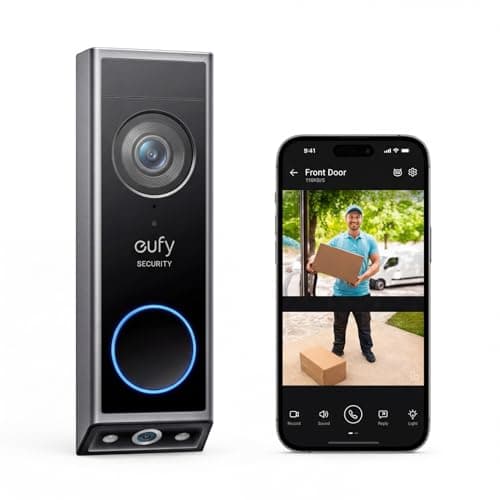
(Current price, subject to change)
The eufy Video Doorbell E340 earns 6.5 on the weighted SHE Self-Host Doorbell Score, a composite held down by one deliberate omission: it exposes no RTSP or ONVIF to a third-party recorder. That 6.5 pairs a strong 7.8 NVR-recording sub-score against a 4.5 stream-openness sub-score, because footage stays on-device on just 8 GB of built-in storage — one-quarter the Lorex's 32 GB card and one-thirty-second of the Reolink pair's 256 GB — yet you are locked to eufy's own HomeBase. Positioned at $149.99, roughly 1.4x the PoE price, it adds a downward second camera for a head-to-toe package view.
In subscription-free-doorbell roundups, outlets like TechRadar, Reviewed, and CNET praise its no-monthly-fee local storage and dual-camera coverage, while noting it stays inside eufy's ecosystem. Color night vision and on-device AI detection run with no cloud account, and the 8 GB of built-in storage expands to 16TB through a eufy HomeBase 3, so it never charges a recurring fee. The structural trade is that local-only here means no standard Home Assistant doorbell-press entity, a normalized penalty our integration-ease factor applies. Relative to the Reolink Video Doorbell PoE, the eufy trades RTSP and Frigate compatibility for plug-and-play simplicity, even at 1.4x the PoE price.
What We Love
- Stores fully on-device with 8 GB of built-in storage and no required subscription
- Dual cameras add a downward lens for a true head-to-toe package view
- Color night vision and local AI person and package detection
- Expandable to 16TB of local storage through a eufy HomeBase 3
What Could Be Better
- No RTSP or ONVIF on the doorbell, so it cannot feed Frigate or Blue Iris
- Local-only means no standard Home Assistant doorbell-press path
The Verdict
If RTSP is not a hard requirement and you want no-cloud recording without standing up a recorder, the eufy Video Doorbell E340 is a sensible pick for that setup at $149.99. The 6.5 reflects the easiest plug-and-play local experience: 8 GB on-device storage, dual cameras, and on-device AI with no fee — you give up RTSP and ONVIF, so to feed Frigate the Reolink models fit better.
How We Score: SHE Self-Host Doorbell Score
SHE Self-Host Doorbell Score
Score Formula
Stream_Openness * 0.30 + NVR_Recording * 0.25 + Integration_Ease * 0.20 + Power_Reliability * 0.15 + Zero_Sub_Completeness * 0.10Score Factors
- Stream Openness (30%)The load-bearing factor of this category: can the doorbell hand a standard RTSP stream, and ideally an ONVIF profile, to a recorder you control? This sub-score is a weighted, normalized tier — full RTSP plus ONVIF auto-discovery scores at the top, RTSP-only with a manual URL scores in the middle, and a doorbell that exposes nothing and locks you to its own app scores at the floor. The coefficient is highest because openness is what makes a doorbell self-hostable at all.
- Local NVR Recording (25%)Whether footage actually lands on hardware you own with no cloud round-trip: microSD on-device, a brand NVR, a NAS over FTP, or a 24/7 recorder like Frigate or Blue Iris. The calculation weights always-on continuous recording above event-only clips into a normalized tier, because the whole point of a local NVR is catching what happens between motion triggers. This factor carries the second-highest weight.
- Integration Ease (20%)How painlessly the doorbell joins a self-hosted stack. The formula rewards a first-party Home Assistant integration that exposes the doorbell-press event, clean go2rtc and Frigate behavior, and a button that keeps ringing after a third-party NVR pulls RTSP. Models that flip into intercom mode and stop notifying when an NVR grabs the stream are penalized in this composite, since a doorbell that stops ringing has failed its one job.
- Power & Reliability (15%)A front-door camera meant for continuous local recording has to stay awake and online. This factor normalizes power source into a tier — PoE single-cable power is the gold standard, wired transformer power is solid, and a sleeping battery unit that wakes only on events is the weakest base for an always-on NVR feed. The coefficient sits below recording because a steady feed is necessary but not the headline self-host trait.
- Zero-Subscription Completeness (10%)Whether the core experience — live view, recording, playback, and detection — is fully usable with no account or paid plan. This sub-score carries the lightest weight because every pick here clears the no-fee bar, but it still separates a doorbell that gates AI detection behind a subscription from one that runs everything locally for free. The coefficient closes the formula as a tiebreaker rather than a primary driver.
SHE Self-Host Doorbell Score — Ranked
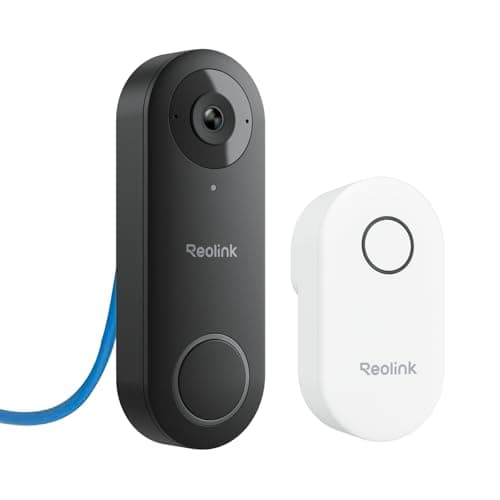
Reolink Video Doorbell PoE
SHE Self-Host Doorbell Score9.4/10$109.99 — RTSP, ONVIF, PoE single cable, HA doorbell-press event; the cleanest self-host feed
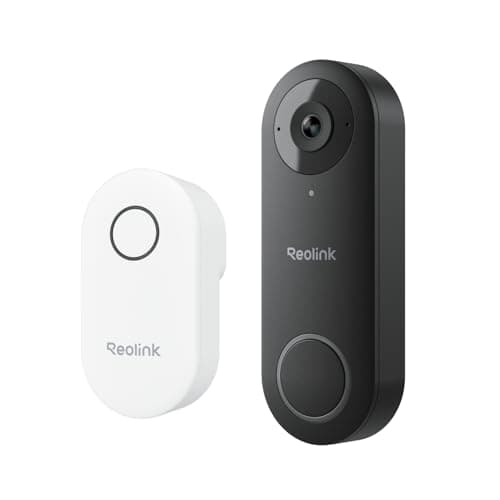
Reolink Video Doorbell WiFi
SHE Self-Host Doorbell Score9.1/10$119.99 — same RTSP and ONVIF stack on existing doorbell wiring; easiest wired retrofit
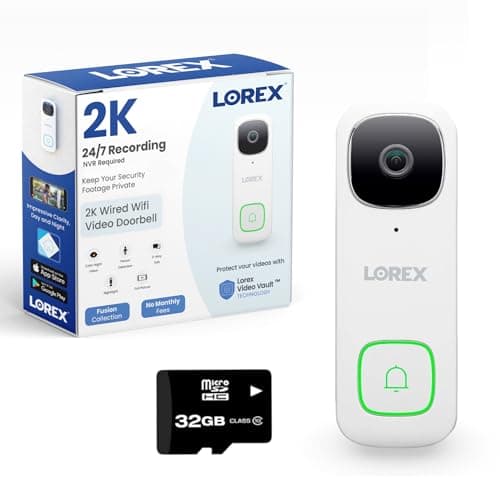
Lorex 2K Wired Video Doorbell
SHE Self-Host Doorbell Score8.2/10$170.00 — RTSP main and substream, Lorex Fusion NVR native, no ONVIF; recorder-first pick
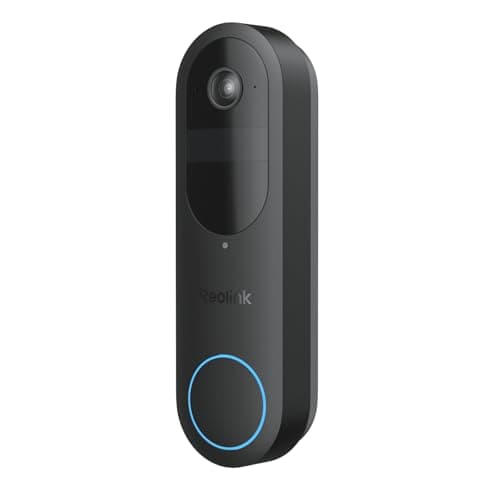
Reolink Battery Video Doorbell (2nd Gen)
SHE Self-Host Doorbell Score7.9/10$129.99 — fully local battery, RTSP via Home Hub, no 24/7; best no-wiring pick
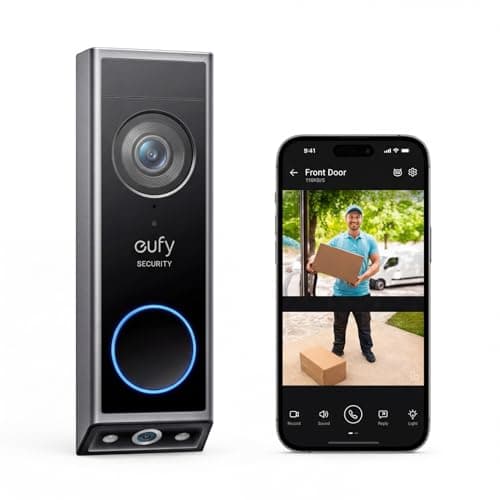
eufy Video Doorbell E340
SHE Self-Host Doorbell Score6.5/10$149.99 — dual-camera local recording, no RTSP out, HomeBase-locked; plug-and-play
Recorder and Protocol Fit
The compatibility that matters here is recorder-and-protocol, not voice assistants, which is the read that subscription-free-doorbell roundups from outlets like Security.org and TechHive consistently use to separate the tiers, a tier split our weighted formula mirrors. The Reolink Video Doorbell PoE and Reolink Video Doorbell WiFi expose RTSP plus ONVIF, so they auto-fit Frigate, Blue Iris, Scrypted, and Synology Surveillance Station, and Reolink ships a first-party Home Assistant integration for the doorbell-press event. CNET and Reviewed both flag this protocol openness as the dividing line. The Lorex 2K Wired Video Doorbell gives an RTSP main and substream but no ONVIF, so you enter the URL by hand. The eufy Video Doorbell E340 stays inside its own HomeBase and exposes nothing to a recorder, the trade for plug-and-play simplicity at $149.99.
None of these doorbells needs a smart-home hub to record, because the recording target is a recorder you run rather than a cloud account, which means the connectivity that actually matters is RTSP and ONVIF rather than Matter or Thread. As of June 2026, and verified against published integration guides, the two Reolink wired models hand a real stream to Frigate within seconds of ONVIF discovery over a single Cat5e/Cat6 run, while the Reolink Battery Video Doorbell (2nd Gen) reaches the same protocols only through the separately considered Reolink Home Hub, where TechRadar notes the battery adds a recharge every 5 months. Owners on r/frigate_nvr and the Home Assistant forum consistently praise that the Reolink doorbell-press binary sensor keeps firing automations after Frigate takes over object detection, while the recurring complaint the community flags is stream contention — pulling RTSP in an NVR while the app or HA also streams can drop the connection within seconds, and owners report the fix is proxying every consumer through go2rtc so the camera serves one stream that several recorders share. For a self-hoster building out a local-first plan, a doorbell this open also pairs with the recorder picks in our Best PoE NVR Security Camera Systems 2026 guide and the storage math in our Security Camera Storage: Local vs Cloud vs NAS 5-Year Cost roundup.
| Product | RTSP Stream | ONVIF Auto-Discovery | Frigate / Blue Iris | Home Assistant Press Event | Local microSD |
|---|---|---|---|---|---|
| Reolink Video Doorbell PoE | ✓ | ✓ | ✓ | ✓ | ✓ |
| Reolink Video Doorbell WiFi | ✓ | ✓ | ✓ | ✓ | ✓ |
| Lorex 2K Wired Video Doorbell | ✓ | ✕ | ✓ | ✕ | ✓ |
| Reolink Battery Video Doorbell (2nd Gen) | ✓ | ✓ | ✓ | ✓ | ✓ |
| eufy Video Doorbell E340 | ✕ | ✕ | ✕ | ✕ | ✕ |
When NOT to Buy
Skip this whole category entirely if you do not already operate a local NVR and are not willing to stand up Frigate, Blue Iris, or a brand recorder, because a mainstream cloud doorbell will be considerably simpler to live with, as TechRadar specifically notes for first-time buyers. Skip the eufy E340 in particular if RTSP is genuinely non-negotiable, since it records locally yet never exposes a usable stream to an independent recorder. And if you only want occasional microSD clips with no NVR whatsoever, the Reolink WiFi at $119.99 — against which the comparable Lorex costs roughly 1.4x as much — is entirely sufficient. The right buyer here operates a recorder and wants the front door continuously feeding it over RTSP, precisely the integration the Reolink Video Doorbell PoE was engineered for.
Who Should Buy What
Who Should Buy What
| If you are… | Recommended pick |
|---|---|
Frigate and Home Assistant owners You already run a local NVR and can pull one Ethernet cable for the most reliable always-on RTSP feed | Reolink Video Doorbell PoE |
Wired retrofitters without Ethernet You want the full RTSP and ONVIF stack on existing doorbell wiring with a strong Wi-Fi signal at the door | Reolink Video Doorbell WiFi |
Lorex NVR and Blue Iris owners You run a wired-security recorder and do not mind entering an RTSP URL and credentials by hand | Lorex 2K Wired Video Doorbell |
Renters who cannot wire You need a fully local battery doorbell and can add a Reolink Home Hub for RTSP and ONVIF | Reolink Battery Video Doorbell (2nd Gen) |
No-cloud plug-and-play buyers You want local recording with package-spotting dual cameras and do not need RTSP for a third-party NVR | eufy Video Doorbell E340 |
Frequently Asked Questions
Which doorbell cameras actually support RTSP and ONVIF for a local NVR like Frigate or Blue Iris?
The Reolink Video Doorbell PoE and WiFi both expose a real RTSP main stream plus an ONVIF profile, so Frigate, Blue Iris, Scrypted, and Synology Surveillance Station auto-discover them. The Lorex 2K publishes an RTSP main and substream on port 554 but no ONVIF, so you enter the URL by hand. The Reolink Battery doorbell reaches RTSP and ONVIF only through the separately considered Reolink Home Hub. The eufy E340 exposes neither and stays locked to its own HomeBase.
Do these doorbells work with no subscription and no cloud account at all?
Yes, every pick in this guide records locally with no monthly fee and no required cloud account. The two Reolink wired models and the Lorex record to a microSD card or a brand NVR, the Reolink Battery records to microSD or a Home Hub, and the eufy E340 stores on 8 GB of built-in storage expandable to 16TB. Live view, recording, playback, and on-device AI detection all run for free, which is the zero-subscription completeness factor in our scoring.
Why does my doorbell stop ringing or sending notifications after I add it to Frigate over RTSP?
Many doorbells flip into call or intercom mode when a third-party recorder pulls the RTSP stream, which suppresses the button press and the mechanical chime. The Reolink wired models avoid this by exposing a separate doorbell-press binary sensor through their first-party Home Assistant integration, so the button keeps firing automations even while Frigate handles object detection. The reliable fix for any RTSP doorbell is proxying through go2rtc so the camera serves one stream that several consumers share without contention.
Is PoE worth it for a doorbell, or is wired Wi-Fi power good enough?
PoE is worth it when you can run an Ethernet cable, because one Cat5e or Cat6 line carries both power and data over 802.3af, removing the doorbell transformer and the Wi-Fi reliability problems that stutter a 24/7 NVR feed. Wired Wi-Fi power over existing 16-24V doorbell wiring is good enough when the front door sits inside a strong access point, and it is a far easier retrofit. The Reolink PoE scores a 9.6 on power reliability against the WiFi model's 8.4 in our scoring.
Can I record the doorbell feed 24/7 continuously to a NAS or NVR instead of just motion clips?
Yes, the wired models support continuous recording. The Reolink PoE and WiFi and the Lorex 2K all stay awake on wired or PoE power and hand a continuous RTSP stream to Frigate, Blue Iris, or a NAS over FTP, so you capture what happens between motion triggers. A battery doorbell like the Reolink 2nd Gen sleeps between events to save power, so it is not suited to true always-on recording. Continuous recording is why our score weights wired and PoE power above battery.
Does the Reolink doorbell integrate with Home Assistant, and does the button press fire automations?
Yes, the Reolink wired doorbells ship with a first-party Home Assistant integration that adds a dedicated doorbell-press binary sensor. That sensor fires automations on a button press even when Frigate or Blue Iris is the consumer handling the video stream over RTSP. The Reolink Battery doorbell reaches the same integration through the Reolink Home Hub. This is the integration-ease advantage that pure RTSP pulls miss, because a raw stream alone does not surface the button event.
What is the difference between RTSP and ONVIF, and do I need both?
RTSP is the protocol that actually carries the video stream from the camera to your recorder, while ONVIF is a discovery and control standard that lets an NVR find the camera and pull its stream paths automatically. You need RTSP to record at all. ONVIF is a convenience that turns a manual URL-and-credentials entry into auto-discovery. The Reolink wired models offer both, the Lorex offers RTSP only so you type the URL by hand, and the eufy E340 offers neither.
Can I run the Reolink app and a third-party NVR at the same time, or do the streams drop?
Running the Reolink app or Home Assistant alongside a third-party NVR can cause connection drops, because the doorbell has a limited number of simultaneous stream slots. Most owners run one consumer at a time, or proxy every consumer through go2rtc, which pulls a single stream from the camera and re-serves it to the app, Home Assistant, and Frigate at once. The go2rtc approach is the community-recommended fix and resolves the contention without losing the doorbell-press event.
Does the eufy E340 support RTSP for a third-party recorder?
No, the eufy Video Doorbell E340 does not expose RTSP or ONVIF on the doorbell itself, so it cannot feed Frigate, Blue Iris, or any generic third-party NVR. It records fully on-device to 8 GB of built-in storage, expandable to 16TB through a eufy HomeBase 3, but that recording stays locked inside eufy's own app and ecosystem. If a real RTSP stream into a recorder you control is the requirement, the Reolink PoE or WiFi is the pick instead.
How much microSD storage do I need, and do these doorbells record to a card by default?
The wired Reolink models accept a microSD card up to 256 GB, which holds several days of continuous 2K+ footage before older clips roll over, and the Lorex ships with a 32 GB card preinstalled. For continuous 24/7 recording you will want the largest card the model supports, or you offload to a NAS or NVR over RTSP so card size stops being the limit. A larger card buys more retention days, while an NVR or NAS removes the cap entirely.
Will a battery doorbell work for continuous local recording, or do I need a wired model?
A battery doorbell like the Reolink 2nd Gen is not ideal for true continuous recording, because it sleeps between events to preserve a battery that lasts roughly 5 months per charge, so it wakes on motion rather than holding an always-on feed. For 24/7 continuous capture to a NAS or NVR, a wired or PoE model that stays awake is the right choice. The battery model fits renters who cannot wire a transformer and accept event-based recording as the trade for no install.
Do I still get person, vehicle, and package detection without paying for a cloud plan?
Yes, every doorbell in this guide runs its AI detection on-device with no cloud plan. The Reolink models process person, vehicle, and package detection locally, the eufy E340 runs person and package detection on-device with a downward second camera for floor-level packages, and the Lorex handles person detection locally. None of these gates detection behind a subscription, which is the whole point of a self-host doorbell and a factor our scoring rewards in zero-subscription completeness.
Bottom Line
Get the Reolink Video Doorbell PoE if you already run Frigate, Blue Iris, or a Reolink NVR and can pull one Ethernet cable to the door for the most reliable always-on feed.
Get the Reolink Video Doorbell WiFi if you want the full RTSP and ONVIF self-host stack on existing doorbell wiring with a strong Wi-Fi signal at the door.
Get the Lorex 2K Wired Video Doorbell if you run a Lorex Fusion NVR or Blue Iris and do not mind entering an RTSP URL and credentials by hand.
Get the Reolink Battery Video Doorbell (2nd Gen) if you rent or cannot wire, want fully local storage, and can add a Reolink Home Hub for RTSP and ONVIF.
Get the eufy Video Doorbell E340 if you want plug-and-play no-cloud recording and package-spotting dual cameras and do not need RTSP.
The right call for most self-hosters is the Reolink Video Doorbell PoE at $109.99 — RTSP, ONVIF, single-cable PoE power, and a Home Assistant doorbell-press event earn the top 9.4 Self-Host Doorbell Score. If you cannot run Ethernet, the Reolink Video Doorbell WiFi brings the same stack on doorbell wiring for $119.99. Skip this category entirely if you do not run a local NVR and are not willing to stand one up, since a cloud doorbell will be simpler.
Sources & Methodology
Methodology: SHE Self-Host Doorbell Score — Formula: Stream_Openness * 0.30 + NVR_Recording * 0.25 + Integration_Ease * 0.20 + Power_Reliability * 0.15 + Zero_Sub_Completeness * 0.10. Factors: Stream Openness (30%): The load-bearing factor of this category: can the doorbell hand a standard RTSP stream, and ideally an ONVIF profile, to a recorder you control? This sub-score is a weighted, normalized tier — full RTSP plus ONVIF auto-discovery scores at the top, RTSP-only with a manual URL scores in the middle, and a doorbell that exposes nothing and locks you to its own app scores at the floor. The coefficient is highest because openness is what makes a doorbell self-hostable at all. | Local NVR Recording (25%): Whether footage actually lands on hardware you own with no cloud round-trip: microSD on-device, a brand NVR, a NAS over FTP, or a 24/7 recorder like Frigate or Blue Iris. The calculation weights always-on continuous recording above event-only clips into a normalized tier, because the whole point of a local NVR is catching what happens between motion triggers. This factor carries the second-highest weight. | Integration Ease (20%): How painlessly the doorbell joins a self-hosted stack. The formula rewards a first-party Home Assistant integration that exposes the doorbell-press event, clean go2rtc and Frigate behavior, and a button that keeps ringing after a third-party NVR pulls RTSP. Models that flip into intercom mode and stop notifying when an NVR grabs the stream are penalized in this composite, since a doorbell that stops ringing has failed its one job. | Power & Reliability (15%): A front-door camera meant for continuous local recording has to stay awake and online. This factor normalizes power source into a tier — PoE single-cable power is the gold standard, wired transformer power is solid, and a sleeping battery unit that wakes only on events is the weakest base for an always-on NVR feed. The coefficient sits below recording because a steady feed is necessary but not the headline self-host trait. | Zero-Subscription Completeness (10%): Whether the core experience — live view, recording, playback, and detection — is fully usable with no account or paid plan. This sub-score carries the lightest weight because every pick here clears the no-fee bar, but it still separates a doorbell that gates AI detection behind a subscription from one that runs everything locally for free. The coefficient closes the formula as a tiebreaker rather than a primary driver.
Expert review sources used in this analysis:
- SmartHomeExplorer aggregates expert review data and community sentiment to produce consensus-based buying guidance
- We do not perform first-party product testing
- Expert ratings and product assessments draw on subscription-free-doorbell buyer's guides and category roundups from outlets that cover this segment — TechHive, Security.org, CNET, TechRadar, and Reviewed — rather than first-party tests of each individual unit
- RTSP and ONVIF support, port-554 stream paths, and Home Assistant integration behavior draw on published manufacturer specifications and documented integration guides
- Community reliability and owner reports are drawn from r/frigate_nvr, r/reolinkcam, and the Home Assistant forum, where the recurring owner praise is that the Reolink doorbell-press binary sensor keeps firing automations after Frigate takes over object detection, and the recurring complaint the community flags is RTSP stream contention when the app, Home Assistant, and a third-party NVR pull the feed at once
- Amazon prices and availability were verified via the Amazon Creators API, and every price verified June 7, 2026: Reolink Video Doorbell PoE $109.99, Reolink Video Doorbell WiFi $119.99, Lorex 2K Wired Video Doorbell $170.00, Reolink Battery Video Doorbell 2nd Gen $129.99, eufy Video Doorbell E340 $149.99
- The SHE Self-Host Doorbell Score weights stream openness (30%), local NVR recording (25%), integration ease (20%), power and reliability (15%), and zero-subscription completeness (10%); factor sub-scores derive from manufacturer specifications and aggregated reviewer assessments, and no first-party measurements were conducted.
Nicholas Miles is the founder of SmartHomeExplorer and a longtime smart home enthusiast focused on helping everyday homeowners make better technology decisions. He researches, compares, and writes about products across security, climate, lighting, leak prevention, sensors, home energy, and automation, with an emphasis on real-world usefulness, ecosystem compatibility, reliability, privacy, and long-term value.
Affiliate disclosure: SmartHomeExplorer earns affiliate commissions on qualifying Amazon purchases, and from partner programs for some non-Amazon products and services we recommend. Our scoring methodology is independent of affiliate relationships.