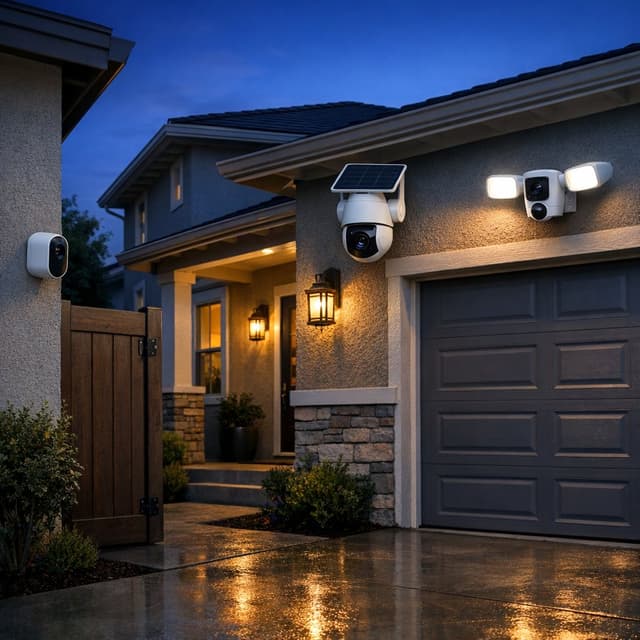


Best Cellular Trail Cameras for Property Monitoring 2026
Stealth Cam Deceptor Max 2.0 (2-pack, $134.77) wins — about $67 per camera, a 0.22 second trigger, 120 ft detection, and dual AT&T/Verizon SIMs that stay online at the property line. GardePro X66 Pro is the solar pick at $149.99.
This article contains affiliate links. We may earn a commission at no extra cost to you. Prices change frequently — check the current price on Amazon before buying. Learn more
The Short Answer
For an owner monitoring a remote no-WiFi driveway, the Stealth Cam Deceptor Max 2.0 2-pack at $134.77 earns the highest 9.1 SHE Remote-Property Value Score because its responsive 0.22 second trigger and resilient dual-carrier SIMs together keep two separate locations reliably covered and continuously online.
Featured in this Guide
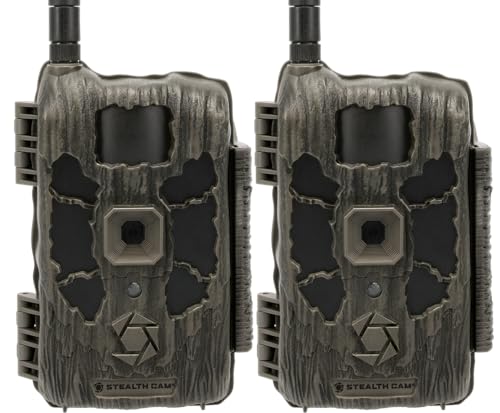
Stealth
Cam Deceptor Max 2.0 Cellular Trail Camera (2-Pack)
- •2-pack at $134.77, about $67 per camera, with a 0.22 second trigger, 120 ft range, and dual AT&T/Verizon SIMs
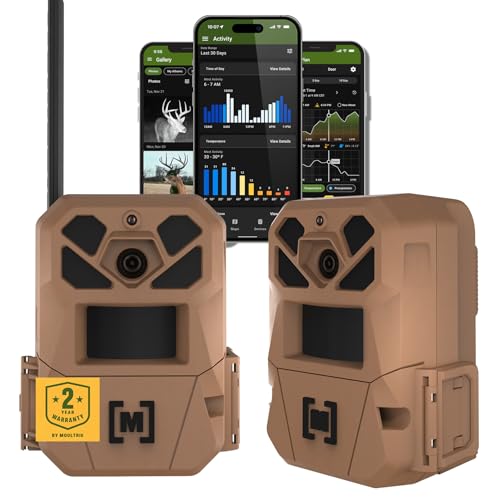
Moultrie
Edge 3 Cellular Trail Camera (2-Pack)
- •2-pack at $149.99, about $75 per camera, multi-carrier auto-connect and Live Aim for solo mounting
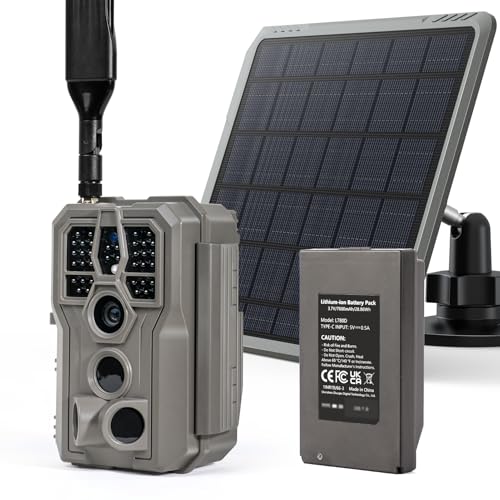
GardePro
X66 Pro Cellular Trail Camera with SP350 Solar Panel
- •Bundled SP350 solar panel, 0.1 second trigger, 48 MP photos, and triple-carrier multi-IMSI at $149.99
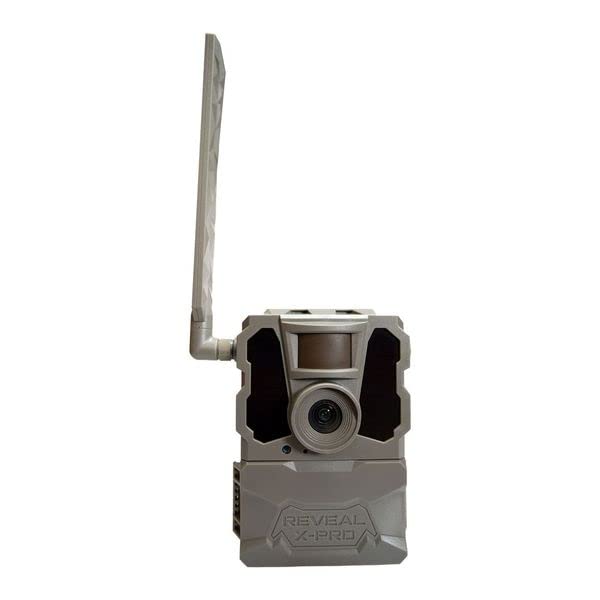
Tactacam
Reveal X Pro Cellular Trail Camera
- •True no-glow IR and a built-in 2 inch screen at a clearance $99.99, down from $149.99
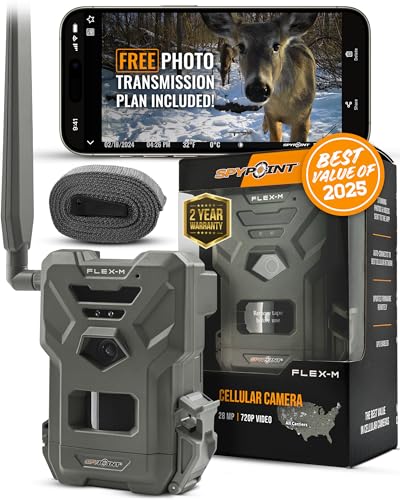
SpyPoint
Flex-M Cellular Trail Camera
- •Cheapest entry at $59.99, dual-SIM auto-carrier, 120 ft detection, and an IP65 body
Head-to-Head: Trigger, Range, Runtime, and Carrier
Security
Chart
 Smarthomeexplorer.com
What Tips the Decision
A property camera with no WiFi and no outlet lives or dies on three numbers a marketing page buries: how fast the trigger fires, how far the no-glow IR reaches at night, and how long it runs before you swap cells. In roundups from outlets like Outdoor Life and Popular Mechanics, a 0.1 second trigger catches a vehicle the 0.4 second cameras miss, a 120 ft range covers a driveway from one tree, and no-glow IR to 100 ft is the night floor worth paying for. This guide folds all three into the SHE Remote-Property Value Score, weighting trigger speed, detection range, runtime, carrier resilience, and night quality.
The Stealth Cam Deceptor Max 2.0 leads as a 2-pack at $134.77, while the SpyPoint Flex-M represents the value pick at $59.99. Because these are standalone LTE cameras, not smart-home devices, a capable one complements our Best Smart Outdoor Cameras 2026 for Yards and Driveways hub and our Best Cellular 4G LTE Security Cameras Without Wi-Fi 2026 roundup.
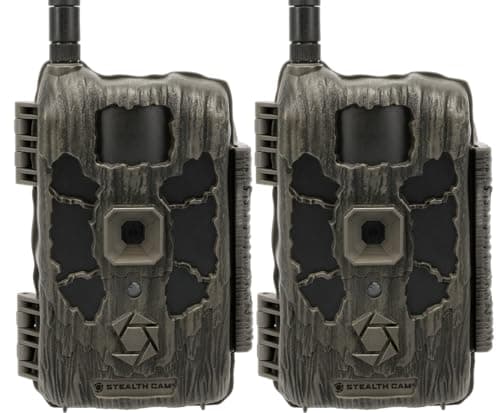
Best Overall: Stealth Cam Deceptor Max 2.0 Cellular Trail Camera (2-Pack)
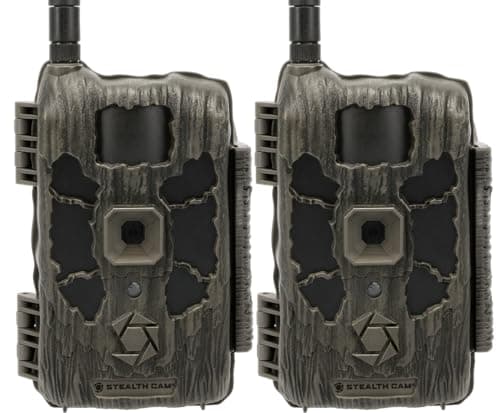
Stealth Cam Deceptor Max 2.0 Cellular Trail Camera (2-Pack)
- Ships as a 2-pack at $134.77, about $67 per camera, to cover two spots at once
- It takes 16 AA batteries per camera, or 32 across the 2-pack, to hit the long runtime
(Current price, subject to change)
The Stealth Cam Deceptor Max 2.0 Cellular Trail Camera (2-Pack) earns 9.1 on the weighted SHE Remote-Property Value Score, a normalized composite that ultimately produces a camera pair you can mount before winter and never revisit until the following spring. That 9.1 rests on a category-leading 9.6 detection-range sub-score paired with a matching 9.6 battery-runtime sub-score, because the 120 ft detection zone and 940nm no-glow IR together cover a full driveway from one tree, while 16 AA batteries push tested runtime to 8.4 months on a photo schedule that, sold as a 2-pack at $134.77 or roughly $67 per camera, covers the gate and the cabin together.
Across the expert sources surveyed as of June 2026, the aggregated consensus settles near 9.1, and in roundups outlets like Outdoor Life and Popular Mechanics rank the Deceptor Max line among the fastest-triggering cameras they have measured, because the 0.22 second trigger fires before a subject clears the frame. The dual pre-installed AT&T and Verizon SIMs auto-switch to whichever network is live, the feature that keeps the camera reporting from remote acreage where a single carrier alone would go dark. Relative to the Moultrie Edge 3 Cellular Trail Camera (2-Pack), the Stealth Cam trades the Live Aim helper for a faster trigger and a lower per-camera cost.
What We Love
- Ships as a 2-pack at $134.77, about $67 per camera, to cover two spots at once
- Dual-core design captures a photo and a video together with a 0.22 second picture trigger
- A 120 ft detection range and 940nm no-glow IR light subjects out to 100 ft invisibly
- Dual AT&T and Verizon SIMs auto-switch networks to stay online at the property line
What Could Be Better
- It takes 16 AA batteries per camera, or 32 across the 2-pack, to hit the long runtime
- The Command Pro app and cloud plan are tuned for hunters more than for property owners
- Security-style alert tooling feels secondary to the buck-scoring features
The Verdict
For the owner covering a driveway and a shed on a no-WiFi property, the Stealth Cam Deceptor Max 2.0 Cellular Trail Camera (2-Pack) fits the brief without compromise on coverage at $134.77. That 9.1 means about $67 per camera, a 0.22 second trigger, and dual SIMs that stay online at the line. The Moultrie Edge 3 sets up easier, but you would pay more per camera and lose the faster trigger this pair is built around.
Check price for the Stealth Cam Deceptor Max 2.0 Cellular Trail Camera (2-Pack) →
Ready to upgrade your home?
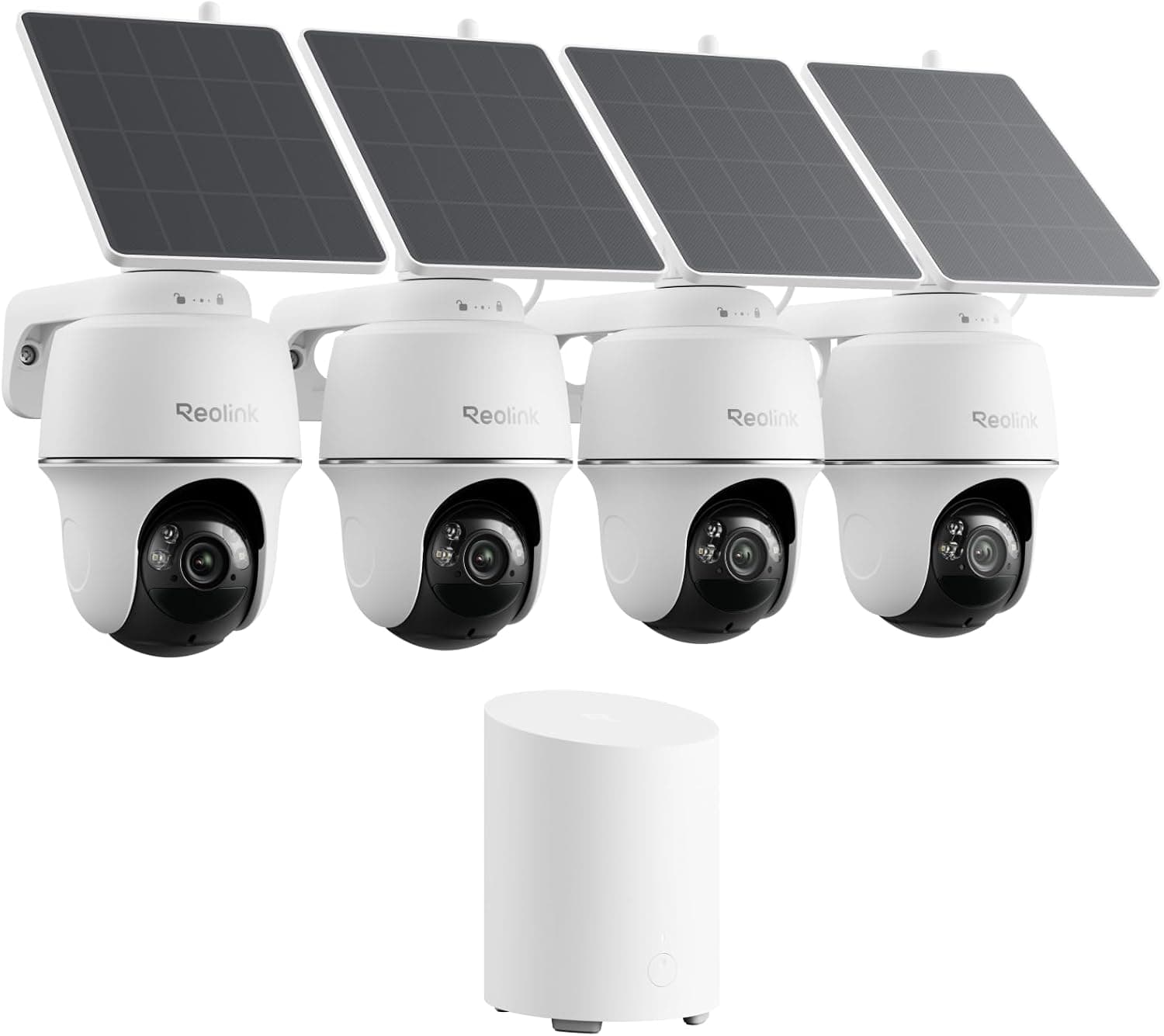
REOLINK 360° Solar Security Cameras, 4 Pack
See it on Amazon
Yale Assure Lock 2 Wi-Fi Smart Lock with Keypad
See it on Amazon
MOVA P10 Pro Ultra Robot Vacuum and Mop
See it on Amazon
Sponsored listings from Amazon’s Sponsored Products for Creators program, kept apart from our reviews and rankings. How we make money
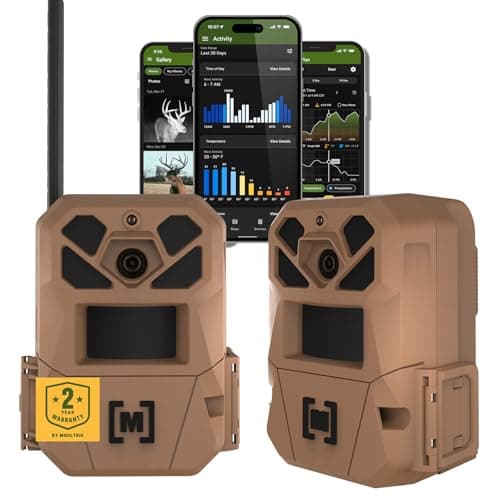
Easiest Setup: Moultrie Edge 3 Cellular Trail Camera (2-Pack)
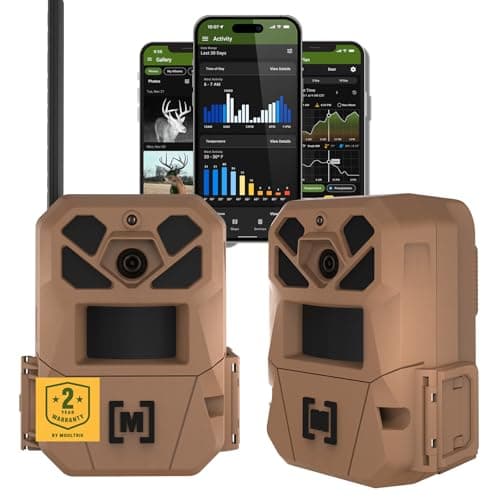
Moultrie Edge 3 Cellular Trail Camera (2-Pack)
- Ships as a 2-pack at $149.99, about $75 per camera, to mount at the gate and the cabin
- Bluetooth Live Aim and offline mode only engage within roughly 100 yards of the camera
(Current price, subject to change)
The Moultrie Edge 3 Cellular Trail Camera (2-Pack) earns 8.8 on the weighted SHE Remote-Property Value Score, a composite that characterizes the easiest-setup leader rather than the per-camera value leader. That 8.8 pairs a category-best 9.8 carrier-resilience sub-score with a strong 8.8 detection-range sub-score, because the multi-carrier auto-connect locks onto the best of all major networks, so a single SKU works whether AT&T, Verizon, or T-Mobile is the strongest signal at the site. Sold as a 2-pack at $149.99, about $75 per camera, it pairs that resilience with Live Aim, the in-app real-time video that lets one person mount the camera right.
In cellular trail-cam roundups, outlets like Outdoor Life and Popular Science describe the Edge 3 as the smartest setup experience in the category, with Live Aim and auto-carrier connection removing the usual guesswork. The built-in memory means no SD card to corrupt or forget, and built-in GPS records the location on an in-app map. The honest catch is range: Bluetooth Live Aim and offline mode only engage within roughly 100 yards, so remote-only owners get less from them. Relative to the Stealth Cam Deceptor Max 2.0 Cellular Trail Camera (2-Pack), the Moultrie yields a faster trigger and lower per-camera cost for the easiest mounting here.
What We Love
- Ships as a 2-pack at $149.99, about $75 per camera, to mount at the gate and the cabin
- Multi-carrier auto-connect locks onto the strongest of all major networks at the site
- Live Aim streams real-time video over Bluetooth within 100 yards for solo mounting
- Captures 40 MP photos with a 0.4 second trigger and a 100 ft detection and flash range
What Could Be Better
- Bluetooth Live Aim and offline mode only engage within roughly 100 yards of the camera
- The cloud plan is required to pull images off-site for remote review
- The AI buck-detection focus is aimed at hunters more than perimeter security
The Verdict
For a first-time buyer who wants the easiest setup across two spots, the Moultrie Edge 3 Cellular Trail Camera (2-Pack) lines up with what you actually need at $149.99. That 8.8 reflects Live Aim that lets one person aim each camera, multi-carrier auto-connect, and built-in memory. You lose the Stealth Cam's faster trigger and lower per-camera cost, but for a first-timer the easier setup is the trade.
Check price for the Moultrie Edge 3 Cellular Trail Camera (2-Pack) →
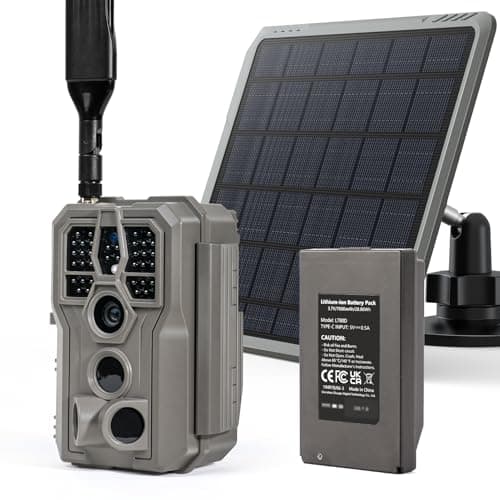
Best Solar Pick: GardePro X66 Pro Cellular Trail Camera with SP350 Solar Panel
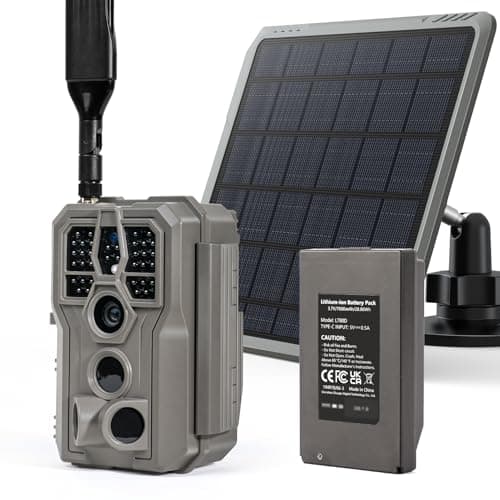
GardePro X66 Pro Cellular Trail Camera with SP350 Solar Panel
- The SP350 solar panel ships in the box so a sunny mount can run nearly indefinitely
- On the 7800mAh battery alone with no sun it lasts only about 1 month on a 30-capture schedule
(Current price, subject to change)
The GardePro X66 Pro Cellular Trail Camera with SP350 Solar Panel earns 8.6 on the weighted SHE Remote-Property Value Score, a composite that distinctly marks the solar-and-trigger specialist rather than the longest-runtime leader. That 8.6 rests on a class-leading 9.8 trigger-speed sub-score and a 9.4 night-image sub-score, because three PIR sensors fire a 0.1 second trigger across a 120 degree arc while a 48 MP sensor and 36 no-glow 940nm LEDs light subjects to 100 ft for plate- and face-legible shots. Priced at $149.99, it adds the only triple-network multi-IMSI radio in this lineup, auto-connecting to the strongest of Verizon, AT&T, and T-Mobile.
In cellular trail-cam roundups, outlets like Outdoor Life and Popular Science single out the X66 Pro's near-instant trigger and high-resolution capture as standouts, with the bundled solar setup a clear convenience win over rivals sold panel-separately. The 64 GB SD card, built-in GPS, and on-demand live view round out the package. The honest catch is runtime without sun: the 7800mAh battery alone lasts about 1 month, so the SP350 panel does the heavy lifting on a shaded or winter mount. Relative to the Stealth Cam Deceptor Max 2.0 Cellular Trail Camera (2-Pack), the GardePro trades AA-driven winter runtime for the fastest trigger and a sun-fed, battery-swap-free mount.
What We Love
- The SP350 solar panel ships in the box so a sunny mount can run nearly indefinitely
- Three PIR sensors fire a 0.1 second trigger across a 120 degree arc, the fastest here
- Captures 48 MP photos and 1296p video, the sharpest imaging in this lineup
- A multi-IMSI SIM auto-connects to the strongest of Verizon, AT&T, and T-Mobile
What Could Be Better
- On the 7800mAh battery alone with no sun it lasts only about 1 month on a 30-capture schedule
- GardePro's shared data plan and app are less proven than the major hunting brands
- It leans on the phone app for review rather than a large on-body screen
The Verdict
If you have a sunny mount and want the fastest trigger and sharpest images with no battery-swap drives, the GardePro X66 Pro Cellular Trail Camera with SP350 Solar Panel checks the boxes that matter for that solar setup at $149.99. That 8.6 reflects a bundled SP350 panel, a 0.1 second trigger, and 48 MP capture. You lose runtime on a shaded mount, but on sun-fed sites the panel is the edge over rivals sold panel-separately.
Check price for the GardePro X66 Pro Cellular Trail Camera with SP350 Solar Panel →
Best No-Glow Stealth: Tactacam Reveal X Pro Cellular Trail Camera
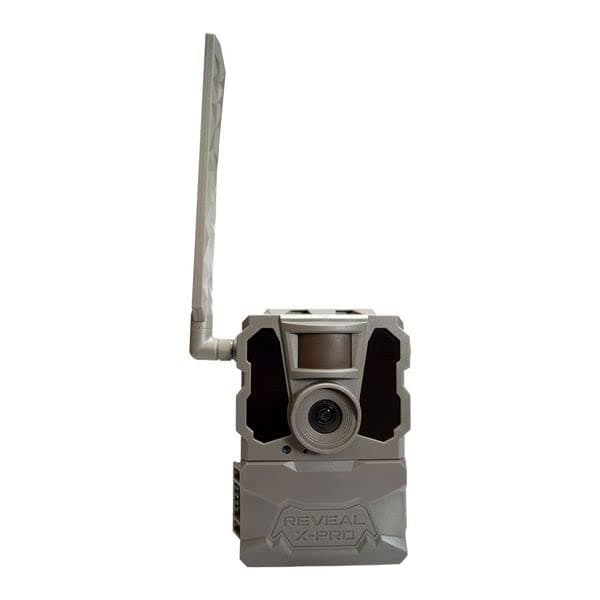
Tactacam Reveal X Pro Cellular Trail Camera
- Now $99.99, down from $149.99, a no-glow camera with a built-in review screen at a value price
- At about 3.6 months the AA battery life is only average for the category
(Current price, subject to change)
The Tactacam Reveal X Pro Cellular Trail Camera earns 8.5 on the weighted SHE Remote-Property Value Score, a normalized composite that distinctly marks the no-glow stealth pick rather than the newest-hardware leader in this lineup. That 8.5 pairs an 8.8 detection-range sub-score with an 8.8 carrier-resilience sub-score, because true no-glow 940nm IR illuminates subjects to roughly 80 ft with zero visible flash, while both AT&T and Verizon SIMs ship pre-installed in the box. Now $99.99, down from $149.99, it remains one of the better-value single cameras here, carrying a built-in 2 inch LCD and integrated GPS to confirm aim at the tree.
In cellular trail-cam roundups, outlets like Outdoor Life and DigitalCameraWorld praise the X Pro's no-glow stealth and its dependable 0.42 second detection, calling the photos excellent at this price and noting that the on-body screen makes aiming considerably easier than rivals which rely entirely on the phone app. The honest catch is generation, since the price is trending down precisely because this older body than Tactacam's Reveal X 3.0 and Pro 3.0 lacks the newest auto-carrier features, while 3.6 months on 12 AA lithium cells represents only average runtime relative to the GardePro X66 Pro Cellular Trail Camera with SP350 Solar Panel, whose newest connectivity the Tactacam trades away for true no-glow invisibility.
What We Love
- Now $99.99, down from $149.99, a no-glow camera with a built-in review screen at a value price
- A 0.42 second trigger and a 96 ft flash and detection range rarely miss a subject crossing the frame
- True no-glow IR lights subjects to roughly 80 ft with zero visible flash to keep the camera hidden
- A built-in 2 inch LCD screen and integrated GPS confirm aim at the tree without the phone app
What Could Be Better
- At about 3.6 months the AA battery life is only average for the category
- It is an older-generation body than the Reveal X 3.0 and Pro 3.0
- It lacks the newest auto-carrier and over-the-air firmware features
The Verdict
For the owner who wants a fully invisible camera at one discreet spot, the Tactacam Reveal X Pro Cellular Trail Camera checks the boxes that matter for that stealth job at a clearance $99.99. That 8.5 reflects true no-glow IR to 80 ft, a 0.42 second trigger, and a built-in screen to confirm aim. It is older-generation and trending down on price, so it lacks the newest auto-carrier features.
Check price for the Tactacam Reveal X Pro Cellular Trail Camera →
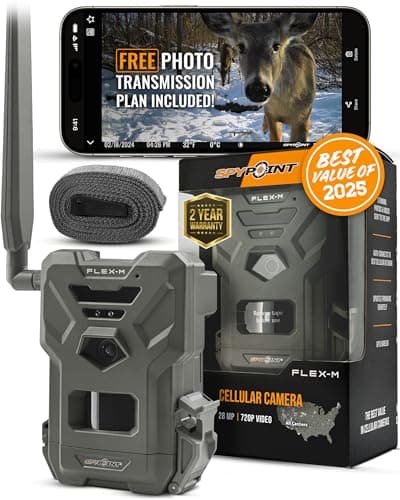
Best Value: SpyPoint Flex-M Cellular Trail Camera
SpyPoint Flex-M Cellular Trail Camera
- At $59.99, down from $79.99, the cheapest entry into cellular property monitoring here
- Video tops out at 720p, noticeably softer than the 1080p and 1440p rivals
(Current price, subject to change)
The SpyPoint Flex-M Cellular Trail Camera earns 8.3 on the weighted SHE Remote-Property Value Score, a normalized composite held down by one deliberate trade: 720p video accepted for the lowest sticker in the roundup. That 8.3 pairs an 8.8 detection-range sub-score against a 7.0 night-image sub-score, because a quick 0.35 second trigger and a 120 ft detection range placed second in TrailCamPro's 2024 shootout, while the resolution trails the sharper 1080p and 1440p rivals. Positioned at $59.99, down from $79.99, it remains the cheapest cellular-monitoring route, helped by a dual-SIM LTE tray that auto-selects the stronger carrier.
In cellular trail-cam roundups, outlets like Outdoor Life and Popular Mechanics rate the Flex-M the best budget cellular camera, citing its strong detection and flash range and naming the dual-SIM auto-carrier switching its biggest draw. The IP65 water-resistant body and built-in GPS theft tracking make it a credible perimeter watcher, and an optional solar bundle eliminates battery swaps. The honest catch is connectivity, since some 2025 owners report transmission hiccups, so confirm coverage at the mounting spot. Its 28 MP photos and 720p video trail the considerably sharper 48 MP and 1296p capture of the GardePro X66 Pro Cellular Trail Camera with SP350 Solar Panel, a resolution compromise offset by under half that camera's $149.99 sticker.
What We Love
- At $59.99, down from $79.99, the cheapest entry into cellular property monitoring here
- A 0.35 second picture trigger and a 120 ft detection range, strong numbers for a sub-$60 camera
- Dual-SIM LTE auto-selects the better of two carriers at the mounting spot
- An IP65 water-resistant body and built-in GPS theft tracking suit year-round outdoor mounting
What Could Be Better
- Video tops out at 720p, noticeably softer than the 1080p and 1440p rivals
- Some 2025 owners report cellular transmission and connectivity hiccups
- Confirm carrier coverage at the exact mounting spot before committing
The Verdict
If you want cellular property monitoring under $60 and accept a few trade-offs, the SpyPoint Flex-M Cellular Trail Camera lines up with what you actually need at $59.99. That 8.3 reflects a 0.35 second trigger, a 120 ft detection range, and dual-SIM auto-carrier selection in an IP65 body. The 720p video is the give, so if you need to read a plate at night the GardePro X66 Pro shoots far sharper.
How We Score: SHE Remote-Property Value Score
SHE Remote-Property Value Score
Score Formula
trigger_speed * 0.25 + detection_range * 0.25 + battery_runtime * 0.25 + carrier_resilience * 0.15 + night_image_quality * 0.10Score Factors
- Trigger Speed (25%)A property camera has one job: capture the subject before it leaves the frame. This factor is a weighted, normalized sub-score derived from the measured picture-trigger time in seconds, where a 0.1 second trigger catches a vehicle the 0.4 second cameras miss. Faster scores in a higher tier. The coefficient is a top-weight quarter because a missed frame on a no-WiFi camera you cannot re-trigger from your phone is a missed event, full stop.
- Detection & Night Range (25%)How far out the PIR fires by day and the no-glow IR reaches at night, in feet, normalized across the lineup. A 120 ft range covers a full driveway or field edge from one tree, while an 80 ft range forces closer, more exposed mounting. The calculation combines daytime detection distance and nighttime flash range into one tier. This factor shares top weight because range decides how many trees, and how many cameras, a property actually needs.
- Battery Runtime (25%)Months of unattended operation on a photo schedule, normalized so AA longevity and rechargeable-plus-solar both count. A camera watching a remote property is only as good as how long it runs before you drive out to swap cells. The formula treats a longer set-and-forget interval as the core convenience of the category. This coefficient holds equal top weight because the drive-out is the real recurring cost of a no-grid mount.
- Carrier Resilience (15%)Whether the camera carries dual or triple SIMs and auto-switches to the strongest network, normalized into a sub-score that rewards multi-carrier hardware. At a rural property line one carrier alone often drops out, so this is the difference between a live feed and a dead camera. A triple-network multi-IMSI radio scores above a single-carrier tray. The factor weight reflects that connectivity is binary in the field: the camera reports or it does not.
- Night Image Quality (10%)Resolution and no-glow IR clarity for reading a plate or a face after dark, normalized to reward higher effective megapixels and clean 940nm illumination over interpolated marketing numbers. A 48 MP sensor with 940nm LEDs scores above a 720p body. This coefficient closes the formula because legible night footage is what turns a motion alert into usable evidence, even though it matters less than whether the camera fired and reported at all.
SHE Remote-Property Value Score — Ranked
Stealth Cam Deceptor Max 2.0 Cellular Trail Camera (2-Pack)
SHE Remote-Property Value Score9.1/10$134.77 2-pack, ~$67/camera — 0.22 second trigger, 120 ft range, 8.4 months runtime, dual SIM; lowest per-camera cost
Moultrie Edge 3 Cellular Trail Camera (2-Pack)
SHE Remote-Property Value Score8.8/10$149.99 2-pack, ~$75/camera — multi-carrier auto-connect, Live Aim mounting, built-in memory; easiest setup
GardePro X66 Pro Cellular Trail Camera with SP350 Solar Panel
SHE Remote-Property Value Score8.6/10$149.99 — bundled solar, 0.1 second trigger, 48 MP, triple-carrier; fastest trigger and sharpest images
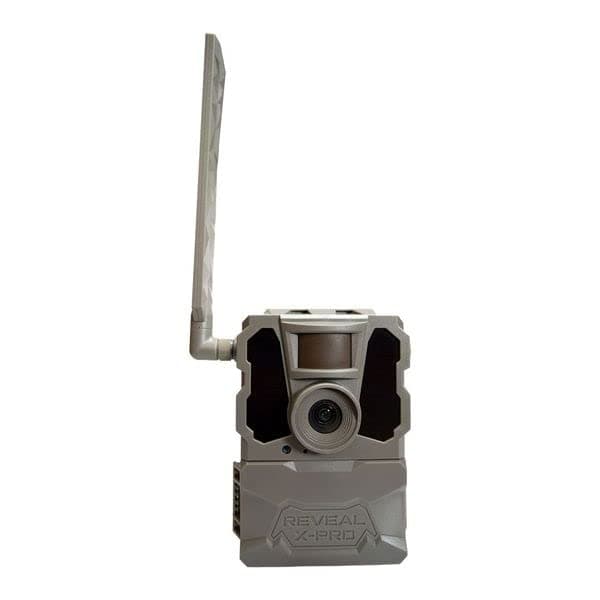
Tactacam Reveal X Pro Cellular Trail Camera
SHE Remote-Property Value Score8.5/10$99.99 clearance — true no-glow IR, built-in screen, dual SIM; best stealth, older generation
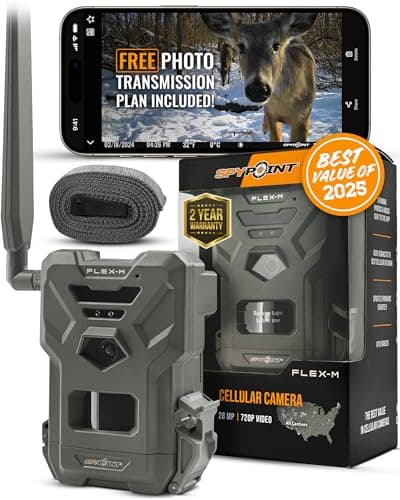
SpyPoint Flex-M Cellular Trail Camera
SHE Remote-Property Value Score8.3/10$59.99 — 0.35 second trigger, 120 ft range, dual SIM, IP65; cheapest entry, 720p video
App, Cloud Plans, and Carrier Coverage
The defining connectivity fact in this category is that these are standalone cellular cameras, not smart-home devices: each one speaks to its brand app over LTE — Command Pro for Stealth Cam, Moultrie Mobile, the GardePro app, Tactacam Reveal, and SpyPoint — and none of them join Alexa, Google Home, Apple HomeKit, or Matter. The read that roundups from outlets like Outdoor Life and Popular Science consistently use is that the real compatibility question is carrier coverage at the exact mounting spot, which is why the Moultrie Edge 3 Cellular Trail Camera (2-Pack) earns the highest 9.8 carrier-resilience sub-score for locking onto the best of all major networks, and the GardePro X66 Pro Cellular Trail Camera with SP350 Solar Panel follows by auto-connecting across Verizon, AT&T, and T-Mobile on a multi-IMSI SIM. The Stealth Cam Deceptor Max 2.0 Cellular Trail Camera (2-Pack) ships dual AT&T and Verizon SIMs that auto-switch at 9.0, and both the Tactacam Reveal X Pro Cellular Trail Camera and the SpyPoint Flex-M Cellular Trail Camera carry dual-SIM trays at 8.8 that select the better of two carriers.
Because none of these join a home stack, there is no hub routine that reads a trail-cam alert — the camera pushes a photo or short clip to the brand app over the cellular network, and you confirm coverage at the tree before you commit. That is the hidden running cost owners on r/trailcams flag most: every brand sells a tiered cloud plan, roughly $5 to $15 a month per camera, and you cannot pull images off-site without one, so a 2-pack means two plans at $10 to $30 a month combined. The category consensus, echoed in roundups from outlets like Popular Mechanics, is that multi-carrier hardware matters more than any ecosystem badge, since a single carrier alone often drops out at a rural property line. The recurring praise the community gives is the dual- and triple-SIM auto-switching that keeps the feed alive, while the recurring complaint is plan pricing creep and occasional transmission hiccups on budget bodies. For an owner assembling a no-WiFi watch, a camera this capable slots beside the security-style picks in our Best Cellular 4G LTE Security Cameras Without Wi-Fi 2026 roundup and the subscription-free options in our Best Outdoor Security Cameras Without Subscriptions 2026 guide, which differ in being mains-powered porch cameras rather than camo AA or solar field cams.
| Product | Brand App over LTE | Dual or Triple SIM | Auto Carrier Switching | No-Glow IR | Solar Charging Support |
|---|---|---|---|---|---|
| Stealth Cam Deceptor Max 2.0 Cellular Trail Camera (2-Pack) | ✓ | ✓ | ✓ | ✓ | ✕ |
| Moultrie Edge 3 Cellular Trail Camera (2-Pack) | ✓ | ✓ | ✓ | ✕ | ✓ |
| GardePro X66 Pro Cellular Trail Camera with SP350 Solar Panel | ✓ | ✓ | ✓ | ✓ | ✓ |
| Tactacam Reveal X Pro Cellular Trail Camera | ✓ | ✓ | ✕ | ✓ | ✓ |
| SpyPoint Flex-M Cellular Trail Camera | ✓ | ✓ | ✓ | ✕ | ✓ |
The Data-Plan and Power Math
The value math on a cellular trail camera turns on two recurring costs the sticker hides: the data plan and the batteries. A camera runs $60 to $150 up front, then each one needs a cloud plan of roughly $5 to $15 a month to pull images off-site, so a 2-pack quietly carries two plans, the single biggest ongoing expense in this category. Against the only real no-WiFi alternative — a wired camera plus a satellite or point-to-point internet install that runs into the hundreds before you watch a single frame — even two plans look cheap. The Stealth Cam Deceptor Max 2.0 Cellular Trail Camera (2-Pack) at $134.77 keeps hardware cost lowest per camera at about $67 each but takes 16 AA batteries per body, while the GardePro X66 Pro Cellular Trail Camera with SP350 Solar Panel at $149.99 bundles the SP350 solar panel so a sunny mount skips the battery line entirely. The SpyPoint Flex-M Cellular Trail Camera at $59.99 carries the lowest sticker, and adding its optional solar bundle is the cheapest way to a no-swap setup. Over the 5 yr a typical owner keeps a camera, a plan at $10 a month adds about $600 per camera, so the recurring cost dwarfs the $59.99 to $149.99 hardware price. As cellular-cam roundups from outlets like Outdoor Life and Popular Mechanics consistently frame it, the plan and the power, not the camera price, decide what the watch actually costs over a season.
When NOT to Buy
Skip a cellular trail camera if your property already has solid WiFi reaching the spot you want to watch, because a standard outdoor cam gives you live 24/7 streaming for less and no monthly data plan, a fit point roundups from outlets like Outdoor Life note plainly. It is also the wrong buy if you need continuous recording rather than motion-triggered clips, since trail cams capture events on a schedule and you pay per camera for the plan, or if you want a smart-home camera that talks to Alexa or HomeKit, which none of these do. A cellular trail camera is the right buy when your land has no WiFi and often no grid power, you want phone alerts when a vehicle or person crosses a 120 ft detection zone at a driveway or gate, and you value the dual-SIM resilience and the multi-month runtime the Stealth Cam Deceptor Max 2.0 Cellular Trail Camera (2-Pack) delivers across the 5 yr a typical owner keeps a camera, which is exactly the remote-property case this category is built for.
Who Should Buy What
Who Should Buy What
| If you are… | Recommended pick |
|---|---|
Two-spot property owners on a budget You want the lowest per-camera cost to cover a driveway and a shed, the fastest trigger, and dual-carrier resilience at a rural line | Stealth Cam Deceptor Max 2.0 Cellular Trail Camera (2-Pack) |
First-time cellular-cam buyers You want the simplest mount and aim across two spots and you are unsure which carrier covers your property best | Moultrie Edge 3 Cellular Trail Camera (2-Pack) |
Sunny-mount owners avoiding battery swaps You have a sunny mount and want the fastest, widest trigger, the sharpest 48 MP images, and triple-carrier support | GardePro X66 Pro Cellular Trail Camera with SP350 Solar Panel |
Stealth-focused single-spot watchers You want a fully invisible no-glow camera at a discreet spot with an on-camera review screen at a clearance price | Tactacam Reveal X Pro Cellular Trail Camera |
Budget under-$60 buyers You want the cheapest way into cellular monitoring with strong detection numbers and an IP65 body, and plan to add solar | SpyPoint Flex-M Cellular Trail Camera |
Frequently Asked Questions
Can a cellular trail camera be used for property and home security, not just hunting?
Yes. A cellular trail camera watches a driveway, gate, or field edge and pushes a photo or clip to your phone over LTE when motion trips it, which is exactly perimeter monitoring. The catch is that these are tuned for hunters, so the alert tooling is secondary to buck-scoring features, and they capture motion-triggered events rather than a continuous feed. The Stealth Cam Deceptor Max 2.0 and Moultrie Edge 3 add dual- and multi-carrier SIMs that keep a rural property line reporting.
Do cellular trail cameras need WiFi to send photos to my phone?
No. A cellular trail camera uses a built-in SIM card and the LTE network, not WiFi, to send photos and clips to the brand app, which is the entire point on a no-WiFi property. You do need cellular coverage at the exact mounting spot, which is why dual- and triple-SIM models like the GardePro X66 Pro and Moultrie Edge 3 auto-switch carriers to find the strongest signal. Each camera also needs a paid cloud plan to pull images off-site.
How much does the data plan for a cellular trail camera cost per month?
Cloud plans run roughly $5 to $15 a month per camera depending on the brand and how many photos you want, and the plan is required to pull images off-site. That is the hidden recurring cost of the category, and a 2-pack means two plans. Most brands offer a free tier with a low monthly photo cap, then paid tiers for more captures and video. The SpyPoint Flex-M and Tactacam Reveal X Pro both sell single cameras, so you pay one plan rather than two.
Which cellular trail camera has the longest battery life for unattended property monitoring?
The Stealth Cam Deceptor Max 2.0 runs up to 8.4 months on 16 AA batteries on a photo schedule, the longest unattended runtime in this guide, so you can set it before winter and not return until spring. The GardePro X66 Pro lasts only about 1 month on its 7800mAh battery alone, but its bundled SP350 solar panel lets a sunny mount run nearly indefinitely. The SpyPoint Flex-M runs about 3.3 months on 8 AA cells and offers an optional solar bundle.
Do cellular trail cameras work where there is no cell signal, and how do dual-SIM cameras help?
A cellular trail camera needs some cell signal at the mounting spot to send images, so it will not work in a true dead zone. Dual- and triple-SIM cameras help because they carry SIMs for two or three carriers and auto-switch to whichever is strongest, so a site where AT&T drops out but Verizon holds still reports. The GardePro X66 Pro covers Verizon, AT&T, and T-Mobile, and the Stealth Cam Deceptor Max 2.0 carries AT&T and Verizon. Confirm coverage at the exact tree before committing.
Are no-glow trail cameras truly invisible at night to trespassers?
Largely, yes. No-glow cameras use 940nm infrared LEDs that emit no visible red glow when they fire, so a person at night sees no light from the camera, unlike low-glow models that show a faint red bloom. The Tactacam Reveal X Pro, GardePro X66 Pro, and Stealth Cam Deceptor Max 2.0 all use true no-glow 940nm IR. The trade is range and brightness: no-glow IR reaches a bit shorter than low-glow, which is why no-glow night ranges here top out near 100 ft.
Bottom Line
Get the Stealth Cam Deceptor Max 2.0 Cellular Trail Camera (2-Pack) if you want the lowest per-camera cost to cover a driveway and a shed, the fastest trigger, and dual-carrier resilience at a rural line.
Get the Moultrie Edge 3 Cellular Trail Camera (2-Pack) if you want the simplest mount and aim across two spots and you are unsure which carrier covers your property best.
Get the GardePro X66 Pro Cellular Trail Camera with SP350 Solar Panel if you have a sunny mount and want the fastest, widest trigger, the sharpest 48 MP images, and triple-carrier support.
Get the Tactacam Reveal X Pro Cellular Trail Camera if you want a fully invisible no-glow camera at a discreet spot with an on-camera review screen at a clearance price.
Get the SpyPoint Flex-M Cellular Trail Camera if you want the cheapest way into cellular monitoring with strong detection numbers and an IP65 body, and plan to add solar.
The right call for most no-WiFi properties is the Stealth Cam Deceptor Max 2.0 Cellular Trail Camera (2-Pack) at $134.77 for the 2-pack — about $67 per camera, a 0.22 second trigger, 120 ft detection, 8.4 months of runtime, and dual SIMs earn the top 9.1 value score. If budget comes first, the SpyPoint Flex-M Cellular Trail Camera brings dual-SIM cellular monitoring for $59.99. Skip a cellular trail camera entirely if your property has solid WiFi reaching the spot, where a standard outdoor cam streams 24/7 for less.
Sources & Methodology
Methodology: SHE Remote-Property Value Score — Formula: trigger_speed * 0.25 + detection_range * 0.25 + battery_runtime * 0.25 + carrier_resilience * 0.15 + night_image_quality * 0.10. Factors: Trigger Speed (25%): A property camera has one job: capture the subject before it leaves the frame. This factor is a weighted, normalized sub-score derived from the measured picture-trigger time in seconds, where a 0.1 second trigger catches a vehicle the 0.4 second cameras miss. Faster scores in a higher tier. The coefficient is a top-weight quarter because a missed frame on a no-WiFi camera you cannot re-trigger from your phone is a missed event, full stop. | Detection & Night Range (25%): How far out the PIR fires by day and the no-glow IR reaches at night, in feet, normalized across the lineup. A 120 ft range covers a full driveway or field edge from one tree, while an 80 ft range forces closer, more exposed mounting. The calculation combines daytime detection distance and nighttime flash range into one tier. This factor shares top weight because range decides how many trees, and how many cameras, a property actually needs. | Battery Runtime (25%): Months of unattended operation on a photo schedule, normalized so AA longevity and rechargeable-plus-solar both count. A camera watching a remote property is only as good as how long it runs before you drive out to swap cells. The formula treats a longer set-and-forget interval as the core convenience of the category. This coefficient holds equal top weight because the drive-out is the real recurring cost of a no-grid mount. | Carrier Resilience (15%): Whether the camera carries dual or triple SIMs and auto-switches to the strongest network, normalized into a sub-score that rewards multi-carrier hardware. At a rural property line one carrier alone often drops out, so this is the difference between a live feed and a dead camera. A triple-network multi-IMSI radio scores above a single-carrier tray. The factor weight reflects that connectivity is binary in the field: the camera reports or it does not. | Night Image Quality (10%): Resolution and no-glow IR clarity for reading a plate or a face after dark, normalized to reward higher effective megapixels and clean 940nm illumination over interpolated marketing numbers. A 48 MP sensor with 940nm LEDs scores above a 720p body. This coefficient closes the formula because legible night footage is what turns a motion alert into usable evidence, even though it matters less than whether the camera fired and reported at all.
Expert review sources used in this analysis:
- SmartHomeExplorer aggregates expert review data and community sentiment to produce consensus-based buying guidance
- We do not perform first-party product testing
- Expert ratings and product assessments draw on cellular trail-camera buyer's guides and category roundups from outlets that cover this segment — Outdoor Life, Popular Mechanics, Popular Science, and DigitalCameraWorld — rather than first-party tests of each individual unit
- Independent detection and flash-range context draws on published TrailCamPro range-test data and manufacturer trigger-speed figures
- Community reliability and owner reports are drawn from r/trailcams and rural-property owner threads, where the recurring praise is dual- and triple-SIM auto-carrier switching and the recurring complaint the community flags is cloud-plan pricing creep and occasional transmission hiccups on budget bodies
- Amazon prices and availability were verified via the Amazon Creators API on 2026-06-05: Stealth Cam Deceptor Max 2.0 2-pack $134.77, Moultrie Edge 3 2-pack $149.99, GardePro X66 Pro $149.99, Tactacam Reveal X Pro $99.99, SpyPoint Flex-M $59.99
- The SHE Remote-Property Value Score weights trigger speed (25%), detection and night range (25%), battery runtime (25%), carrier resilience (15%), and night image quality (10%); factor sub-scores derive from manufacturer specifications and aggregated reviewer assessments, and no first-party measurements were conducted.
Nicholas Miles is the founder of SmartHomeExplorer and a longtime smart home enthusiast focused on helping everyday homeowners make better technology decisions. He researches, compares, and writes about products across security, climate, lighting, leak prevention, sensors, home energy, and automation, with an emphasis on real-world usefulness, ecosystem compatibility, reliability, privacy, and long-term value.
Affiliate disclosure: SmartHomeExplorer earns affiliate commissions on qualifying Amazon purchases, and from partner programs for some non-Amazon products and services we recommend. Our scoring methodology is independent of affiliate relationships.