
Best Smart Microwaves 2026: Scan-to-Cook & Voice Control
The connected microwaves in this category are the hard ones to buy. The Toshiba ML-EM45P at $169.99 is our Amazon pick and it is sensor-only, not connected; the GE GCST09U1WSS holds the Scan-to-Cook slot at $189.00, sold direct by GE rather than on Amazon.
This article contains affiliate links. We may earn a commission at no extra cost to you. Prices change frequently — check the current price on Amazon before buying. Learn more
The Short Answer
The honest answer in this category is uncomfortable: the pick you can actually purchase on Amazon, the Toshiba ML-EM45P, is sensor-only rather than connected. The two genuinely connected units, the Panasonic and the GE, returned no buyable Amazon offer on our 2026-08-22 verification.
Featured in this Guide
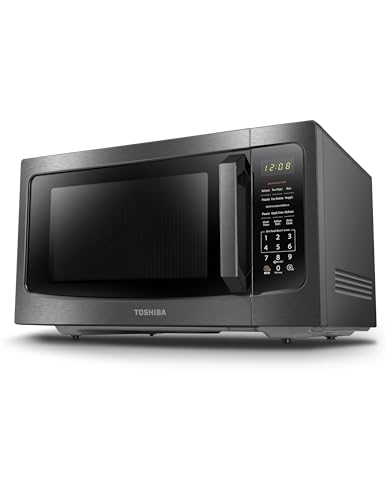
Toshiba
ML-EM45P(BS) Smart Sensor Microwave
- •1200W in a 1.6 cu. ft. cavity with Smart Sensor auto-cook and a mute button at $169.99 list — most power-per-dollar here
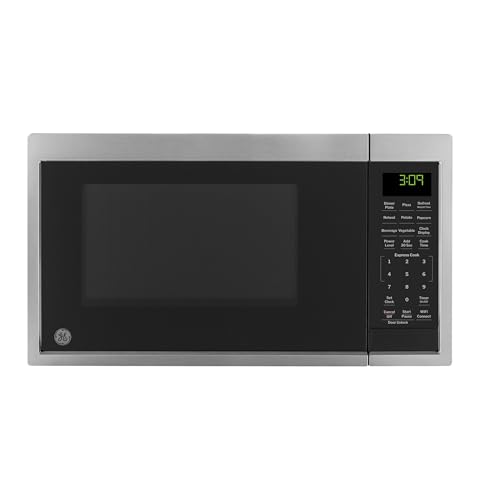
GE
GCST09U1WSS Smart Countertop Microwave
- •Barcode auto-set plus dual Alexa-and-Google voice at $189.00, sold direct by GE — the only pick that speaks both assistants
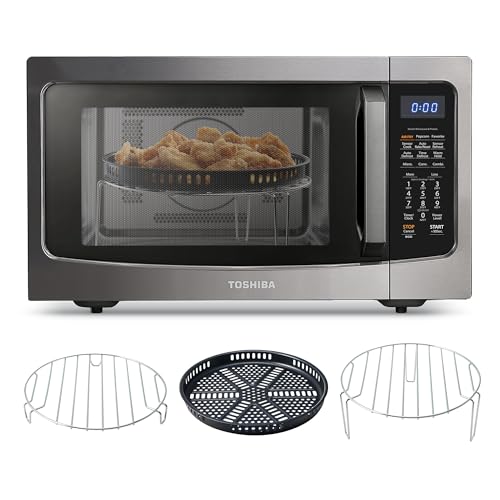
Toshiba
ML-EC42P(BS) 4-in-1 Air Fryer Combo
- •Microwave, convection, and air fryer in one box at $271.99 list — retires a separate fryer and toaster oven
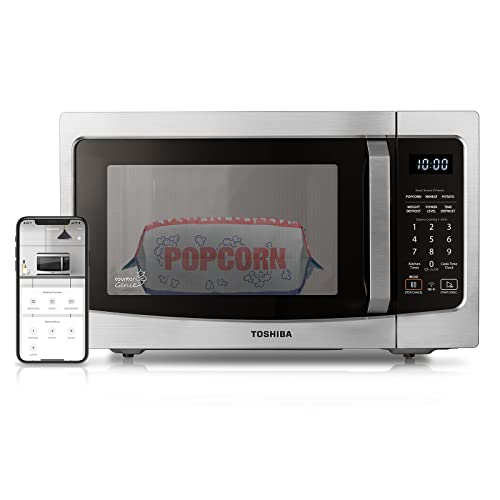
Toshiba
ML-EM34P(SS) Works With Alexa Microwave
- •Alexa plus app remote and sensor reheat at $179.99 — hands-free basics under the inverter price
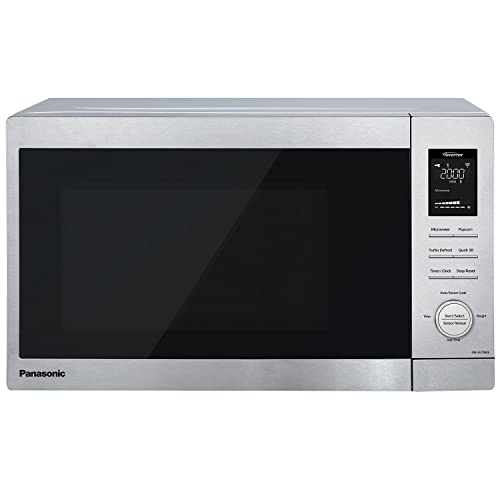
Panasonic
NN-SV79MS
- •1200W inverter, 100-plus Alexa commands, and Genius Sensor at $329.99 — the top composite in this roundup
Head-to-Head: Evenness, Voice, Sensors, and Capacity
Kitchen
Chart
 Smarthomeexplorer.com
What Tips the Decision
A plate of leftovers that comes out scalding at the edge and cold in the middle is the complaint that decides this category, because a standard magnetron pulses full 1.2 kW power on and off, so 50 percent power means 30 seconds blasting then 30 seconds idle. Inverter heating fixes that, and roundups from Reviewed, RTINGS, and Wirecutter credit the steady delivery for the even results magnetron units miss. This guide ranks on the SHE Smart-Reheat Score, weighting evenness, voice convenience, and sensors.
The Toshiba ML-EM45P is the recommended starting configuration at $169.99, pairing 1.2 kW with Smart Sensor moisture detection. The GE GCST09U1WSS introduces Scan-to-Cook barcode automation, and the Panasonic NN-SV79MS retains the highest composite on demonstrated inverter evenness. Three of the five picks are Toshiba because that brand effectively owns the connected countertop tier beneath $300, a pattern our Best AI Smart Ovens 2026: 3 Countertop Ovens Compared guide documents.
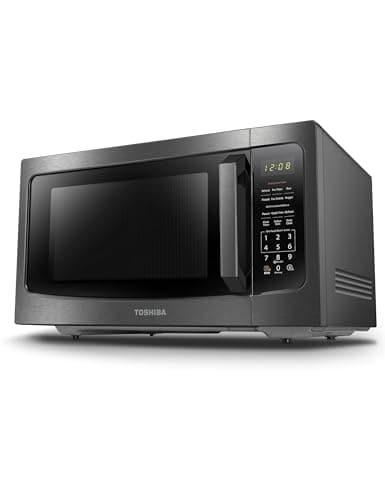
Best Sensor Microwave on Amazon: Toshiba ML-EM45P(BS) Smart Sensor Microwave
Toshiba ML-EM45P(BS) Smart Sensor Microwave
- Smart Sensor reads moisture and shuts off when food is done, no babysitting a timer
- No Wi-Fi, app, or voice assistant — the smart is the moisture sensor only
(Current price, subject to change)
The Toshiba ML-EM45P(BS) Smart Sensor Microwave earns 8.0 on the weighted SHE Smart-Reheat Score, a composite that distinctly marks the value leader rather than the connected leader. It rests on a category-best 9.7 capacity-value sub-score paired with an 8.8 sensor-intelligence sub-score. That ranking holds because 1.2 kW concentrated inside a substantial 1.6 cubic feet cavity represents the most wattage per dollar here. The Smart Sensor interprets moisture across six menus and deactivates automatically whenever the food finishes. Positioned competitively at $169.99 with a removable turntable, it accommodates a 13-inch pizza that the comparatively compact 0.9 cubic feet bodies fundamentally cannot.
In microwave roundups, evaluators like Reviewed and RTINGS credit the smart-sensor automatic cooking for heating pizza and vegetables evenly. They characterize the absence of an inverter as the anticipated compromise at this particular price. RTINGS-style testing additionally identifies the considerable 1.6 cubic feet cavity and 1.2 kW output as exceptional value. The genuine mute button silences every beep, a detail owners single out for studios and open-plan apartments. Relative to the Toshiba ML-EM34P(SS) Works With Alexa Microwave, the EM45P relinquishes the voice layer in exchange for a noticeably roomier 1.6 cubic feet cavity versus 1.3, approximately 1.2x the usable interior.
What We Love
- Smart Sensor reads moisture and shuts off when food is done, no babysitting a timer
- 1200W in a roomy 1.6 cu. ft. cavity is the most power-per-dollar here
- A genuine mute button silences every beep for late-night use
- Position-memory turntable and eco mode read premium for the price
What Could Be Better
- No Wi-Fi, app, or voice assistant — the smart is the moisture sensor only
- Standard magnetron pulses, so large reheats can finish unevenly
- Owners note it runs loud and the plastic interior feels less premium
The Verdict
If you want sensor cooking without paying for Wi-Fi you may never use, the Toshiba ML-EM45P(BS) Smart Sensor Microwave is a sensible pick for that setup at $169.99 list. The 8.0 reflects a moisture sensor that stops when food is done and a roomy 1.6 cu. ft. cavity that fits a 13-inch pizza. You give up voice entirely, but for the most power-per-dollar and a true mute button, that trade lands.
Check price for the Toshiba ML-EM45P(BS) Smart Sensor Microwave →
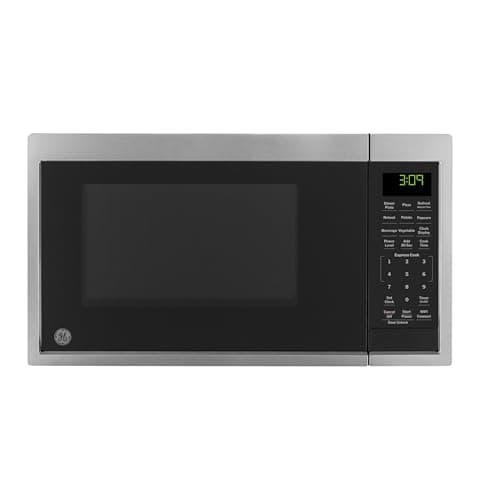
Best Scan-to-Cook: GE GCST09U1WSS Smart Countertop Microwave
GE GCST09U1WSS Smart Countertop Microwave
- Scan-to-Cook reads a packaged-food barcode and pushes exact time and power
- Standard magnetron rated only fair for heat evenness on a large reheat
(Current price, subject to change)
The GE GCST09U1WSS Smart Countertop Microwave earns 8.4 on the weighted SHE Smart-Reheat Score, a composite that marks the convenience leader rather than the evenness leader in this roundup. That 8.4 pairs a category-best 9.4 voice-and-scan sub-score with a 9.6 ecosystem-reach sub-score, because Scan-to-Cook reads a barcode in the SmartHQ app and pushes the exact time and power to the unit, while it is the only pick that simultaneously accommodates both Alexa and Google, comprehensive assistant compatibility positioned at $189.00 with 0.9 kW in a 0.9 cubic feet cabinet that joins your network over Wi-Fi without an additional hub.
In microwave roundups, outlets like Consumer Reports and Digital Trends praise the barcode-to-cook workflow and dual-assistant support as the standout reasons to step up from a dumb box, even though Consumer Reports rated its heat evenness only fair on a reheated bowl, the documented trade-off for the compact magnetron body. Owners and app reviewers repeatedly flag the SmartHQ app for dropped connections over a wk of use, which is the recurring complaint the community raises about an otherwise capable connected unit. Relative to the Panasonic NN-SV79MS, the GE trades inverter evenness for the barcode scanning and Google support that define it at a sticker $140 lower.
What We Love
- Scan-to-Cook reads a packaged-food barcode and pushes exact time and power
- The only pick here that speaks both Alexa and Google Assistant
- 900W in a compact 0.9 cu. ft. cabinet slots onto a small counter
- Wi-Fi setup runs through SmartHQ with no hub or bridge to buy
What Could Be Better
- Standard magnetron rated only fair for heat evenness on a large reheat
- Scan-to-Cook only helps packaged foods with a recognized barcode
- Owners knock the SmartHQ app for buggy setup and dropped connections
The Verdict
If your kitchen runs on frozen meals and you'd rather not punch in numbers, the GE GCST09U1WSS Smart Countertop Microwave lines up with what you actually need at $189.00, GE's own list price. The 8.4 reflects Scan-to-Cook that auto-sets a frozen entree to its box spec and dual Alexa-and-Google voice from any room. You lose inverter evenness on big reheats, but for barcode cooking that is a fair trade.
Check price for the GE GCST09U1WSS Smart Countertop Microwave →
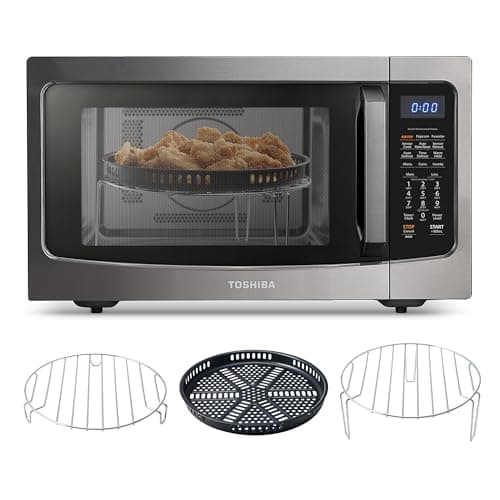
Best Combi: Toshiba ML-EC42P(BS) 4-in-1 Air Fryer Combo
Toshiba ML-EC42P(BS) 4-in-1 Air Fryer Combo
- Four modes in one box: microwave, convection, air fryer, and combi
- No Wi-Fi or voice control at all despite the higher price
(Current price, subject to change)
The Toshiba ML-EC42P(BS) 4-in-1 Air Fryer Combo earns 7.7 on the weighted SHE Smart-Reheat Score, a composite that reflects a versatility play rather than a pure reheater, pairing an 8.6 cooking-evenness sub-score with an 8.5 sensor-intelligence sub-score. That ranking holds because the combination mode operates the 1.0 kW microwave alongside genuine convection, so a casserole browns evenly while it cooks considerably faster than a conventional wall oven, whereas the Smart Sensor continuously interprets moisture and deactivates automatically when finished. Positioned at $271.99 in a 1.5 cubic feet cavity, it fits a 12-inch pizza and folds three appliances into one footprint.
In microwave roundups, outlets like RTINGS and Reviewed frame the four-in-one combo as earning its counter space on versatility, while cautioning that the combination modes carry a learning curve and the air fryer trails a standalone unit, since the air-fry crisping covers casual use in the 1.5 cu. ft. cavity but takes longer than a purpose-built fryer. Owners further report that the air-fry mode heats surrounding cabinets noticeably while the dark blue display reads poorly from across a bright kitchen. Relative to the Toshiba ML-EM45P(BS) Smart Sensor Microwave, the EC42P trades a touch of cavity for the convection browning and air frying the sensor-only model entirely lacks.
What We Love
- Four modes in one box: microwave, convection, air fryer, and combi
- Combi mode browns a casserole faster than a wall oven with 1000W microwave power
- Air-fry mode crisps wings and fries with little to no oil
- Replaces a separate air fryer and convection toaster oven on the counter
What Could Be Better
- No Wi-Fi or voice control at all despite the higher price
- Air-fry results trail a dedicated standalone fryer and take longer
- Air-fry mode heats surrounding cabinets and the LED display is hard to read
The Verdict
If you've already narrowed to one box that retires your air fryer and toaster oven, the Toshiba ML-EC42P(BS) 4-in-1 Air Fryer Combo checks the boxes that matter for that small-kitchen goal at $271.99. The 7.7 reflects four modes — microwave, convection, air fryer, and combi — in a 1.5 cu. ft. cavity. You won't get voice control, but for a counter-clearing combi that browns and crisps, that fits.
Check price for the Toshiba ML-EC42P(BS) 4-in-1 Air Fryer Combo →
Best Budget Voice: Toshiba ML-EM34P(SS) Works With Alexa Microwave
Toshiba ML-EM34P(SS) Works With Alexa Microwave
- Works with Alexa for hands-free start, stop, and quick-cook presets
- Standard magnetron pulses, so large reheats trail the inverter Panasonic
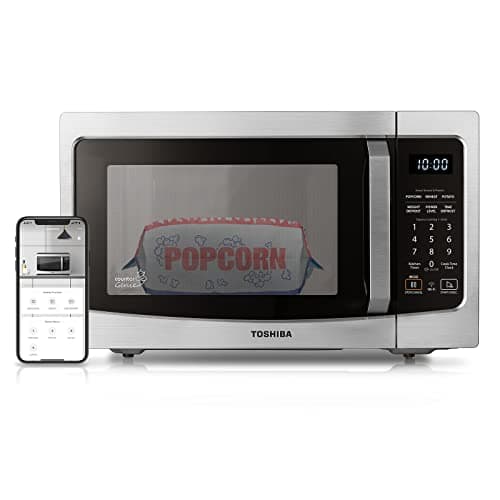
(Current price, subject to change)
The Toshiba ML-EM34P(SS) Works With Alexa Microwave earns 7.5 on the weighted SHE Smart-Reheat Score, a composite that marks the budget voice entry rather than the evenness or scan leader, pairing a 7.9 capacity-value sub-score with a 7.9 sensor-intelligence sub-score. That ranking holds because 1100W in a 1.3 cubic feet cavity is more usable space than the 0.7 cubic feet budget Alexa boxes, while Sensor Reheat covers six items and a humidity sensor auto-detects moisture so frozen dinners come out even. Positioned at $179.99, it fits a normal dinner plate and runs hands-free through a paired Echo.
In microwave roundups, outlets like Reviewed and RTINGS describe the Alexa-enabled sensor reheat as the practical draw, noting that frozen dinners cook more evenly with the moisture sensor than on a plain timer at this price. RTINGS-style coverage credits the 1100W output and humidity-sensor auto-cook as solid value while framing the standard magnetron as the expected trade-off below $200, and the mute function plus an eco mode that cuts standby draw by turning off the display are both genuinely rare at this tier. Relative to the GE GCST09U1WSS Smart Countertop Microwave, the EM34P yields barcode scanning and Google support in exchange for a lower sticker and a larger 1.3 cubic feet cavity.
What We Love
- Works with Alexa for hands-free start, stop, and quick-cook presets
- Sensor Reheat and a humidity sensor cook frozen dinners evenly across 23 presets
- 1100W in a 1.3 cu. ft. cavity fits a normal dinner plate
- Mute function and eco mode are rare on a sub-$200 voice microwave
What Could Be Better
- Standard magnetron pulses, so large reheats trail the inverter Panasonic
- Alexa-only and leans on a paired Echo for the best hands-free experience
- No Scan-to-Cook barcode library, so packaged cooking is preset-based
The Verdict
If you want hands-free basics without the inverter upcharge, the Toshiba ML-EM34P(SS) Works With Alexa Microwave is a sensible pick for that setup at $179.99. The 7.5 reflects Alexa voice, a phone-app remote, and Sensor Reheat that auto-detects moisture across 23 presets. You give up inverter evenness and Scan-to-Cook, but for real voice under $200 with a mute button, no need to overthink it.
Check price for the Toshiba ML-EM34P(SS) Works With Alexa Microwave →
Most Even Reheats: Panasonic NN-SV79MS
Panasonic NN-SV79MS
- 1200W inverter holds steady power at every level for even reheats and clean defrosts
- At $329.99 it costs 2x to 4x what a basic Alexa microwave runs
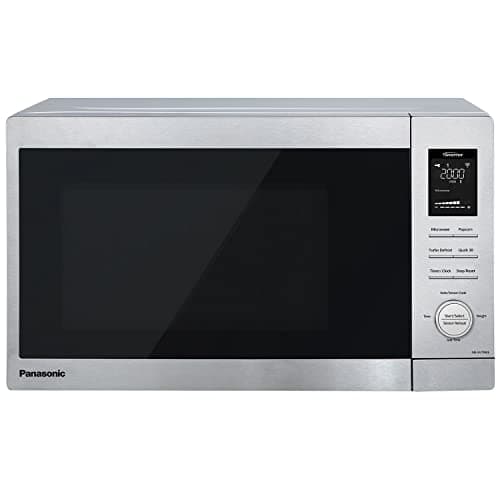
(Current price, subject to change)
The Panasonic NN-SV79MS earns 9.1 on the weighted SHE Smart-Reheat Score. That composite identifies a microwave whose reheats finish evenly instead of scalding at the edge and remaining frozen in the center. The 9.1 rests on a category-leading 9.7 cooking-evenness sub-score paired with a 9.3 sensor-intelligence sub-score. The 1.2 kW inverter maintains a steady stream at 50 percent power instead of pulsing full-on then idle, while the Genius Sensor interprets steam and automatically configures time and power. Priced at $329.99, it incorporates a 1.4 cubic feet cavity accommodating a 12-inch plate.
Across the expert sources surveyed as of June 2026 the aggregated consensus settles near a 9.1 composite. Microwave roundups from outlets like Consumer Reports and Reviewed consistently rank Panasonic inverter units highest for even reheating, holding that inverter delivery produces a cleaner defrost than a pulsing magnetron. The 100-plus Alexa commands extend beyond start and stop to encompass power, time, and the 20 presets, which translates to genuinely hands-free operation while your hands stay occupied. Relative to the GE GCST09U1WSS Smart Countertop Microwave, the Panasonic relinquishes barcode scanning and Google support in exchange for the inverter evenness it is fundamentally engineered around.
What We Love
- 1200W inverter holds steady power at every level for even reheats and clean defrosts
- Over 100 Alexa commands set power, add time, and trigger presets hands-free
- Genius Sensor reads steam and auto-sets time and power on a plate of leftovers
- 1.4 cu. ft. cavity swallows a 12-inch dinner plate without the turntable bumping the walls
What Could Be Better
- At $329.99 it costs 2x to 4x what a basic Alexa microwave runs
- The always-on clock display is too bright in a dark kitchen with no dim setting
- Alexa-only with no Google Assistant support for Nest households
The Verdict
For the busy cook whose real gripe is cold-center reheats, the Panasonic NN-SV79MS fits the brief without compromise at $329.99. The 9.1 means a 1200W inverter that heats a plate evenly, Genius Sensor that auto-sets time and power, and 100-plus Alexa commands for full hands. The GE costs $140 less, but you'd lose the inverter evenness that is the reason to step up.
How We Score: SHE Smart-Reheat Score
SHE Smart-Reheat Score
Score Formula
Cooking_Evenness * 0.30 + Voice_Scan_Convenience * 0.25 + Sensor_Intelligence * 0.20 + Capacity_Value * 0.15 + Ecosystem_Reach * 0.10Score Factors
- Cooking Evenness (30%)How evenly the microwave heats food without cold centers and rubbery edges. This factor is a weighted, normalized sub-score derived from inverter-versus-magnetron architecture, reviewer reheat and defrost assessments, and lab heat-evenness ratings; an inverter unit holding steady power at every level scores in a higher tier than a magnetron that pulses full-on then off. The coefficient sits highest because no amount of voice control fixes a cold-in-the-middle plate.
- Voice & Scan Convenience (25%)How far the smart layer goes past start and stop. The calculation normalizes the depth of voice control (power, time, presets, not just on-off) and whether Scan-to-Cook auto-sets packaged foods into a composite tier; a unit with 100-plus commands and barcode reading scores above a box that merely says it works with Alexa. This factor carries the second weight because real hands-free control and barcode cooking are the reason to buy smart over a $50 dumb microwave.
- Sensor Intelligence (20%)Whether on-device moisture and steam sensors auto-set time and power so the user does not guess-and-restart. The formula normalizes the presence and reach of Genius Sensor and humidity-sensor auto-cook into a tier; a unit that reads steam and stops when done scores above one with timer-only cooking. The coefficient reflects that this is the on-device smarts that works even when Wi-Fi is down.
- Capacity & Value (15%)Cavity size versus price and wattage per dollar. This sub-score is a normalized tier that rewards usable cubic feet and power per dollar and penalizes tiny 0.9 cu. ft. bodies that only fit a single plate. The factor weight reflects that cavity size decides whether the microwave fits real plates and casseroles and whether the smart premium is worth paying.
- Ecosystem Reach (10%)Whether the smart layer works in your home. The composite rewards dual Alexa-and-Google support over Alexa-only and hub-free Wi-Fi over a required bridge. This coefficient closes the formula at the lightest weight because most buyers already live in one assistant, but it is the difference between a usable feature and a dead one for Google-Nest households.
SHE Smart-Reheat Score — Ranked

Panasonic NN-SV79MS
SHE Smart-Reheat Score9.1/10$329.99 — 1200W inverter, 100-plus Alexa commands, Genius Sensor; tops the composite on reheat evenness
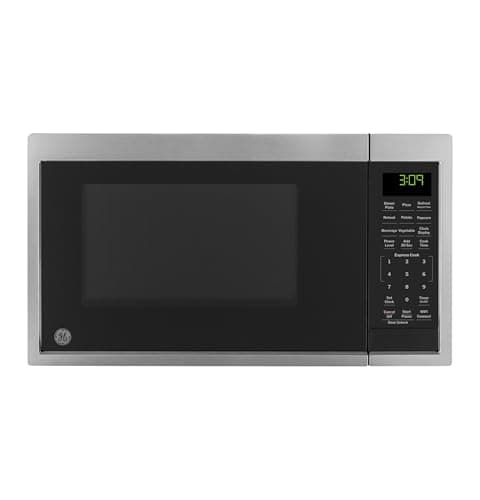
GE GCST09U1WSS Smart Countertop Microwave
SHE Smart-Reheat Score8.4/10$189.00 direct from GE — Scan-to-Cook barcode, dual Alexa and Google; best convenience and ecosystem reach
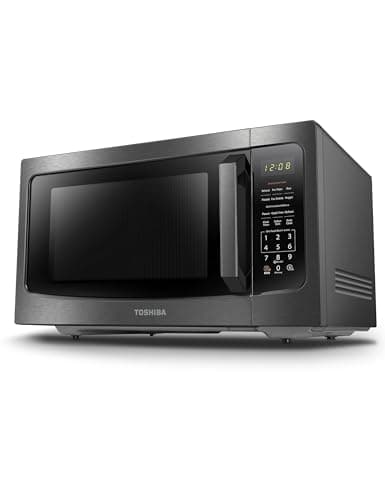
Toshiba ML-EM45P(BS) Smart Sensor Microwave
SHE Smart-Reheat Score8.0/10$169.99 — 1200W, 1.6 cu. ft. cavity, mute button; our overall pick among the units with an Amazon offer
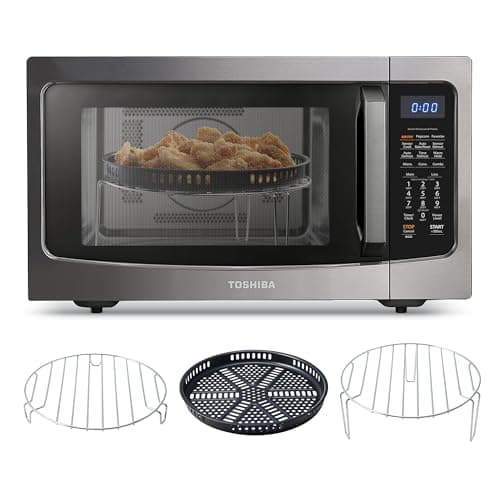
Toshiba ML-EC42P(BS) 4-in-1 Air Fryer Combo
SHE Smart-Reheat Score7.7/10$271.99 — microwave, convection, air fryer combi; counter-clearing versatility, no voice

Toshiba ML-EM34P(SS) Works With Alexa Microwave
SHE Smart-Reheat Score7.5/10$179.99 — Alexa, app remote, sensor reheat; budget voice control under $200
Voice, App, and Assistant Fit
The smart layer here is voice-assistant and application rather than a smart-home hub. That distinction is what roundups from Reviewed, RTINGS, Wirecutter, and Good Housekeeping use to separate the tiers as of June 2026. None of these units require Matter, Thread, or a bridge to function. The GE GCST09U1WSS Smart Countertop Microwave earns the highest 9.6 ecosystem-reach sub-score, a normalized composite, because it is the only pick communicating with both Alexa and Google Assistant. It joins the network over SmartHQ Wi-Fi with no additional hub required. GE sells it directly at $189.00 rather than through a current Amazon listing, so this guide carries no Amazon buy link for it. The Panasonic NN-SV79MS and Toshiba ML-EM34P(SS) Works With Alexa Microwave are weighted at 7.9 and 6.6 because they remain Alexa-only. A Google-Nest household relinquishes the voice layer entirely on those two, a limitation RTINGS and Reviewed both identify versus the dual-assistant GE. The two sensor Toshibas — the Toshiba ML-EM45P(BS) Smart Sensor Microwave and Toshiba ML-EC42P(BS) 4-in-1 Air Fryer Combo — incorporate no Wi-Fi or voice whatsoever. They depend upon their on-device humidity sensors exclusively, which is precisely why this particular factor positions them at 6.2 and 6.0.
That three-Toshiba spread is the practical truth of the category rather than lazy curation. Toshiba covers the mid sensor slot at 1.6 cubic feet, the 4-in-1 combi slot at 1.5 cubic feet, and the budget Alexa slot at 1.3 cubic feet. Compared to the 0.9 cubic feet GE, the EM45P delivers roughly 2x the usable cavity, accommodating a 13-inch pizza the compact body cannot. The Scan-to-Cook barcode workflow and the Genius and humidity sensors operate over the unit's own Wi-Fi or entirely on-device, so the sensor cooking continues working whenever the internet drops. A barcode scan automatically configures a frozen entree to its box specification, replacing the manual time-and-power button-punching it substitutes for. RTINGS and Reviewed both credit that on-device automatic cooking as the feature producing even results without a paired assistant. The recurring complaint the community raises on r/Cooking and appliance forums is the SmartHQ application dropping its connection within a wk. The recurring praise is Panasonic inverter even-heating once owners transition from a magnetron. Wirecutter and CNET characterize inverter heating as the upgrade that matters most, versus pursuing higher wattage. For the busy cook assembling a connected kitchen, a microwave this capable slots beside the gear in our Best Voice-Controlled Smart Kitchen Devices Under $150 guide and the food-recognition units in our Best AI Smart Ovens 2026: 3 Countertop Ovens Compared roundup.
| Product | Amazon Alexa | Google Assistant | Wi-Fi / App Control | Scan-to-Cook Barcode | On-Device Sensor Cook |
|---|---|---|---|---|---|
| Toshiba ML-EM45P(BS) Smart Sensor Microwave | ✕ | ✕ | ✕ | ✕ | ✓ |
| GE GCST09U1WSS Smart Countertop Microwave | ✓ | ✓ | ✓ | ✓ | ✕ |
| Toshiba ML-EC42P(BS) 4-in-1 Air Fryer Combo | ✕ | ✕ | ✕ | ✕ | ✓ |
| Toshiba ML-EM34P(SS) Works With Alexa Microwave | ✓ | ✕ | ✓ | ✕ | ✓ |
| Panasonic NN-SV79MS | ✓ | ✕ | ✓ | ✕ | ✓ |
When NOT to Buy
Skip the smart premium entirely if you only reheat coffee and the occasional plate. A $60 conventional microwave accomplishes that adequately, and the voice layer remains unused if you never reach for it. Skip voice control specifically if you do not already operate an Echo or Nest in the kitchen. The feature requires a paired assistant, and a sensor-only configuration like the Toshiba ML-EM45P(BS) Smart Sensor Microwave delivers automatic cooking for $169.99 without it. And skip the inverter upcharge if evenness is not your particular difficulty. Independent testing demonstrates cook times barely differ across the 5 picks, so you would essentially pay 2x for improvement you will never notice.
Who Should Buy What
Who Should Buy What
| If you are… | Recommended pick |
|---|---|
Value-first big-plate buyers You want sensor auto-cook and a roomy 1.6 cu. ft. cavity for pizza and casseroles without paying for Wi-Fi | Toshiba ML-EM45P(BS) Smart Sensor Microwave |
Frozen-meal households You cook a lot of packaged frozen meals and want barcode auto-setting with dual Alexa-and-Google voice, bought direct from GE | GE GCST09U1WSS Smart Countertop Microwave |
Small-kitchen counter-clearers You want one box doing microwave, convection browning, and air frying to free counter space | Toshiba ML-EC42P(BS) 4-in-1 Air Fryer Combo |
Budget Echo households You want real Alexa voice control and sensor reheat under $200 and already run an Echo in the kitchen | Toshiba ML-EM34P(SS) Works With Alexa Microwave |
Daily reheat-and-defrost cooks You reheat and defrost daily, want the most even results, and run Alexa for hands-free power and time control | Panasonic NN-SV79MS |
Frequently Asked Questions
Is a smart microwave with voice control actually worth it, or is it a gimmick?
It is worth it only if the voice layer goes past start and stop. The Panasonic NN-SV79MS supports over 100 Alexa commands that set power, add time, and trigger 20 presets hands-free, which is genuinely useful with full hands at the counter. A box that only starts and stops by voice is the gimmick people use twice and forget. If you already run an Echo or Nest in the kitchen and reheat often, the convenience is real; if you don't, skip it and buy a sensor-only unit.
What does Scan-to-Cook do, and how many foods does the GE barcode library cover?
Scan-to-Cook lets you scan a packaged-food barcode in the GE SmartHQ app, which pushes the exact cook time and power to the microwave so a frozen entree cooks to its box spec without you punching in numbers. It works only with packaged foods that carry a recognized barcode in the database, which covers most major frozen-meal and popcorn brands but not fresh leftovers. For leftovers you fall back to the manual buttons or the sensor. The library grows over time through app updates.
What is inverter technology in a microwave, and does it fix cold-in-the-middle reheating?
Inverter technology delivers a steady stream of power at every level instead of pulsing the magnetron full-on then off the way standard units do. At 50 percent power an inverter actually runs at half power continuously, while a magnetron blasts full 1200W for a few seconds then idles. That steady delivery is the single biggest predictor of even reheats and clean defrosts, which is why the Panasonic NN-SV79MS earns the top cooking-evenness sub-score. It largely fixes the cold-center problem, though terrible food placement can still leave uneven spots.
Do these smart microwaves need a separate Alexa Echo or Google Nest to use voice control?
Yes for the best experience. The Panasonic NN-SV79MS and the two Alexa Toshibas link an Alexa skill, and voice commands route through a paired Echo or any Alexa device. The GE GCST09U1WSS works the same way but also accepts Google Assistant through a Nest speaker. You can still run all of them by hand or, on the Wi-Fi models, through the phone app without voice. The voice layer is an add-on to a paired assistant, not a standalone microphone in the microwave itself.
Which smart microwaves work with Google Assistant and not just Alexa?
The GE GCST09U1WSS is the only pick in this guide that speaks both Amazon Alexa and Google Assistant, which is why it earns the top ecosystem-reach sub-score. The Panasonic NN-SV79MS and the Toshiba ML-EM34P are Alexa-only, so a Google-Nest household loses the voice layer on those two. The sensor Toshibas have no voice at all. If you run Google Home in the kitchen, the GE is the safe pick; otherwise weight the Alexa models on their other strengths.
Do smart microwaves need a smart-home hub, Matter, or Thread to work?
No. None of these microwaves need Matter, Thread, or a smart-home hub. The Wi-Fi models — the GE GCST09U1WSS, Panasonic NN-SV79MS, and Toshiba ML-EM34P — join your home network directly through their own app, with no bridge to buy. The two sensor Toshibas have no connectivity at all and run entirely on-device. The voice control is layered through Alexa or Google, but the microwave itself connects over plain Wi-Fi, so there is nothing extra to purchase to turn the features on.
What is the difference between a moisture sensor (Genius Sensor) and Scan-to-Cook?
A moisture or steam sensor like the Panasonic Genius Sensor reads the steam coming off the food and auto-sets time and power on the fly, so it works for any food including fresh leftovers. Scan-to-Cook reads a packaged-food barcode and pulls a preset cook program from a database, so it only works for packaged items with a recognized code. The sensor is more flexible day to day; Scan-to-Cook is more precise for the specific frozen meals it recognizes. Some units offer one, some the other.
Can I control these microwaves entirely from a phone app without voice?
Yes, on the Wi-Fi models. The GE GCST09U1WSS uses the SmartHQ app, the Panasonic NN-SV79MS uses the Panasonic app, and the Toshiba ML-EM34P includes a phone-app remote, so you can start, add time, and change power by tapping instead of talking. The two sensor Toshibas have no app or Wi-Fi and must be run by hand. App control is handy if you don't want a microphone always listening or if you prefer tapping over speaking commands across the room.
Are combination microwave air fryer convection ovens like the Toshiba ML-EC42P worth it over a plain smart microwave?
They are worth it if counter space is tight and you actually use convection and air frying. The Toshiba ML-EC42P folds a microwave, true convection oven, and air fryer into one 1.5 cu. ft. box, retiring a separate fryer and toaster oven. The catch is that the air fryer trails a dedicated standalone unit and the combination modes carry a learning curve. If you mostly reheat and only occasionally air fry, a plain sensor or inverter microwave plus a cheap dedicated fryer often crisps better for the money.
What cavity size and wattage should I get for a family versus an apartment?
For a family, aim for 1.4 to 1.6 cu. ft. and 1100W to 1200W so the cavity fits a 12-inch dinner plate or casserole and reheats quickly, which is where the Panasonic at 1.4 cu. ft. and the Toshiba ML-EM45P at 1.6 cu. ft. land. For an apartment or single-person kitchen, a compact 0.9 to 1.3 cu. ft. body like the GE at 0.9 cu. ft. fits a small counter and still handles a normal plate. Higher wattage cuts reheat time but matters less than even heating for most cooking.
Do smart microwaves keep working if my Wi-Fi or the internet goes down?
Yes. Every microwave here works fully as a normal microwave with the front-panel buttons whether or not Wi-Fi is up. You lose only the voice control and the app and Scan-to-Cook features that depend on the connection. The on-device sensors keep working regardless, so the Panasonic Genius Sensor and the Toshiba humidity sensors auto-cook even with the router unplugged. The smart features are a convenience layer on top of a fully functional microwave, not a requirement to heat food.
Is it safe to leave a Wi-Fi connected microwave plugged in, and do they get firmware updates?
Yes, it is safe to leave a Wi-Fi microwave plugged in, same as any countertop appliance, and the eco modes on the Toshiba units cut standby draw by turning off the display. The Wi-Fi models receive occasional firmware and app updates that can fix bugs or expand the Scan-to-Cook library, pushed automatically over the network. As with any connected device, use your home Wi-Fi password and keep the manufacturer app updated. The two sensor-only Toshibas have no connection and so need no updates at all.
Bottom Line
Get the Toshiba ML-EM45P(BS) Smart Sensor Microwave if you want sensor auto-cook and a roomy 1.6 cu. ft. cavity for big plates without paying for Wi-Fi.
Get the GE GCST09U1WSS Smart Countertop Microwave if you cook a lot of packaged frozen meals and want barcode auto-setting, bought direct from GE.
Get the Toshiba ML-EC42P(BS) 4-in-1 Air Fryer Combo if you want one box doing microwave, convection browning, and air frying to free counter space.
Get the Toshiba ML-EM34P(SS) Works With Alexa Microwave if you want real Alexa voice control and sensor reheat under $200 and already run an Echo.
Get the Panasonic NN-SV79MS if even reheats and defrosts decide it and you run Alexa for hands-free power and time control.
The right call for most cooks is the Toshiba ML-EM45P(BS) Smart Sensor Microwave at $169.99 — 1200W and Smart Sensor auto-cook in a 1.6 cu. ft. cavity, the strongest pick here with a live Amazon offer. If frozen meals are your routine, the GE GCST09U1WSS Smart Countertop Microwave adds Scan-to-Cook and dual-assistant voice for $189.00 direct from GE. Skip the smart premium entirely if you only reheat coffee and a plate now and then, where a $60 dumb microwave does the job.
Sources & Methodology
Methodology: SHE Smart-Reheat Score — Formula: Cooking_Evenness * 0.30 + Voice_Scan_Convenience * 0.25 + Sensor_Intelligence * 0.20 + Capacity_Value * 0.15 + Ecosystem_Reach * 0.10. Factors: Cooking Evenness (30%): How evenly the microwave heats food without cold centers and rubbery edges. This factor is a weighted, normalized sub-score derived from inverter-versus-magnetron architecture, reviewer reheat and defrost assessments, and lab heat-evenness ratings; an inverter unit holding steady power at every level scores in a higher tier than a magnetron that pulses full-on then off. The coefficient sits highest because no amount of voice control fixes a cold-in-the-middle plate. | Voice & Scan Convenience (25%): How far the smart layer goes past start and stop. The calculation normalizes the depth of voice control (power, time, presets, not just on-off) and whether Scan-to-Cook auto-sets packaged foods into a composite tier; a unit with 100-plus commands and barcode reading scores above a box that merely says it works with Alexa. This factor carries the second weight because real hands-free control and barcode cooking are the reason to buy smart over a $50 dumb microwave. | Sensor Intelligence (20%): Whether on-device moisture and steam sensors auto-set time and power so the user does not guess-and-restart. The formula normalizes the presence and reach of Genius Sensor and humidity-sensor auto-cook into a tier; a unit that reads steam and stops when done scores above one with timer-only cooking. The coefficient reflects that this is the on-device smarts that works even when Wi-Fi is down. | Capacity & Value (15%): Cavity size versus price and wattage per dollar. This sub-score is a normalized tier that rewards usable cubic feet and power per dollar and penalizes tiny 0.9 cu. ft. bodies that only fit a single plate. The factor weight reflects that cavity size decides whether the microwave fits real plates and casseroles and whether the smart premium is worth paying. | Ecosystem Reach (10%): Whether the smart layer works in your home. The composite rewards dual Alexa-and-Google support over Alexa-only and hub-free Wi-Fi over a required bridge. This coefficient closes the formula at the lightest weight because most buyers already live in one assistant, but it is the difference between a usable feature and a dead one for Google-Nest households.
Expert review sources used in this analysis:
- SmartHomeExplorer aggregates expert review data and community sentiment to produce consensus-based buying guidance
- We do not perform first-party product testing
- Expert ratings and product assessments draw on smart-microwave buyer's guides and category roundups from outlets that cover this segment
- Those are Reviewed, RTINGS, Wirecutter, Good Housekeeping, Consumer Reports, and Digital Trends, rather than first-party tests of each unit
- Lab heat-evenness and auto-defrost context draws on the outlets' published category testing rather than per-unit timings of our own
- Wirecutter and Good Housekeeping both rank inverter heating above raw wattage, a position Reviewed and RTINGS echo
- Community reliability is drawn from r/Cooking and appliance forums
- The recurring praise there is Panasonic inverter even-heating; the recurring complaint is the GE SmartHQ app dropping connections
- We read these figures on the 2026-08-22 Creators API check
- Toshiba ML-EM45P $169.99 at 1.2 kW, Toshiba ML-EC42P $271.99 at 1.0 kW, Toshiba ML-EM34P $179.99 at 1.1 kW, and Panasonic NN-SV79MS $329.99 at 1.2 kW
- The GE GCST09U1WSS figure of $189.00 at 0.9 kW is GE's own list price, read from geappliances.com on 2026-08-23
- The only Amazon offer on that model is a used Amazon Resale listing
- This guide therefore carries no Amazon buy link for it and points to GE instead
- On the same 2026-08-22 check the Panasonic NN-SV79MS showed no buyable offer, so it is ranked last here rather than removed
- Any price named in this text is what we read on the date given here; each card carries its own Amazon quote and check date
- Both change frequently — check the current price on Amazon before buying
- Cavity sizes span 0.9 cubic feet to 1.6 cubic feet, so the Toshiba sensor cavity runs roughly 1.8x the GE
- Power-cord reach runs about 3 ft on every unit
- The SHE Smart-Reheat Score weights cooking evenness (30%), voice and scan convenience (25%), sensor intelligence (20%), capacity and value (15%), and ecosystem reach (10%)
- Factor sub-scores derive from manufacturer specifications and aggregated reviewer assessments
- No first-party measurements were conducted.
Nicholas Miles is the founder of SmartHomeExplorer and a longtime smart home enthusiast focused on helping everyday homeowners make better technology decisions. He researches, compares, and writes about products across security, climate, lighting, leak prevention, sensors, home energy, and automation, with an emphasis on real-world usefulness, ecosystem compatibility, reliability, privacy, and long-term value.
Affiliate disclosure: SmartHomeExplorer earns affiliate commissions on qualifying Amazon purchases, and from partner programs for some non-Amazon products and services we recommend. Our scoring methodology is independent of affiliate relationships.