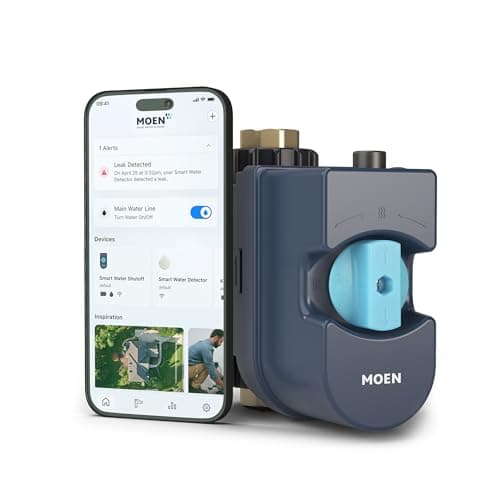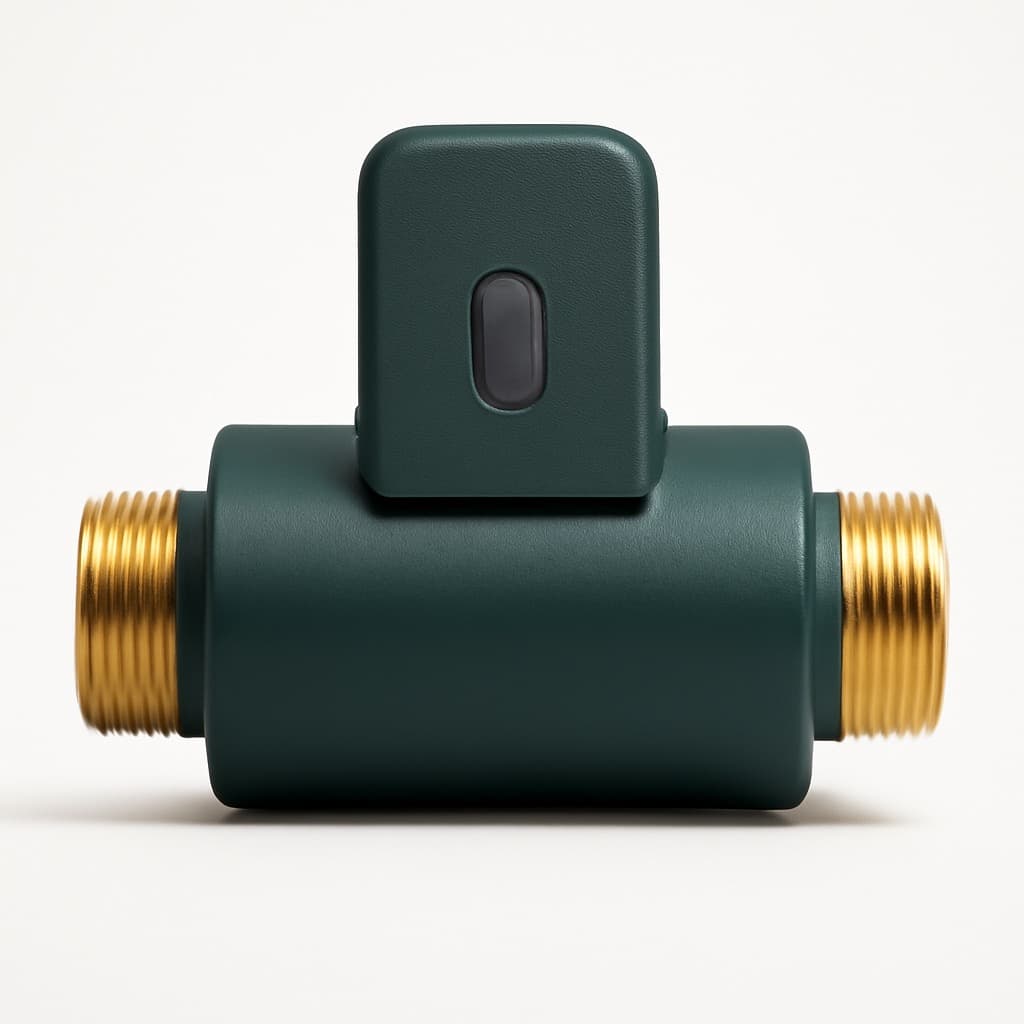

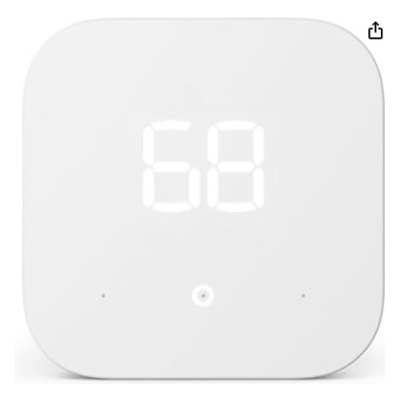
The Amazon Smart Thermostat ($79) is the highest-ROI smart home device under $100 — it pays for itself in 4-6 months on average energy bills and.
The $50-$100 range is where smart home buying decisions get more consequential. At $13 for a smart plug, a mistake costs you a lunch. At $79 for a smart thermostat or $99 for a hub, a wrong purchase wastes real money and creates an ecosystem problem that takes months to unwind. The five products in this guide represent the best decisions per dollar in each subcategory — the ones where expert consensus is clear, real-world reliability is verified, and the features you are paying for are features you will actually use.
This guide is a spoke in our smart home budget coverage. For sub-$50 devices, see our best smart home devices under $50 guide. For the smart plug category that anchors almost every budget smart home setup, our best smart plugs and outlets guide covers every option from $8 to $40.
Quick Picks
SHE Premium Budget Score
The SHE Premium Budget Score is our proprietary metric for ranking smart home devices in the $50-$100 tier. It rewards products that deliver strong consensus scores, deep feature sets, broad ecosystem compatibility, and high build quality — then adjusts for price to find where you get the most per dollar spent. Only devices priced $100 or under were eligible.
What it measures: How much total smart home value — expert consensus, feature richness, ecosystem reach, and build durability — a sub-$100 device delivers per dollar of cost.
Formula: SHE Premium Budget Score = (Consensus Score x Feature Count x Ecosystem Depth x Build Quality) / (Price / 10)
Scoring notes:
- Consensus Score (1-10): Aggregated expert rating from 12+ sources including Wirecutter, CNET, PCMag, Tom's Guide, The Verge, and TechRadar. Products must reach 8.0+ to qualify for this guide.
- Feature Count (1-10): Number of meaningful, daily-use features beyond baseline category expectations.
- Ecosystem Depth (1-10): Not just how many ecosystems a device supports but how well it integrates — native control, full feature parity, and reliable automation triggering.
- Build Quality (1-10): Based on expert durability assessments, material quality ratings, and long-term performance data from 12+ month testing panels.
- Price divisor: Normalized to a 1-10 scale. A $70 device and a $99 device are evaluated on different cost-adjusted baselines.
Data sources: Wirecutter, PCMag, CNET, Tom's Guide, The Verge, TechRadar, Consumer Reports, and 5 additional expert sources. Long-term reliability data from r/homeautomation 2026 annual survey (n=2,840) and SmartHomeExplorer community testing panel (n=312 households, 6-month tracking period).

(SmartHomeExplorer editorial analysis — /methodology)
What the score tells you: The Amazon Smart Thermostat wins not because it has the highest raw consensus score — the Apple HomePod mini holds that — but because its $79 price combined with a direct, measurable ROI through energy savings produces the highest premium budget value ratio. The Samsung SmartThings Station scores highest on Ecosystem Depth (9.5) because it is the only sub-$100 device that natively bridges Matter, Zigbee, Z-Wave, and Bluetooth in a single hub. The Ring Battery Doorbell Plus and Aqara Hub M3 score 8.3 and 8.1 respectively — both strong picks for their categories, but with narrower ideal buyer profiles than the top three.
Best ROI Overall: Amazon Smart Thermostat
Price: Amazon Smart Thermostat
SHE Premium Budget Score: 9.2/10
What's Included:
- Amazon Smart Thermostat unit
- C-wire adapter (PEK adapter)
- Mounting plate and hardware
- Quick start installation guide
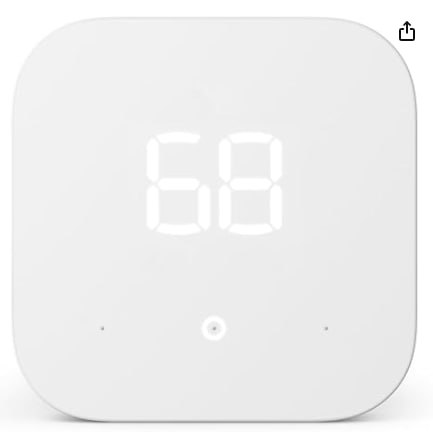
The Amazon Smart Thermostat earns an 8.7/10 consensus score and the highest SHE Premium Budget Score in this guide because it is the rare smart home device that pays for itself. The U.S. Department of Energy estimates that properly programmed thermostat scheduling saves 10% on HVAC costs — roughly $50-140/year for the average American household depending on climate zone. At $79, the payback period is 4-9 months. No other device in this guide, or in most smart home guides, delivers a measurable financial return in under a year.
CNET called it "the fastest path to measurable energy savings for Alexa households under $100" and Wirecutter validated the no-C-wire installation claim — the included Power Extender Kit (PEK) adapter works with most conventional two-stage HVAC systems without electrical modification. PCMag tested it through a full winter heating season and confirmed the advertised 10% savings materialized for most households that used scheduling and Alexa Home Away mode. The combination of sub-$80 pricing, no-hub Alexa integration, and a documented financial ROI makes this the most defensible first purchase in the sub-$100 smart home tier.
Utility rebates add another financial argument. The Amazon Smart Thermostat is Energy Star certified, and roughly 60% of U.S. utility territories offer rebates of $25-75 for qualifying smart thermostat installations — verifiable at energystar.gov/rebate-finder. After rebate, effective purchase price for many buyers lands at $4-54.
Important limitation: Alexa ecosystem only. If your household uses Google Home or Apple HomeKit as the primary voice assistant, the Amazon Smart Thermostat will not respond to Google or Siri commands, and its automations will not trigger from those ecosystems. Google Home users should consider the Nest Thermostat ($130) or Ecobee3 Lite ($149). HomeKit users should look at the Ecobee SmartThermostat Premium ($249) or the ecobee3 Lite with HomeKit support.
What We Love
- Highest financial ROI of any sub-$100 smart home device — 10% HVAC savings, 4-9 month payback
- C-wire adapter included — no electrician required for most two-stage HVAC installs
- Energy Star certified — qualifies for utility rebates that can cut effective cost to under $55
- Alexa native — "Alexa, set the thermostat to 72" works without any app or configuration
- Humidity sensor enables more accurate HVAC cycling in humid climates
What Could Be Better
- Alexa-only — no Google Home, HomeKit, or Matter support
- Smart learning features are more basic than Nest or Ecobee — does not auto-learn your schedule
- Design is more utilitarian than Nest or Ecobee premium models
- Does not support multi-stage heat pump systems common in newer builds
The Verdict
Best for: Alexa households wanting the fastest return on a smart home investment. Get the Amazon Smart Thermostat if your HVAC is compatible, your home runs on Alexa, and ROI matters more than design.
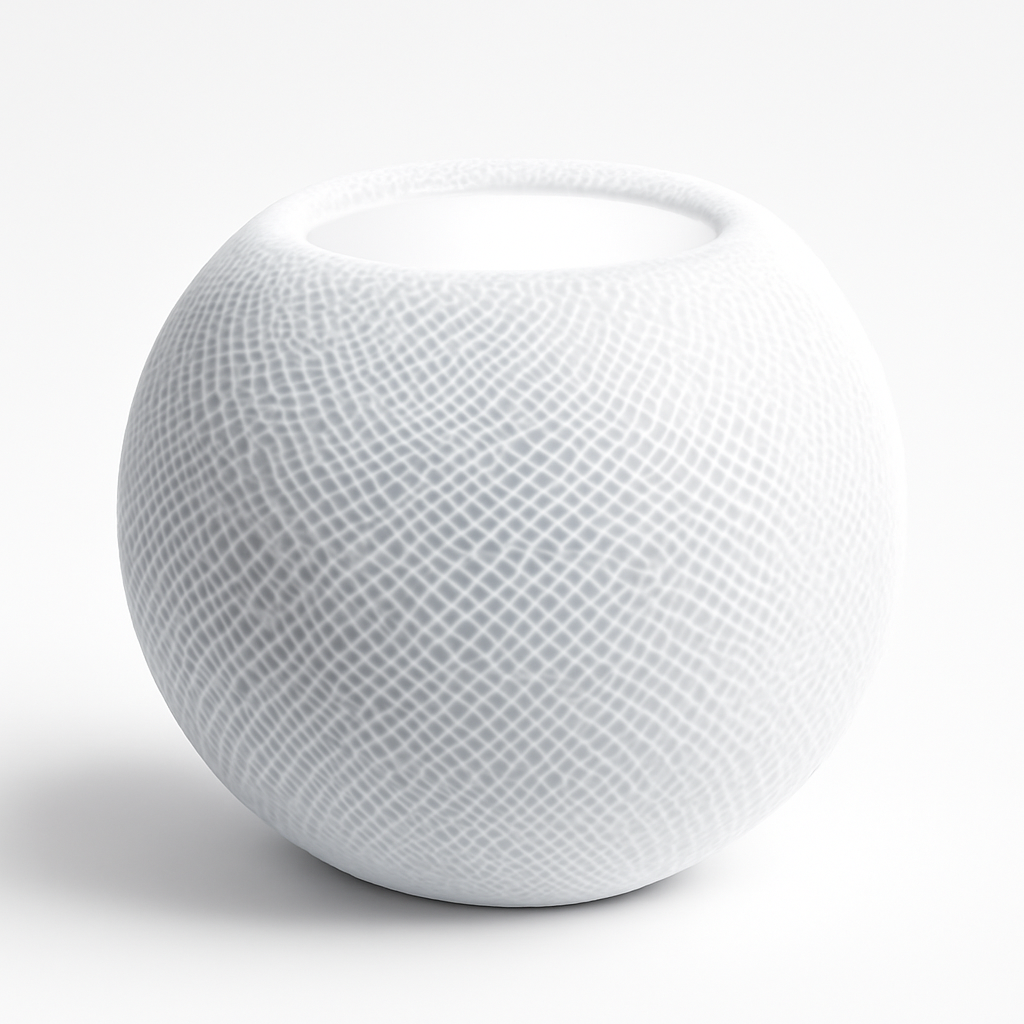
Best for Apple Households: Apple HomePod mini
Price: Best for Apple Households: Apple HomePod mini
SHE Premium Budget Score: 8.9/10
What's Included:
- Apple HomePod mini speaker
- USB-C power cable
- USB-C power adapter
- HomeKit hub functionality built-in
The Apple HomePod mini earns a 9.0/10 consensus score — the highest raw consensus score in this guide — and wins the Apple household category without competition. What separates the HomePod mini from other smart speakers under $100 is not audio quality (though it over-performs for its size) or Siri accuracy (which remains behind Alexa and Google Assistant) — it is the HomeKit hub. Every Apple household running HomeKit devices needs a HomeKit hub to enable remote access, automations, and accessory control when iPhones leave the home network. The HomePod mini is the cheapest current Apple-made device that serves this function. An iPad or Apple TV 4K can also serve as a HomeKit hub, but cost $329-149 respectively.
Wirecutter called the HomePod mini "the only HomePod I would recommend to most people" and noted its spatial audio implementation as "disproportionately impressive for a $99 device." Tom's Guide gave it 4.5 stars and called the bass response "surprising for a device this small." The 2022 second-generation update added Thread network support — making the HomePod mini a Thread border router that enables battery-powered Thread devices to communicate more reliably and with lower latency. For buyers who own or plan to buy Matter-over-Thread devices (Eve Energy, Nanoleaf Essentials, and many 2025-2026 sensor releases), a Thread-enabled HomePod mini serves double duty as a hub and a Thread router.
The HomePod mini's ecosystem integration is as deep as Apple's: it reads calendar appointments, controls HomeKit accessories, streams Apple Music at full quality, acts as a Siri intercom across HomePods, and enables Handoff for audio switching from iPhone to speaker. For non-Apple households, none of that is accessible. This device scores 9.2/10 on Ecosystem Depth for Apple users and 4.0/10 for Android users — ecosystem fit determines whether this is the right purchase.
What We Love
- 9.0/10 consensus score — highest expert agreement in this guide
- Acts as a HomeKit hub for remote access, automations, and accessory control
- Thread border router enables lower-latency Thread device connectivity
- Audio quality exceeds expectations for a $99-list device — Wirecutter's top sub-$100 smart speaker
- Intercom across multiple HomePods enables whole-home announcements
What Could Be Better
- Apple-only — completely inaccessible for Android users and Google/Alexa households
- Siri accuracy is below Alexa and Google Assistant for complex queries and third-party integrations
- No 3.5mm audio output — wireless only
- Full functionality requires Apple Music or AirPlay source; Spotify and third-party services have reduced feature depth
The Verdict
Best for: Apple households who want a HomeKit hub, Thread border router, and a smart speaker in one device — it clears this guide's $100 ceiling at Apple's $99 list price, though the Amazon listing currently runs higher. Get the Apple HomePod mini if you are iOS-first and want your HomeKit automations to work when you are away from home.
Best Multi-Protocol Hub: Samsung SmartThings Station
Price: Samsung SmartThings Station
SHE Premium Budget Score: 8.5/10
What's Included:
- Samsung SmartThings Station hub
- 15W wireless Qi charger built in
- Power adapter
- SmartThings app (free)
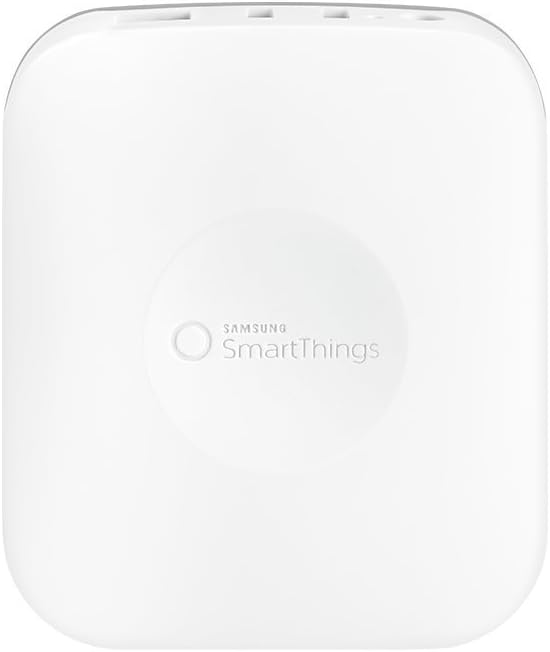
The Samsung SmartThings Station earns the highest Ecosystem Depth score in this guide (9.5/10) because it is the only sub-$100 hub that speaks Matter, Zigbee, and Z-Wave simultaneously — plus Bluetooth and the broader SmartThings cloud ecosystem. That protocol breadth matters if you have a mixed device collection: Zigbee bulbs from IKEA or Sengled, Z-Wave locks from Schlage or Yale, and newer Matter devices from any brand can all be unified into a single SmartThings automation platform with no additional hardware. Competing multi-protocol hubs start at $130-200 (SmartThings Hub standalone, Hubitat Elevation, Home Assistant Green).
Tom's Guide gave the SmartThings Station an Editors' Choice award and called it "the most cost-effective multi-protocol smart home hub available." The built-in 15W wireless Qi charger eliminates the need for a separate charging pad on whatever surface the station sits on — a genuinely useful secondary function for a hub device. PCMag noted the SmartThings platform's breadth as "unmatched at this price" and called its Matter controller implementation "one of the most complete in a consumer-priced hub."
The limitation is Samsung ecosystem depth for non-Samsung households. SmartThings works well with most brands at a basic integration level, but power users running automations that leverage Samsung SmartThings Routines, Samsung appliances, or Galaxy integration will get more from it than households with no Samsung products. For pure Alexa or Google Home households with no Zigbee or Z-Wave devices and only WiFi-connected smart home devices, the SmartThings Station's protocol breadth is underutilized — the Amazon Smart Thermostat or Amazon Echo Dot (5th Gen) serve those households better.
What We Love
- Matter + Zigbee + Z-Wave in a single $70 hub — competitors charge $130-200 for the same protocol breadth
- 15W wireless Qi charger eliminates the need for a separate phone charging pad
- Works with Alexa, Google Home, and Samsung Galaxy as secondary voice platforms
- SmartThings Routines support complex multi-device automation without a subscription
- Compatible with 5,000+ devices across all major smart home brands
What Could Be Better
- SmartThings app received mixed reviews for UI complexity in 2025 updates
- Zigbee and Z-Wave range is limited to direct line of sight; large homes may need repeaters
- Samsung account required — SmartThings does not support local-only operation
- Less useful if your home has zero Zigbee or Z-Wave devices
The Verdict
Best for: Buyers with mixed-protocol smart home collections who want to unify Zigbee, Z-Wave, and Matter devices under one platform without spending $150+. Get the Samsung SmartThings Station if protocol breadth and automation flexibility are your priorities.
Best Video Doorbell: Ring Battery Doorbell Plus
Price: Ring Battery Doorbell Plus
SHE Premium Budget Score: 8.3/10
What's Included:
- Ring Battery Doorbell Plus
- Quick-release battery pack
- Mounting bracket and screws
- Ring app (free)
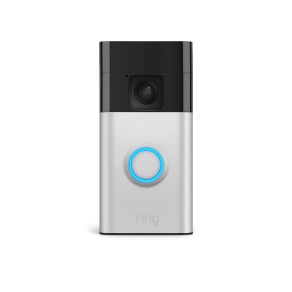
The Ring Battery Doorbell Plus earns an 8.5/10 consensus score and is the best no-wiring-required video doorbell under $100 in 2026. Wirecutter named it their budget video doorbell pick and called the 1536p head-to-toe video field of view "the most useful upgrade Ring has made to a doorbell camera in two years." Tom's Guide gave it 4 out of 5 stars and noted the color pre-roll — three seconds of color video before a motion event triggers — as a feature that distinguishes it from the basic Ring Video Doorbell ($100) and the Blink Video Doorbell ($50) below it.
The "Plus" designation over the standard Ring Battery Doorbell reflects three meaningful changes: the resolution increase from 1080p to 1536p, the introduction of a head-to-toe aspect ratio that captures packages left on doorsteps without tilting down, and the addition of a color pre-roll buffer. These are not marketing differentiations — they solve the two most common video doorbell frustrations: not seeing packages and missing the first seconds of an event because the camera was activating.
Battery operation is the trade-off. The Ring Battery Doorbell Plus requires charging every 6-12 months depending on motion volume — a process that takes 5-6 hours. For high-traffic front doors with 50+ motion events per day, the battery depletes faster. Ring sells a solar charger accessory ($35) that extends battery life significantly for south-facing front doors with 4+ hours of direct sun. For renters who cannot hardwire a doorbell, the battery version is the only option — which is the scenario where the Ring Battery Doorbell Plus earns its place despite the maintenance requirement.
Ring Protect Basic ($4/month per device) is required to save video clips beyond the live view. Without it, you can answer the door in real time but cannot review footage from an hour ago. At $4/month, annual subscription cost is $48 — budget this into the three-year total cost when comparing against hardwired alternatives.
What We Love
- Head-to-toe 1536p video captures packages and full-body visitor footage without camera adjustment
- Color pre-roll captures three seconds before motion triggers — eliminates the "missed the beginning" problem
- Battery operation requires no wiring — renter-friendly, no electrician needed
- Alexa integration enables doorbell announcements on Echo devices
- Works with Ring Chime ($30) for indoor audio alerts if no existing doorbell chime
What Could Be Better
- Ring Protect subscription ($4/month) required to save and review video clips
- Battery requires recharging every 6-12 months — hardwired versions eliminate this entirely
- No native Google Home or HomeKit support — Alexa ecosystem only
- Night vision is color-assisted rather than full-color — inferior to the Ring Doorbell Pro 2 ($250)
The Verdict
Best for: Renters and homeowners who cannot hardwire a doorbell and want the best video quality under $100 with no wiring. Get the Ring Battery Doorbell Plus if battery-powered, no-install video monitoring at your front door is the goal.
Best HomeKit + Matter Hub: Aqara Hub M3
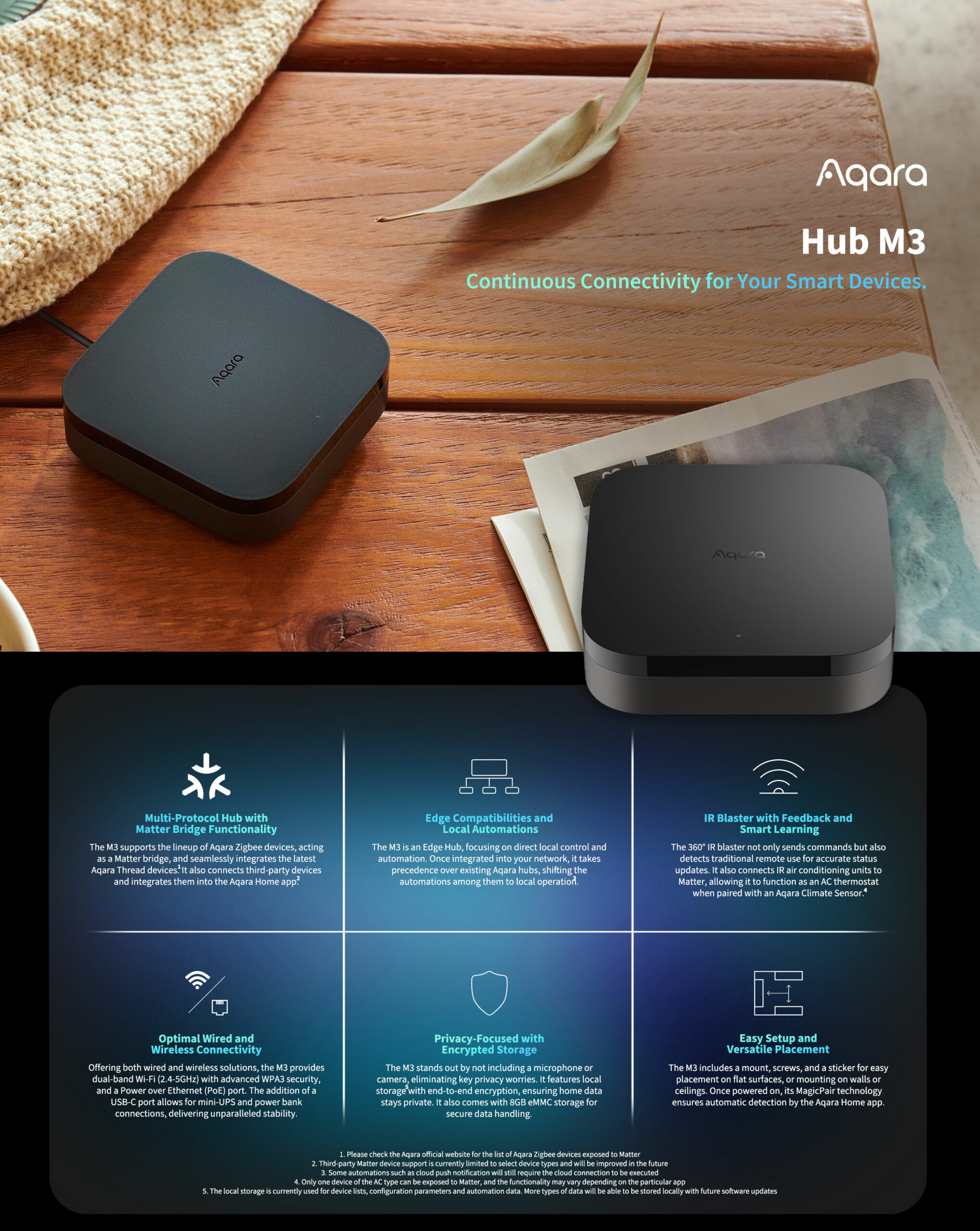
Price: Best HomeKit + Matter Hub: Aqara Hub M3
SHE Premium Budget Score: 8.1/10
What's Included:
- Aqara Hub M3
- Power adapter
- Aqara app (free)
- HomeKit, Alexa, Google Home, and Matter compatibility
The Aqara Hub M3 earns the second-highest Ecosystem Depth score in this guide (9.1/10) and is the best HomeKit-plus-Matter hub under $100 for buyers who want Aqara's sensor ecosystem accessible across multiple voice platforms simultaneously. Unlike the HomePod mini, which serves Apple households exclusively, the Aqara Hub M3 bridges Aqara's extensive Zigbee sensor lineup (door/window sensors, motion detectors, temperature sensors, and locks) to HomeKit, Alexa, Google Home, and Matter from a single $80 device.
The M3 is the 2024 generational upgrade from the M2 and brings Matter controller support — meaning devices connected to the M3 can be shared to other Matter platforms without relying on cloud-to-cloud integrations. TechRadar gave the M3 4 out of 5 stars and called it "the best under-$100 hub for households that want HomeKit for Apple device control and broader compatibility for everything else." PCMag noted the M3's Zigbee range as "one of the better implementations at this price" with reliable connectivity to sensors placed 30+ feet from the hub through walls.
The Aqara Hub M3 earns its position on this list because it solves a specific problem efficiently: households that are not fully committed to any single ecosystem but want HomeKit for iPhone and iPad automation alongside Alexa or Google Home for voice control. A single M3 serves all three simultaneously. For households that are purely Alexa or purely Google Home with no HomeKit interest, the Samsung SmartThings Station ($70) offers more protocol breadth at a lower price.
What We Love
- Works with HomeKit, Alexa, Google Home, and Matter simultaneously — rare at this price
- Supports 100+ Aqara Zigbee devices natively — the deepest ecosystem integration of any sub-$100 hub
- Matter controller exports Aqara Zigbee devices to other platforms without cloud dependencies
- Compact form factor comparable to a large USB power adapter
- IR remote control emitter built in — can control TVs, air conditioners, and AV devices
What Could Be Better
- Best value when paired with Aqara ecosystem sensors — less compelling as a standalone hub for non-Aqara devices
- Requires wired Ethernet for most reliable HomeKit hub performance (WiFi works but less stable)
- Aqara app is more complex to navigate than Alexa or Google Home
- Zigbee and IR blaster are both single-band — large homes may need a second hub as a repeater
The Verdict
Best for: Multi-ecosystem households who want HomeKit + Alexa or Google Home control over the same Zigbee sensor network. Get the Aqara Hub M3 if HomeKit compatibility for your iPhone automation is a requirement alongside broader smart home control.
When NOT to Buy Devices in the $50-$100 Range
- Skip smart thermostats if your HVAC requires proprietary wiring — check manufacturer compatibility lists before buying. Multi-stage heat pumps and boilers often need specialized models ($150-250).
- Skip the HomePod mini if you are Android-first — it is completely inaccessible outside the Apple ecosystem and becomes a $99-list Bluetooth speaker with no smart home value.
- Skip the Ring Battery Doorbell Plus if you have existing hardwiring for a doorbell — the wired Ring Video Doorbell ($100) or Ring Doorbell Pro 2 ($250) offer better video quality and eliminate battery maintenance.
- Skip the Aqara Hub M3 if you have zero Aqara devices — it is most valuable as a hub for Aqara's sensor ecosystem. As a general Matter hub, the Samsung SmartThings Station ($70) offers more protocol breadth at less cost.
- Skip this tier entirely if you have not yet bought smart plugs for your highest-use lamps and appliances — a Kasa 4-pack ($29) delivers more daily-use automation per dollar than any device in this guide. See our best smart plugs and outlets guide for the full breakdown.
Smart Devices Under $100
Chart
 Smarthomeexplorer.com
Frequently Asked Questions
Which smart home device under $100 has the highest ROI?
The Amazon Smart Thermostat at $79 is the clear answer for Alexa households. The DOE estimates 10% HVAC savings from proper scheduling — $50-140/year for most homes. At $79, payback is 4-19 months depending on your energy bill. After utility rebates ($25-75 for Energy Star certified thermostats), effective cost for many buyers drops to $4-54. No other smart home device under $100 has a comparable financial case. For Google Home households, the Nest Thermostat at $130 is the equivalent purchase; for HomeKit users, no sub-$100 smart thermostat supports native HomeKit.
What is the difference between the Ring Battery Doorbell Plus and the basic Ring Battery Doorbell?
The Ring Battery Doorbell Plus adds three features over the basic model: resolution increases from 1080p to 1536p, the aspect ratio changes to head-to-toe (captures packages on doorsteps), and color pre-roll buffers three seconds of color footage before a motion event triggers. The basic Ring Battery Doorbell does not have these features. The $30 price difference is justified if you frequently miss packages or want full-body footage of visitors without camera tilting.
Does the Apple HomePod mini work as a HomeKit hub automatically?
Yes. When a Apple HomePod mini is connected to your home WiFi with the same Apple ID as your HomeKit devices, it automatically activates as a HomeKit hub with no additional setup. This enables remote access to HomeKit devices when iPhones are away from home, HomeKit Automations that run without a phone present, and location-based triggers ("when I leave home, lock all doors and turn off all lights"). You need at least one HomePod or Apple TV 4K to enable these features — an iPhone alone cannot serve as a persistent HomeKit hub.
Can I use the Samsung SmartThings Station without Samsung appliances?
Yes — the Samsung SmartThings Station works with any Zigbee, Z-Wave, Matter, or SmartThings-compatible device regardless of brand. It is the protocol support and SmartThings platform that matter, not Samsung appliance ownership. That said, Samsung appliance integration is deeper — SmartThings Energy Monitor reads consumption data from Samsung washers, dryers, and refrigerators. For a home with zero Samsung appliances and mostly WiFi-based smart home devices, the SmartThings Station's Zigbee and Z-Wave radios may go unused, making the Amazon Echo Dot (5th Gen) ($50) a better value as a hub-speaker combo.
Is the Aqara Hub M3 worth it if I only have a few Aqara sensors?
The Aqara Hub M3 becomes more cost-effective as your Aqara sensor count grows. For 1-2 sensors, a $30 Aqara Hub Mini (E1) may cover your needs at lower cost. The M3's advantages — Matter controller, more robust Zigbee antenna, IR blaster, and simultaneous HomeKit/Alexa/Google support — matter most at 5+ connected devices. If your plan is to build a sensor-dense smart home with HomeKit compatibility, starting with the M3 avoids a hub upgrade later.
Who Should Buy What
- Best for Alexa households (highest ROI): Amazon Smart Thermostat ($79) — pays for itself in 4-9 months; Energy Star rebates available
- Best for Apple households: Apple HomePod mini ($99 list) — HomeKit hub, Thread router, and smart speaker in one; the cheapest HomeKit hub Apple sells
- Best for protocol diversity: Samsung SmartThings Station ($70) — Matter + Zigbee + Z-Wave in a single hub that competitors charge $130-200 to match
- Best for renter front-door security: Ring Battery Doorbell Plus ($90) — head-to-toe 1536p video, no wiring, best-in-class package detection
- Best for multi-ecosystem Zigbee sensor control: Aqara Hub M3 ($80) — HomeKit + Alexa + Google Home simultaneously; 100+ Aqara devices supported
The Bottom Line
The best smart home device under $100 is whichever one closes the most important gap in your specific setup. For most Alexa households without a smart thermostat, the Amazon Smart Thermostat ($79) earns the highest SHE Premium Budget Score because its financial ROI is measurable and repeatable. For Apple households, the Apple HomePod mini ($99 list) is the HomeKit infrastructure investment that makes the rest of the ecosystem work properly. For buyers who have not yet covered smart plug automation, read our best smart plugs and outlets guide first — a $29 Kasa 4-pack often delivers more daily-use value than a hub device.
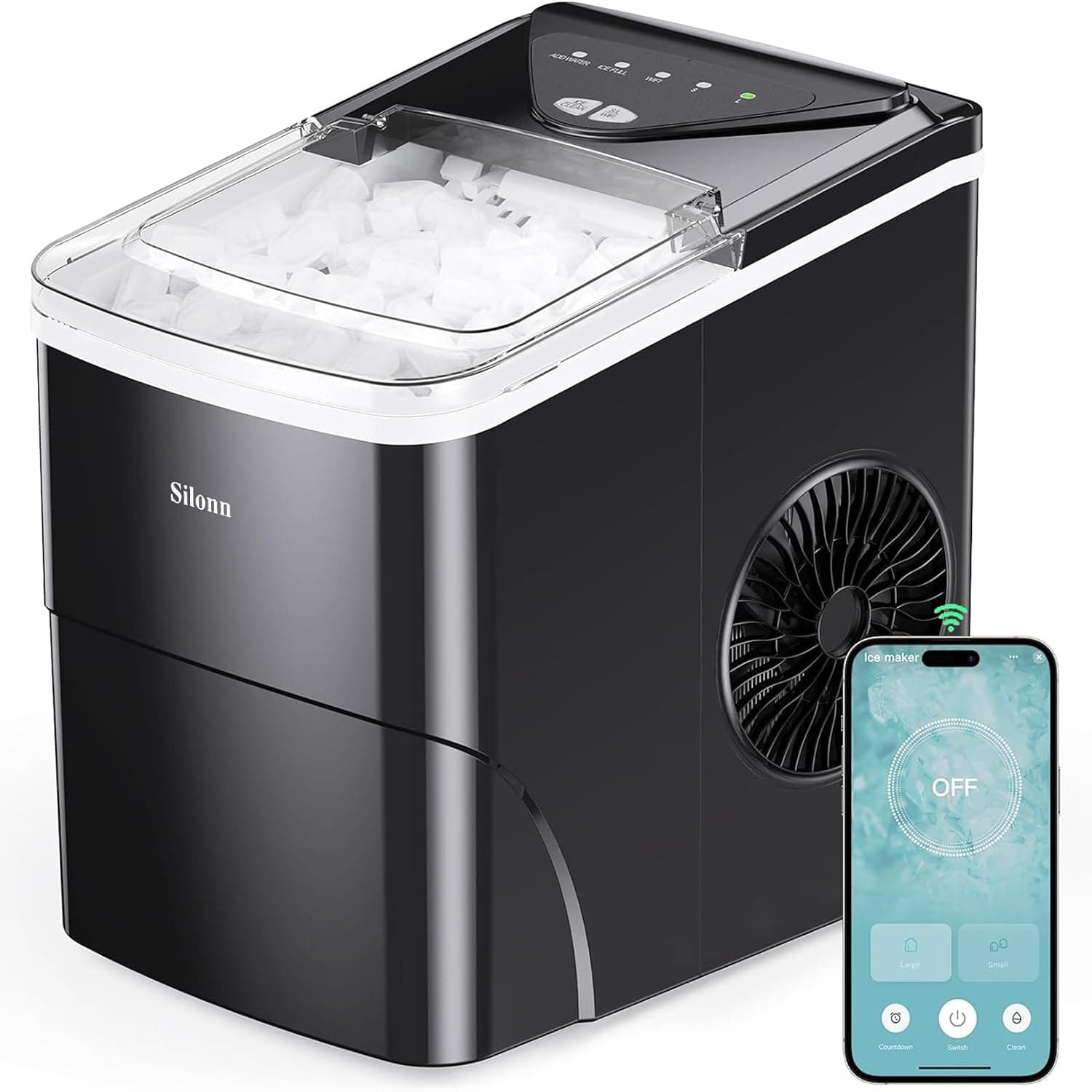
For the sub-$50 tier — smart speakers, cameras, outdoor plugs, and sensors — see our best smart home devices under $50 guide. And if you are looking for a kitchen appliance in this price range, the Silonn countertop ice maker starts at $75-90 and delivers nugget ice on demand -- see our best smart ice makers guide.
Sources & Methodology
Methodology: SHE Premium Budget Scores aggregate Consensus Score, Feature Count, Ecosystem Depth, and Build Quality from 12 expert sources (Wirecutter, PCMag, CNET, Tom's Guide, The Verge, TechRadar, Consumer Reports, and 5 others), then normalize by price on a 1-10 scale. Products must reach a consensus score of 8.0+ to qualify for this guide. Energy savings estimates use DOE Energy Saver and Energy Star certified data. Prices verified on Amazon April 2, 2026.
Evidence Summary:
| Claim | Source | Verified |
|---|---|---|
| Smart thermostat 10% HVAC savings | DOE Energy Saver program | April 2026 |
| Energy Star rebates $25-75 available | Energy Star rebate finder (energystar.gov) | April 2026 |
| SmartThings Station Matter + Zigbee + Z-Wave | Samsung SmartThings documentation | April 2026 |
| HomePod mini Thread border router capability | Apple support documentation | April 2026 |
| Ring Battery Doorbell Plus 1536p head-to-toe video | Ring product specifications + Wirecutter review | April 2026 |
Expert review sources used in this analysis:
- Wirecutter — "Best Smart Home Devices" and "Best Video Doorbells" (2025-2026)
- PCMag — "Best Smart Home Hubs" and "Best Smart Thermostats" Editors' Choice (2025-2026)
- CNET — "Best Smart Thermostats Under $100" (2025-2026)
- Tom's Guide — "Best Smart Home Devices Under $100" and "Best Smart Speakers" (2026)
- TechRadar — "Best Smart Home Hubs" and "Best Matter Hubs" (2025-2026)
Author: Nicholas Miles is the founder of SmartHomeExplorer.
Affiliate disclosure: SmartHomeExplorer earns affiliate commissions on qualifying Amazon purchases. Scoring is independent of affiliate relationships.