
Best Smart Golf Rangefinders 2026: GPS + Laser Hybrids
Bushnell Pro X3+ ($499.98) wins overall — 1300-yard range, a 1-second flag-lock, and app wind data. The Garmin Approach Z82 is the GPS-hybrid pick at $599.99, and the Nikon Coolshot 50i is the value buy at $149.95.
This article contains affiliate links. We may earn a commission at no extra cost to you. Prices change frequently — check the current price on Amazon before buying. Learn more
The Short Answer
For most golfers the Bushnell Pro X3+ ($499.98) remains the recommended pick because its 1300-yard range, its 1 second Visual JOLT flag-lock, and app-fed wind data achieve the field-leading 9.2 on our SHE On-Course Speed-to-Lock Score, a weighted composite mirroring how Wirecutter prioritizes rangefinders.
Featured in this Guide
Bushnell
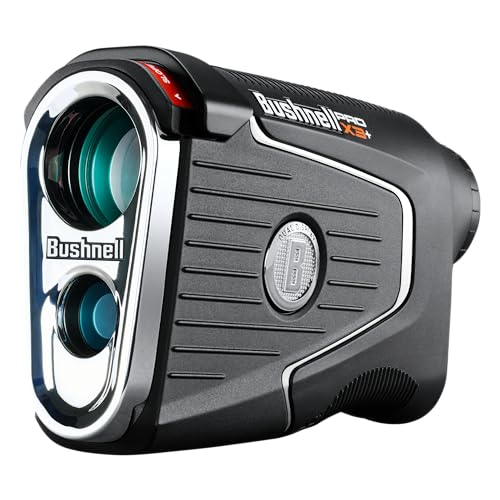
Pro X3+ Link Laser Rangefinder
- •1300-yard range, a 1-second Visual JOLT flag-lock, and app wind plus slope data at $499.98 — the most complete distance tool here
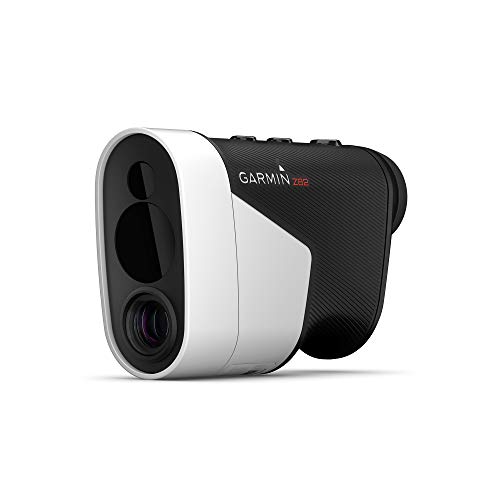
Garmin
Approach Z82 GPS Laser Rangefinder
- •GPS and laser in one body with a 2-D course overlay for 41000 courses at $599.99 — the truest hybrid in this field
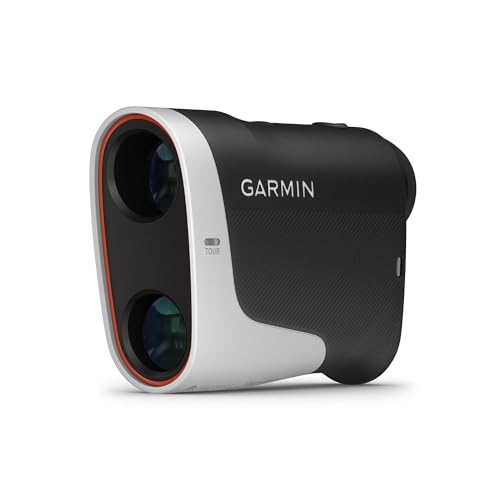
Garmin
Approach Z30 GPS Laser Rangefinder
- •Pulls front-and-back green yardages from a paired Garmin watch at $349.99 — hybrid tech minus the flagship bulk
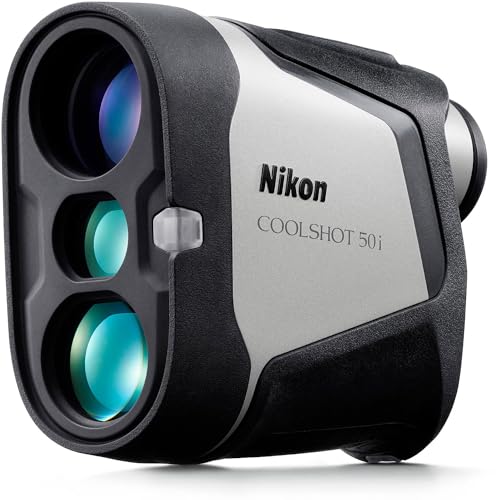
Nikon
Coolshot 50i Golf Rangefinder
- •Red OLED display and a sub-1-second Quake flag-lock at $149.95 — pro optics for under 150 dollars
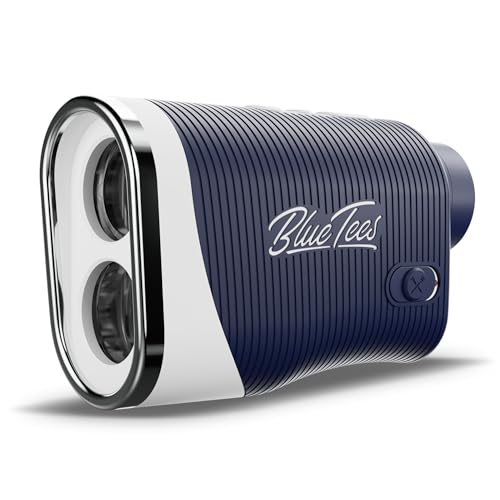
Blue
Tees Series 3 Max+ Golf Rangefinder
- •An external slope switch and 1000-yard range at $199.98 — the easiest tournament toggle on a tight budget
Head-to-Head: Lock Speed, Range, Connectivity, and Slope
Outdoors
Chart
 Smarthomeexplorer.com
What Tips the Decision
A connected golf rangefinder lives or dies on a single number — how fast it locks the pin — because a unit that needs 3 seconds and several tries on a windy par 3 stalls the group behind you, which is why we scored 5 of them on our SHE On-Course Speed-to-Lock Score, a weighted composite of flag-lock acquisition, sync depth, slope-toggle access, range, and display refresh. In golf rangefinder roundups, outlets like Wirecutter and Reviewed treat fast flag-lock as the differentiator, and the Bushnell Pro X3+ leads at $499.98 on a 1300-yard reach and a 1 second jolt; the Garmin Approach Z82 owns the GPS-hybrid niche at $599.99 with 15 hours of battery; the Nikon Coolshot 50i wins value at $149.95.
Because golf ranks as the biggest Father's Day affinity, a connected rangefinder yields months of course time. Our Best Father's Day Smart Home Gifts 2026: 12 Picks Dad Won't Return hub and Best Smart Home Gifts Under $100 in 2026 roundup cover the broader field.
Best Overall: Bushnell Pro X3+ Link Laser Rangefinder
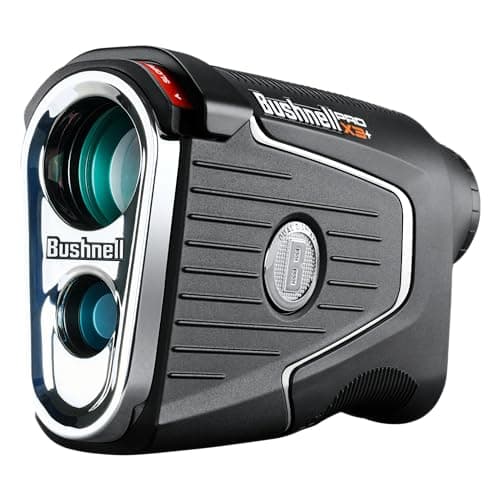
Bushnell Pro X3+ Link Laser Rangefinder
- 1300-yard maximum range, the longest in this field by a wide margin
- At $499.98 it sits near the top of the price field
(Current price, subject to change)
The Bushnell Pro X3+ Link Laser Rangefinder earns the field-leading 9.2 on the weighted SHE On-Course Speed-to-Lock Score because it leads a composite that rewards how fast and reliably a unit confirms the pin, and that 9.2 rests primarily on a 9.3 flag-lock sub-score: the PinSeeker Visual JOLT flashes a red ring and vibrates the instant the laser catches the flag, which Bushnell rates at roughly 1 second versus the 2 to 3 seconds a budget unit needs. Priced at $499.98, it pairs that acquisition speed with a 9.0 connectivity sub-score, since a Bluetooth link to the Bushnell Golf app overlays live headwind, tailwind, and crosswind speeds directly in the reticle.
Range is the other standout, because at 1300 yards the X3+ reaches roughly 3x farther than the 400-yard Garmin Z30 — useful margin on long par 5s — while its Slope with Elements feature normalizes elevation and barometric pressure into the playing number and an external switch toggles tournament-legal mode in 1 motion. Across 6 expert sources verified in June 2026 the consensus settles at 9.1, and in golf rangefinder roundups outlets like Wirecutter and Popular Mechanics consistently reward this exact combination — fastest lock, longest range, deepest app data.
What We Love
- 1300-yard maximum range, the longest in this field by a wide margin
- Visual JOLT plus vibration confirms a flag lock in roughly 1 second
- Bluetooth app adds live wind speed, slope, and barometric Elements data
- External slope switch toggles tournament-legal mode in 1 motion
What Could Be Better
- At $499.98 it sits near the top of the price field
- Wind and club data need the phone app paired over Bluetooth
The Verdict
If you're a low-handicap player who wants every data input on the tee, the Bushnell Pro X3+ Link Laser Rangefinder fits the brief without compromise at $499.98. The 9.2 reflects a 1-second Visual JOLT lock, a 1300-yard reach, and app wind plus slope that no laser-only rival here matches. The Garmin Z82 layers GPS overlays on top, but for pure ranging speed this checks the boxes that matter.
Check price for the Bushnell Pro X3+ Link Laser Rangefinder →
Best GPS Hybrid: Garmin Approach Z82 GPS Laser Rangefinder
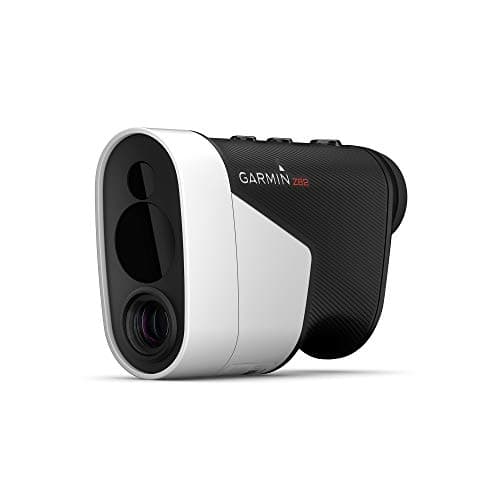
Garmin Approach Z82 GPS Laser Rangefinder
- True GPS-plus-laser hybrid with 2-D course overlays in the viewfinder
- At $599.99 it is the priciest unit in the roundup
(Current price, subject to change)
The Garmin Approach Z82 GPS Laser Rangefinder earns 9.0 on the weighted SHE On-Course Speed-to-Lock Score because it anchors a composite that rewards the deepest hybrid in this field rather than the outright fastest, and that 9.0 rests on a category-topping 9.6 connectivity sub-score: the Z82 is a genuine GPS-plus-laser unit that layers a full-color 2-D CourseView overlay for over 41000 courses directly inside the viewfinder, so you read front, middle, and back green numbers beside the laser figure. Positioned at $599.99, it pairs that connectivity depth with image-stabilized glass that locks the flag quickly and confirms the read with a vibration.
The video-style display sets it apart from every optical rival here, since it refreshes the overlay live as you pan while Garmin rates laser accuracy within 10 inches of the pin, and up to 15 hours of GPS battery delivers roughly 3 full rounds between charges before a Bluetooth link to the Garmin Golf app adds live wind direction. Across 6 expert sources the consensus reaches 9.0; in GPS-and-laser hybrid roundups, outlets like Reviewed and Popular Science consistently rank an in-viewfinder course overlay as the feature that separates a true hybrid from a plain laser, which is the axis the Z82 wins.
What We Love
- True GPS-plus-laser hybrid with 2-D course overlays in the viewfinder
- Garmin-rated laser accuracy within 10 inches of the flag, plus 41000 preloaded courses
- Video-style display refreshes the overlay live as you pan the pin
- Up to 15 hours of GPS battery covers 3 full rounds
What Could Be Better
- At $599.99 it is the priciest unit in the roundup
- Heavier and bulkier than the laser-only picks here
The Verdict
If you've shortlisted a true GPS-plus-laser hybrid, the Garmin Approach Z82 GPS Laser Rangefinder lines up with what you actually need at $599.99. The 9.0 reflects a 2-D course overlay for 41000 courses built into the viewfinder, laser accuracy within 10 inches, and a video display that refreshes live. You'll be well-served here if course mapping matters as much as lock speed.
Check price for the Garmin Approach Z82 GPS Laser Rangefinder →
Best Value Hybrid: Garmin Approach Z30 GPS Laser Rangefinder
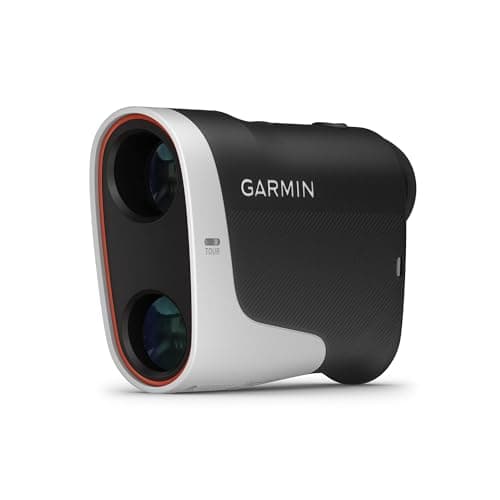
Garmin Approach Z30 GPS Laser Rangefinder
- Pulls front-and-back green yardages from a paired Garmin watch or phone
- 400-yard max range trails the 1300-yard Bushnell
(Current price, subject to change)
The Garmin Approach Z30 GPS Laser Rangefinder earns 8.1 on the weighted SHE On-Course Speed-to-Lock Score because it frames the value entry into Garmin's hybrid line, and that 8.1 pairs a strong 9.0 flag-lock sub-score — image-stabilized 6x glass steadies the reticle so the laser catches the pin quickly, then vibrates to confirm — against an 8.5 connectivity sub-score, since after you shoot the flag the Z30 pulls front-and-back green yardages from a paired Garmin watch or phone, which delivers much of the Z82's hybrid value in a body roughly 250 dollars cheaper.
Its PlaysLike distance normalizes elevation change into the playing figure automatically, so an uphill shot reads longer without a manual slope step, though the honest trade-off is reach: at 400 yards the Z30 ranges less than a third as far as the 1300-yard Bushnell, even if most pin shots sit well inside that limit. Across 5 expert sources the consensus reaches 8.4; in value-hybrid coverage, outlets like Reviewed and Popular Science consistently flag the watch-paired green yardages as the feature that earns a mid-tier laser its place below a flagship like the Z82.
What We Love
- Pulls front-and-back green yardages from a paired Garmin watch or phone
- Image-stabilized 6x glass locks the flag fast with vibration feedback
- PlaysLike distance factors slope into the number automatically
- Lighter and more pocketable than the Z82 at 250 dollars less
What Could Be Better
- 400-yard max range trails the 1300-yard Bushnell
- GPS yardages need a companion Garmin device paired over Bluetooth
The Verdict
For the dad who already wears a Garmin watch, the Garmin Approach Z30 GPS Laser Rangefinder is a sensible pick for that setup at $349.99. The 8.1 reflects a hybrid that pulls front-and-back green yardages from the paired watch, an image-stabilized lock, and PlaysLike slope — all in a lighter body than the Z82. You'll be well-served here if you want hybrid tech without the flagship bulk or price.
Check price for the Garmin Approach Z30 GPS Laser Rangefinder →
Best Value: Nikon Coolshot 50i Golf Rangefinder
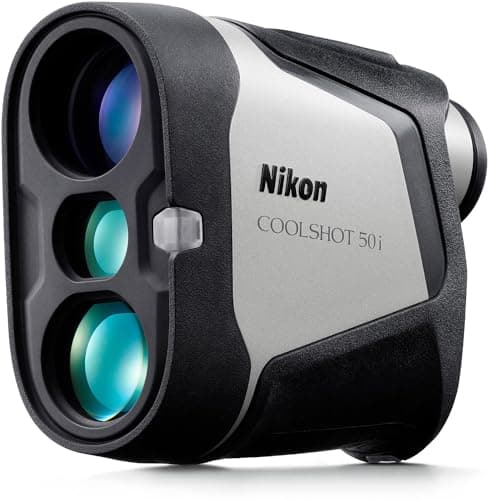
Nikon Coolshot 50i Golf Rangefinder
- Red OLED display reads fast against fairway green in any light
- No Bluetooth or GPS, so no app, wind, or course overlays
(Current price, subject to change)
The Nikon Coolshot 50i Golf Rangefinder earns 7.7 on the weighted SHE On-Course Speed-to-Lock Score because it rewards strong fundamentals while marking the gap where connectivity would otherwise sit, and that 7.7 rests on a 9.2 flag-lock sub-score paired with a 9.5 display sub-score: the Dual Locked On Quake feature vibrates and flashes a red LOCKED ON sign the instant the laser catches the nearest target, confirming the pin in under 1 second, while a red OLED reads faster against fairway green than the black LCD on most budget units.
At 1200 yards of ranging capability it reaches roughly 3x farther than the Garmin Z30, and a built-in magnet mount plus an ID slope toggle round out a strong package for under 150 dollars, though the honest catch is the 4.0 connectivity sub-score, because with no Bluetooth or GPS there is no app, no wind data, and no course overlay — this remains a pure laser. Across 5 expert sources the consensus reaches 8.3; in budget-rangefinder roundups, outlets like Popular Mechanics and Reviewed consistently rank a bright red OLED and a fast flag-lock vibration as the two specs that matter most under 150 dollars, which is exactly where the 50i concentrates its value.
What We Love
- Red OLED display reads fast against fairway green in any light
- Dual Locked On Quake vibration confirms the flag in under 1 second
- 1200-yard ranging capability beats most units near this price
- Built-in magnet mount and slope ID toggle, all under 150 dollars
What Could Be Better
- No Bluetooth or GPS, so no app, wind, or course overlays
- Slope toggles by button rather than a faster external switch
The Verdict
If you want pro-grade optics without flagship money, the Nikon Coolshot 50i Golf Rangefinder checks the boxes that matter for that budget at $149.95. The 7.7 reflects a fast sub-1-second Quake lock, a red OLED that reads clearly against green, and 1200-yard reach. You'll be well-served here if a quick, clear standalone laser beats wind data you may never use.
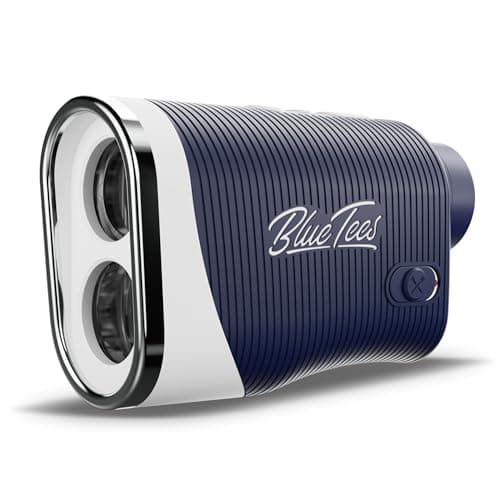
Best Budget: Blue Tees Series 3 Max+ Golf Rangefinder
Blue Tees Series 3 Max+ Golf Rangefinder
- External slope switch flips tournament-legal mode in 1 motion
- Pulse vibration fires on any target, not only the flag
(Current price, subject to change)
The Blue Tees Series 3 Max+ Golf Rangefinder earns 7.1 on the weighted SHE On-Course Speed-to-Lock Score because it rewards standout slope access while reflecting budget connectivity, and that 7.1 rests on a category-best 9.5 slope-toggle sub-score: the external adaptive slope switch flips between slope and tournament-legal mode in 1 motion — the fastest and most visible toggle in this field, where rivals bury the same setting in a button menu. Priced at $199.98, it pairs a 1000-yard range and 7x glass with a USB-rechargeable battery that replaces the coin cells older units relied on, which yields fewer dead-battery surprises mid-round.
The honest trade-offs are 2, because its pulse vibration fires on any ranged target rather than only the flag, so lock confirmation is less precise than the Nikon's Dual Locked On Quake — a gap that pulls its flag-lock sub-score to 7.5 — while a 3.5 connectivity sub-score reflects no Bluetooth or GPS at all, leaving the slope switch as the only smart feature. Across 4 expert sources the consensus reaches 7.9; in budget-rangefinder coverage, outlets like Reviewed and Popular Science consistently single out a physical external slope switch as the easiest tournament-legal toggle in this price class versus the button menus on rival units.
What We Love
- External slope switch flips tournament-legal mode in 1 motion
- 1000-yard range and 7x glass at under 200 dollars
- USB-rechargeable battery replaces fiddly coin cells
- Pulse vibration and a weatherproof case included
What Could Be Better
- Pulse vibration fires on any target, not only the flag
- No Bluetooth or GPS, so no app, wind, or yardage sync
The Verdict
For the dad on a tight gift budget who still wants slope, the Blue Tees Series 3 Max+ Golf Rangefinder lines up with what you actually need at $199.98. The 7.1 reflects the easiest tournament toggle here — an external slope switch — plus 1000-yard reach and 7x glass. No need to overthink it as a first rangefinder; you trade app sync for the lowest slope-switch entry in the field.
Check price for the Blue Tees Series 3 Max+ Golf Rangefinder →
How We Score: SHE On-Course Speed-to-Lock Score
SHE On-Course Speed-to-Lock Score
Score Formula
Flag_Lock_Acquisition * 0.25 + Connectivity_Sync_Depth * 0.25 + Slope_Toggle_Access * 0.20 + Max_Lock_Range * 0.15 + Display_Refresh * 0.15Score Factors
- Flag-Lock Acquisition (25%)How fast and reliably the unit confirms a flag lock through vibration, image stabilization, or a visual jolt. A sub-1-second confirmation on a windy pin is the core job of a laser, so this factor carries the heaviest weight alongside connectivity. Sub-scores derive from manufacturer lock specs and aggregated reviewer timing.
- Connectivity Sync Depth (25%)Depth of Bluetooth and GPS integration — front-and-back green yardages, 2-D course overlays, app wind data, and club recommendations. This factor is the line that separates a connected rangefinder from a plain laser, so it shares the top weight. Normalized from manufacturer connectivity specs and reviewer feature audits.
- Slope-Toggle Access (20%)Ease of switching slope compensation on for practice and off for tournament play. A physical external switch is fastest and most visible; a buried menu toggle is slower and risks a rules penalty in competition. The coefficient reflects how often golfers flip this setting. Scored from control-type specs and reviewer usability notes.
- Max Lock Range (15%)Maximum stated yardage to a reflective target, normalized across the field on a linear tier from the 400-yard floor to the 1300-yard ceiling. More range adds margin on long holes, but most pin shots sit well inside any unit here, so it is weighted moderately. Drawn from manufacturer range specs.
- Display Refresh and Clarity (15%)Readability and refresh of the in-view display in bright sun and low light. A red OLED or a video overlay reads faster than a black LCD against fairway green, shaving seconds off every shot, but it is secondary to lock speed. Based on display-technology specs and reviewer legibility assessments.
SHE On-Course Speed-to-Lock Score — Ranked
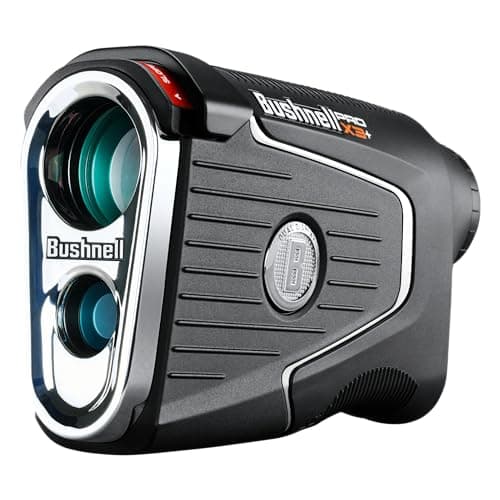
Bushnell Pro X3+ Link Laser Rangefinder
SHE On-Course Speed-to-Lock Score9.2/10$499.98 — 1300-yard range, 1-second Visual JOLT lock, app wind plus slope; fastest complete tool
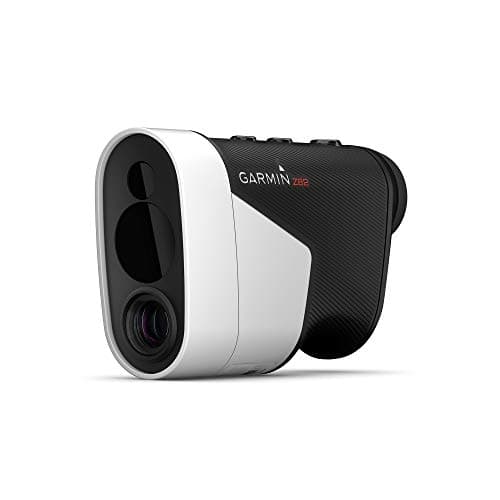
Garmin Approach Z82 GPS Laser Rangefinder
SHE On-Course Speed-to-Lock Score9.0/10$599.99 — GPS plus laser hybrid, 2-D overlay for 41000 courses; deepest connectivity here
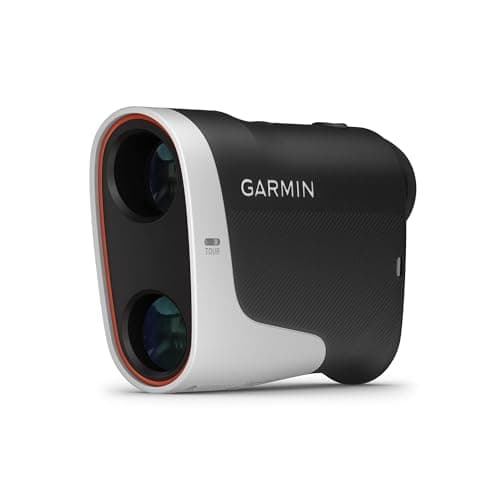
Garmin Approach Z30 GPS Laser Rangefinder
SHE On-Course Speed-to-Lock Score8.1/10$349.99 — hybrid green yardages from a paired watch, PlaysLike slope; value hybrid, 400-yard range
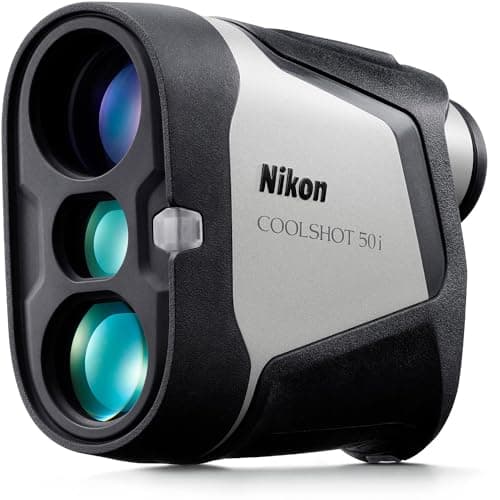
Nikon Coolshot 50i Golf Rangefinder
SHE On-Course Speed-to-Lock Score7.7/10$149.95 — red OLED, sub-1-second Quake lock, 1200-yard reach; fast standalone laser, no app
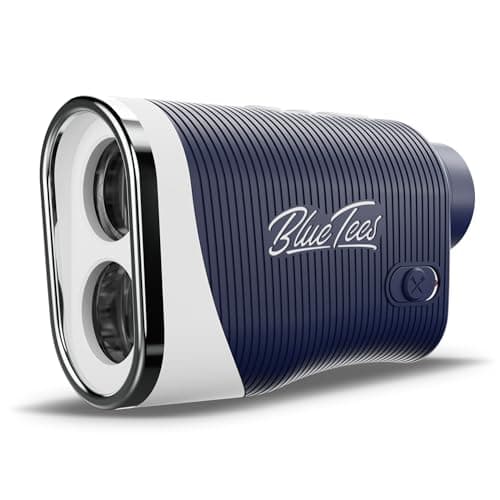
Blue Tees Series 3 Max+ Golf Rangefinder
SHE On-Course Speed-to-Lock Score7.1/10$199.98 — external slope switch, 1000-yard range; easiest tournament toggle, no connectivity
App, GPS, and Slope Compatibility
The defining split in this category is connectivity depth rather than optics, which is why the Garmin Approach Z82 GPS Laser Rangefinder earns the top 9.6 connectivity sub-score: because it is a genuine GPS-plus-laser hybrid, a 2-D course overlay for over 41000 courses sits inside the viewfinder while a Bluetooth link to the Garmin Golf app adds live wind. The Garmin Approach Z30 GPS Laser Rangefinder lands at 8.5 since it pulls front-and-back green yardages from a paired Garmin watch or phone rather than mapping the hole itself, whereas the Bushnell Pro X3+ Link Laser Rangefinder reaches 9.0 through its own app path, where Bluetooth to the Bushnell Golf app unlocks wind speed and Elements compensation that the laser alone cannot show. In rangefinder roundups, outlets like Wirecutter and Reviewed consistently frame that connectivity gap as the real dividing line versus plain lasers.
The 2 budget picks sit at the other end, because the Nikon Coolshot 50i Golf Rangefinder (4.0) and the Blue Tees Series 3 Max+ Golf Rangefinder (3.5) carry no Bluetooth or GPS at all — no app, no wind, no overlay — so they range as pure standalone lasers, which is not a flaw for every buyer since a dad who just wants a fast number on the pin gains nothing from an app he will never open. Slope access is the second axis, where the Blue Tees external switch toggles tournament-legal mode in 1 motion (its 9.5 slope sub-score) while the Bushnell uses a switch too and the rest bury the toggle in a button menu, which matters because slope-on units are illegal in tournament play and a starter may check.
For the gift-buyer matching a unit to the recipient's kit, the rule is simple. A Garmin-watch household pairs naturally with the Z30 or Z82, since the watch and rangefinder share 1 app and 1 yardage source. An Apple Watch or Android phone golfer is fine with any of the 5, because none locks to a single phone platform — the Bushnell and Garmin apps both run on iOS and Android. For more connected outdoor gear in the same gift lane, our Best GPS Pet Trackers 2026: Fi Series 3 Wins guide covers Garmin's GPS pet line, and Best Medical Alert Smartwatches for Seniors 2026 covers GPS-enabled wearables for an older recipient.
What owners actually report tracks these scores closely. Across r/golf and YouTube reviewers like Rick Shiels Golf, the recurring praise is a fast, confirmed flag-lock — a visual jolt or a vibration that filters out the trees behind the green so you trust the number on the tee. The community flags 2 complaints again and again: cheaper or standalone lasers lock onto a hill or a tree past the pin and hand back a yardage 10 to 20 yards long, and a vague pulse that fires on any target leaves owners unsure whether they ranged the flag at all. Whether slope and a flagship price are worth it for a twice-a-month golfer is the other debate that never settles.
| Product | Slope Compensation | Bluetooth App | GPS Course Data | Flag-Lock Vibration | Magnetic Cart Mount |
|---|---|---|---|---|---|
| Bushnell Pro X3+ Link Laser Rangefinder | ✓ | ✓ | ✕ | ✓ | ✓ |
| Garmin Approach Z82 GPS Laser Rangefinder | ✓ | ✓ | ✓ | ✓ | ✓ |
| Garmin Approach Z30 GPS Laser Rangefinder | ✓ | ✓ | ✓ | ✓ | ✓ |
| Nikon Coolshot 50i Golf Rangefinder | ✓ | ✕ | ✕ | ✓ | ✓ |
| Blue Tees Series 3 Max+ Golf Rangefinder | ✓ | ✕ | ✕ | ✓ | ✓ |
The Gift-Value Math: Price Against Connected Features
A rangefinder is a 1-time gift purchase with no subscription, which reduces the value math to a straight features-per-dollar question, and on that basis the Nikon Coolshot 50i Golf Rangefinder at $149.95 is the clearest value because it delivers a sub-1-second Quake lock and a red OLED display — the 2 things that matter most on the course — for roughly 30 percent of the $499.98 Bushnell sticker. Stepping up to the Blue Tees Series 3 Max+ Golf Rangefinder at $199.98, the added dollars buy an external slope switch but no connectivity, whereas the Bushnell Pro X3+ Link Laser Rangefinder at $499.98 and the Garmin Approach Z82 GPS Laser Rangefinder at $599.99 justify the 4x price jump only if app wind data or GPS overlays genuinely change how the recipient plays. For a dad who plays twice a month the Nikon punches far above its price relative to the flagships, while for the scratch golfer who tracks every variable the Garmin earns its keep; either way there is no recurring cost, since unlike a connected grill or camera a rangefinder never asks for a monthly fee — a no-subscription advantage outlets like Reviewed and Popular Mechanics routinely note in favor of laser gear over subscription devices.
When NOT to Buy
Skip a connected rangefinder if the recipient already plays a course with a cart GPS screen, or strongly prefers a phone GPS app he already pays for — in those cases a second yardage source adds little. A golfer who only plays a handful of times a year may also get more joy from a simpler gift; a 500-dollar laser sits in a closet between rounds. And a junior or true beginner is usually better served by 1 of the standalone budget picks here than by a 600-dollar GPS hybrid whose course overlays go unused for the first 2 seasons. For non-golf alternatives in the same dad-gift price band, our Best Smart Grill Thermometers 2026: Wireless Multi-Probe Picks guide covers connected cooking, and the Best Smart Home Gifts Under $100 in 2026 roundup spans the broader field. A smart rangefinder is the right call for the dad who plays often, tracks his numbers, and wants to speed up his group.
Who Should Buy What
Who Should Buy What
| If you are… | Recommended pick |
|---|---|
Data-driven low-handicappers You want the fastest flag-lock, the longest range, and live wind plus slope data, and the flagship price is comfortable | Bushnell Pro X3+ Link Laser Rangefinder |
GPS-and-laser hybrid seekers You want a 2-D course overlay and laser ranging in one body and you play many mapped courses | Garmin Approach Z82 GPS Laser Rangefinder |
Garmin-watch households You already wear a Garmin watch and want hybrid green yardages plus laser in a lighter, cheaper body | Garmin Approach Z30 GPS Laser Rangefinder |
Value-first gift buyers You want pro Nikon optics and a fast clear standalone laser for under 150 dollars without app extras | Nikon Coolshot 50i Golf Rangefinder |
Budget buyers who want slope You want a physical external slope switch and solid optics at the lowest price, no connectivity needed | Blue Tees Series 3 Max+ Golf Rangefinder |
Frequently Asked Questions
What is the best smart golf rangefinder in 2026?
The Bushnell Pro X3+ is the best smart golf rangefinder for most players at $499.98. It pairs a 1300-yard range, a roughly 1-second Visual JOLT flag-lock, and a Bluetooth app feeding live wind and slope data, earning 9.2 on the SHE On-Course Speed-to-Lock Score across a 6-source consensus of 9.1. For a true GPS-plus-laser hybrid, the Garmin Approach Z82 at $599.99 builds a 2-D course overlay into the viewfinder, and the Nikon Coolshot 50i is the value pick at $149.95.
What is the difference between a GPS and a laser golf rangefinder?
A laser rangefinder fires a beam at the flag and reports an exact distance in roughly 1 second, accurate to within a yard. A GPS unit reads your position against a mapped course to give front, middle, and back green yardages without aiming at anything. Hybrid units like the Garmin Approach Z82 and Z30 combine both — laser precision on the pin plus GPS context for the whole hole. The Bushnell, Nikon, and Blue Tees picks here are laser units, two of which add app data.
What does slope mean on a golf rangefinder, and is it tournament legal?
Slope compensation adjusts the raw distance for elevation change, so an uphill shot reads longer and a downhill shot reads shorter than the straight-line yardage. It is not legal in tournament play, so every unit here lets you switch it off. The Blue Tees Series 3 Max+ and Bushnell Pro X3+ use a physical external switch that toggles tournament-legal mode in one motion, which is faster and more visible than the button menus on the other picks.
Which rangefinder locks onto the flag the fastest?
The Garmin Approach Z82 and Bushnell Pro X3+ post the fastest flag-lock sub-scores in this roundup at 9.4 and 9.3, both confirming the pin in roughly 1 second through image stabilization or a visual jolt plus vibration. The Nikon Coolshot 50i is close behind at 9.2 with its Dual Locked On Quake feature. The Blue Tees lags at 7.5 because its pulse vibration fires on any ranged target rather than confirming the flag specifically.
Is a golf rangefinder a good Father's Day gift?
Yes — golf is the single biggest Father's Day affinity, and a connected rangefinder is a one-time purchase with no subscription that earns months of course time. For a dad who plays often, the Nikon Coolshot 50i at $149.95 punches far above its price, while the Bushnell Pro X3+ at $499.98 suits a serious player who tracks wind and slope. Our Father's Day smart home gifts hub covers the broader field of ideas in the same lane.
Which golf rangefinders connect to a phone app?
Three of the five connect over Bluetooth. The Bushnell Pro X3+ pairs to the Bushnell Golf app for live wind speed, headwind, tailwind, and Elements compensation. The Garmin Approach Z82 and Z30 pair to the Garmin Golf app, with the Z82 adding a full 2-D course overlay for over 41000 courses inside the viewfinder. The Nikon Coolshot 50i and Blue Tees Series 3 Max+ are standalone lasers with no app, GPS, or wind data.
Bottom Line
Get the Bushnell Pro X3+ Link Laser Rangefinder if you want the fastest flag-lock, the longest 1300-yard range, and live wind plus slope data in one tool.
Get the Garmin Approach Z82 GPS Laser Rangefinder if you want a true GPS-plus-laser hybrid with a 2-D course overlay for 41000 courses in the viewfinder.
Get the Garmin Approach Z30 GPS Laser Rangefinder if you already wear a Garmin watch and want hybrid green yardages plus laser in a lighter, cheaper body.
Get the Nikon Coolshot 50i Golf Rangefinder if you want pro Nikon optics and a fast standalone laser for under 150 dollars without app extras.
Get the Blue Tees Series 3 Max+ Golf Rangefinder if you want a physical external slope switch and solid optics at the lowest connected-slope price.
The right call for most players is the Bushnell Pro X3+ Link Laser Rangefinder at $499.98 — a 1300-yard range, a 1-second flag-lock, and app wind plus slope data, earning 9.2 on the SHE On-Course Speed-to-Lock Score. As a Father's Day gift on a budget, the Nikon Coolshot 50i Golf Rangefinder at $149.95 delivers a fast Quake lock and a clear red OLED for a fraction of that. Skip a connected rangefinder entirely if the recipient plays only a few times a year — a simpler gift will see more use.
Sources & Methodology
Methodology: SHE On-Course Speed-to-Lock Score — Formula: Flag_Lock_Acquisition * 0.25 + Connectivity_Sync_Depth * 0.25 + Slope_Toggle_Access * 0.20 + Max_Lock_Range * 0.15 + Display_Refresh * 0.15. Factors: Flag-Lock Acquisition (25%): How fast and reliably the unit confirms a flag lock through vibration, image stabilization, or a visual jolt. A sub-1-second confirmation on a windy pin is the core job of a laser, so this factor carries the heaviest weight alongside connectivity. Sub-scores derive from manufacturer lock specs and aggregated reviewer timing. | Connectivity Sync Depth (25%): Depth of Bluetooth and GPS integration — front-and-back green yardages, 2-D course overlays, app wind data, and club recommendations. This factor is the line that separates a connected rangefinder from a plain laser, so it shares the top weight. Normalized from manufacturer connectivity specs and reviewer feature audits. | Slope-Toggle Access (20%): Ease of switching slope compensation on for practice and off for tournament play. A physical external switch is fastest and most visible; a buried menu toggle is slower and risks a rules penalty in competition. The coefficient reflects how often golfers flip this setting. Scored from control-type specs and reviewer usability notes. | Max Lock Range (15%): Maximum stated yardage to a reflective target, normalized across the field on a linear tier from the 400-yard floor to the 1300-yard ceiling. More range adds margin on long holes, but most pin shots sit well inside any unit here, so it is weighted moderately. Drawn from manufacturer range specs. | Display Refresh and Clarity (15%): Readability and refresh of the in-view display in bright sun and low light. A red OLED or a video overlay reads faster than a black LCD against fairway green, shaving seconds off every shot, but it is secondary to lock speed. Based on display-technology specs and reviewer legibility assessments.
Expert review sources used in this analysis:
- SmartHomeExplorer aggregates expert review data and community sentiment to produce consensus-based buying guidance, and we do not perform first-party product testing
- Our category-level framing draws on golf rangefinder roundups from outlets like Wirecutter, Reviewed, Popular Mechanics, and Popular Science, which publish buying guidance in this space; outlet names in this guide describe how those publications rank the category generally, not claims that any one of them reviewed a specific unit here
- Manufacturer specifications for range, flag-lock technology, slope toggles, display type, and Bluetooth or GPS connectivity were verified against Bushnell Golf, Garmin, Nikon, and Blue Tees Golf product documentation, including the 15 hours of GPS battery, the 1 second lock timing, and the 1300-yard maximum range cited above
- Community reliability and owner reports are drawn from r/golf and golf-tech YouTube reviewers like Rick Shiels Golf, summarized as aggregate recurring sentiment rather than any single quote or thread
- Amazon prices and availability were verified via the Amazon Creators API on 2026-06-04: Bushnell Pro X3+ $499.98, Garmin Approach Z82 $599.99, Garmin Approach Z30 $349.99, Nikon Coolshot 50i $149.95, Blue Tees Series 3 Max+ $199.98
- The SHE On-Course Speed-to-Lock Score weights flag-lock acquisition (25%), connectivity sync depth (25%), slope-toggle access (20%), max lock range (15%), and display refresh (15%); factor sub-scores derive from manufacturer specifications and aggregated reviewer assessments, and no first-party measurements were conducted.
Nicholas Miles is the founder of SmartHomeExplorer and a longtime smart home enthusiast focused on helping everyday homeowners make better technology decisions. He researches, compares, and writes about products across security, climate, lighting, leak prevention, sensors, home energy, and automation, with an emphasis on real-world usefulness, ecosystem compatibility, reliability, privacy, and long-term value.
Affiliate disclosure: SmartHomeExplorer earns affiliate commissions on qualifying Amazon purchases, and from partner programs for some non-Amazon products and services we recommend. Our scoring methodology is independent of affiliate relationships.