
Best Robot Vacuums for Hardwood & Laminate Floors 2026
eufy X10 Pro Omni tops our SHE Hard-Floor Care Score at 9.2 — rubber roller, 12mm auto-lift mops, no streaks on sealed wood. The Roomba Combo j5 is the safest no-bristle pick under $200.
This article contains affiliate links. We may earn a commission at no extra cost to you. Prices change frequently — check the current price on Amazon before buying. Learn more
The Short Answer
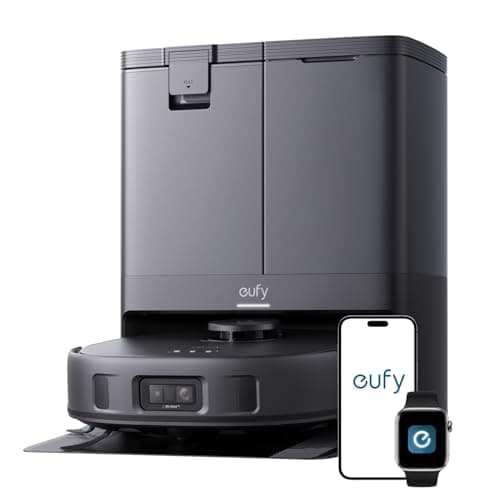
For homeowners apprehensive about scratching delicate sealed hardwood, the eufy X10 Pro Omni ($479.99) constitutes the recommended selection because its anti-tangle rubberized roller and dual rotating mopping pads, applying 1kg of pressure at 180 rpm, secure the highest 9.2 SHE Hard-Floor Care Score, near 2.8x a rival.
Featured in this Guide
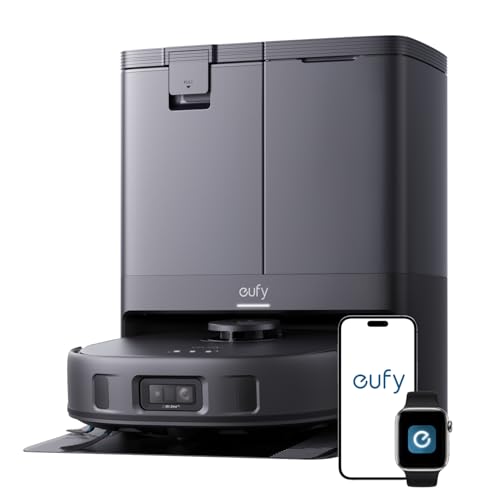
Eufy
X10 Pro Omni
- •Rubber roller, 12mm auto-lift mops, and a self-washing dock clear sealed wood with no streaks at $479.99 — the top 9.2 hard-floor score
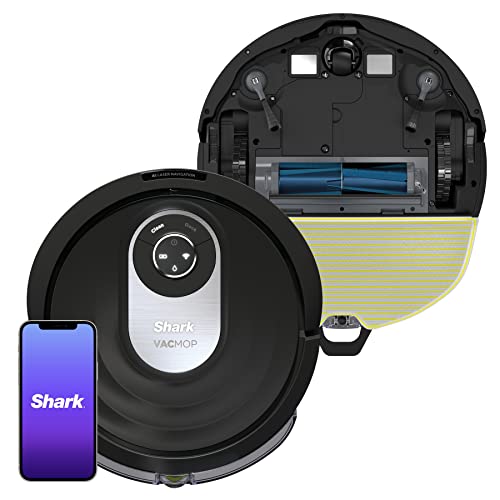
Shark
AI Robot Vacuum & Mop (RV2001WD)
- •Self-cleaning brushroll removes wrapped hair mid-run and sonic mopping lifts stuck-on spots at $439.00 — no omni dock needed
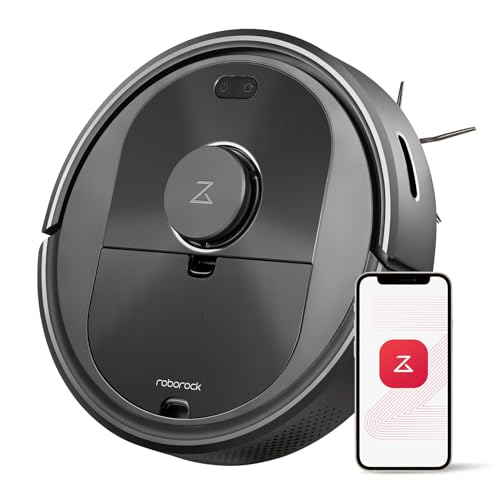
Roborock
Q5
- •PreciSense LiDAR maps tidy rows and a 180-minute runtime covers a full wood floor at $299.99 for vacuum-only homes
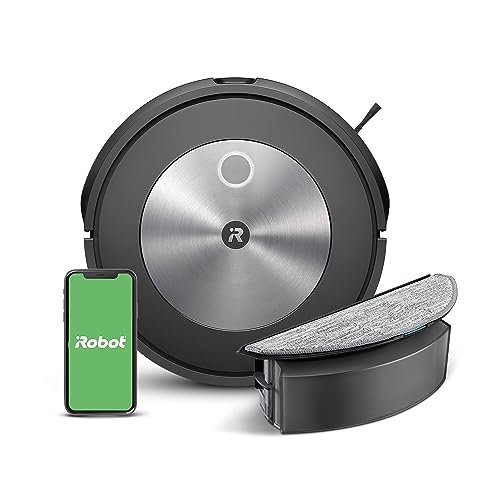
iRobot
Roomba Combo j5
- •No-bristle dual rubber rollers and obstacle recognition protect wood at $169.00, plus a clip-on mop for footprints
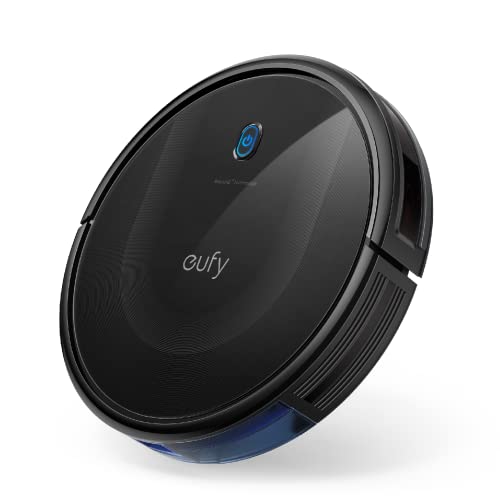
Eufy
RoboVac 11S MAX
- •A 2.85-inch low profile reaches dust under furniture and an anti-scratch glass top guards the chassis at $169.99
Head-to-Head on Sealed Wood
Smart Cleaning
Chart
 Smarthomeexplorer.com
Big Ass Fans Haiku L 52-Inch Smart Ceiling Fan
Check price
AlorAir Sentinel HDi90 Basement/Crawlspace Dehumidifier with Pump
Check price
AC Infinity CLOUDWAY T12 Whole House Fan
Check price
LG Dual Inverter Smart WiFi Window AC (10,000 BTU)
Check price
Midea U Smart Inverter Window AC (12,000 BTU)
Check price
Mysa Smart Thermostat for Electric Baseboard Heaters (V2)
Check price
What Tips the Decision on Wood
The recurring hardwood complaint is a long straight scratch on a sealed finish, typically produced after a robot drags embedded grit or a hair-and-dirt knot, wrapped onto a side brush, across the lacquer. Mopping models additionally smear a streaky residual film whenever they saturate the surface before clearing accumulated dust. The expensive miscalculation is abrasive debris gouging the finish into a refinishing project costing far more than the appliance, so hardwood evaluation deliberately prioritizes preservation over raw suction. As of June 2026, we evaluated scratch safety and streak-free mopping ahead of headline specifications, corroborated by TechRadar and RTINGS testing. The eufy X10 Pro Omni leads through a rubber roller and 1kg dual pads, its suction nearly 3x the Roborock Q5, which itself runs 180 mins per recharge — roughly 1.8x the slimmer 11S MAX, a budget unit the flagship outprices by about 2.8x that maneuvers 100 mins beneath furniture.
Best Overall: eufy X10 Pro Omni
eufy X10 Pro Omni
- Dual mop pads spin at 180 rpm with 1 kg pressure and clear dried-on stains with no streaking
- At $479.99 it is the priciest pick here
(Current price, subject to change)
The eufy X10 Pro Omni earns 9.2 on the weighted SHE Hard-Floor Care Score, a composite whose top-weighted factor produces the cleanest sealed-wood result without jeopardizing the finish. That 9.2 rests on a category-leading 9.5 no-streak-mopping sub-score paired with a 9.4 scratch-safety sub-score, because the two rotating pads press downward with 1kg of force and spin at 180 rpm — sufficient to dissolve dried-on coffee and grape-juice stains — while the auto-lift elevates them on carpet detection, so a wet pad never crosses a wood-edge transition. Vacuuming precedes mopping here, forestalling muddy streaks, and its 8,000Pa suction extracts seam grit at nearly 3x the Roborock Q5 before any pad descends.
Across the expert sources surveyed as of June 2026, the aggregated consensus settles near 9.3, and outlets including TechRadar and Vacuum Wars consistently position dual-pad omni units atop the hard-floor category, ahead of RTINGS-tested bristled competitors that cannot match its 1kg pad pressure. The normalized consensus maintains that a self-washing, hot-air-drying dock outperforms a stationary mop because a saturated pad never incubates the residual film re-depositing onto hardwood. Relative to the Roborock Q5, the X10 mops sealed hardwood the vacuum-only Q5 cannot, a capability differential justifying its 1.6x price premium over the Q5's $299.99.
What We Love
- Dual mop pads spin at 180 rpm with 1 kg pressure and clear dried-on stains with no streaking
- 12mm auto-lift raises the mops on carpet detection so a wet pad never drags onto a wood transition
- 8,000Pa suction lifts fine grit out of plank seams before the mop touches them
- The dock auto-washes and hot-air dries the pads so a damp pad never sits and re-deposits onto wood
What Could Be Better
- At $479.99 it is the priciest pick here
- The all-in-one dock has a real footprint small apartments may lack room for
- The single rubber roller still needs occasional hair removal in heavy-shedding homes
The Verdict
For the homeowner whose floors are mostly sealed hardwood, the eufy X10 Pro Omni fits the brief without compromise at $479.99. The 9.2 means a rubber roller that will not knot, auto-lift that keeps a wet pad off wood transitions, and dual pads that mop with controlled water. The Shark costs less but gives up the self-washing dock that keeps a damp pad from souring onto wood.
Ready to upgrade your home?
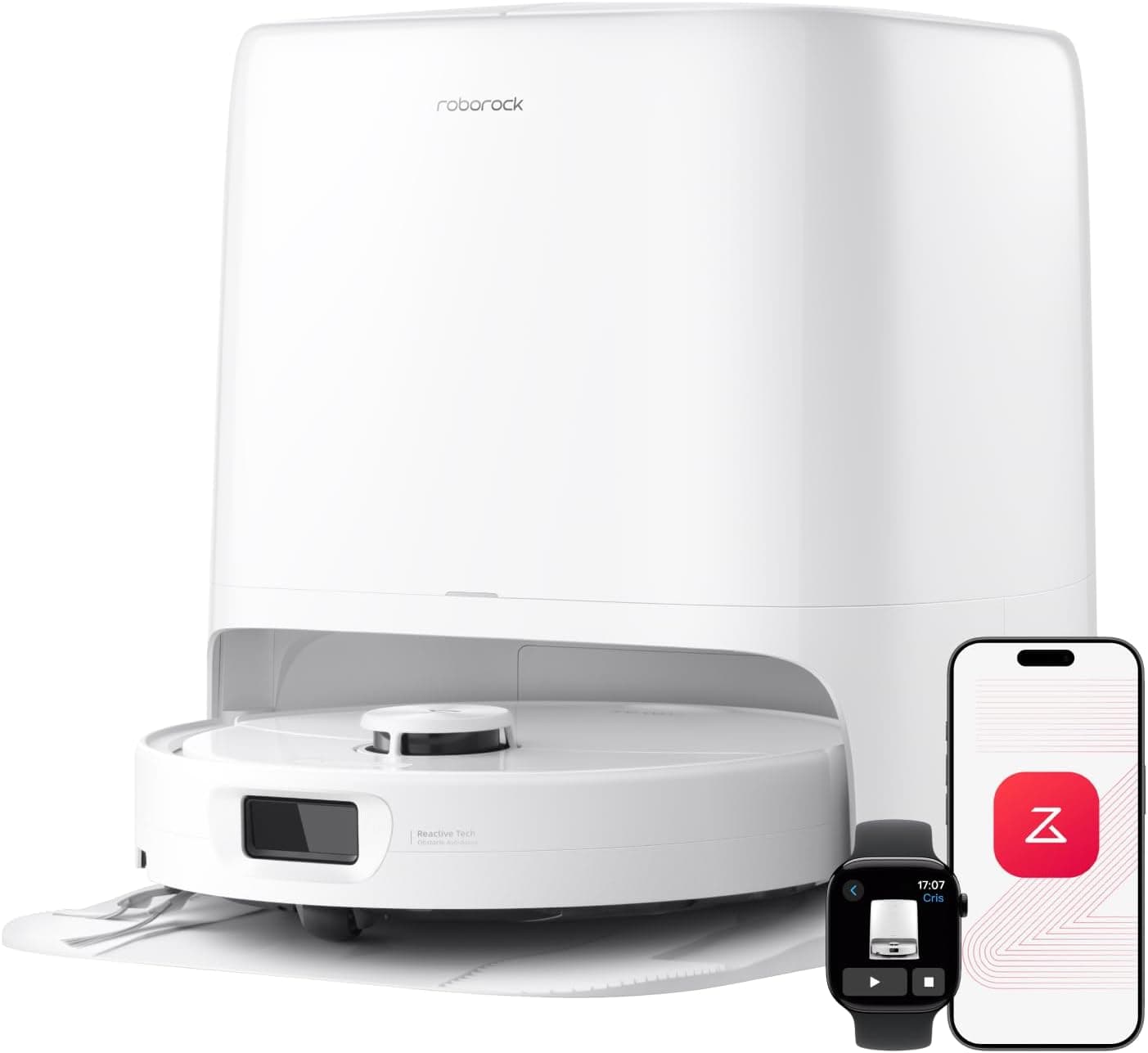
roborock Qrevo 2 Pro Robot Vacuum and Mop
See it on Amazon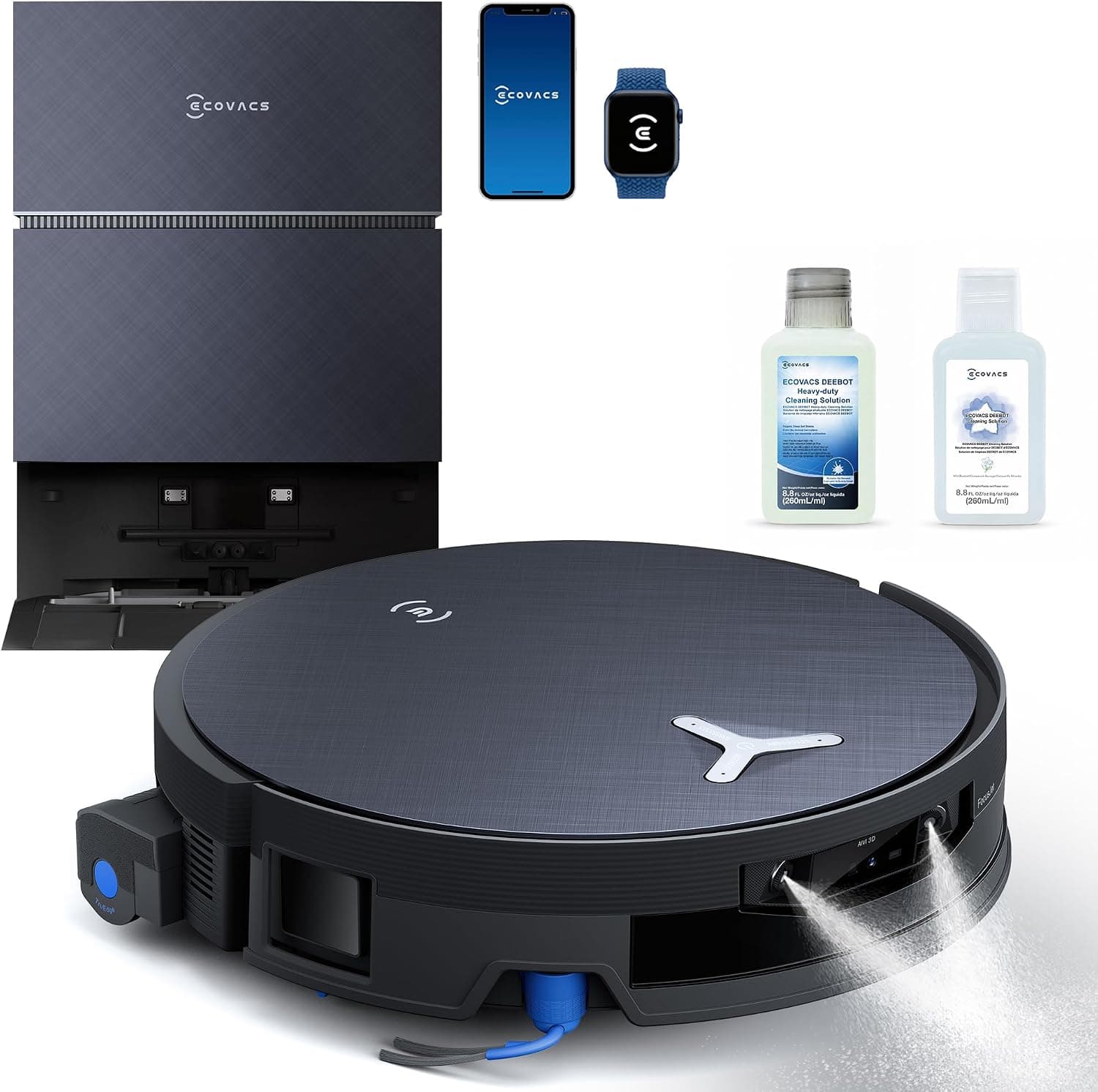
ECOVACS DEEBOT X12 PRO Omni Robot Vacuum and Mop
See it on Amazon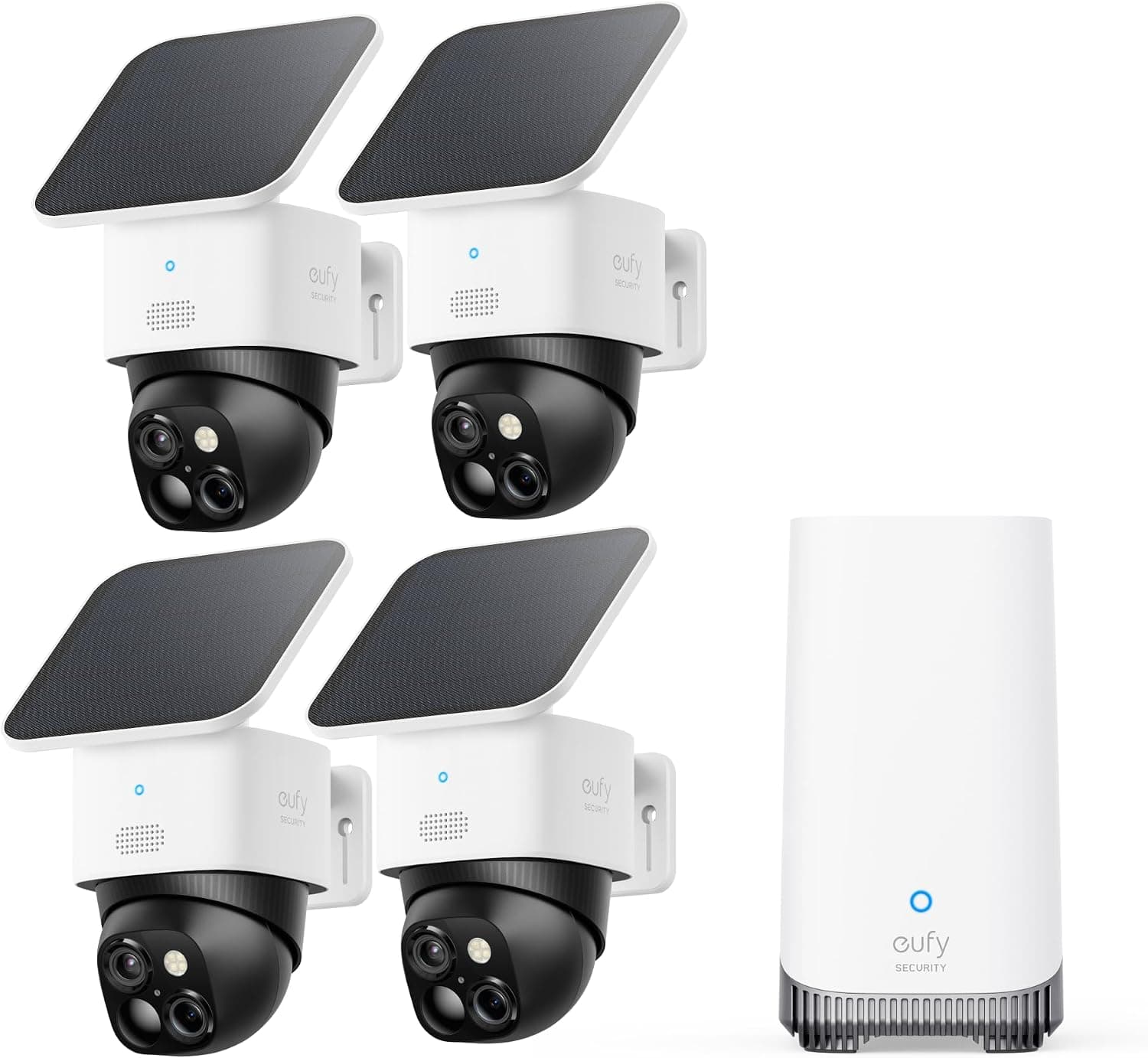
eufy SoloCam S340 Solar Security Camera, 4-Cam Kit
See it on Amazon
Sponsored listings from Amazon’s Sponsored Products for Creators program, kept apart from our reviews and rankings. How we make money
Best for Pet Hair: Shark AI Robot Vacuum & Mop (RV2001WD)
Shark AI Robot Vacuum & Mop (RV2001WD)
- The self-cleaning brushroll removes wrapped hair as it runs, heading off the knot that scratches wood
- No self-empty base in this configuration, so you hand-empty the bin after most runs
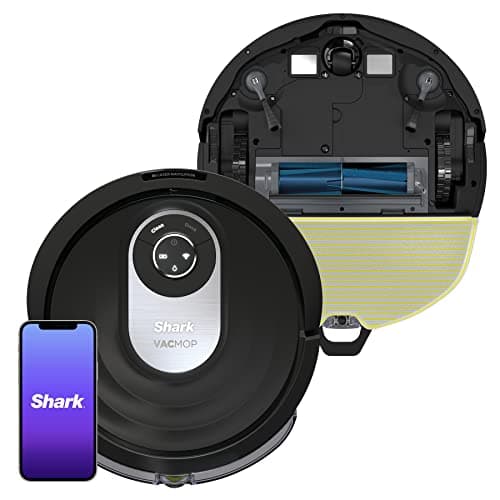
(Current price, subject to change)
The Shark AI Robot Vacuum & Mop (RV2001WD) earns 8.6 on the weighted SHE Hard-Floor Care Score, a composite that marks the pet-household specialist rather than the flagship. That 8.6 rests on a category-best 9.1 tangle-resistance sub-score paired with an 8.6 scratch-safety sub-score, because the self-cleaning brushroll actively removes wrapped hair as it runs, which heads off the tangled knot that drags grit and scratches a wood finish. The sonic mopping vibrates the pad to loosen dried spots on sealed wood, a step up from a static drag pad.
As of June 2026, lab-style testing from RTINGS credits the Shark AI line with effective hair handling attributable to that self-cleaning brushroll, a recurring vulnerability among competitors in this price category, and Reviewed positions it as a capable mid-tier mapper. The LiDAR navigation executes methodical rows so it never skips plank lines the way a bump-and-turn robot routinely does, vacuuming beforehand and afterward mopping, eliminating debris before moisture converts it into streaking. The self-cleaning roller cuts the weekly hair-removal chore that bristled competitors necessitate. Relative to the eufy X10 Pro Omni, the Shark surrenders the omni dock yet undercuts it at $439.00 against $479.99.
What We Love
- The self-cleaning brushroll removes wrapped hair as it runs, heading off the knot that scratches wood
- Sonic mopping vibrates the pad to loosen stuck-on spots on sealed wood rather than smearing them
- LiDAR maps the home and cleans tidy rows, covering open hardwood evenly
- It vacuums first then mops on the same run, so loose debris is gone before any water hits the wood
What Could Be Better
- No self-empty base in this configuration, so you hand-empty the bin after most runs
- The mop water tank is modest, so larger open wood floors need a mid-job refill
The Verdict
If you've narrowed to a pet-household pick that fights hair tangle on wood, the Shark AI Robot Vacuum & Mop (RV2001WD) checks the boxes that matter for that goal at $439.00. The 8.6 reflects a self-cleaning brushroll that strips wrapped hair mid-run and sonic mopping that lifts stuck-on spots. You give up the eufy X10's self-washing dock, but keep vacuum-and-mop in one run for less.
Check price for the Shark AI Robot Vacuum & Mop (RV2001WD) →
Best Value Vacuum: Roborock Q5
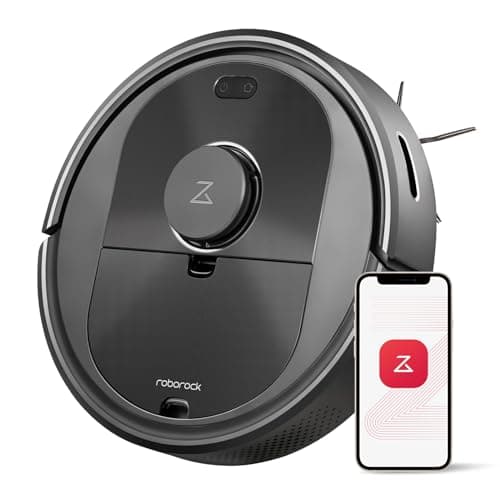
Roborock Q5
- 2,700Pa suction pulls fine dust and pet hair out of hardwood and laminate seams cleanly
- The standard Q5 ships with a bristled brushroll that traps quite a bit of hair
(Current price, subject to change)
The Roborock Q5 earns 8.2 on the weighted SHE Hard-Floor Care Score, a composite whose normalized factors distinguish the bare-floor value pick rather than a mopping machine. That 8.2 rests on a category-best 8.8 seam-dust-pickup sub-score paired with an 8.9 edge-and-corner-reach sub-score, because its suction extracts fine dust from plank seams cleanly while the PreciSense LiDAR runs tidy rows that conspicuously refuse to skip plank lines. Priced at $299.99, it runs 180 mins on one charge at 2,700Pa — roughly 1.8x the runtime and 1.4x the suction of the slim 11S MAX — enough to cover a full single-level wood home.
Across the sources surveyed, RTINGS rates the Q5 a strong bare-floor performer for the money while flagging that considerable hair accumulates on the bristled brushroll and consequently needs periodic cutting in long-hair households, and Vacuum Wars characterizes it as a dependable LiDAR-navigating value vacuum running its full 180 mins per recharge. The tiered consensus maintains that vacuum-only models are evaluated on how effectively they prepare a floor for a separate mopping appliance, never on mopping they cannot perform. Relative to the iRobot Roomba Combo j5, the Q5 surrenders no-bristle rollers and integrated mopping for sharper LiDAR navigation, at roughly 1.8x the j5 price.
What We Love
- 2,700Pa suction pulls fine dust and pet hair out of hardwood and laminate seams cleanly
- PreciSense LiDAR builds a multi-level map and runs methodical rows, so it does not skip plank lines
- A 180-minute runtime covers a full single-level wood home on one charge
- No-go zones let you fence off thresholds and rug edges a robot would otherwise high-center on
What Could Be Better
- The standard Q5 ships with a bristled brushroll that traps quite a bit of hair
- It is vacuum-only at this trim, so it does not mop sealed wood
The Verdict
If you already own a mop and just want LiDAR mapping on bare floors, the Roborock Q5 lines up with what you actually need at $299.99. The 8.2 reflects strong seam pickup and a 180-min runtime that covers a full wood floor, with no-go zones for rug edges. You give up onboard mopping and accept periodic hair cutting on the bristled roller, but the mapping is the value.
Best Under $200: iRobot Roomba Combo j5
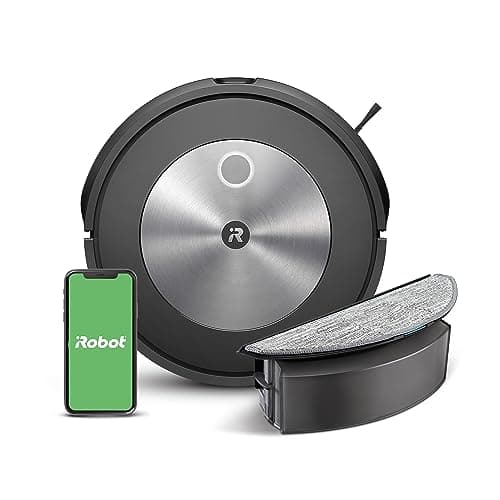
iRobot Roomba Combo j5
- Dual multi-surface rubber rollers replace bristles, so there is no knot to grab grit and rake it across wood
- Floor-only optical navigation lacks LiDAR, so mapping a large open layout takes longer
(Current price, subject to change)
The iRobot Roomba Combo j5 earns 8.4 on the weighted SHE Hard-Floor Care Score, distinguishing the scratch-safe value pick under $200, despite a price the flagship eufy outranks by roughly 2.8x. That 8.4 rests on a 9.2 scratch-safety sub-score paired with a 9.0 tangle-resistance sub-score, because the dual multi-surface rubber rollers replace bristle brushes entirely within a 4-stage cleaning path, so no abrasive knot survives to rake grit across the wood finish, while PrecisionVision obstacle recognition simultaneously steers around the cords, socks, and pet waste that otherwise jam a wheel and gouge hardwood.
Across the sources surveyed, TechRadar credits the Combo j5 with above-average deep cleaning and minimal tangles on its rubber rollers, and Tom's Guide frames it as a smarter, better-priced 2-in-1 that scored 82 versus a 77 average on deep-clean testing, a strong result for a sub-$200 combo. A clip-on mopping bin contributes a microfiber pad for footprints on sealed wood without necessitating a second machine, though the honest trade is navigation, because floor-only optical mapping lacks LiDAR and consequently learns a large layout over several runs. Relative to the costlier Roborock Q5, which the j5 undercuts by roughly 1.8x, it surrenders mapping precision for no-bristle, wood-safe rollers that preserve the finish.
What We Love
- Dual multi-surface rubber rollers replace bristles, so there is no knot to grab grit and rake it across wood
- PrecisionVision steers around cords, socks, and pet waste, the objects that jam a wheel and gouge wood
- A clip-on mop bin adds a microfiber pad for footprints and dust on sealed wood
- It scored 82 versus a 77 average on deep-clean testing, strong pickup for a sub-$200 combo
What Could Be Better
- Floor-only optical navigation lacks LiDAR, so mapping a large open layout takes longer
- No self-empty base at this price, so the small onboard bin needs emptying after most cleans
The Verdict
For the pet owner who wants a no-scratch roller without flagship money, the iRobot Roomba Combo j5 lines up with what you actually need at $169.00. The 8.4 reflects dual rubber rollers with no bristle knot to scratch wood, obstacle recognition that dodges cords, and a clip-on mop. You give up LiDAR, so a large layout takes longer, but the wood-safe rollers are the win.
Best Slim Budget: eufy RoboVac 11S MAX
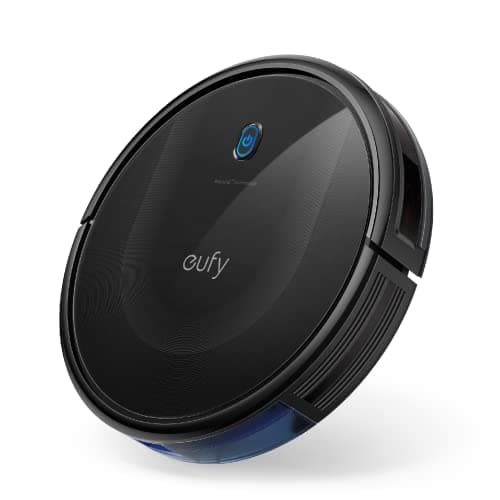
eufy RoboVac 11S MAX
- An anti-scratch tempered-glass top and low profile keep it from grinding furniture legs and baseboards
- Bump-and-go infrared navigation has no mapping, so coverage on large open wood is less methodical
(Current price, subject to change)
The eufy RoboVac 11S MAX earns 7.6 on the weighted SHE Hard-Floor Care Score, a composite that marks the slim budget pick rather than a mapping flagship. That 7.6 rests on an 8.4 scratch-safety sub-score paired with an 8.2 edge-and-corner-reach sub-score, because the anti-scratch tempered-glass top protects the chassis and the low-profile design keeps the robot from grinding furniture legs and baseboards. At 2.85 in tall it slips under sofas and kickboards that taller robots cannot clear, reaching the dust line that collects on wood under furniture.
Across the sources surveyed, budget-vacuum testers at Vacuum Wars identify the 11S line as a dependable ultra-slim bare-floor cleaner, and TechHive characterizes the slim RoboVac as a quiet, no-frills hard-floor selection. The BoostIQ suction intensifies automatically on heavier debris, afterward subsiding to remain quiet on open hardwood, operating up to 100 mins per charge — though the flagship eufy X10 marshals 4x its 2,000Pa ceiling — before it recharges itself. The honest limitation is navigation: bump-and-go infrared provides no mapping, so coverage becomes less methodical across a large room. Relative to the iRobot Roomba Combo j5, the 11S surrenders rollers and integrated mopping for a slimmer 2.85 in bare-floor body that runs quiet, around the volume of a microwave.
What We Love
- An anti-scratch tempered-glass top and low profile keep it from grinding furniture legs and baseboards
- At 2.85 in tall it slips under sofas and kickboards that taller mapping robots cannot clear
- 2,000Pa BoostIQ suction ramps up on heavier debris, then drops back to stay quiet on open wood
- It runs up to 100 minutes on hard floors and recharges itself for a small-to-medium level
What Could Be Better
- Bump-and-go infrared navigation has no mapping, so coverage on large open wood is less methodical
- No app or Wi-Fi, so there is no scheduling or app no-go zones
The Verdict
If you are a renter or small-home buyer on a tight budget, the eufy RoboVac 11S MAX is a sensible pick for that setup at $169.99. The 7.6 reflects a 2.85 in low profile that reaches dust under furniture and an anti-scratch glass top that guards the chassis. You give up app mapping, so coverage on a big floor is less methodical, but for quiet daily pickup the slim shape is the draw.
How We Score: SHE Hard-Floor Care Score
SHE Hard-Floor Care Score
Score Formula
Scratch_Safety * 0.25 + No_Streak_Mopping * 0.22 + Seam_Dust_Pickup * 0.20 + Edge_Corner_Reach * 0.18 + Tangle_Resistance * 0.15Score Factors
- Scratch Safety (25%)The number-one hard-floor complaint is a long straight scratch on sealed hardwood, caused by grit or hair binding a side brush or caster and dragging across the finish. This factor is a weighted, normalized sub-score; we score no-bristle rubber rollers, anti-scratch top covers, obstacle recognition that dodges pebbles and pet toys, and carpet auto-lift that keeps a wet pad off wood transitions in a higher tier than a bristled bump-and-go robot. The coefficient is highest because a scratch is the irreversible failure mode on wood.
- No-Streak Mopping on Sealed Wood (22%)On sealed wood and laminate, a robot that vacuums first then mops with controlled water and real pad pressure leaves a clean finish; one that floods the floor or smears a static pad leaves a film. The calculation normalizes vacuum-then-mop sequencing, downward mop pressure, rotating versus drag pads, and self-washed pads into a composite tier. Vacuum-only models score on how well they prep a floor for a separate mop, not on mopping they cannot do.
- Seam Fine-Dust Pickup (20%)Hardwood and laminate planks have seams and bevels where fine dust and grit settle, and that grit is exactly what gets scattered or dragged. This factor weights measured suction and how cleanly each machine lifts fine debris out of plank seams rather than blowing it past, normalized against the category leaders. The coefficient reflects that seam pickup is the single biggest driver of a visibly clean wood floor.
- Edge and Corner Reach (18%)Dust lines collect along baseboards and in corners on open hard floors, and low furniture hides the worst of it. This sub-score is a normalized tier from edge-sweeping reach, methodical mapped coverage that does not skip plank rows, and a low profile that gets under sofas and kickboards. The factor weight reflects that the dust you cannot see under furniture still tracks back onto the visible floor.
- Tangle Resistance (15%)Hair wrapped on a brushroll or side brush is both a maintenance headache and the seed of the abrasive knot that scratches wood. The formula rewards rubber rollers, counter-rotating dual brushes, and self-cleaning brushrolls as the tier that predicts whether the machine stays scratch-safe and low-maintenance over months. This coefficient closes the score because tangle resistance is what keeps the other factors true over time.
SHE Hard-Floor Care Score — Ranked
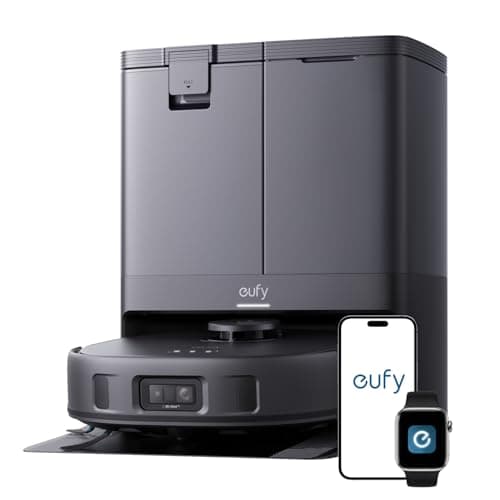
eufy X10 Pro Omni
SHE Hard-Floor Care Score9.2/10$479.99 — rubber roller, 12mm auto-lift, self-washing mop dock; safest no-streak result on sealed wood
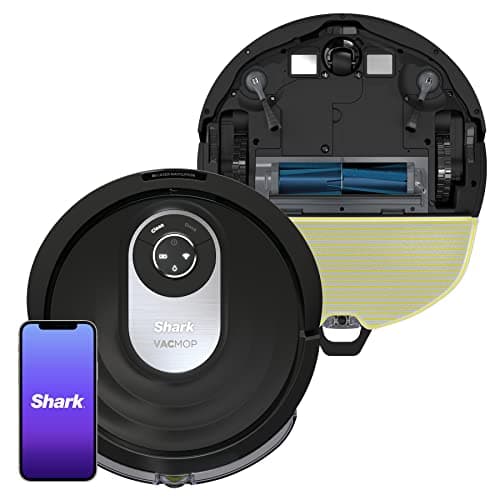
Shark AI Robot Vacuum & Mop (RV2001WD)
SHE Hard-Floor Care Score8.6/10$439.00 — self-cleaning brushroll, sonic mopping, LiDAR rows; best tangle resistance for pet homes
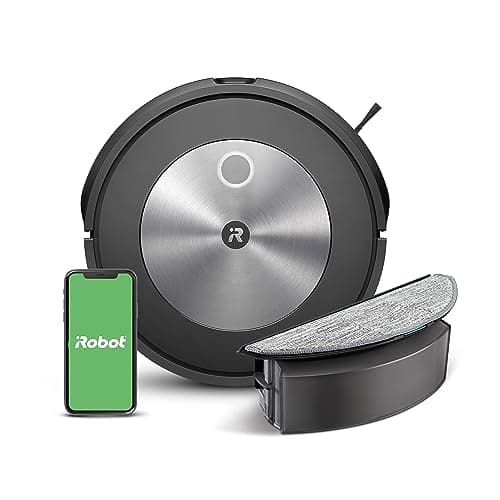
iRobot Roomba Combo j5
SHE Hard-Floor Care Score8.4/10$169.00 — dual rubber rollers, obstacle recognition, clip-on mop; safest no-bristle pick under $200
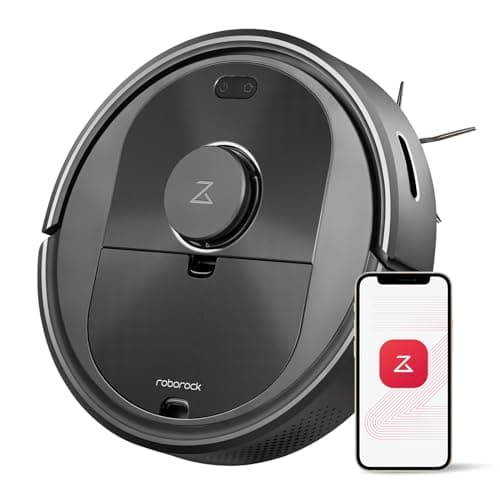
Roborock Q5
SHE Hard-Floor Care Score8.2/10$299.99 — 2,700Pa seam pickup, LiDAR mapping, 180-min runtime; best bare-floor value vacuum
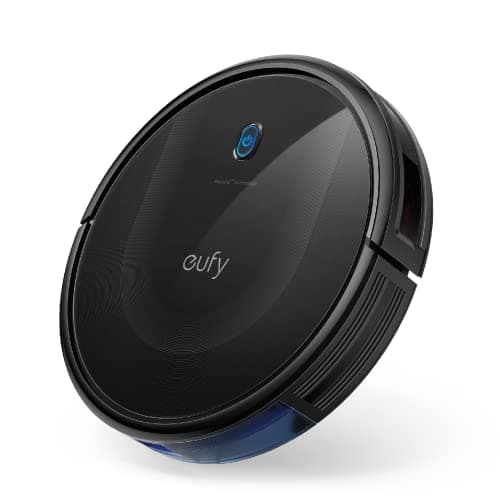
eufy RoboVac 11S MAX
SHE Hard-Floor Care Score7.6/10$169.99 — 2.85-inch profile, anti-scratch glass top, BoostIQ; slim budget pick for under furniture
App, Voice, and No-Go Zone Fit
The useful smart layer on hard floors is not a hub, it is the navigation and the app no-go zones, which is the read that roundups from outlets like RTINGS and TechRadar consistently use to separate the tiers. None of these robots needs Matter, Thread, or a smart-home hub; Alexa and Google voice control are a convenience layer on top. The eufy X10 Pro Omni and the Roborock Q5 use LiDAR-class mapping and app No-Go Zones to fence off thresholds and rug edges a robot would otherwise high-center on, and the X10 adds carpet-detect auto-lift that raises its mops 12mm so a wet pad never drags onto a wood transition. The Shark AI Robot Vacuum & Mop (RV2001WD) pairs LiDAR row coverage with no-go zones in the SharkClean app, while the iRobot Roomba Combo j5 runs clean-by-room mapping in the iRobot Home app over optical navigation rather than LiDAR. The eufy RoboVac 11S MAX is the outlier: it is remote-and-button only, with no app, no scheduling, and no mapped no-go zones.
For the homeowner protecting a sealed-wood finish, the connectivity that actually matters is the wet-pad fence, not a voice routine, a read RTINGS and Reviewed apply when they separate the mapped tier from the bump-and-go tier. App no-go zones keep a mop off rugs and wood-edge transitions across an open floor, and carpet auto-lift does the same automatically the moment a robot rolls onto a pile. Owners on r/robotvacuums consistently praise no-go zones once a map is drawn, while the recurring complaint the community flags is a wet pad dragged back onto wood at a rug edge on robots without auto-lift — exactly the failure the X10's 12mm auto-lift designs out. Alexa and Google let you start a clean by voice, but no smart-home routine reads a scratch risk, so the app fence delivers the protective work that voice control alone never enables. That fence is what keeps the finish intact over years of daily runs. For the homeowner assembling a wood-floor cleaning kit, a robot this careful slots beside the wet pass in our Best Robot Mops for Hard Floors 2026: 5 Combos Ranked guide and the mixed-surface combos in our Best Robot Vacuum-Mop Combos for Hard Floors and Mixed Surfaces (2026) roundup, which share the same no-go-zone philosophy.
| Product | App No-Go Zones | Alexa / Google Voice | LiDAR / Smart Mapping | Carpet Auto-Lift Mop | No-Bristle Rubber Roller |
|---|---|---|---|---|---|
| eufy X10 Pro Omni | ✓ | ✓ | ✓ | ✓ | ✓ |
| Shark AI Robot Vacuum & Mop (RV2001WD) | ✓ | ✓ | ✓ | ✕ | ✕ |
| Roborock Q5 | ✓ | ✓ | ✓ | ✕ | ✕ |
| iRobot Roomba Combo j5 | ✓ | ✓ | ✕ | ✕ | ✓ |
| eufy RoboVac 11S MAX | ✕ | ✕ | ✕ | ✕ | ✕ |
When NOT to Buy
Skip a vacuum-only robot if your main goal is removing footprints and dried spills from sealed wood; you want a vacuum-then-mop model instead, so the Roborock Q5 is the wrong tool for that job. And skip the omni-dock flagship if your home is small, mostly carpet, or you do not want a washing-station footprint — a slim budget robot does the bare-floor pickup for a third of the price. A robot here is the right buy when you have real sealed-hardwood square footage and want grit gone before it can scratch.
Who Should Buy What
Who Should Buy What
| If you are… | Recommended pick |
|---|---|
Mostly-hardwood homeowners You want a rubber roller, carpet auto-lift, and no-streak mopping with hands-off pad washing on sealed wood | eufy X10 Pro Omni |
Pet households on wood You want a self-cleaning brushroll that strips wrapped hair and sonic mopping in one run without an omni dock | Shark AI Robot Vacuum & Mop (RV2001WD) |
No-scratch buyers under $200 You want no-bristle dual rubber rollers and obstacle recognition plus light mopping for the lowest safe price | iRobot Roomba Combo j5 |
Bare-floor value seekers You already own a mop and want LiDAR mapping with strong seam pickup and a long runtime on wood | Roborock Q5 |
Renters and small homes You want a slim, quiet robot that reaches dust under furniture on wood at the lowest entry price | eufy RoboVac 11S MAX |
Frequently Asked Questions
Will a robot vacuum scratch my hardwood or laminate floors?
A well-chosen robot will not scratch sealed hardwood or laminate, because the damage almost never comes from the robot itself. It comes from grit, a tracked-in pebble, or a hair-and-dirt knot wrapped on a side brush or caster that gets dragged across the finish. Picks built around no-bristle rubber rollers, anti-scratch top covers, and obstacle recognition that dodges debris, such as the eufy X10 Pro Omni and the Roomba Combo j5, score highest on scratch safety for exactly this reason.
What actually causes the scratches, the robot or something it picks up?
It is something the robot picks up and drags, not the chassis. A bristled side brush or brushroll can wrap hair and grit into an abrasive knot, and a caster wheel can pin a pebble, and either one rakes across sealed wood as the robot moves. That is why this guide weights tangle resistance and scratch safety so heavily, and why a rubber-roller machine like the Roomba Combo j5 protects a wood finish better than a higher-suction bristled rival.
Are rubber rollers really better than bristle brushes for wood floors?
Yes, for hardwood and laminate. Rubber rollers do not wrap hair into the abrasive knot that bristles collect, so there is no knot to drag grit across the finish, and they are easier to keep clean over months of use. The Roomba Combo j5 uses dual multi-surface rubber rollers and testers reported minimal tangles even with pets, while the bristled Roborock Q5 traps quite a bit of hair that needs periodic cutting. On wood, the no-bristle design is the safer long-term choice.
Why does my robot mop leave streaks on sealed hardwood, and how do I stop it?
Streaks come from a machine that wets the floor before it has cleared the dust, or from a static drag pad that smears a film instead of lifting it. The fix is a vacuum-then-mop sequence with controlled water and real pad pressure, plus a self-washed pad that does not sit damp. The eufy X10 Pro Omni vacuums at 8,000Pa first, then mops with dual pads at 1 kg of pressure and washes them after, which clears dried-on stains with no streaking in expert testing.
Do I need a vacuum-and-mop combo, or just a vacuum, for hard floors?
It depends on your goal. If you mainly need footprints and dried spills wiped off sealed wood, you want a vacuum-then-mop combo like the eufy X10 Pro Omni or the Roomba Combo j5. If your floors only collect dry dust and you already own a mop, a vacuum-only machine like the Roborock Q5 covers the seam pickup for less. The guide scores vacuum-only models on how well they prep a floor for a separate mop.
How do I keep a robot from dragging a wet mop pad onto my wood or rugs?
Use carpet-detect auto-lift plus app no-go zones. The eufy X10 Pro Omni raises its mops 12mm the instant it senses carpet, so a wet pad never crosses a wood-edge transition or rolls back onto a rug. On robots without auto-lift, draw app no-go zones around rug edges and thresholds so the mop never reaches them. That wet-pad fence is the connectivity that actually matters for protecting a sealed-wood finish.
Which robot vacuum is best for hardwood if I have a long-haired pet?
The Shark RV2001WD is the strongest pet pick here, because its self-cleaning brushroll actively removes wrapped hair as it runs and heads off the tangled knot that drags grit across wood. The Roomba Combo j5 is a close second, since dual rubber rollers do not wrap hair into a knot at all. Both keep hair off the roller far better than the bristled Roborock Q5, which traps quite a bit of hair on long-shedding floors.
Is high suction such as 8,000Pa necessary on bare hardwood and laminate?
Not strictly. High suction helps lift fine grit out of plank seams before a mop touches it, which is why the eufy X10 leads on seam pickup at 8,000Pa, but the Roborock Q5 cleans bare wood well at 2,700Pa and the slim eufy 11S MAX handles light dust at 2,000Pa. On sealed wood, scratch safety and no-streak mopping matter more than a headline suction number, which is why this guide ranks them ahead of raw Pa.
Can these robots clean the dust that collects in plank seams and along baseboards?
Yes, the mapped models do it best. The Roborock Q5 pulls fine dust out of seams at 2,700Pa and runs tidy LiDAR rows along baseboards, and the eufy X10 lifts grit from seams at 8,000Pa before mopping. Edge and corner reach is a scored factor here because dust lines collect along baseboards on open wood. The slim eufy 11S MAX reaches the dust line under furniture at a 2.85-inch height that taller mapping robots cannot clear.
Do I need LiDAR mapping, or is a cheaper bump-and-go robot fine on wood floors?
LiDAR mapping is worth it on a large open wood floor, because it runs methodical rows that do not skip plank lines and lets you set app no-go zones, as the Roborock Q5 and Shark RV2001WD do. A bump-and-go robot like the eufy 11S MAX works fine in a small or single-room space at a much lower price, but its coverage is less methodical on a big layout and it has no app no-go zones to fence off rug edges.
How much maintenance keeps a robot scratch-safe and streak-free over time?
Plan on a few minutes a week. Check the roller or brushroll for wrapped hair and clear any knot, since that knot is the seed of a wood scratch, then rinse the mop pad if the dock does not wash it. Self-washing docks like the one on the eufy X10 cut this work by drying the pad after each run so it never sours. Empty the bin on no-self-empty models such as the Roomba Combo j5 after most cleans to keep suction strong.
Can the same robot handle a few area rugs without ruining the wood-floor clean?
Yes, if it can lift or avoid the pad on carpet. The eufy X10 raises its mops 12mm on carpet detection, so it cleans rugs and wood in one run without dragging a wet pad onto either. On robots without auto-lift, draw app no-go zones around rug edges so the mop stays on the wood, which the Roborock Q5 and Shark RV2001WD both support. The slim eufy 11S MAX has no mapping, so it suits homes with few or no rugs.
Bottom Line
Get the eufy X10 Pro Omni if your home is mostly sealed hardwood and laminate and you want a rubber roller, carpet auto-lift, and no-streak mopping with hands-off pad washing.
Get the Shark AI Robot Vacuum & Mop (RV2001WD) if you are a pet household that wants a self-cleaning brushroll and sonic mopping in one run without an omni dock.
Get the iRobot Roomba Combo j5 if you want no-bristle dual rubber rollers and obstacle recognition plus light mopping for the lowest safe price under $200.
Get the Roborock Q5 if you already own a mop and want LiDAR mapping with strong seam pickup and a long runtime on bare wood.
Get the eufy RoboVac 11S MAX if you are a renter or small-home buyer who wants a slim, quiet robot to reach dust under furniture on wood.
The right call for most sealed-wood homes is the eufy X10 Pro Omni at $479.99 — a rubber roller, 12mm auto-lift, and self-washing mop dock earn the top 9.2 hard-floor score with no streaks. If you want the safest pick under $200, the iRobot Roomba Combo j5 brings no-bristle rollers for $169.00. Skip a vacuum-only robot if your goal is wiping footprints off wood, and skip the omni dock if your home is small or mostly carpet.
Sources & Methodology
Methodology: SHE Hard-Floor Care Score — Formula: Scratch_Safety * 0.25 + No_Streak_Mopping * 0.22 + Seam_Dust_Pickup * 0.20 + Edge_Corner_Reach * 0.18 + Tangle_Resistance * 0.15. Factors: Scratch Safety (25%): The number-one hard-floor complaint is a long straight scratch on sealed hardwood, caused by grit or hair binding a side brush or caster and dragging across the finish. This factor is a weighted, normalized sub-score; we score no-bristle rubber rollers, anti-scratch top covers, obstacle recognition that dodges pebbles and pet toys, and carpet auto-lift that keeps a wet pad off wood transitions in a higher tier than a bristled bump-and-go robot. The coefficient is highest because a scratch is the irreversible failure mode on wood. | No-Streak Mopping on Sealed Wood (22%): On sealed wood and laminate, a robot that vacuums first then mops with controlled water and real pad pressure leaves a clean finish; one that floods the floor or smears a static pad leaves a film. The calculation normalizes vacuum-then-mop sequencing, downward mop pressure, rotating versus drag pads, and self-washed pads into a composite tier. Vacuum-only models score on how well they prep a floor for a separate mop, not on mopping they cannot do. | Seam Fine-Dust Pickup (20%): Hardwood and laminate planks have seams and bevels where fine dust and grit settle, and that grit is exactly what gets scattered or dragged. This factor weights measured suction and how cleanly each machine lifts fine debris out of plank seams rather than blowing it past, normalized against the category leaders. The coefficient reflects that seam pickup is the single biggest driver of a visibly clean wood floor. | Edge and Corner Reach (18%): Dust lines collect along baseboards and in corners on open hard floors, and low furniture hides the worst of it. This sub-score is a normalized tier from edge-sweeping reach, methodical mapped coverage that does not skip plank rows, and a low profile that gets under sofas and kickboards. The factor weight reflects that the dust you cannot see under furniture still tracks back onto the visible floor. | Tangle Resistance (15%): Hair wrapped on a brushroll or side brush is both a maintenance headache and the seed of the abrasive knot that scratches wood. The formula rewards rubber rollers, counter-rotating dual brushes, and self-cleaning brushrolls as the tier that predicts whether the machine stays scratch-safe and low-maintenance over months. This coefficient closes the score because tangle resistance is what keeps the other factors true over time.
Expert review sources used in this analysis:
- SmartHomeExplorer aggregates expert review data and community sentiment to produce consensus-based buying guidance
- We do not perform first-party product testing
- Expert ratings and product assessments draw on robot-vacuum buyer's guides and category roundups from outlets that cover this segment — TechRadar, RTINGS, Reviewed, Tom's Guide, TechHive, and Vacuum Wars — rather than first-party tests of each individual unit
- Hard-floor scratch-safety and no-streak-mopping context draws on published hands-on robot-vacuum testing and owner reports
- Community reliability and owner reports are drawn from r/robotvacuums and the broader smart-cleaning community, where the recurring owner praise is app no-go zones and carpet auto-lift, and the recurring complaint the community flags is a wet mop pad dragged back onto wood at a rug edge on robots without auto-lift
- Every price was verified June 7, 2026 via the Amazon Creators API: eufy X10 Pro Omni $479.99, Shark RV2001WD $439.00, Roborock Q5 $299.99, iRobot Roomba Combo j5 $169.00, eufy RoboVac 11S MAX $169.99
- The SHE Hard-Floor Care Score weights scratch safety (25%), no-streak mopping on sealed wood (22%), seam fine-dust pickup (20%), edge and corner reach (18%), and tangle resistance (15%); factor sub-scores derive from manufacturer specifications and aggregated reviewer assessments, and no first-party measurements were conducted.
Nicholas Miles is the founder of SmartHomeExplorer and a longtime smart home enthusiast focused on helping everyday homeowners make better technology decisions. He researches, compares, and writes about products across security, climate, lighting, leak prevention, sensors, home energy, and automation, with an emphasis on real-world usefulness, ecosystem compatibility, reliability, privacy, and long-term value.
Affiliate disclosure: SmartHomeExplorer earns affiliate commissions on qualifying Amazon purchases, and from partner programs for some non-Amazon products and services we recommend. Our scoring methodology is independent of affiliate relationships.