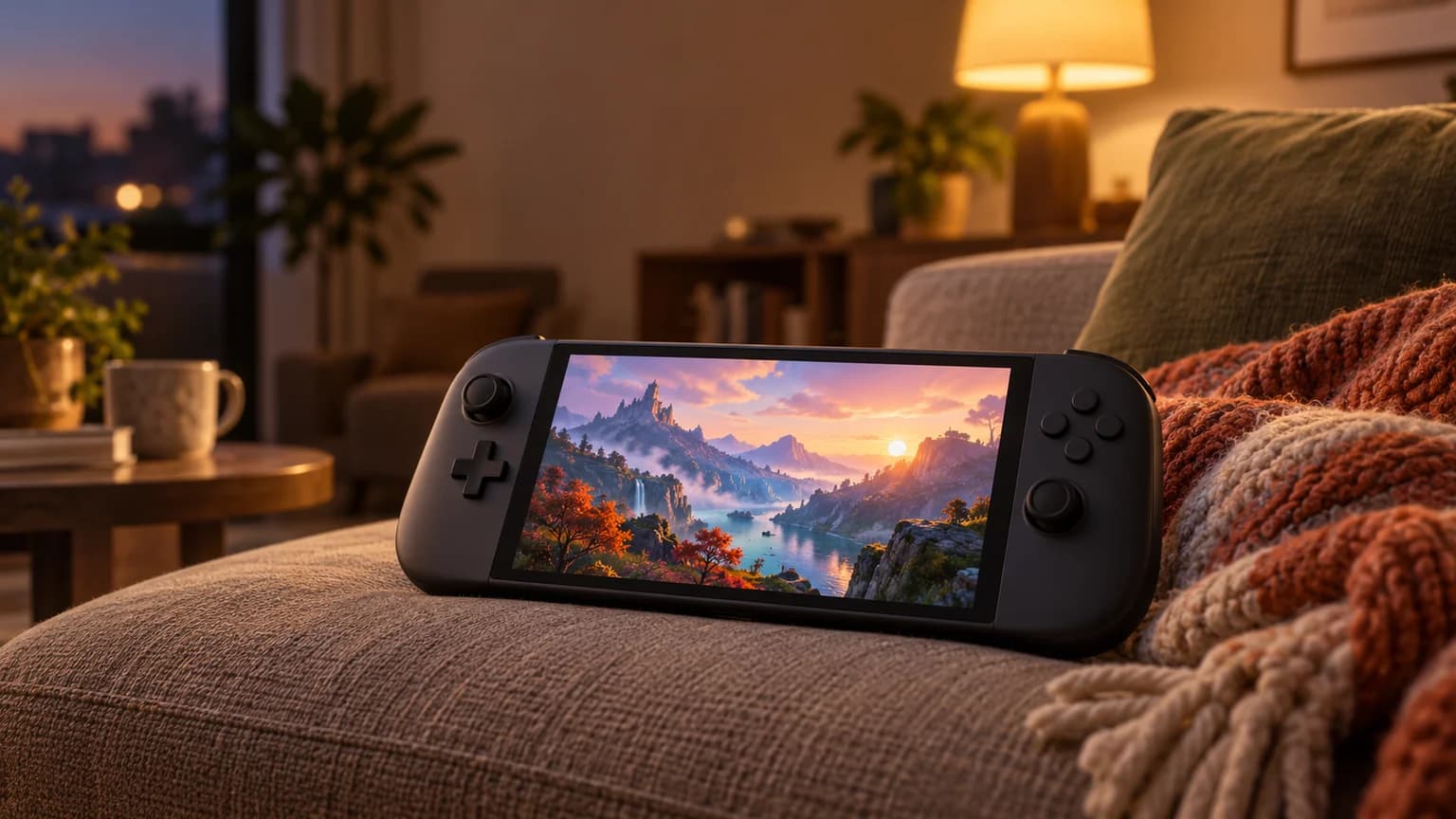

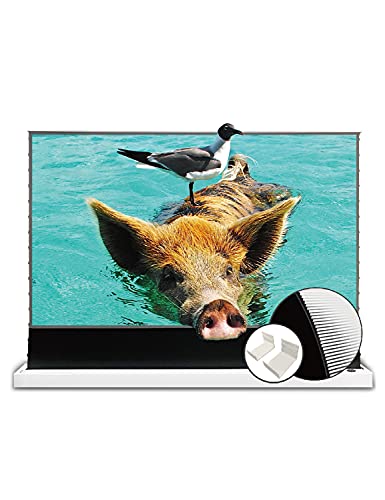
The VIVIDSTORM S PRO Floor-Rising UST ALR 120-inch is the best smart motorized projector screen for 2026 — tab-tensioned, floor-rising, 12V trigger ready, no ceiling cutout.
The best smart motorized projector screen is the one that drops into your Movie Night scene without a phone unlock — 12V trigger from the AVR, RF remote bridged to Alexa, or a scene-compatible smart app. Everything else is a motor and a piece of fabric.
Motorized projector screens are the only cinema-stack component reviewers keep treating like furniture. The guides you find rank by gain number, screen size, and price. None of them ask the question a real cinema-room owner asks: when the AVR flips to Movie mode at 7:42 PM, does the screen drop by itself? That's the question our Cinema Room hub is built around, and it's the question we used to build this guide.
We aggregated expert reviews from Projector Reviews, The Hook Up, Dead Set Live, AVForums, and AVSForum, then scored six motorized screens on the SHE Cinema Room Readiness Score — the same 0-10 composite we use on projectors, AVRs, and TV lifts. One axis across the cinema stack means a VIVIDSTORM S PRO Floor-Rising UST ALR 120-inch at 8.7 is directly comparable to a Denon AVR-X4800H or a motorized TV lift cabinet. No other publication does that.
Smart Motorized Projector Screen
Chart
 Smarthomeexplorer.com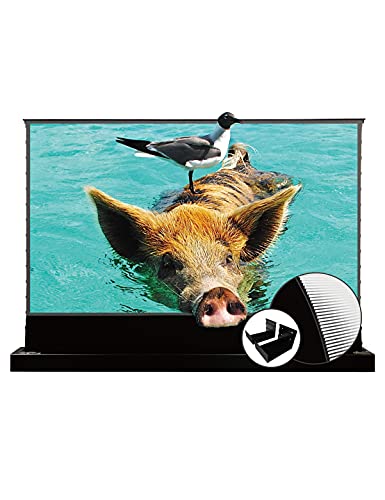
VIVIDSTORM S PRO Floor-Rising UST ALR 120-inch — Best Overall
VIVIDSTORM S PRO Floor-Rising UST ALR 120-inch
(Current Price, subject to change)
Ready to upgrade your home?
roborock Qrevo 2 Pro Robot Vacuum and Mop
See it on Amazon
roborock F25 Ultra Steam Wet Dry Vacuum Mop
See it on Amazon
Philips Wi-Fi Keypad Deadbolt with Handle
See it on Amazon
Sponsored listings from Amazon’s Sponsored Products for Creators program, kept apart from our reviews and rankings. How we make money
The VIVIDSTORM S PRO Floor-Rising UST ALR 120-inch is the reference point for "smart" in this category, because smart here does not mean Wi-Fi chips on the screen itself — it means the screen joins a scene without a phone unlock. The 12V trigger input sinks directly into any AVR with a trigger-out (Denon, Marantz, Yamaha, Onkyo), so when the receiver flips to Movie mode, the screen deploys. Pair the RF remote with a Bond bridge and you pick up an Alexa / Google / HomeKit path too. The VIVIDSTORM app handles manual cases where guests want to drop the screen without the AVR already on.
The floor-rising mechanism is the second reason this lands at the top. No ceiling cutout, no mounting rail, no electrician. The cabinet sits in front of the wall, retracts into itself when idle, and the only permanent footprint is the outlet behind it. For renters, first-time cinema-room builders, or anyone sharing the living room with a spouse who does not love visible hardware, that trade — slightly more floor depth for zero install complexity — is the one that wins.
Surface quality is where it matches the Elite Screens lineup. Tab-tensioning keeps the screen wrinkle-free across the 120-inch diagonal, and the ALR coating is tuned specifically for ultra-short-throw laser projectors (Hisense L9G, AWOL LTV-3500, Formovie Theater). If you're running a standard-throw projector, this is the wrong ALR surface — the Starling Tab-Tension 2 CineGrey 5D variant in row three is what you want.
What We Love
- 12V trigger sync with any AVR — Plug the trigger cable into a Denon or Marantz trigger-out jack, and the screen joins Movie scenes without app fuss
- Floor-rising chassis — No ceiling cutout, no electrician, no install day off work; the cabinet sits wherever you can run a power cable
- Tab-tensioned ALR surface — Theater-grade flatness on a 120-inch diagonal holds up over years
- Disappears when retracted — Cabinet is a clean black furniture piece when the screen is down
- Three control paths — RF remote, 12V trigger, and smart app cover manual, automatic, and guest scenarios
What Could Be Better
- Entry price for the floor-rising UST ALR category starts above $2,000 — a real commitment
- Deployment cycle is roughly 30 seconds and audibly motorized; not silent like a fixed-frame screen
- ALR coating tuned for ultra-short-throw projectors narrows the optimal viewing cone versus matte white
- Smart app is manual-only — no native Alexa / Google / HomeKit without a Bond bridge
The Verdict
If you're pairing with a UST laser projector and want a screen that disappears when the room is not a cinema, the VIVIDSTORM S PRO Floor-Rising UST ALR 120-inch is the single best Cinema Room Readiness Score on Amazon. The 12V trigger is what makes it "smart" in the SHE sense — scene-compatible without adding another phone step. Check the current VIVIDSTORM S PRO price on Amazon.
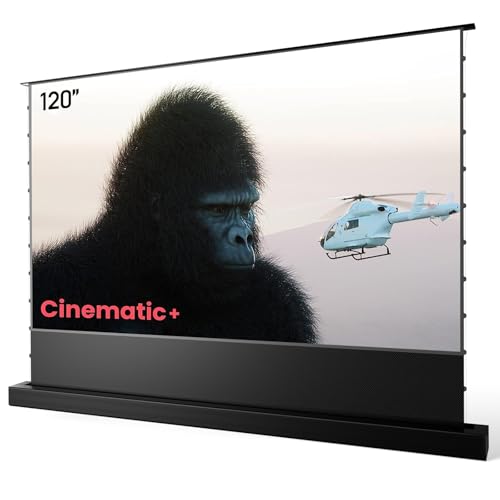
AWOL Vision ALR-F220C 120-inch Motorized ALR Floor Rising — Best for UST Laser TVs with Wider Viewing Angle
AWOL Vision ALR-F220C 120-inch Motorized ALR Floor Rising
(Current Price, subject to change)
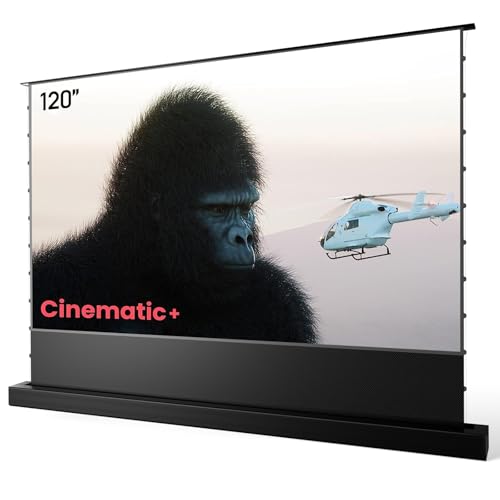
The AWOL Vision ALR-F220C 120-inch Motorized ALR Floor Rising is the UST pick for anyone also shopping AWOL or Hisense laser TVs. The 170-degree viewing angle is the headline spec — wider than most competing ALR surfaces, which matters for sofas that wrap around a coffee table and for second-row seating in dedicated cinema rooms. Expert reviewers at Projector Reviews and Dead Set Live both note the AWOL's consistency across off-axis positions where tighter ALR screens fall off fast.
The acoustic-transparent surface with a defined bottom black border is the under-appreciated feature. If you're planning a full Dolby Atmos build with L/C/R speakers behind the screen, the ALR-F220C is one of the few floor-rising ALR options that supports the install. That is a Cinema Rooms hub move — see the 7.1.4 and 9.1.6 Atmos layouts for the receivers that drive it.
Where it lands just below the VIVIDSTORM: AWOL prioritized the bright-room use case, so peak gain sits at 0.8. That is optimal when ambient light is the enemy, but in a fully blackout-capable cinema room, the image looks a touch dim compared to a 1.1 gain matte white or a VIVIDSTORM's surface. It's the correct trade for a mixed-use living room with a UST laser projector. It's the wrong trade for a dedicated basement theater.
What We Love
- 170-degree viewing angle — Wider than most ALR competitors, so off-axis seats don't lose image
- 95% ambient-light rejection — Rated for UST laser TVs in rooms with significant daylight
- Acoustic-transparent surface — Supports in-wall L/C/R speakers behind the screen
- Floor-rising chassis — Plug-and-play install, no ceiling cutout
- Brand-matched to AWOL LTV-3500 Pro — Spec-level color and gain alignment for the AWOL projector lineup
What Could Be Better
- 0.8 peak gain looks dim in full blackout rooms — optimized for bright, not dark
- Floor housing needs roughly 6 inches of depth in front of the wall for the rising mechanism
- 12V trigger requires a compatible AVR or projector trigger-out to join scenes automatically
- No native smart-app option beyond the included RF remote
The Verdict
The AWOL Vision ALR-F220C 120-inch Motorized ALR Floor Rising earns its 8.2 by solving the UST-plus-wide-sofa problem better than anyone else. If you own or are buying an AWOL, Hisense, or Formovie UST laser TV and your seating is wider than 10 feet, this is the screen. If you're in a dedicated dark cinema room, step to the VIVIDSTORM for the better blackout gain. Check the current AWOL Vision ALR-F220C price on Amazon.
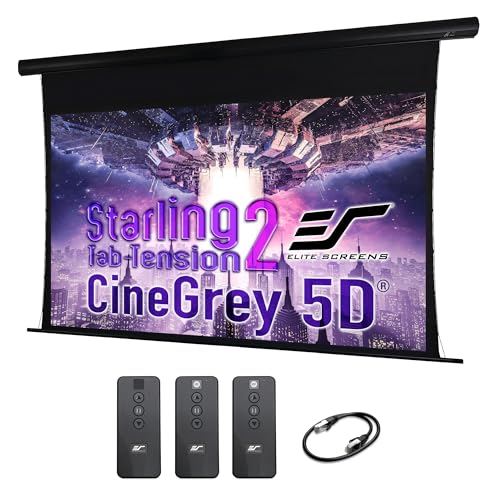
Elite Screens Starling Tab-Tension 2 CineGrey 5D 120-inch — Best for Standard-Throw Dark Rooms
Elite Screens Starling Tab-Tension 2 CineGrey 5D 120-inch
(Current Price, subject to change)
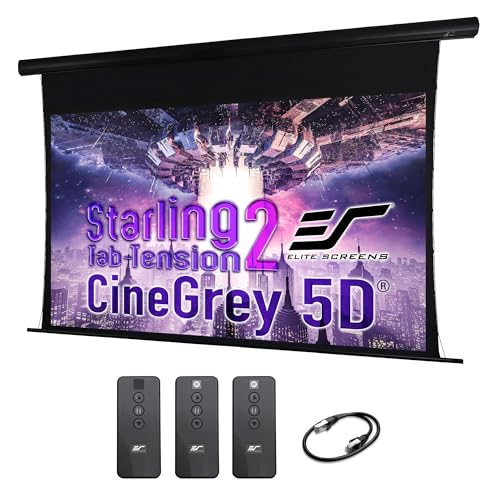
The Elite Screens Starling Tab-Tension 2 CineGrey 5D 120-inch is the pick if you're running a standard-throw projector in a room where you can't blackout. CineGrey 5D is Elite's standard-throw ALR material, and it's genuinely different from UST-only ALR surfaces: the micro-structure rejects ceiling-bounce light instead of floor-bounce, which is exactly what a ceiling-mounted projector needs. The Epson LS800 or a BenQ HT-series in a living room with lamps is the canonical use case.
The trigger story is also the most complete in the lineup. Most motorized screens force you to pick between 12V and 5V trigger inputs depending on your AVR or projector vintage. Starling Tab-Tension 2 includes both cables out of the box plus a programmed IR remote kit and an RF remote. That is four scene-automation paths for a single screen — a Scene Automation factor score of 9 on our scale.
The downside is install. Unlike the floor-rising VIVIDSTORM and AWOL, this is a ceiling-drop design. You need a mounting rail, a ceiling surface (or a sturdy wall plate), and either a long screwdriver day or a handyman. The housing is slim aluminum and the drop is clean, but the first two hours of unboxing need to end with a level.
What We Love
- CineGrey 5D for standard-throw — Rare ALR surface genuinely tuned for non-UST projectors
- Tab-tensioned drop — Theater-grade flatness across the 120-inch span
- Four scene-automation paths — 12V, 5V, IR, and RF all covered out of the box
- Slim aluminum housing — Suits both ceiling and wall mount installs
- Programmed IR remote — Pre-learned for most AVR IR hubs and smart-remote platforms
What Could Be Better
- Ceiling-drop format needs a mounting rail or ceiling surface — no plug-and-play like floor-rising
- CineGrey 5D is specifically tuned for standard-throw — not the right ALR if you're running a UST laser TV
- Sits in the four-figure price tier without adding native voice-assistant control
- Install adds roughly $150-$300 in handyman labor for most buyers
The Verdict
For a dedicated dark cinema room running a standard-throw projector with ambient light sneaking in from the hallway or stair landing, the Elite Screens Starling Tab-Tension 2 CineGrey 5D 120-inch is the correct ALR. Pair with an AVR that has 12V trigger-out and this screen joins scenes without adding a single phone step. Check the current Starling Tab-Tension 2 price on Amazon.
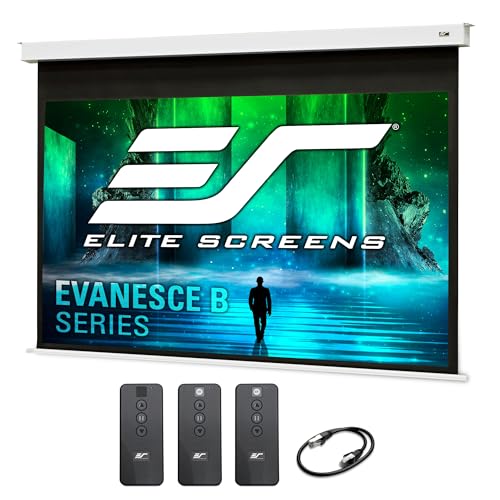
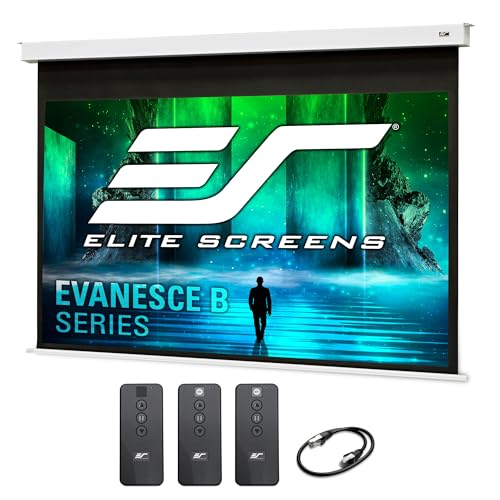
Elite Screens Evanesce B 120-inch In-Ceiling — Best for Invisible Install
Elite Screens Evanesce B 120-inch In-Ceiling
(Current Price, subject to change)
The Elite Screens Evanesce B 120-inch In-Ceiling is the choice when the cinema room has to double as a furnished living space when the projector is off. The housing is recessed into the ceiling, so when the screen retracts, the room shows only a drywall trim line. No visible motor box, no cabinet, no evidence a screen is installed at all. That is the move for open-plan living rooms and rooms with architectural trim buyers don't want to break.
The trade is install complexity. This is the only screen in the lineup that genuinely requires an electrician. You need a ceiling cutout, a low-voltage rough-in for the trigger cables, and line power to the housing. That's a $500-$1,200 install on top of the screen price. The product does include the ceiling flange, trim kit, and wiring cables — Elite earns the 6.7 in large part because the hardware is actually complete out of the box.
The surface is the other trade. Matte White fiberglass is 8K/4K ready and flat, but it is not ALR. This screen wants a dedicated dark cinema room. If ambient light is a factor, the Evanesce B will wash the image in the frame edges, and the comparison with the Starling Tab-Tension 2 becomes uncomfortable — the Starling costs more but performs better in any room where blackout isn't the default.
What We Love
- Fully invisible when retracted — No visible hardware, just a drywall trim line
- 8K/4K-ready Matte White fiberglass — Flat response, color-neutral surface
- Both 12V and 5V trigger inputs — Joins scenes via AVR or projector trigger-out
- Full install kit included — Flange, trim, wiring cables, and limit-switch-controlled descent
- Elite Screens track record — Long product line with replacement parts available
What Could Be Better
- Requires ceiling cutout and electrical rough-in — professional install expected ($500-$1,200)
- Matte White surface is not ALR — needs a dark room to perform
- Not tab-tensioned, so minor edge waves are possible on the 120-inch span
- IR remote is the default — RF upgrade is a separate purchase
The Verdict
If your cinema room lives inside a finished living space and the priority is "no visible hardware when the movie's over," the Elite Screens Evanesce B 120-inch In-Ceiling earns the pick — but only if you have both the budget for professional install and a genuinely dark room. For a dedicated basement theater, the tensioned ALR options score higher. Check the current Evanesce B price on Amazon.
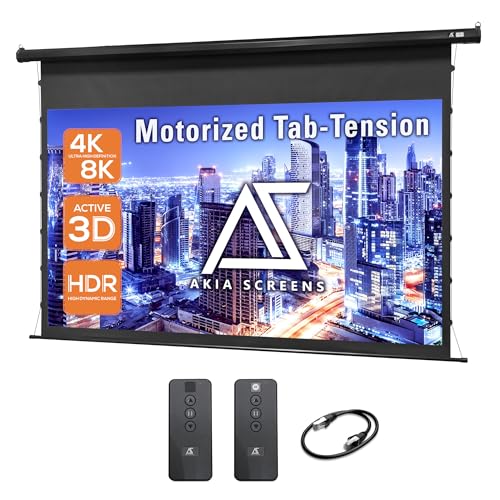
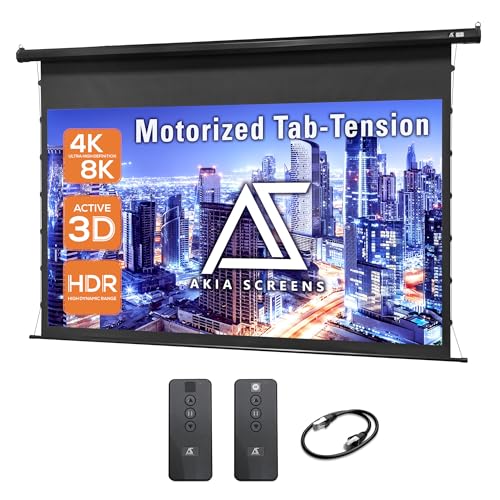
Akia Screens Motorized Tab-Tension 120-inch — Best Mid-Tier Tab-Tensioned
Akia Screens Motorized Tab-Tension 120-inch
(Current Price, subject to change)
The Akia Screens Motorized Tab-Tension 120-inch is the under-$1,000 pick that saves buyers from the non-tensioned entry tier without forcing them up to four-figure Elite or VIVIDSTORM pricing. Tab-tensioning is the single specification that separates cinema-grade motorized screens from the AV-club tier, and Akia delivers it at a price that leaves budget for the AVR and soundbar a real cinema room needs.
The surface is rated for UST, short-throw, and standard-throw projectors — unusual flexibility, because most ALR surfaces commit to one throw type. If you're building a room now with a standard-throw projector but might swap to a UST laser TV in three years, the Akia's surface will still be correct. That's a real Cinema Room Readiness Score advantage: the screen is not the bottleneck when you upgrade.
The honest limitations are control paths. The 12V trigger is included, which is the scene-automation floor, but there is no RF remote in the box. IR requires line-of-sight, so if your equipment rack sits behind a cabinet door, you'll need either an IR blaster or a SofaBaton X1 hub to bridge. That's fine in a purpose-built cinema room; it's a hassle in a casual living-room setup.
What We Love
- Tab-tensioned under $1,000 — Rare combination in a category that mostly tensions above $1,200
- UST + short + standard throw compatibility — One surface spec covers three projector upgrade paths
- 12V trigger included — Scene-automation-ready out of the box via AVR trigger-out
- Black aluminum case — Ceiling or wall mount flexibility, theater-matched finish
- Price floor leaves budget — Pairs nicely with an AVR with 12V trigger-out
What Could Be Better
- Fewer third-party expert reviews than Elite Screens or VIVIDSTORM — smaller brand footprint
- No RF remote included — IR line-of-sight is the default control path
- Housing finish is good but lacks the slim aluminum profile of the Starling Tab-Tension 2
- Surface is not ALR — dark-room performance is strong, bright-room performance is average
The Verdict
The Akia Screens Motorized Tab-Tension 120-inch is the right move for cinema-room builders on a budget who refuse to compromise on tensioning. Pair with an AVR that has 12V trigger-out and you get scene-automation parity with screens twice the price — just without the slim aluminum housing of the Elite flagships. Check the current Akia Motorized Tab-Tension price on Amazon.
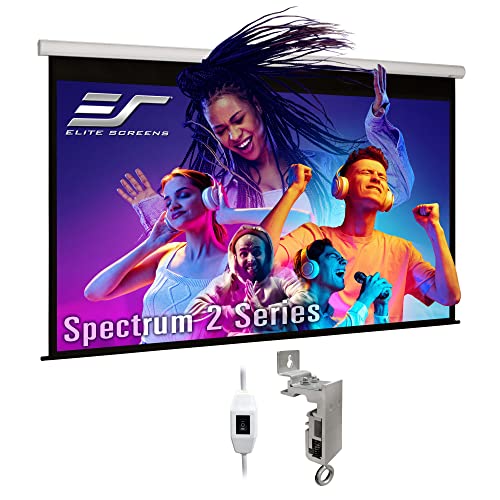
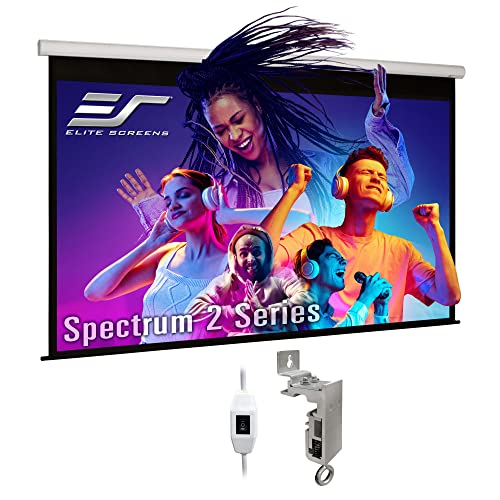
Elite Screens Spectrum2 120-inch Electric — Best Budget
Elite Screens Spectrum2 120-inch Electric
(Current Price, subject to change)
The Elite Screens Spectrum2 120-inch Electric is the sub-$500 entry point into motorized projection for buyers whose priority is "I want the screen to drop automatically when I press a button," not "I want a Movie Night scene." That's a real use case — classrooms, conference rooms, secondary media rooms where one viewer flips a switch and the screen descends. For that job, the Spectrum2 is correct.
The 12-inch drop from the ceiling housing is a small-but-real advantage. Most budget motorized screens force the surface to start from the housing centerline, which means you either mount very high or accept a screen that sits taller than your sightline. The adjustable drop lets installers calibrate the screen center to the projector throw angle without fixing the housing position. It's the kind of practical engineering that makes the Spectrum2 a fair option for mixed-use spaces.
The honest limitation — and the reason this lands in the Cinema Room Readiness Score fair band — is that 12V trigger is not included on this tier. IR remote only. That means the screen can never join a Movie Night scene via AVR trigger-out. It can ride inside a SofaBaton X1 Smart Remote IR/RF hub macro, but the direct-from-AVR trigger path is not available. For a dedicated cinema room, that's a dealbreaker; for a conference room or weekend-movie living room, it doesn't matter.
What We Love
- Sub-$500 entry point — Genuinely cheap motorized 120-inch
- 12-inch ceiling drop — Installers can calibrate screen center to projector throw
- Both ceiling and wall brackets included — No install surprises
- MaxWhite FG fiberglass — 4K/8K-ready surface that performs in dark rooms
- Long product line — Replacement parts and service parts readily available
What Could Be Better
- No 12V trigger on this tier — IR remote only, so scenes require an IR/RF bridge
- Non-tensioned surface can show minor edge waves on the 120-inch span
- Matte White only — no ALR option, so ambient light washes the image
- Basic housing; no slim aluminum profile
The Verdict
If your budget tops out at $500 and you can live without 12V trigger scene automation, the Elite Screens Spectrum2 120-inch Electric is the right budget motorized pick. For cinema-room builds where scene automation is the whole point, step up to the Akia Motorized Tab-Tension or a Starling for the 12V path. Check the current Spectrum2 price on Amazon.
How We Score: SHE Cinema Room Readiness
The SHE Cinema Room Readiness Score is the same 0-10 composite we use for every component in a cinema stack — projector, AVR, soundbar, TV lift, and now motorized screen. The formula does not change by category. What changes is how each factor maps to the category.
Formula: (Scene Automation × 0.25) + (Role Performance × 0.35) + (Install Ease × 0.20) + (Ecosystem Compatibility × 0.20)
For motorized projector screens, each factor translates to specific specifications. Scene Automation (25%) asks how cleanly the screen joins a Movie Night scene: 12V trigger input scores high, RF remote via Bond bridge scores high, IR-only scores low. Role Performance (35%) asks whether the surface itself is cinema-grade: tab-tensioned ALR matched to projector throw scores high, non-tensioned matte white scores low. Install Ease (20%) asks whether this is a weekend install or a weekend and a licensed electrician: floor-rising is plug-and-play, in-ceiling recessed is not. Ecosystem Compatibility (20%) asks how many smart-home platforms can orchestrate the drop: Bond bridge + Matter AVR + native smart app scores high, proprietary IR-only scores low.
We score each factor from 0-10 using anchors from expert-reviewed manufacturer specs and community install threads at AVSForum and AVForums. The weighted composite gives the final 0-10 score. Read the full methodology at /methodology or the score's canonical page at /metrics/she-cinema-room-readiness-score.
(SmartHomeExplorer editorial analysis — methodology)
SHE Cinema Room Readiness Score — Smart Motorized Projector Screens
Ranks motorized projector screens on scene automation (25%), role performance (35%), install ease (20%), and ecosystem compatibility (20%). Higher = cleaner integration into a Movie Night scene alongside projector, AVR, and lighting.
Tab-tensioned UST ALR floor-rising · 12V trigger + RF + smart app · plug-and-play install
95% ALR · 170° viewing angle · acoustic-transparent · 12V + RF
Standard-throw ALR · tab-tensioned · 12V + 5V + IR + RF — four scene-automation paths
Tab-tensioned under $1,000 · UST + short + standard throw surface · 12V + IR
Fully recessed in-ceiling · 12V + 5V triggers · professional install required
Sub-$500 entry · MaxWhite FG 4K/8K surface · IR remote only, no 12V trigger on this tier
SmartHomeExplorer editorial analysis. Formula: Scene Automation (25%) + Role Performance (35%) + Install Ease (20%) + Ecosystem Compatibility (20%) (April 2026)
(SmartHomeExplorer editorial analysis — methodology)
How to Add a Motorized Screen to a Cinema Scene
The shortest path from "the screen drops automatically" to a real smart-home scene has three steps. Pick the one that matches your AVR and your smart platform.
Path 1 — 12V trigger from AVR (easiest). If your receiver has a trigger-out jack (most Denon, Marantz, Yamaha, and Onkyo AVRs do), you run one low-voltage cable from the trigger-out to the screen's 12V input. When the AVR flips to a Movie Night scene, the trigger goes hot and the screen deploys. No bridge, no cloud, no app. The Denon AVR-X4800H is the reference AVR for this path because its trigger assignments are per-input — you can configure the screen to drop only on the projector-fed HDMI input, so gaming on a wall-mounted TV doesn't accidentally trigger it.
Path 2 — RF remote via Bond bridge. If your AVR doesn't have a trigger-out (or you want an Alexa / Google / HomeKit path directly), add a Bond bridge to the network. Bond learns the RF remote codes and exposes the screen as a smart device across all major assistants. This is the correct move for Siri-first homes and for setups that want the screen to join scenes the AVR isn't part of — dimming lights, closing shades, and dropping the screen in one routine alongside smart lighting scenes.
Path 3 — Universal remote / smart-remote hub. A SofaBaton X1 or Logitech Harmony successor can learn IR and RF, then expose the screen inside a single macro. The advantage is keeping scene logic on a dedicated remote hub instead of a phone or an AVR. The disadvantage is that it adds a device to the rack. Use this for the Spectrum2 or Akia when you have no 12V path and don't want a Bond bridge.
For the full room design — lighting, acoustic treatment, seating, and projector/screen throw calibration — see the Cinema Rooms parent hub.
ALR vs Matte White: Which Screen Material
The single biggest material decision is not "ALR vs matte white" — it's "what projector am I running and what ambient light do I have." Expert reviewers at Projector Reviews and The Hook Up agree on the framing.
Matte White (like the Evanesce B or Spectrum2) is the correct choice for dedicated dark cinema rooms with full blackout. It delivers neutral color, even gain, and the widest viewing cone. The moment ambient light hits the screen, the image washes out.
ALR for UST (like the VIVIDSTORM or AWOL) is tuned to reject floor-bounce light from below. Ultra-short-throw laser projectors fire up from a cabinet 10-18 inches below the screen, so the coating structure is optimized for that angle. Put a standard-throw ceiling-mounted projector on a UST ALR screen and the image will look dim and hot-spotted — wrong tool for the job.
ALR for standard-throw (like the Starling Tab-Tension 2 CineGrey 5D) flips the structure: it rejects ceiling-bounce light from above. That matches a ceiling-mounted standard-throw projector. Run a UST laser on this and you get the same mismatch in reverse.
For the projector pairing, see our smart projector guide — the projector choice dictates the screen material, not the other way around.
When NOT to Buy a Motorized Projector Screen
A motorized screen is the wrong spend if your cinema room is permanent and visible hardware is not a problem — a fixed-frame tab-tensioned screen costs less, performs slightly better at the same price, and has zero moving parts. A motorized is also wrong if your budget still has holes in it at the AVR or projector tier; the scene-automation benefit of a motorized screen only shows up when the rest of the stack is scene-capable. And a motorized IR-only screen (like the Spectrum2 without 12V) is the wrong buy for a dedicated cinema room — it locks you out of trigger automation that every other component supports.
Frequently Asked Questions
Is a motorized projector screen worth it versus a fixed-frame?
A motorized screen is worth it in two scenarios: the cinema room shares space with another use (living room, family room, guest room), or visible hardware is a dealbreaker. For a dedicated cinema basement where the screen is down 100% of the time, a fixed-frame tab-tensioned screen costs about 40% less, performs slightly better at the same price, and has zero motor failure risk. Buy motorized for flexibility, not for performance.
How does a 12V trigger work with a motorized screen?
A 12V trigger is a low-voltage wire that connects an AVR's trigger-out jack to the screen's 12V input. When the AVR flips to an assigned input or scene — typically a Movie Night macro — the trigger goes from 0V to 12V, and the screen's motor drops. Release the scene, the voltage drops, the screen retracts. It's the simplest scene-automation path because it requires no bridge, no cloud, and no network. Every screen in this guide except the Elite Screens Spectrum2 120-inch Electric supports 12V out of the box.
Can a motorized screen work with Alexa or Google Home?
Not natively on any screen in this guide. Motorized projector screens are mechanical motors with RF or 12V inputs — they don't ship with Wi-Fi chips or voice-assistant skills. The path to Alexa or Google is indirect: add a Bond bridge to learn the RF remote codes, or use a smart-remote hub (SofaBaton X1) that exposes macros to voice assistants. The VIVIDSTORM S PRO Floor-Rising UST ALR 120-inch includes a companion smart app, but the app is manual-only — no direct voice hook without a bridge.
ALR vs matte white — which material is right for my room?
The projector dictates the material, not the room. Ultra-short-throw laser projector (Hisense, AWOL, Formovie) needs UST-specific ALR like the VIVIDSTORM or AWOL Vision. Standard-throw ceiling-mounted projector needs either matte white (in a fully blackout-capable room) or standard-throw ALR like the Starling Tab-Tension 2 CineGrey 5D (in a room with ambient light). Mismatching ALR type to projector throw produces dim, hot-spotted images.
Tab-tensioned vs non-tensioned — does flatness really matter on a 120-inch?
At 120 inches, yes. Non-tensioned electric screens develop edge waves as the fabric relaxes, and those waves become visible artifacts on high-contrast scenes. Tab-tensioning uses side tensioning cables to keep the surface flat across the full diagonal. For a dedicated cinema room, tab-tensioning is the floor. For a conference room or a casual movie space, non-tensioned is acceptable and saves real money.
Floor-rising vs ceiling-drop vs in-ceiling recessed — which install is right?
Floor-rising (VIVIDSTORM S PRO Floor-Rising UST ALR 120-inch, AWOL Vision ALR-F220C 120-inch Motorized ALR Floor Rising) is plug-and-play — no mounting, no electrician, works in rentals. Ceiling-drop (Elite Screens Starling Tab-Tension 2 CineGrey 5D 120-inch, Akia Screens Motorized Tab-Tension 120-inch, Elite Screens Spectrum2 120-inch Electric) needs a mounting rail or surface — DIY-possible weekend install. In-ceiling recessed (Elite Screens Evanesce B 120-inch In-Ceiling) needs a drywall cutout and an electrician — professional install required, but the screen disappears completely when retracted.
The Bottom Line
The best smart motorized projector screen is defined by what happens at 7:42 PM when you hit the Movie Night button. If the screen drops without a phone unlock — via 12V trigger, RF remote, or Bond bridge — it's smart. If it requires line-of-sight IR or a separate app step, it isn't.
Get the VIVIDSTORM S PRO Floor-Rising UST ALR 120-inch if you're running a UST laser projector, want plug-and-play install with no ceiling cutout, and value the single best Cinema Room Readiness Score in the category. Check current price on Amazon.
Get the AWOL Vision ALR-F220C 120-inch Motorized ALR Floor Rising if you own an AWOL or Hisense UST laser TV, have wider seating than 10 feet, and want acoustic-transparent support for in-wall L/C/R speakers. Check current price on Amazon.
Get the Elite Screens Starling Tab-Tension 2 CineGrey 5D 120-inch if you're running a standard-throw projector in a room with ambient light that won't blackout. Check current price on Amazon.
Get the Akia Screens Motorized Tab-Tension 120-inch if you want tab-tensioning under $1,000 and you have an AVR with a 12V trigger-out. Check current price on Amazon.
Skip the Elite Screens Evanesce B 120-inch In-Ceiling if you don't have the budget for professional electrical install or your room has meaningful ambient light. Check current price on Amazon.
Skip the Elite Screens Spectrum2 120-inch Electric if your cinema room is built around AVR scene automation — the lack of 12V trigger on this tier locks you out of the primary scene-automation path. Check current price on Amazon.
Whatever screen you pick, pair it with an AVR that exposes a 12V trigger-out and a projector matched to your screen material. The screen is the easiest cinema-room component to get right when the stack around it is already scene-capable.
Sources & Methodology
We aggregated expert reviews from Projector Reviews, The Hook Up, Dead Set Live, Projector Central, AVForums, and AVSForum; manufacturer specs from VIVIDSTORM, AWOL Vision, Elite Screens, and Akia Screens; and community install consensus from AVSForum thread 1527106 and AVForums thread 2281915. Consensus scores reflect weighted averages from these sources. SHE Cinema Room Readiness Scores are computed per-product using the methodology documented at /metrics/she-cinema-room-readiness-score and the shared formula at /methodology.
Written by Nicholas Miles, founder of SmartHomeExplorer. Nick has covered smart home technology since 2024, including 1,414 smart home products and 426 buying guides, with a focus on cinema-room builds and scene-automation design. Browse more smart entertainment guides.
Disclosure: SmartHomeExplorer.com earns affiliate commissions from qualifying Amazon purchases. This doesn't influence our rankings — our methodology is published at /methodology.