
Best Smart Home Power Monitors 2026: 4 No-Sub Picks
Emporia Vue 3 16-Circuit ($199.99) wins overall — 16 circuits, no subscription, solar-ready. Shelly EM Mini Gen4 is the $25 entry point.
This article contains affiliate links. We may earn a commission at no extra cost to you. Prices change frequently — check the current price on Amazon before buying. Learn more
The Short Answer
Emporia Vue 3 16-Circuit: circuit-level disaggregation, subscription-free. Eyedro: bidirectional NEM 3.0 solar. Shelly Mini Gen4: single-circuit.
Featured in this Guide
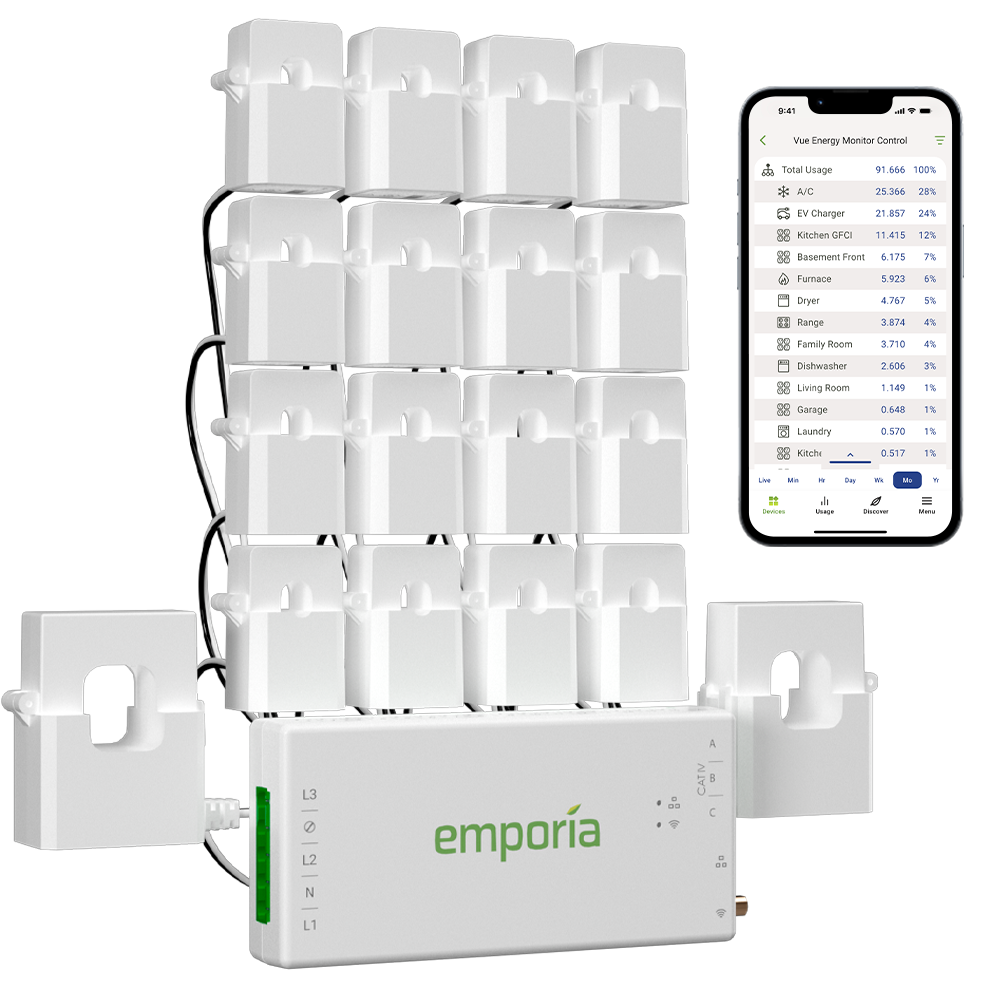
Emporia
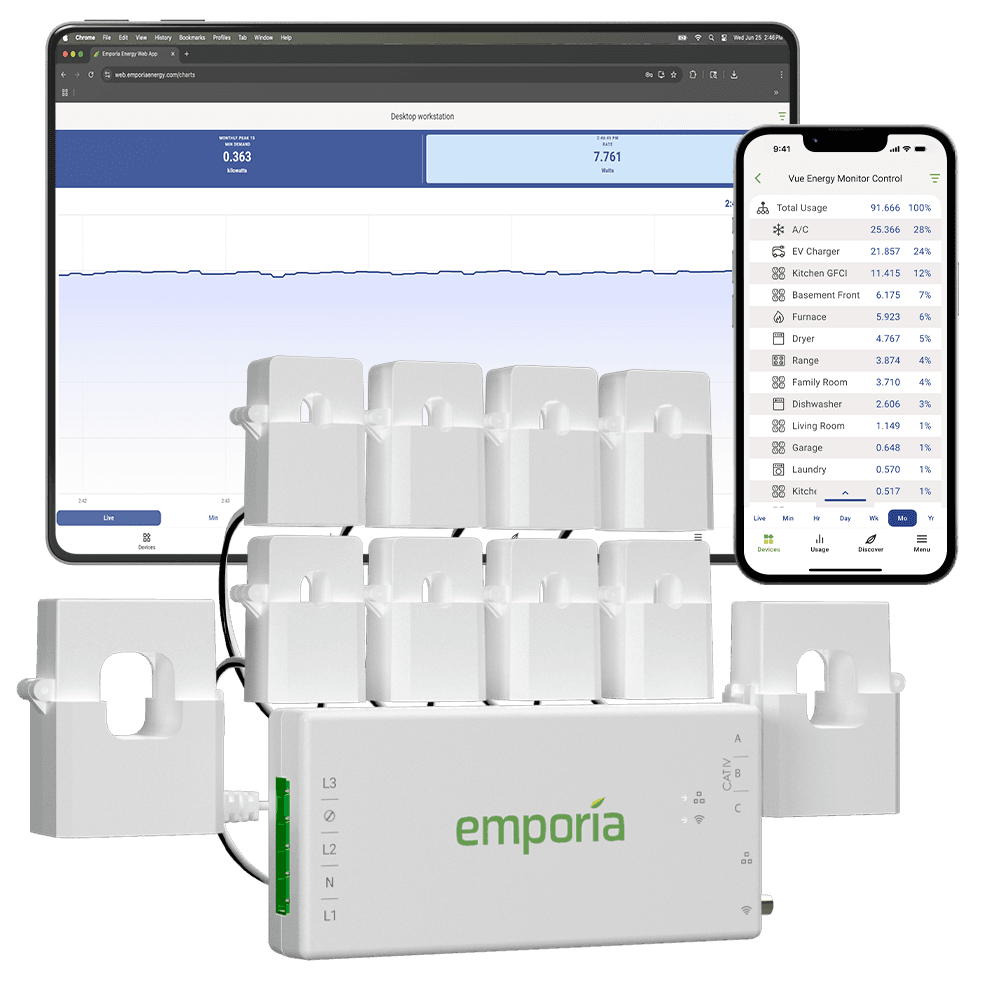
Vue 3 16-Circuit Monitor
- •16 branch circuits, no subscription, solar net metering, ESPHome-flashable for full local control at $199.99
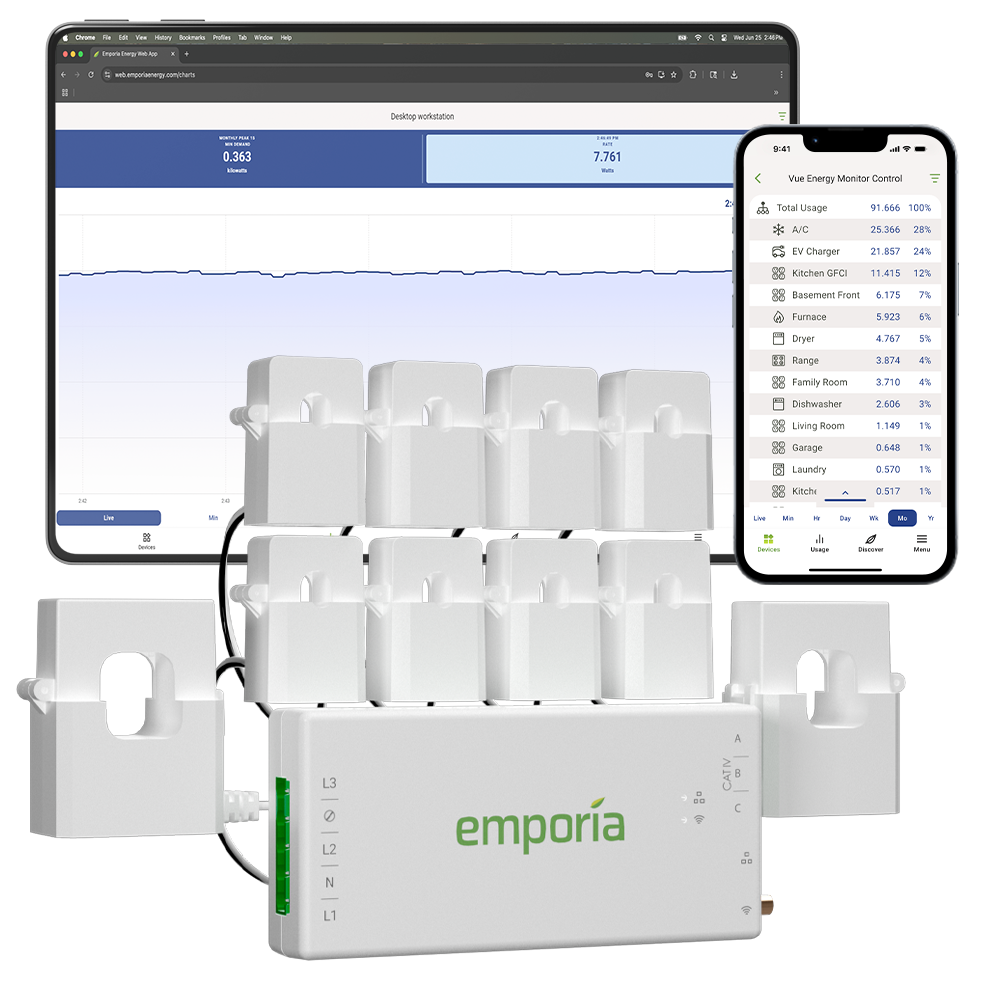
Emporia
Vue 3 8-Circuit Monitor
- •Same hub and app as the 16-circuit model, 8 branch CTs cover most high-draw circuits at $50 less
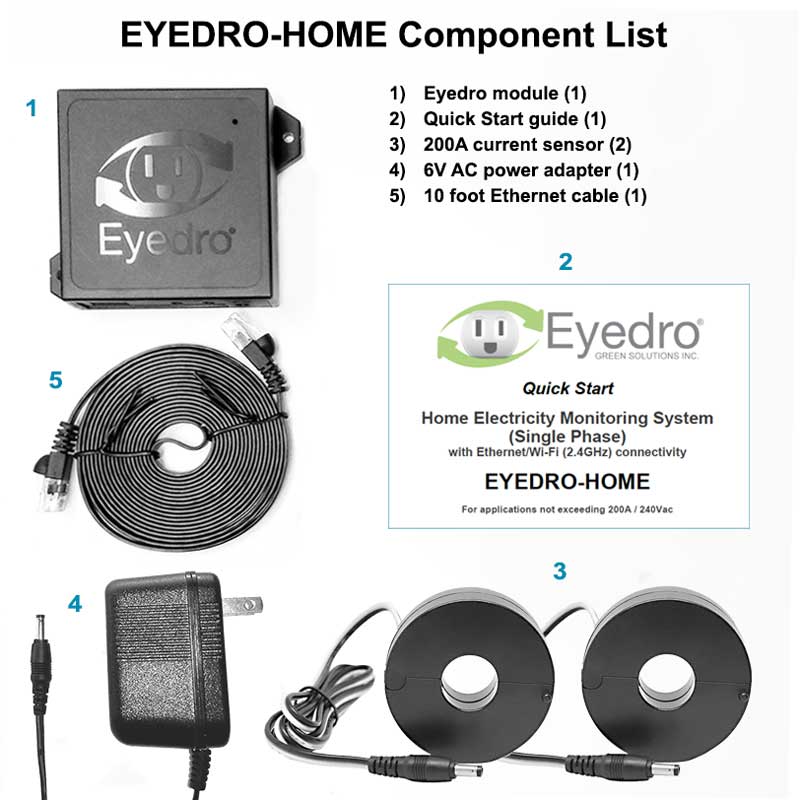
Eyedro
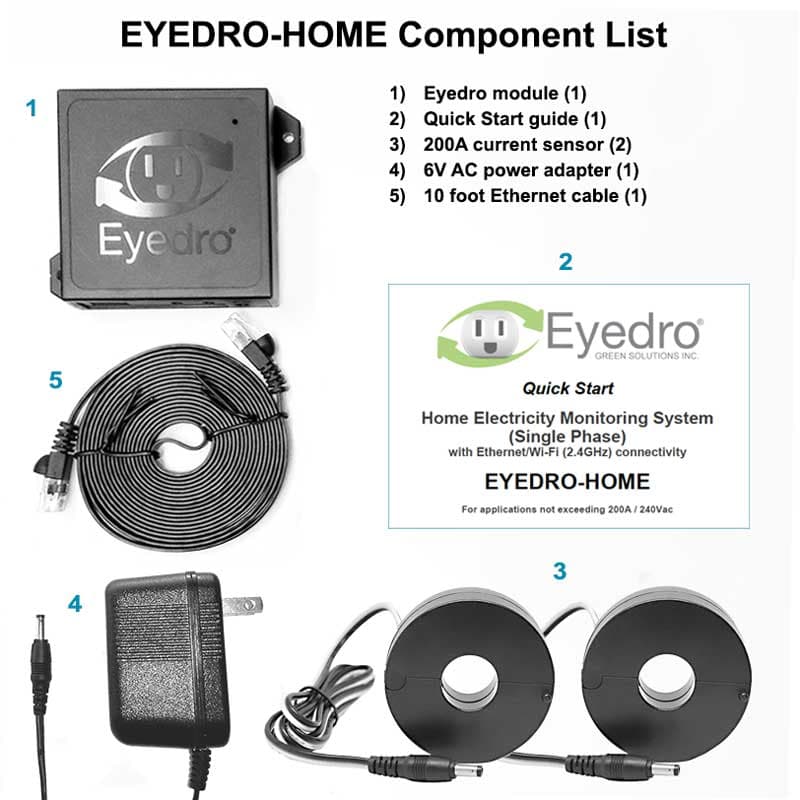
Home Energy Monitor
- •Strongest bidirectional metering of any sub-$200 whole-home monitor — tracks export credits for NEM 3.0 California households
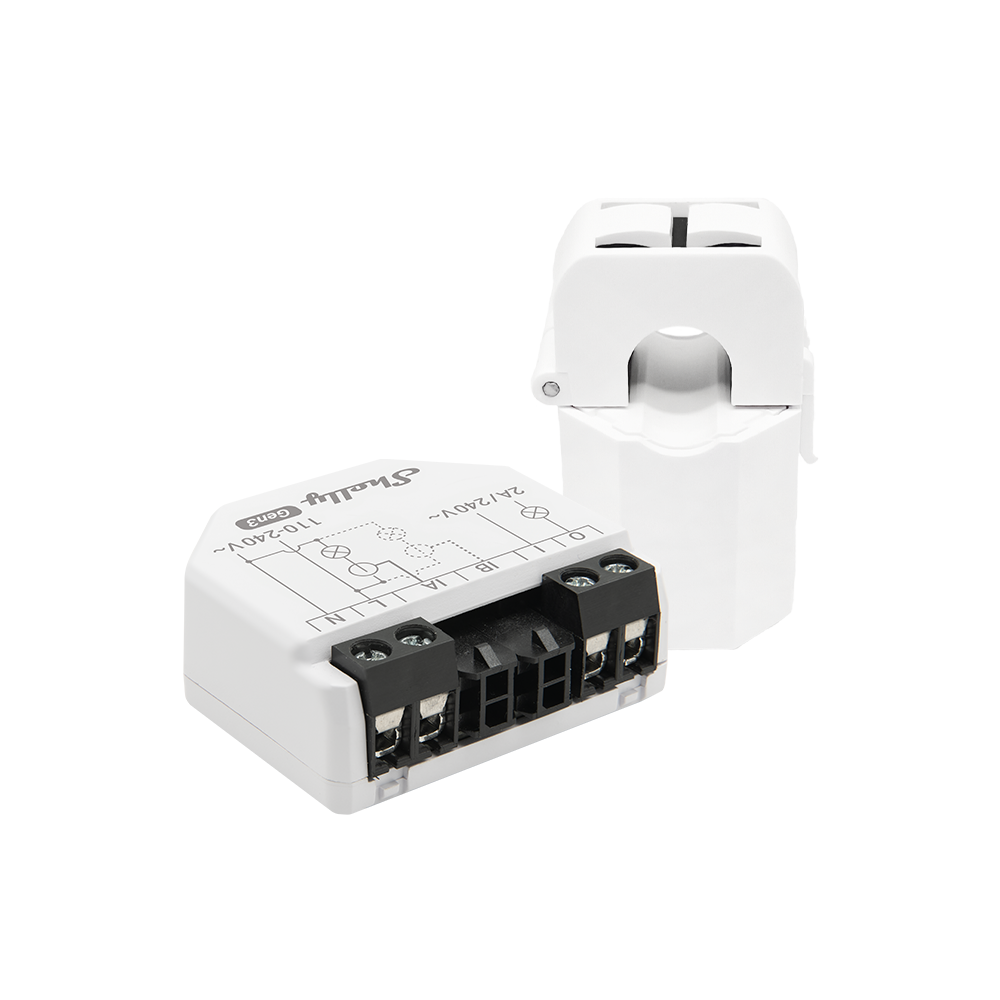
Shelly
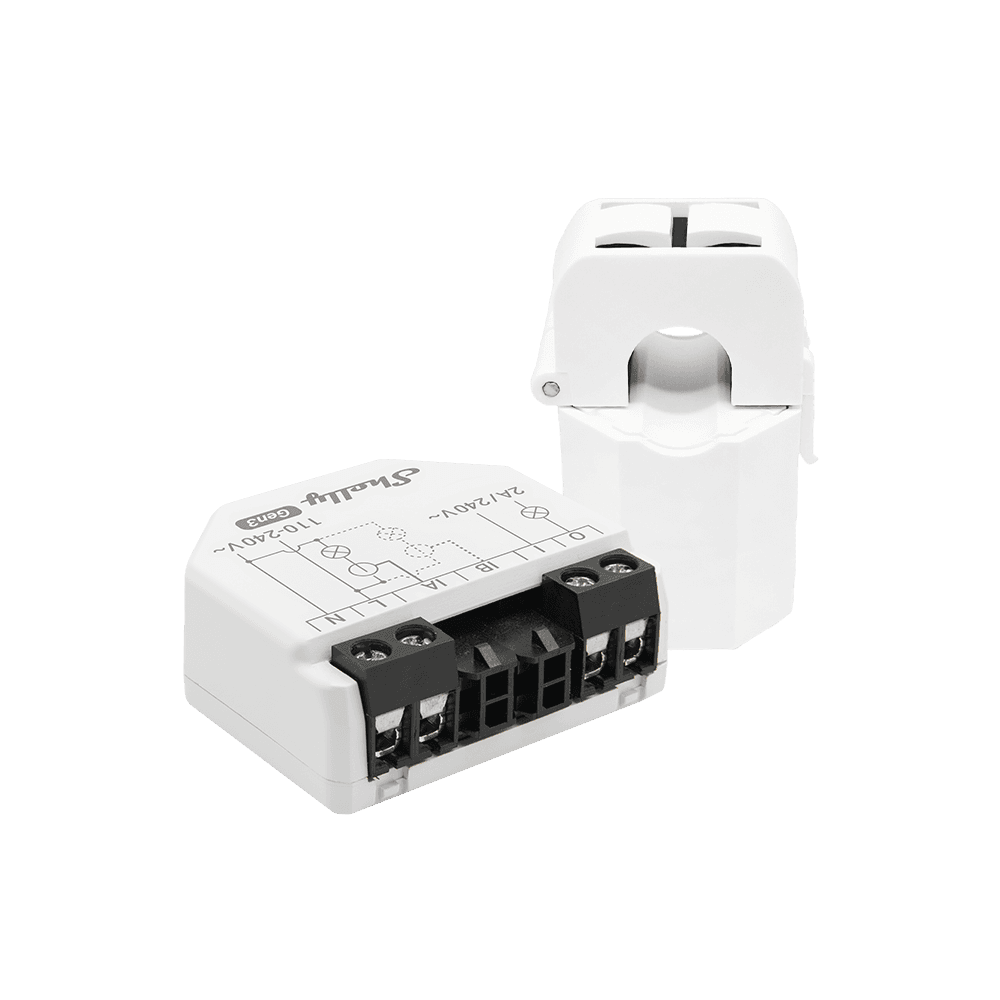
EM Gen3 Energy Meter
- •Matter-native single-circuit plug-in at $24.99 — the cheapest way to monitor an EV charger, freezer, or workshop tool
Head-to-Head: Ecosystem, Setup, Disaggregation, and Cost Savings
Smart Energy
Chart
 Smarthomeexplorer.com
Tap any pick to check its live price on Amazon.
AlorAir Sentinel HDi90 Basement/Crawlspace Dehumidifier with Pump
Check price
Big Ass Fans Haiku L 52-Inch Smart Ceiling Fan
Check price
Midea U Smart Inverter Window AC (12,000 BTU)
Check price
Where Your Electricity Bill Is Hiding
Your bill spike shows total kWh consumption, not which circuits drove it. EIA puts the average US household electricity expenditure at $1,500-$2,000 per year; The Verge and EnergySage both estimate that circuit-level disaggregation methodology yields 8% to 15% behavioral savings — typically $120 to $240 per year — once a CT clamp surfaces the always-on workshop refrigerator, the misconfigured hot tub timer running 6 hours overnight, the EV charger drawing at peak rates. Power monitors deliver that visibility through the SHE Energy Disaggregation Score framework.
Whole panel, no subscription: the Emporia Vue 3 16-Circuit Monitor covers 16 branch CTs plus 2 mains across a 200A panel at 1 second cloud refresh and ±2% accuracy. NEM 3.0 California: the Eyedro Home Energy Monitor tracks bidirectional export across 5 hours of daylight production at ±1% accuracy with a 5-year free dashboard. Single circuit: the Shelly EM Gen3 Energy Meter enables Matter-native plug-in monitoring up to 16A in 5 minutes without electrician scheduling.
Best Overall: Emporia Vue 3 16-Circuit Monitor
Emporia Vue 3 16-Circuit Monitor
- 16 branch circuits plus 2 mains — the widest sub-$200 disaggregation footprint in this roundup
- 1-second cloud refresh, not sub-second local — local mode requires ESPHome flash
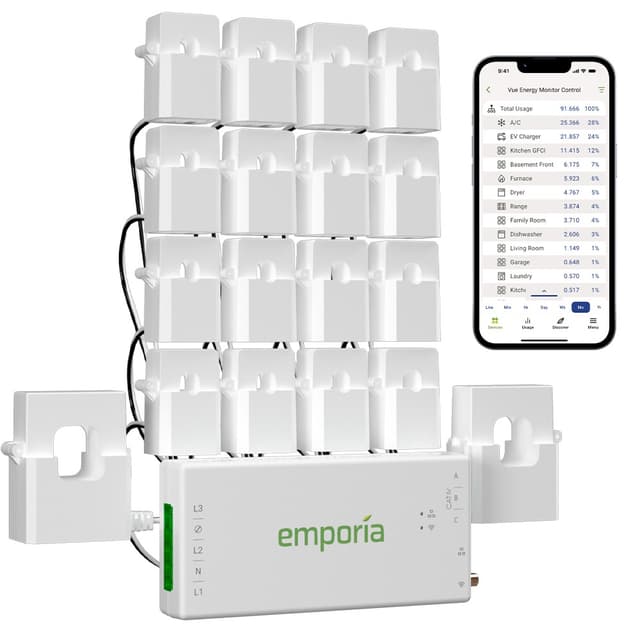
(Current price, subject to change)
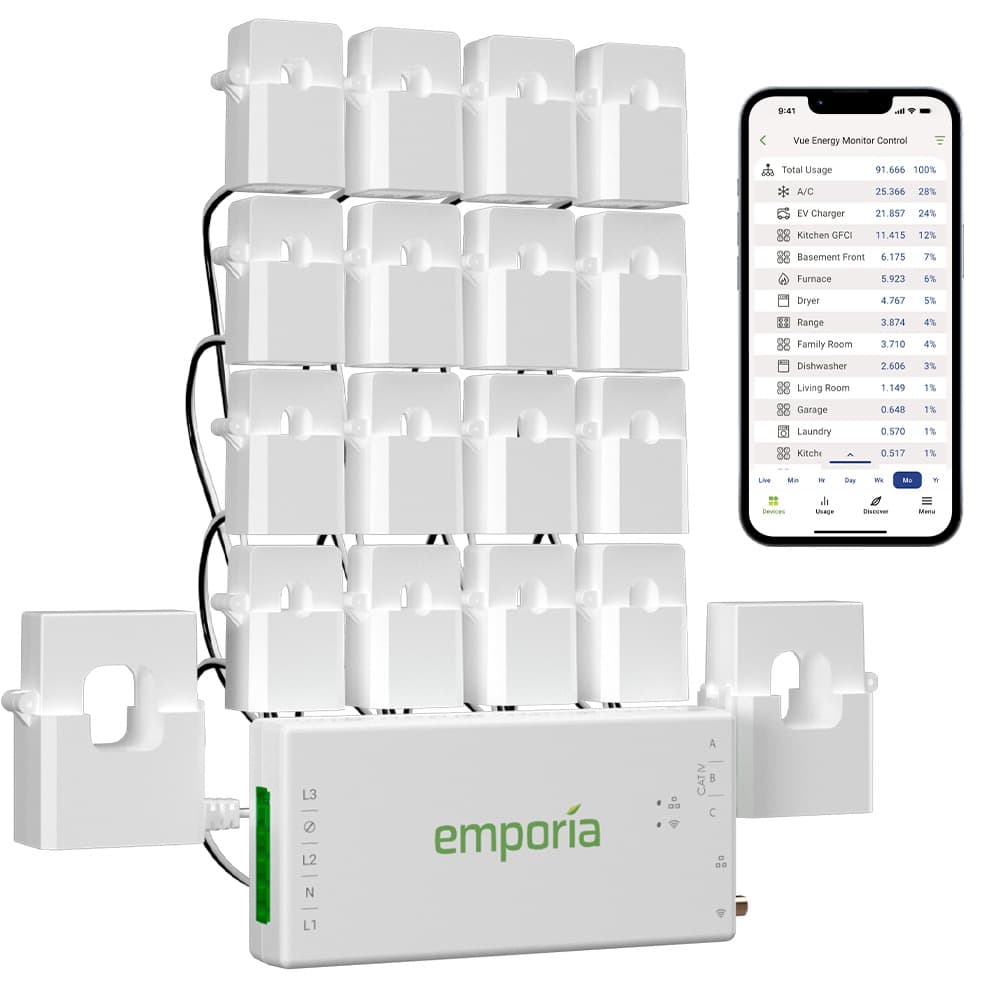
The Emporia Vue 3 16-Circuit Monitor earns 8.80 on the SHE Energy Disaggregation Score, our weighted composite formula. The 8.80 reflects three factors: 16 branch CTs deliver per-circuit kWh visibility (HVAC draws 3 kWh to 5 kWh per day; dryer, EV charger, and water heater follow), the free Energy Manager app gates zero features behind a paid tier, and bidirectional CT support enables solar production and EV charging to register correctly at ±2% accuracy. The Verge rated the Vue 3 the strongest panel-monitor value under $300, citing the no-subscription model as the differentiator versus Sense and Smappee.
EnergySage placed Emporia top-tier on net metering accuracy, with the caveat that ±2% is a half-point looser than Eyedro at ±1% — invisible on flat-rate utilities, meaningful under NEM 3.0 export-credit math. The 1-second cloud refresh feeds the Emporia app fast enough to drive behavior change; ESPHome flash converts the Vue 3 into a fully local Home Assistant sensor with sub-second MQTT updates.
Compared to the Emporia Vue 3 8-Circuit Monitor: same hub, same app, half the CTs. The 16-circuit kit yields 18-month payback via DOE's 8% to 15% behavioral savings.
What We Love
- 16 branch circuits plus 2 mains — the widest sub-$200 disaggregation footprint in this roundup
- No subscription tier and no paywalled features — the Energy Manager app is free forever
- Bidirectional CT support and a dedicated EV-circuit tag — solar and EV households get the right tools
- ESPHome-flashable hardware — DIY users can ditch the cloud entirely and run fully local on Home Assistant
What Could Be Better
- 1-second cloud refresh, not sub-second local — local mode requires ESPHome flash
- CT clamps go inside the breaker panel — DIY in 60 to 90 minutes or hire an electrician
- ±2% accuracy — Eyedro's ±1% is a half-point tighter for solar net metering
The Verdict
If you want whole-panel visibility without a subscription, the Emporia Vue 3 16-Circuit Monitor fits the brief without compromise. The 8.80 score reflects what matters: 16 branch circuits show exactly where the bill is going, the free Energy Manager app gates nothing behind a paid tier, and ESPHome flash is there if you want fully local. You'll be well-served here.
Best Value: Emporia Vue 3 8-Circuit Monitor
Emporia Vue 3 8-Circuit Monitor
- Same hub and app as the 16-circuit model — no software gap, no missing features
- Only 8 branch CTs — multi-array solar plus EV plus workshop runs out of clamps
(Current price, subject to change)
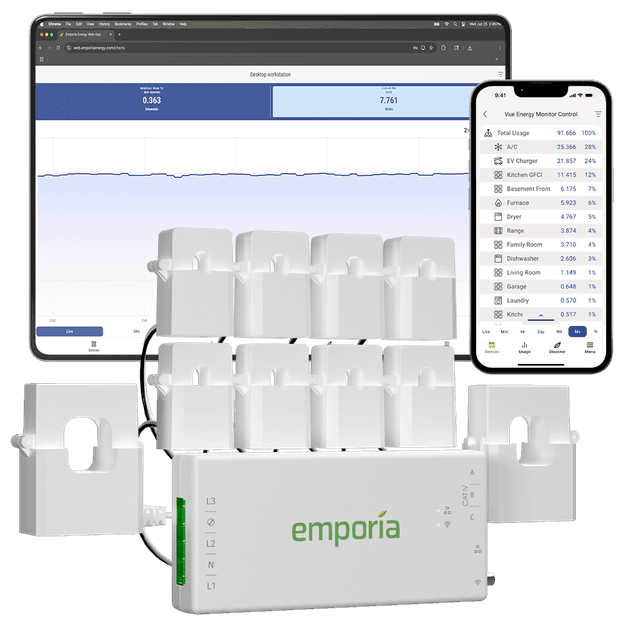
The Emporia Vue 3 8-Circuit Monitor scores 7.83 on our weighted composite, second behind its 16-circuit sibling. The 7.83 reflects the same software stack (free Energy Manager, ESPHome flash, ±2% accuracy) with 8 branch CTs instead of 16 — a cleaner fit for compact panels. EnergySage and TechRadar both reviewed the 8-circuit kit and noted the same hub, same firmware, same app — the only mechanical difference is the box of CTs.
The 8-circuit kit delivers coverage for the typical high-draw set: HVAC compressor, dryer, electric water heater, oven, kitchen circuits, plus 3 spares for an EV charger or solar tag. A 100A panel apartment or small condo is enough; for a 200A panel running multiple solar arrays, a Level 2 EV charger, a heat-pump water heater, AND a workshop sub-panel, the 16-circuit model is the right buy.
DOE's 8% to 15% behavioral savings factor scales with circuit visibility, not clamp count. EnergySage's case studies show first-month wins are identical between the 8 and 16-circuit kits — you find a forgotten workshop fridge, a hot tub timer wrong, a server cabinet, and you fix it. Versus the Eyedro Home Energy Monitor: Emporia produces branch disaggregation Eyedro lacks.
What We Love
- Same hub and app as the 16-circuit model — no software gap, no missing features
- 8 branch CTs cover the typical high-draw set: HVAC, water heater, dryer, oven, EV charger
- $50 cheaper than the 16-circuit kit — the right call for small-to-mid panels
- Same free-forever Energy Manager subscription model and same ESPHome local-control path
What Could Be Better
- Only 8 branch CTs — multi-array solar plus EV plus workshop runs out of clamps
- Same panel-install effort as the 16-circuit unit — saves 15 minutes of clamping
- Same ±2% accuracy as the 16-circuit version — Eyedro's ±1% is tighter for solar
The Verdict
If you've already shortlisted Emporia and your panel has ≤10 breakers worth monitoring, the Emporia Vue 3 8-Circuit Monitor lines up with what you actually need at $50 less. The 7.83 score reflects the trade: same hub, same app, same accuracy, half the branch CTs. For most apartments, condos, and small homes, this is the path of least friction.
Best for Solar / NEM 3.0: Eyedro Home Energy Monitor
Eyedro Home Energy Monitor
- ±1% rated accuracy — the tightest spec in this roundup, materially relevant under NEM 3.0 export-credit math
- Whole-home totals only — no branch CTs, so the bill is visible but not which circuits drove it
(Current price, subject to change)
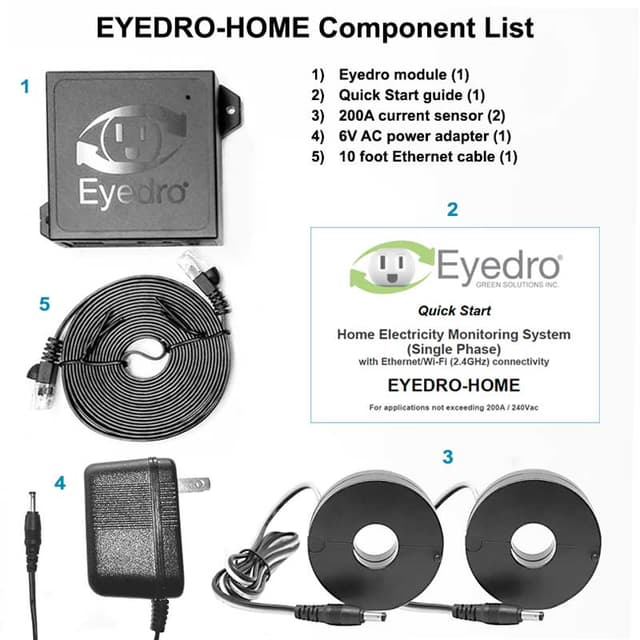
The Eyedro Home Energy Monitor scores 6.10 on the SHE Energy Disaggregation Score, our weighted composite. The calculation reflects Eyedro's deliberate decision: bidirectional solar metering takes priority over branch disaggregation. The 9.5 Solar/EV coefficient — highest in this roundup — represents bidirectional net metering at ±1% accuracy. EnergySage's evaluation positioned Eyedro top tier for bidirectional accuracy in the sub-$200 segment.
The architectural trade-off appears in the 4.5 disaggregation factor: 2 main CTs operate without branch monitoring. Total household kWh, solar production, and grid export remain visible, but the methodology cannot identify which circuit produced a 3kW spike at 6pm. For solar-prioritized households with a fixed load profile, this configuration delivers what's needed. For waste-investigation households — workshop refrigerators, hot tub timers, server cabinets — the Emporia Vue 3 16-Circuit Monitor supplies disaggregation.
MyEyedro's free tier provides 5 years of dashboard access; afterward, $1 per month enables historical analysis. NEM 3.0 specifics: California's 2023 regulation cut export credits by 75% versus NEM 2.0. Eyedro's ±1% accuracy delivers measurable export tracking that Emporia's ±2% specification cannot match across thousands of annual NEM 3.0 decisions.
What We Love
- ±1% rated accuracy — the tightest spec in this roundup, materially relevant under NEM 3.0 export-credit math
- Bidirectional net metering with explicit export tracking — the right tool for California NEM 3.0 households
- WiFi and Ethernet — the only monitor here with wired backup for installs where WiFi flakes
- Simplest panel install in this roundup — 2 main CTs only, 30 to 45 minutes
What Could Be Better
- Whole-home totals only — no branch CTs, so the bill is visible but not which circuits drove it
- 1-minute web-dashboard refresh — slower than Emporia's 1-second cloud
- MyEyedro free for 5 years from purchase, then $1 per month for historical access
The Verdict
If you've already shortlisted a solar monitor for a NEM 3.0 California household, the Eyedro Home Energy Monitor is a sensible pick for that setup. The 6.10 score reflects the trade-off: best-in-class solar accuracy and net metering, but no branch disaggregation. For solar-first buyers, that's the right shape. You can stop the search here.
Best Budget Spot Monitor: Shelly EM Gen3 Energy Meter
Shelly EM Gen3 Energy Meter
- Matter-native — works with Alexa, Google, HomeKit, and SmartThings out of the box, no hub required
- Single-circuit only — measures one plug, not whole-home loads
(Current price, subject to change)
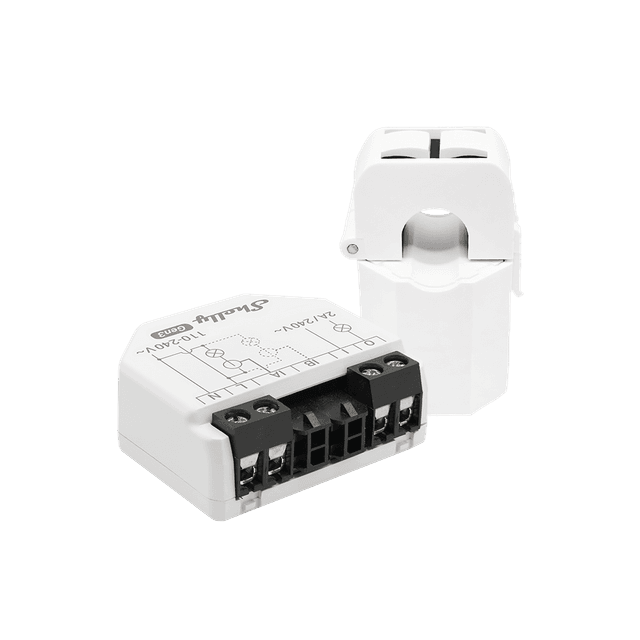
The Shelly EM Gen3 Energy Meter scores 5.40 on our weighted composite — lowest in this roundup because it is a spot monitor, not a panel monitor, with a 2.0 disaggregation factor and 2.0 channel-coverage coefficient, offset by 10.0 on both Real-Time Latency and Subscription-Free. Matter-native sub-second updates deliver zero cloud dependency and no subscription obligation. The Verge and TechRadar both reviewed the Mini Gen4 as a Matter-era replacement for older Zigbee plug-type devices.
The appropriate use case is single-circuit disaggregation on a high-cost load: a Level 1 EV charger on 120V (Level 2 240V exceeds the 16A current ceiling), a 1.8 kW workshop table saw, or a server cabinet drawing 0.4 kWh per day. Installing one unit produces permanent circuit-level visibility without a panel appointment.
Where the Shelly does not work: 240V dryer, HVAC compressor, electric water heater — all circuits exceed 16A. The Emporia Vue 3 CT-based approach delivers circuit disaggregation for those loads. The Mini Gen4 cannot capture bidirectional solar production or net export data — for solar-primary households, Eyedro Home Energy Monitor is the appropriate choice.
What We Love
- Matter-native — works with Alexa, Google, HomeKit, and SmartThings out of the box, no hub required
- Sub-second local update via Matter — the fastest refresh in this roundup
- Fully local, no cloud account, no subscription, no app dependency
- $24.99 — the cheapest serious power monitor on Amazon at this writing
What Could Be Better
- Single-circuit only — measures one plug, not whole-home loads
- 16A current ceiling — works for Level 1 EV, freezer, workshop tool; not 240V dryer or HVAC
- Plug-in form factor only — no CT-clamp option for branch monitoring
The Verdict
If you specifically want to monitor a single high-draw load — EV charger, workshop tool, freezer — without a panel install, the Shelly EM Gen3 Energy Meter is the only product here that does it under $30. The 5.40 score reflects single-channel scope (a real gap for whole-home use), but Matter-native, sub-second local, and zero subscription cover what matters at this price tier.
How We Score: SHE Energy Disaggregation Score
SHE Energy Disaggregation Score
Score Formula
(Disaggregation_Granularity × 0.25) + (RealTime_Latency_Inv × 0.15) + (Solar_EV_Integration × 0.20) + (SubscriptionFree_Score × 0.20) + (Channel_Coverage × 0.20)Score Factors
- Disaggregation Granularity (25%)Circuit-level CT data versus whole-home-only. 10 = 16+ individual circuit CTs; 7 = 8 circuits; 4 = 2 main CTs only; 2 = single CT spot monitor. Derived from manufacturer hardware specs and verified against The Verge, EnergySage, and Home Assistant community integration docs.
- Real-Time Latency Inverse (15%)Inverse of update latency. 10 = sub-second MQTT local; 8 = ~1s local API; 7 = 1s cloud; 4 = 1-minute interval; 1 = 5-minute or manual refresh.
- Solar / EV Integration (20%)Bidirectional metering, solar production tracking, NEM 3.0 net export measurement, EV-charger recognition or API integration. 10 = full bidirectional + EV + NEM 3.0 confirmed; 5 = basic solar; 2 = none.
- Subscription Free (20%)Local data ownership and no-cloud operation. 10 = fully local, open API, no cloud; 9 = cloud optional with local fallback; 5 = cloud required, free tier; 1 = mandatory paid subscription.
- Channel Coverage (20%)Total CT inputs. 10 = 16+ branch + 2 main = 18 inputs; 7 = 8 branch + 2 main = 10 inputs; 3 = 2 main CTs only; 2 = 1-2 spot CTs.
SHE Energy Disaggregation Score — Ranked
Emporia Vue 3 16-Circuit Monitor
SHE Energy Disaggregation Score8.8/10$199.99 / 16 branch + 2 main CTs — best whole-panel disaggregation, no subscription, ESPHome-flashable for full local
Emporia Vue 3 8-Circuit Monitor
SHE Energy Disaggregation Score7.8/10$149.99 / 8 branch + 2 main CTs — same hub and app as the 16-circuit kit at $50 less; right pick for small-to-mid panels
Eyedro Home Energy Monitor
SHE Energy Disaggregation Score6.1/10$149.99 / 2 main CTs — best-in-class ±1% solar net metering for NEM 3.0 households; no branch disaggregation
Shelly EM Gen3 Energy Meter
SHE Energy Disaggregation Score5.4/10$24.99 / 1 channel plug-in — Matter-native, sub-second local, zero subscription; single-load only
Ecosystem Compatibility: Apps, Matter, and Local Control
The compatibility story for power monitors differs structurally from lighting, thermostats, and locks. Most users do not control monitors through Alexa or HomeKit — they read circuit data through an app or web dashboard. The relevant compatibility axis is data ownership, not voice routing. The Emporia Vue 3 16-Circuit Monitor and Emporia Vue 3 8-Circuit Monitor both ship with the free Emporia Energy Manager application for iOS, Android, and web browsers, with optional Alexa and Google Assistant skills for voice queries on top of the app. ESPHome flash converts the hardware into a fully local Home Assistant sensor delivering sub-second MQTT updates — the methodology most Home Assistant power-users adopt.
The Eyedro Home Energy Monitor is dashboard-first: MyEyedro web application on iOS and Android, free for 5 years from purchase. No voice integration, no Matter framework, no smart-home hub coordination. EnergySage's evaluation positioned this as the appropriate design for solar-first households checking the dashboard once or twice daily rather than querying a voice assistant. The Eyedro hub provides WiFi or Ethernet connectivity at 1-second internal sampling, with the dashboard refreshing per-minute by design.
The Shelly EM Gen3 Energy Meter is the only monitor here with native Matter integration — the Mini Gen4 hardware ships with Matter, Zigbee, and WiFi radios, working with Alexa, Google, HomeKit, and SmartThings out of the box, no hub required. The Verge highlighted this as the differentiator versus older Shelly EM Gen3 hardware that required Shelly's own cloud infrastructure. For Home Assistant users, the Mini Gen4 integrates locally via Matter without any cloud round-trip, contributing to the SHE Energy Disaggregation Score's 10.0 Subscription-Free coefficient.
Span Smart Panel — a $3,500 to $5,000 installed pro-grade smart electrical panel replacing the existing breaker box with circuit-level monitoring and app-controllable breakers — represents the premium upgrade path for new construction or whole-home renovation. Span ships through certified electricians only and is not available on Amazon. For most readers Span is architectural overkill, but for new-build and full-renovation households the panel-replacement approach delivers monitoring plus breaker-level remote control in one integrated hardware platform.
A note on discontinued products: Sense (the original Sense Home Energy Monitor) discontinued hardware sales December 31, 2025, pivoting the company toward utility smart-meter software partnerships. Sense's official communication directed former customers toward Emporia as the recommended replacement methodology. IotaWatt (the open-source 14-channel monitor favored by the Home Assistant power-monitoring community) ended production April 15, 2025 due to tariff cost uncertainty; existing units continue functioning but new units are unavailable. Both transitions shifted demand toward Emporia for whole-panel monitoring and toward Shelly for budget single-circuit applications — the market shift this SHE Energy Disaggregation Score reflects.
| Product | Matter | Alexa | Google Home | HomeKit | Home Assistant |
|---|---|---|---|---|---|
| Emporia Vue 3 16-Circuit Monitor | ✕ | ✓ | ✓ | ✕ | ✓ |
| Emporia Vue 3 8-Circuit Monitor | ✕ | ✓ | ✓ | ✕ | ✓ |
| Eyedro Home Energy Monitor | ✕ | ✕ | ✕ | ✕ | ✓ |
| Shelly EM Gen3 Energy Meter | ✓ | ✓ | ✓ | ✓ | ✓ |
When NOT to Buy
Power monitors are misallocated capital for renters with no panel access. They contribute marginal value for households on flat-rate utilities without solar or EV charging at 240V. An electrician engagement runs $150 to $250 for the panel work. For single-load monitoring under 16A, a Shelly EM Mini Gen4 plug-in is a more proportional spend than a $200 panel system. For households without solar where HVAC or EV is the dominant load, a smart thermostat (HVAC accounts for 40% to 50% of the average bill) typically delivers higher behavioral savings per dollar than panel monitoring — see Best Smart Thermostats 2026: ecobee, Nest & 4 More.
Who Should Buy What
Who Should Buy What
| If you are… | Recommended pick |
|---|---|
Whole-panel visibility households You want circuit-level disaggregation across your full panel and don't want to pay a subscription to see your own data | Emporia Vue 3 16-Circuit Monitor |
Small-to-mid panel households You have a 100A panel or a small-to-mid 200A panel with under 10 high-draw breakers worth monitoring | Emporia Vue 3 8-Circuit Monitor |
NEM 3.0 California solar households You have solar in California under NEM 3.0 and your priority is accurate bidirectional metering for export-credit tracking | Eyedro Home Energy Monitor |
Single-circuit budget monitoring You want to monitor one specific high-draw load (EV charger, workshop tool, freezer) without a panel install | Shelly EM Gen3 Energy Meter |
Frequently Asked Questions
Do I need an electrician to install a power monitor?
Most CT-clamp monitors (Emporia Vue 3, Eyedro) do not legally require an electrician — clamps go around existing wires inside the breaker panel without breaking a circuit. That said, you are working inside a live electrical panel; if you are not comfortable opening the panel cover and identifying the main breaker, hire a licensed electrician for $150 to $250. The Shelly EM Mini Gen4 requires no panel work at all — it plugs into a wall outlet and measures whatever you plug into it.
How accurate are these versus my utility meter?
Eyedro is rated ±1% — the tightest spec in this roundup. Emporia Vue 3 is rated ±2%. Shelly Mini Gen4 is rated ±1%. All three are well within utility-grade accuracy for billing reconciliation. The accuracy gap matters most under NEM 3.0 California where every kWh of self-consumption versus export changes the bill; for flat-rate utility households the spec gap is invisible at the bill.
Will this work with my solar inverter?
Yes — all three whole-home monitors here support bidirectional metering for solar net export. Eyedro is the most accurate at ±1% and is the right pick for NEM 3.0 California. Emporia Vue 3 also supports solar at ±2% and the additional advantage of branch-level disaggregation alongside solar production. The Shelly Mini Gen4 is single-channel only and is not appropriate for whole-home solar monitoring.
Are there any subscription fees?
Emporia Vue 3 (both 8 and 16-circuit) is free forever — no subscription, no paid tier, no feature gating. Shelly Mini Gen4 is fully local with no cloud account. Eyedro's MyEyedro web dashboard is free for 5 years from purchase, then $1 per month for continued historical data access — the only product in this roundup with any future subscription cost. None of these monitors gate real-time data behind a paywall.
What about Sense — can I still buy it?
Sense (the original Sense Home Energy Monitor) discontinued hardware sales December 31, 2025. The company pivoted to embedding their machine-learning load-disaggregation in utility smart meters via partnerships with Schneider Electric and select utilities. Sense's official guidance directs former Sense customers to Emporia as the recommended replacement for whole-home monitoring.
What about IotaWatt?
IotaWatt — the open-source 14-channel monitor favored by the Home Assistant power-monitoring community — ended production April 15, 2025 due to tariff cost uncertainty. Existing units still work and the open-source firmware continues to receive community updates, but new units are not on the market through standard retail channels. For new buyers wanting open-source local-first monitoring, the Emporia Vue 3 with ESPHome flash is the closest in-production substitute.
Should I buy Emporia or Eyedro?
Emporia Vue 3 wins for whole-panel branch disaggregation — you see which circuits drive the bill. Eyedro wins for solar accuracy under NEM 3.0 — its ±1% spec versus Emporia's ±2% matters at the meter when export credits are involved. Choose Emporia for general whole-home visibility (especially non-solar or pre-NEM 3.0 households). Choose Eyedro for solar-first households on NEM 3.0 in California.
Is the $25 Shelly enough or do I need the $200 Emporia?
Depends on your scope. The Shelly Mini Gen4 measures one circuit at a time — if you only want to know what your EV charger or workshop tool actually costs to run, $25 is enough. The Emporia Vue 3 measures 8 to 16 circuits plus the mains — if you want whole-home visibility and branch-level breakdown, $200 is the proportional spend. Many households start with a Shelly to validate that monitoring changes behavior, then upgrade to Emporia within 6 to 12 months.
Bottom Line
Get the Emporia Vue 3 16-Circuit Monitor if you want whole-panel branch disaggregation, no subscription, and either solar or EV integration — 16 circuits plus 2 mains at $199.99.
Get the Emporia Vue 3 8-Circuit Monitor if you have a small-to-mid panel and want Emporia's whole-panel approach without paying for spare CTs you'll never clamp.
Get the Eyedro Home Energy Monitor if you have solar (especially NEM 3.0 California) and your priority is accurate bidirectional export-credit tracking at ±1%.
Get the Shelly EM Gen3 Energy Meter if you want to monitor a single high-draw load — EV charger, workshop tool, freezer — without a panel install.
The right call for most households is the Emporia Vue 3 16-Circuit Monitor at $199.99 — 16 branch CTs, no subscription, ESPHome-flashable. For solar-first NEM 3.0 households, the Eyedro Home Energy Monitor is the better $150 spend. Skip whole-home power monitors entirely if you're a renter with no panel access, on a flat-rate utility with no solar or EV, or unwilling to either DIY the panel install or pay an electrician $150 to $250.
Sources & Methodology
Methodology: SHE Energy Disaggregation Score — Formula: (Disaggregation_Granularity × 0.25) + (RealTime_Latency_Inv × 0.15) + (Solar_EV_Integration × 0.20) + (SubscriptionFree_Score × 0.20) + (Channel_Coverage × 0.20). Factors: Disaggregation Granularity (25%): Circuit-level CT data versus whole-home-only. 10 = 16+ individual circuit CTs; 7 = 8 circuits; 4 = 2 main CTs only; 2 = single CT spot monitor. Derived from manufacturer hardware specs and verified against The Verge, EnergySage, and Home Assistant community integration docs. | Real-Time Latency Inverse (15%): Inverse of update latency. 10 = sub-second MQTT local; 8 = ~1s local API; 7 = 1s cloud; 4 = 1-minute interval; 1 = 5-minute or manual refresh. | Solar / EV Integration (20%): Bidirectional metering, solar production tracking, NEM 3.0 net export measurement, EV-charger recognition or API integration. 10 = full bidirectional + EV + NEM 3.0 confirmed; 5 = basic solar; 2 = none. | Subscription Free (20%): Local data ownership and no-cloud operation. 10 = fully local, open API, no cloud; 9 = cloud optional with local fallback; 5 = cloud required, free tier; 1 = mandatory paid subscription. | Channel Coverage (20%): Total CT inputs. 10 = 16+ branch + 2 main = 18 inputs; 7 = 8 branch + 2 main = 10 inputs; 3 = 2 main CTs only; 2 = 1-2 spot CTs.
Expert review sources used in this analysis:
- SmartHomeExplorer aggregates expert review data and community sentiment to produce consensus-based buying guidance
- We do not perform first-party product testing
- Expert ratings and product assessment data come from The Verge, EnergySage, TechRadar, PCMag, CNET, Wirecutter, and Engadget
- Community reliability and installation reports sourced from r/homeautomation, r/HomeAssistant, the DiySolarForum, and the Home Assistant community integration docs
- Amazon prices and product availability verified 2026-05-06
- Sense discontinuation (December 31, 2025) and IotaWatt production halt (April 15, 2025) verified from manufacturer announcements and EnergySage coverage
- SHE Energy Disaggregation Score factors derived from manufacturer hardware specifications, expert reviews, and community reports; no first-party measurements were conducted.
Nicholas Miles is the founder of SmartHomeExplorer and a longtime smart home enthusiast focused on helping everyday homeowners make better technology decisions. He researches, compares, and writes about products across security, climate, lighting, leak prevention, sensors, home energy, and automation, with an emphasis on real-world usefulness, ecosystem compatibility, reliability, privacy, and long-term value.
Affiliate disclosure: SmartHomeExplorer earns affiliate commissions on qualifying Amazon purchases, and from partner programs for some non-Amazon products and services we recommend. Our scoring methodology is independent of affiliate relationships.