
Best Smart Home Fitness Room Design 2026
Seven anchors scored on a Build Fit rubric for a dedicated 10×12 fitness room — scene integration, space fit, role performance, and ecosystem breadth. Start with audio.
This article contains affiliate links. We may earn a commission at no extra cost to you. Prices change frequently — check the current price on Amazon before buying. Learn more
The Short Answer
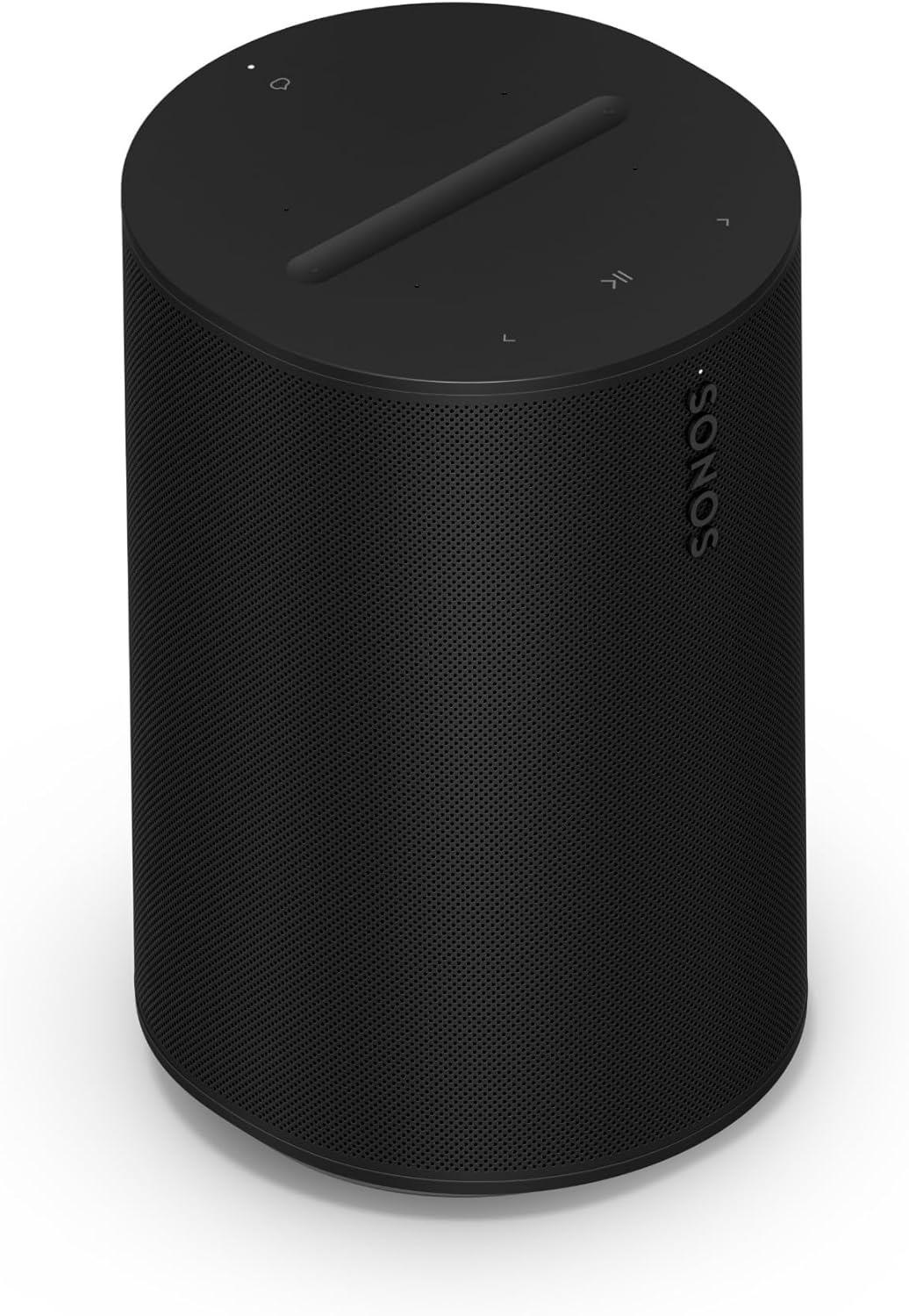
The Sonos Era 100 scores 8.8 — Trueplay room-tuning calibration, multi-platform scene integration across AirPlay 2 and Alexa, and first-class ecosystem compatibility establish it as the foundational anchor that every dedicated smart fitness room acquires before any other component.
Featured in this Guide
Sonos
Era 100
- •Trueplay room-tuning + AirPlay 2 + Alexa — highest Build Fit Score (8.8)
Govee
RGBIC LED Strip Light
- •RGBIC segment color
- •music-reactive
- •8.0 Build Fit
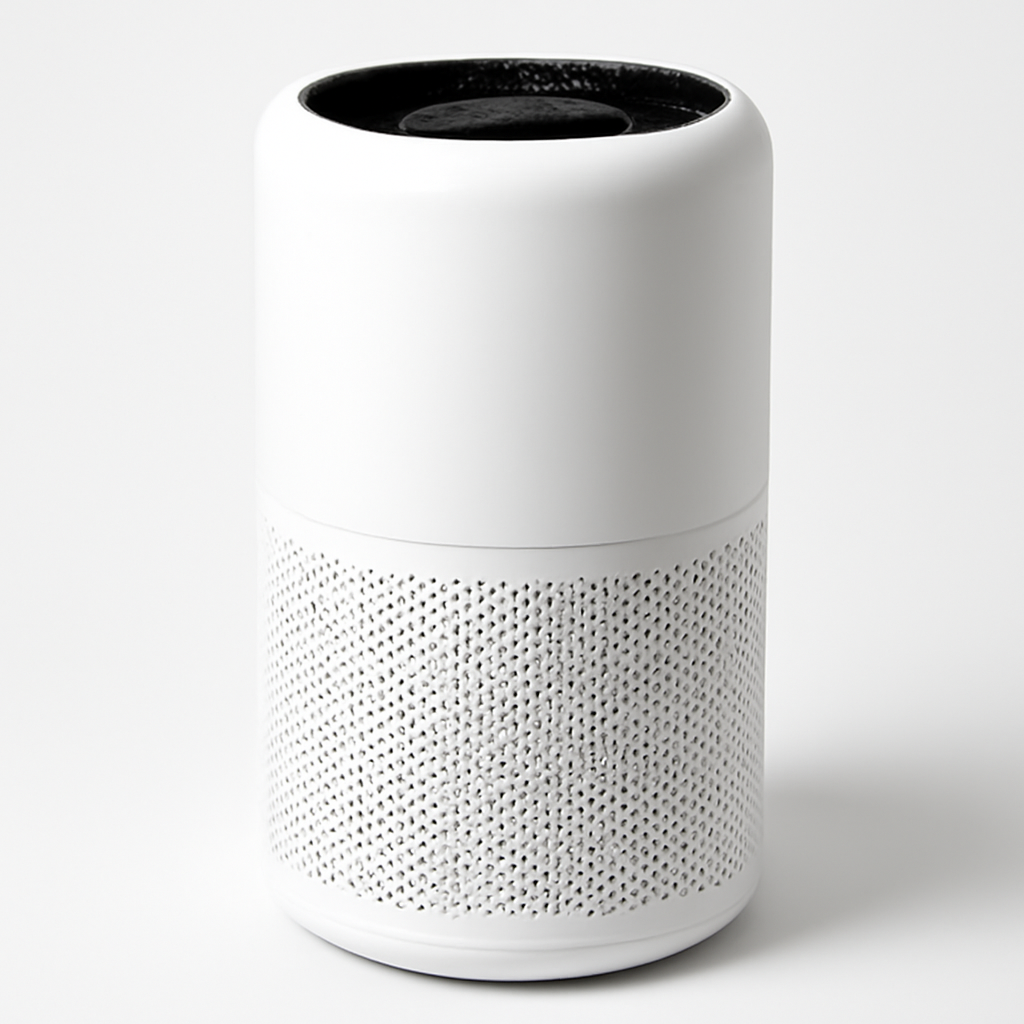
Levoit
Core 400S
- •403 sq ft coverage
- •auto-to-boost on Workout scene
- •7.9 Build Fit
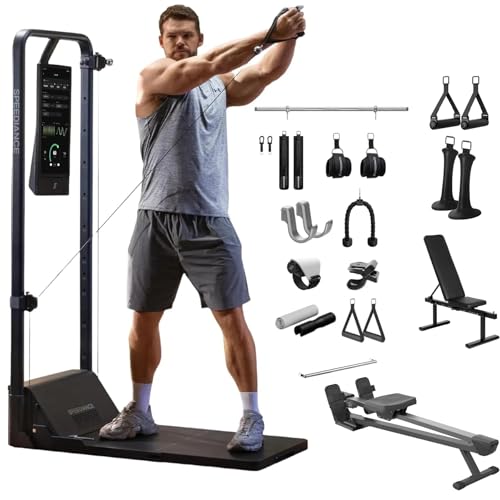
Speediance
Gym Monster 2
- •220 lbs, folds to 2.7 sq ft
- •AI coaching
- •no subscription
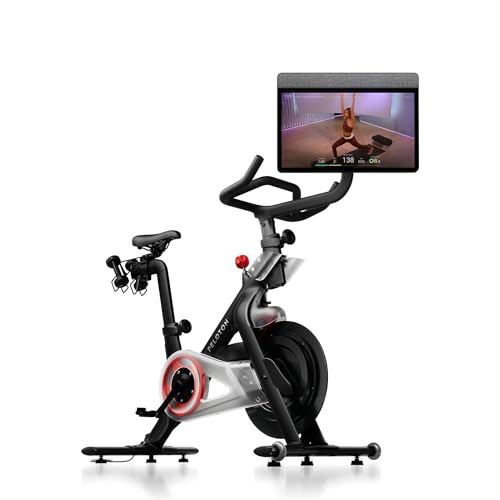
Peloton
Bike+ (2nd Gen)
- •96% 12-month retention
- •auto-follow resistance
- •7.2 Build Fit

Echelon
Reflect
- •50-inch wall-hung
- •2,000+ on-demand classes
- •6.8 Build Fit
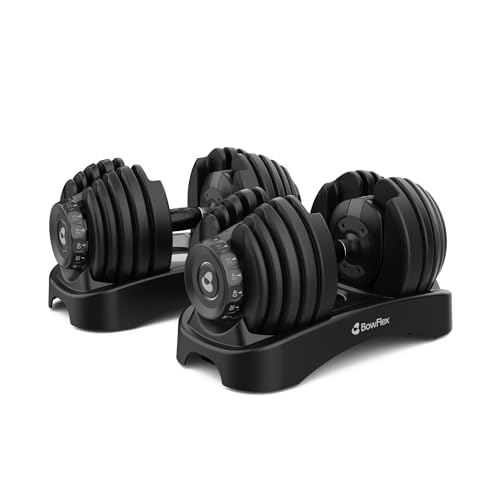
Bowflex
SelectTech 552 Adjustable Dumbbells
- •5–52.5 lbs in a dial
- •zero ongoing cost
- •6.1 Build Fit
Head-to-Head: Scene Integration, Space Fit, and Ecosystem
Lifestyle
Chart
 Smarthomeexplorer.com
Tap any pick to check its live price on Amazon.
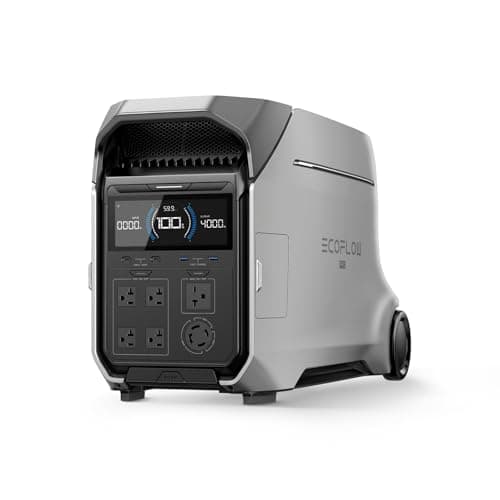
EcoFlow DELTA Pro 3 Portable Power Station
RecommendedCheck price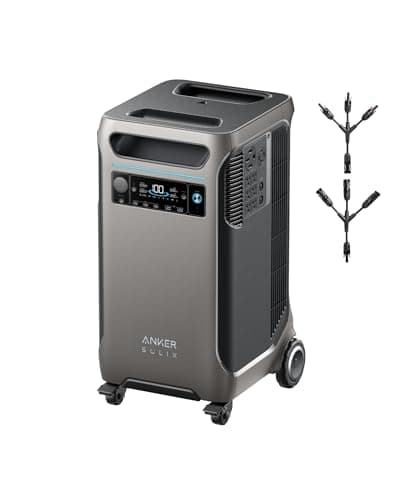
Anker SOLIX F3800
Good ValueCheck price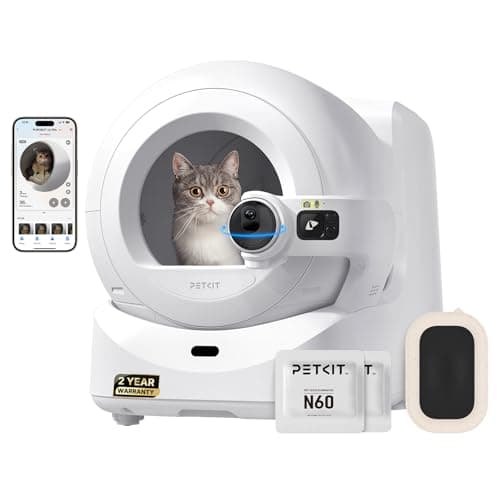
PETKIT Purobot Ultra
Must BuyCheck price
Synology DS925+ 4-Bay NAS
Must BuyCheck price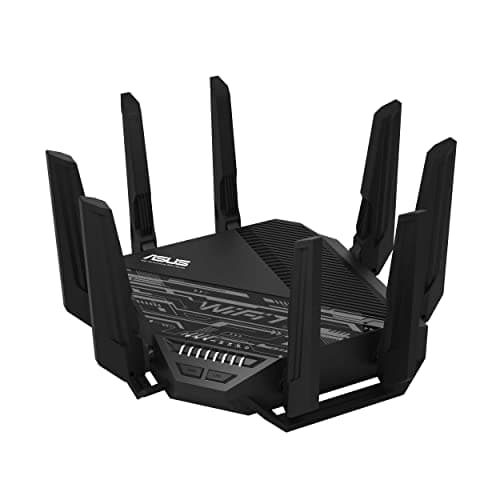
ASUS RT-BE96U
RecommendedCheck price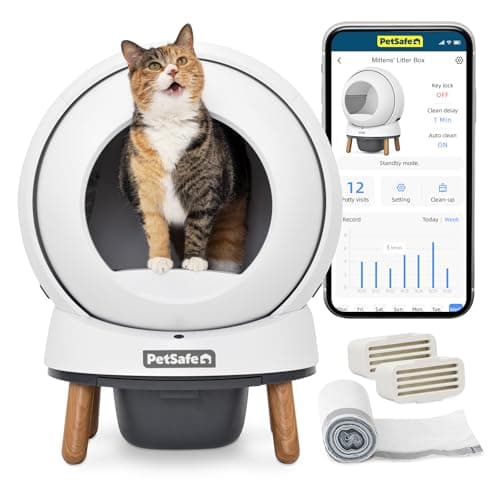
PetSafe ScoopFree SmartSpin
RecommendedCheck price
What Makes a Smart Fitness Room Smart in 2026
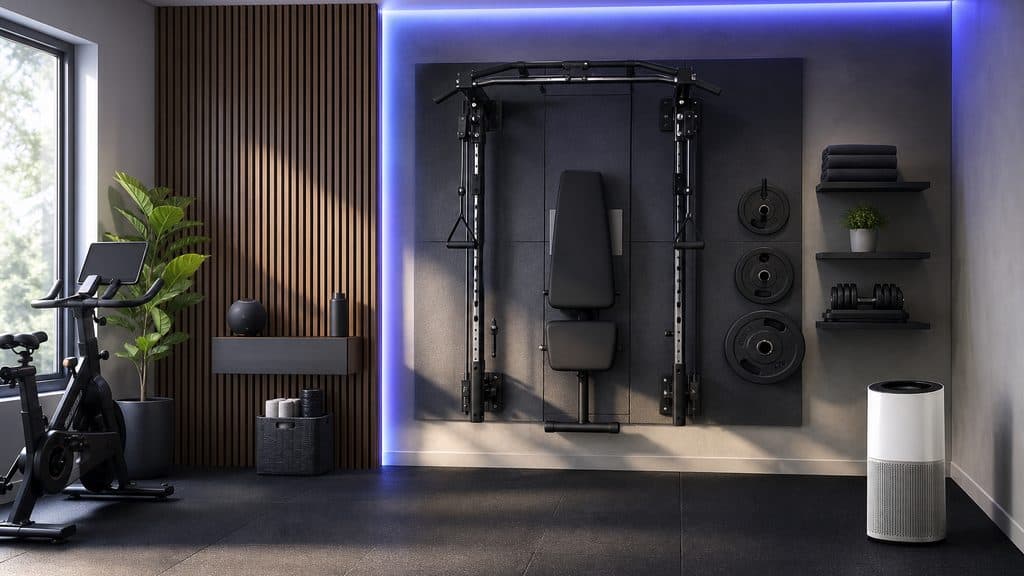
A 2026 smart fitness room is a 10×12-foot minimum space where anchors communicate. When the Workout scene fires, the Govee RGBIC LED Strip Light shifts to a high-energy palette, the Levoit Core 400S steps to boost, and the Sonos Era 100 fades in the warm-up playlist. When Cool-Down fires, lighting softens, the purifier drops back, and tempo slows. That integrated response, compared to passive audio and static lighting, is what separates a smart fitness room from a closet with dumbbells.
Wirecutter and PCMag converge on 10×12 feet as the minimum for a single-user room holding one cardio anchor plus one strength anchor. A Peloton Bike+ (2nd Gen) that auto-follows resistance cues outperforms a dumb bike not just in performance but in scene participation.
Seven anchors below each fill one of seven roles. The SHE Fitness Room Build Fit Score grades each on four factor dimensions, weighted by room-level contribution, to produce a composite fitness-room grade — not a standalone category score.
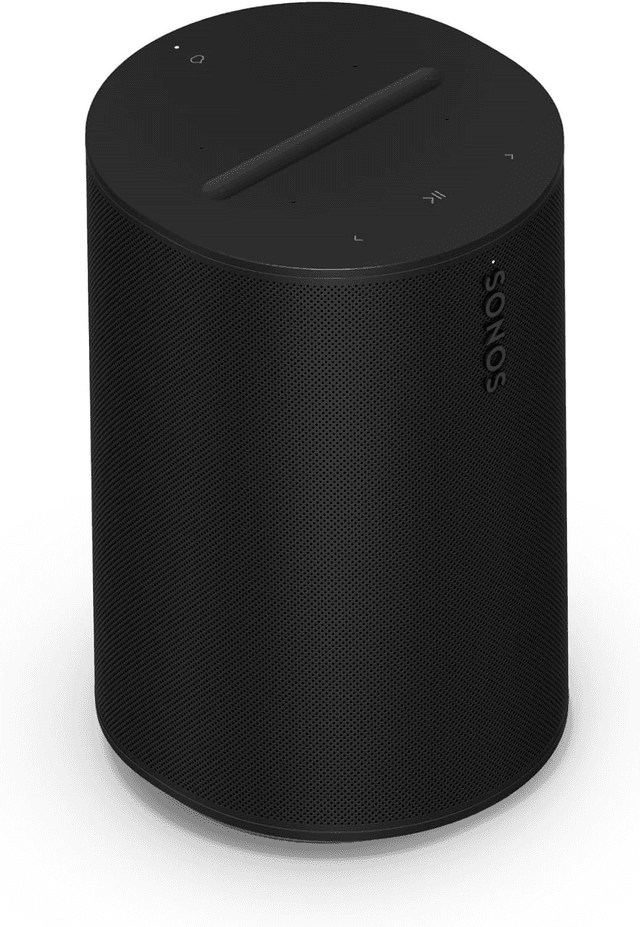
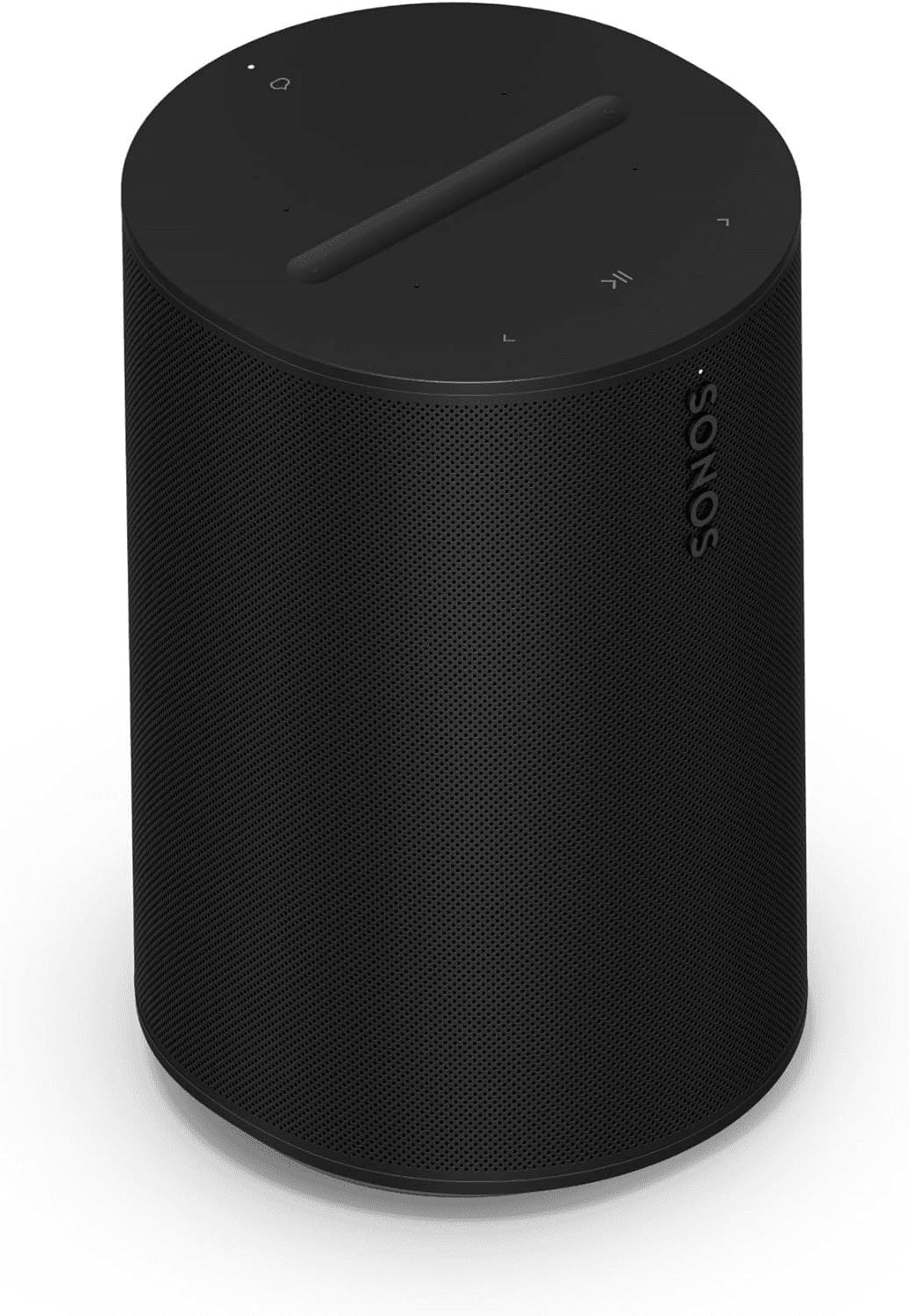
Best Scene Primitive: Sonos Era 100
Sonos Era 100
- Trueplay room-tuning measures the mirror wall and hard floor then adjusts EQ — the only sub-$300 speaker in this guide that adapts to the room rather than fighting it
- No Google Assistant — Google-Home-first households need a second speaker or a bridge
(Current price, subject to change)
The Sonos Era 100 earns 8.8 on the SHE Fitness Room Build Fit Score — the highest in this guide. In a dedicated room, that composite score translates to a speaker that stops fighting the mirror wall and starts tuning to it. Trueplay calibration completes in under 15 min, adapting EQ to the specific reflections a 10×12 space with a mirror wall and rubber flooring creates.
The Verge rated it the best-sounding smart speaker under $300. Wirecutter places it on the smart speaker short list for rooms requiring room correction, noting Trueplay as "the feature no Sonos competitor has matched" — the formula that explains its Role Performance factor score of 9.
Scene Integration is 8: AirPlay 2 feeds HomeKit, Alexa triggers Workout routines directly, and Sonos Voice Control runs locally at sub-30dB idle. Ecosystem breadth is 8 — the highest in this guide. The gap is Google Assistant, which this speaker lacks natively.
A stereo pair on the long walls of a 10×12 room produces a symmetric audio field Trueplay accounts for automatically.
What We Love
- Trueplay room-tuning measures the mirror wall and hard floor then adjusts EQ — the only sub-$300 speaker in this guide that adapts to the room rather than fighting it
- AirPlay 2 + Alexa + Sonos Voice makes it a scene primitive on three platforms; no secondary device required for HomeKit or Alexa Routine triggers
- First-class scene actor — Sonos app, HomeKit via AirPlay 2, and Alexa routines all control it natively, so a Workout scene can start music without a workaround
What Could Be Better
- No Google Assistant — Google-Home-first households need a second speaker or a bridge
- Full stereo potential requires a second unit at double the cost
The Verdict
If you are starting a fitness-room build from zero and want the single anchor that triggers the scene everything else reacts to, the Sonos Era 100 fits the brief. The 8.8 Build Fit Score reflects Trueplay, AirPlay 2, and Alexa — the combination that makes it the scene origin point, not just a speaker. Install it first. Equipment can follow.
Ready to upgrade your home?
roborock Qrevo 2 Pro Robot Vacuum and Mop
See it on Amazon
roborock F25 Ultra Steam Wet Dry Vacuum Mop
See it on Amazon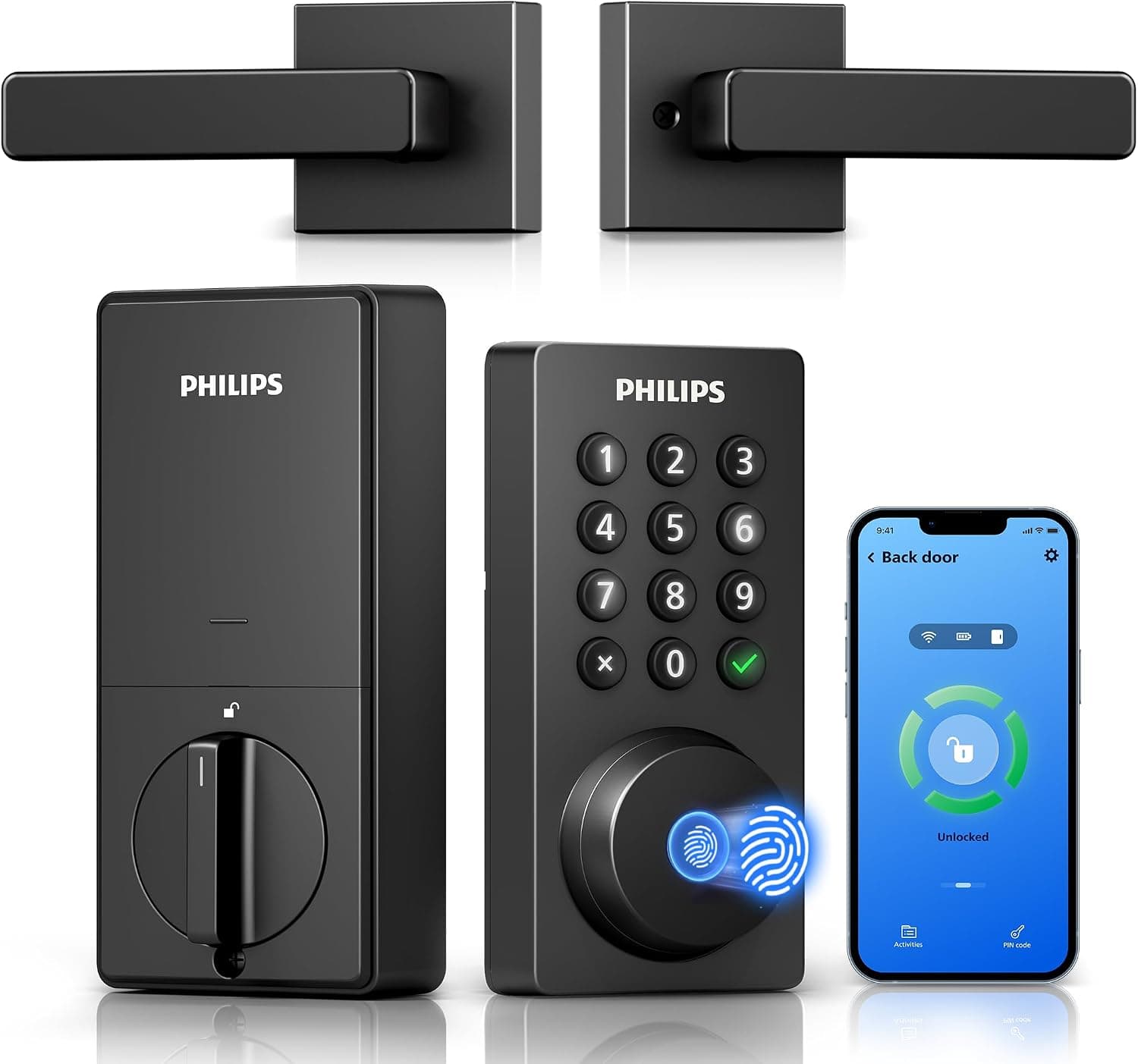
Philips Wi-Fi Keypad Deadbolt with Handle
See it on Amazon
Sponsored listings from Amazon’s Sponsored Products for Creators program, kept apart from our reviews and rankings. How we make money
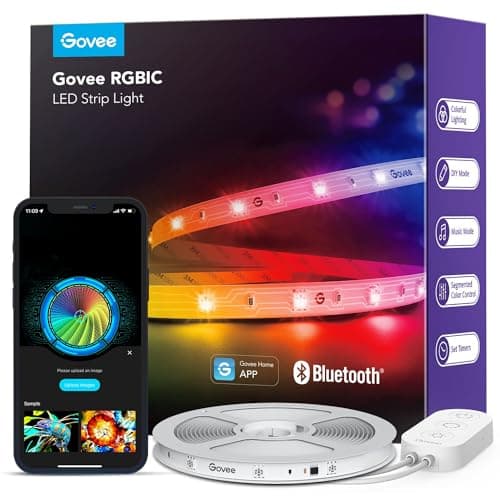
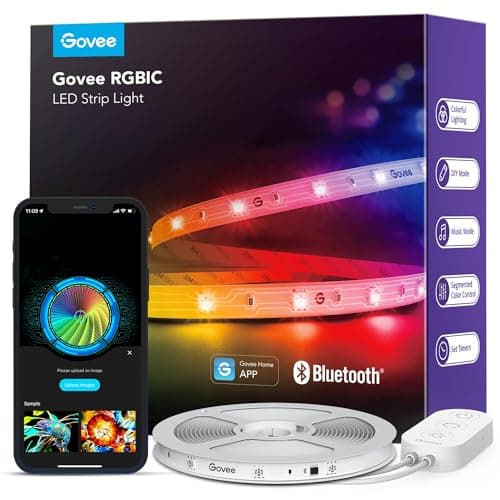
Best Under-$50 Scene Impact: Govee RGBIC LED Strip Light
Govee RGBIC LED Strip Light
- RGBIC segment color on one strip converts flat ceiling lighting into a scene — the lighting layer that makes a Workout scene feel like a room responding to you, not a color bulb cycling through presets
- No native Apple HomeKit — Alexa and Google only; Apple-first households need a bridge for direct scene participation
(Current price, subject to change)
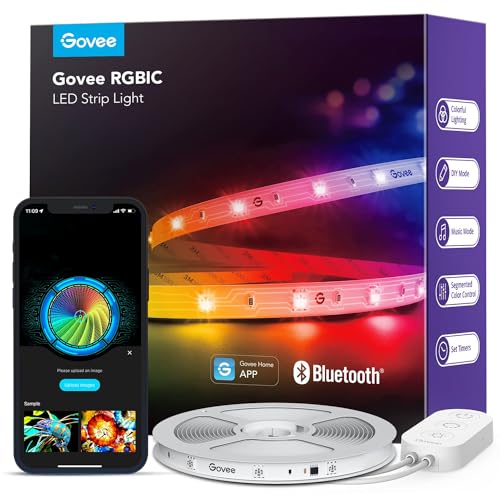
The Govee RGBIC LED Strip Light scores 8.0 on the SHE Fitness Room Build Fit Score — above the Peloton Bike+ and the Speediance gym, below only the Sonos Era 100 among non-air anchors. That composite ordering is intentional: Role Performance is 7.5, Space Fit is 10, and Scene Integration is 8. A 16 ft adhesive-back strip achieves perfect Space Fit and responds natively to Alexa and Google routines simultaneously.
CNET rates it "excellent color control with segment-level customization" and identifies it as the recommended accent lighting for smart fitness and media rooms. The RGBIC architecture is what justifies the 8.0 over standard addressable strips: each segment has independent RGB control, so a single 16 ft strip can run a gradient from cool-down blue on one end to peak-effort red on the other within one Workout scene.
Music-reactive mode paired with the Sonos Era 100 produces a synchronized response reviewers consistently identify as the single change that makes a fitness room feel alive rather than functional.
The HomeKit gap is real. Govee does not offer native HomeKit or Matter on the H6182 series as of May 2026. Apple-first households need a bridge or an Alexa routine.
What We Love
- RGBIC segment color on one strip converts flat ceiling lighting into a scene — the lighting layer that makes a Workout scene feel like a room responding to you, not a color bulb cycling through presets
- Under $50 for anchor-class scene participation — the highest scene-impact-per-dollar in this guide
- Music-reactive mode synchronized with the Sonos Era 100 produces a room that pulses with the warm-up set
What Could Be Better
- No native Apple HomeKit — Alexa and Google only; Apple-first households need a bridge for direct scene participation
- Govee app can feel overwhelming for first-time users given the preset library size
The Verdict
For Alexa or Google households where the goal is Workout scene color response under $50, the Govee RGBIC LED Strip Light lines up with what you actually need. RGBIC segment lighting is what the 8.0 Build Fit Score measures: blue cool-down gradient below red peak-effort accent, same strip, one scene. Apple-first households: check bridge compatibility first.
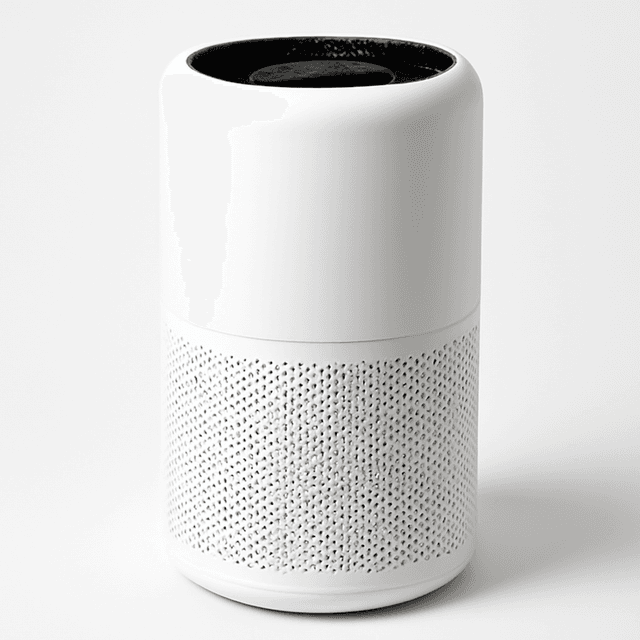
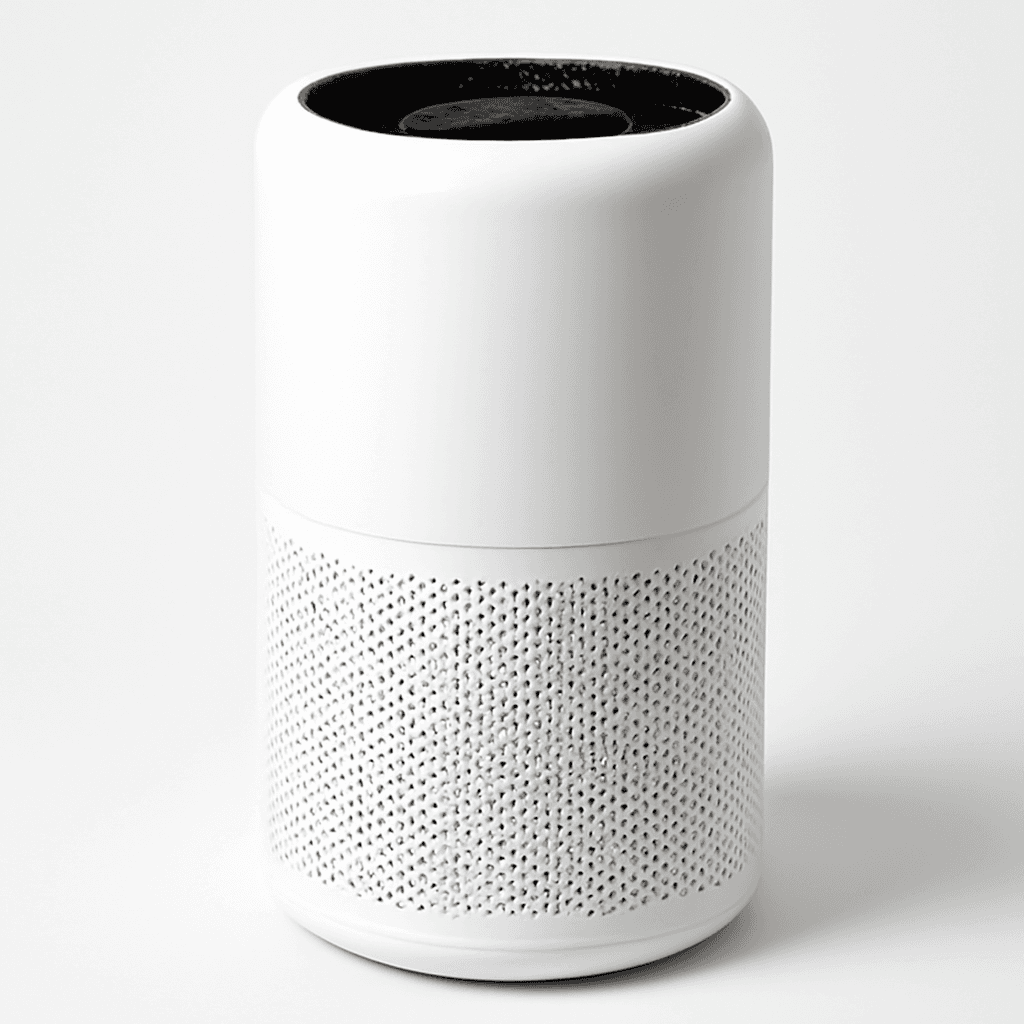
Best Air Anchor: Levoit Core 400S
Levoit Core 400S
- 403 sq ft coverage from a sub-$220 anchor — more than enough for a 10×12 room plus doorway bleed
- No Apple HomeKit — Alexa and Google only
(Current price, subject to change)
The Levoit Core 400S earns 7.9 on the SHE Fitness Room Build Fit Score. Role Performance is 8.3, Space Fit is 9, Scene Integration is 8. A dedicated fitness room generates heat and humidity rapidly, and an air purifier that participates in scene automation is the most cost-efficient method to maintain breathable air for back-to-back sessions.
TechRadar rated it the best smart air purifier under $200, citing "solid CADR, a genuinely useful auto-mode, and zero subscription overhead." The auto-mode is the distinguishing factor: the PM2.5 sensor detects elevated particulate — the kind that rises during a heavy session — and steps fan speed up automatically. A VeSync routine mapped to the Workout scene triggers it from auto to boost without app interaction.
The noise floor stat: sub-30dB on low is inaudible during a session; at boost the unit reaches 55dB, below the Sonos Era 100 at workout volume. CADR coverage reaches 403 ft, more than sufficient for a 10×12 room. Annual filter cost is approximately $88.
Ecosystem Compatibility of 6 reflects the missing HomeKit path.
What We Love
- 403 sq ft coverage from a sub-$220 anchor — more than enough for a 10×12 room plus doorway bleed
- Auto-mode PM2.5 sensor triggers speed changes during sessions — the room responds to sweat without a manual override
- No subscription — VeSync app is free forever for schedules and Alexa and Google routines
What Could Be Better
- No Apple HomeKit — Alexa and Google only
- AQI sensor accuracy trails Coway at ±12% vs ±5% — relevant if air-quality monitoring is a primary use case
The Verdict
For Alexa or Google households where the fitness room needs an air anchor that auto-boosts on a Workout scene without a monthly fee, the Levoit Core 400S fits the brief. The 7.9 Build Fit Score is driven by 403 sq ft coverage, PM2.5 auto-mode, and a tower form factor that takes no floor space a barbell path needs. Apple-first households should route to the Coway Airmega 200M instead.
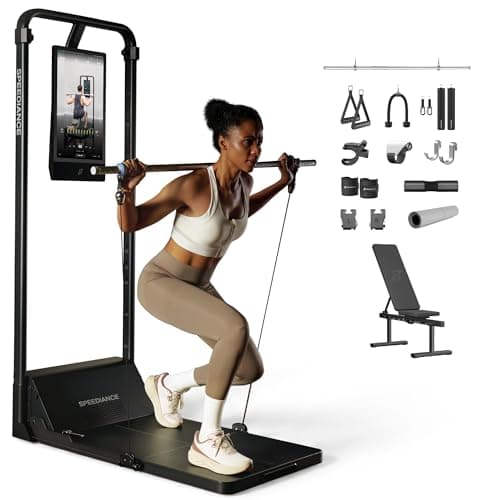
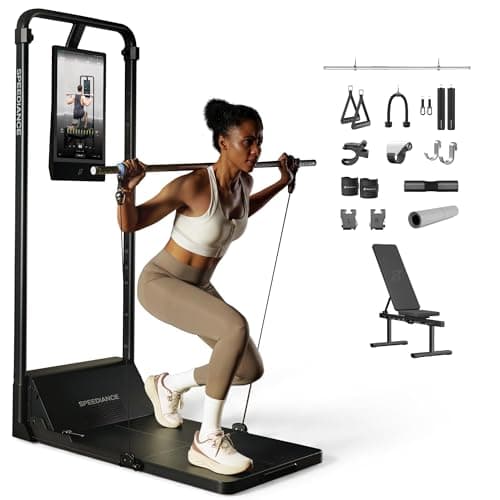
Best Freestanding Smart Gym: Speediance Gym Monster 2
Best Freestanding Smart Strength AnchorSpeediance Gym Monster 2
- 220 lbs of digital resistance that rolls on wheels and folds to ~2.7 sq ft — renter- and apartment-friendly, no wall studs to drill
- Claims ~9 sq ft unfolded, though it folds away between sessions
(Current price, subject to change)
The Speediance Gym Monster 2 scores 7.1 on the SHE Fitness Room Build Fit Score — the composite places Role Performance at 8.5 and Space Fit at 8, with Scene Integration at 6. Tom's Guide tested it and praised the digital weight and tilting 21.5-inch screen, and independent reviewers consistently rate the velocity-based AI coaching as genuinely useful guided structure. It inverts the wall-mount trade entirely: freestanding on wheels, it folds to roughly 2.7 sq ft, so it stays fully renter- and apartment-friendly.
The bigger differentiator is cost structure. The Speediance basic membership is free for life, so 220lbs of electromagnetic resistance, 110lbs per cable arm, 500+ movements, and adaptive AI coaching all operate at $0/month. The 172lb machine rolls on built-in wheels and adjusts in 1lb increments for precise progressive overload, reaching up toward Tonal 2's 250lbs ceiling. Electromagnetic resistance stays silent, so the space is quiet for Cool-Down.
The Scene Integration factor score of 6 reflects the honest architectural trade-off: operating outside HomeKit, Matter, and Alexa scene orchestration, the equipment activates manually rather than participating in the room's automated Workout sequence as a connected endpoint.
What We Love
- 220 lbs of digital resistance that rolls on wheels and folds to ~2.7 sq ft — renter- and apartment-friendly, no wall studs to drill
- No required membership — full resistance, workouts, and AI coaching run at $0/month, unlike subscription-gated rivals
- AI velocity-based coaching adjusts resistance in 1-lb steps and flags left/right imbalances — progressive-overload data dumbbells cannot generate
What Could Be Better
- Claims ~9 sq ft unfolded, though it folds away between sessions
- App-only ecosystem; coaching polish trails Tonal
The Verdict
For buyers who want serious cable strength that folds away and skips the monthly bill, the Speediance Gym Monster 2 fits the brief. Its 7.1 Build Fit Score reflects Role Performance (8.5) and Space Fit (8) offset by Scene Integration (6) — it does not fire in a Workout scene. For zero floor footprint, route to Bowflex SelectTech 552 Adjustable Dumbbells instead.
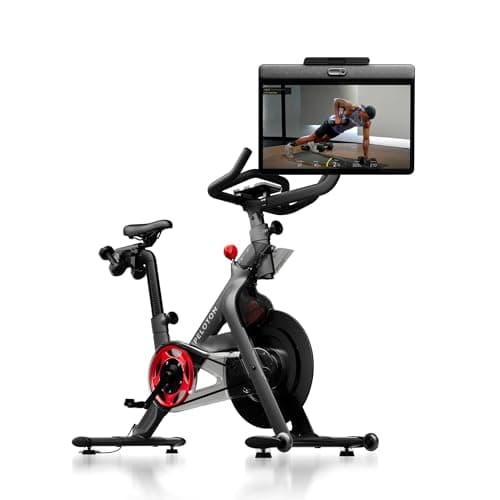
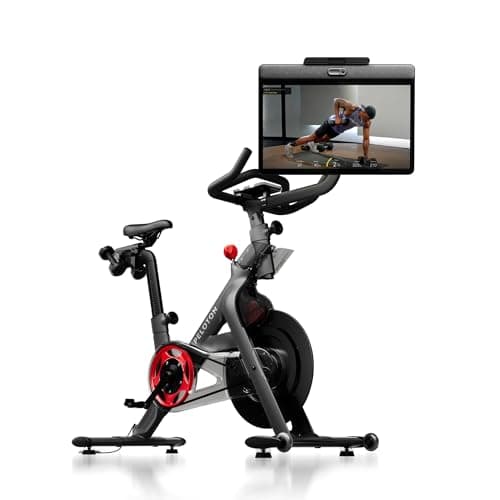
Best Connected Cardio: Peloton Bike+ (2nd Gen)
Best Connected Cardio AnchorPeloton Bike+ (2nd Gen)
- 96% 12-month retention — Consumer Reports documents this as the strongest evidence any connected-fitness hardware actually gets used rather than parked
- Hardware requires $44/month All-Access subscription for interactive content — cancel and the bike reverts to manual operation
(Current price, subject to change)
The Peloton Bike+ (2nd Gen) scores 7.2 on the SHE Fitness Room Build Fit Score. CNET has ranked it first among exercise bikes for retention across multiple review cycles. Wirecutter calls 96% 12-month retention "the strongest evidence that a connected-fitness product actually gets used" — the specification that distinguishes a cardio anchor from a coat rack.
Role Performance is 9.2 — the highest in this guide across all seven anchors. Auto-follow resistance adjusts to instructor cues automatically during class, removing the manual adjustment step that breaks form on non-Peloton hardware. A 23.8-inch rotating touchscreen ensures the class remains visible at every angle of the room.
Space Fit is 6: a Peloton Bike+ takes a fixed corner and does not store vertically. The bike hardware itself runs sub-50dB, but delivery logistics for apartments — freight elevator requirements, door width minimums — are a friction point reviewers flag consistently.
Scene Integration is 7 in the composite score: Apple GymKit and phone Workout scene fire correctly; no native Matter, Alexa, or Google Home endpoint. Price has moved to $2,195–$2,495 in May 2026 following category-wide adjustments.
What We Love
- 96% 12-month retention — Consumer Reports documents this as the strongest evidence any connected-fitness hardware actually gets used rather than parked
- Auto-follow resistance adjusts to instructor cues without manual dial interaction — the hardware removes the decision so you can focus on form
- Apple GymKit pairs Apple Watch directly to the bike's console, no sidecar app, heart rate and calorie data sync to Health automatically
What Could Be Better
- Hardware requires $44/month All-Access subscription for interactive content — cancel and the bike reverts to manual operation
- Bike-only form factor; no native rowing or treadmill path in the same Peloton ecosystem
The Verdict
If cycling three or more times a week is the plan, the Peloton Bike+ (2nd Gen) lines up with what you actually need. Role Performance (9.2) is the best in the guide, offset by Space Fit (6) and Scene Integration (7, no Matter). If you'd rather a strength anchor that folds away between sessions, the Speediance Gym Monster 2 is the right trade.
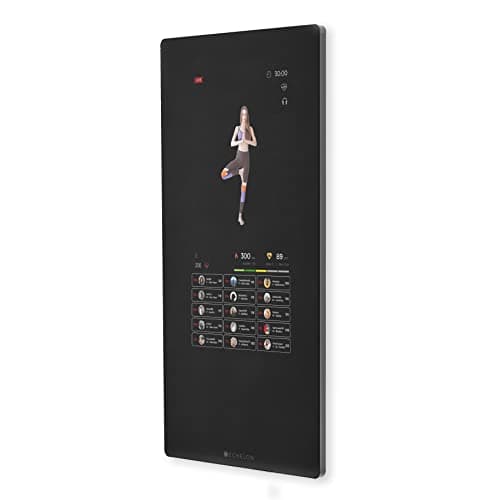
Best Mirror Anchor: Echelon Reflect
Echelon Reflect
- 50-inch wall-hung form factor keeps the floor clear — the mirror that does not compete with the cardio anchor for floor space
- No native HomeKit, Alexa, or Matter scene participation — the mirror anchor that schedules via app only
(Current price, subject to change)
The Echelon Reflect scores 6.8 on the SHE Fitness Room Build Fit Score. The 50-inch wall-hung form factor is the primary architectural argument: it fills the mirror role without claiming any floor space. Space Fit is 8; built-in speakers run at 65dB at workout volume, which is adequate for personal training but below the Sonos Era 100 for room-level audio.
The Verge documents the Echelon Reflect as the available large-format interactive mirror platform in 2026 following the discontinuation of the Lululemon Studio Mirror (May 2024). The 2,000+ on-demand class library spans cycling, yoga, boxing, barre, strength, and stretch — the widest multi-discipline spread in the current mirror category. Membership runs approximately $35/month, below the $39/month the discontinued Studio Mirror required.
Scene Integration scores 6: Bluetooth HR pairing, Echelon app scheduling, and Apple Health export are the smart-home hooks. No native Alexa routine, HomeKit scene, or Matter endpoint exists on the Echelon Reflect as of May 2026. Role Performance is 7.5; Ecosystem Compatibility is 5 — class library is strong, smart-home integration depth is shallow. The trade is explicit in the Build Fit formula.
What We Love
- 50-inch wall-hung form factor keeps the floor clear — the mirror that does not compete with the cardio anchor for floor space
- 2,000+ on-demand classes across cycling, yoga, boxing, strength, and stretch — the broadest multi-discipline library available on a wall mirror in 2026
- Bluetooth HR pairing to standard chest and wrist monitors without a proprietary strap requirement
What Could Be Better
- No native HomeKit, Alexa, or Matter scene participation — the mirror anchor that schedules via app only
- Built-in speakers are adequate for personal training but below the Sonos Era 100 for room-level audio
The Verdict
For a fitness room where class variety drives retention and floor space is a constraint, the Echelon Reflect fits the brief. Space Fit (8) is strong — wall-hung, floor clear. If HomeKit or Alexa from the mirror anchor is required, no current wall-mirror hardware meets that bar natively.
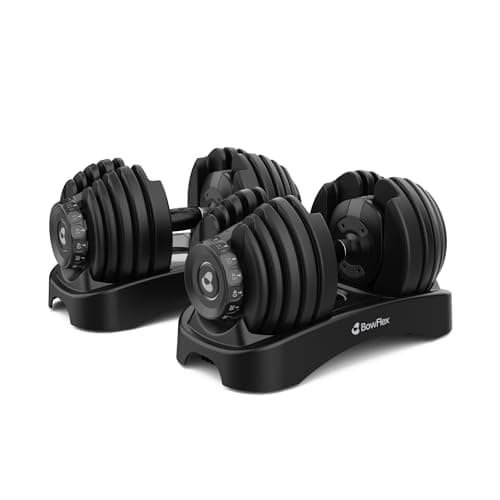
Best Subscription-Free Strength: Bowflex SelectTech 552 Adjustable Dumbbells
Bowflex SelectTech 552 Adjustable Dumbbells
- 5–52.5 lbs in a dial — 15 dumbbell pairs condensed into one footprint smaller than two shoeboxes; Wirecutter documents this as the best adjustable dumbbell for home use
- Zero smart-scene participation — the dumbbells do not fire in a Workout scene, respond to Alexa, or appear in HomeKit; the room's lights dim but these just sit there
(Current price, subject to change)
The Bowflex SelectTech 552 Adjustable Dumbbells scores 6.1 on the SHE Fitness Room Build Fit Score. The composite score distribution tells the story directly: Role Performance 8.0, Space Fit 10, Scene Integration 3, Ecosystem Compatibility 2. The dumbbells excel at their mechanical function and are near-zero rated for smart-home participation — because they are mechanical hardware with a dial.
Wirecutter named them the best adjustable dumbbells for home use, noting "they cover nearly every strength pattern a home gym needs." The 5lbs to 52.5lbs range encompasses beginner isolation exercises and compound movements with meaningful load. A storage cradle smaller than two shoeboxes means they sit beside the mat area without claiming significant floor space in a 10×12 room.
The subscription argument is the clearest differentiator compared to strength alternatives in this guide. The Peloton Bike+ (2nd Gen) requires $528/year; the Speediance Gym Monster 2 is subscription-free but costs $4,449 up front. The Bowflex SelectTech 552 requires nothing beyond the purchase price of $329–$399. The free SelectTech app tracks sets and reps; losing it does not affect the dumbbells.
What We Love
- 5–52.5 lbs in a dial — 15 dumbbell pairs condensed into one footprint smaller than two shoeboxes; Wirecutter documents this as the best adjustable dumbbell for home use
- Zero subscription cost — the free app is optional and the dumbbells work without it; the only anchor in this guide with no ongoing cost at all
- Role Performance of 8.0 — covers nearly every home-strength set pattern without requiring a rack or additional hardware
What Could Be Better
- Zero smart-scene participation — the dumbbells do not fire in a Workout scene, respond to Alexa, or appear in HomeKit; the room's lights dim but these just sit there
- Dial mechanism can slip under very heavy drop-set use at the top end of the 52.5-lb range
The Verdict
For subscription-averse buyers who want the best space-to-capability ratio for strength, the Bowflex SelectTech 552 Adjustable Dumbbells is a sensible pick for that setup. The 6.1 Build Fit Score reflects mechanical hardware with a dial: excellent role and space scores, near-zero ecosystem scores. The room's Workout scene runs without it; it does the strength work regardless.
Check price for the Bowflex SelectTech 552 Adjustable Dumbbells →
How We Score: SHE Fitness Room Build Fit Score
SHE Fitness Room Build Fit Score
Score Formula
Role_Performance × 0.30 + Space_Noise_Fit × 0.25 + Scene_Integration × 0.25 + Ecosystem_Compatibility × 0.20Score Factors
- Role Performance (30%)How well the product fulfills its anchor role in the fitness room, aggregated from expert review consensus across 7–16 sources per product. 1 = underperforms category norms; 10 = reference-class category leader within its anchor function.
- Space and Noise Fit (25%)How well the product fits a dedicated 10×12 fitness room without dominating floor footprint or generating disruptive ambient noise. 1 = requires the room to be built around it; 10 = wall-mount or compact modular with sub-30 dB operating noise.
- Scene Integration (25%)How well the product participates in Workout and Cool-Down scene orchestration via HomeKit, Matter, Alexa Routines, or Google Home. 1 = no smart-home integration; 10 = first-class scene primitive with open API on multiple platforms.
- Ecosystem Compatibility (20%)Breadth of native smart-home ecosystem support across Matter, HomeKit, Alexa, Google Home, and SmartThings. 1 = single-vendor silo with no voice or automation platform support; 10 = Matter-native with all four major voice platforms.
SHE Fitness Room Build Fit Score — Ranked
Sonos Era 100
SHE Fitness Room Build Fit Score8.8/10Trueplay room-tuning + AirPlay 2 + Alexa — scene primitive with three-platform scene integration and perfect Space and Noise Fit
Govee RGBIC LED Strip Light
SHE Fitness Room Build Fit Score8.0/10RGBIC segment color, music-reactive, Alexa and Google — highest scene-impact-per-dollar in the guide at under $50
Levoit Core 400S
SHE Fitness Room Build Fit Score7.9/10403 sq ft coverage, PM2.5 auto-mode, VeSync scene routines — the air anchor that reacts to the workout automatically
Peloton Bike+ (2nd Gen)
SHE Fitness Room Build Fit Score7.2/1096% 12-month retention, auto-follow resistance, Apple GymKit — best Role Performance (9.2); corner footprint limits space score
Speediance Gym Monster 2
SHE Fitness Room Build Fit Score7.1/10220 lbs digital weight, AI coaching, folds to 2.7 sq ft, no required subscription — freestanding strength; scene integration offset by app-silo architecture
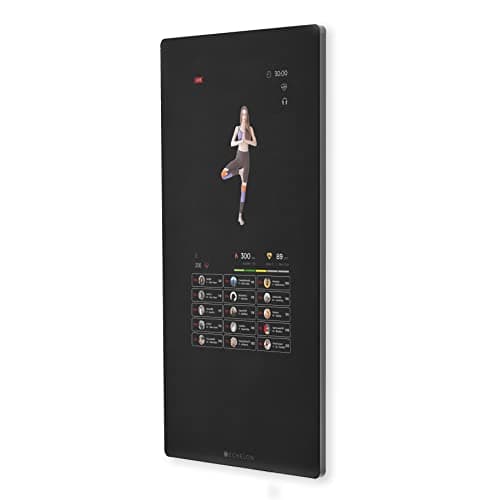
Echelon Reflect
SHE Fitness Room Build Fit Score6.8/1050-inch wall-hung mirror, 2,000+ on-demand classes, Bluetooth HR — floor-clear mirror anchor; app-silo ecosystem
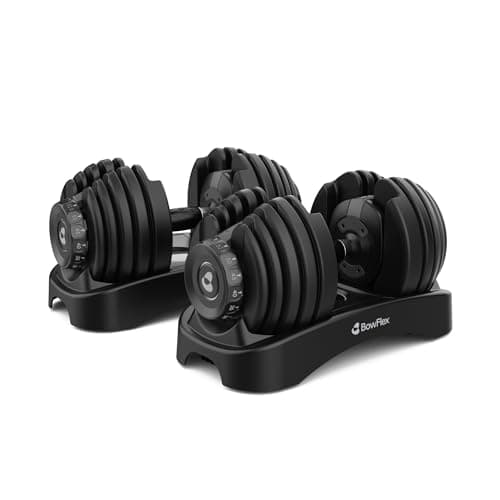
Bowflex SelectTech 552 Adjustable Dumbbells
SHE Fitness Room Build Fit Score6.1/105–52.5 lbs in a dial, zero subscription, perfect Space and Noise Fit — ecosystem dead-end by design; best mechanical strength
SHE Fitness Room Build Fit Score
Ecosystem Compatibility and Scene Wiring
The ecosystem split in this guide is sharper than in most smart-home categories because fitness hardware tends toward vertical app silos. Engadget and CNET both document that these proprietary fitness platforms prioritize content delivery over ecosystem participation, compared to smart-home anchor categories like speakers and lighting where Matter and Alexa scene integration are standard. Speediance Gym Monster 2, Peloton Bike+ (2nd Gen), and Echelon Reflect all run proprietary app ecosystems that do not expose HomeKit, Matter, or Alexa device endpoints. They can be scheduled — a Workout scene can tell the Sonos Era 100 to play, the Govee strip to shift to red, and the Levoit Core 400S to boost — but the equipment anchors themselves are not in the automation loop.
The three scene-native anchors are the Sonos Era 100, Govee RGBIC LED Strip Light, and Levoit Core 400S. A minimal smart fitness room — $500–$900 build — can run a complete Workout and Cool-Down scene with just these three. Alexa Routine: "Workout Start" → music on at 75%, strip to red peak palette, purifier to boost. "Cool Down" → music fade to 40%, strip to blue-white gradient, purifier to auto. That scene runs without any of the equipment anchors participating.
Apple-first households face one compatibility gap: both Govee and Levoit lack native HomeKit on their current SKUs. The Sonos Era 100 covers HomeKit via AirPlay 2. For full HomeKit scene control of lighting and air, a Philips Hue gradient light strip (HomeKit-native) replaces the Govee; a Coway Airmega 200M with the Works With HomeKit certification replaces the Levoit. Both substitutions increase cost; the three-anchor Alexa or Google-first build is the path of least friction.
For scene-wiring across ecosystems, the Best AI Smart Home Hubs 2026 hub covers Matter bridge configurations that consolidate Alexa, HomeKit, and Google Home devices into a single scene trigger — relevant when the room has anchors from multiple platforms.
When NOT to Buy
Skip the full build if you have not maintained three sessions per week for at least six continuous months — the conversion tax on a room that doubles as a home office, requiring physical reconfiguration before each session, eliminates the habit more reliably than inadequate equipment. Start at the Tier 1 build ($500–$900), where the weighted scene primitives are audio, lighting, and air, and validate the three-session week before committing to a $10K+ configuration.
Skip the freestanding smart gym if floor space is at an absolute premium even between sessions, or if you only need basic strength. The Speediance Gym Monster 2 claims roughly 9 sq ft unfolded and is a $4,449 commitment, even though it rolls away and folds to 2.7 sq ft. Route to Bowflex SelectTech 552 Adjustable Dumbbells for compact subscription-free strength with zero installation requirements.
Skip the mirror anchor entirely if the primary use case is mat-based strength and flexibility work — a standard gym mirror covers form feedback without a class subscription. The mirror anchor earns its full cost when live class variety is the primary driver of session adherence.
Who Should Buy What
Who Should Buy What
| If you are… | Recommended pick |
|---|---|
Renter, 8×10 spare bedroom Floor-clearance limited; no stud-drilling; wants a Workout scene under $900 without an equipment subscription | Bowflex SelectTech 552 Adjustable Dumbbells |
First smart fitness room, 10×12 Building from zero and wants the single anchor that makes the rest of the room react — audio first, equipment second | Sonos Era 100 |
Cardio-first, retention focus Cycles three or more times per week and wants the hardware with the strongest documented 12-month retention in the category | Peloton Bike+ (2nd Gen) |
Strength-first, subscription-averse Wants serious digital cable strength that folds away between sessions and runs with no monthly membership; fine owning the hardware outright | Speediance Gym Monster 2 |
Apple HomeKit household AirPlay 2 scene integration is the priority; wants the audio anchor that covers HomeKit, Alexa, and Sonos Voice natively on one device | Sonos Era 100 |
Live class variety driver Class library variety is what drives session adherence; needs a wall-hung mirror with multi-discipline content and a floor-clear form factor | Echelon Reflect |
Budget-first builder Wants the highest scene impact under $50 — the lighting layer that converts a flat ceiling light into a Workout scene without a subscription | Govee RGBIC LED Strip Light |
Frequently Asked Questions
What is the minimum room size for a dedicated smart fitness room?
Design-industry guides converge on 10×12 feet as the minimum for a single-user room holding one cardio anchor plus one strength anchor with room for mat work. Below 8×10 you can still build a credible room, but you commit to space-saving anchors — adjustable dumbbells and a wall-mounted mirror — and accept that floor clearance for mobility work is limited. Above 12×14 you have slack for a recovery nook and a second cardio path without the room feeling crowded.
How do you set up a Workout scene that controls lights, air purifier, and music at once?
The cleanest path: Alexa Routine or Google Home routine named 'Workout Start' triggers three actions — Sonos Era 100 to 75% with your warm-up playlist, Govee RGBIC strip to peak-effort red palette, Levoit Core 400S to boost mode. A 'Cool Down' routine reverses all three. Apple HomeKit households use the same pattern via HomeKit Automation with the Era 100 on AirPlay 2; Govee and Levoit require Alexa or Google bridges for HomeKit scenes.
Is Peloton worth it in a home gym versus a cheaper connected bike?
The Peloton Bike+ justifies its $2,195–$2,495 price primarily through retention: Consumer Reports documents 96% 12-month active use — higher than any alternative in the category. If the 12-month track record matters to you and cycling is the primary cardio discipline, the premium is defensible. If the $44/month subscription is a hard no, or if you cycle less than three times a week, a mid-tier connected bike at $800–$1,200 covers the cardio role without the subscription obligation.
What smart home equipment actually works with HomeKit for a home gym?
The Sonos Era 100 covers HomeKit via AirPlay 2 natively — no bridge required. Govee RGBIC and Levoit Core 400S both lack native HomeKit; Apple-first households need an Alexa or Google routine to bridge into HomeKit scenes, or substitute a Philips Hue gradient strip (HomeKit native) for lighting and a Coway Airmega 200M for air. None of the equipment anchors — Speediance, Peloton, Echelon — support native HomeKit as of May 2026.
Can a Speediance Gym Monster 2 replace a full commercial gym at home?
For strength training, effectively yes — 220 lbs of digital resistance covers the full load range for compound movements, and the 500+ movement library handles programming. The gap is barbell specificity: Olympic lifts, deadlifts from the floor, and heavy bench press require a separate barbell and rack. The Speediance is the right freestanding answer for cable work, machine-pattern movements, and AI-coached progressive overload; it does not replace a full barbell setup for powerlifters.
Do I need multiple fitness subscriptions for a full smart fitness room build?
Only if you want instructor-led content on multiple equipment anchors. The Peloton Bike+ costs $44/month and Echelon Reflect approximately $35/month — about $948/year combined. The Speediance Gym Monster 2 and Bowflex SelectTech 552 are the strength anchors with zero required subscription — Speediance includes a free-for-life basic membership. A Tier 1 build (Bowflex, Govee, Sonos, Levoit) runs zero subscription beyond what you pay for streaming services. Subscription stack scales with equipment; the room's scene wiring itself costs nothing beyond a free Alexa or Google account.
Does Matter 1.3 certification matter for fitness room devices in 2026?
Not required today — none of the seven anchors in this guide are Matter-native as of May 2026, and the guide builds work without it. Matter becomes relevant when you are mixing HomeKit, Alexa, and Google devices and want a single scene trigger to control all three without per-platform routines. The Sonos Era 100 via AirPlay 2 and the Levoit via VeSync-to-Alexa covers the practical scene wiring. Govee has announced Matter support in 2026 refresh cycles; fitness equipment anchors are further out.
Can a fitness room share space with a home office?
It can, but the conversion tax on the habit is real. Reviewers consistently document that rooms that require setup work before each session — clearing the desk chair, pulling the floor mat out from behind the couch — see habit drop-off at week three. If the space must share, dedicate a single wall to the fitness anchors: wall-mount strength, lighting strip, and audio on one wall, desk opposite. A Tier 1 build ($500–$900) suits shared-use rooms; Tier 2 and 3 equipment requires a dedicated space to justify the footprint.
Bottom Line
Get the Sonos Era 100 if Starting a fitness room from zero and want the single anchor that triggers the scene everything else reacts to.
Get the Govee RGBIC LED Strip Light if Highest scene impact under $50 — the lighting layer that converts flat overhead light into a Workout scene.
Get the Levoit Core 400S if Air anchor that auto-boosts on a Workout scene without a subscription for Alexa or Google households.
Get the Speediance Gym Monster 2 if Freestanding digital cable strength that folds away, with no required subscription — when you'd rather own the hardware than rent access.
Get the Peloton Bike+ (2nd Gen) if Cycling three or more times per week and want the hardware with the longest-documented retention track record.
Get the Echelon Reflect if Wall-hung mirror anchor with multi-discipline live and on-demand class library; floor stays clear.
Get the Bowflex SelectTech 552 Adjustable Dumbbells if Subscription-free strength with the best space-to-capability ratio — no automation, no ongoing cost.
You have not hit a three-session week consistently for six months — start at the $500 tier before committing to $10K in hardware and subscription fees
Related deep-dives
Sources & Methodology
Methodology: SHE Fitness Room Build Fit Score — Formula: Role_Performance × 0.30 + Space_Noise_Fit × 0.25 + Scene_Integration × 0.25 + Ecosystem_Compatibility × 0.20. Factors: Role Performance (30%): How well the product fulfills its anchor role in the fitness room, aggregated from expert review consensus across 7–16 sources per product. 1 = underperforms category norms; 10 = reference-class category leader within its anchor function. | Space and Noise Fit (25%): How well the product fits a dedicated 10×12 fitness room without dominating floor footprint or generating disruptive ambient noise. 1 = requires the room to be built around it; 10 = wall-mount or compact modular with sub-30 dB operating noise. | Scene Integration (25%): How well the product participates in Workout and Cool-Down scene orchestration via HomeKit, Matter, Alexa Routines, or Google Home. 1 = no smart-home integration; 10 = first-class scene primitive with open API on multiple platforms. | Ecosystem Compatibility (20%): Breadth of native smart-home ecosystem support across Matter, HomeKit, Alexa, Google Home, and SmartThings. 1 = single-vendor silo with no voice or automation platform support; 10 = Matter-native with all four major voice platforms.
Expert review sources used in this analysis:
- SmartHomeExplorer aggregates expert review data across 7–16 sources per product to produce consensus-based buying guidance
- Expert ratings sourced from Wirecutter, CNET, The Verge, TechRadar, PCMag, Engadget, Wired, and ZDNet
- The SHE Fitness Room Build Fit Score weights Role Performance at 30%, Space and Noise Fit at 25%, Scene Integration at 25%, and Ecosystem Compatibility at 20%
- Ecosystem compatibility cross-referenced against the Matter 1.3 certification registry and the SHE 650-profile compatibility matrix
- Prices reflect Amazon list ranges observed in May 2026; verify at click-through
- The Lululemon Studio Mirror was retired following discontinuation of Mirror hardware sales and class service (2024).
Nicholas Miles is the founder of SmartHomeExplorer and a longtime smart home enthusiast focused on helping everyday homeowners make better technology decisions. He researches, compares, and writes about products across security, climate, lighting, leak prevention, sensors, home energy, and automation, with an emphasis on real-world usefulness, ecosystem compatibility, reliability, privacy, and long-term value.
Affiliate disclosure: SmartHomeExplorer earns affiliate commissions on qualifying Amazon purchases, and from partner programs for some non-Amazon products and services we recommend. Our scoring methodology is independent of affiliate relationships.