
Best Multi-Room Baby Monitors for Large Homes 2026
Monitoring a baby across a 2,000+ sq ft house is a coverage problem, not a pixel-count one. Walls, distance, and Wi-Fi congestion all degrade the signal. These five are ranked on through-wall range, multi-camera coverage, and 2-year whole-home cost.
This article contains affiliate links. We may earn a commission at no extra cost to you. Prices change frequently — check the current price on Amazon before buying. Learn more
The Short Answer
Dependable whole-home coverage favors the Infant Optics DXR-8 Pro ($199.99): a 1,000 ft FHSS radio independent of your congested Wi-Fi. Maximum multi-camera value belongs to the Babysense HD S2 — two 4x-zoom cameras, a genuine split-screen, no subscription — leading our SHE coverage evaluation.
Featured in this Guide
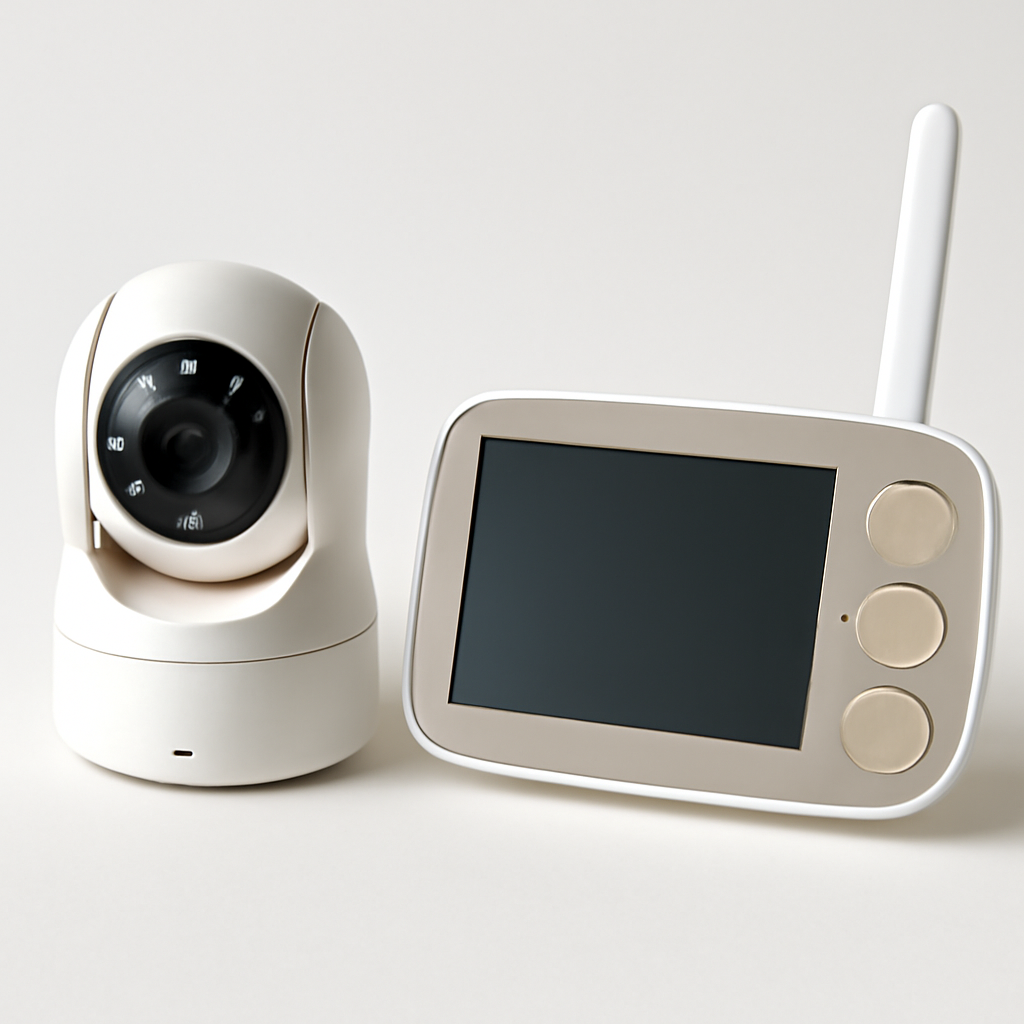
Infant
Optics DXR-8 Pro
- •1,000 ft FHSS radio with no Wi-Fi dependency and Active Noise Reduction — the longest-range coverage here
- •Consumer Reports covers it
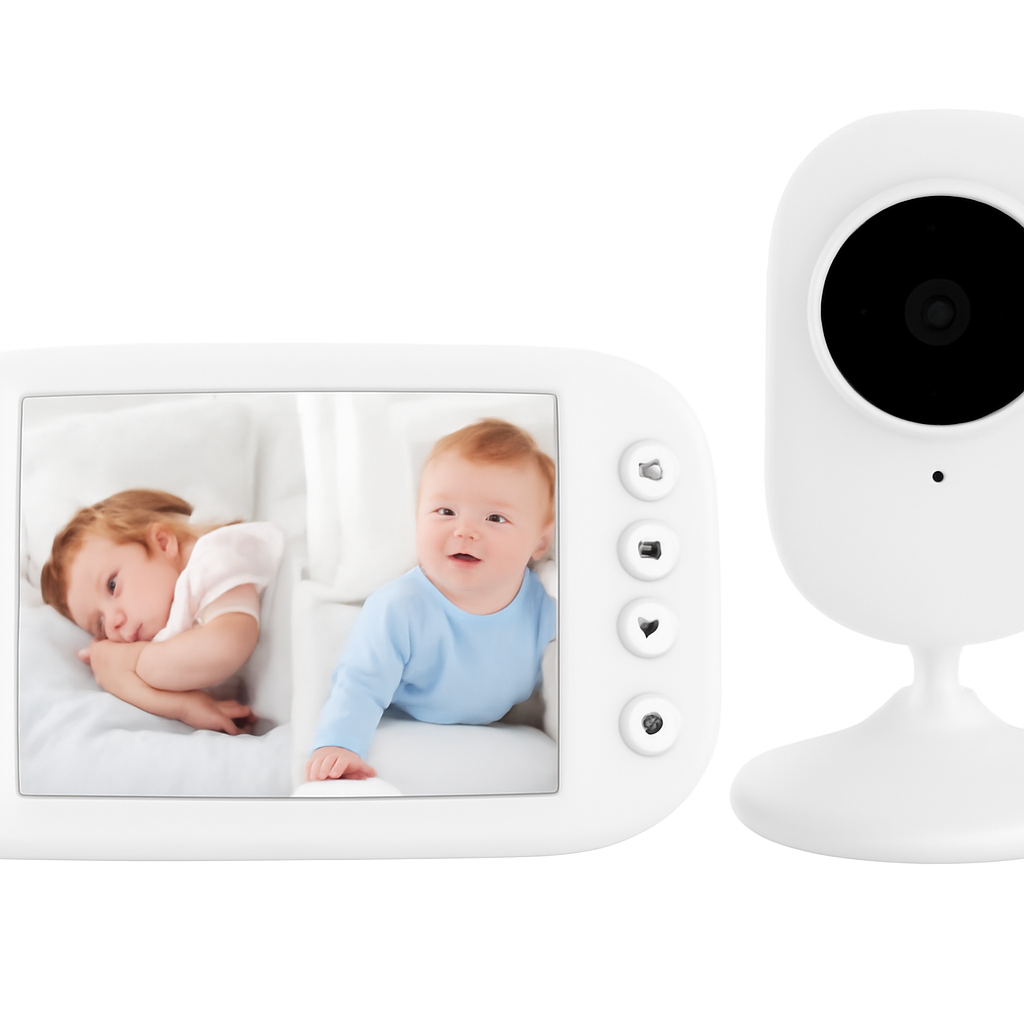
Babysense
HD S2
- •Two cameras and a true 5-inch split-screen, no subscription — the highest SHE Multi-Room Coverage Score
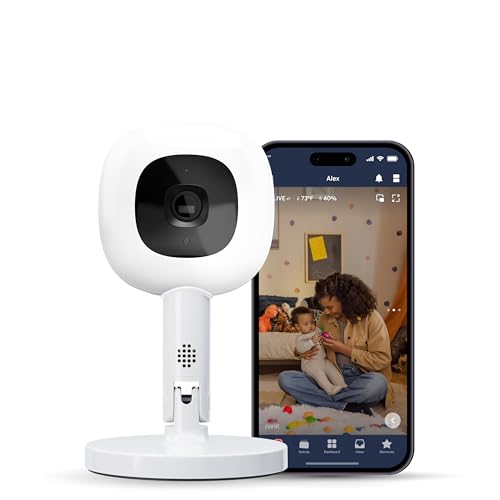
Nanit
Pro Smart Baby Monitor
- •Breathing monitoring, sleep analytics, and two-camera split-screen that streams to Echo Show displays — Wirecutter covers it
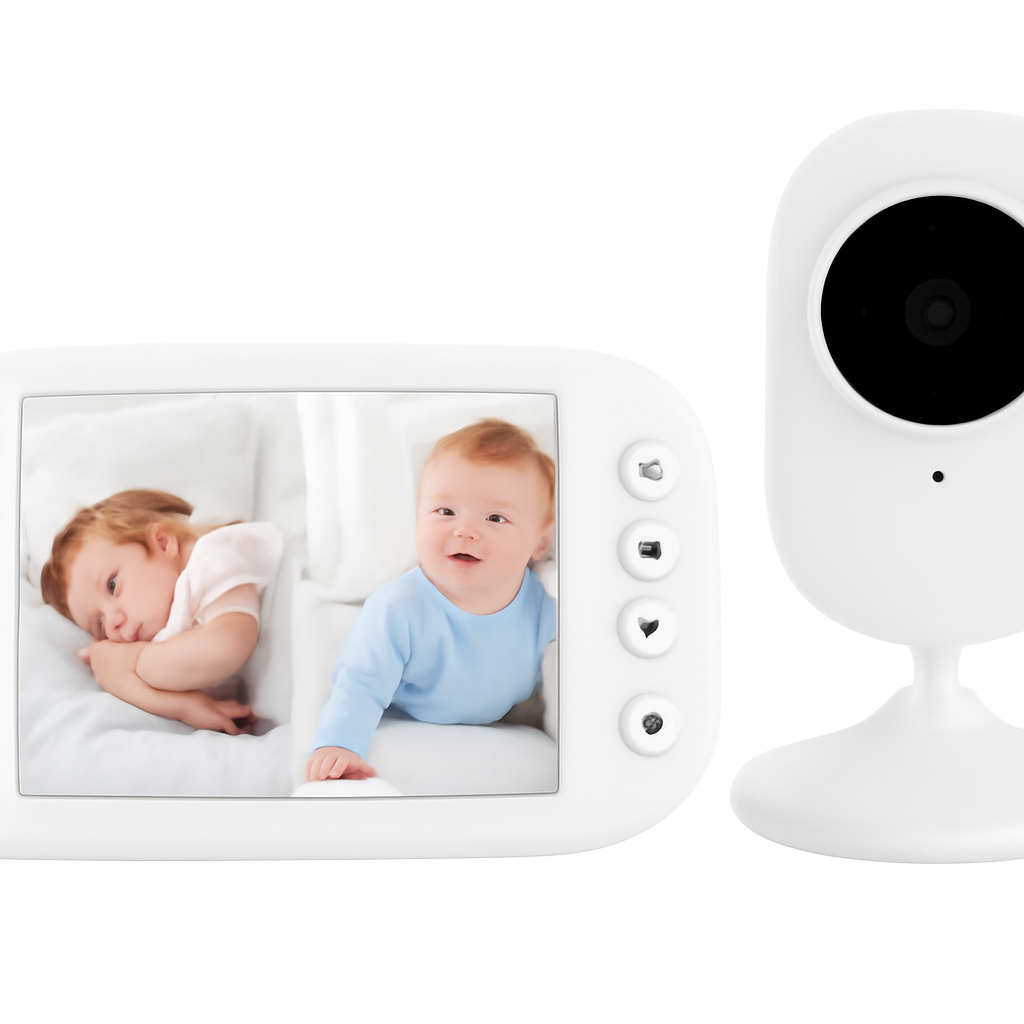
HelloBaby
HB6550
- •$63 entry, a 30 hours parent-unit battery, and 1,000 ft FHSS range — cheapest whole-home coverage
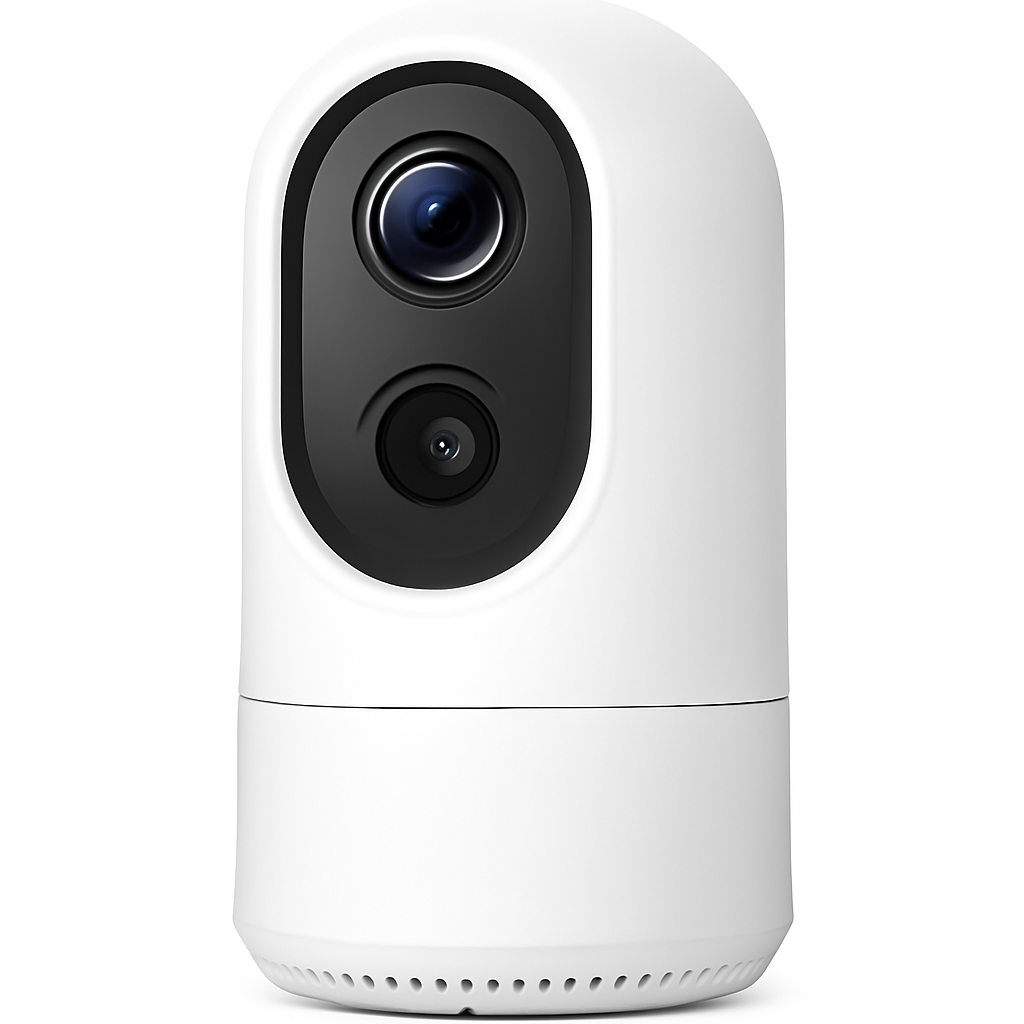
Eufy
Indoor Cam S350
- •Dual-lens 4K, 8x zoom, 360-degree coverage, on-device cry detection, no subscription — Wirecutter covers it
Head-to-Head: Range, Multi-Camera, Ecosystem, and SHE Coverage
Security
Chart
 Smarthomeexplorer.com
What Tips the Decision
In a large home the deciding factor is rarely resolution; it is whether the signal reliably reaches from the nursery to wherever you happen to be standing. A dedicated FHSS radio rated to 1,000 ft open-air holds its connection through interior walls, independently of your network. A Wi-Fi monitor inherits every dead zone your router already suffers. Consequently the weighted SHE Multi-Room Coverage Score prioritizes range reliability and multi-camera coverage, keeping price inside a single bounded factor rather than a hidden denominator. We evaluated five monitors as of July 2026 against live pricing. Consumer Reports covers the $199.99 Infant Optics. Wirecutter covers the Nanit Pro and the $139.99 Eufy S350, and BabyGearLab covers the Babysense and the $63 HelloBaby. A monitor's open-air rating always overstates its real through-wall reach, which is why the radio technology, not the headline number, determines whether the thing works.
Best for Large Homes: Infant Optics DXR-8 Pro
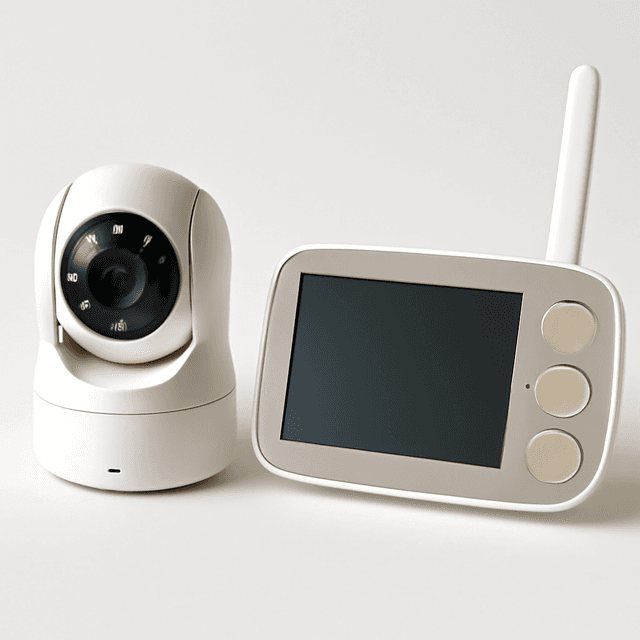
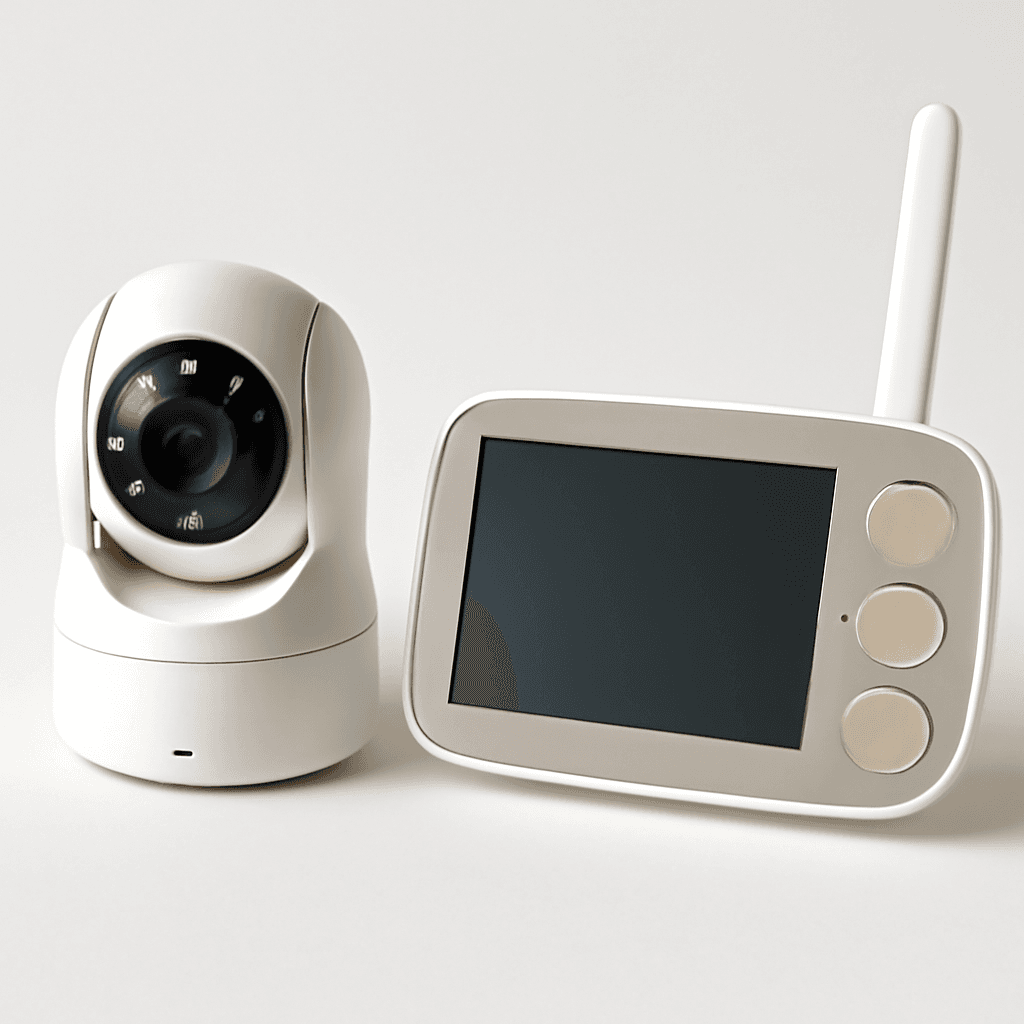
Infant Optics DXR-8 Pro
- 1,000 ft FHSS range operates on a dedicated band that never competes with your Wi-Fi, Bluetooth, or mesh traffic
- No Wi-Fi means no smartphone access and no remote viewing when you are away from home
(Current price, subject to change)
The Infant Optics DXR-8 Pro earns a 7.5 SHE Multi-Room Coverage Score — third overall, yet it posts the highest range-reliability factor (9.0) in the roundup, which is the factor that matters most for a large home. Its dedicated FHSS radio is rated to 1,000 ft open-air and operates independently of Wi-Fi, so the congestion that degrades wireless monitors in device-dense homes never reaches it. Consumer Reports covers the DXR-8 Pro in its baby-monitor testing.
What restrains the composite is coverage value (6.5): at $199.99 for a single-camera unit it costs more per room than the bundled kits. Compared to the Wi-Fi monitors here, it trades every smart feature for a radio that simply works — the Active Noise Reduction filtering fans and white-noise machines out of the audio yields a clearer feed from distant rooms, which produces a practical difference in a big house.
What We Love
- 1,000 ft FHSS range operates on a dedicated band that never competes with your Wi-Fi, Bluetooth, or mesh traffic
- Active Noise Reduction filters ambient nursery sound so distant-room audio focuses on the baby
- The interchangeable lens mount accepts an optional zoom lens for tighter framing without digital pixelation
- Zero internet dependency — nothing leaves the house, and there is no subscription of any kind
What Could Be Better
- No Wi-Fi means no smartphone access and no remote viewing when you are away from home
- No sleep tracking, no breathing detection, and no smart-home integration whatsoever
- The 5-inch parent unit is the only display, so coverage stops where the radio does
The Verdict
If your priority is reliable video that reaches across a large home rather than app features, the Infant Optics DXR-8 Pro fits the brief. A 1,000 ft FHSS radio independent of your Wi-Fi, Active Noise Reduction, and a plug-and-play parent unit — Consumer Reports covers it, and coverage is the whole job here.
Best Multi-Camera Value: Babysense HD S2
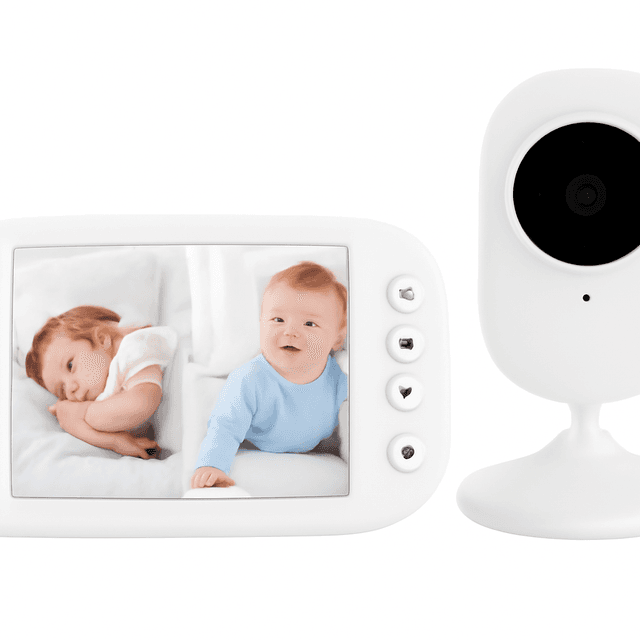
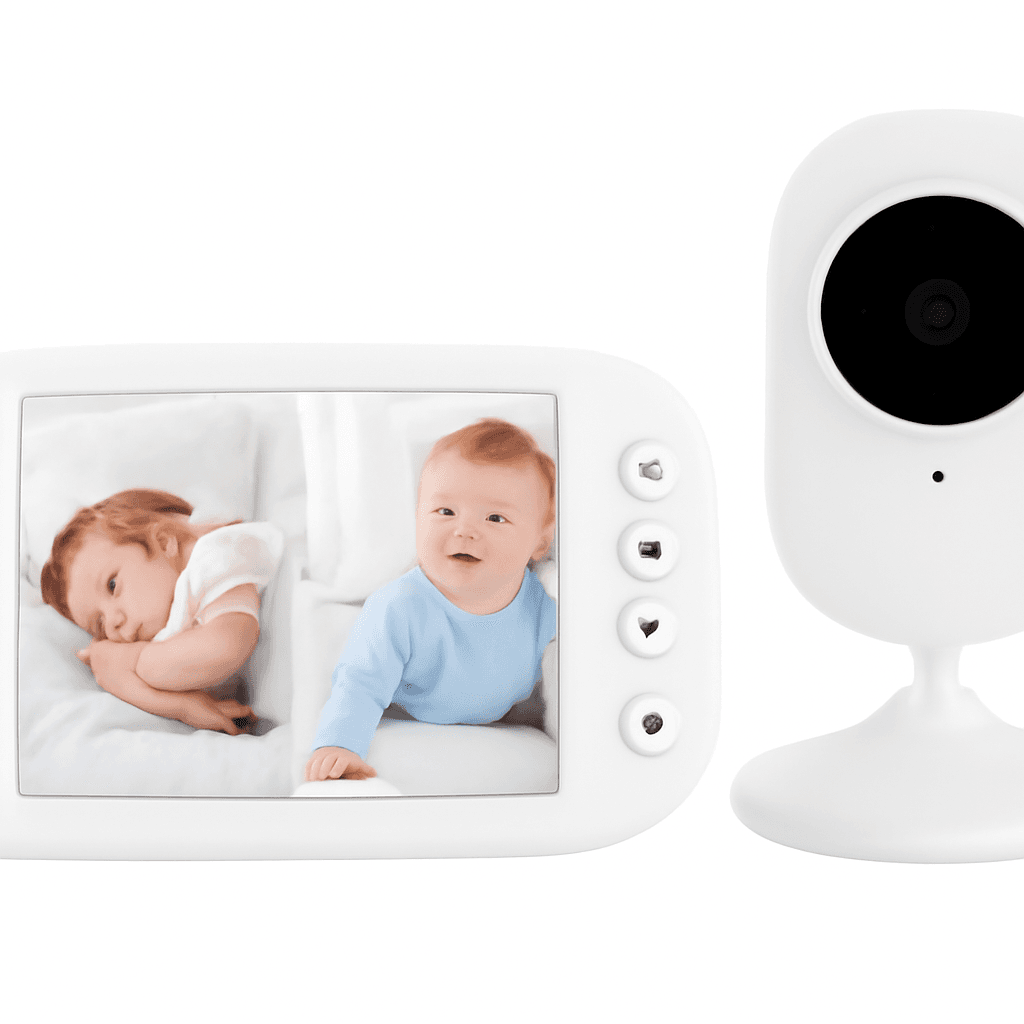
Babysense HD S2
- Ships as a two-camera bundle with a true split-screen display — the strongest multi-camera value here
- The 1080p feed is sharp but below the 4K Eufy S350 for fine detail
(Current price, subject to change)
An 8.4 SHE Multi-Room Coverage Score puts the Babysense HD S2 at the top of this roundup, second only to the HelloBaby on coverage value. It earns that with a strong range factor (8.5), a genuine split-screen multi-camera factor (8.5), and a coverage-value factor of 9.0 against the HelloBaby's 9.5. The two-camera bundle incorporates a 5-inch split-screen parent display, which consequently delivers whole-home two-room coverage without the subscription or incremental per-camera expenditure the Wi-Fi systems accumulate.
BabyGearLab covers the Babysense in its budget-monitor testing. Its 1,000 ft-rated radio matches the substantially pricier Infant Optics for through-wall reliability, and the 4,000 mAh battery keeps the display continuously mobile. Compared to the Nanit Pro, it relinquishes sleep analytics and remote accessibility, yet for the specific large-home objective of observing two rooms concurrently, it yields the strongest balance of range and multi-camera coverage in the roster.
What We Love
- Ships as a two-camera bundle with a true split-screen display — the strongest multi-camera value here
- 1,000 ft-rated range matches the far pricier Infant Optics for through-wall coverage with no Wi-Fi
- 4x zoom and night vision on each camera cover a full room from a single placement
- A 4,000 mAh parent-unit battery keeps the display mobile through a large home with no subscription
What Could Be Better
- The 1080p feed is sharp but below the 4K Eufy S350 for fine detail
- No sleep tracking, breathing detection, or smart-home integration — it is a closed system
- No smartphone app, so there is no remote viewing away from the house
The Verdict
If you want two rooms covered on one split-screen without a subscription, the Babysense HD S2 means you'll be well-served here. Two cameras, a true 5-inch split-screen, and a 1,000 ft-rated radio — BabyGearLab covers it, and it tops our coverage score.
Best Smart Multi-Camera: Nanit Pro Smart Baby Monitor
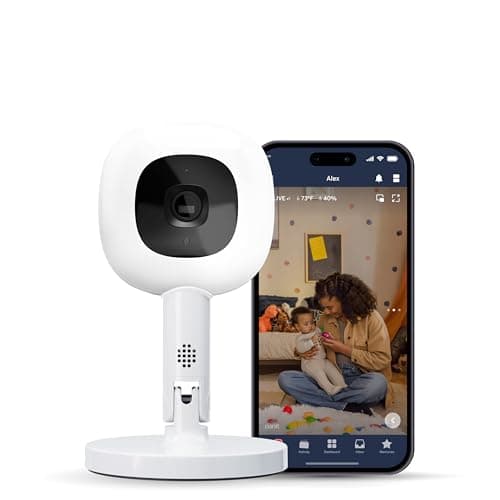
Nanit Pro Smart Baby Monitor
- Camera-based breathing monitoring needs no wearable band touching the baby
- Wi-Fi-dependent, so coverage across a large home relies on strong mesh rather than the camera's own radio
(Current price, subject to change)
A 6.9 SHE Multi-Room Coverage Score places the Nanit Pro Smart Baby Monitor last here, though not because the product underperforms. It carries the highest expert-consensus factor (8.8) alongside a strong multi-camera factor (8.5), reflecting its two-camera split-screen and per-room sleep analytics. What comparatively restrains the composite is range reliability (6.0): as a Wi-Fi device it inherits your network's coverage rather than projecting its own transmission, so a large home requires a genuinely robust mesh configuration to sustain the continuous stream.
Wirecutter covers the Nanit Pro, and its camera-based breathing monitoring represents a differentiator no FHSS unit here replicates. Coverage value (5.0) is the additional constraint — the hardware alone runs about 1.5x the entry cost of the Babysense two-camera bundle, before the recurring $8/mo analytics tier. It is unmistakably the intelligent pick, not the range pick.
What We Love
- Camera-based breathing monitoring needs no wearable band touching the baby
- Two-camera split-screen in the app covers a nursery and a second room from anywhere with internet
- Streams to Echo Show displays, so you can check the nursery from any room without your phone
- Per-room sleep analytics that pediatric-minded parents reference, on the highest consensus score here
What Could Be Better
- Wi-Fi-dependent, so coverage across a large home relies on strong mesh rather than the camera's own radio
- Full sleep analytics require an $8/mo subscription on top of the hardware
- The most expensive per-camera path here, and the breathing band is extra
The Verdict
If your large home already runs strong mesh Wi-Fi and Echo Show displays, the Nanit Pro Smart Baby Monitor is a sensible pick for that setup. Breathing monitoring, two-camera split-screen, and per-room sleep data streamed anywhere — Wirecutter covers it.
Best Budget Multi-Room: HelloBaby HB6550
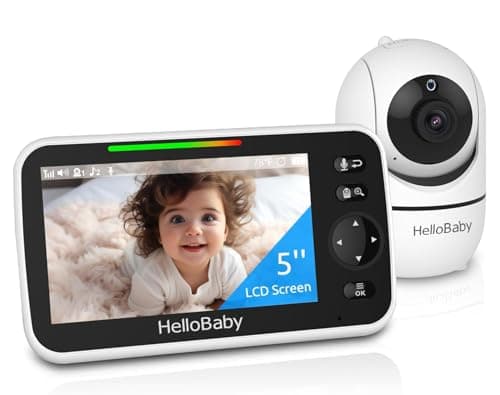
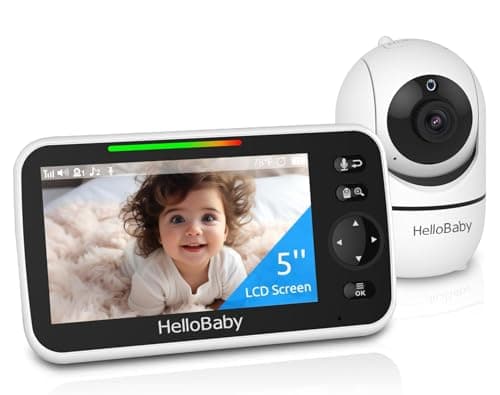
HelloBaby HB6550
- A 30 hours parent-unit battery lets the display travel a large home all day without a charger
- The 480p camera is the lowest resolution in this roundup — fine for movement, weak on fine detail
(Current price, subject to change)
Second overall at a 7.8 SHE Multi-Room Coverage Score, the HelloBaby HB6550 is propelled by the best coverage-value factor (9.5) in the set. At $63 with no subscription it is the cheapest way into reliable large-home monitoring, and its 30 hours parent-unit battery is the practical differentiator: the display travels a multi-story house from morning to night without a charger.
Its 1,000 ft-rated radio, no Wi-Fi required, reaches through standard walls dependably. BabyGearLab covers the HB6550. The trade-offs are honest and scored: the 480p camera drags the setup on fine detail, and multi-camera use cycles between feeds rather than showing a split-screen, so its multi-camera factor (6.5) trails the Babysense. Relative to the Infant Optics it gives up resolution and lens options, but it delivers the same core coverage for roughly a third of the price.
What We Love
- A 30 hours parent-unit battery lets the display travel a large home all day without a charger
- $63 entry price is the lowest here, and the FHSS system expands to additional cameras
- 1,000 ft FHSS range with encryption reaches through walls without any Wi-Fi dependency
- Pan, tilt, and zoom cover a room from one placement, with VOX to wake the screen on sound
What Could Be Better
- The 480p camera is the lowest resolution in this roundup — fine for movement, weak on fine detail
- Extra cameras cycle between feeds on the parent unit rather than showing a split-screen
- No smartphone app, sleep tracking, or smart-home features of any kind
The Verdict
If you need whole-home coverage on the smallest budget and battery life matters more than sharpness, the HelloBaby HB6550 is a buy where there's no need to overthink it. $63, a 30 hours battery, and a 1,000 ft-rated radio — BabyGearLab covers it.
Best 4K Large-Room Coverage: Eufy Indoor Cam S350
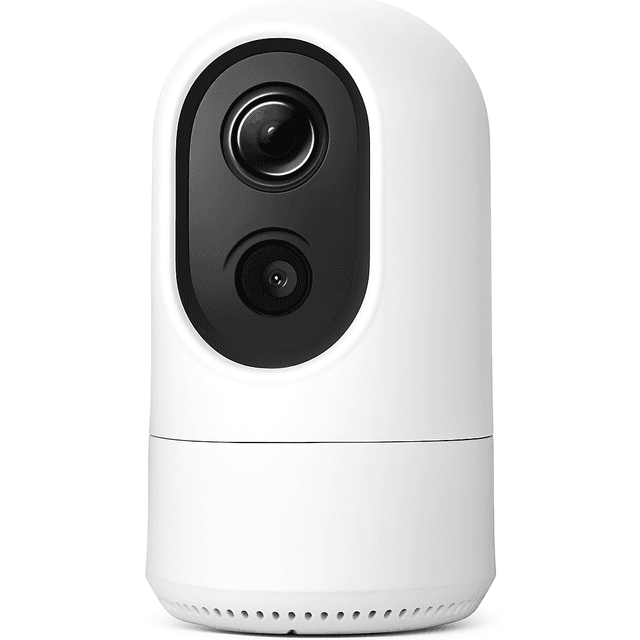
Eufy Indoor Cam S350
- Dual-lens 4K with 8x zoom pulls crib-level detail from across a large room without pixelation
- Wi-Fi-dependent, so reliable 4K across a large home needs a strong mesh network
(Current price, subject to change)
The Eufy Indoor Cam S350 earns a 7.3 SHE Multi-Room Coverage Score — fourth overall, carried by the second-highest consensus factor (8.7) and a solid coverage-value factor (8.0) thanks to local microSD storage with no fees. Its dual-lens 4K design with 8x zoom and 360-degree coverage handles a large or open room better than any dedicated baby camera here, and its on-device cry detection makes it genuinely usable as a nursery monitor.
Wirecutter covers the S350. What holds the composite back is range reliability (6.0): like the Nanit it is Wi-Fi-dependent, so full-resolution streaming across a big home relies on mesh coverage rather than a dedicated radio. It wins decisively on resolution versus the FHSS units, but it cannot match their network-independent reach.
What We Love
- Dual-lens 4K with 8x zoom pulls crib-level detail from across a large room without pixelation
- 360-degree pan and tilt eliminate blind spots in an open nursery-and-playroom layout
- On-device cry detection and AI auto-tracking follow the baby without cloud processing or fees
- Local microSD storage with no subscription for any feature — everything runs on-device
What Could Be Better
- Wi-Fi-dependent, so reliable 4K across a large home needs a strong mesh network
- No dedicated parent display — viewing runs through a phone via the eufy Security app
- Two-way audio is security-camera grade rather than tuned for nursery playback
The Verdict
If you want the sharpest coverage of a large nursery and you're already on solid mesh Wi-Fi, the Eufy Indoor Cam S350 checks the boxes that matter for that room. Dual-lens 4K, 8x zoom, 360-degree coverage, and on-device cry detection with no subscription — Wirecutter covers it.
How We Score: SHE Multi-Room Coverage Score
SHE Multi-Room Coverage Score
Score Formula
Score = 0.30 × Range_Reliability + 0.25 × Multi_Camera_Coverage + 0.25 × Coverage_Value + 0.20 × Expert_ConsensusScore Factors
- Range Reliability (weight 0.30)Whole-home signal dependability on a 0-10 scale. A dedicated FHSS radio rated to 1,000 ft open-air with no Wi-Fi dependency scores 8-9; a Wi-Fi monitor that needs a mesh network to hold a stream across a large home scores 6, because its coverage is inherited from the router rather than projected by the device. This is the most heavily weighted factor because range is the defining large-home constraint.
- Multi-Camera Coverage (weight 0.25)Cameras supported, split-screen capability, and add-on simplicity. A true simultaneous split-screen with two-plus cameras bundled scores 8.5; app-based multi-view scores 8; expandable systems that cycle between feeds score 6.5; strong single-unit 360-degree coverage scores 7.
- Coverage Value (weight 0.25)Normalized 2-year cost to cover a whole home: hardware price, subscription burden, and add-on camera cost. A bundled multi-camera kit with no subscription scores 9-9.5; a single-camera no-subscription unit scores 6.5-8; a Wi-Fi system carrying an $8/mo analytics tier scores 5. Price enters the composite only through this bounded factor, never as a hidden denominator.
- Expert Consensus (weight 0.20)The aggregated consensus score from the product's consensus-data record (7+ editorial sources), carried on its native 0-10 scale so the composite reflects independent expert standing alongside the coverage factors.
SHE Multi-Room Coverage Score — Ranked
Babysense HD S2
SHE Multi-Room Coverage Score8.4/10Two-camera split-screen, 1,000 ft range — strong range (8.5) and value (9.0) plus a true split-screen carry it to the top
HelloBaby HB6550
SHE Multi-Room Coverage Score7.8/10$63 entry, 30 hours battery, 1,000 ft FHSS — top coverage-value factor (9.5); only entry-level video and feed-cycling hold it back
Infant Optics DXR-8 Pro
SHE Multi-Room Coverage Score7.5/10$199.99 single camera, 1,000 ft FHSS — the highest range factor (9.0), restrained by single-camera per-room cost
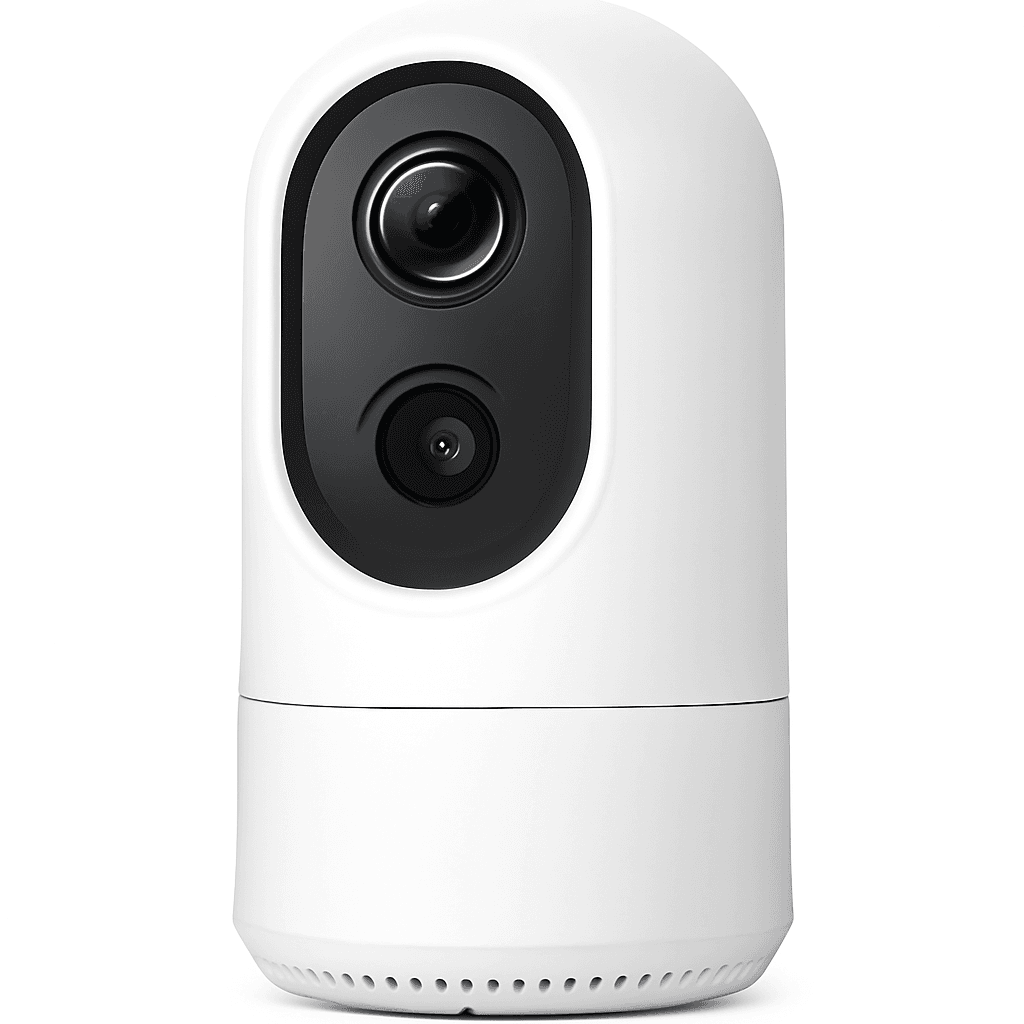
Eufy Indoor Cam S350
SHE Multi-Room Coverage Score7.3/10$139.99 dual-lens 4K, 360-degree — strong consensus and value, held back by Wi-Fi-dependent range (6.0)
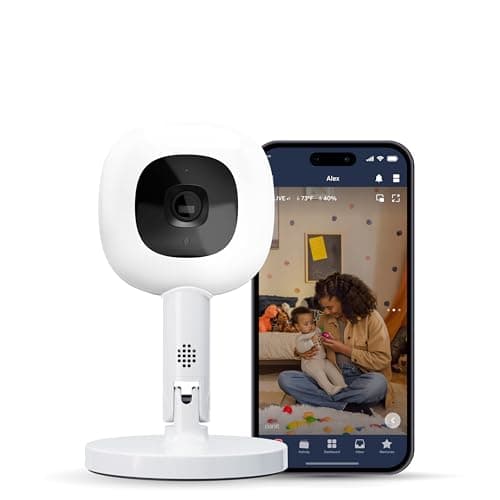
Nanit Pro Smart Baby Monitor
SHE Multi-Room Coverage Score6.9/10Wi-Fi smart monitor — highest consensus (8.8) and split-screen, but Wi-Fi range and subscription cost pull the composite down
Ecosystem Fit: FHSS Radio vs Wi-Fi Coverage
The compatibility decision for a large home is fundamentally a radio decision. The Infant Optics DXR-8 Pro and HelloBaby HB6550 run FHSS across a dedicated 2.4 GHz band that never shares airtime with your Wi-Fi, mesh routers, or streaming devices; the Babysense HD S2 runs a comparably rated dedicated radio. A 1,000 ft open-air rating consequently yields dependable through-wall coverage in a device-saturated home, specifically because nothing competes for the channel. The corresponding trade-off is a deliberately closed loop — no application, no remote viewing, no smart-home integration whatsoever.
Wi-Fi monitors — the Nanit Pro and Eufy Indoor Cam S350 — invert that arrangement: they inherit your network's coverage, so a robust mesh installation (Eero, Orbi, Google Wi-Fi) becomes a prerequisite for reliable streaming across a 2,000+ sq ft residence. In exchange, the Nanit delivers remote accessibility and per-room sleep analytics with Alexa Echo Show streaming, while the Eufy delivers dual-lens ultra-HD resolution and on-device cry detection with no subscription. The prevailing recommendation is correspondingly straightforward — if your mesh is dependable, a Wi-Fi monitor introduces additional intelligence; if it harbors dead zones, an independent FHSS radio remains the safer coverage investment. For multi-camera configuration, match the matrix above to your rooms: split-screen for observing two spaces simultaneously, a single wide-angle unit or a feed-cycling system for sequential verification.
| Product | Alexa | Google Home | HomeKit | Works Without Wi-Fi | No Subscription | Split-Screen |
|---|---|---|---|---|---|---|
| Infant Optics DXR-8 Pro | ✕ | ✕ | ✕ | ✓ | ✓ | ✕ |
| Babysense HD S2 | ✕ | ✕ | ✕ | ✓ | ✓ | ✓ |
| Nanit Pro Smart Baby Monitor | ✓ | ✕ | ✕ | ✕ | ✕ | ✓ |
| HelloBaby HB6550 | ✕ | ✕ | ✕ | ✓ | ✓ | ✕ |
| Eufy Indoor Cam S350 | ✕ | ✕ | ✕ | ✕ | ✓ | ✕ |
2-Year Cost of Covering a Whole Home
The Babysense HD S2's 8.4 SHE Multi-Room Coverage Score means, in practice: two cameras, a genuine split-screen, a 1,000 ft FHSS radio that ignores Wi-Fi congestion, and no subscription. The acquisition price therefore approximates the complete 2-year cost. That combination of range, split-screen, and zero recurring expenditure explains why it leads a field that includes monitors costing about 1.5x as much.
Coverage economics across a 2-year horizon are dominated by three inputs: hardware price, subscription burden, and the incremental expense of additional cameras. The FHSS bundles prevail on all three considerations. The Babysense two-camera configuration represents the least expensive entry point for covering two separate rooms. The HelloBaby covers an initial room for $63 and expands inexpensively, which is why its coverage-value factor (9.5) tops the evaluation. The single-camera Infant Optics at $199.99 delivers superior range but a correspondingly higher per-room expenditure, since a second room necessitates a second camera.
The Wi-Fi monitors carry the recurring weight. The Nanit Pro lists at $289.99 on nanit.com, with Amazon's current price on the card. Pair that hardware with a recurring $8/mo analytics plan and a 2-year window accumulates roughly $190 in subscription atop the camera. That is why its coverage-value factor stays at 5.0 despite the highest consensus score. The Eufy S350 circumvents that penalty. At $139.99 with local microSD and no fees, its 2-year cost is essentially the hardware alone. That elevates its value factor to 8.0 and keeps top-tier resolution affordable for an expansive room.
When NOT to Buy
If you are monitoring a single nursery in a normally sized home, skip this category entirely — a standard single-camera monitor covers that job for less. These picks justify their expense only across distance and multiple rooms.
If your home already runs strong mesh Wi-Fi in every room, the FHSS range advantage largely disappears — a Wi-Fi monitor delivers superior video for the same coverage. And if fine visual detail is a priority, the 480p HelloBaby will disappoint; the dual-lens Eufy at $139.99 is the better call.
Who Should Buy What
Who Should Buy What
| If you are… | Recommended pick |
|---|---|
Large-home coverage buyer You need dependable through-wall video across a 2,000+ sq ft house, you value a private internet-free loop, and app features are not a requirement | Infant Optics DXR-8 Pro |
Two-room split-screen family You are watching two children or two rooms, you want both on one screen without a subscription, and value matters more than 4K sharpness | Babysense HD S2 |
Smart mesh-Wi-Fi household You have strong mesh Wi-Fi and Echo Show displays, and you want breathing monitoring plus per-room sleep analytics streamed anywhere | Nanit Pro Smart Baby Monitor |
Budget multi-room parent You want the cheapest reliable whole-home coverage, you prioritize a long parent-unit battery and signal range, and you accept entry-level video | HelloBaby HB6550 |
Large-room clarity seeker You want the sharpest coverage of a big or open nursery, you already run solid mesh Wi-Fi, and you refuse a subscription | Eufy Indoor Cam S350 |
Frequently Asked Questions
How far can a baby monitor reach through walls in a large home?
An FHSS monitor rated for 1,000 feet open-air typically holds a reliable connection through several interior walls, though real-world through-wall range is always meaningfully shorter than the open-air figure. Wi-Fi monitors depend on your home network instead: with a strong mesh system they match FHSS coverage, but without mesh Wi-Fi they degrade beyond a few walls. For a large home, the dedicated FHSS radio is the more predictable choice because it does not compete with your other wireless devices.
Is a Wi-Fi or non-Wi-Fi baby monitor better for a large home?
It depends on your Wi-Fi. Non-Wi-Fi monitors like the Infant Optics DXR-8 Pro (FHSS), Babysense HD S2 (a comparably rated dedicated radio), and HelloBaby HB6550 (FHSS) operate independently of your network, which makes them the safer choice if your home has dead zones or a congested router. Wi-Fi monitors like the Nanit Pro and Eufy Indoor Cam S350 need reliable mesh coverage throughout the house, but in exchange they offer remote access and sleep analytics or 4K video that FHSS units cannot provide. Match the monitor to your existing network reality rather than the spec sheet.
Can I use multiple cameras in different rooms?
Yes, every monitor in this guide supports more than one camera, but the viewing experience differs. The Babysense HD S2 ships with two cameras and shows both on a true split-screen at once, and the Nanit Pro shows a two-camera split-screen in its app. The Infant Optics DXR-8 Pro and HelloBaby HB6550 expand to additional cameras but cycle between feeds on the parent unit rather than showing them simultaneously. The Eufy S350 covers a single large room from one dual-lens unit. Decide whether you need to watch two rooms at the same time or check them in sequence.
What is FHSS and why does it matter for baby monitors?
FHSS, or Frequency Hopping Spread Spectrum, is a radio technology that transmits on rapidly changing frequencies within the 2.4 GHz band. Because it hops between frequencies rather than sitting on one fixed channel, the signal resists interference and cannot be casually intercepted. For a large home where Wi-Fi congestion from mesh routers, streaming, and smart devices can degrade a Wi-Fi monitor, FHSS provides a dedicated, interference-free channel between the camera and the parent unit — which is why the FHSS picks in this guide hold their connection where Wi-Fi monitors can struggle.
How many cameras do I need for a large home?
Most families in large homes find two or three cameras sufficient: one in the primary nursery and one in the most-used secondary room, such as a toddler bedroom or playroom. Starting with two is the practical approach, and the Babysense HD S2 two-camera bundle is the most cost-effective way to begin. You can add cameras incrementally as your monitoring needs grow, since every system in this guide supports more than one camera — just remember that only the split-screen models show two rooms at the same time.
Bottom Line
Get the Infant Optics DXR-8 Pro if you want the longest, most reliable through-wall coverage across a large home and app features are not part of your requirement.
Get the Babysense HD S2 if you want two rooms on one true split-screen with a 1,000 ft-rated radio and no subscription — the best coverage value here.
Get the Nanit Pro Smart Baby Monitor if you already run strong mesh Wi-Fi and Echo Show displays and want breathing monitoring plus per-room sleep analytics.
Get the HelloBaby HB6550 if you want the cheapest reliable multi-room coverage with a long parent-unit battery and accept entry-level video quality.
Get the Eufy Indoor Cam S350 if you want the sharpest 4K coverage of a large room on solid mesh Wi-Fi with no subscription.
The right call for whole-home range is the Infant Optics DXR-8 Pro — its 1,000 ft FHSS radio reaches where Wi-Fi monitors struggle. For the best value across two rooms, the Babysense HD S2 leads our SHE Multi-Room Coverage Score with a true split-screen. Skip this category entirely if you only need to watch one nursery in a normal-sized home — a single standard monitor is the more efficient buy at that scale.
Sources & Methodology
Methodology: SHE Multi-Room Coverage Score — Formula: Score = 0.30 × Range_Reliability + 0.25 × Multi_Camera_Coverage + 0.25 × Coverage_Value + 0.20 × Expert_Consensus. Factors: Range Reliability (weight 0.30): Whole-home signal dependability on a 0-10 scale. A dedicated FHSS radio rated to 1,000 ft open-air with no Wi-Fi dependency scores 8-9; a Wi-Fi monitor that needs a mesh network to hold a stream across a large home scores 6, because its coverage is inherited from the router rather than projected by the device. This is the most heavily weighted factor because range is the defining large-home constraint. | Multi-Camera Coverage (weight 0.25): Cameras supported, split-screen capability, and add-on simplicity. A true simultaneous split-screen with two-plus cameras bundled scores 8.5; app-based multi-view scores 8; expandable systems that cycle between feeds score 6.5; strong single-unit 360-degree coverage scores 7. | Coverage Value (weight 0.25): Normalized 2-year cost to cover a whole home: hardware price, subscription burden, and add-on camera cost. A bundled multi-camera kit with no subscription scores 9-9.5; a single-camera no-subscription unit scores 6.5-8; a Wi-Fi system carrying an $8/mo analytics tier scores 5. Price enters the composite only through this bounded factor, never as a hidden denominator. | Expert Consensus (weight 0.20): The aggregated consensus score from the product's consensus-data record (7+ editorial sources), carried on its native 0-10 scale so the composite reflects independent expert standing alongside the coverage factors.
Expert review sources used in this analysis:
- SmartHomeExplorer aggregates expert review coverage and community sentiment to produce consensus-based buying guidance
- We do not perform first-party product testing
- Expert coverage referenced for this roundup comes from Consumer Reports (Infant Optics DXR-8 Pro) and Wirecutter (Nanit Pro Smart Baby Monitor and Eufy Indoor Cam S350)
- BabyGearLab covers the Babysense HD S2 and the HelloBaby HB6550
- Each outlet is scoped only to the products it actually covers
- We state outlet coverage and manufacturer specifications rather than transcribing specific verdicts
- Product availability was verified against the live Amazon Creators API on 2026-07-11
- That pass recorded the Infant Optics DXR-8 Pro at $199.99 and the Babysense HD S2 at $129.99 on Amazon
- The Nanit Pro read $289.99, the HelloBaby HB6550 $63.17, and the Eufy Indoor Cam S350 $139.99 on the same day
- Those are that date's figures, not today's: the current price for each product is the one on its card, stamped with its own check date
- The SHE Multi-Room Coverage Score factors come from those manufacturer specifications and the aggregated consensus record
- Price enters the composite only through the bounded Coverage Value factor, and the full rubric is published in the methodology above so the score is recomputable.
Nicholas Miles is the founder of SmartHomeExplorer and a longtime smart home enthusiast focused on helping everyday homeowners make better technology decisions. He researches, compares, and writes about products across security, climate, lighting, leak prevention, sensors, home energy, and automation, with an emphasis on real-world usefulness, ecosystem compatibility, reliability, privacy, and long-term value.
Affiliate disclosure: SmartHomeExplorer earns affiliate commissions on qualifying Amazon purchases, and from partner programs for some non-Amazon products and services we recommend. Our scoring methodology is independent of affiliate relationships.