
Best Premium Camera Drones 2026
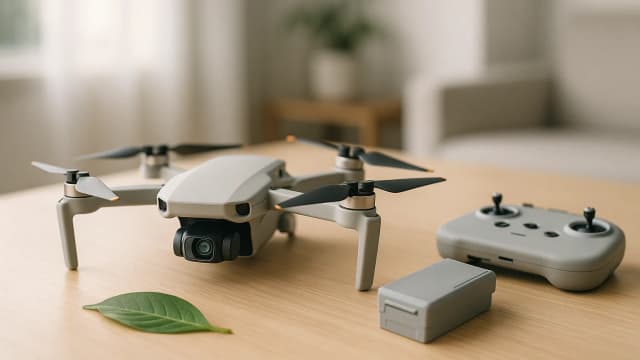
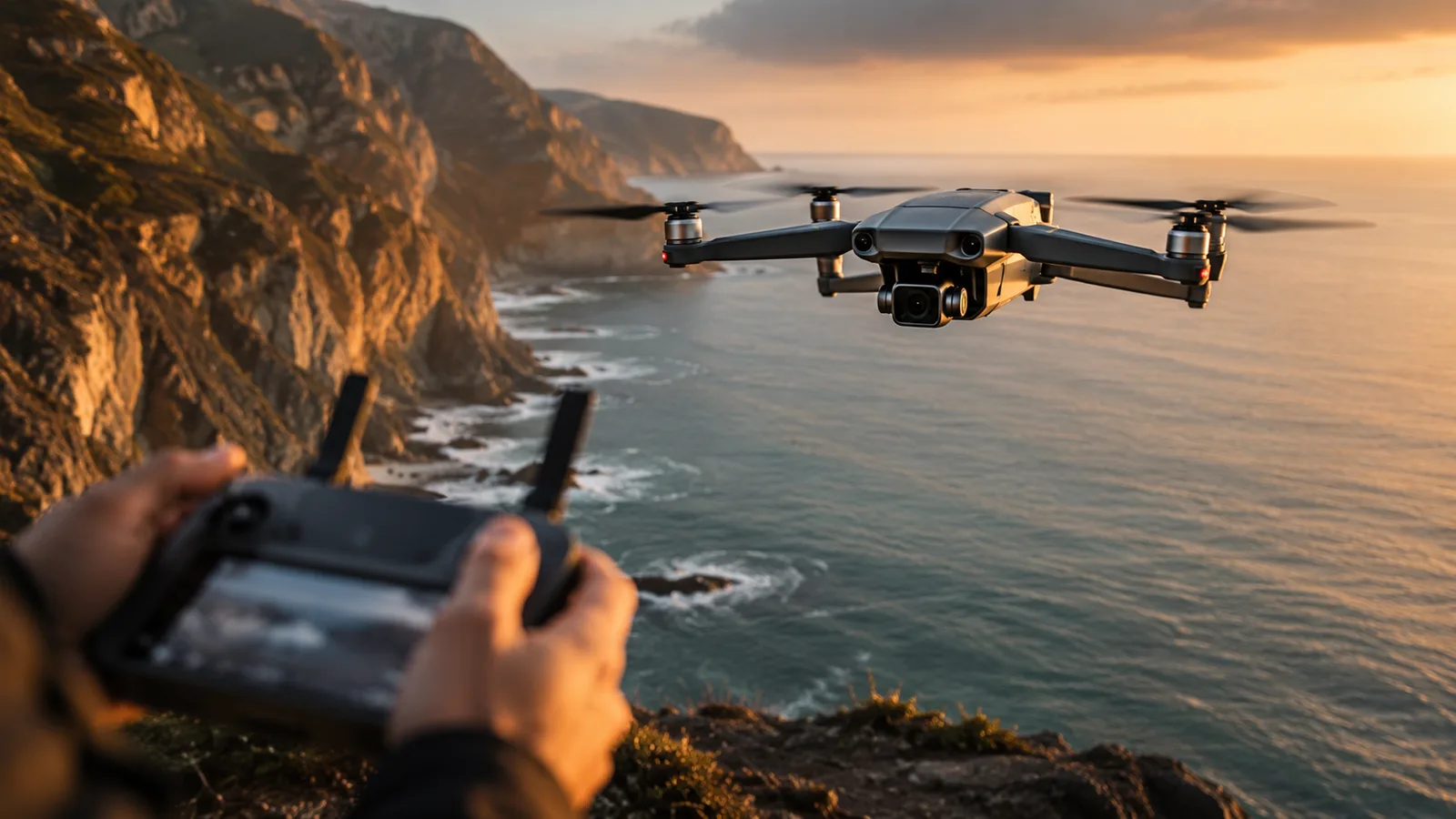
The DJI Air 3S (around $1,099) is the cheapest route to dual 1-inch cameras. Stay sub-250g with the Mini 5 Pro to skip FAA registration; step to the Mavic 3 Classic for the 4/3 cinema look.
This article contains affiliate links. We may earn a commission at no extra cost to you. Prices change frequently — check the current price on Amazon before buying. Learn more
The Short Answer
Buy the DJI Air 3S (RC-N3, around $1,099): the cheapest route to dual 1-inch cameras, supplemented by forward LiDAR and a 45 min flight rating anchoring exceptional value. Exceeding 249g, however, triggers mandatory FAA registration. The sub-250g DJI Mini 5 Pro instead preserves comparable quality registration-free.
Featured in this Guide
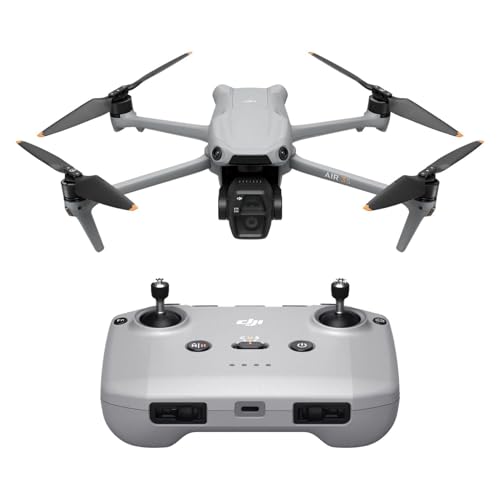
DJI
Air 3S (RC-N3)
- •Cheapest route to dual 1-inch cameras (50MP main + 48MP tele), forward LiDAR, and a 45-minute rating around $1,099
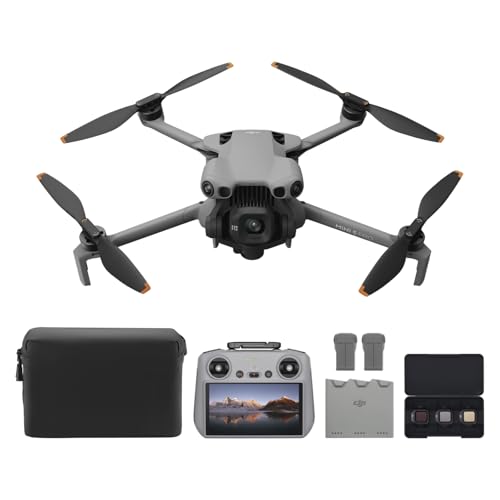
DJI
Mini 5 Pro Fly More Combo
- •The first sub-250g drone with a true 1-inch sensor, so it skips FAA registration entirely while keeping pro image quality
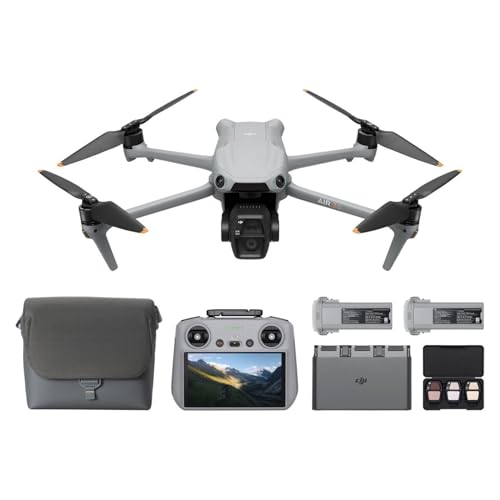
DJI
Air 3S Fly More Combo (RC 2)
- •Same Air 3S aircraft with the screen-built-in RC 2, three batteries, charging hub, and ND filters for all-day shoots
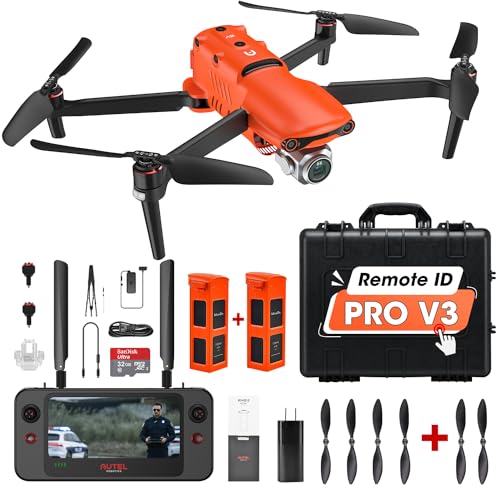
Autel
Robotics EVO II Pro V3
- •Max ISO 44,000 and Moonlight Algorithm 2.0 deliver genuinely usable footage after dark, plus 12-bit DNG RAW
DJI
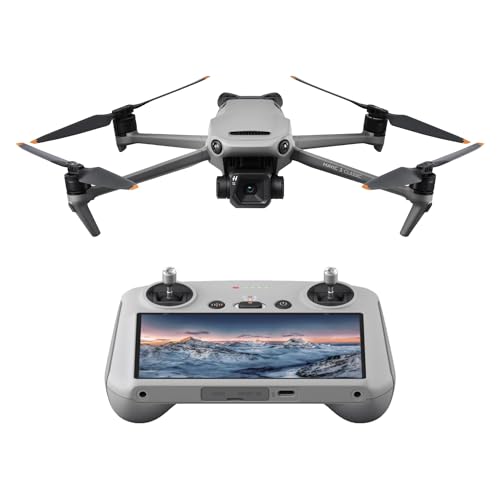
Mavic 3 Classic (DJI RC)
- •4/3 Hasselblad sensor, 5.1K video, and the longest 46-minute flight time for buyers who want the image ceiling
DJI
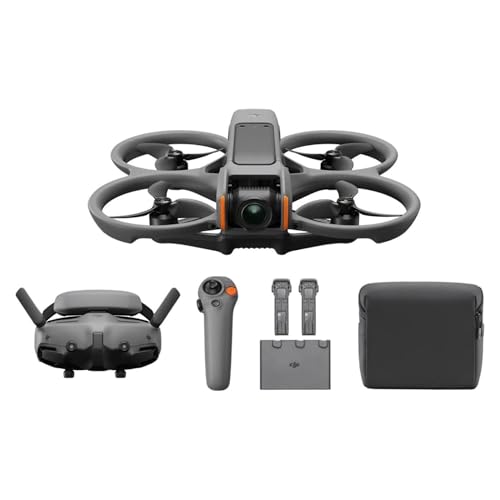
Avata 2 Fly More Combo
- •Goggles and motion control in the combo for single-take footage no fixed-gimbal camera drone can capture
Head-to-Head: Sensor, Endurance, Safety, and the 249g Line
Cameras
Chart
 Smarthomeexplorer.com
The Two Questions Premium Drone Buyers Actually Ask
At this tier nobody argues about image quality; Tom's Guide and TechGearLab agree the 1-inch-and-larger sensors here are excellent, and flight times run 45 min on the Air 3S down to 23 min on the FPV Avata 2. The questions that fill r/dji and DroneXL threads are different: "Is this the real listing or a marked-up reseller?" and "Do I register and broadcast Remote ID?" DJI and Autel both sell through third parties, so the same model swings 200-400 dollars and blinks out of stock — our value score weights buyability heavily (15%).
FAA registration plus Remote ID apply to every pick except one: the sub-250g DJI Mini 5 Pro Fly More Combo. At 249g it has so little inertia that footage bounces in gusts a heavier DJI Air 3S (RC-N3) shrugs off — Fstoppers still measured a 20-30% low-light gain over the prior Mini. If this tier exceeds your needs, our Best Beginner Camera Drones 2026 guide covers the sub-250g starter band.
Best for most prosumer buyers: DJI Air 3S (RC-N3)
DJI Air 3S (RC-N3)
- Dual 1-inch-class cameras: a 50MP 24mm main plus a 48MP 70mm telephoto, so you get a real second focal length, not a digital crop
- Crosses 249g, so FAA registration and Remote ID broadcast are required
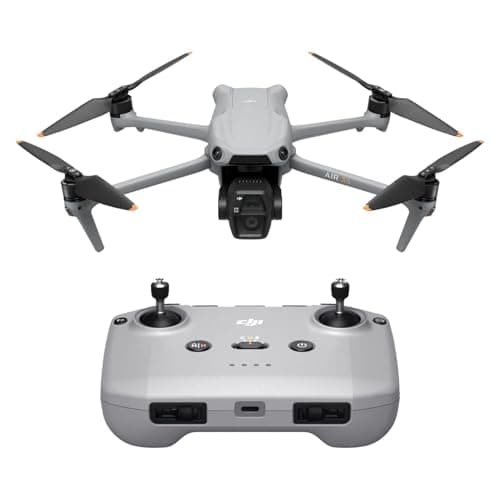
The DJI Air 3S (RC-N3) is the pick for buyers who already know they want a folding 1-inch drone and need the one that delivers the most per dollar. It earns the top SHE Prosumer Drone Value Score at 9.4 because the composite rewards capability against price, and this aircraft reaches near the category ceiling on sensor and safety while costing the least. Three specs carry the argument: dual 1-inch-class cameras (50MP main, 48MP telephoto), DJI's first forward-facing LiDAR, and a 45 min flight rating.
That second focal length is the deciding factor for most shooters. The 70mm telephoto is genuine optical reach rather than a digital crop, invaluable for wildlife or terrain you would rather not approach. Tom's Guide called it the best 4K/60fps drone available, citing the large 1-inch sensor and 42GB of internal storage. TechGearLab found the larger sensor captures more light for ultra-crisp detail, a large dynamic range, and ideal low-light performance; DJI rates the camera at 14 stops.
The caveats are brief. It exceeds 249g, so registration applies, and the RC-N3 requires your phone clipped on. If a built-in screen matters more than the savings, the DJI Air 3S Fly More Combo (RC 2) is the identical aircraft — confirm the third-party listing first.
What We Love
- Dual 1-inch-class cameras: a 50MP 24mm main plus a 48MP 70mm telephoto, so you get a real second focal length, not a digital crop
- First DJI drone with forward-facing LiDAR for confident obstacle avoidance in low light
- 45-minute rated max flight time and roughly 14 stops of dynamic range
- 42GB of internal storage as a backup when you forget the microSD card
- At around $1,099 with the standard RC-N3 controller, the cheapest route to dual 1-inch sensors
What Could Be Better
- Crosses 249g, so FAA registration and Remote ID broadcast are required
- RC-N3 controller needs your phone clipped on; the screen-built-in RC 2 costs more (the Fly More combo)
- Telephoto uses the smaller 1/1.3-inch sensor type, not a full second 1-inch
- DJI sells through Amazon third parties, so confirm the listing before buying
The Verdict
If you've narrowed to one drone that does the most for the money, the DJI Air 3S (RC-N3) fits the brief. The 9.4 reflects what matters at this tier: two genuine focal lengths instead of a crop, LiDAR for dusk flying, and the lowest price to dual 1-inch glass. You'll be well-served here unless you specifically need to stay sub-250g.
Best 1-inch sensor under 250g: DJI Mini 5 Pro Fly More Combo
DJI Mini 5 Pro Fly More Combo
- The first sub-250g drone with a true 1-inch sensor, so it skips FAA registration entirely
- At 249g it has little inertia, so footage bounces in gusts an Air 3S would shrug off
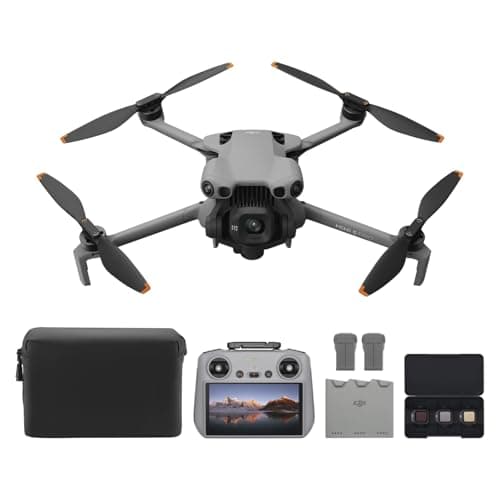
The DJI Mini 5 Pro Fly More Combo is for travelers who demand professional image quality yet refuse to file FAA paperwork. The decisive specs: it is the first sub-250g drone with a genuine 1-inch 50MP sensor, it captures 4K footage at up to 120fps in 10-bit D-Log M, and its 225-degree gimbal rotation produces true vertical video without cropping. It scores 8.9 on the SHE Prosumer Drone Value Score, held just behind the leaders by the endurance factor.
Staying beneath 250g is the entire proposition — no registration, fewer restrictions on where you fly. Space.com wrote that it redefines what a sub-250g drone can accomplish thanks to the 1-inch sensor and its omnidirectional vision-sensing system. Fstoppers measured a genuine low-light improvement, finding dynamic range noticeably better at sunrise, sunset, and night, roughly a 20-30% gain over the previous Mini.
The catch is physics, not optics. At 249g the aircraft retains minimal inertia, so in gusts where a heavier DJI Air 3S (RC-N3) holds steady, this footage oscillates — the price of skipping registration. Real flight time approaches 28 min during active shooting. At around $1,049 the combo sits close enough to the dual-camera Air 3S that the decision reduces to how much registration-free flying matters to you.
What We Love
- The first sub-250g drone with a true 1-inch sensor, so it skips FAA registration entirely
- 50MP stills, 4K up to 120fps, and 10-bit D-Log M color
- 225-degree gimbal rotation for full vertical shooting without cropping
- ActiveTrack 360 and omnidirectional obstacle sensing in a jacket-pocket body
- Pro image quality in a body that still gifts-and-flies like a beginner drone
What Could Be Better
- At 249g it has little inertia, so footage bounces in gusts an Air 3S would shrug off
- Single camera, no telephoto
- The Fly More combo at around $1,049 narrows the price gap to the dual-camera Air 3S
- Smaller battery means real flight times near 28-32 minutes when actively shooting
The Verdict
If your main goal is avoiding the FAA paperwork without giving up a 1-inch sensor, the DJI Mini 5 Pro Fly More Combo is the path of least friction. The 8.9 reflects genuine pro image quality under the 250g line — but be honest with yourself about wind, because that low weight is also why footage bounces in gusts the heavier picks shrug off.
Best complete kit in one box: DJI Air 3S Fly More Combo (RC 2)
DJI Air 3S Fly More Combo (RC 2)
- Same dual 1-inch-class camera system as the standard Air 3S, in the full kit
- About $500 more than the RC-N3 standard kit for the same aircraft
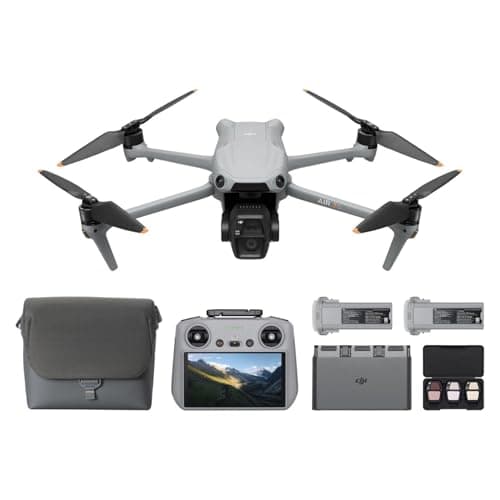
The DJI Air 3S Fly More Combo (RC 2) is for creators who have settled on the Air 3S and shoot enough to want everything in one box. Three things define it: the cameras are identical to the standard Air 3S, the screen-built-in RC 2 eliminates any phone requirement, and three batteries rated at 45 min apiece carry you through a full day without returning to the charger. It scores 9.1 on the SHE Prosumer Drone Value Score.
The value question here concerns the kit, not the camera. Tom's Guide's verdict on the Air 3S — the best 4K/60fps drone available — applies identically, because it remains the same aircraft, and TechGearLab observed the larger airframe flies with superior, predictable stability versus lighter drones. The roughly $500 premium purchases convenience: the screen controller, enough batteries to skip the swap routine, plus ND filters and a carrying bag.
Run the arithmetic honestly. If you already own an RC 2 or a stack of Air 3S batteries, the base DJI Air 3S (RC-N3) is the wiser spend at a better price-to-capability tier. Like everything except the Mini 5 Pro, it exceeds 249g, so registration applies — and because this SKU fluctuates more than the base kit, verify the listing before committing.
What We Love
- Same dual 1-inch-class camera system as the standard Air 3S, in the full kit
- Ships with the screen-built-in DJI RC 2 controller, so no phone needed
- Three batteries plus a charging hub for a full day of flying
- Carrying bag, spare props, and ND filters included
- The buy-once-and-forget bundle for serious creators
What Could Be Better
- About $500 more than the RC-N3 standard kit for the same aircraft
- Crosses 249g, so registration and Remote ID apply
- Overkill if you already own DJI batteries or an RC 2
- Third-party Amazon pricing on this SKU swings more than the base kit
The Verdict
If you've already decided on the Air 3S and shoot enough to want the screen controller and spare batteries, the DJI Air 3S Fly More Combo (RC 2) lines up with what you actually need. The 9.1 reflects the same gold-standard aircraft with the all-day kit — the only reason it sits below the base model is that you pay roughly $500 more for accessories, not a better camera.
Best low-light night aerial: Autel Robotics EVO II Pro V3
Best for buyers avoiding DJIAutel Robotics EVO II Pro V3
- Sony 20MP 1-inch CMOS sensor shooting up to 6K video
- More expensive than a comparably-specced DJI Air 3S
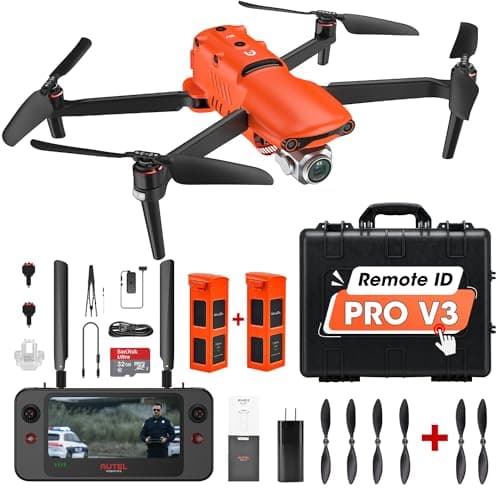
The Autel Robotics EVO II Pro V3 is the appropriate recommendation for buyers determined to escape the DJI ecosystem, and for photographers tackling demanding low-light assignments after dark. The decisive specifications: a Sony 20MP 1-inch sensor, cinematography reaching 6K with 12-bit DNG RAW, and a 40 min flight rating. It scores 8.4 on the SHE Prosumer Drone Value Score, constrained primarily by its weaker price-to-capability positioning.
The argument combines exceptional camera hardware with independence. DSLRPros documented the 20-megapixel 1-inch Sony sensor delivering video up to 6K with enhanced dynamic range and aggressive noise suppression, concluding that even amid the dimmest conditions it captures footage with exceptional clarity — worth every penny, in their assessment. Equally consequential for committed buyers: there is no mandatory account or restrictive login wall comparable to DJI's.
The qualifications involve expenditure, refinement, and dimensions. It commands more than a comparably specced DJI Air 3S (RC-N3), so independence carries a premium. It weighs more and packs less compactly than the folding Air class, its accessory ecosystem remains thinner, and its transmission trails DJI's OcuSync. It exceeds 249g, so registration applies. For nocturnal and low-light photography specifically, its range remains the clearest justification.
What We Love
- Sony 20MP 1-inch CMOS sensor shooting up to 6K video
- The strongest non-DJI alternative for buyers who want out of the DJI ecosystem
- Max ISO 44,000 plus Moonlight Algorithm 2.0 for genuinely usable night footage
- 12-bit DNG RAW and an f/2.8-f/11 adjustable aperture
- No mandatory account or login wall, plus 360-degree obstacle avoidance
What Could Be Better
- More expensive than a comparably-specced DJI Air 3S
- Heavier and bulkier than the folding DJI Air class
- Smaller third-party ecosystem of ND filters and accessories
- App and transmission are less polished than DJI's OcuSync
The Verdict
If you've decided you want out of the DJI ecosystem — or you shoot a lot after dark — the Autel Robotics EVO II Pro V3 lines up with what you actually need. The 8.4 reflects a Sony 1-inch 6K sensor with serious low-light range and no account login wall. You'll pay more than a DJI Air 3S and lose some app polish, but for the no-DJI buyer that's a sensible trade.
Best largest-sensor cinema look: DJI Mavic 3 Classic (DJI RC)
DJI Mavic 3 Classic (DJI RC)
- 4/3 CMOS Hasselblad sensor — the largest in this guide — with 12.8 stops of dynamic range
- Most expensive pick at around $2,499
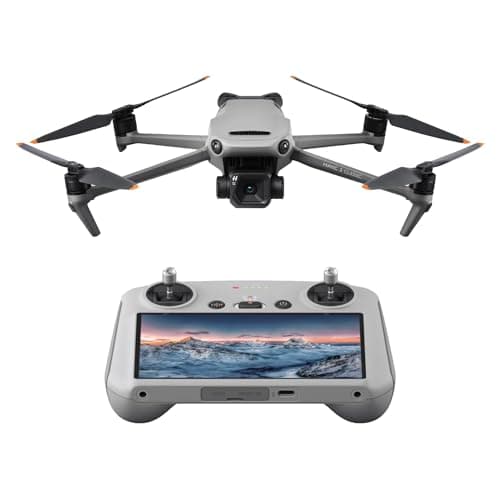
The DJI Mavic 3 Classic (DJI RC) is for the buyer pursuing the image ceiling — the largest sensor and most cinematic look in this guide. Buyers prioritizing value or a second focal length should pass, because the Air 3S delivers two cameras for considerably less. Three specifications define it: a 4/3 Hasselblad sensor (the largest here), 5.1K video with Hasselblad Natural Color Solution, and a 46 min maximum flight time, the longest here. It scores 9.0 on the SHE Prosumer Drone Value Score.
Sensor area constitutes the entire argument. Drone & Cam observed that the substantial sensor captures additional light and reduces noise, enabling effortless extraction of shadow and highlight detail, and called it the perfect choice for professional footage thanks partly to its C1 certification. Relative to the 1-inch crowd, that 4/3 rendering is flatter and more forgiving when you grade it.
Where it surrenders the composite is value, not capability. At around $2,499 it is the most expensive pick, substituting a single fixed-focal camera for the Mavic 3 Pro's telephoto trio, and it is the heaviest folder here. For most buyers the DJI Air 3S (RC-N3) is the wiser spend; this aircraft justifies itself only when the 4/3 Hasselblad image is the objective.
What We Love
- 4/3 CMOS Hasselblad sensor — the largest in this guide — with 12.8 stops of dynamic range
- 5.1K video and Hasselblad Natural Color Solution color science
- 46-minute max flight time, the longest here
- C1 certification and a mature DJI safety suite
- The image-quality ceiling for buyers who want a cinema look, not a second 1-inch body
What Could Be Better
- Most expensive pick at around $2,499
- Single fixed-focal camera (drops the Mavic 3 Pro's telephoto trio)
- Heaviest and least packable of the folding drones here
- Overkill unless you specifically need the 4/3 sensor look
The Verdict
If you've shortlisted drones for the largest sensor and a true cinema look, the DJI Mavic 3 Classic (DJI RC) is the right call and there's no need to overthink it. The 9.0 reflects the 4/3 Hasselblad image ceiling and the longest flight time here. It only drops below the Air 3S on price-to-capability — you're paying for sensor area, not features.
Best immersive FPV alternative: DJI Avata 2 Fly More Combo
DJI Avata 2 Fly More Combo
- The most accessible way into immersive FPV flying, with goggles and motion control in the combo
- 1/1.3-inch sensor is smaller than every other pick here (it does not clear the 1-inch bar)
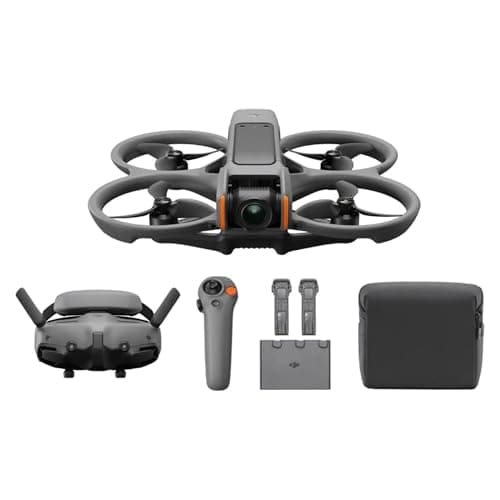
The DJI Avata 2 Fly More Combo is for hobbyists who want a second creative tool for immersive, single-take footage — not for anyone shopping for a primary camera drone. If you need one aircraft to do everything, skip it: its smaller sensor and short flight time make it a complement, not a substitute. The specs to know: a 1/1.3-inch sensor (below the 1-inch bar the rest of this guide clears), roughly 23 min per battery, and goggles plus a motion controller around $1,019.
We include it honestly as the immersive-flight alternative, because first-person-view flying captures footage a gimbal drone cannot frame. TechGearLab found the Avata 2's flight exceptionally responsive and stable, and noted its FPV capability uniquely enables footage no other drone in their lineup could replicate — the swooping, dive-and-climb shots that justify buying it.
What holds it to 7.8 on the SHE Prosumer Drone Value Score is that it does not compete on equivalent terms. Compared to the 1-inch-and-larger cameras here the sensor is genuinely smaller, the 23 min flight time is the shortest in the guide, and the FPV controls demand practice. For conventional aerial photography the DJI Air 3S (RC-N3) is the answer; the Avata 2 is for the immersive shot.
What We Love
- The most accessible way into immersive FPV flying, with goggles and motion control in the combo
- Built-in propeller guards and crash-survival design for confident close-quarters flying
- RockSteady 3.0+ and HorizonSteady stabilization smooth out aggressive FPV motion
- Captures dynamic single-take footage no fixed-gimbal camera drone can
- Cheapest pick in the guide at around $1,019 for the Fly More combo
What Could Be Better
- 1/1.3-inch sensor is smaller than every other pick here (it does not clear the 1-inch bar)
- Short flight time near 23 minutes per battery
- FPV controls have a learning curve; better for committed hobbyists than first-timers
- Not a replacement for a gimbal camera drone for traditional aerial stills
The Verdict
If you've already got a gimbal camera drone and want a second creative tool for immersive shots, the DJI Avata 2 Fly More Combo is a sensible pick for that setup. The 7.8 is honestly docked: its 1/1.3-inch sensor sits below the 1-inch bar and flight time is short. Treat it as the FPV alternative, not a core camera-drone buy.
How We Score: SHE Prosumer Drone Value Score
SHE Prosumer Drone Value Score
Score Formula
(Sensor_Image × 0.30 + Flight_Endurance × 0.22 + Intelligent_Safety × 0.20 + Buyability × 0.15 + Price_to_Capability × 0.13)Score Factors
- Sensor & Image Quality (30%)The whole reason to leave the beginner tier. Scored on physical sensor area (the Mavic 3 Classic's 4/3 Hasselblad and the 1-inch sensors on the Air 3S, Mini 5 Pro, and Autel EVO II Pro all clear the 1-inch bar; the Avata 2's 1/1.3-inch sits below it), plus max resolution and frame rate, 10-bit-or-better color, and rated dynamic range (12.8 stops on the Mavic, roughly 14 on the Air 3S).
- Flight Endurance & Wind Resistance (22%)Real-world usability per battery. Combines rated max flight time (45-46 minutes on the Air 3S and Mavic 3 Classic versus around 35 on the Mini 5 Pro and 23 on the Avata 2) with wind resistance. This is where the sub-250g Mini 5 Pro is honestly docked: its footage bounces in gusts the heavier Air 3S shrugs off.
- Intelligent Safety (20%)How forgiving the drone is near terrain, trees, or at dusk. Scores omnidirectional obstacle sensing (Air 3S, Mini 5 Pro, Mavic 3 Classic, and the Autel's 360-degree coverage) above forward-only, awards a bonus for the Air 3S's forward LiDAR, and grades subject-tracking maturity such as ActiveTrack 360.
- Buyability & Stock Reliability (15%)A category-specific factor that exists because DJI and Autel sell through Amazon third-party sellers, so the same model can swing $200-400 and blink out of stock. Scored on whether the exact SKU resolved to an in-stock, sanely-priced listing during live June 2026 Creators-API verification. Models that returned empty ASIN lookups were excluded from the guide rather than scored low.
- Price-to-Capability (13%)Live verified Amazon price divided into the composite capability tier, so the cheapest route to a given level scores highest. This is why the around-$1,099 Air 3S RC-N3 outscores the around-$1,599 Fly More combo on pure value, and why the around-$2,499 Mavic 3 Classic earns its keep only for buyers who specifically need the 4/3 Hasselblad look.
SHE Prosumer Drone Value Score — Ranked
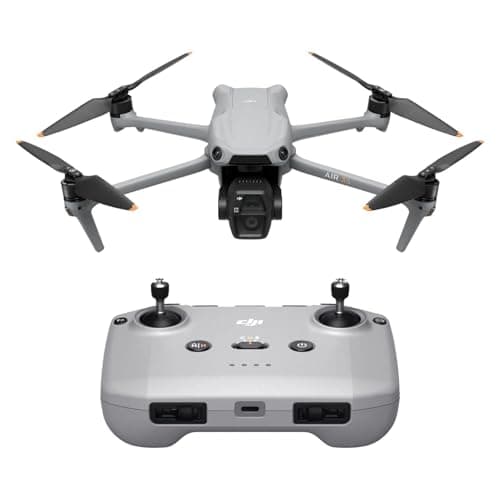
DJI Air 3S (RC-N3)
SHE Prosumer Drone Value Score9.4/10Around $1,099 — top buyability and price-to-capability with near-top sensor and safety thanks to the forward LiDAR bonus
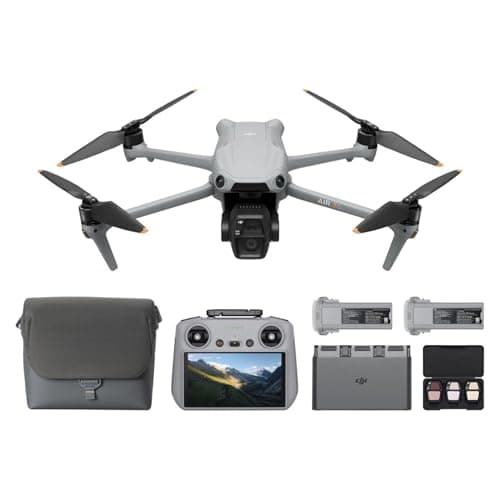
DJI Air 3S Fly More Combo (RC 2)
SHE Prosumer Drone Value Score9.1/10Around $1,599 — same gold-standard aircraft, docked only on price-to-capability for the accessory premium
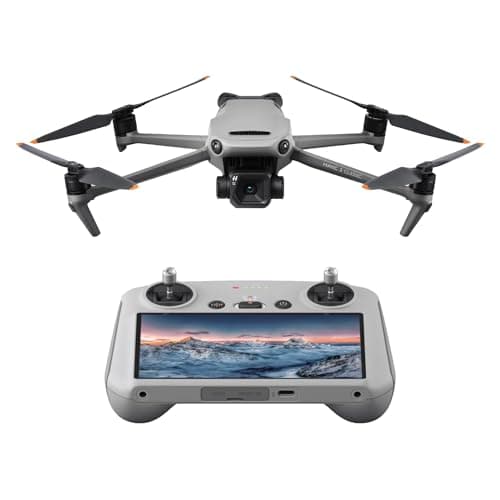
DJI Mavic 3 Classic (DJI RC)
SHE Prosumer Drone Value Score9.0/10Around $2,499 — wins raw sensor with the 4/3 Hasselblad but loses ground on price-to-capability
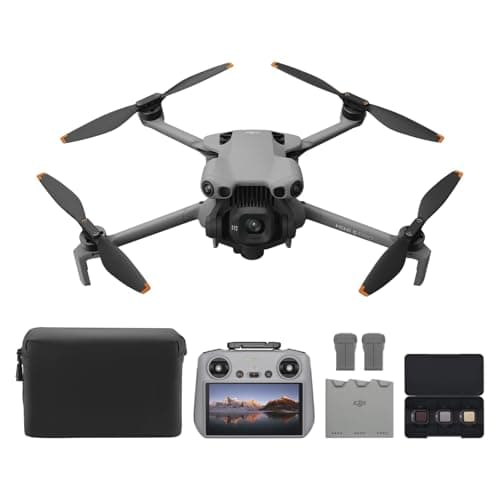
DJI Mini 5 Pro Fly More Combo
SHE Prosumer Drone Value Score8.9/10Around $1,049 — true 1-inch sensor under 250g (no registration), docked on endurance and wind stability
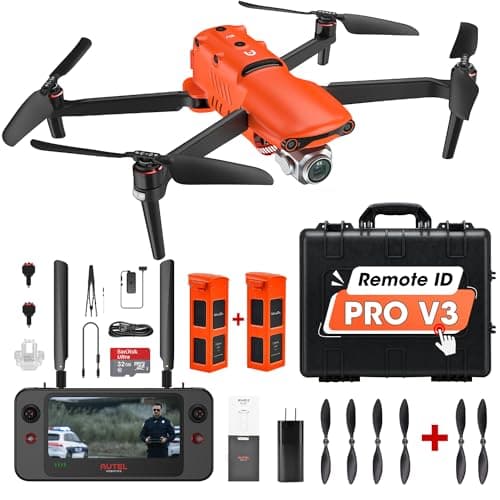
Autel Robotics EVO II Pro V3
SHE Prosumer Drone Value Score8.4/10Around $2,099 — Sony 1-inch 6K with no login wall, behind DJI on price-to-capability and app polish
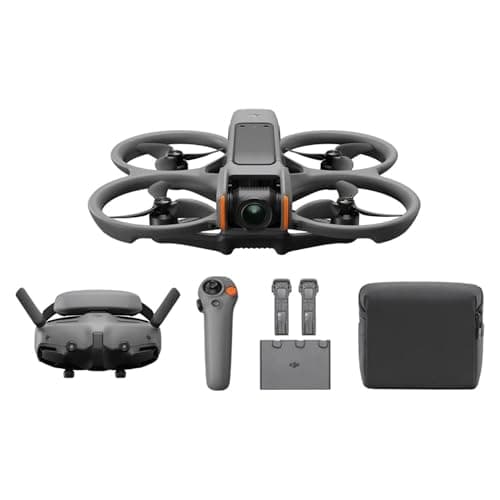
DJI Avata 2 Fly More Combo
SHE Prosumer Drone Value Score7.8/10Around $1,019 — the FPV alternative, docked on sensor (sub-1-inch) and short flight endurance
SHE Prosumer Drone Value Score
Composite of sensor and image, flight endurance, intelligent safety, buyability, and price-to-capability (0-10)
SmartHomeExplorer — computed from manufacturer specs and cited third-party reviews
Ecosystem, Controllers, and the FAA Registration Line
Before the ecosystem detail, here is how to read the score: the SHE Prosumer Drone Value Score weights the five things that actually decide a $1,000-2,500 purchase. The 9.4 on the DJI Air 3S (RC-N3) means two real focal lengths and dusk-confident LiDAR avoidance at the lowest price to that capability. Sensor and image quality carries the most weight (30%) in the weighted composite; flight endurance is the next factor at 22%, which is why the 45 min Air 3S and the 46 min Mavic 3 Classic score above the 23 min Avata 2 and the ~35 min Mini 5 Pro. Buyability is its own 15% factor precisely because DJI and Autel sell through third parties, so a model that reliably resolves to an in-stock, sanely-priced listing scores higher compared to one that blinks out of stock.
"Ecosystem" means something different for drones than for a smart-home hub: there's no Alexa or HomeKit here, only which app and controller you live in. Four of these six fly in DJI Fly — the DJI Air 3S (RC-N3), DJI Air 3S Fly More Combo (RC 2), DJI Mini 5 Pro Fly More Combo, and DJI Mavic 3 Classic (DJI RC) — which is the most polished app and transmission stack in the category and the reason most buyers stay with DJI. The Autel Robotics EVO II Pro V3 is the deliberate exception: Autel's Explorer app imposes no mandatory account or login wall, which is the single biggest reason buyers cross over. The DJI Avata 2 Fly More Combo is its own world, flown through Goggles 3 and a motion controller rather than a standard screen.
The controller choice is the practical fork. The base Air 3S ships with the RC-N3, which needs your phone clipped on; the Fly More combo, the Mini 5 Pro, the Autel, and the Mavic 3 Classic all include a screen-built-in controller, so you skip the phone-mount routine entirely. If you hate clipping your phone on in cold weather or bright sun, that's worth real money.
Registration is the compatibility wrinkle with legal teeth. Every drone in this guide except the sub-250g Mini 5 Pro crosses 249g, which means FAA registration and Remote ID broadcast are mandatory — a one-time $5 registration and a built-in module that broadcasts your drone's position and ID while flying. Only the Mini 5 Pro skips it. That is the entire reason it exists in a guide otherwise built around 1-inch-and-larger sensors: it is the one route to pro image quality without filing. Stability is the price, though — versus the heavier picks, its 249g airframe holds position less steadily in wind. Buyers who would rather avoid registration entirely and do not need a 1-inch sensor should start at our Best Beginner Camera Drones 2026 guide, where the whole tier stays under 250g.
When NOT to Buy
Plenty of buyers land here and shouldn't spend $1,000-2,500. If you mostly want fun flights, casual vacation clips, or a gift, the sub-250g starter tier in our Best Beginner Camera Drones 2026 guide delivers most of the joy for $169-$699, skips registration, and still manages 18-30 min of air time per battery. And if your one goal is dodging FAA paperwork, the DJI Mini 5 Pro Fly More Combo is the single pick here that does it — paying more for a heavier drone you then must register defeats the purpose.
Who Should Buy What
Who Should Buy What
| If you are… | Recommended pick |
|---|---|
Most prosumer creators You want the most camera per dollar — two real focal lengths and forward LiDAR — and you don't mind registering a drone over 249g with the FAA. | DJI Air 3S (RC-N3) |
Travelers who skip FAA paperwork You want true 1-inch image quality in a sub-250g body that legally skips registration, and you mostly fly in calm-to-moderate wind. | DJI Mini 5 Pro Fly More Combo |
Buy-once, fly-all-day shooters You've chosen the Air 3S and would rather get the screen RC 2, three batteries, a bag, and ND filters in one box than buy accessories piecemeal. | DJI Air 3S Fly More Combo (RC 2) |
Buyers leaving the DJI ecosystem You want a Sony 1-inch 6K camera with strong night range and no mandatory DJI account or login wall, and you'll trade some app polish for it. | Autel Robotics EVO II Pro V3 |
Cinema-look perfectionists You specifically want the largest 4/3 Hasselblad sensor, 5.1K, and the longest flight time here, and the premium over a 1-inch drone is justified. | DJI Mavic 3 Classic (DJI RC) |
FPV second-drone hobbyists You already own a gimbal camera drone and want immersive, dive-and-swoop single-take footage as a creative complement, not a primary camera. | DJI Avata 2 Fly More Combo |
Frequently Asked Questions
Do I have to register a $1,000-plus drone with the FAA?
Yes for every pick in this guide except the sub-250g DJI Mini 5 Pro. Any drone over 249 grams requires FAA registration (a one-time $5 fee) and must broadcast Remote ID — a signal that transmits the drone's position and identification while flying. The DJI Air 3S, Air 3S Fly More combo, Autel EVO II Pro V3, Mavic 3 Classic, and Avata 2 all cross 249 grams and require both. Only the Mini 5 Pro, at 249 grams, legally skips registration.
Is the cheaper Air 3S (RC-N3) really the same drone as the Fly More combo?
Yes — same aircraft, same dual 1-inch-class cameras, same forward LiDAR. The Fly More combo adds the screen-built-in DJI RC 2 controller (so you don't clip a phone on), two extra batteries with a charging hub, a carrying bag, spare props, and ND filters, for roughly $500 more. If you already own DJI batteries or an RC 2, the base RC-N3 kit is the smarter buy.
Why would I buy Autel over DJI?
The main reasons are no mandatory account or login wall, a Sony 1-inch sensor that shoots 6K, strong low-light range, and staying entirely outside the DJI ecosystem. The honest tradeoffs are price (the Autel EVO II Pro V3 costs more than a comparably-specced DJI Air 3S), a smaller accessory ecosystem of ND filters and parts, and an app and transmission system that are less polished than DJI's.
Will a sub-250g drone really shoot as well as the heavier ones?
On image quality, yes — the DJI Mini 5 Pro carries a true 1-inch 50MP sensor, so stills and video hold their own against the heavier picks. On stability, no. At 249 grams it has little inertia, so in gusty wind its footage bounces where a heavier DJI Air 3S or Mavic 3 Classic holds position. The weight that lets it skip FAA registration is the same weight that costs you stability.
Is the DJI Avata 2 a camera drone or something else?
It's an FPV (first-person-view) drone with a smaller 1/1.3-inch sensor, flown through goggles. It's great for immersive, dynamic single-take footage that no fixed-gimbal camera drone can capture, but it is not a substitute for a standard camera drone for traditional aerial stills. Think of it as a second creative tool alongside a gimbal drone, not your only one.
Are these prices stable on Amazon?
Not reliably. DJI and Autel sell through Amazon third-party sellers, so the same model can swing $200-400 and blink in and out of stock. Every price in this guide was verified for June 2026 via the Amazon Creators API and is phrased as approximate because it will move. Always confirm the seller and the current listing price before you buy.
Bottom Line
Get the DJI Air 3S (RC-N3) if you want the most capability per dollar — two real focal lengths, forward LiDAR, and a 45-minute rating — and don't mind FAA registration.
Get the DJI Mini 5 Pro Fly More Combo if you want a true 1-inch sensor in a sub-250g body that legally skips FAA registration, and you mostly fly in calm-to-moderate wind.
Get the DJI Air 3S Fly More Combo (RC 2) if you've chosen the Air 3S and want the complete all-day kit: screen-built-in RC 2, three batteries, charging hub, bag, and ND filters.
Get the Autel Robotics EVO II Pro V3 if you want a capable 1-inch camera drone outside the DJI ecosystem with no login wall and strong night-shooting range.
Get the DJI Mavic 3 Classic (DJI RC) if you want the largest sensor and the 4/3 Hasselblad cinema look plus the longest flight time, and price isn't the deciding factor.
Get the DJI Avata 2 Fly More Combo if you already own a gimbal camera drone and want immersive FPV as a second creative tool.
The right call for most prosumer buyers is the DJI Air 3S (RC-N3) around $1,099 — the cheapest path to dual 1-inch cameras with LiDAR. If you want to skip FAA registration, the sub-250g DJI Mini 5 Pro Fly More Combo is the only pick here that does. Skip the prosumer tier entirely if you mostly want casual flights or a gift — the sub-250g starter tier in our beginner guide delivers most of the fun for $169-$699 without registration.
Sources & Methodology
Methodology: SHE Prosumer Drone Value Score — Formula: (Sensor_Image × 0.30 + Flight_Endurance × 0.22 + Intelligent_Safety × 0.20 + Buyability × 0.15 + Price_to_Capability × 0.13). Factors: Sensor & Image Quality (30%): The whole reason to leave the beginner tier. Scored on physical sensor area (the Mavic 3 Classic's 4/3 Hasselblad and the 1-inch sensors on the Air 3S, Mini 5 Pro, and Autel EVO II Pro all clear the 1-inch bar; the Avata 2's 1/1.3-inch sits below it), plus max resolution and frame rate, 10-bit-or-better color, and rated dynamic range (12.8 stops on the Mavic, roughly 14 on the Air 3S). | Flight Endurance & Wind Resistance (22%): Real-world usability per battery. Combines rated max flight time (45-46 minutes on the Air 3S and Mavic 3 Classic versus around 35 on the Mini 5 Pro and 23 on the Avata 2) with wind resistance. This is where the sub-250g Mini 5 Pro is honestly docked: its footage bounces in gusts the heavier Air 3S shrugs off. | Intelligent Safety (20%): How forgiving the drone is near terrain, trees, or at dusk. Scores omnidirectional obstacle sensing (Air 3S, Mini 5 Pro, Mavic 3 Classic, and the Autel's 360-degree coverage) above forward-only, awards a bonus for the Air 3S's forward LiDAR, and grades subject-tracking maturity such as ActiveTrack 360. | Buyability & Stock Reliability (15%): A category-specific factor that exists because DJI and Autel sell through Amazon third-party sellers, so the same model can swing $200-400 and blink out of stock. Scored on whether the exact SKU resolved to an in-stock, sanely-priced listing during live June 2026 Creators-API verification. Models that returned empty ASIN lookups were excluded from the guide rather than scored low. | Price-to-Capability (13%): Live verified Amazon price divided into the composite capability tier, so the cheapest route to a given level scores highest. This is why the around-$1,099 Air 3S RC-N3 outscores the around-$1,599 Fly More combo on pure value, and why the around-$2,499 Mavic 3 Classic earns its keep only for buyers who specifically need the 4/3 Hasselblad look.
Expert review sources used in this analysis:
- SmartHomeExplorer aggregates expert review data and community sentiment to produce consensus-based buying guidance
- We did not independently flight-test these drones; the SHE Prosumer Drone Value Score is computed from manufacturer specifications and the cited third-party reviews, not first-party testing
- Expert assessments come from Tom's Guide, TechGearLab, and DPReview (DJI Air 3S); Space.com, Fstoppers, and DroneXL (DJI Mini 5 Pro); DSLRPros and Autelpilot (Autel EVO II Pro V3); DPReview, Tom's Guide, and Drone & Cam (DJI Mavic 3 Classic); and TechGearLab and Digital Camera World (DJI Avata 2)
- Community reliability and buyability reports sourced from r/dji and DroneXL long-term threads
- Amazon prices and stock verified June 2026 via the Amazon Creators API (affiliate tag nsh069-20); because DJI and Autel sell through third parties, prices are approximate and may shift.
Nicholas Miles is the founder of SmartHomeExplorer and a longtime smart home enthusiast focused on helping everyday homeowners make better technology decisions. He researches, compares, and writes about products across security, climate, lighting, leak prevention, sensors, home energy, and automation, with an emphasis on real-world usefulness, ecosystem compatibility, reliability, privacy, and long-term value.
Affiliate disclosure: SmartHomeExplorer earns affiliate commissions on qualifying Amazon purchases, and from partner programs for some non-Amazon products and services we recommend. Our scoring methodology is independent of affiliate relationships.