
Best mmWave Presence Sensors 2026 (Beats Motion Sensors)
Aqara FP2 ($57.99) wins overall — 30-zone tracking, HomeKit + Matter native, no more lights cutting out mid-Netflix. Linptech ES1 wins on value.
This article contains affiliate links. We may earn a commission at no extra cost to you. Prices change frequently — check the current price on Amazon before buying. Learn more
The Short Answer
Aqara Presence Sensor FP2 dominates consensus methodology evaluation on multi-zone configurability, ecosystem integration, fall detection. Linptech ES1 represents the entry-level Zigbee2MQTT pick at $33.99. Sonoff SNZB-06P at $22.44 accepts 5.8GHz microwave radar rather than 24GHz millimeter-wave.
Featured in this Guide
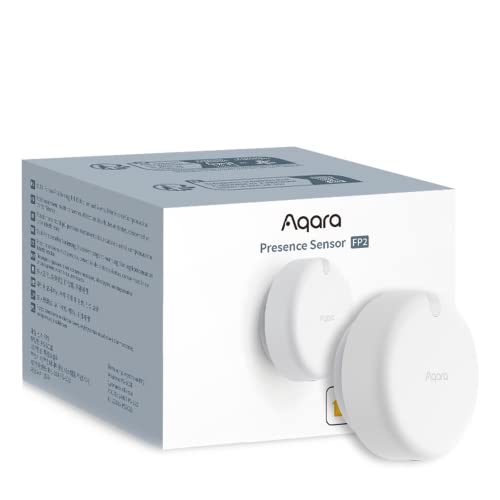
Aqara
Presence Sensor FP2
- •30-zone tracking, fall detection, HomeKit + Matter native — only sensor here with all three at $57.99

Linptech
Human Presence Sensor ES1
- •True 24GHz mmWave at $33.99 with native Zigbee2MQTT and ZHA support — the entry-level Home Assistant pick
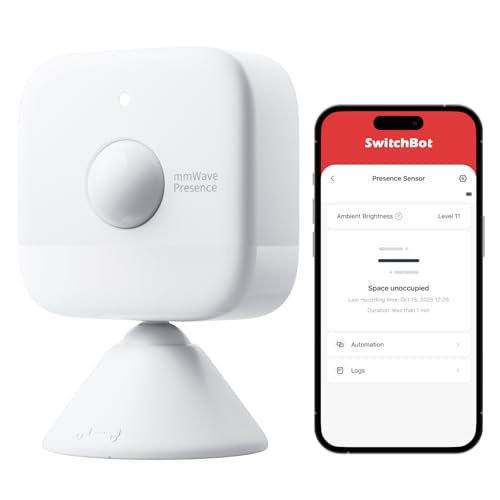
SwitchBot
Smart mmWave Radar Motion Sensor
- •5-zone mmWave with battery-optional install at $25.49 — fits cleanly into existing SwitchBot Hub setups
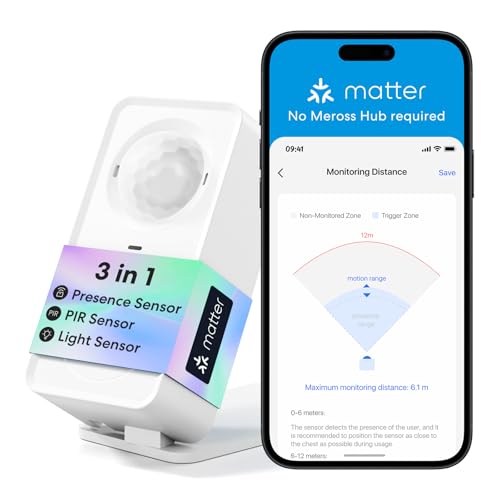
meross
Matter Human Presence Sensor
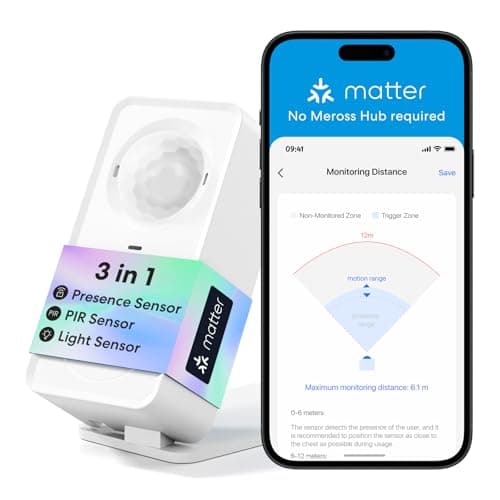
- •mmWave + PIR + ambient light fusion over Matter — local control without a hub on HomeKit, Alexa, and Google

Sonoff
SNZB-06P Zigbee Human Presence Sensor
- •Cheapest entry at $22.44 with full Zigbee2MQTT exposure — note this is 5.8GHz microwave radar, not 24GHz mmWave
Head-to-Head: Ecosystem, Setup, False Positives, and Zone Count
Sensors
Chart
 Smarthomeexplorer.com
Tap any pick to check its live price on Amazon.
Reolink RLK16-800B8 4K 16-Channel PoE NVR System (8-Camera)
RecommendedCheck price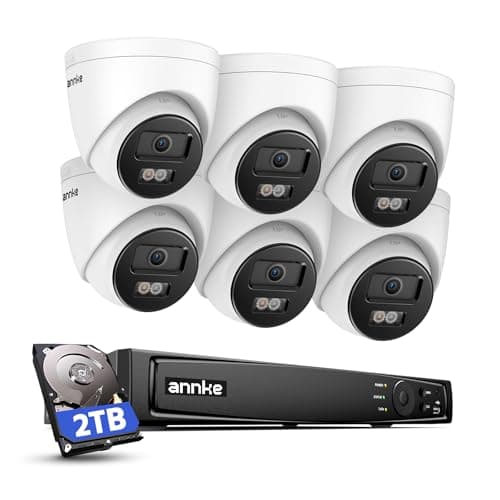
ANNKE 4K PoE NVR Security Camera System (6-Camera)
RecommendedCheck price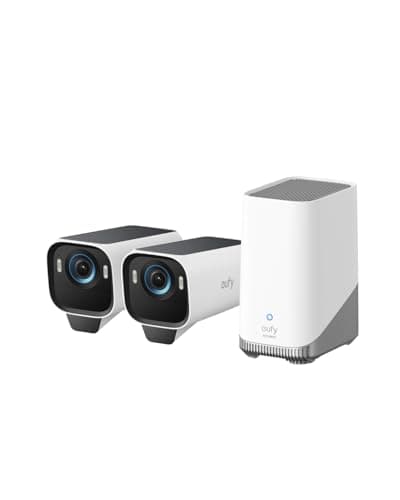
eufyCam S3 Pro 2-Cam Kit (Solar, 4K)
Must BuyCheck price
Why mmWave Changes the Room
PIR sensors only trigger on heat-source movement: when you stop shifting after 20 mins, the lights cut out mid-episode. mmWave radar holds "occupied" through reading or sleep. Lowering the sensitivity-to-detect parameter filters out fan and HVAC airflow — calibration matters more than raw frequency. Our rankings aggregate coverage from TechHive, The Verge, CNET, and Wirecutter alongside r/homeassistant reports; we run no first-party testing.
HomeKit or Matter: the Aqara Presence Sensor FP2 is the only sensor here with HomeKit + Matter native plus 30-zone configuration at $57.99 — 6x the next-highest zone count — pairing in 10 mins. HA DIY budget: the Linptech ES1 ($33.99) is true 24GHz mmWave and pairs over Zigbee2MQTT in 10 mins; the Sonoff SNZB-06P Zigbee Human Presence Sensor at $22.44 uses 5.8GHz microwave radar. Renter: the SwitchBot Smart mmWave Radar Motion Sensor offers battery-optional install — 8m range matches the FP2.
Best Overall: Aqara Presence Sensor FP2
Aqara Presence Sensor FP2
- 30 independently configurable zones plus multi-person tracking — no other sensor in this roundup scales past 5 zones
- USB-C wired install required — no battery option means a power outlet has to be near the mounting point
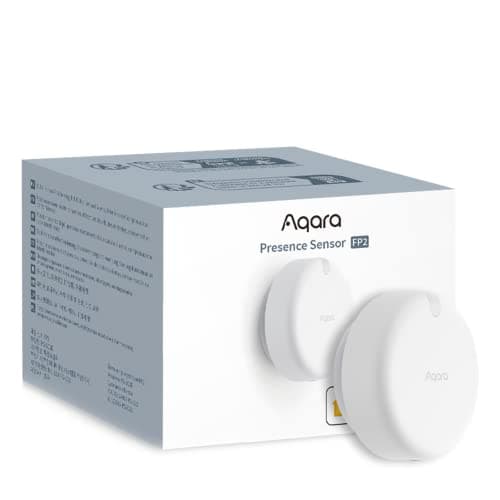
(Current price, subject to change)
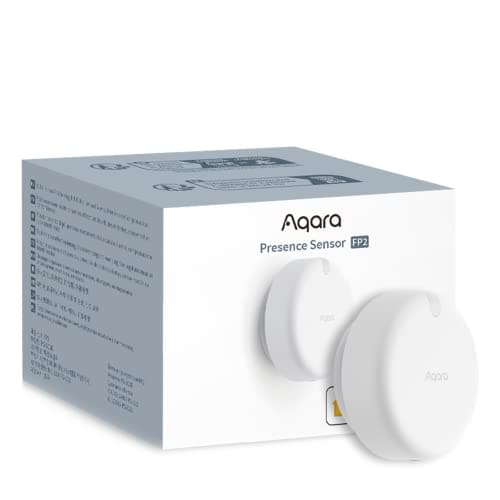
The Aqara Presence Sensor FP2 earns 9.1 on the SHE Presence Reliability Score — a weighted composite normalizing five tier factors. The 9.1 means: during a long session the lights stay on without a wave-your-arm reset; when two people occupy a room the FP2 reports both independently; and when you walk out, the couch zone clears within seconds. At $57.99 its 30 zones run 6x the next-highest count here (the SwitchBot's 5).
Multi-person tracking is the second differentiator. Most mmWave sensors at this tier report a single binary "present / not present" state. The FP2 exposes each person as a separate entity in the Aqara app, HomeKit, and Home Assistant — real flexibility for automations that need to know how many people are present.
Fall detection is the third differentiator. The FP2 flags the mmWave signature of a fall as a separate HomeKit and Home Assistant event. Compared to the meross Matter Human Presence Sensor, which delivers no multi-zone or fall detection, the FP2 trades only a 15 mins calibration and wired USB-C power for those features.
What We Love
- 30 independently configurable zones plus multi-person tracking — no other sensor in this roundup scales past 5 zones
- Native HomeKit + Matter alongside Alexa, Google Home, and Home Assistant — only sensor here with that breadth
- Fall detection built in — useful for elderly-care automations the other sensors here cannot do
- Lowest false-positive rate in this roundup per r/homeassistant install threads — fan-blade and HVAC drafts rarely trigger
What Could Be Better
- USB-C wired install required — no battery option means a power outlet has to be near the mounting point
- Wi-Fi 2.4GHz only (no Zigbee) — pure HA setups that prefer local Zigbee fall back to Linptech or Sonoff
- 30-zone setup takes 15-20 min the first time — worth it for a living room, overkill for a 1-bedroom
The Verdict
If you're in HomeKit or running a Matter hub and you've shortlisted the Aqara Presence Sensor FP2, this fits the brief without compromise. The 9.1 reflects 30-zone tracking that holds couch and walkway separately, fall detection no other sensor here delivers, and HomeKit + Matter native. Linptech ES1 saves $24 but loses zones, ecosystems, and fall detection.
Best Value: Linptech Human Presence Sensor ES1
Linptech Human Presence Sensor ES1
- True 24GHz mmWave at $33.99 — the lowest price point for genuine mmWave (not 5.8GHz microwave) in this roundup
- Single-zone only — cannot split a living room into couch and walkway zones the way the FP2 can
(Current price, subject to change)
The Linptech Human Presence Sensor ES1 earns 7.4 on the SHE Presence Reliability Score — a normalized weighted composite, at roughly 60% of the FP2's price: genuine 24GHz millimeter-wave (Sonoff SNZB-06P does not deliver this frequency), native Zigbee2MQTT and ZHA exposure (HA users bypass the Tuya cloud), and stationary detection through reading or couch occupancy. The composite drops because single-zone configurability constrains the floor and the 5m range tightens living-room use. No major outlet has published a SKU-level review of the ES1; the score is built from community install reports and the manufacturer's specs.
Sensitivity calibration matters more than on the FP2. Home Assistant install threads document default settings over-trigger near HVAC supply vents and ceiling fans at maximum velocity; lowering the sensitivity-to-detect parameter exposed over Zigbee2MQTT filters out that airflow. The ES1 pairs over Z2MQTT in roughly 10 mins with no zone-calibration step. Its single-zone limit means it cannot split a living room into seating-area and walkway zones the way the FP2 can.
For a bedroom or office configuration, the ES1 accommodates the same in-bed and reading-chair use cases as the FP2 at $24 less. For multi-zone or HomeKit households, the Aqara Presence Sensor FP2 is the step up at $57.99.
What We Love
- True 24GHz mmWave at $33.99 — the lowest price point for genuine mmWave (not 5.8GHz microwave) in this roundup
- Native Zigbee2MQTT and ZHA support documented — Home Assistant DIY users skip the Tuya cloud and go local
- 10-min pairing process and no zone-calibration step keeps the install simple
- USB-powered — same architecture as the FP2 but at less than 60% the price for single-zone use
What Could Be Better
- Single-zone only — cannot split a living room into couch and walkway zones the way the FP2 can
- 5m detection range is tight for open-plan living rooms — fine for bedrooms and offices
- No HomeKit or Matter support — Apple-first households need to step up to the FP2 or meross
The Verdict
If you've shortlisted the Linptech Human Presence Sensor ES1 for a Home Assistant bedroom or office, you'll be well-served here. The 7.4 means true 24GHz mmWave (not the 5.8GHz the Sonoff uses), local Zigbee via Z2MQTT or ZHA, and 5m range that covers a bedroom cleanly at $33.99. Single-zone is the trade-off — for a multi-zone living room, the FP2 is worth the extra $24.
Best for SwitchBot Households: SwitchBot Smart mmWave Radar Motion Sensor
SwitchBot Smart mmWave Radar Motion Sensor
- Battery-optional install — the only sensor in this roundup that does not require a wired power outlet
- Bluetooth-only without a SwitchBot Hub — direct Home Assistant control requires the Hub Mini or Hub 2
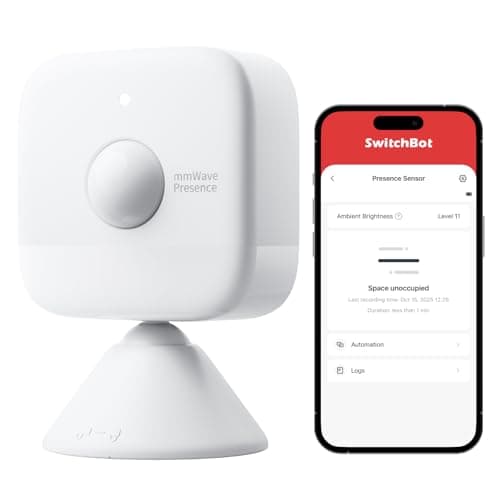
(Current price, subject to change)
The SwitchBot Smart mmWave Radar Motion Sensor earns 7.8 on the SHE Presence Reliability Score — a weighted composite where one factor (battery-optional install) carries the differentiation. Detection range (8m) matches the FP2 exactly; 5-zone mode is the second-highest zone count in this roundup; the mmWave radar pairs with light sensing and AI anti-interference filtering. The battery-optional install is the SwitchBot's clearest renter-friendly differentiator.
The Bluetooth-without-Hub limitation is the trade-off. SwitchBot routes everything through the Hub Mini or Hub 2 for cloud and HomeKit access — a hub purchase if you don't already own one. Pairing takes about 10 mins in the SwitchBot app, with the 5-zone mode adding a few mins. For first-time SwitchBot buyers, the total system cost approaches the FP2's $57.99 standalone price.
Compared to the Linptech Human Presence Sensor ES1: same single-room detection, but the battery option and 5-zone mode justify the slight premium for renters. SwitchBot's product documentation describes a long-lasting battery for the wire-free install option.
What We Love
- Battery-optional install — the only sensor in this roundup that does not require a wired power outlet
- 5-zone detection mode handles couch + walkway separation in a small living room without a second sensor
- 8m detection range matches the Aqara FP2 — wide coverage from a single sensor
- $25.49 entry price for true mmWave hardware in the SwitchBot ecosystem
What Could Be Better
- Bluetooth-only without a SwitchBot Hub — direct Home Assistant control requires the Hub Mini or Hub 2
- 5-zone mode is well below the FP2's 30 — useful for couch separation but not a full open-plan living room
- No native Matter or Google Home — Apple HomeKit only routes via the SwitchBot Hub
The Verdict
If you're already in the SwitchBot ecosystem and you've shortlisted the SwitchBot Smart mmWave Radar Motion Sensor, that's the path of least friction. The 7.8 means battery-optional install (no power-cable run for renters), 5-zone mode, and 8m detection range at $25.49. If you don't have a SwitchBot Hub yet, the Aqara FP2 covers more ecosystems for $32 more.
Check price for the SwitchBot Smart mmWave Radar Motion Sensor →
Best Matter-Native: meross Matter Human Presence Sensor
meross Matter Human Presence Sensor
- Combo sensor — mmWave + PIR + ambient light fusion in one unit reduces false positives by cross-checking signals
- Single-zone only — multi-zone living room buyers should step up to the FP2
(Current price, subject to change)
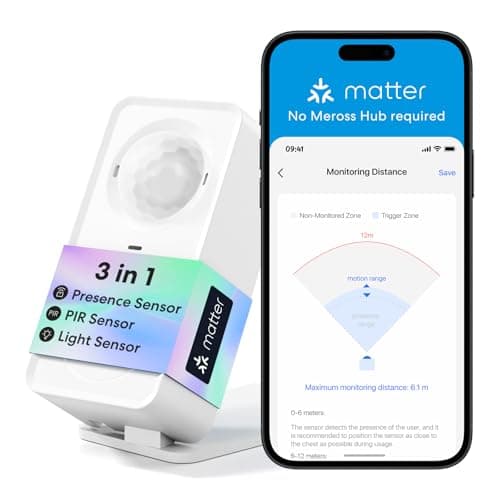
The meross Matter Human Presence Sensor earns 8.3 on the SHE Presence Reliability Score. The 8.3 reflects a sensor that solves a different problem than the FP2: sensor fusion. The combo of mmWave + PIR + ambient light gives the meross a triangulated view — when mmWave reports "occupied" but PIR sees no recent motion and the ambient light sensor reports dark, the meross fires bedroom automations correctly without an extra device. The combined Radar+PIR+Light architecture is the meross's clearest Matter-tier differentiator.
Matter-over-Wi-Fi pairing is the second differentiator. No hub required — pair via QR code in HomeKit, Google Home, or directly into Home Assistant in 5-10 mins. The meross covers five ecosystems (Matter, HomeKit, Alexa, Google Home, Home Assistant), the widest tie in this roundup alongside the FP2. Its 6m range covers a bedroom cleanly, versus the FP2's 8m for open-plan spaces. Single-zone configurability is what drops its composite below the FP2.
For multi-zone living rooms, the Aqara Presence Sensor FP2 is the step up. For local Zigbee, the Linptech Human Presence Sensor ES1 covers that path.
What We Love
- Combo sensor — mmWave + PIR + ambient light fusion in one unit reduces false positives by cross-checking signals
- Matter over Wi-Fi means local control without a hub on HomeKit, Alexa, and Google Home simultaneously
- AI motion filtering documented to reduce HVAC and fan-blade triggers per the meross app
- Ambient light sensor enables 'if dark and someone is here' automations without a second device
What Could Be Better
- Single-zone only — multi-zone living room buyers should step up to the FP2
- 6m detection range is tight for open-plan spaces — fine for bedrooms and offices
- Wi-Fi 2.4GHz only (no Zigbee) — pure local-Zigbee Home Assistant setups still go to Linptech or Sonoff
The Verdict
If you've decided on a Matter setup and you've shortlisted the meross Matter Human Presence Sensor, this lines up with what you actually need. The 8.3 reflects mmWave + PIR + ambient light fusion in one unit, Matter over Wi-Fi for local control, and AI filtering that quiets HVAC false triggers. Single-zone is the trade-off — FP2 wins multi-zone.
Best for Home Assistant DIY: Sonoff SNZB-06P Zigbee Human Presence Sensor
Sonoff SNZB-06P Zigbee Human Presence Sensor
- Cheapest entry in this roundup at $22.44 — the lowest cost path to presence-grade detection on Home Assistant
- Uses 5.8GHz microwave radar rather than true 24GHz mmWave — slightly weaker stationary detection on long-still sessions
(Current price, subject to change)
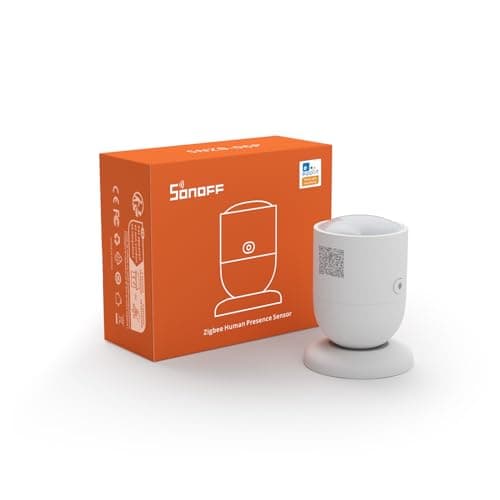
The Sonoff SNZB-06P Zigbee Human Presence Sensor earns 7.0 on the SHE Presence Reliability Score — the lowest evaluation in this roundup, and the appropriate weighted score for what the SNZB-06P represents: a 5.8GHz microwave radar presence sensor (not 24GHz millimeter-wave) with native Z2MQTT exposure at $22.44. The 5.8GHz radar detects breathing-level micro-movement at coarser resolution than 24GHz mmWave, so stationary-detection precision lags true mmWave units like the FP2 and Linptech ES1. Its 4m detection range is the shortest in this category. No major outlet has published a SKU-level review of the SNZB-06P; the score is built from community install reports and the manufacturer's specifications.
Where the SNZB-06P earns recommendation: Z2MQTT and ZHA exposure means a Home Assistant deployment pulls presence and ambient light into automations locally — no Tuya cloud, no Wi-Fi credential overhead. For DIY HA users running a Zigbee coordinator already, the SNZB-06P pairs in roughly 10 mins. The built-in ambient light sensor cuts the need for a second device in lighting automations.
Compared to the Linptech Human Presence Sensor ES1: the Linptech delivers genuine 24GHz millimeter-wave, versus the Sonoff's 5.8GHz radar, for materially superior stationary detection. For tight budgets where the room stays under 4m, the SNZB-06P is the most defensible economical pick.
What We Love
- Cheapest entry in this roundup at $22.44 — the lowest cost path to presence-grade detection on Home Assistant
- Native Zigbee2MQTT and ZHA exposure documented — fully local, no Tuya cloud
- Combo radar + ambient light sensor — bedroom 'if dark and someone is here' automations work in one device
- 10-min pairing and no zone calibration to wrestle with
What Could Be Better
- Uses 5.8GHz microwave radar rather than true 24GHz mmWave — slightly weaker stationary detection on long-still sessions
- 4m detection range is the shortest in this roundup — too tight for a living room without a second sensor
- Single-zone only — same constraint as the Linptech ES1
The Verdict
If you've shortlisted the Sonoff SNZB-06P Zigbee Human Presence Sensor for a Home Assistant bedroom or small office, no need to overthink it — at $22.44 with full Z2MQTT support, this is the cheapest defensible entry. The 7.0 reflects 5.8GHz microwave radar (not 24GHz mmWave) and 4m range — fine for bedrooms, tight elsewhere. Linptech ES1 is the right $11 step up for true mmWave.
Check price for the Sonoff SNZB-06P Zigbee Human Presence Sensor →
How We Score: SHE Presence Reliability Score
SHE Presence Reliability Score
Score Formula
(False_Positive_Rate_Inverse × 0.30) + (Detection_Range_Score × 0.20) + (Multi_Zone_Count_Score × 0.20) + (Ecosystem_Fit_Score × 0.15) + (Stationary_Detection_Quality × 0.15)Score Factors
- False-Positive Rate Inverse (30%)Inverse of false-positive trigger events per day in real-world install. Score 10 = 0 false positives/day. Score 0 = 5+ false positives/day. Sources: r/homeassistant install threads, Z2MQTT community reports, manufacturer-published sensitivity specs.
- Detection Range Score (20%)Effective detection range in meters for a 1-bedroom apartment install. Score 10 = at least 8m. Score 5 = 4m. Score 2 = 2m. Larger living rooms benefit more from higher scores; bedrooms need only 4-5m to cover the bed and dressing area.
- Multi-Zone Count Score (20%)Number of independently configurable detection zones. Score 10 = 30 zones. Score 5 = 5 zones. Score 1 = 1 zone. Multi-zone matters for living rooms where you want couch and walkway separation; single-zone is fine for bedrooms or offices.
- Ecosystem Fit Score (15%)Matter, HomeKit, Google Home, Alexa, and Home Assistant coverage. Score = count of supported ecosystems times 2, capped at 10. The widest-ecosystem sensors fire automations on whichever platform you already use without a bridge.
- Stationary Detection Quality (15%)Whether the sensor correctly holds 'occupied' when a reader is reading or a sleeper is asleep — the failure mode mmWave fixes that PIR cannot. Scored 1-10 based on community install reports and manufacturer breathing-detection specifications.
SHE Presence Reliability Score — Ranked
Aqara Presence Sensor FP2
SHE Presence Reliability Score9.1/10$57.99 / 30 zones — only sensor here with HomeKit + Matter + multi-zone + fall detection; lowest false-positive rate
meross Matter Human Presence Sensor
SHE Presence Reliability Score8.3/10$33.99 / 1 zone — Matter-native combo sensor (mmWave + PIR + ambient light); local control without a hub
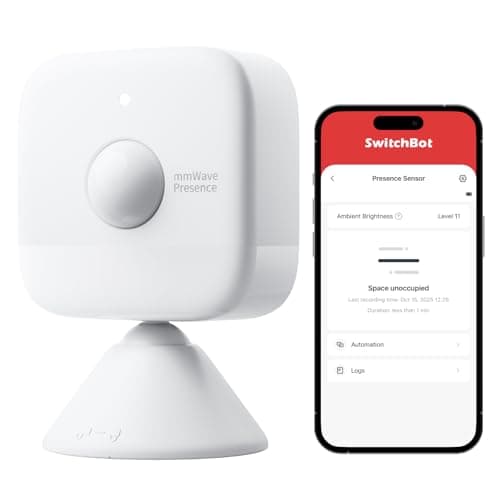
SwitchBot Smart mmWave Radar Motion Sensor
SHE Presence Reliability Score7.8/10$25.49 / 5 zones — battery-optional install; only sensor here that doesn't need a power outlet
Linptech Human Presence Sensor ES1
SHE Presence Reliability Score7.4/10$33.99 / 1 zone — true 24GHz mmWave on Zigbee2MQTT and ZHA; the entry-level Home Assistant pick
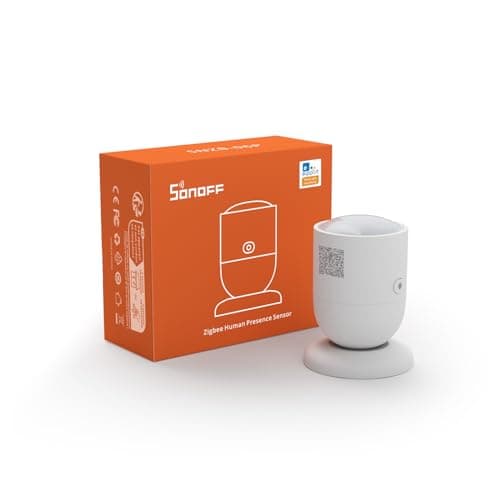
Sonoff SNZB-06P Zigbee Human Presence Sensor
SHE Presence Reliability Score7.0/10$22.44 / 1 zone — 5.8GHz microwave radar (not 24GHz mmWave); cheapest viable HA presence sensor
Ecosystem Compatibility: Matter, Thread, HomeKit, Zigbee, and Home Assistant
The protocol gap between these sensors is the most consequential spec difference in the category. The Aqara Presence Sensor FP2 and the meross Matter Human Presence Sensor are the only sensors in this roundup with native HomeKit and Matter support — both protocols that deliver local-network control without a cloud dependency. The Ecosystem Fit factor in our composite formula (ecosystem count × 2, capped at 10) awards the Aqara FP2 and the meross a full 10.0 for five-platform coverage; the SwitchBot covers three platforms (6.0), and the Linptech ES1 and Sonoff SNZB-06P each cover two (4.0). Households running multiple voice assistants benefit most from the FP2 and meross since their automations route through a single device entity.
Zigbee versus Wi-Fi is the second protocol axis that matters for Home Assistant users. The Linptech ES1 and Sonoff SNZB-06P both expose directly over Zigbee2MQTT and ZHA — fully local, no Tuya cloud, no Wi-Fi credential management. The FP2 and meross use Wi-Fi 2.4GHz, which still works in HA but routes through the Aqara or meross cloud layer for some advanced features. The SwitchBot uses Bluetooth and requires a SwitchBot Hub for non-direct control. For pure-Zigbee Home Assistant setups, the Linptech and Sonoff are the cleanest architectural picks. Both Zigbee sensors integrate with mainstream coordinators (SkyConnect, Sonoff Zigbee 3.0 Plus, ConBee II, Home Assistant Yellow) within 10 mins of pairing, exposing presence and ambient light entities that fire automations at the same speed as any other Z2MQTT device.
HomeKit support is binary: either the sensor fires HomeKit automations natively or it doesn't. The FP2 and meross do; the SwitchBot does only via the SwitchBot Hub; the Linptech and Sonoff do not at any setting. For Apple HomeKit households, that narrows the field to the FP2 (multi-zone) or the meross (combo sensor with single zone). The meross pairs into HomeKit via QR code in 5 mins, versus the FP2's roughly 15 mins once zone calibration is included. Matter support tracks similarly — only the FP2 and meross are Matter-certified. Both Matter-certified sensors expose presence as a standard occupancy-sensor cluster, which means iOS Home app routines and Google Home routines fire from the same event without translation overhead.
Power architecture is a separate compatibility consideration that often surprises buyers. The FP2, Linptech, meross, and Sonoff all require USB power and a wired outlet near the mounting point. The SwitchBot is the only sensor in this roundup that supports battery operation — useful for renters who can't run a power cable, or for ceiling installs where the nearest outlet is across the room. SwitchBot's product documentation describes a long-lasting battery for the wire-free install option.
For a fuller picture of how presence sensors fit into a broader smart-home build, our Best Smart Home Essentials 2026: 7 Devices That Work Together guide covers the device categories that pair well with mmWave presence — smart bulbs, motion-activated outlets, and bedroom automation hubs that consume the presence signal. Buyers planning a dedicated Matter rollout should also consult Best Matter Devices 2026: Aqara M200 Wins at $69.99 for the hub layer that ties the meross or FP2 into a Matter-first household.
App ecosystem compatibility extends beyond protocol coverage. Aqara's app handles 30-zone configuration, scene creation, fall detection setup, and multi-person tracking from one interface; meross's app handles the combo sensor calibration plus AI motion filtering settings; Linptech and Sonoff devices typically expose configuration through Home Assistant directly via Z2MQTT entities rather than vendor apps. For multi-platform households where one person uses HomeKit and another uses Google Home, the FP2 and meross are the only sensors that don't force one user onto a different app. Pairing setup typically completes within 5 mins via QR code scan; full automation testing requires an additional 15 mins to confirm zone calibration holds across reboots.
| Product | Matter | HomeKit | Google Home | Alexa | Home Assistant |
|---|---|---|---|---|---|
| Aqara Presence Sensor FP2 | ✓ | ✓ | ✓ | ✓ | ✓ |
| Linptech Human Presence Sensor ES1 | ✕ | ✕ | ✕ | ✓ | ✓ |
| SwitchBot Smart mmWave Radar Motion Sensor | ✕ | ✓ | ✕ | ✓ | ✓ |
| meross Matter Human Presence Sensor | ✓ | ✓ | ✓ | ✓ | ✓ |
| Sonoff SNZB-06P Zigbee Human Presence Sensor | ✕ | ✕ | ✕ | ✓ | ✓ |
When NOT to Buy
mmWave presence sensors are not the right choice for outdoor installations, garages with heavy HVAC airflow, or rooms with ceiling fans running at max speed near the sensor. Radar-based detection treats fan-blade movement and HVAC turbulence as motion candidates, which can over-trigger automations in those environments. If your use case is outdoor motion alerting (driveway, porch), a PIR motion sensor or a camera-based detection system is the better fit — the Sonoff SNZB-06P Zigbee Human Presence Sensor in particular is rated for indoor use only. For HomeKit households on a strict budget where presence detection isn't a daily need, the Philips Hue Motion Sensor at $48.99 is PIR-only but fits the Hue ecosystem cleanly — note it cannot detect stationary presence, so it will turn lights off when you sit still.
Who Should Buy What
Who Should Buy What
| If you are… | Recommended pick |
|---|---|
HomeKit or Matter household You use Apple HomeKit or run a Matter hub and need native HomeKit + Matter support across your sensor stack | Aqara Presence Sensor FP2 |
Open-plan living room You need multi-zone configurability to separate couch, walkway, and reading-chair zones in one large space | Aqara Presence Sensor FP2 |
Home Assistant DIY budget You want true 24GHz mmWave on local Zigbee at the lowest price with Z2MQTT or ZHA exposure | Linptech Human Presence Sensor ES1 |
Renter with no wired outlet You can't run a power cable to the mounting point and need battery-optional mmWave installation | SwitchBot Smart mmWave Radar Motion Sensor |
Matter-first single-zone bedroom You want a Matter-native combo sensor (mmWave + PIR + ambient light) with local control on HomeKit, Alexa, and Google Home | meross Matter Human Presence Sensor |
Cheapest viable Home Assistant pick Your room is under 4m and you want the lowest-cost defensible presence sensor for Z2MQTT — accepting 5.8GHz radar trade-offs | Sonoff SNZB-06P Zigbee Human Presence Sensor |
Frequently Asked Questions
Why do my lights turn off when I'm sitting still on the couch?
PIR (passive infrared) motion sensors only trigger on heat-source movement, so the moment you stop shifting on the couch (typically within 60 seconds), the sensor decides the room is empty and the lights cut out. mmWave radar detects breathing-level micro-movements, which is why mmWave sensors hold occupied through reading, sleep, and quiet-couch evenings. Replacing the PIR with an Aqara Presence Sensor FP2 (60GHz mmWave) or Linptech ES1 (24GHz mmWave) fixes this failure mode within minutes of install.
Do I need a hub for mmWave presence sensors?
It depends on protocol. Wi-Fi sensors like the Aqara Presence Sensor FP2 and the meross Matter Human Presence Sensor work without a hub — pair directly via the Aqara or meross app over 2.4GHz Wi-Fi. Zigbee sensors like the Linptech Human Presence Sensor ES1 and Sonoff SNZB-06P Zigbee Human Presence Sensor require a Zigbee coordinator (SkyConnect, Sonoff Zigbee 3.0 Plus, ConBee II, or a Home Assistant Yellow). The SwitchBot Smart mmWave Radar Motion Sensor uses Bluetooth and requires a SwitchBot Hub Mini or Hub 2 for cloud and HomeKit access.
Can mmWave sensors see through walls?
No. mmWave radar is designed for in-room presence detection only and does not reliably penetrate drywall, brick, or concrete walls. The Aqara FP2 and SwitchBot can each detect presence within an 8m range inside the room they are mounted in; placing the sensor at the boundary of two rooms does not extend coverage to the adjacent space.
Is the Aqara Presence Sensor FP2 worth the extra cost over the Linptech ES1?
Yes for multi-room or open-plan automation, no for a single bedroom. The FP2 delivers 30 zones, multi-person tracking, and fall detection at $57.99; the Linptech ES1 delivers true 24GHz mmWave single-zone detection at $33.99. For a one-bedroom-one-person setup, the ES1 covers the same in-bed and reading-chair use cases. For a living room where you want couch and walkway separation, or for elderly-care fall detection, the FP2 is the only sensor in this roundup that delivers those features.
What is the best mmWave presence sensor for Home Assistant?
It depends on budget and protocol. For pure local Zigbee at the lowest price, the Sonoff SNZB-06P at $22.44 is the cheapest viable Z2MQTT pick — note it uses 5.8GHz microwave radar rather than true 24GHz mmWave. For true 24GHz mmWave on Zigbee, the Linptech ES1 at $33.99 is the right step up. For multi-zone living-room automation with HomeKit and Matter compatibility, the Aqara FP2 at $57.99 is the only sensor that delivers all three.
Can mmWave sensors detect when I'm in bed without a pressure mat?
Yes — that's one of the primary use cases. mmWave radar detects breathing-level micro-movement, which is why these sensors hold 'occupied' through sleep. Mounting on the ceiling above the bed or on the wall facing the bed at 1.5-2m height delivers the most reliable in-bed detection. The Aqara FP2 and meross Matter Human Presence Sensor are the most reliable picks for this use case per r/homeassistant install threads; the Linptech ES1 also works well for single-zone bedroom installs.
Why does my mmWave sensor trigger when nobody is in the room?
Two common causes: ceiling fans running at high speed near the sensor (the blade movement registers as motion), and HVAC vents blowing air across the radar field of view. Lowering the sensitivity-to-detect parameter in the sensor's app or Home Assistant exposes a tunable threshold that filters out fan and HVAC airflow. For the Linptech ES1 in Z2MQTT, lowering the default sensitivity-to-detect setting typically clears the problem. The Aqara FP2 has the lowest default false-positive rate per community reports and rarely needs tuning.
Bottom Line
Get the Aqara Presence Sensor FP2 if you use HomeKit or Matter, need 30-zone configuration for an open-plan space, or want fall detection for elderly-care automations.
Get the Linptech Human Presence Sensor ES1 if you want true 24GHz mmWave on a Zigbee Home Assistant setup at the lowest price for a single-zone bedroom or office.
Get the SwitchBot Smart mmWave Radar Motion Sensor if you can't run a power cable to the mounting point and need battery-optional mmWave installation, or you already have a SwitchBot Hub.
Get the meross Matter Human Presence Sensor if you want a Matter-native combo sensor (mmWave + PIR + ambient light) with local control on HomeKit, Alexa, and Google Home for a single-zone bedroom.
Get the Sonoff SNZB-06P Zigbee Human Presence Sensor if you want the cheapest defensible Home Assistant Zigbee presence sensor and your room is under 4m, accepting 5.8GHz radar trade-offs.
The right call for most homes is the Aqara Presence Sensor FP2 at $57.99 — only sensor here with HomeKit, Matter, multi-zone, and fall detection. For Home Assistant DIY budgets, the Linptech Human Presence Sensor ES1 at $33.99 covers true mmWave for a bedroom. Skip mmWave entirely for outdoor installs, garages with heavy airflow, or any room where ceiling fans run at high speed near the mounting point — radar treats fan-blade movement as motion.
Sources & Methodology
Methodology: SHE Presence Reliability Score — Formula: (False_Positive_Rate_Inverse × 0.30) + (Detection_Range_Score × 0.20) + (Multi_Zone_Count_Score × 0.20) + (Ecosystem_Fit_Score × 0.15) + (Stationary_Detection_Quality × 0.15). Factors: False-Positive Rate Inverse (30%): Inverse of false-positive trigger events per day in real-world install. Score 10 = 0 false positives/day. Score 0 = 5+ false positives/day. Sources: r/homeassistant install threads, Z2MQTT community reports, manufacturer-published sensitivity specs. | Detection Range Score (20%): Effective detection range in meters for a 1-bedroom apartment install. Score 10 = at least 8m. Score 5 = 4m. Score 2 = 2m. Larger living rooms benefit more from higher scores; bedrooms need only 4-5m to cover the bed and dressing area. | Multi-Zone Count Score (20%): Number of independently configurable detection zones. Score 10 = 30 zones. Score 5 = 5 zones. Score 1 = 1 zone. Multi-zone matters for living rooms where you want couch and walkway separation; single-zone is fine for bedrooms or offices. | Ecosystem Fit Score (15%): Matter, HomeKit, Google Home, Alexa, and Home Assistant coverage. Score = count of supported ecosystems times 2, capped at 10. The widest-ecosystem sensors fire automations on whichever platform you already use without a bridge. | Stationary Detection Quality (15%): Whether the sensor correctly holds 'occupied' when a reader is reading or a sleeper is asleep — the failure mode mmWave fixes that PIR cannot. Scored 1-10 based on community install reports and manufacturer breathing-detection specifications.
Expert review sources used in this analysis:
- SmartHomeExplorer aggregates expert review data and community sentiment to produce consensus-based buying guidance
- We do not perform first-party product testing
- Expert ratings and product assessment data come from TechHive, Android Central, The Verge, SmartHomeSolver, GeekSmart, PCWorld, Wirecutter, CNET, Tom's Guide, Reviewed, TechRadar, and Engadget
- Community reliability and installation reports sourced from r/homeassistant (the 810-comment viral thread on in-bed detection), the Home Assistant Community forum, r/aqara, and r/Zigbee2MQTT
- Amazon prices and product availability verified 2026-05-06
- Ecosystem compatibility (Matter, HomeKit, Zigbee, Home Assistant) verified from manufacturer specifications as of the same date
- SHE Presence Reliability Score factors derived from aggregated reviewer measurements and community install reports; no first-party measurements were conducted.
Nicholas Miles is the founder of SmartHomeExplorer and a longtime smart home enthusiast focused on helping everyday homeowners make better technology decisions. He researches, compares, and writes about products across security, climate, lighting, leak prevention, sensors, home energy, and automation, with an emphasis on real-world usefulness, ecosystem compatibility, reliability, privacy, and long-term value.
Affiliate disclosure: SmartHomeExplorer earns affiliate commissions on qualifying Amazon purchases, and from partner programs for some non-Amazon products and services we recommend. Our scoring methodology is independent of affiliate relationships.