
XGIMI Horizon Ultra vs BenQ TK710: Smart 4K Projector Face-Off 2026
The XGIMI Horizon Ultra packs Android TV plus Dolby Vision into one box; the BenQ TK710 trades the smart OS for 3,200 lumens and 4ms gaming. Which one fits your room?
This article contains affiliate links. We may earn a commission at no extra cost to you. Prices change frequently — check the current price on Amazon before buying. Learn more
The Short Answer
The XGIMI Horizon 20 wins: RGB Triple Laser illumination, Google TV, responsive 1ms/240Hz gaming, plus Dolby Vision cinema HDR for $1,399. Its constraint is the price premium over the Horizon Ultra, the best smart all-in-one at $1,299. Prioritizing maximum brightness instead, choose the BenQ TK710 plus a peripheral.
Featured in this Guide
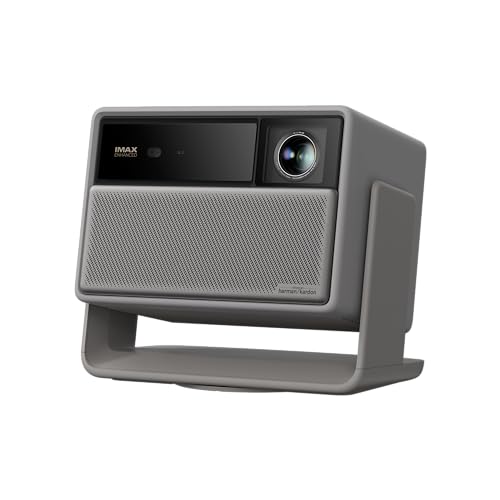
XGIMI
HORIZON 20 4K RGB Triple Laser Home Projector
- •RGB Triple Laser, Google TV with licensed Netflix, 1ms/240Hz, and Dolby Vision plus IMAX Enhanced

XGIMI
Horizon Ultra Smart 4K Projector
- •Dolby Vision plus built-in Android TV and Harman Kardon audio fills the smart-OS gap for $1,299
BenQ
TK710 4K Gaming Projector
- •Verified 4ms at 1080p/240Hz and 3,200 lumens
- •budget a streaming stick since there is no smart OS
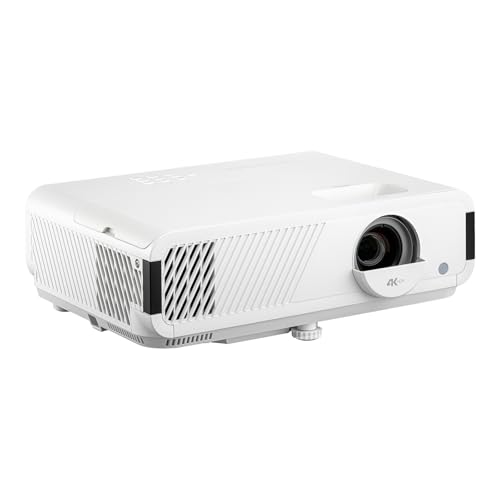
ViewSonic
PX749-4K 4000 Lumens 4K Gaming Projector
- •4,000 lumens for under $1,200 handles bright rooms, though it ships with no smart OS
Head-to-Head: Brightness, Smart OS, Gaming, and the SHE Score
Entertainment
Chart
 Smarthomeexplorer.com
SofaBaton X1S Universal Remote (with Hub)
Check price
VTOMAN X7 4250A Jump Starter with 160PSI Air Compressor
Check price
Smart OS or Raw Performance?
You have a $1,200 to $1,800 budget and two opposing philosophies before you. The XGIMI Horizon Ultra is an integrated all-in-one: 4K resolution, Dolby Vision, Android TV navigation, and 2 x 12W Harman Kardon speakers configured in one box at $1,299. The BenQ TK710 prioritizes raw illumination instead: 3,200 lumens, 4ms input lag, 240Hz refresh, plus a 1.3x optical zoom for $1,699, without built-in smart OS capability. In this guide we evaluate five 4K projectors on one weighted composite, the SHE Smart 4K Throw Value Score. Smart OS depth carries the heaviest coefficient at 25%, because the missing-OS limitation is the complication buyers identify most frequently. ProjectorCentral independently verified the TK710 gaming measurements, and RTINGS validated the XGIMI illumination specifications.
Best for most home theaters: XGIMI HORIZON 20 4K RGB Triple Laser Home Projector
XGIMI HORIZON 20 4K RGB Triple Laser Home Projector
- Highest-tier smart OS here — Google TV with licensed Netflix built in
- At $1,399 it costs $100 more than the Horizon Ultra
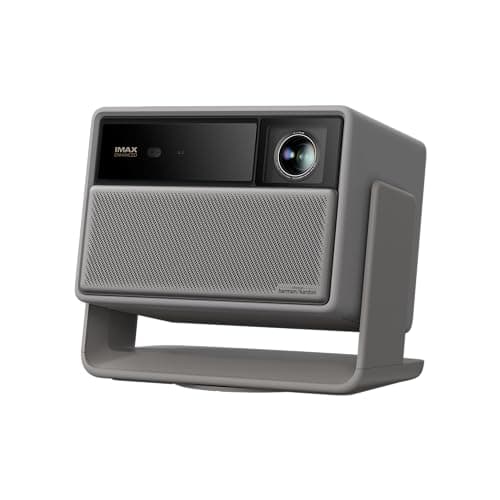
(Current price, subject to change)
If you want one projector that streams, games, and handles cinema HDR without compromise, the XGIMI HORIZON 20 4K RGB Triple Laser Home Projector is the right call. Skip it if you only watch films and prefer to economize $100, since the Horizon Ultra covers that scenario. The decision-critical specifications are concrete: 3,200 ISO lumens, 1ms input lag at 240Hz, plus a 300 inch maximum projection. It earns the top composite of 9.3 on the SHE Smart 4K Throw Value Score, the only configuration to maximize smart OS, gaming, and HDR simultaneously.
What that composite signifies for your room is straightforward. Its RGB Triple Laser illumination produces an exceptionally wide color volume, and Google TV with licensed Netflix yields an integrated streaming experience requiring no external peripheral. XGIMI lists 1ms/240Hz responsiveness for it — matching the class ProjectorCentral bench-verified on the TK710 at 4ms — and its RGB Triple Laser light engine sits a tier above the standard phosphor-laser designs in this set. Compared to the BenQ TK710 4K Gaming Projector, the Horizon 20 matches the gaming latency while incorporating the smart OS the BenQ omits entirely.
What We Love
- Highest-tier smart OS here — Google TV with licensed Netflix built in
- RGB Triple Laser delivers wide color volume at 3,200 ISO lumens
- 1ms input lag plus 240Hz makes it a genuine gaming projector
- Dolby Vision plus IMAX Enhanced is the top HDR tier in this comparison
What Could Be Better
- At $1,399 it costs $100 more than the Horizon Ultra
- Exact optical zoom ratio is not published by XGIMI
The Verdict
If you want one box that streams, games, and plays Dolby Vision movies without an add-on stick, the XGIMI HORIZON 20 4K RGB Triple Laser Home Projector fits the brief without compromise. The 9.3 reflects a clean sweep on smart OS, gaming, and HDR. You pay $100 over the Horizon Ultra, but it is the path of least friction for a do-everything room.
Check price for the XGIMI HORIZON 20 4K RGB Triple Laser Home Projector →
Ready to upgrade your home?
roborock Qrevo 2 Pro Robot Vacuum and Mop
See it on Amazon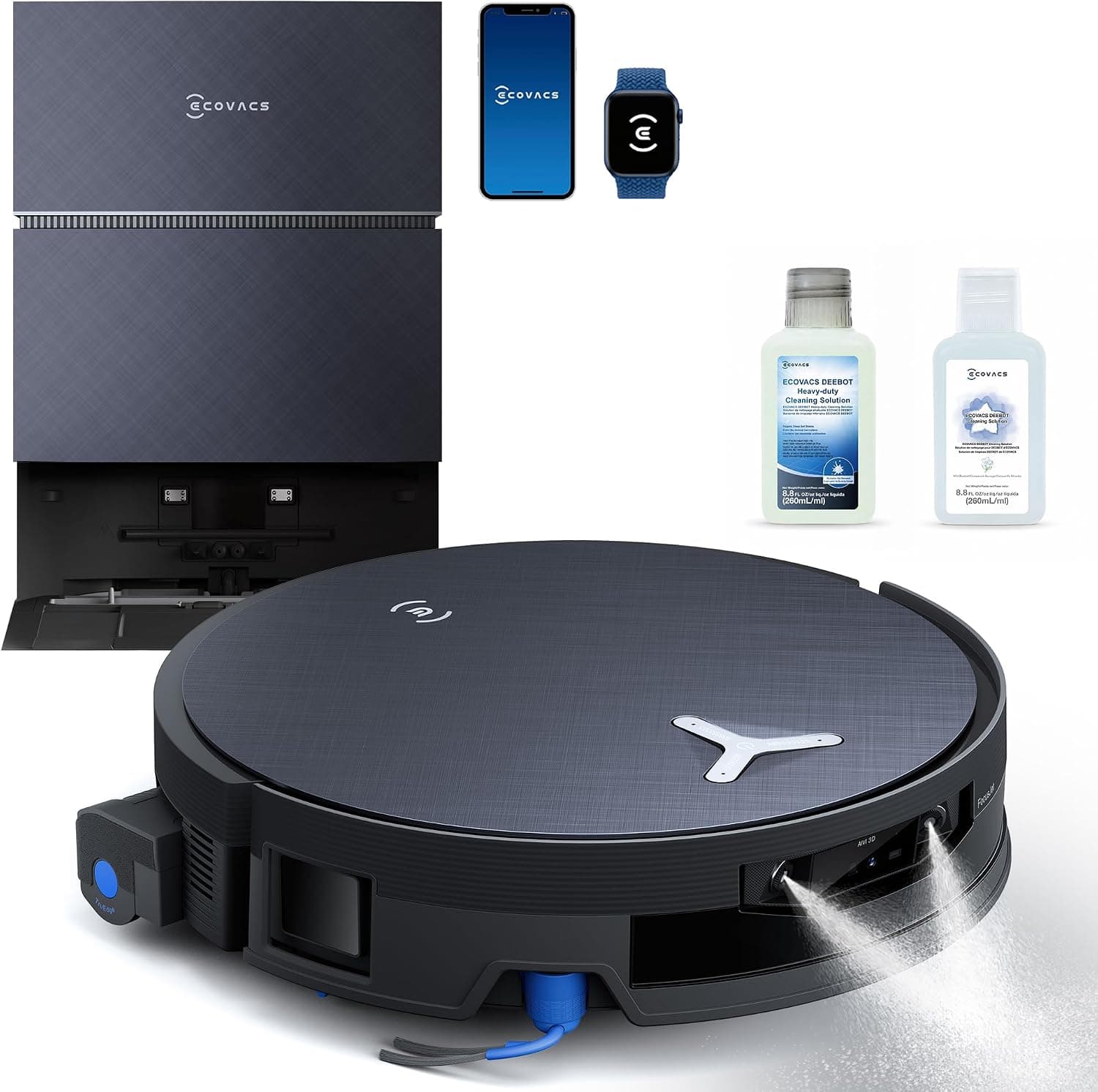
ECOVACS DEEBOT X12 PRO Omni Robot Vacuum and Mop
See it on Amazon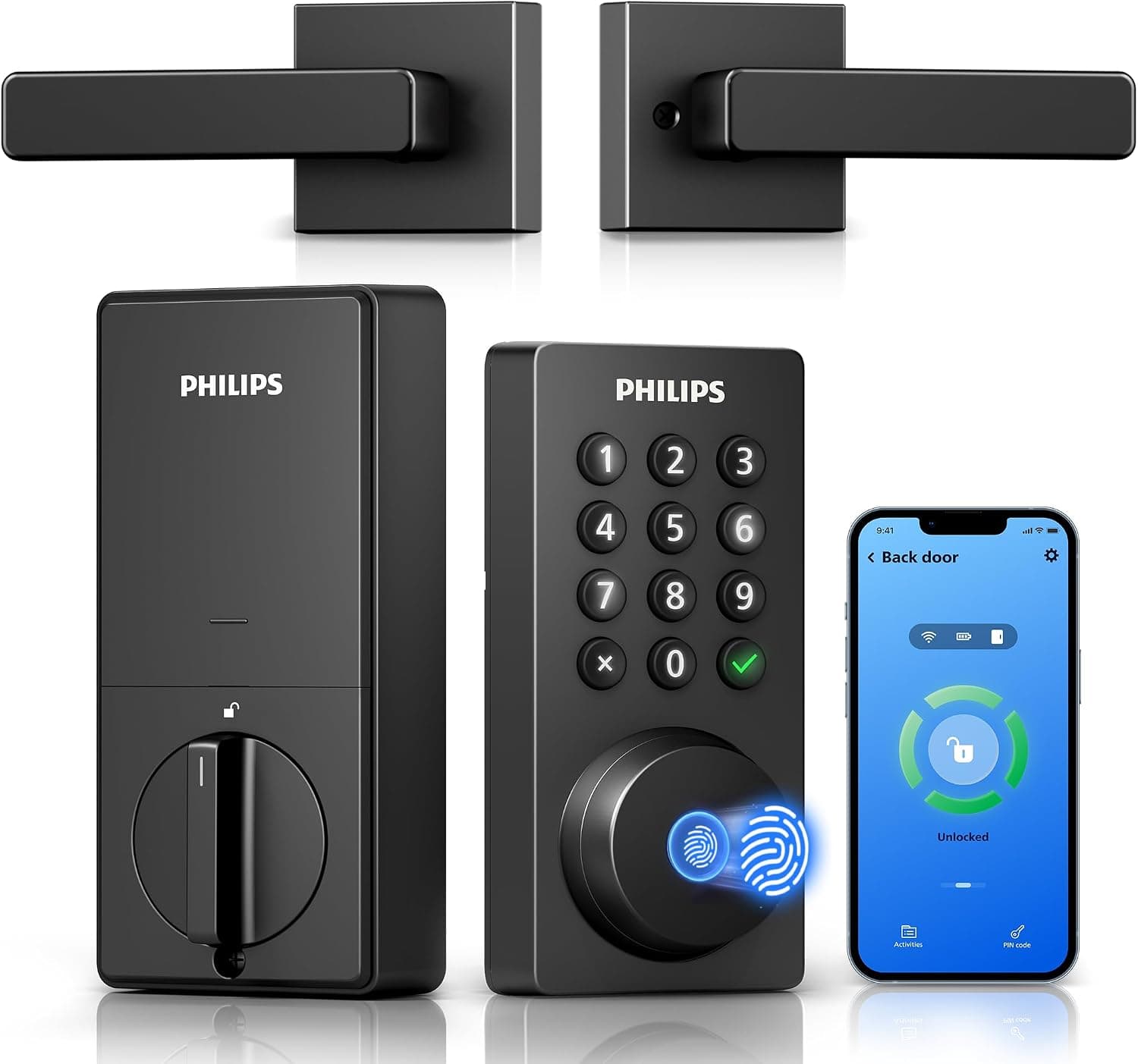
Philips Wi-Fi Keypad Deadbolt with Handle
See it on Amazon
Sponsored listings from Amazon’s Sponsored Products for Creators program, kept apart from our reviews and rankings. How we make money
Best smart all-in-one under $1,300: XGIMI Horizon Ultra Smart 4K Projector
XGIMI Horizon Ultra Smart 4K Projector
- First standard-throw 4K projector to carry Dolby Vision per RTINGS
- 2,300 ISO lumens trails the brighter picks in ambient light
If you want a movie-first configuration that streams and reproduces Dolby Vision without an add-on, the XGIMI Horizon Ultra Smart 4K Projector is the right call. Skip it if you game on console or contend with bright daylight, since the brighter or faster alternatives serve those environments better. The decision-critical specifications are clear: 2,300 ISO lumens, Dolby Vision, plus 2 x 12W Harman Kardon audio configured at $1,299. It earns a composite of 6.4 on the SHE Smart 4K Throw Value Score.
What that signifies for your room is a genuinely integrated all-in-one. RTINGS confirms it as the first standard-throw 4K projector to incorporate Dolby Vision, and its Dual Light laser-LED hybrid illumination takes a distinctive engineering approach to brightness. RTINGS also validated the 2,300 ISO lumens and characterized the Ultra as outstanding for dark-room use though limited in ambient light, which is the tradeoff to weigh against the brighter picks here. Compared to the BenQ TK710 4K Gaming Projector, the Ultra produces a built-in Android TV experience the BenQ fundamentally lacks, and it costs $400 less; ProjectorCentral's TK710 bench — 1.3x optical zoom with vertical lens shift — shows where BenQ spent that difference instead.
What We Love
- First standard-throw 4K projector to carry Dolby Vision per RTINGS
- Built-in Android TV needs no external streaming device
- 2 x 12W Harman Kardon speakers cover audio without a soundbar
- $1,299 undercuts the BenQ TK710 by $400
What Could Be Better
- 2,300 ISO lumens trails the brighter picks in ambient light
- No published input lag, so gaming buyers should look elsewhere
The Verdict
If you want a movie-night box that streams and plays Dolby Vision out of the box for under $1,300, the XGIMI Horizon Ultra Smart 4K Projector lines up with what you actually need. The 6.4 reflects strong HDR and a real smart OS, held back only on gaming. No need to overthink it for a dim living room — it replaces a TV without a soundbar or stick.
Check price for the XGIMI Horizon Ultra Smart 4K Projector →
Best for console gamers: BenQ TK710 4K Gaming Projector
BenQ TK710 4K Gaming Projector
- Verified 4ms at 1080p/240Hz, among the lowest gaming latency available
- Zero built-in smart OS — you must add a streaming stick
If you wall-mount and prioritize brightness plus 4ms gaming over built-in streaming, the BenQ TK710 4K Gaming Projector is the right call. Skip it if you want an integrated all-in-one or Dolby Vision, since the XGIMI alternatives deliver both. The decision-critical specifications are concrete: 3,200 lumens, 4ms at 1080p/240Hz, plus a 1.3x optical zoom with vertical lens shift. It earns a composite of 6.1 on the SHE Smart 4K Throw Value Score.
What that signifies practically is a gaming-first projector carrying one honest compromise. ProjectorCentral independently verified 4ms at 240Hz, which is among the lowest input lag in this category, and notes the 3,200-lumen phosphor laser as a strong ambient-light performer. Sound and Vision documents that BenQ achieved the $1,699 positioning by eliminating the smart OS entirely, which registers zero on the highest-weighted axis. Compared to the XGIMI HORIZON 20 4K RGB Triple Laser Home Projector, the TK710 matches gaming latency but sacrifices the built-in Google TV navigation the XGIMI delivers.
What We Love
- Verified 4ms at 1080p/240Hz, among the lowest gaming latency available
- 3,200 lumens holds up in moderate ambient light
- 1.3x optical zoom plus vertical lens shift make install forgiving
- Phosphor laser light source; BenQ publishes a 20,000-hour rated lifespan
What Could Be Better
- Zero built-in smart OS — you must add a streaming stick
- HDR10 and HLG only, no Dolby Vision for cinema HDR
The Verdict
If you wall-mount, plug in a Fire Stick, and care most about brightness and 4ms gaming, the BenQ TK710 4K Gaming Projector checks the boxes that matter for a gaming room. The 6.1 reflects a perfect gaming and install score, dragged down only by the zero smart-OS axis. Budget $50 to $80 for a stick and no need to overthink it after that.
Best lumen-per-dollar: ViewSonic PX749-4K 4000 Lumens 4K Gaming Projector
ViewSonic PX749-4K 4000 Lumens 4K Gaming Projector
- 4,000 lumens for under $1,200 is the best brightness-per-dollar here
- No built-in smart OS, so a streaming stick is required
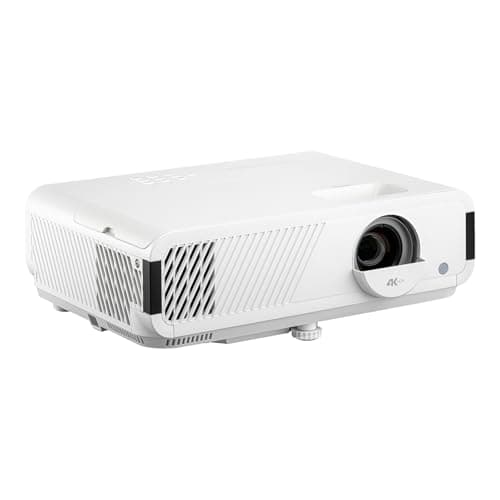
(Current price, subject to change)
If you contend with ambient light on a budget and will incorporate your own stick, the ViewSonic PX749-4K 4000 Lumens 4K Gaming Projector is the right call. Skip it if you want Dolby Vision or built-in streaming, since the XGIMI alternatives cover those scenarios. The decision-critical specifications are clear: 4,000 lumens, 240Hz refresh, plus a 1.3x optical zoom for under $1,200. It earns a composite of 5.5 on the SHE Smart 4K Throw Value Score.
What that signifies for your room is exceptional brightness at the lowest positioning. Bright-room projectors suit living rooms with windows and ambient light that dimmer units cannot overcome, and 4,000 lumens leads this comparison. The complication is the absent smart OS plus the unpublished input lag, which the formula penalizes. Compared to the BenQ TK710 4K Gaming Projector, the ViewSonic produces superior brightness per dollar but sacrifices the verified low-latency gaming the BenQ delivers.
What We Love
- 4,000 lumens for under $1,200 is the best brightness-per-dollar here
- 240Hz refresh supports fast gaming content
- 1.3x optical zoom plus auto keystone eases setup
- USB-C input adds flexible single-cable laptop playback
What Could Be Better
- No built-in smart OS, so a streaming stick is required
- Generic HDR with no published input lag spec
The Verdict
If you fight ambient light on a tight budget and will add your own streaming stick, the ViewSonic PX749-4K 4000 Lumens 4K Gaming Projector is a sensible pick for that setup. The 5.5 reflects class-leading brightness offset by a missing smart OS and unverified lag. For a bright, casual room it is the path of least friction at under $1,200.
Check price for the ViewSonic PX749-4K 4000 Lumens 4K Gaming Projector →
Established DLP context pick: Optoma UHD55 4K DLP Projector
Optoma UHD55 4K DLP Projector
- Established Optoma DLP home-theater platform
- Brightness, HDR, and gaming specs not published in available data
If you are committed to an Optoma DLP and will examine the current specification sheet yourself, the Optoma UHD55 4K DLP Projector is a contextual option. Skip it if you require documented brightness, HDR, or gaming measurements, since the alternatives publish them comprehensively. The decision-critical reality is that its brightness, HDR tier, and gaming specifications remain unpublished in our data, so it functions as a supporting mention. It earns a composite of 2.6 on the SHE Smart 4K Throw Value Score.
What that composite signifies is a scoring penalty for absent documentation, not a verdict on the underlying hardware. Optoma is an established DLP home-theater manufacturer, and the UHD55 is a 4K Ultra HD DLP configuration incorporating a built-in speaker. Compared to the XGIMI Horizon Ultra Smart 4K Projector, the Optoma sacrifices the smart OS, Dolby Vision, plus Harman Kardon audio that the XGIMI delivers in one integrated box.
What We Love
- Established Optoma DLP home-theater platform
- Built-in speaker covers basic audio
- 4K Ultra HD DLP imaging in a familiar brand
What Could Be Better
- Brightness, HDR, and gaming specs not published in available data
- No built-in smart OS documented
The Verdict
If you specifically want an Optoma DLP and will research the current spec sheet yourself, the Optoma UHD55 4K DLP Projector is a sensible pick for that setup. The 2.6 reflects missing published data, not confirmed weak hardware. Treat it as a context option and no need to overthink it unless brand loyalty drives the call.
How We Score: SHE Smart 4K Throw Value Score
SHE Smart 4K Throw Value Score
Score Formula
(Lumen Efficiency × 0.20) + (HDR Tier × 0.20) + (Smart OS Depth × 0.25) + (Gaming Spec × 0.20) + (Lens Flexibility × 0.15)Score Factors
- Smart OS Depth (25%)Built-in streaming quality, weighted highest. Google TV with licensed Netflix scores 10; Android TV with Google Play scores 8; Fire TV native scores 7; no built-in OS (external device required) scores 0. The BenQ TK710 vs XGIMI decision is fundamentally a smart-OS-present versus smart-OS-absent choice, and buyers consistently flag the missing OS as the key gotcha after purchase.
- HDR Tier (20%)HDR format support tier. Dolby Vision plus IMAX Enhanced scores 10; Dolby Vision only scores 9; HDR10 plus HLG scores 6; HDR10 only scores 5; generic or unstated HDR scores 3. Drawn from product spec sheets and review confirmations.
- Gaming Spec (20%)Composite of input lag and refresh rate. Sub-4ms or sub-1ms at 240Hz scores 10; sub-16ms at 120Hz scores 7; sub-20ms at 60Hz scores 5; unpublished gaming specs score 3. ProjectorCentral verified the TK710 at 4ms/240Hz; XGIMI lists the Horizon 20 at 1ms/240Hz.
- Lumen Efficiency (20%)Raw brightness in ANSI or ISO lumens divided by price per $100. At or above 250 lumens per $100 scores 10; 200 to 249 scores 8; 150 to 199 scores 7; 100 to 149 scores 5; below 100 scores 3. Calibrated within this product set against confirmed Amazon prices.
- Lens Flexibility (15%)Installation flexibility. 1.3x optical zoom plus vertical lens shift plus keystone scores 10; zoom plus lens shift scores 8; zoom plus keystone scores 7; keystone only scores 5; no published adjustment specs scores 4. Derived from spec sheets and review confirmations.
SHE Smart 4K Throw Value Score — Ranked
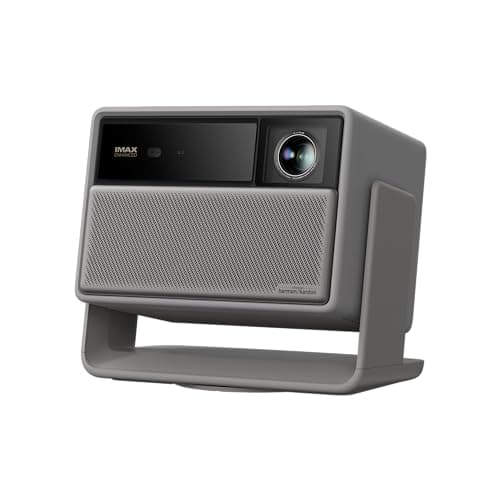
XGIMI HORIZON 20 4K RGB Triple Laser Home Projector
SHE Smart 4K Throw Value Score9.3/10$1,399 — RGB Triple Laser, Google TV with Netflix, 1ms/240Hz, Dolby Vision plus IMAX Enhanced
XGIMI Horizon Ultra Smart 4K Projector
SHE Smart 4K Throw Value Score6.4/10$1,299 — Dolby Vision plus Android TV and Harman Kardon audio; no published gaming lag
BenQ TK710 4K Gaming Projector
SHE Smart 4K Throw Value Score6.1/10$1,699 — verified 4ms/240Hz gaming and 3,200 lumens; zero built-in smart OS penalty
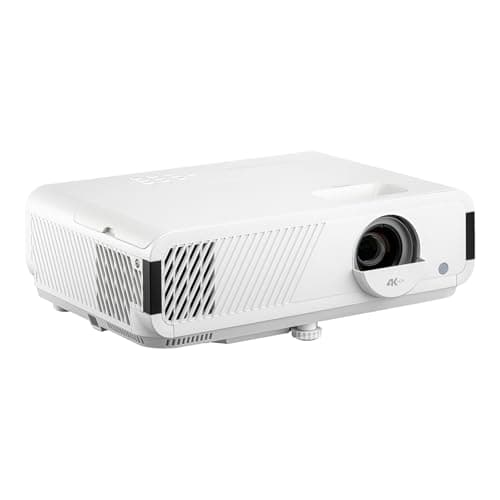
ViewSonic PX749-4K 4000 Lumens 4K Gaming Projector
SHE Smart 4K Throw Value Score5.5/10$1,199 — brightest at 4,000 lumens for the money; no smart OS, generic HDR, unverified lag
Optoma UHD55 4K DLP Projector
SHE Smart 4K Throw Value Score2.6/10$1,345 — established DLP brand but underspecified brightness, HDR, and gaming in our data
Smart OS, Streaming, and Gaming: What Each Box Supports
The single most consequential consideration before purchasing is that the smart OS gap defines the entire comparison. The XGIMI Horizon Ultra and Horizon 20 ship with Android TV or Google TV navigation, so streaming functions the moment you plug in. The BenQ TK710 4K Gaming Projector and ViewSonic PX749-4K 4000 Lumens 4K Gaming Projector incorporate no built-in OS whatsoever, which Sound and Vision identifies as the TK710's principal concession to achieve its $1,699 positioning. That limitation is not disqualifying, but it adds $50 to $80 for a Fire Stick or Chromecast plus one additional remote on the coffee table. Budget for it beforehand.
Gaming differentiates the comparison equally sharply. ProjectorCentral independently verified the TK710 at 4ms input lag and 240Hz, which produces genuinely responsive console interaction. The XGIMI HORIZON 20 4K RGB Triple Laser Home Projector matches that performance at a documented 1ms and 240Hz. The Horizon Ultra publishes no input lag specification, so it is the inappropriate purchase for a dedicated gaming environment. HDR follows a comparable division: both XGIMI projectors deliver Dolby Vision, whereas the BenQ and ViewSonic culminate at HDR10 and HLG. RTINGS confirms the Horizon Ultra as the first standard-throw 4K projector to support Dolby Vision, and the RGB Triple Laser architecture on the Horizon 20 delivers a wider color volume at the $1,399 tier — a meaningful step up from standard phosphor laser designs.
Lens flexibility determines how forcefully installation resists you. The TK710 incorporates a 1.3x optical zoom plus vertical lens shift, the most accommodating positioning here, so it adapts to an off-center shelf without ceiling mounting. The Horizon 20 adds optical zoom and lens shift; the Horizon Ultra publishes neither, necessitating more deliberate placement. Match the projector to your environment over a 5-yr ownership horizon. A bright living room with a console rewards the TK710 brightness and gaming, whereas a dim media room rewards the XGIMI smart OS and Dolby Vision. Purchase the capability your room genuinely requires, not the lengthiest specification sheet.
| Product | Built-in Smart OS | Dolby Vision | 240Hz Gaming | Optical Zoom | Lens Shift | Built-in Audio |
|---|---|---|---|---|---|---|
| XGIMI HORIZON 20 4K RGB Triple Laser Home Projector | ✓ | ✓ | ✓ | ✓ | ✓ | ✓ |
| XGIMI Horizon Ultra Smart 4K Projector | ✓ | ✓ | ✕ | ✕ | ✕ | ✓ |
| BenQ TK710 4K Gaming Projector | ✕ | ✕ | ✓ | ✓ | ✓ | ✕ |
| ViewSonic PX749-4K 4000 Lumens 4K Gaming Projector | ✕ | ✕ | ✓ | ✓ | ✕ | ✕ |
| Optoma UHD55 4K DLP Projector | ✕ | ✕ | ✕ | ✕ | ✕ | ✓ |
When NOT to Buy
A 4K throw projector is not invariably the correct decision. If your room never darkens and accommodates no console, a brighter portable from our Best Portable Projectors 2026: Outdoor Movie Picks cluster may suit you better economically. And if you already own a capable streaming peripheral and exclusively watch movies in darkness, the smart-OS premium on the XGIMI configurations represents expenditure you may not require. RTINGS noted this tradeoff clearly — the Horizon Ultra is outstanding for dark-room use and limited in ambient light. Sound and Vision called the TK710 an outstanding gaming projector that doubles as a decent entertainment projector — with the absent smart OS as its main concession. Match the tool to the use case. Match the projector to the environment before purchasing.
Who Should Buy What
Who Should Buy What
| If you are… | Recommended pick |
|---|---|
Do-everything home theater You want one box that streams, games at 240Hz, and plays Dolby Vision movies without adding any external device | XGIMI HORIZON 20 4K RGB Triple Laser Home Projector |
Movie-first, sub-$1,300 You watch films in a dim room and want Dolby Vision plus built-in Android TV and Harman Kardon audio at the lowest smart-projector price | XGIMI Horizon Ultra Smart 4K Projector |
Console gamers You prioritize brightness and verified 4ms/240Hz gaming and already own or will add a streaming stick for apps | BenQ TK710 4K Gaming Projector |
Bright-room budget buyers You fight ambient light, have a sub-$1,200 budget, and already own a streaming device to pair with the projector | ViewSonic PX749-4K 4000 Lumens 4K Gaming Projector |
Frequently Asked Questions
Does the BenQ TK710 have built-in streaming apps like Netflix?
No. The standard BenQ TK710 ships with no built-in smart OS, so it cannot run Netflix, Disney+, or any app on its own. You need an external streaming device such as a Fire TV Stick, Chromecast, or Apple TV plugged into one of its HDMI ports. Sound and Vision flags this as the main concession BenQ made to hit the $1,699 price. Budget $50 to $80 for the stick. By contrast, both XGIMI picks here have Android TV or Google TV built in.
Is the XGIMI Horizon Ultra at 2,300 lumens bright enough for a normal room?
It depends on your room. RTINGS validated the 2,300 ISO lumens and called it outstanding for dark-room use but limited in ambient light. For a dedicated media room with shades, it is plenty. For a bright living room with windows, the 3,200-lumen BenQ TK710 or the 4,000-lumen ViewSonic PX749-4K hold up far better. If your room is bright, prioritize lumens over the smart OS the XGIMI adds.
XGIMI Horizon Ultra or BenQ TK710 — which should I buy?
Buy the XGIMI Horizon Ultra ($1,299) if you want a single-box theater: Dolby Vision, built-in Android TV, and Harman Kardon audio with no extra devices. RTINGS confirmed it as the first standard-throw 4K projector to support Dolby Vision. Buy the BenQ TK710 ($1,699) if you game on console and want brightness and verified 4ms/240Hz performance from ProjectorCentral's measurements, and you are fine adding a streaming stick. The XGIMI is cheaper and smarter; the BenQ is brighter, faster, and more flexible to install. The XGIMI Horizon 20 splits the difference at $1,399 by adding gaming specs to a smart box.
Is the XGIMI Horizon 20 worth $100 more than the Horizon Ultra?
For most buyers, yes. The Horizon 20 ($1,399) adds RGB Triple Laser, a brighter 3,200 ISO lumens, Google TV with licensed Netflix, 1ms/240Hz gaming, and IMAX Enhanced on top of Dolby Vision. That 1ms figure is XGIMI's listed spec; ProjectorCentral's bench verification covers the TK710 at 4ms/240Hz, the same low-latency class. The Horizon Ultra ($1,299) is the better value only if you watch movies exclusively and never game, since it keeps Dolby Vision and built-in Android TV at a lower price. If you game at all, the extra $100 buys a real upgrade.
Are these projectors native 4K or pixel-shifted?
The XGIMI Horizon Ultra and BenQ TK710 both use XPR pixel-shifting on a DLP chip for 4K UHD output. That is standard in this price band and looks sharp at normal viewing distances. The XGIMI Horizon 20 uses RGB Triple Laser with a 4K UHD output as well. True native 4K imaging chips are rare under $5,000, so pixel-shifting is the norm here and not a knock against any of these picks.
Laser, LED hybrid, or triple laser — which lasts longest?
BenQ's phosphor laser in the TK710 carries a manufacturer-rated 20,000-hour lifespan, which is roughly 10 years at 5 hours a day. ProjectorCentral's review notes the phosphor laser source alongside the 3,200-lumen output as a matched pair for the TK710's bright-room performance. The XGIMI Horizon Ultra uses a Dual Light laser-plus-LED hybrid, a newer design with fewer long-term field comparisons, while the Horizon 20 uses RGB Triple Laser. All three vastly outlast old lamp projectors that needed bulb swaps every few thousand hours, so lifespan is not a deciding factor among these picks.
Bottom Line
Get the XGIMI HORIZON 20 4K RGB Triple Laser Home Projector if you want one box that streams, games at 240Hz, and plays Dolby Vision movies with no add-ons.
Get the XGIMI Horizon Ultra Smart 4K Projector if you watch movies in a dim room and want Dolby Vision plus built-in Android TV under $1,300.
Get the BenQ TK710 4K Gaming Projector if you game on console, want maximum brightness and 4ms/240Hz, and will add a streaming stick.
Get the ViewSonic PX749-4K 4000 Lumens 4K Gaming Projector if you fight ambient light on a sub-$1,200 budget and already own a streaming device.
The best all-around pick is the XGIMI HORIZON 20 4K RGB Triple Laser Home Projector — RGB Triple Laser, Google TV, 1ms/240Hz, and Dolby Vision plus IMAX Enhanced in one box. For movies only under $1,300, the XGIMI Horizon Ultra Smart 4K Projector saves you $100. Console gamers should take the BenQ TK710 4K Gaming Projector for its brightness and 4ms gaming, then budget for a streaming stick.
Sources & Methodology
Methodology: SHE Smart 4K Throw Value Score — Formula: (Lumen Efficiency × 0.20) + (HDR Tier × 0.20) + (Smart OS Depth × 0.25) + (Gaming Spec × 0.20) + (Lens Flexibility × 0.15). Factors: Smart OS Depth (25%): Built-in streaming quality, weighted highest. Google TV with licensed Netflix scores 10; Android TV with Google Play scores 8; Fire TV native scores 7; no built-in OS (external device required) scores 0. The BenQ TK710 vs XGIMI decision is fundamentally a smart-OS-present versus smart-OS-absent choice, and buyers consistently flag the missing OS as the key gotcha after purchase. | HDR Tier (20%): HDR format support tier. Dolby Vision plus IMAX Enhanced scores 10; Dolby Vision only scores 9; HDR10 plus HLG scores 6; HDR10 only scores 5; generic or unstated HDR scores 3. Drawn from product spec sheets and review confirmations. | Gaming Spec (20%): Composite of input lag and refresh rate. Sub-4ms or sub-1ms at 240Hz scores 10; sub-16ms at 120Hz scores 7; sub-20ms at 60Hz scores 5; unpublished gaming specs score 3. ProjectorCentral verified the TK710 at 4ms/240Hz; XGIMI lists the Horizon 20 at 1ms/240Hz. | Lumen Efficiency (20%): Raw brightness in ANSI or ISO lumens divided by price per $100. At or above 250 lumens per $100 scores 10; 200 to 249 scores 8; 150 to 199 scores 7; 100 to 149 scores 5; below 100 scores 3. Calibrated within this product set against confirmed Amazon prices. | Lens Flexibility (15%): Installation flexibility. 1.3x optical zoom plus vertical lens shift plus keystone scores 10; zoom plus lens shift scores 8; zoom plus keystone scores 7; keystone only scores 5; no published adjustment specs scores 4. Derived from spec sheets and review confirmations.
Expert review sources used in this analysis:
- SmartHomeExplorer aggregates expert review data and manufacturer specifications to produce consensus-based buying guidance
- We do not perform first-party product testing
- Brightness, HDR tier, gaming latency, lens specs, and pricing are drawn from manufacturer documentation
- They are corroborated against projector coverage from ProjectorCentral, RTINGS, and Sound and Vision
- ProjectorCentral verified the BenQ TK710 at 4ms input lag and 240Hz, and confirmed the 1.3x optical zoom and vertical lens shift as primary installation advantages
- RTINGS validated the XGIMI Horizon Ultra at 2,300 ISO lumens and as the first standard-throw 4K projector to support Dolby Vision; RTINGS also characterized it as outstanding for dark-room use
- Sound and Vision positioned the TK710 as an outstanding gaming projector that doubles as a capable entertainment projector, with the absent smart OS flagged as its principal concession
- Amazon prices and availability verified 2026-06-12
- The SHE Smart 4K Throw Value Score weights smart OS depth, HDR tier, gaming spec, lumen efficiency, and lens flexibility from aggregated specs and reviewer reports
- No first-party measurements were conducted.
Nicholas Miles is the founder of SmartHomeExplorer and a longtime smart home enthusiast focused on helping everyday homeowners make better technology decisions. He researches, compares, and writes about products across security, climate, lighting, leak prevention, sensors, home energy, and automation, with an emphasis on real-world usefulness, ecosystem compatibility, reliability, privacy, and long-term value.
Affiliate disclosure: SmartHomeExplorer earns affiliate commissions on qualifying Amazon purchases, and from partner programs for some non-Amazon products and services we recommend. Our scoring methodology is independent of affiliate relationships.