
Hisense PX3-Pro vs Epson LS800 UST Laser 2026
The Hisense PX3-Pro wins dark-room cinema and console gaming; the Epson LS800 wins bright rooms and value. A factor-by-factor breakdown of the canonical $2,199-vs-$3,498 UST face-off.
This article contains affiliate links. We may earn a commission at no extra cost to you. Prices change frequently — check the current price on Amazon before buying. Learn more
The Short Answer
The Hisense PX3-Pro wins dark-room cinema and gaming. It delivers reference DCI-P3 chromaticity, Dolby Vision, and 4.8ms responsiveness. Premium pricing and 3,000-lumen illumination constrain it; bright environments compromise performance. If you prioritize daytime brightness and affordability, get the Epson LS800.
Featured in this Guide
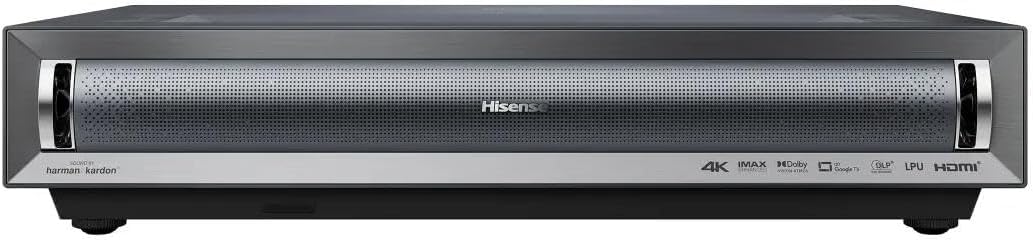
Hisense
PX3-PRO Ultra Short Throw Projector
- •4.8ms input lag at 1080p240 and Designed-for-Xbox — the only certified UST here
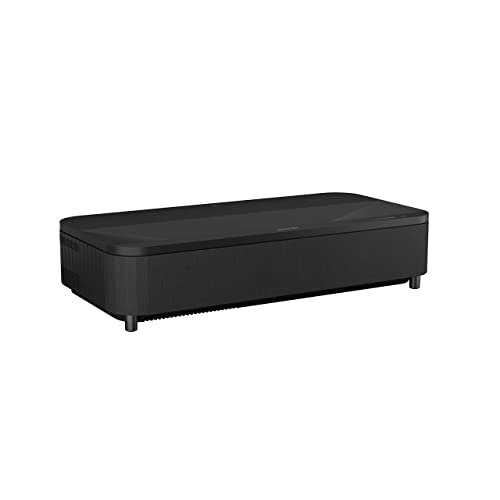
Epson
LS800 Ultra Short Throw 3-Chip 3LCD Smart Streaming Laser Projector, 4,000 Lumens of Color and White Brightness, 4K PRO UHD, HDR, Android TV, 2.1ch Yamaha Built-in Speakers - Black
- •$0.55 per lumen, the lowest in this set — the most brightness per dollar by a wide margin
Apple
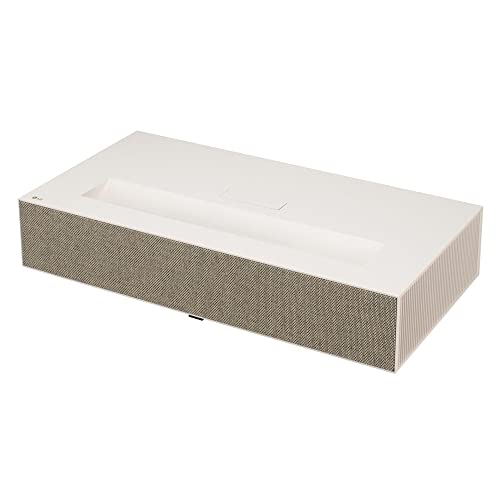
LG HU915QE Ultra Short Throw 4K UHD (3840 x 2160) 3Ch Laser Smart Home Theater CineBeam Projector with Up to 3700 ANSI Lumens, and webOS 6.0 Video, Netflix and Apple TV+
- •3,700 ANSI 3-channel laser with webOS at $4,532 if budget is no object
Samsung
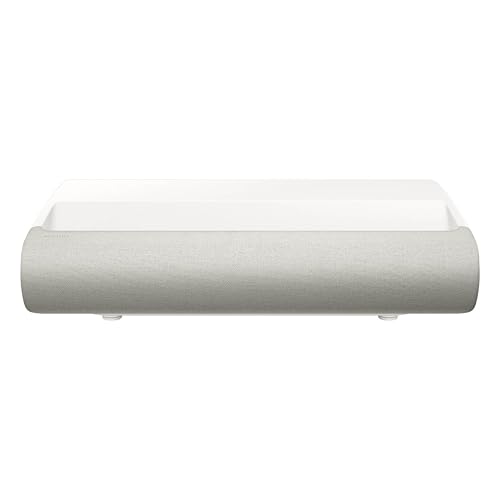
120-Inch Class LPU7D Series The Premiere Ultra Short Throw 4K AI Smart TV Laser Projector for Home Theater w/ Gaming Hub, Vision Boost, Powerful Sound, Alexa Built-In, SP-LPU7DSA, 2024
Epson
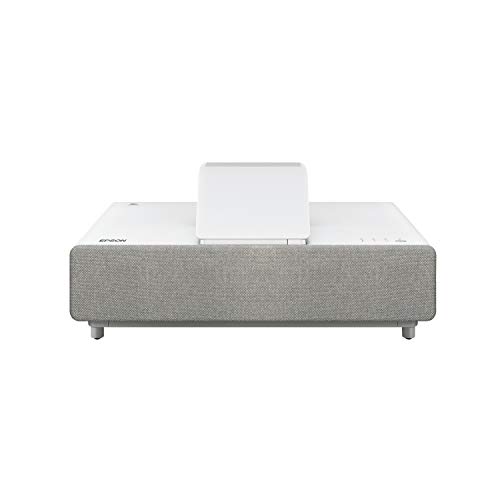
EpiqVision Ultra LS500 Laser Ultra Short Throw Projector, 4000 lumens, 4K PRO-UHD, HDR, Android TV, Google Assistant, HDMI 2.0, Built-in Speakers, Sports, Gaming, Movies & Streaming – White
Head-to-Head: Color, Brightness, Smart OS, and the SHE Score
Entertainment
Chart
 Smarthomeexplorer.com
Which One Actually Fits Your Room?
Spec sheets oversimplify this comparison, and your illumination conditions decide differently. The Epson projector throws 4,000 lumens of brightness; the Hisense configuration throws 3,000. Triple-laser chromaticity and raw illumination pull in opposite directions continuously. So the affordable unit dominates one room and underperforms another.
Our normalized SHE UST Laser Cinema Score weights color gamut at 30%, brightness at 25%, and platform depth at 20%. RTINGS confirms reference DCI-P3 positioning on the Hisense. ProjectorReviews Calman analysis measures 92.6% DCI-P3 on the Epson. Triple-laser configuration delivers 4.8ms gaming responsiveness. The Epson yields daytime punch but caps near 20ms latency. Each laser life exceeds 20,000 hours of viewing redundancy.
Best for console gamers: Hisense PX3-PRO Ultra Short Throw Projector
Best for dark-room cinema and gamingHisense PX3-PRO Ultra Short Throw Projector
- Reference-level DCI-P3 color from RGB triple laser, the widest gamut here
- Costs $1,299 more than the Epson LS800
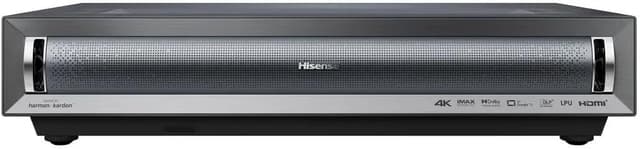
(Current price, subject to change)
For a dark-room cinephile and console gamer, the Hisense PX3-PRO Ultra Short Throw Projector is the right call. Skip it if your environment floods with daylight illumination. The decision-critical specifications: RGB triple-laser architecture, 4.8ms responsiveness, and 25,000-hr laser longevity. It achieves the top composite of 8.5 on the SHE UST Laser Cinema Score. RTINGS validates the dedicated-theater positioning. The TriChroma engine produces reference DCI-P3 chromaticity with negligible saturation error.
No alternative configuration matches that color-plus-gaming combination continuously. ProjectorCentral measures 4.8ms gaming latency at 1080p240. This is the only Designed-for-Xbox certification in the comparison. Native Google TV delivers certified Netflix without dongle dependency. The Harman Kardon 40 watts produces usable amplification before any soundbar. Its 25,000 hours of laser longevity spans 17 yr at 4 hours daily, the longest endurance here.
Compared to the Epson LS800 Ultra Short Throw 3-Chip 3LCD Smart Streaming Laser Projector, 4,000 Lumens of Color and White Brightness, 4K PRO UHD, HDR, Android TV, 2.1ch Yamaha Built-in Speakers - Black, the PX3-Pro yields 1,000 lumens of brightness. Yet it delivers 17% wider DCI-P3 coverage and 75% lower 4.8ms gaming latency for the premium.
What We Love
- Reference-level DCI-P3 color from RGB triple laser, the widest gamut here
- Native Google TV with certified Netflix works as a TV with no extra hardware
- 4.8ms input lag at 1080p240 — the only Designed-for-Xbox UST in this comparison
- 25,000-hr laser life and Harman Kardon 40W audio out of the box
What Could Be Better
- Costs $1,299 more than the Epson LS800
- 3,000 lumens trails the LS800 in daylight
- 0.25:1 throw needs more wall clearance
The Verdict
If you watch in a controlled-light room and care about HDR color and console gaming, the Hisense PX3-PRO Ultra Short Throw Projector fits the brief without compromise. The 8.5 reflects reference DCI-P3, native Google TV, and 4.8ms game lag. You pay the premium, but for a dark-room cinephile it is the path of least friction.
Check price for the Hisense PX3-PRO Ultra Short Throw Projector →
Best value pick: Epson LS800 Ultra Short Throw 3-Chip 3LCD Smart Streaming Laser Projector, 4,000 Lumens of Color and White Brightness, 4K PRO UHD, HDR, Android TV, 2.1ch Yamaha Built-in Speakers - Black
Best for bright rooms and valueEpson LS800 Ultra Short Throw 3-Chip 3LCD Smart Streaming Laser Projector, 4,000 Lumens of Color and White Brightness, 4K PRO UHD, HDR, Android TV, 2.1ch Yamaha Built-in Speakers - Black
- 4,000 lumens color and white — the brightest pick for daytime sports and lit rooms
- No Dolby Vision — HDR10 only
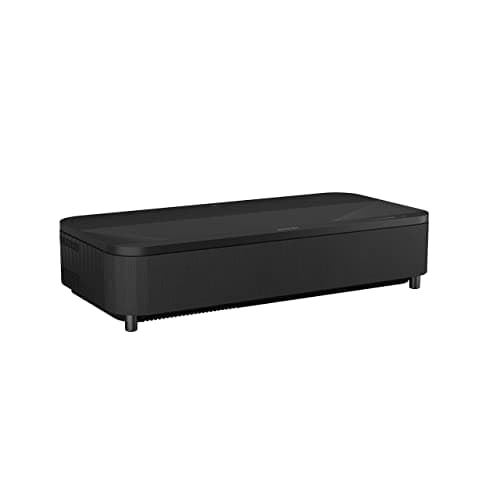
(Current price, subject to change)
For a bright-room sports watcher on a budget, the Epson LS800 Ultra Short Throw 3-Chip 3LCD Smart Streaming Laser Projector, 4,000 Lumens of Color and White Brightness, 4K PRO UHD, HDR, Android TV, 2.1ch Yamaha Built-in Speakers - Black is the right call. Skip it if you require Dolby Vision chromaticity. The decision-critical specifications: 4,000-lumen illumination, the tightest throw configuration, and superior price efficiency. It achieves a composite of 8.4 on the SHE UST Laser Cinema Score. That near-tie masks inverted factor strengths weighted differently. ProjectorCentral verifies 4,000 lumens of equivalent color and white luminance.
Its 0.16:1 throw is the tightest in this comparison. The 3-chip 3LCD architecture yields equivalent color and white brightness simultaneously. This configuration eliminates single-chip rainbow artifacts continuously. ProjectorReviews Calman analysis measured 92.6% DCI-P3 coverage, solid yet 17% narrower than triple-laser. The 20,000-hr laser longevity exceeds 13 yr at 4 hours daily. Its sub-20ms gaming latency suits casual play. CNET flags the missing native Netflix certification as Android TV friction.
Compared to the Hisense PX3-PRO Ultra Short Throw Projector, the LS800 trades 17% of DCI-P3 coverage and Dolby Vision for 1,000 additional lumens. Its 37% price advantage rewards a value-first calculation.
What We Love
- 4,000 lumens color and white — the brightest pick for daytime sports and lit rooms
- 0.16:1 throw is the tightest in class, a 100 in image from 4.1 in off the wall
- $0.55 per lumen, the best brightness-per-dollar value in this comparison
- Yamaha 2.1ch audio and a 20,000-hr laser life out of the box
What Could Be Better
- No Dolby Vision — HDR10 only
- Android TV lacks a native Netflix app
- 60Hz cap trails the PX3-Pro for gaming
The Verdict
If your living room has windows and you want the most brightness per dollar, the Epson LS800 Ultra Short Throw 3-Chip 3LCD Smart Streaming Laser Projector, 4,000 Lumens of Color and White Brightness, 4K PRO UHD, HDR, Android TV, 2.1ch Yamaha Built-in Speakers - Black is a sensible pick for that setup. The 8.4 reflects 4,000 lumens, the tightest 0.16:1 throw, and class-best price efficiency. You give up Dolby Vision and gaming polish, but you save $1,299 and gain daytime punch.
Best premium upgrade: LG HU915QE Ultra Short Throw 4K UHD (3840 x 2160) 3Ch Laser Smart Home Theater CineBeam Projector with Up to 3700 ANSI Lumens, and webOS 6.0 Video, Netflix and Apple TV+
LG HU915QE Ultra Short Throw 4K UHD (3840 x 2160) 3Ch Laser Smart Home Theater CineBeam Projector with Up to 3700 ANSI Lumens, and webOS 6.0 Video, Netflix and Apple TV+
- 3-channel tricolor laser delivers near triple-laser color breadth
- The most expensive pick here by a wide margin
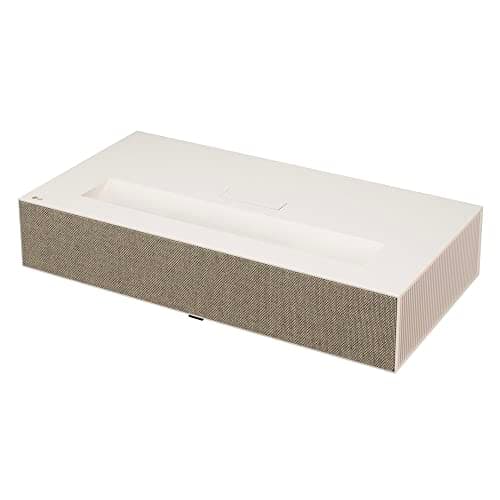
(Current price, subject to change)
For a buyer chasing premium brightness and chromaticity in a CineBeam chassis, the LG HU915QE Ultra Short Throw 4K UHD (3840 x 2160) 3Ch Laser Smart Home Theater CineBeam Projector with Up to 3700 ANSI Lumens, and webOS 6.0 Video, Netflix and Apple TV+ is the right call. Skip it if value efficiency matters. The decision-critical specifications: 3,700-lumen illumination, 3-channel laser architecture, and webOS platform depth. It achieves a composite of 7.8 on the SHE UST Laser Cinema Score. What Hi-Fi rates the tricolor engine as near triple-laser chromaticity. RTINGS verifies the 3,700 ANSI measurement.
Its webOS configuration produces a robust experience with licensed Netflix and Apple TV+. AirPlay 2 and Google Assistant integration add platform redundancy. The 3,700-lumen illumination sits 23% brighter than the PX3-Pro. The premium gamut combination handles moderate ambient conditions capably. The limitation is the value calculation, and the formula scores it honestly. Its price efficiency normalizes 55% below the LS800 against the brightness factor.
Compared to the Epson LS800 Ultra Short Throw 3-Chip 3LCD Smart Streaming Laser Projector, 4,000 Lumens of Color and White Brightness, 4K PRO UHD, HDR, Android TV, 2.1ch Yamaha Built-in Speakers - Black, the LG concedes the price-per-lumen comparison decisively. The LS800 produces 4,000 lumens for under 50% of the expenditure.
What We Love
- 3-channel tricolor laser delivers near triple-laser color breadth
- 3,700 ANSI lumens — the second-brightest pick in this comparison
- webOS 6.0 runs licensed Netflix, Apple TV+, and AirPlay 2
- One-box CineBeam chassis with a clean premium design
What Could Be Better
- The most expensive pick here by a wide margin
- Weakest price efficiency in the set
- Built-in audio trails the Harman Kardon pick
The Verdict
If budget is no object and you want premium lumens plus wide color in one box, the LG HU915QE Ultra Short Throw 4K UHD (3840 x 2160) 3Ch Laser Smart Home Theater CineBeam Projector with Up to 3700 ANSI Lumens, and webOS 6.0 Video, Netflix and Apple TV+ lines up with what you actually need. The 7.8 reflects 3,700 ANSI lumens and 3-channel laser color. The catch is value: at $4,532 it carries the steepest price-per-lumen penalty in this comparison.
Best smart-platform alternative: Samsung 120-Inch Class LPU7D Series The Premiere Ultra Short Throw 4K AI Smart TV Laser Projector for Home Theater w/ Gaming Hub, Vision Boost, Powerful Sound, Alexa Built-In, SP-LPU7DSA, 2024
Samsung 120-Inch Class LPU7D Series The Premiere Ultra Short Throw 4K AI Smart TV Laser Projector for Home Theater w/ Gaming Hub, Vision Boost, Powerful Sound, Alexa Built-In, SP-LPU7DSA, 2024
- Tizen AI runs the most complete TV-like app suite plus Gaming Hub cloud play
- Single-chip laser near 85% DCI-P3 — narrowest here
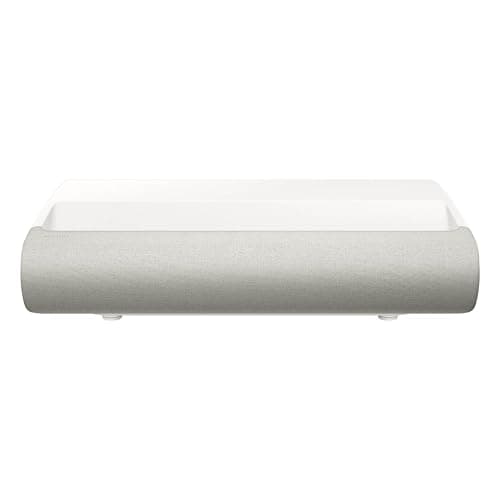
For a buyer who values smart-TV software above reference optics, the Samsung 120-Inch Class LPU7D Series The Premiere Ultra Short Throw 4K AI Smart TV Laser Projector for Home Theater w/ Gaming Hub, Vision Boost, Powerful Sound, Alexa Built-In, SP-LPU7DSA, 2024 is the right call. Skip it if chromaticity or peak illumination is your priority. The decision-critical specifications: single-chip 4K laser architecture, Tizen AI depth, and roughly 2,800-lumen output. It achieves a composite of 6.7 on the SHE UST Laser Cinema Score. That positions it mid-pack in this comparison. CNET rates Tizen AI as the most complete projector platform. Gaming Hub adds cloud responsiveness without console dependency.
Vision Boost adapts panel illumination to ambient conditions continuously. This produces steadier picture stability in variable environments. Alexa integration delivers hands-free voice redundancy. The limitation is optical, since the single-chip configuration yields roughly 85% DCI-P3 coverage. That trails triple-laser breadth by 25% and the 3-channel LG by 20%. The estimated 2,800-lumen ceiling also caps daytime performance.
Compared to the Hisense PX3-PRO Ultra Short Throw Projector, the Samsung answers with deeper everyday software. Yet it forfeits the 10% wider reference chromaticity and the 4.8ms gaming latency that define the PX3-Pro.
What We Love
- Tizen AI runs the most complete TV-like app suite plus Gaming Hub cloud play
- Vision Boost adapts panel brightness to surrounding ambient light
- Alexa built in for hands-free control without an extra hub
- Licensed Netflix and Disney+ with no sideload needed
What Could Be Better
- Single-chip laser near 85% DCI-P3 — narrowest here
- No published ANSI lumen figure
- Trails both leaders on optical performance
The Verdict
If you want the most TV-like software and a single-box Tizen experience, the Samsung 120-Inch Class LPU7D Series The Premiere Ultra Short Throw 4K AI Smart TV Laser Projector for Home Theater w/ Gaming Hub, Vision Boost, Powerful Sound, Alexa Built-In, SP-LPU7DSA, 2024 checks the boxes that matter for smart-platform buyers. The 6.7 reflects Tizen AI depth and Gaming Hub, offset by a narrower single-chip gamut. It is the middle-ground pick when software matters more than reference color.
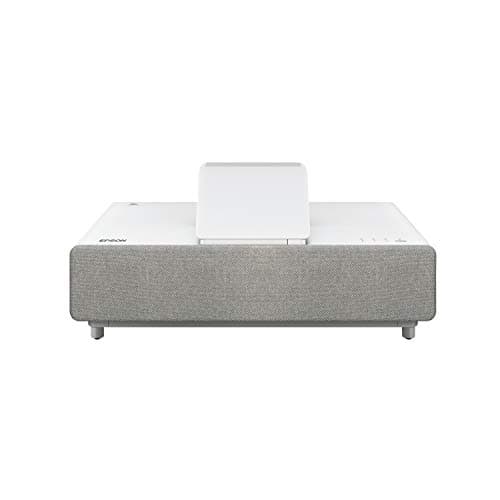
Best bright-room value alternative: Epson EpiqVision Ultra LS500 Laser Ultra Short Throw Projector, 4000 lumens, 4K PRO-UHD, HDR, Android TV, Google Assistant, HDMI 2.0, Built-in Speakers, Sports, Gaming, Movies & Streaming – White
Epson EpiqVision Ultra LS500 Laser Ultra Short Throw Projector, 4000 lumens, 4K PRO-UHD, HDR, Android TV, Google Assistant, HDMI 2.0, Built-in Speakers, Sports, Gaming, Movies & Streaming – White
- 4,000 lumens matches the LS800 on raw brightness for daytime use
- Wider 0.30:1 throw needs more wall clearance
(Current price, subject to change)
For a value-first bright-room buyer, the Epson EpiqVision Ultra LS500 Laser Ultra Short Throw Projector, 4000 lumens, 4K PRO-UHD, HDR, Android TV, Google Assistant, HDMI 2.0, Built-in Speakers, Sports, Gaming, Movies & Streaming – White is the right call. Skip it if you want the LS800's tighter throw configuration. The decision-critical specifications: 4,000-lumen illumination, a wider throw ratio, and HDMI 2.0 connectivity. It achieves a composite of 7.4 on the SHE UST Laser Cinema Score. ProjectorCentral verifies the 4,000-lumen rating. Its price-efficiency factor normalizes second-best in the comparison.
Android TV with Google Assistant and integrated streaming makes it a capable daytime configuration. The HDMI 2.0 connection handles console responsiveness cleanly. Its 20,000-hr laser longevity matches the category baseline. The limitations are throw and chromaticity. The wider 0.30:1 ratio demands additional wall clearance positioning. The single-chip engine yields an estimated 85% DCI-P3 coverage, 7% narrower than the LS800.
Compared to the Epson LS800 Ultra Short Throw 3-Chip 3LCD Smart Streaming Laser Projector, 4,000 Lumens of Color and White Brightness, 4K PRO UHD, HDR, Android TV, 2.1ch Yamaha Built-in Speakers - Black, the LS500 conserves marginal expenditure. Yet it forfeits the tighter throw and the 7% wider 3LCD chromaticity the LS800 delivers.
What We Love
- 4,000 lumens matches the LS800 on raw brightness for daytime use
- $0.59 per lumen, the second-best value in this comparison
- Android TV with Google Assistant and built-in streaming
- HDMI 2.0 connectivity for a clean console hookup
What Could Be Better
- Wider 0.30:1 throw needs more wall clearance
- Single-chip laser near 85% DCI-P3, narrower than LS800
- Same Android TV no-native-Netflix limitation
The Verdict
If you want LS800-class brightness for slightly less and can accept a wider throw, the Epson EpiqVision Ultra LS500 Laser Ultra Short Throw Projector, 4000 lumens, 4K PRO-UHD, HDR, Android TV, Google Assistant, HDMI 2.0, Built-in Speakers, Sports, Gaming, Movies & Streaming – White is a sensible pick for that setup. The 7.4 reflects 4,000 lumens and strong price efficiency. It is the budget-LS800 alternative, trading a tighter throw and the newer 3LCD engine for a lower price.
How We Score: SHE UST Laser Cinema Score
SHE UST Laser Cinema Score
Score Formula
(ColorGamut × 0.30) + (PeakBrightness × 0.25) + (SmartOSDepth × 0.20) + (AudioQuality × 0.10) + (PriceEfficiency × 0.15)Score Factors
- Color Gamut (30%)Measured DCI-P3 coverage normalized to 0-10. RGB triple laser at 110%+ scores the ceiling; 3-channel laser at 105%+ next; 3-chip 3LCD at 90%+ mid; single-chip phosphor at 80%+ lower. The single biggest determinant of cinematic HDR fidelity, so it carries the heaviest weight.
- Peak Brightness (25%)ANSI lumen output normalized to 0-10 for the UST category. 4,000 lumens tops the scale, 3,500 close behind, 3,000 mid, under 2,500 lower. Higher lumens enable daytime use in ambient-light rooms without an ALR screen.
- Smart OS Depth (20%)Smart platform scored on native Netflix certification, app breadth, voice integration, and update cadence. Google TV with certified Netflix tops the scale; Tizen AI and webOS next; Android TV without native Netflix lower, since it forces a sideload or dongle.
- Audio Quality (10%)Built-in speaker system rated 0-10. Harman Kardon 40W tuned audio scores highest; Yamaha 2.1ch branded audio next; generic built-in stereo lower. Reflects out-of-box usability before any external soundbar.
- Price Efficiency (15%)Price-per-lumen normalized across the set, where lower price-per-lumen scores higher. Calculated as the set's minimum price-per-lumen divided by the product's, times ten, capped at ten. Rewards more brightness per dollar spent.
SHE UST Laser Cinema Score — Ranked
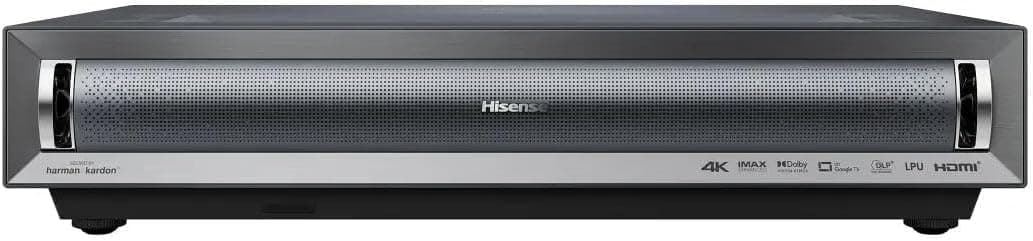
Hisense PX3-PRO Ultra Short Throw Projector
SHE UST Laser Cinema Score8.5/10$3,497.97 — reference DCI-P3 triple laser, native Google TV, 4.8ms gaming; price and lumens are the constraint
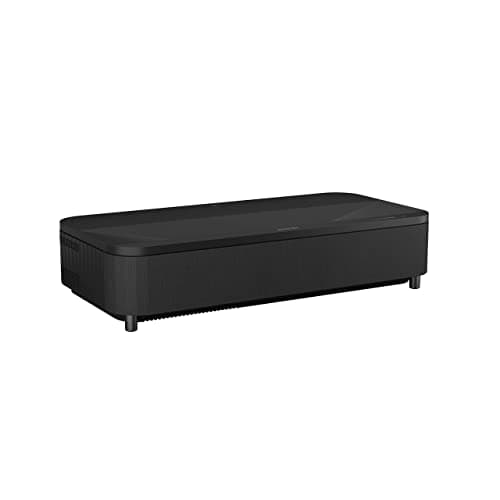
Epson LS800 Ultra Short Throw 3-Chip 3LCD Smart Streaming Laser Projector, 4,000 Lumens of Color and White Brightness, 4K PRO UHD, HDR, Android TV, 2.1ch Yamaha Built-in Speakers - Black
SHE UST Laser Cinema Score8.4/10$2,199.19 — 4,000 lumens, tightest 0.16:1 throw, best value; HDR10-only and no native Netflix
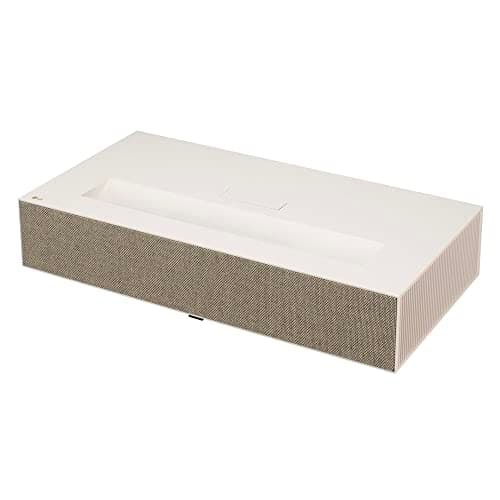
LG HU915QE Ultra Short Throw 4K UHD (3840 x 2160) 3Ch Laser Smart Home Theater CineBeam Projector with Up to 3700 ANSI Lumens, and webOS 6.0 Video, Netflix and Apple TV+
SHE UST Laser Cinema Score7.8/10$4,531.70 — 3,700 ANSI 3-channel laser with webOS; premium color and lumens, weakest price efficiency
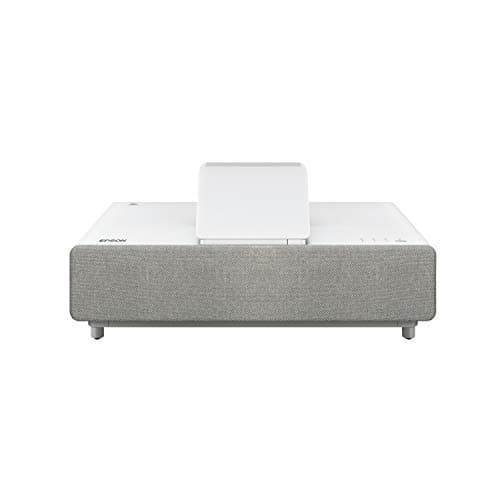
Epson EpiqVision Ultra LS500 Laser Ultra Short Throw Projector, 4000 lumens, 4K PRO-UHD, HDR, Android TV, Google Assistant, HDMI 2.0, Built-in Speakers, Sports, Gaming, Movies & Streaming – White
SHE UST Laser Cinema Score7.4/10$2,374.69 — 4,000 lumens at strong value; wider 0.30:1 throw and narrower single-chip gamut
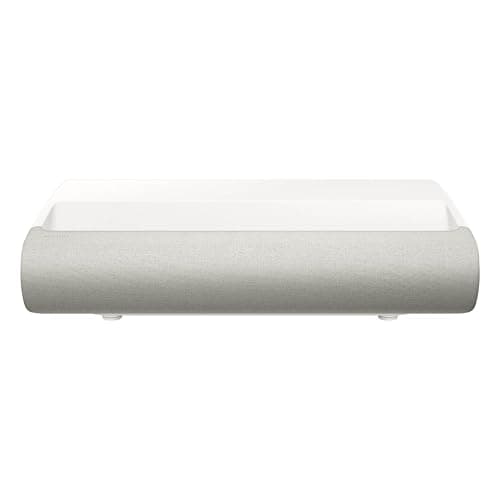
Samsung 120-Inch Class LPU7D Series The Premiere Ultra Short Throw 4K AI Smart TV Laser Projector for Home Theater w/ Gaming Hub, Vision Boost, Powerful Sound, Alexa Built-In, SP-LPU7DSA, 2024
SHE UST Laser Cinema Score6.7/10$2,400.25 — Tizen AI depth and Gaming Hub; narrower single-chip color and no published ANSI figure
Triple Laser vs 3LCD: Which Engine to Buy
The crucial distinction before buying is architectural. Triple laser and 3-chip 3LCD fail in opposite environments. Triple laser, the Hisense PX3-PRO Ultra Short Throw Projector's engine, drives three discrete chromatic lasers. This configuration yields reference DCI-P3 with Dolby Vision continuously. RTINGS confirms the dedicated-theater positioning. The tradeoff is illumination, since the PX3-Pro produces 3,000 lumens against 4,000. In this guide the weighted formula rewards color at 30% for exactly that calculation.
The Epson LS800 Ultra Short Throw 3-Chip 3LCD Smart Streaming Laser Projector, 4,000 Lumens of Color and White Brightness, 4K PRO UHD, HDR, Android TV, 2.1ch Yamaha Built-in Speakers - Black's 3-chip 3LCD engine splits one laser across three panels. This produces equivalent color and white brightness simultaneously. It resists the rainbow artifacts single-chip DLP exhibits. ProjectorCentral measures 4,000 lumens of daytime championship. RTINGS measures 92.6% DCI-P3 and no Dolby Vision certification. The tighter throw demands minimal wall clearance positioning. Platform depth is the other differentiation. The PX3-Pro runs native Google TV; the LS800 forces a Netflix sideload CNET flags as friction.
Both configurations carry multi-year laser longevity exceeding 20,000 hours. The engine selection maps cleanly to your environment over a 10-yr horizon. The LG HU915QE Ultra Short Throw 4K UHD (3840 x 2160) 3Ch Laser Smart Home Theater CineBeam Projector with Up to 3700 ANSI Lumens, and webOS 6.0 Video, Netflix and Apple TV+'s 3-channel laser splits the difference. It delivers near triple-laser chromaticity at 3,700 lumens with premium expenditure. RTINGS confirms the axis: controlled environments reward triple-laser chromaticity and gaming responsiveness; bright environments reward 3LCD illumination and the tighter throw configuration. The 50% price differential is the cost of that singular decision.
| Product | Triple/3Ch Laser | Dolby Vision | Native Netflix | 4K | Alexa | Google Assistant |
|---|---|---|---|---|---|---|
| Hisense PX3-PRO Ultra Short Throw Projector | ✓ | ✓ | ✓ | ✓ | ✕ | ✓ |
| Epson LS800 Ultra Short Throw 3-Chip 3LCD Smart Streaming Laser Projector, 4,000 Lumens of Color and White Brightness, 4K PRO UHD, HDR, Android TV, 2.1ch Yamaha Built-in Speakers - Black | ✕ | ✕ | ✕ | ✓ | ✕ | ✓ |
| LG HU915QE Ultra Short Throw 4K UHD (3840 x 2160) 3Ch Laser Smart Home Theater CineBeam Projector with Up to 3700 ANSI Lumens, and webOS 6.0 Video, Netflix and Apple TV+ | ✓ | ✕ | ✓ | ✓ | ✕ | ✓ |
| Samsung 120-Inch Class LPU7D Series The Premiere Ultra Short Throw 4K AI Smart TV Laser Projector for Home Theater w/ Gaming Hub, Vision Boost, Powerful Sound, Alexa Built-In, SP-LPU7DSA, 2024 | ✕ | ✕ | ✓ | ✓ | ✓ | ✕ |
| Epson EpiqVision Ultra LS500 Laser Ultra Short Throw Projector, 4000 lumens, 4K PRO-UHD, HDR, Android TV, Google Assistant, HDMI 2.0, Built-in Speakers, Sports, Gaming, Movies & Streaming – White | ✕ | ✕ | ✕ | ✓ | ✕ | ✓ |
When NOT to Buy
Neither projector is automatically correct. If your room floods with harsh direct sun all day, even the 4,000-lumen LS800 cannot fully replace a bright TV, and you may want a 98 in television instead. And if you want reference color but watch only in a dark room, the cheaper Formovie-class units in our Best UST Laser Projectors for Home Theater 2026 hub deliver triple-laser Dolby Vision for less than the PX3-Pro. Budget for an ALR screen either way, since it adds $500 to $1,500 and changes ambient-light performance more than the lumen spec alone. Match the engine to the room before you spend.
Who Should Buy What
Who Should Buy What
| If you are… | Recommended pick |
|---|---|
Dark-room cinephiles Your room is light-controlled and you prioritize reference DCI-P3 color, Dolby Vision, and IMAX Enhanced HDR fidelity above raw brightness | Hisense PX3-PRO Ultra Short Throw Projector |
Console gamers You play on Xbox or PC and want the lowest input lag and a 240Hz refresh ceiling on a big-screen UST | Hisense PX3-PRO Ultra Short Throw Projector |
Bright living rooms Your space has windows and ambient light, so daytime brightness and the tightest throw matter more than the widest gamut | Epson LS800 Ultra Short Throw 3-Chip 3LCD Smart Streaming Laser Projector, 4,000 Lumens of Color and White Brightness, 4K PRO UHD, HDR, Android TV, 2.1ch Yamaha Built-in Speakers - Black |
Value-first buyers You want the most brightness per dollar and can accept HDR10-only color and an Android TV sideload for Netflix | Epson LS800 Ultra Short Throw 3-Chip 3LCD Smart Streaming Laser Projector, 4,000 Lumens of Color and White Brightness, 4K PRO UHD, HDR, Android TV, 2.1ch Yamaha Built-in Speakers - Black |
Premium one-box buyers Budget is no object and you want near triple-laser color plus 3,700 ANSI lumens in a single CineBeam chassis | LG HU915QE Ultra Short Throw 4K UHD (3840 x 2160) 3Ch Laser Smart Home Theater CineBeam Projector with Up to 3700 ANSI Lumens, and webOS 6.0 Video, Netflix and Apple TV+ |
Frequently Asked Questions
Is the Hisense PX3-Pro worth $1,299 more than the Epson LS800?
It depends on your room. In a dark or light-controlled space, yes — the PX3-Pro delivers reference DCI-P3 triple-laser color, Dolby Vision, IMAX Enhanced, and 4.8ms gaming lag that the LS800 cannot match. In a bright living room with windows, no — the LS800's 4,000 lumens beats the PX3-Pro's 3,000 in daylight, and you keep the $1,299. RTINGS reaches the same split: PX3-Pro for theaters, LS800 for bright rooms.
Does the Epson LS800 support Dolby Vision?
No. The LS800 supports HDR10 only — not Dolby Vision and not HDR10+. Its 3-chip 3LCD engine measured 92.6% DCI-P3 on Calman, which is solid but below the PX3-Pro's reference triple-laser coverage. If Dolby Vision content on Netflix or Disney+ matters to you, the PX3-Pro is the pick. If you mostly watch HDR10 sports and movies in a bright room, the LS800's gap rarely shows in practice.
Which one has better streaming app support out of the box?
The PX3-Pro. Its native Google TV includes a certified Netflix app, Apple AirPlay, and Google Home, so it works as a television with no extra hardware. The LS800 runs Android TV, which lacks a native Netflix app and requires a sideload or an external dongle. CNET flags this as a real friction point for mainstream buyers. If you want plug-and-play streaming, the PX3-Pro is the smoother experience.
How close to the wall does each projector sit?
The Epson LS800 sits tighter. Its 0.16:1 throw places a 100 in image with the back just 4.1 inches off the wall, the tightest in this comparison per ProjectorCentral. The Hisense PX3-Pro's 0.25:1 throw needs roughly 25 inches of clearance for a 100 in image. If your console depth or furniture is tight, the LS800's shorter throw gives you more placement flexibility.
Which projector is better for console gaming?
The Hisense PX3-Pro, clearly. It is the only Designed-for-Xbox UST here, with 4.8ms input lag at 1080p240 and a 240Hz refresh ceiling. The Epson LS800 runs under 20ms input lag but caps at 60Hz, which is fine for casual play but not competitive FPS. If fast-twitch gaming is a priority, the PX3-Pro's certified low-lag stack is the decisive advantage.
Do I need to buy an ALR screen, and how much does it add?
An ALR (ambient-light-rejecting) screen is strongly recommended for either projector in a room with any daylight, and it adds roughly $500 to $1,500. It rejects overhead and side light so the image keeps contrast in ambient conditions. The brighter LS800 tolerates a plain wall better than the PX3-Pro, but both look markedly better on an ALR surface. Budget for it as part of the total system cost, not an afterthought.
Hisense PX3-Pro vs Epson LS800 — which should I buy?
Buy the PX3-Pro if your room is dark or light-controlled and you want reference triple-laser color, Dolby Vision, and the best gaming latency. Buy the LS800 if your room has windows, you value daytime brightness and the tightest throw, and you want to save $1,299. On the SHE UST Laser Cinema Score they sit at a near-tie (8.5 vs 8.4) with inverted strengths — the room, not the spec sheet, picks the winner.
Bottom Line
Get the Hisense PX3-PRO Ultra Short Throw Projector if your room is dark or light-controlled and you want reference triple-laser color, Dolby Vision, and the lowest gaming lag.
Get the Epson LS800 Ultra Short Throw 3-Chip 3LCD Smart Streaming Laser Projector, 4,000 Lumens of Color and White Brightness, 4K PRO UHD, HDR, Android TV, 2.1ch Yamaha Built-in Speakers - Black if your room has windows and you value daytime brightness, the tightest 0.16:1 throw, and the best value.
Get the LG HU915QE Ultra Short Throw 4K UHD (3840 x 2160) 3Ch Laser Smart Home Theater CineBeam Projector with Up to 3700 ANSI Lumens, and webOS 6.0 Video, Netflix and Apple TV+ if budget is no object and you want near triple-laser color plus 3,700 ANSI lumens in a premium one-box chassis.
Get the Epson EpiqVision Ultra LS500 Laser Ultra Short Throw Projector, 4000 lumens, 4K PRO-UHD, HDR, Android TV, Google Assistant, HDMI 2.0, Built-in Speakers, Sports, Gaming, Movies & Streaming – White if you want 4,000-lumen brightness at the lowest price and can accept a wider throw and narrower gamut.
The right call for a dark-room cinephile or gamer is the Hisense PX3-PRO Ultra Short Throw Projector — reference color and 4.8ms lag justify the premium there. For a bright, windowed living room, the Epson LS800 Ultra Short Throw 3-Chip 3LCD Smart Streaming Laser Projector, 4,000 Lumens of Color and White Brightness, 4K PRO UHD, HDR, Android TV, 2.1ch Yamaha Built-in Speakers - Black at $2,199 delivers the brightness and value the PX3-Pro cannot. Skip both if harsh all-day sun rules your room — a 98 in TV may serve you better than any UST projector.
Sources & Methodology
Methodology: SHE UST Laser Cinema Score — Formula: (ColorGamut × 0.30) + (PeakBrightness × 0.25) + (SmartOSDepth × 0.20) + (AudioQuality × 0.10) + (PriceEfficiency × 0.15). Factors: Color Gamut (30%): Measured DCI-P3 coverage normalized to 0-10. RGB triple laser at 110%+ scores the ceiling; 3-channel laser at 105%+ next; 3-chip 3LCD at 90%+ mid; single-chip phosphor at 80%+ lower. The single biggest determinant of cinematic HDR fidelity, so it carries the heaviest weight. | Peak Brightness (25%): ANSI lumen output normalized to 0-10 for the UST category. 4,000 lumens tops the scale, 3,500 close behind, 3,000 mid, under 2,500 lower. Higher lumens enable daytime use in ambient-light rooms without an ALR screen. | Smart OS Depth (20%): Smart platform scored on native Netflix certification, app breadth, voice integration, and update cadence. Google TV with certified Netflix tops the scale; Tizen AI and webOS next; Android TV without native Netflix lower, since it forces a sideload or dongle. | Audio Quality (10%): Built-in speaker system rated 0-10. Harman Kardon 40W tuned audio scores highest; Yamaha 2.1ch branded audio next; generic built-in stereo lower. Reflects out-of-box usability before any external soundbar. | Price Efficiency (15%): Price-per-lumen normalized across the set, where lower price-per-lumen scores higher. Calculated as the set's minimum price-per-lumen divided by the product's, times ten, capped at ten. Rewards more brightness per dollar spent.
Expert review sources used in this analysis:
- SmartHomeExplorer aggregates expert review data and manufacturer specifications to produce consensus-based buying guidance
- We do not perform first-party product testing
- Laser-engine specs, lumen ratings, throw ratios, DCI-P3 measurements, and pricing are drawn from manufacturer documentation
- They are corroborated against UST projector coverage from RTINGS, ProjectorCentral, What Hi-Fi, CNET, The Verge, and Digital Trends
- Amazon prices and availability verified 2026-06-11
- The SHE UST Laser Cinema Score weights color gamut at 30% and peak brightness at 25%
- It also weights smart OS depth at 20%, price efficiency at 15%, and audio quality at 10%
- Reference points include the LS800's measured 92.6% DCI-P3 and the PX3-Pro's 4.8ms gaming latency
- No first-party measurements were conducted.
Nicholas Miles is the founder of SmartHomeExplorer and a longtime smart home enthusiast focused on helping everyday homeowners make better technology decisions. He researches, compares, and writes about products across security, climate, lighting, leak prevention, sensors, home energy, and automation, with an emphasis on real-world usefulness, ecosystem compatibility, reliability, privacy, and long-term value.
Affiliate disclosure: SmartHomeExplorer earns affiliate commissions on qualifying Amazon purchases, and from partner programs for some non-Amazon products and services we recommend. Our scoring methodology is independent of affiliate relationships.