
Best Portable Power Stations for Camping & Tailgating (2026)
Capacity-per-dollar is only half the buy — at a campsite or tailgate, the real questions are how much power you can carry and how fast you top it back up. The Anker SOLIX C1000 leads on both; the Bluetti Elite 200 V2 wins big groups.
This article contains affiliate links. We may earn a commission at no extra cost to you. Prices change frequently — check the current price on Amazon before buying. Learn more
The Short Answer
Buy the Anker SOLIX C1000 ($399.99): its 1056Wh capacity delivers the best overall value here, recharging completely within 58 minutes across 6 outlets. The compromise is split-wattage USB-C. For tailgates demanding all-day power, the larger Bluetti Elite 200 V2 ($799) ultimately prevails.
Featured in this Guide
Anker
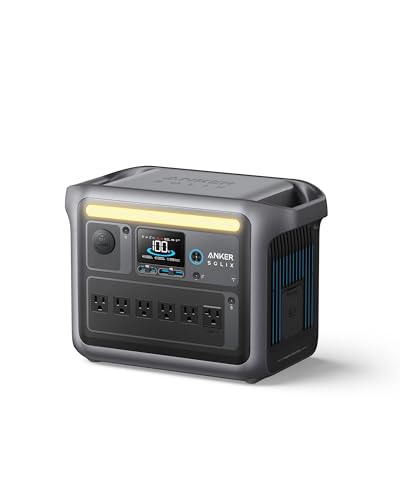
SOLIX C1000 Portable Power Station (1056Wh, 1800W)
- •1056Wh at the best overall value, a 58-minute full recharge, and 6 AC outlets
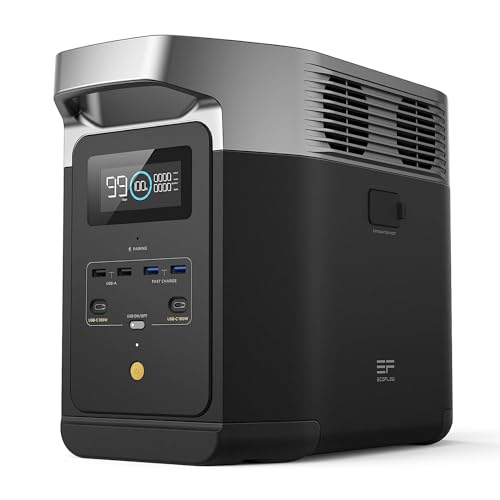
EcoFlow
DELTA 2 Portable Power Station (1024Wh, 1800W)
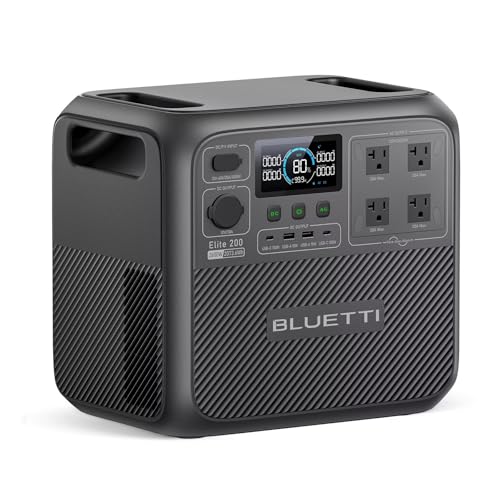
BLUETTI
Elite 200 V2 Portable Power Station
- •2074Wh and 2600W continuous run an electric grill and lighting for a full day
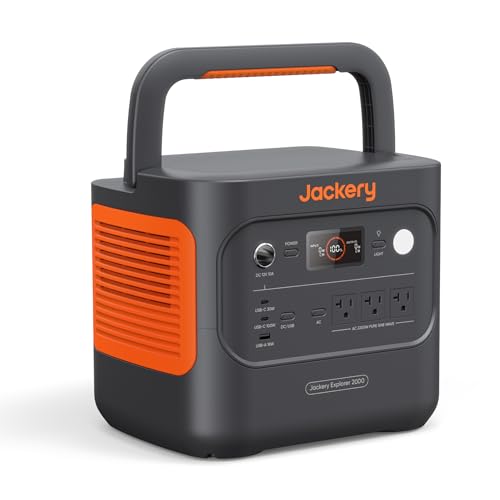
Jackery
Explorer 2000 v2 Portable Power Station (2042Wh, 2200W)
- •2042Wh at 39.5 lb, the most carryable big-capacity unit in this slate
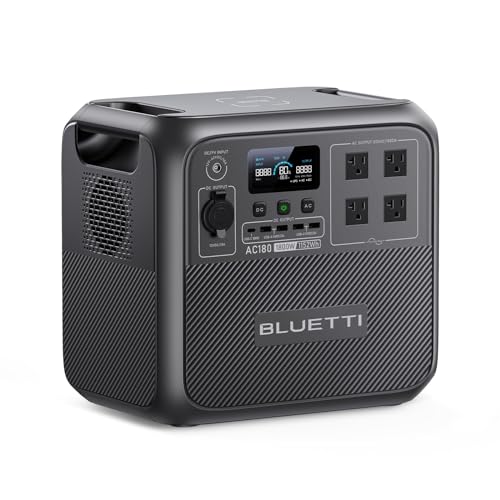
Bluetti
AC180 Portable Power Station
- •1152Wh, the most in the 1kWh class, plus a built-in wireless charging pad
Jackery
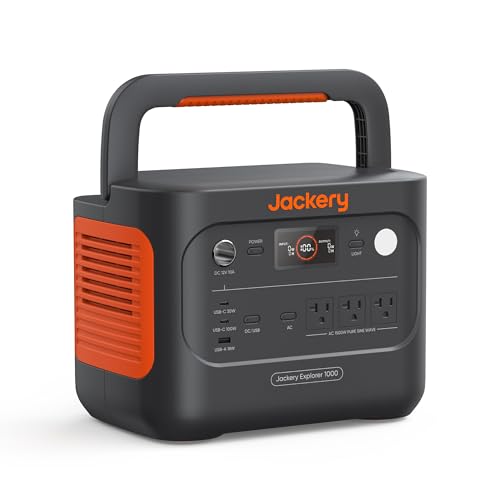
Explorer 1000 v2
- •1070Wh at 23.8 lb, the easiest full-size unit to lift by hand
EcoFlow
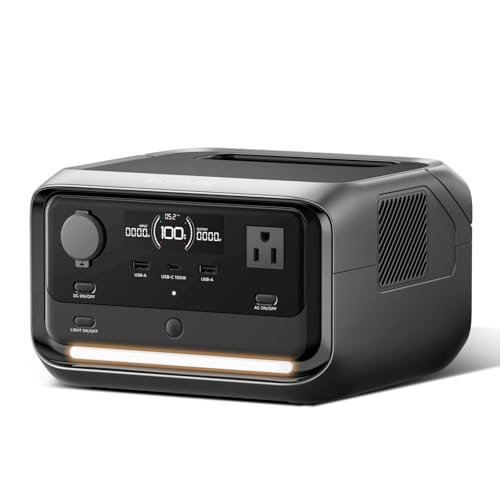
River 3 Plus Portable Power Station (286Wh, 600W)
- •286Wh at 10.4 lb for phones, lights, and a laptop with sub-10ms UPS
Head-to-Head: Capacity, Output, Recharge, and Value
Outdoor
Chart
 Smarthomeexplorer.com
Tap any pick to check its live price on Amazon.
EGO POWER+ Z6 Zero Turn Riding Lawn Mower 42" S-Series (ZT4215S)
RecommendedCheck price
ECOVACS Goat O1000 LiDAR PRO Robot Lawn Mower
RecommendedCheck price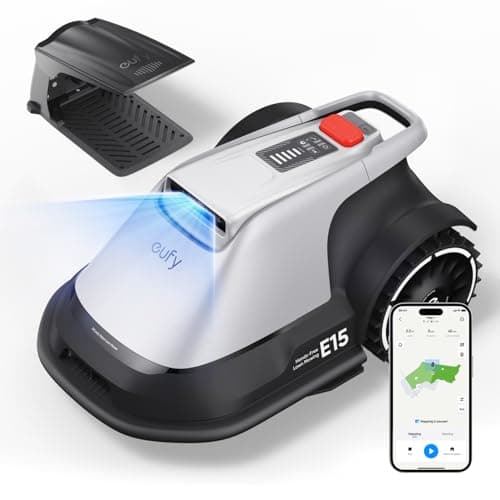
eufy Robot Lawn Mower E15
RecommendedCheck price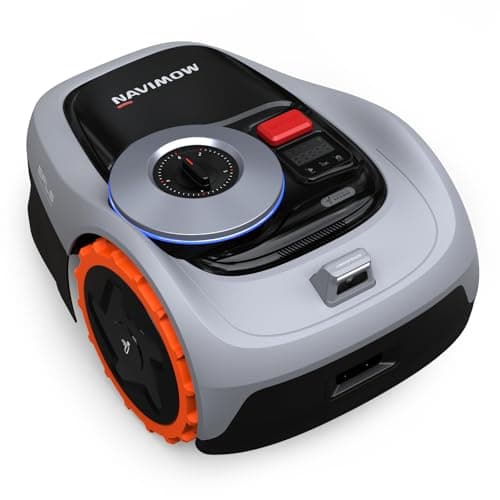
Segway Navimow i105N Wire-Free Robot Mower
Must BuyCheck price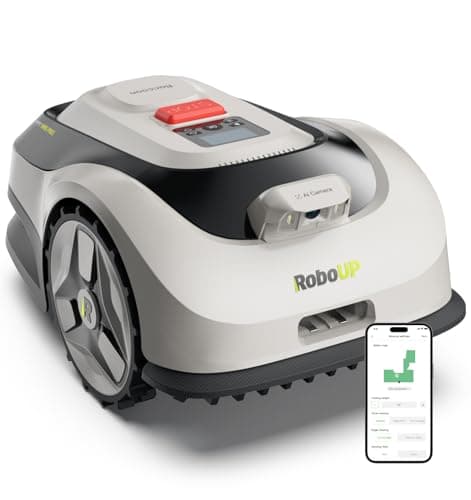
RoboUP Raccoon 2 SE Wire-Free Robot Mower
Good ValueCheck price
Why Carry Weight and Recharge Speed Decide the Buy
You compared these units by capacity and price, then pictured hauling one across a parking lot to the tailgate, and the specification sheet quietly rearranged itself. A 53 lbs unit carrying twice the watt-hours is a fundamentally different purchase, as of June 2026, than a 24 lbs one you carry one-handed. The decision turns on two numbers the headline capacity conceals: how much power actually accompanies you, and how rapidly an overnight hookup replenishes it.
Consequently, this roundup ranks by outdoor value, verified June 2026, because the heaviest unit is rarely the appropriate one. Our weighted SHE Outdoor Power Value Score consolidates capacity, output, recharge, weight, and connectivity into one normalized number. The Anker SOLIX C1000 Portable Power Station (1056Wh, 1800W), which TechRadar reviewed, leads compared to pricier rivals and versus heavier units by pairing near-leading watt-hours per dollar with a 58-minute recharge, whereas the BLUETTI Elite 200 V2 Portable Power Station takes the top composite relative to the field.
Best for most campers: Anker SOLIX C1000 Portable Power Station (1056Wh, 1800W)
Anker SOLIX C1000 Portable Power Station (1056Wh, 1800W)
- 1056Wh LiFePO4 at the best overall value score in this slate
- USB-C is one 100W and one 60W port, not dual 100W
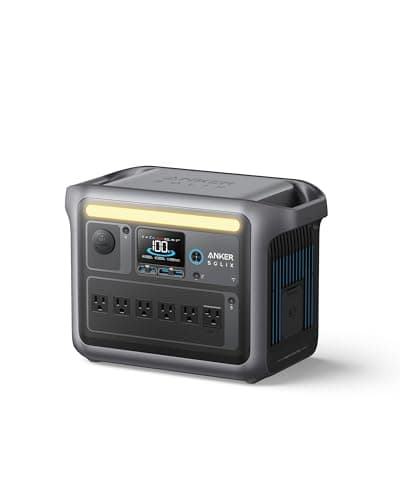
The Anker SOLIX C1000 Portable Power Station (1056Wh, 1800W) is the right buy for the camper who wants the most usable power for the money, and the wrong one if you need more than a kilowatt-hour for a large group. Three facts decide it: 1056Wh of LiFePO4 capacity, a full AC recharge in 58 mins that is the fastest here, and 1800W continuous output across 6 AC outlets. On our weighted SHE Outdoor Power Value Score it normalizes to a composite 8.7, second overall and first in the everyday camping bracket, because its capacity-per-dollar and recharge speed carry the formula.
The recharge time is the quiet advantage: when your only charging window is an overnight campground hookup, a top-up in 58 minutes means you leave full every morning, and the 600W solar ceiling adds a meaningful daytime refill off-grid. The 28.4 lb unit carries a 3000-cycle LiFePO4 battery and a 5-year warranty, and the BP1000 expansion battery lifts capacity to 2112Wh if your needs grow. Against the EcoFlow DELTA 2 Portable Power Station (1024Wh, 1800W), the Anker adds capacity and a faster recharge while giving up only the EcoFlow's dual 100W USB-C ports.
What We Love
- 1056Wh LiFePO4 at the best overall value score in this slate
- 0-100% AC recharge in 58 minutes, the fastest 1kWh unit here
- 1800W continuous and 2400W peak across 6 AC outlets
- 11 total ports plus Anker app control over Wi-Fi and Bluetooth
What Could Be Better
- USB-C is one 100W and one 60W port, not dual 100W
- 28.4 lb is portable for 1kWh but still a two-hand carry
- The BP1000 expansion battery is a separate purchase
- No wireless charging pad like the Bluetti AC180
The Verdict
If you want the most capacity per dollar and a recharge fast enough for a single overnight top-up, the Anker SOLIX C1000 Portable Power Station (1056Wh, 1800W) fits the brief for most camping and tailgating trips. TechRadar reviewed it, and at $399.99 its 1056Wh and 58-minute recharge lead this slate. The honest trade is split-wattage USB-C and a two-hand carry, so we'd point you here first.
Check price for the Anker SOLIX C1000 Portable Power Station (1056Wh, 1800W) →
Best for big-group tailgates: BLUETTI Elite 200 V2 Portable Power Station
BLUETTI Elite 200 V2 Portable Power Station
- 2073.6Wh runs a tailgate or group campsite for a full day
- 53.4 lb is the heaviest unit here, a real two-person lift
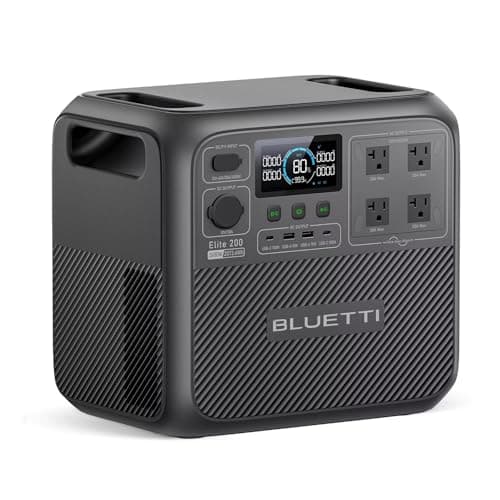
The BLUETTI Elite 200 V2 Portable Power Station represents the appropriate purchase for the host who powers an entire crowd, and the wrong investment for a solo weekend where the considerable weight ultimately remains in the garage. The specifications that determine its standing: 2073.6Wh of automotive-grade LiFePO4, 2600W continuous output alongside a 3900W power-lifting peak, and a 0-80% recharge accomplished in about 50 mins. Its weighted SHE Outdoor Power Value Score normalizes to a composite 8.8, the highest here, elevated by category-leading capacity and output even after accounting for the weight penalty.
The output ceiling is the reason to buy it. At 2600W continuous with a 3900W power-lifting peak, it sustains an electric grill, the kind of high-draw load the 1kWh units cannot carry, and both Popular Science and TechRadar reviewed it. Its automotive-grade cells carry a 6000-cycle rating, the highest here against the 2500-to-4000-cycle ratings of the rest of the slate, and a full recharge lands in about 1.4 hours. Compared to the Jackery Explorer 2000 v2 Portable Power Station (2042Wh, 2200W), the Elite delivers more output and a fourth AC outlet, but at 53.4 lb it weighs about 14 lb more for similar capacity.
What We Love
- 2073.6Wh runs a tailgate or group campsite for a full day
- 2600W continuous and 3900W power-lifting drive an electric grill
- 0-80% recharge in about 50 minutes via TurboBoost
- Automotive-grade LiFePO4 rated for 6000 cycles
What Could Be Better
- 53.4 lb is the heaviest unit here, a real two-person lift
- No weatherproofing and no wheels for the weight
- Twice the price of the 1kWh class
- Overkill for a solo weekend or a phone-and-lights trip
The Verdict
If your tailgate needs to run a grill and lighting all day, the BLUETTI Elite 200 V2 Portable Power Station checks the boxes that matter for a high-draw crowd. Popular Science and TechRadar both reviewed it, and the numbers carry the case: 2073.6Wh, 2600W continuous, a 3900W peak, and a 0-80% recharge in about 50 minutes. At $799 you carry 53.4 lb to get it.
Check price for the BLUETTI Elite 200 V2 Portable Power Station →
Best watt-hours per pound: Jackery Explorer 2000 v2 Portable Power Station (2042Wh, 2200W)
Jackery Explorer 2000 v2 Portable Power Station (2042Wh, 2200W)
- 2042Wh at just 39.5 lb, the best watt-hours per pound here
- Only 3 AC outlets and a single USB-A port limit fan-out
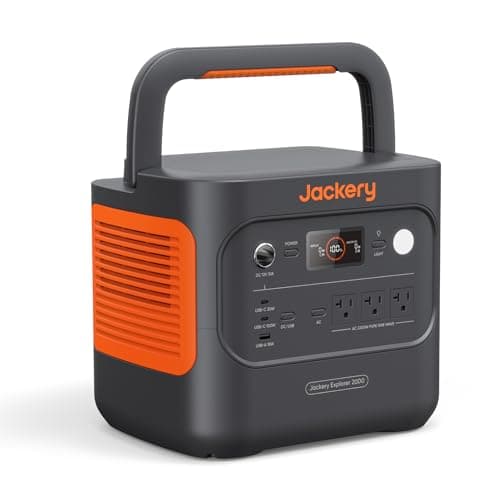
The Jackery Explorer 2000 v2 Portable Power Station (2042Wh, 2200W) represents the appropriate purchase for the camper who wants serious capacity but has to transport it alone, and the wrong one whenever you require numerous outlets at once. Three specifications anchor its position: 2042Wh of LiFePO4 capacity, a class-leading 51.7 watt-hours per pound at 39.5 lb, and 2200W continuous output with a 4400W surge. Its weighted SHE Outdoor Power Value Score normalizes to a composite 8.5, positioned third here, carried by the best portability figure in the slate.
The weight-to-capacity ratio is the headline, the specification that separates this unit from the heavier alternatives. TechRadar reviewed this station, and its 2042Wh packed into a 39.5 lb body is what makes a genuine 2kWh box livable at a campsite where you carry everything yourself. It runs a 4000-cycle LiFePO4 battery and tops up completely in about 1.7 hours, reaching a 0-80% charge in roughly 66 minutes. The catch is fan-out, because three AC outlets and a lone USB-A port mean a crowd shares fewer plugs than the BLUETTI Elite 200 V2 Portable Power Station offers. Against that heavier Bluetti, the Jackery trades output and a fourth outlet for roughly 14 lb less weight, the right call when you carry the unit solo across uneven ground.
What We Love
- 2042Wh at just 39.5 lb, the best watt-hours per pound here
- 2200W continuous and 4400W surge for big-draw appliances
- 0-80% recharge in about 66 minutes
- 4000-cycle LiFePO4 and near-silent operation
What Could Be Better
- Only 3 AC outlets and a single USB-A port limit fan-out
- Capacity is not expandable
- Still a 40-pound carry for one person
- Costs roughly twice a 1kWh unit
The Verdict
If you want 2kWh of capacity without a back-breaking lift, the Jackery Explorer 2000 v2 Portable Power Station (2042Wh, 2200W) lines up with what you actually need. TechRadar reviewed the Explorer 2000 v2, and the spec sheet makes the case: 2042Wh at 39.5 lb, the best watt-hours per pound here, with 2200W continuous output. At $798.99 you get the lightest big-capacity unit in this slate, so no need to overthink it.
Check price for the Jackery Explorer 2000 v2 Portable Power Station (2042Wh, 2200W) →
Best lightest 1kWh with dual USB-C: EcoFlow DELTA 2 Portable Power Station (1024Wh, 1800W)
EcoFlow DELTA 2 Portable Power Station (1024Wh, 1800W)
- Lightest full-power 1kWh unit here at 27 lb
- 1024Wh is the smallest capacity of the four 1kWh picks
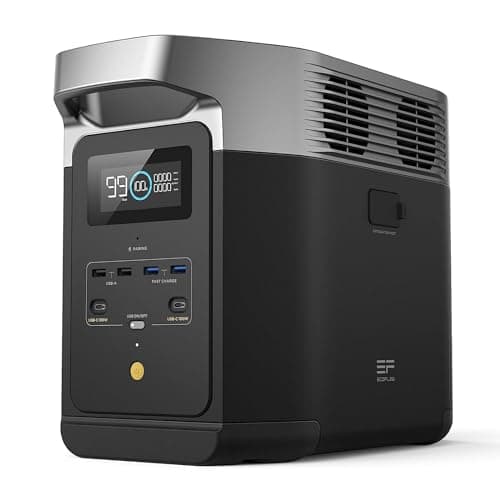
The EcoFlow DELTA 2 Portable Power Station (1024Wh, 1800W) is the right pick for the camper who carries the unit often and charges two laptops at once, and the wrong one if capacity-per-dollar is the deciding number. The facts that decide it: 1024Wh of LiFePO4 capacity, the lightest full-power weight here at 27 lb, and dual 100W USB-C ports across a 6-outlet AC array. Its weighted SHE Outdoor Power Value Score normalizes to a composite 8.3, fourth here, strong on weight and ports but edged on the value and recharge factors that lift the Anker.
The dual USB-C is the genuine differentiator. Outdoor Life reviewed the DELTA 2, and its two 100W USB-C ports let a pair of laptops fast-charge together where the Anker SOLIX C1000 Portable Power Station (1056Wh, 1800W) splits its USB-C into 100W and 60W. At 27 lb it is the lightest full-power unit here, with a 3000-cycle LiFePO4 battery and a full AC recharge in roughly 80 minutes. The give-up is real: a little less capacity at 1024Wh, a slower recharge than the Anker's 58 minutes, and a higher price, which the EcoFlow ecosystem earns for a buyer living on USB-C who plans to add the expansion battery.
What We Love
- Lightest full-power 1kWh unit here at 27 lb
- Dual 100W USB-C ports and 6 AC outlets for a crowded site
- 0-100% AC recharge in roughly 80 minutes
- Expandable to 2048Wh with the Smart Extra Battery
What Could Be Better
- 1024Wh is the smallest capacity of the four 1kWh picks
- Costs more than the Anker C1000 for slightly less capacity
- Full recharge is slower than the Anker's 58 minutes
- Expansion battery roughly doubles the spend
The Verdict
If you want the lightest 1kWh unit and two full-speed USB-C ports, the EcoFlow DELTA 2 Portable Power Station (1024Wh, 1800W) fits the brief. Outdoor Life reviewed the DELTA 2, and the specs back the pick: 1024Wh at just 27 lb, dual 100W USB-C, and 6 AC outlets. At $429 you get the lightest full-power 1kWh body and a path to expand to 2048Wh, trading a little capacity and recharge speed to the Anker.
Check price for the EcoFlow DELTA 2 Portable Power Station (1024Wh, 1800W) →
Best capacity per dollar: Bluetti AC180 Portable Power Station
Bluetti AC180 Portable Power Station
- 1152Wh is the most capacity of the four 1kWh-class units
- 35.3 lb is the heaviest of the 1kWh class
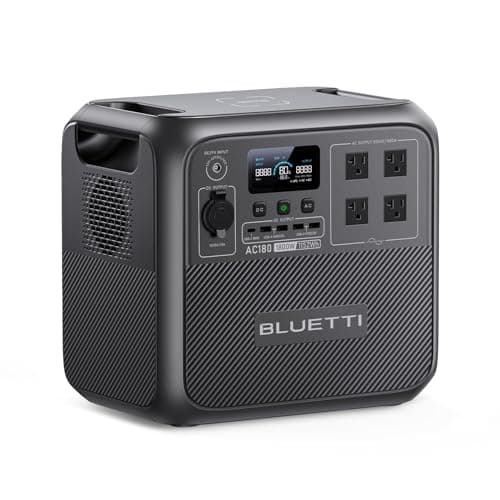
The Bluetti AC180 Portable Power Station is the right call for the value-minded camper who wants every watt-hour the budget buys, and the wrong one if you monitor over Wi-Fi or carry the unit far. Three facts anchor it: 1152Wh of LiFePO4 capacity, the most in the 1kWh class, a built-in 15W wireless charging pad no rival here offers, and a 0-80% recharge in about 45 minutes. Its weighted SHE Outdoor Power Value Score normalizes to a composite 7.8, lifted by capacity-per-dollar but tempered by weight and Bluetooth-only control.
The wireless pad is the small luxury that sets it apart. Both Digital Trends and Outdoor Life reviewed the AC180, and the built-in 15W pad is the only one in this slate, paired with 1152Wh, the most capacity in the 1kWh class. At 35.3 lb it carries a 2500-cycle LiFePO4 battery and refills in roughly 2 hours, the slowest here. Against the Anker SOLIX C1000 Portable Power Station (1056Wh, 1800W), the Bluetti adds capacity and the pad but gives up Wi-Fi monitoring, about 7 lb of weight, and the Anker's 58-minute recharge, a trade that favors a camper who parks the unit at base camp.
What We Love
- 1152Wh is the most capacity of the four 1kWh-class units
- Built-in 15W wireless charging pad, the only one here with it
- 0-80% recharge in about 45 minutes
- 4 AC outlets and a strong watt-hours-per-dollar figure
What Could Be Better
- 35.3 lb is the heaviest of the 1kWh class
- Bluetooth-only control with no Wi-Fi monitoring
- Full AC recharge takes about 2 hours, slower than the Anker
- No dedicated expansion battery
The Verdict
If you want the most watt-hours in the 1kWh class and a built-in wireless pad, the Bluetti AC180 Portable Power Station is a sensible pick for that setup. Both Digital Trends and Outdoor Life reviewed it, and the spec that sets it apart is real: 1152Wh, the most in the 1kWh class, plus a 15W wireless pad no rival here offers. At $429 you carry 35.3 lb and accept Bluetooth-only control.
Best lightest 1kWh carry: Jackery Explorer 1000 v2
Jackery Explorer 1000 v2
- Lightest 1kWh unit here at 23.8 lb, the easiest one-hand carry
- 1500W continuous AC is the lowest of the 1kWh class
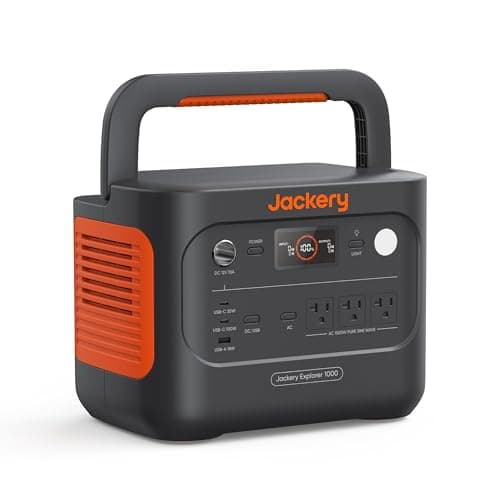
The Jackery Explorer 1000 v2 represents the appropriate purchase for the camper who values a one-hand carry above peak output, and the wrong investment whenever you operate high-draw appliances regularly. The specifications that determine it: 1070Wh of LiFePO4 capacity, the lightest full-size weight here at 23.8 lb, and dual 100W USB-C ports. Its weighted SHE Outdoor Power Value Score normalizes to a composite 7.8, demonstrably strong on portability and ease of use but ultimately held back by the lowest continuous output throughout the 1kWh class.
The weight is the entire argument for it. Both TechRadar and Outdoor Life reviewed the Explorer 1000 v2, and its 1500W continuous output runs lights and small appliances within that ceiling. At 23.8 lb it is the only full-size unit here a single person carries comfortably over a trail, and it holds a 4000-cycle LiFePO4 battery. Against the Anker SOLIX C1000 Portable Power Station (1056Wh, 1800W), the Jackery saves about 5 lb and adds a second 100W USB-C port, but it gives up continuous output and the Anker's faster recharge, so it suits a lighter load rather than a campsite kitchen.
What We Love
- Lightest 1kWh unit here at 23.8 lb, the easiest one-hand carry
- 1070Wh capacity and a 4000-cycle LiFePO4 battery
- Dual 100W USB-C ports and a clean, simple display
- Jackery app control over Wi-Fi and Bluetooth
What Could Be Better
- 1500W continuous AC is the lowest of the 1kWh class
- Only 3 AC outlets
- Capacity is not expandable
- Full recharge is slower than the Anker and EcoFlow
The Verdict
If you want the lightest full-size unit and carry it by hand to the site, the Jackery Explorer 1000 v2 fits the brief. Both TechRadar and Outdoor Life reviewed it, and the numbers fit the use case: 1070Wh at 23.8 lb, the lightest 1kWh unit here, with dual 100W USB-C. At $429 the trade is the 1500W continuous output, the lowest of the 1kWh class.
Best ultralight day pick: EcoFlow River 3 Plus Portable Power Station (286Wh, 600W)
EcoFlow River 3 Plus Portable Power Station (286Wh, 600W)
- Just 10.4 lb, the only unit you toss in a daypack
- 286Wh runs out fast for anything beyond charging and lights
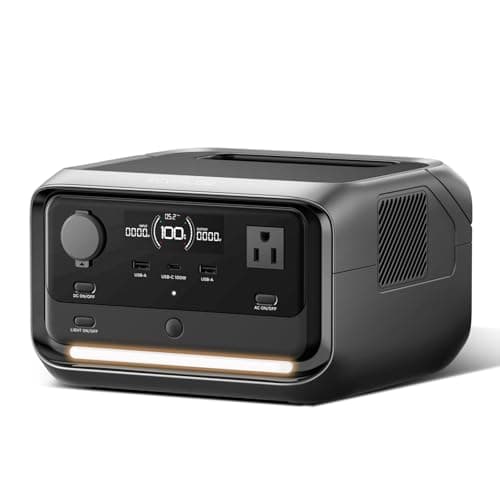
The EcoFlow River 3 Plus Portable Power Station (286Wh, 600W) is the right call for the minimalist who carries everything in and only needs to keep devices alive, and the wrong one for anyone running real appliances. Three facts decide it: 286Wh of LiFePO4 capacity, a featherweight 10.4 lb that no other unit here approaches, and a sub-10ms UPS switchover that protects a CPAP or a laptop through a brownout. Its weighted SHE Outdoor Power Value Score normalizes to a composite 5.7, last here, because the value formula rewards capacity-per-dollar and output, and this unit trades both for portability.
The weight is the whole point, and the limits are the honest counterweight. At 600W continuous it charges phones, runs a string of lights, and keeps a laptop going, but it cannot drive a kettle or a grill, and 286Wh empties quickly under any steady load. At just 10.4 lb it refills on AC in about 60 minutes and expands to 858Wh with an add-on battery, while the sub-10ms UPS switchover protects a CPAP through a brownout. Against the Jackery Explorer 1000 v2, the River 3 Plus weighs less than half as much but delivers barely a quarter of the capacity, so it belongs on a backpacking trip rather than a tailgate.
What We Love
- Just 10.4 lb, the only unit you toss in a daypack
- 600W AC with X-Boost to 1200W for short bursts
- Sub-10ms UPS switchover protects a CPAP or laptop
- Expandable to 858Wh with EB300 or EB600 batteries
What Could Be Better
- 286Wh runs out fast for anything beyond charging and lights
- 600W continuous output cannot drive a grill or kettle
- Single USB-C port limits fast-charge fan-out
- Worst watt-hours per dollar in this slate
The Verdict
If you want a unit light enough to carry without thinking and only need to charge devices and run lights, the EcoFlow River 3 Plus Portable Power Station (286Wh, 600W) fits the brief as the minimalist pick. At $259 and 10.4 lb it is the only one here you toss in a daypack, with sub-10ms UPS protection for a CPAP. The catch is 286Wh and 600W run out fast, but for that load you'll be well-served here.
Check price for the EcoFlow River 3 Plus Portable Power Station (286Wh, 600W) →
How We Score: SHE Outdoor Power Value Score
SHE Outdoor Power Value Score
Score Formula
(Energy_Value × 0.30) + (Usable_AC_Output × 0.20) + (Recharge_Speed × 0.20) + (Portability × 0.15) + (Port_Versatility × 0.15), each factor 0-10, normalized across the slateScore Factors
- Energy Value (Watt-Hours Per Dollar)Usable battery capacity divided by current Buy-Box price. The Anker SOLIX C1000 and Bluetti AC180 lead the 1kWh class near 2.65 watt-hours per dollar, while the small EcoFlow River 3 Plus trails at about 1.1. Weighted 0.30 because capacity per dollar is the core reason to buy a power station over a smaller battery bank.
- Usable AC OutputRated continuous AC wattage, which decides whether the unit runs a coffee maker, an electric grill, or only phones and lights. The Bluetti Elite 200 V2 leads at 2600W; the Jackery Explorer 1000 v2 trails the 1kWh class at 1500W. Weighted 0.20.
- Recharge SpeedTime to a full AC recharge, which matters when your only window is an overnight campground hookup between legs of a trip. The Anker SOLIX C1000 leads at 58 minutes; the Bluetti AC180 trails at roughly two hours. Weighted 0.20.
- Portability (Watt-Hours Per Pound)Capacity divided by weight, the truest measure of how much power you can actually carry to a tailgate or trailhead. The Jackery Explorer 2000 v2 leads at 51.7 watt-hours per pound; the Bluetti AC180 trails at 32.6. Weighted 0.15.
- Port VersatilityCount and mix of AC outlets, USB-C wattage, USB-A, and car ports, which decides how many people and devices you power at once. The EcoFlow DELTA 2 and Anker C1000 lead with six AC outlets; the Jackery units run three. Weighted 0.15.
SHE Outdoor Power Value Score — Ranked
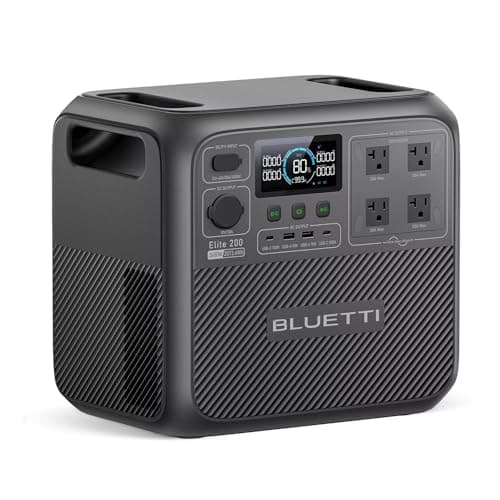
BLUETTI Elite 200 V2 Portable Power Station
SHE Outdoor Power Value Score8.8/102074Wh and 2600W output lead on capacity and power, even after the 53 lb weight penalty
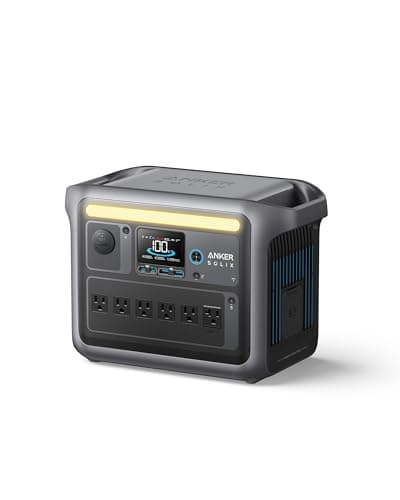
Anker SOLIX C1000 Portable Power Station (1056Wh, 1800W)
SHE Outdoor Power Value Score8.7/10Best watt-hours per dollar and a 58-minute recharge, the everyday camping leader
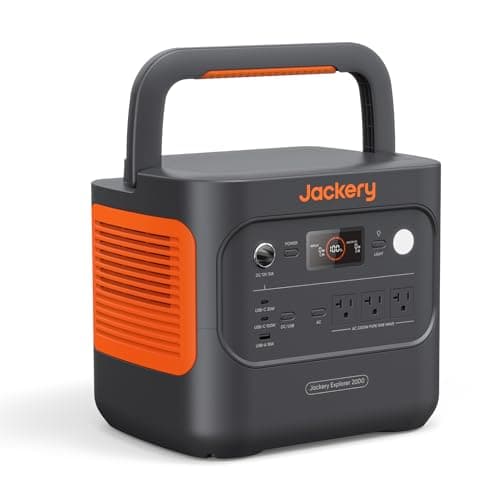
Jackery Explorer 2000 v2 Portable Power Station (2042Wh, 2200W)
SHE Outdoor Power Value Score8.5/10Best watt-hours per pound at 2042Wh and 39.5 lb, the lightest big-capacity unit
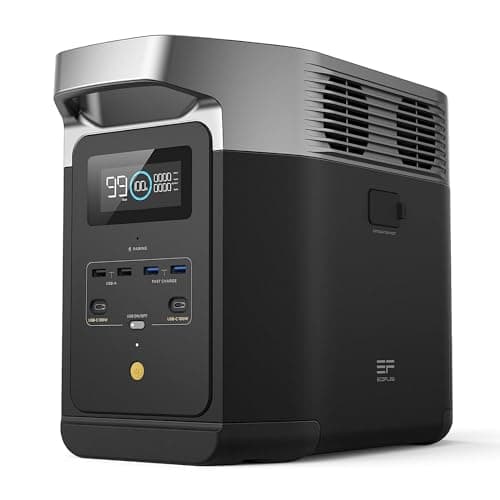
EcoFlow DELTA 2 Portable Power Station (1024Wh, 1800W)
SHE Outdoor Power Value Score8.3/10Lightest full-power 1kWh unit with dual 100W USB-C and 6 AC outlets
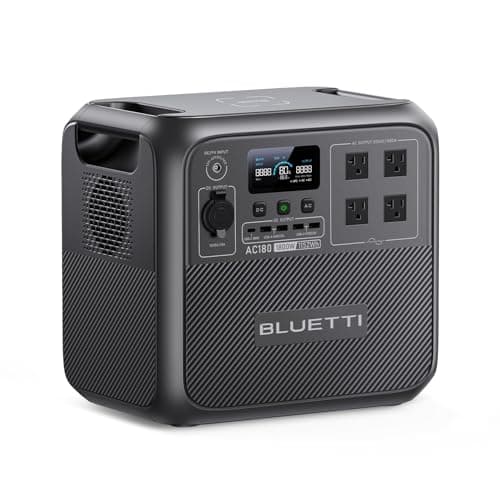
Bluetti AC180 Portable Power Station
SHE Outdoor Power Value Score7.8/10Most capacity in the 1kWh class plus a wireless pad, tempered by weight and Bluetooth-only control
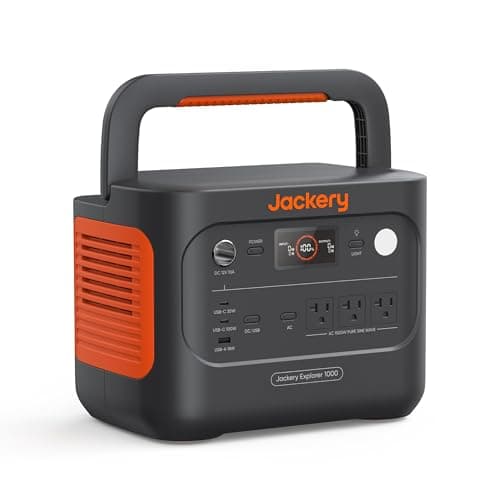
Jackery Explorer 1000 v2
SHE Outdoor Power Value Score7.8/10Lightest 1kWh carry at 23.8 lb, held back by the lowest continuous output here
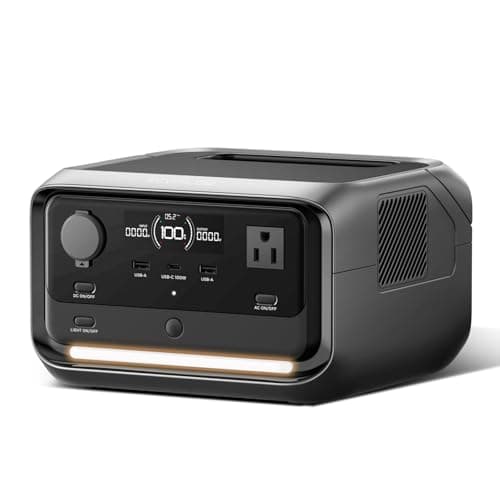
EcoFlow River 3 Plus Portable Power Station (286Wh, 600W)
SHE Outdoor Power Value Score5.7/10Featherweight 10.4 lb day unit, limited by 286Wh and 600W output
Control and Charging Fit: Apps, Solar, and Expansion
Unlike a smart lock or a thermostat, a power station does not join a home platform, so the compatibility that matters here is its own app, its solar input, and whether you can add capacity later. Five of these seven monitor over Wi-Fi, which lets you check the charge from the tent without crouching at the unit, while the Bluetti AC180 Portable Power Station and BLUETTI Elite 200 V2 Portable Power Station control over Bluetooth only, fine at arm's reach but useless across a campsite. If you already run other gear from one brand's app, standardizing on that ecosystem keeps everything on one screen.
Solar and expansion decide how far each unit grows. Every model here accepts a solar panel, but input ceilings range from 220W on the EcoFlow River 3 Plus Portable Power Station (286Wh, 600W) to 1000W on the Bluetti Elite 200 V2, which is the difference between a slow daytime trickle and a meaningful off-grid refill. Within the 1kWh class the ceilings split: the Anker C1000 tops out at 600W, the EcoFlow DELTA 2 and Bluetti AC180 at 500W, and both Jackery Explorers at 400W. Recharge speed scales the same way: the Anker C1000 fills in about 1 hour on AC, while the Bluetti AC180 takes roughly 2 hours and the Jackery Explorer 2000 v2 about 1.7 hours, so the unit you pick also sets how long an overnight hookup needs to run. Three units expand their capacity with add-on batteries, the Anker C1000 to 2112Wh, the EcoFlow DELTA 2 to 2048Wh, and the River 3 Plus to 858Wh, while the Jackery pair and the AC180 are fixed at their rated capacity. If you expect your power needs to climb, buy into a line that lets you bolt on a second battery rather than a second whole unit. For backup that powers a house rather than a campsite, our Best Smart Home Backup Power Systems 2026 guide covers the transfer-switch systems this portable class is not built for.
| Product | Wi-Fi App | Expandable | Wireless Pad | 6 AC Outlets | Solar 500W+ |
|---|---|---|---|---|---|
| Anker SOLIX C1000 Portable Power Station (1056Wh, 1800W) | ✓ | ✓ | ✕ | ✓ | ✓ |
| EcoFlow DELTA 2 Portable Power Station (1024Wh, 1800W) | ✓ | ✓ | ✕ | ✓ | ✓ |
| BLUETTI Elite 200 V2 Portable Power Station | ✕ | ✕ | ✕ | ✕ | ✓ |
| Jackery Explorer 2000 v2 Portable Power Station (2042Wh, 2200W) | ✓ | ✕ | ✕ | ✕ | ✕ |
| Bluetti AC180 Portable Power Station | ✕ | ✕ | ✓ | ✕ | ✓ |
| Jackery Explorer 1000 v2 | ✓ | ✕ | ✕ | ✕ | ✕ |
| EcoFlow River 3 Plus Portable Power Station (286Wh, 600W) | ✓ | ✓ | ✕ | ✕ | ✕ |
When NOT to Buy
A $400-plus power station is overkill for a trip where the only draw is a phone and a headlamp, and a $30 USB power bank covers that at a fraction of the weight. It is also the wrong tool for multi-day, high-draw camping that runs a fridge and a heater around the clock, where a dual-fuel generator refuels in minutes while a battery sits dead until the sun comes back. The honest sweet spot for this class is a weekend of mixed light and medium loads, charging devices, running lights and a fan, and powering a small appliance now and then, where you value silence and clean power over endless runtime.
Who Should Buy What
Who Should Buy What
| If you are… | Recommended pick |
|---|---|
Weekend car camper You want the most usable power per dollar and a recharge fast enough for one overnight hookup | Anker SOLIX C1000 Portable Power Station (1056Wh, 1800W) |
Tailgate host You run a grill, cooler, and lighting for a crowd and need 2kWh of all-day capacity | BLUETTI Elite 200 V2 Portable Power Station |
Off-grid weight-watcher You want 2kWh of capacity at the lowest carry weight for trips away from any hookup | Jackery Explorer 2000 v2 Portable Power Station (2042Wh, 2200W) |
USB-C-first traveler You charge two laptops at once and want the lightest full-power 1kWh unit with dual 100W USB-C | EcoFlow DELTA 2 Portable Power Station (1024Wh, 1800W) |
Value-minded base-camper You want the most watt-hours per dollar in the 1kWh class and a built-in wireless charging pad | Bluetti AC180 Portable Power Station |
One-hand carrier You haul the unit by hand to the site and prize the lightest 1kWh weight over peak output | Jackery Explorer 1000 v2 |
Ultralight minimalist You only charge phones, lights, and a laptop and want a sub-11 lb unit with UPS protection | EcoFlow River 3 Plus Portable Power Station (286Wh, 600W) |
Frequently Asked Questions
What size power station do I actually need for camping versus tailgating?
For a solo or two-person weekend that charges phones, runs lights, and powers a fan, a 1kWh unit like the Anker SOLIX C1000 or Jackery Explorer 1000 v2 is plenty and stays under 30 pounds. For a tailgate or group campsite that runs an electric grill, a cooler, and a full lighting rig, step up to a 2kWh unit like the Bluetti Elite 200 V2 or Jackery Explorer 2000 v2. If you only charge devices and want to carry the unit in a daypack, the 286Wh EcoFlow River 3 Plus covers it.
Can these run a coffee maker, electric grill, or mini-fridge?
It depends on the continuous AC output, not the capacity. A mini-fridge draws roughly 60 to 100 watts and runs on any unit here. A coffee maker or kettle spikes to 1000 to 1500 watts, so you need at least the 1500W Jackery Explorer 1000 v2 and ideally an 1800W unit. An electric grill can pull 1500 to 2400 watts, which calls for the 2600W Bluetti Elite 200 V2 or the 2200W Jackery Explorer 2000 v2. Always check the appliance's running and surge wattage against the unit's continuous and peak ratings.
How do I recharge one of these at a campsite or on the road?
Three ways: a wall outlet at a campground hookup, a 12V car port while you drive, or a solar panel during the day. AC recharge is fastest, and the Anker SOLIX C1000 leads this group at 58 minutes to full, so a single overnight hookup tops it off. Car charging is slower and depends on your vehicle's port. Solar input ranges from 220W on the River 3 Plus to 1000W on the Elite 200 V2, so a panel is a daytime supplement for most of these rather than a primary recharge.
Does LiFePO4 battery chemistry actually matter for a camping unit?
Yes, for lifespan and safety. Every unit in this guide uses LiFePO4, also called LFP, which holds up for 3000 to 6000 charge cycles versus roughly 500 to 800 for the older NMC lithium in cheaper units. That is the difference between a decade of weekend use and a battery that fades in a few years. LiFePO4 also runs cooler and is more tolerant of being left partly charged, which suits gear that sits in a garage between trips. The tradeoff is slightly more weight per watt-hour, which these designs have largely engineered away.
Can I fly with a power station or take one tailgating safely?
You cannot fly with any of these. Airlines cap lithium batteries in carry-on at 100 watt-hours, with up to 160Wh by airline approval, and the smallest unit here is 286Wh, so all of them are far over the limit and barred from passenger flights. For driving to a tailgate or campsite they are perfectly safe: keep the unit ventilated, avoid leaving it in a hot sealed trunk for long stretches, and do not cover the cooling vents while it runs. LiFePO4 chemistry is among the most stable, which is part of why every pick here uses it.
Is a solar panel worth buying with one of these?
It depends on your trip length. For a weekend where you recharge at home before and after, a solar panel adds cost and bulk you may not need. For multi-day off-grid camping with no hookup, a panel is what keeps the unit alive, and the higher-input models like the Bluetti Elite 200 V2 at 1000W or the Anker C1000 at 600W make solar a real refill rather than a trickle, while the Jackery Explorers cap at 400W. Buy the panel sized to the unit's maximum solar input, and remember that real-world output runs well below the panel's rated wattage in anything but direct midday sun.
Bottom Line
Get the Anker SOLIX C1000 Portable Power Station (1056Wh, 1800W) if you want the best overall value and a 58-minute recharge for everyday camping and tailgating.
Get the BLUETTI Elite 200 V2 Portable Power Station if you host big-group tailgates or campsites and need to run a grill and lighting all day.
Get the Jackery Explorer 2000 v2 Portable Power Station (2042Wh, 2200W) if you want 2kWh of capacity at the lowest weight and prize a quiet, app-controlled unit.
Get the EcoFlow DELTA 2 Portable Power Station (1024Wh, 1800W) if you want the lightest full-power 1kWh unit, dual 100W USB-C, and a path to expand later.
Get the Bluetti AC180 Portable Power Station if you want the most capacity per dollar in the 1kWh class plus a built-in wireless charging pad.
Get the Jackery Explorer 1000 v2 if you want the lightest 1kWh unit and carry it by hand to the site.
Get the EcoFlow River 3 Plus Portable Power Station (286Wh, 600W) if you only charge devices and run lights and want a sub-11 lb unit with UPS protection.
The right call for most campers is the Anker SOLIX C1000 Portable Power Station (1056Wh, 1800W) for value and recharge speed, or the BLUETTI Elite 200 V2 Portable Power Station when a tailgate needs all-day power.
Sources & Methodology
Methodology: SHE Outdoor Power Value Score — Formula: (Energy_Value × 0.30) + (Usable_AC_Output × 0.20) + (Recharge_Speed × 0.20) + (Portability × 0.15) + (Port_Versatility × 0.15), each factor 0-10, normalized across the slate. Factors: Energy Value (Watt-Hours Per Dollar): Usable battery capacity divided by current Buy-Box price. The Anker SOLIX C1000 and Bluetti AC180 lead the 1kWh class near 2.65 watt-hours per dollar, while the small EcoFlow River 3 Plus trails at about 1.1. Weighted 0.30 because capacity per dollar is the core reason to buy a power station over a smaller battery bank. | Usable AC Output: Rated continuous AC wattage, which decides whether the unit runs a coffee maker, an electric grill, or only phones and lights. The Bluetti Elite 200 V2 leads at 2600W; the Jackery Explorer 1000 v2 trails the 1kWh class at 1500W. Weighted 0.20. | Recharge Speed: Time to a full AC recharge, which matters when your only window is an overnight campground hookup between legs of a trip. The Anker SOLIX C1000 leads at 58 minutes; the Bluetti AC180 trails at roughly two hours. Weighted 0.20. | Portability (Watt-Hours Per Pound): Capacity divided by weight, the truest measure of how much power you can actually carry to a tailgate or trailhead. The Jackery Explorer 2000 v2 leads at 51.7 watt-hours per pound; the Bluetti AC180 trails at 32.6. Weighted 0.15. | Port Versatility: Count and mix of AC outlets, USB-C wattage, USB-A, and car ports, which decides how many people and devices you power at once. The EcoFlow DELTA 2 and Anker C1000 lead with six AC outlets; the Jackery units run three. Weighted 0.15.
Expert review sources used in this analysis:
- SmartHomeExplorer aggregates expert review data and manufacturer specifications to produce consensus-based buying guidance; we do not perform first-party product testing
- Dedicated mainstream coverage is uneven across this slate, so verdicts lean on the allowlisted outlets that genuinely reviewed each model: TechRadar reviewed the Anker SOLIX C1000, Jackery Explorer 1000 v2, Jackery Explorer 2000 v2, and Bluetti Elite 200 V2; Outdoor Life reviewed the EcoFlow DELTA 2, Bluetti AC180, and Jackery Explorer 1000 v2; Popular Science reviewed the Bluetti Elite 200 V2; and Digital Trends reviewed the Bluetti AC180
- Where no allowlisted outlet has reviewed a specific model, the EcoFlow River 3 Plus here, the verdict is written from verified manufacturer specifications with no source attribution
- Capacity, output, weight, recharge, and port figures come from Anker, EcoFlow, Bluetti, and Jackery specifications
- Prices were verified live via the Amazon Creators API on 2026-06-15, current as of June 2026
- The SHE Outdoor Power Value Score weights energy value, AC output, recharge speed, portability, and port versatility, normalized to a 0-10 scale, and no first-party measurements were conducted.
Nicholas Miles is the founder of SmartHomeExplorer and a longtime smart home enthusiast focused on helping everyday homeowners make better technology decisions. He researches, compares, and writes about products across security, climate, lighting, leak prevention, sensors, home energy, and automation, with an emphasis on real-world usefulness, ecosystem compatibility, reliability, privacy, and long-term value.
Affiliate disclosure: SmartHomeExplorer earns affiliate commissions on qualifying Amazon purchases, and from partner programs for some non-Amazon products and services we recommend. Our scoring methodology is independent of affiliate relationships.