
Best Smart Indoor Gardens Under $300 (2026)
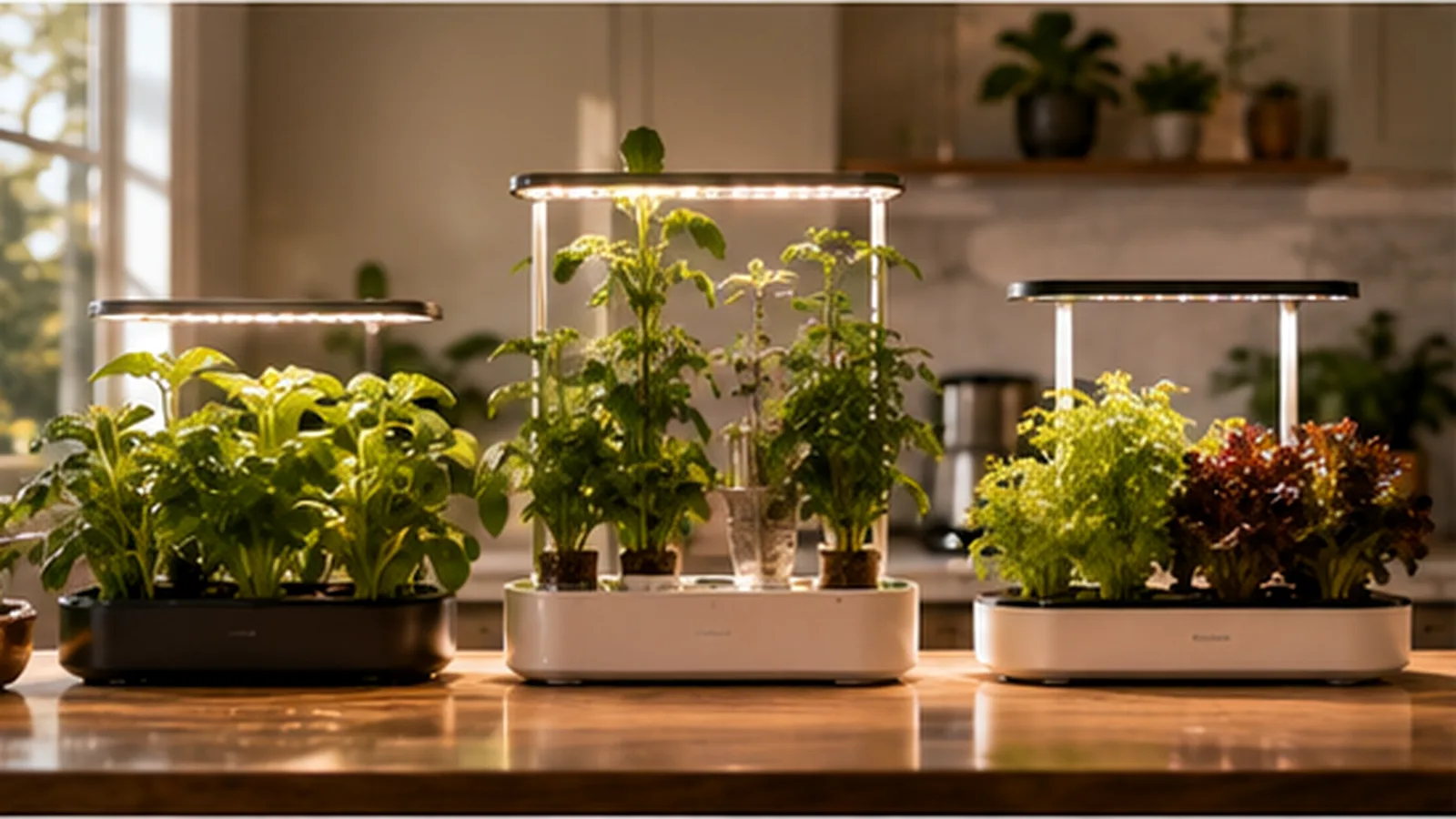
The iDOO 12-Pod wins on value — 12 pods at $84.99 with open-seed supply that sidesteps the AeroGarden pod-stockout risk now reshaping this category.
This article contains affiliate links. We may earn a commission at no extra cost to you. Prices change frequently — check the current price on Amazon before buying. Learn more
The Short Answer
The iDOO 12-Pod wins: maximum pod density per dollar plus open-seed supply eliminates proprietary lock-in entirely. Its limitation is connectivity, since automation relies on a hardware timer. If you instead require WiFi scheduling and drip irrigation, the LetPot LPH-Max delivers comprehensive remote management.
Featured in this Guide

Idoo
12 Pod Hydroponics Kit
- •12 pods at $84.99, open-seed supply, built-in fan — the most growing capacity per dollar
Letpot
Lph Max 21 Pod
- •WiFi app, auto-drip irrigation, and the most efficient LED here at 1.71W per pod
Rise
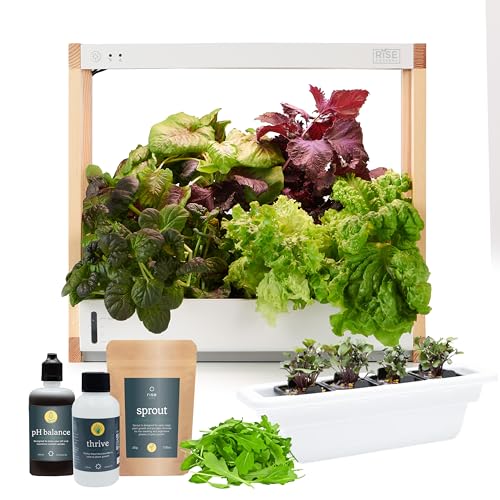
Gardens Personal Rise Garden Hydroponic Indoor Garden Kit with LED Grow Light, Countertop Size
- •Premium build and open-seed freedom at $349, a deliberate stretch above the $300 scope
Click
And Grow Smart Garden 3
- •Three pods, no nutrient mixing, lowest yearly refill cost at $155 over 12 months
Click
and Grow Smart Garden 9
- •Nine curated peat pods and dead-simple operation for buyers who value the brand
Head-to-Head: Value, Pods, Automation, and the SHE Score
Kitchen
Chart
 Smarthomeexplorer.com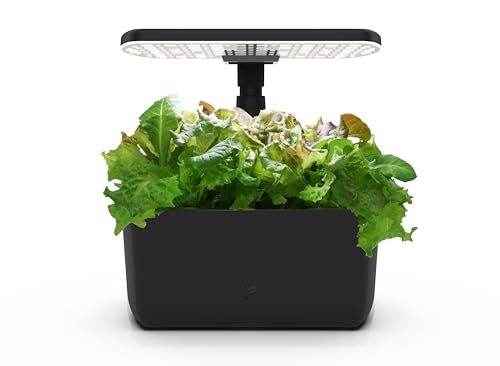
What Actually Matters Under $300
The countertop buyer wants continuous herb cultivation without a watering schedule. Space is the constraint. Recurring pod expenditure determines satisfaction. In this guide we rank six systems on the SHE Compact Garden Value Score, a weighted composite that rewards pod density per dollar and penalizes supply-chain vulnerability.
Reliability dominates the 2026 calculation. AeroGarden's wind-down produced pod stockouts. Open-seed hydroponics sidesteps that exposure entirely. Proprietary peat pods (Click & Grow) run roughly $4 to $7 each; open-seed pods plus nutrient tablets run roughly $1.50 each. Over a 1-yr ownership horizon that differential compounds substantially. Reviewed notes pod pricing as the primary ongoing cost driver across this category. CNN Underscored confirms LED illumination quality and pod availability remain the 2 critical factors. Each pod position cycles about 2.5x annually, so the supply-chain factor carries 25% weight and pod density carries another 25% in our composite calculation.
Best for most kitchens: Idoo 12 Pod Hydroponics Kit
Idoo 12 Pod Hydroponics Kit
- Highest pod density per dollar: 12 pods at $84.99
- Hardware auto-timer only — no app or WiFi scheduling
(Current price, subject to change)
If you are a value maximizer who just wants fresh basil and lettuce, this is the right call. Skip it if app control is non-negotiable. The decision-critical specifications: 12 plant pods, an entry price of 84.99 dollars, and a vertically adjustable illumination arm extending 11.3 inches, a density that normalizes to 100% on our pod-value factor.
The Idoo 12 Pod Hydroponics Kit earns the top composite of 8.2 on the SHE Compact Garden Value Score, where the weighted formula prioritizes pod density per dollar at 25% influence and this configuration maximizes it. Its true-hydroponics reservoir plus open-seed pods produces low recurring expenditure, because open-seed pods and nutrient tablets run roughly $1.50 each against $4 to $7 for proprietary peat pods. Each pod position cycles about 2.5x annually over a 1-yr horizon, so that differential compounds into meaningful savings. CNN Underscored places the $85 to $250 countertop tier at the center of the consumer market, and the iDOO anchors the value end of that band.
Compared to the Letpot Lph Max 21 Pod, the iDOO yields superior value but forfeits WiFi automation. CNN Underscored names LED quality and pod supply as the two factors that decide a purchase, and the open-seed iDOO satisfies both.
What We Love
- Highest pod density per dollar: 12 pods at $84.99
- Open-seed compatible, so no proprietary pod lock-in
- Built-in fan adds passive air circulation budget units skip
- Adjustable light arm extends up to 11.3 inches as plants grow
What Could Be Better
- Hardware auto-timer only — no app or WiFi scheduling
- Basic nutrient mixing is on you, unlike pre-seeded peat pods
- No water-level app alerts; you check the tank by eye
The Verdict
If you want the most herbs growing per dollar and do not care about an app, the Idoo 12 Pod Hydroponics Kit fits the brief without compromise. The 8.2 reflects 12 pods at $84.99 and open-seed supply with no lock-in. The trade is connectivity — it is a timer, not a smart hub.
Best for Apple Home automators: Letpot Lph Max 21 Pod
Letpot Lph Max 21 Pod
- Best automation here: WiFi, app, and auto-drip irrigation
- 21 pods at 2.5 cycles a year adds up, pushing 12-month cost higher
(Current price, subject to change)
If you are an app-first automator who wants remote scheduling and water alerts, this is the natural fit. Skip it if a basic timer suits you, because you would pay for automation you never open. The decision-critical specs: 21 plant pods, a 36W LED that works out to 1.71W per pod, and auto-drip irrigation under app control.
The Letpot Lph Max 21 Pod earns a composite of 7.2 on the SHE Compact Garden Value Score, second here. The weighted methodology rewards its app-automation factor, weighted at 15% and the highest in the set, while its LED-efficiency factor normalizes near the top. WiFi plus a dedicated app delivers self-managed watering across roughly 2.5x annual cycles that timer units cannot match. That automation yields genuine convenience for a busy kitchen.
Compared to the Idoo 12 Pod Hydroponics Kit, the LetPot adds real connectivity but its 12-month cost runs higher across 21 refilled pods. CNN Underscored names LED quality as one of the two factors that decide a countertop purchase, and the LetPot's 1.71W per pod is the most efficient illumination in this set.
What We Love
- Best automation here: WiFi, app, and auto-drip irrigation
- Most efficient LED in the set at 1.71W per pod across 21 pods
- 21-pod capacity is the largest growing footprint under $300
- Open-seed compatible, so no proprietary pod dependency
What Could Be Better
- 21 pods at 2.5 cycles a year adds up, pushing 12-month cost higher
- $251.99 is near the top of the under-$300 band
- App setup adds a few minutes over a plug-and-go timer unit
The Verdict
If you want WiFi scheduling and hands-off watering, the Letpot Lph Max 21 Pod lines up with what you actually need. The 7.2 reflects the best app automation and the most efficient 36W LED here. Its constraint is yearly cost — 21 pods refilled adds up over 12 months.
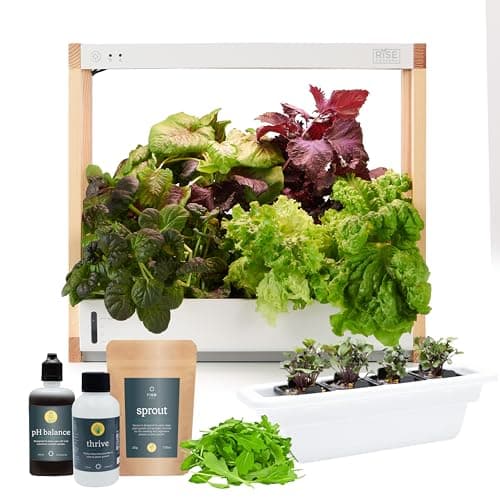
Best upgrade pick: Rise Gardens Personal Rise Garden Hydroponic Indoor Garden Kit with LED Grow Light, Countertop Size
Rise Gardens Personal Rise Garden Hydroponic Indoor Garden Kit with LED Grow Light, Countertop Size
- Open-seed and subscription-free, so no recurring lock-in
- $349 exceeds the guide's $300 scope as a stretch buy
(Current price, subject to change)
If you are an upgrade shopper who values a polished countertop unit over spreadsheet value, this is the right call. Skip it if budget or pod count drives the decision, because cheaper picks grow more. The decision-critical specs: a $349 price above the $300 scope, open-seed pods with no subscription, and roughly a 2-yr ownership cost that runs higher than any other pick here.
The Rise Gardens Personal Rise Garden Hydroponic Indoor Garden Kit with LED Grow Light, Countertop Size earns a composite of 5.3 on the SHE Compact Garden Value Score. Its supply-chain factor normalizes high on open-seed freedom, carrying 25% of the weighting, but the price-driven density factor is the weakest here, which produces the mid-pack composite. The metric is honest about the trade: you pay for finish, not capacity. That premium positioning yields a different buyer than the value tier.
Compared to the Letpot Lph Max 21 Pod, the Rise gives up pod count and automation depth for build quality. It is an upgrade option for shoppers who have already tried a budget unit and want premium construction over raw capacity. We keep its coverage to the countertop Personal unit, since the larger Rise tiers belong to our Lettuce Grow vs AeroGarden vs Rise Gardens 2026 hub.
What We Love
- Open-seed and subscription-free, so no recurring lock-in
- Premium build quality and countertop aesthetics
- App-assisted reminders sit above the bare-timer units
- Healthy supply chain with no wind-down risk
What Could Be Better
- $349 exceeds the guide's $300 scope as a stretch buy
- Highest 12-month cost in the set at around $409 a year
- Weakest pod density per dollar of any pick here
The Verdict
If build quality and aesthetics matter more than raw value, the Rise Gardens Personal Rise Garden Hydroponic Indoor Garden Kit with LED Grow Light, Countertop Size is a sensible pick for that setup. The 5.3 reflects excellent open-seed supply offset by a high $349 price and yearly cost. Treat it as a deliberate upgrade, not a budget buy.
Best gift pick: Click And Grow Smart Garden 3
Click And Grow Smart Garden 3
- Lowest 12-month cost in the set at roughly $155 a year
- Three pods at $124.95 is the weakest density per dollar
If you are a gift purchaser seeking effortless windowsill cultivation, this is the right call. Skip it if capacity or open-seed flexibility matters. The decision-critical specifications: 3 plant pods, a price of $124.95, and the category's lowest 1-yr ownership cost across its 3-pod capacity. Each pod cycles roughly 2.5x per year, so the low pod count keeps annual expenditure the lowest in this set.
The Click And Grow Smart Garden 3 earns a composite of 4.9 on the SHE Compact Garden Value Score. The weighted methodology rewards its minimal-expenditure factor, weighted at 15% in our calculation, while penalizing the weakest density factor. Its pre-seeded peat capsules require zero nutrient preparation, which delivers the simplicity that makes it genuinely giftable. Reviewed identifies proprietary pod pricing as the persistent ownership trade-off for the Click & Grow line. CNN Underscored places this $85 to $250 countertop tier at the heart of the consumer market.
Compared to the Idoo 12 Pod Hydroponics Kit, the Click & Grow 3 minimizes refill expenditure but cultivates roughly 4x fewer positions. Reviewed identifies proprietary pod pricing as the persistent ownership trade-off.
What We Love
- Lowest 12-month cost in the set at roughly $155 a year
- Pre-seeded peat pods need zero nutrient mixing
- Smallest, most giftable countertop footprint here
- Dead-simple click-and-forget operation
What Could Be Better
- Three pods at $124.95 is the weakest density per dollar
- Proprietary peat pods run roughly $4 to $7 each
- No app or WiFi, just a hardware light timer
The Verdict
If you want three herbs growing with no effort and the lowest refill bill, the Click And Grow Smart Garden 3 checks the boxes that matter for a gift buyer. The 4.9 reflects the cheapest yearly cost offset by low pod density. It is a low-capacity, low-fuss unit by design.
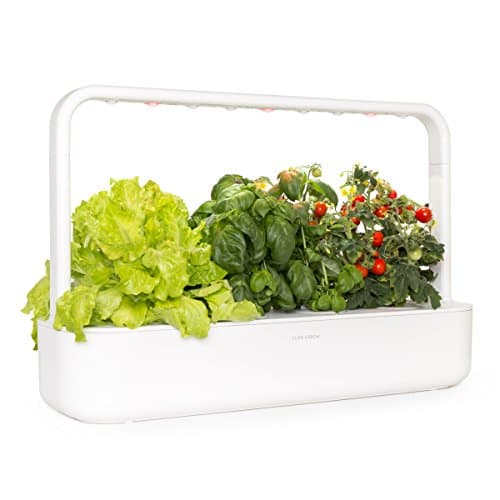
Best design-forward pick: Click and Grow Smart Garden 9
Click and Grow Smart Garden 9
- Nine curated peat pods with no nutrient mixing
- Nine pods at $249.95 is only mid-pack on density
(Current price, subject to change)
If you are a design-conscious beginner valuing curated pods and a handsome horizontal tray, this is the right call. Skip it if per-dollar value or minimal recurring expenditure dominates your priorities. The decision-critical specifications: 9 plant pods at $249.95, timer-based illumination scheduling, and a recurring pod cost that runs roughly 3x the open-seed equivalent per refill. At $249.95 it sits at the top of the $85 to $250 countertop tier CNN Underscored identifies as the consumer mainstream.
The Click and Grow Smart Garden 9 earns a composite of 4.7 on the SHE Compact Garden Value Score. The weighted methodology credits its dependable supply factor, but identifies modest density alongside elevated proprietary pod expenditure. Its pre-seeded peat capsules require zero nutrient preparation, delivering genuine accessibility for first-time cultivators, while Reviewed flags recurring pod pricing at $4 to $7 each as the persistent ownership consideration. That simplicity yields satisfaction beyond pure value mathematics.
Compared to the Click And Grow Smart Garden 3, the larger configuration triples capacity at roughly 2x the price, improving per-pod economics. CNN Underscored names pod supply as one of the two factors that decide a countertop purchase, and Click & Grow's proprietary catalog stays widely stocked.
What We Love
- Nine curated peat pods with no nutrient mixing
- Design-forward horizontal tray suits open kitchens
- Reliable proprietary pod supply, widely stocked
- Dead-simple timer operation, no app to manage
What Could Be Better
- Nine pods at $249.95 is only mid-pack on density
- Proprietary pods at $4 to $7 each push yearly cost up
- No WiFi or app, just automatic light scheduling
The Verdict
If you value the brand's design and curated pods over raw value math, the Click and Grow Smart Garden 9 is a sensible pick for that setup. The 4.7 reflects reliable supply against modest density and high pod cost. It earns its keep on aesthetics and simplicity, not the spreadsheet.
Legacy pick — verify pod stock: Aerogarden Harvest Lite
Aerogarden Harvest Lite
- Fair entry price at $94.02 for six pods
- Pod supply unverified since the 2024 brand wind-down
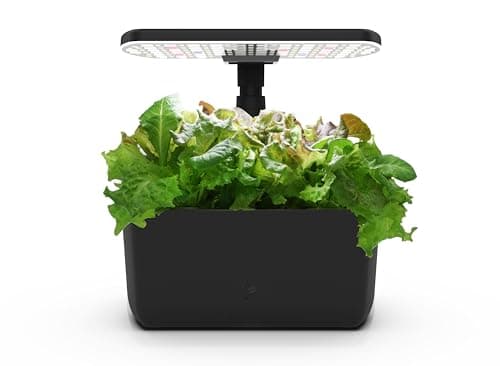
If you are committed to the AeroGarden format and have verified pod availability, this remains functional. Skip it when assured supply continuity matters. The decision-critical specifications: 6 plant pods, a 94.02 dollar price, and an illumination array delivering the category's least efficient distribution at roughly 3.33 watts per position. Reviewed still lists the unit in its hydroponic-garden roundup, so it has not fallen off the map despite the supply question.
The Aerogarden Harvest Lite earns the lowest composite of 3.7 on the SHE Compact Garden Value Score. Its supply-chain factor registers 3.0 against 8 to 9 for competitors, producing the terminal ranking. Scotts Miracle-Gro documented a substantial wind-down charge across its FY2024 disclosure, and pod stockouts proliferated throughout 2025. New-owner continuity remains unverified. That structural uncertainty yields legitimate buyer caution, and CNN Underscored names pod supply as one of the two factors that decide a countertop purchase.
Compared to the Idoo 12 Pod Hydroponics Kit, the AeroGarden carries continuity exposure the open-seed iDOO eliminates. Reviewed still includes AeroGarden in its hydroponic-garden roundup, while CNN Underscored's pod-supply emphasis is exactly the warning a 2026 buyer should heed.
What We Love
- Fair entry price at $94.02 for six pods
- Compact soil-free design fits small counters
- Established hydroponic format with a long track record
- Simple water-indicator operation for beginners
What Could Be Better
- Pod supply unverified since the 2024 brand wind-down
- Worst LED efficiency here at roughly 3.33W per pod
- New-owner pod continuity is the open question for 2026
The Verdict
If you accept the supply risk and confirm pods are in stock first, the Aerogarden Harvest Lite still works, but go in clear-eyed. The 3.7 reflects a real pod-stockout risk after the brand wind-down. We would point most buyers to the open-seed iDOO instead, no need to overthink it.
How We Score: SHE Compact Garden Value Score
SHE Compact Garden Value Score
Score Formula
(Pod Density per Dollar × 0.25) + (LED Coverage Efficiency × 0.20) + (Supply Chain Reliability × 0.25) + (App Automation Depth × 0.15) + (1-Year TCO Score × 0.15)Score Factors
- Pod Density per Dollar (25%)Plant pods divided by system price, normalized against the highest-ratio product. Rewards growing capacity per dollar spent up front. The iDOO 12-Pod normalizes to the maximum at roughly 0.141 pods per dollar; the Rise Gardens Personal sits lowest at $349. Weighted highest alongside supply chain because it is the dominant decision factor for the under-$300 buyer.
- LED Coverage Efficiency (20%)Estimated LED wattage divided by pod count, in watts per pod, inverted so lower watts per pod scores higher. The LetPot LPH-Max leads at 1.71W per pod from its specified 36W LED across 21 pods; the AeroGarden Harvest Lite trails at an estimated 3.33W per pod across six pods based on its compact LED array. Systems not reporting LED wattage are estimated from category comparables.
- Supply Chain Reliability (25%)Assigned rubric: open-seed or confirmed-supply brands score 9 to 10 (iDOO, Rise, LetPot); established proprietary pods score 7 to 8 (Click & Grow); confirmed wind-down or active stockout scores 1 to 3 (AeroGarden, after the Scotts Miracle-Gro FY2024 $29M wind-down and 2025 pod stockouts). Weighted heavily because pod availability decides long-term satisfaction.
- App Automation Depth (15%)Assigned rubric: full WiFi plus app, auto-drip, and scheduling scores 9 to 10 (LetPot LPH-Max); app-assisted reminders score around 5; a hardware timer with no connectivity scores 2. Under-$300 buyers weight this below pod value and cost, hence the modest 0.15 weight in the formula.
- 1-Year TCO Score (15%)Estimated 12-month total cost: system price plus pod and nutrient costs across 2.5 grow cycles, inverted so a lower total scores higher. Proprietary peat pods run about $4 each; open-seed pods plus nutrient tablets run about $1.50 each. The Click & Grow 3 wins on cost with only three pods to refill; the Rise Personal trails at roughly $409 a year.
SHE Compact Garden Value Score — Ranked
Idoo 12 Pod Hydroponics Kit
SHE Compact Garden Value Score8.2/10$84.99 — top pod density per dollar, open-seed supply, built-in fan; no app is the trade
Letpot Lph Max 21 Pod
SHE Compact Garden Value Score7.2/10$251.99 — best WiFi automation and most efficient LED here; higher yearly cost across 21 pods
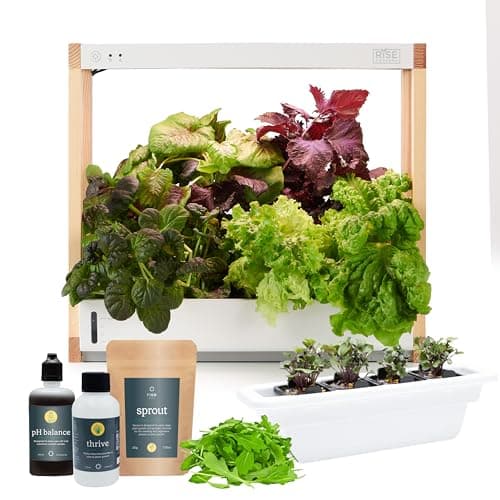
Rise Gardens Personal Rise Garden Hydroponic Indoor Garden Kit with LED Grow Light, Countertop Size
SHE Compact Garden Value Score5.3/10$349 — premium build and open-seed freedom; weakest density and highest 12-month cost in the set
Click And Grow Smart Garden 3
SHE Compact Garden Value Score4.9/10$124.95 — lowest yearly refill cost with three pre-seeded pods; weakest pod density per dollar
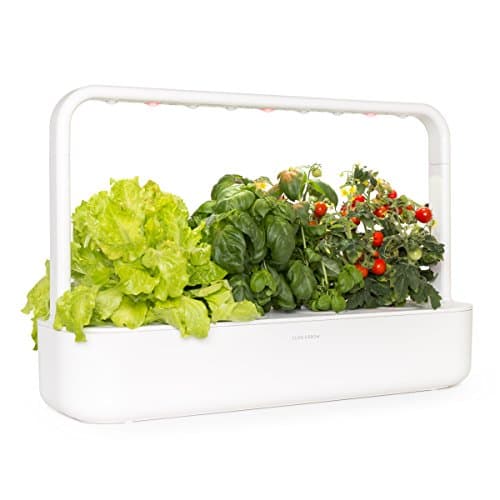
Click and Grow Smart Garden 9
SHE Compact Garden Value Score4.7/10$249.95 — design-forward nine curated pods; reliable supply offset by high proprietary pod cost
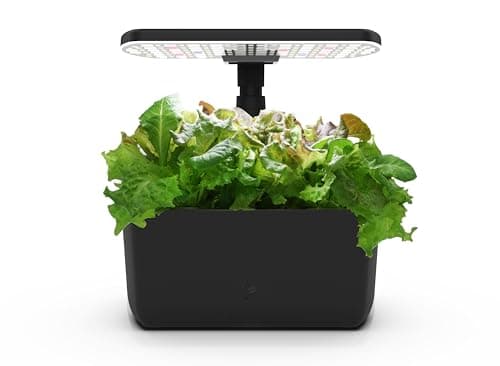
Aerogarden Harvest Lite
SHE Compact Garden Value Score3.7/10$94.02 — supply-chain penalty after brand wind-down and 2025 pod stockouts; verify stock first
True Hydroponics vs Smart Soil Pods
The single most useful concept before buying is how each system delivers nutrients, because it determines recurring expenditure. True hydroponics, used by the Idoo 12 Pod Hydroponics Kit and the Letpot Lph Max 21 Pod, suspends roots within a water-based nutrient solution mixed from tablets. Open-seed pods produce a low 1-yr cost, and this guide rewards that economy. The methodology weights pod density at 25% precisely because capacity per dollar compounds across roughly 2.5x annual grow cycles. The trade is modest nutrient preparation, which the value maximizer accepts readily.
Smart soil pods, the Click & Grow approach, use pre-seeded peat capsules with nutrients integrated. You bypass mixing entirely, which delivers genuine simplicity for a gift recipient or beginner. The proprietary capsules run roughly $4 to $7 each versus $1.50 for open-seed equivalents — a meaningful recurring cost the SHE Compact Garden Value Score surfaces transparently. Reviewed identifies proprietary pod pricing as the persistent ownership trade-off for the Click & Grow line.
AeroGarden occupies a distinct position, and supply explains it. Its soil-free liquid-nutrient format once anchored this category. The 2024 wind-down restructured the calculation. Scotts Miracle-Gro documented a substantial charge across its FY2024 disclosure, pod stockouts proliferated through 2025, and continuity remains unverified. CNN Underscored flags pod availability as one of the 2 critical factors alongside LED illumination quality. Reviewed still lists AeroGarden in its hydroponic-garden roundup, so the unit remains on the radar even as that supply question hangs over it. The practical takeaway: open-seed systems eliminate lock-in entirely, so calibrate the nutrient model to the recurring expenditure and risk you accept across a multi-year ownership horizon.
| Product | True Hydroponics | Open-Seed Pods | WiFi App | Built-in Fan | No Wind-Down Risk | Auto-Drip |
|---|---|---|---|---|---|---|
| Idoo 12 Pod Hydroponics Kit | ✓ | ✓ | ✕ | ✓ | ✓ | ✕ |
| Letpot Lph Max 21 Pod | ✓ | ✓ | ✓ | ✕ | ✓ | ✓ |
| Rise Gardens Personal Rise Garden Hydroponic Indoor Garden Kit with LED Grow Light, Countertop Size | ✓ | ✓ | ✕ | ✕ | ✓ | ✕ |
| Click And Grow Smart Garden 3 | ✕ | ✕ | ✕ | ✕ | ✓ | ✕ |
| Click and Grow Smart Garden 9 | ✕ | ✕ | ✕ | ✕ | ✓ | ✕ |
| Aerogarden Harvest Lite | ✓ | ✕ | ✕ | ✕ | ✕ | ✕ |
When NOT to Buy
A countertop cultivation system is not automatically the appropriate decision. If you require only one or two herbs beside a sunny windowsill, conventional soil cultivation accomplishes that affordably. Committed hobbyists pursuing substantial yields will find these compact configurations insufficient; the large-format vertical towers in our hub serve that buyer better. Calibrate expectations beforehand. Match the system to your kitchen and your tolerance for recurring expenditure, and bypass the premium selections whenever a simpler configuration genuinely suffices.
Who Should Buy What
Who Should Buy What
| If you are… | Recommended pick |
|---|---|
Value maximizer You want the most herbs growing per dollar, are fine mixing basic nutrient solution, and do not need an app | Idoo 12 Pod Hydroponics Kit |
App-first automator You want WiFi scheduling, auto-drip irrigation, and water alerts, and will actually use the connected features | Letpot Lph Max 21 Pod |
Upgrade shopper You have tried a budget unit and will spend $349 for premium build and open-seed freedom over raw pod count | Rise Gardens Personal Rise Garden Hydroponic Indoor Garden Kit with LED Grow Light, Countertop Size |
Gift buyer You want a dead-simple, attractive unit with no nutrient mixing and the lowest yearly refill cost for three herbs | Click And Grow Smart Garden 3 |
Design-forward beginner You value curated pods and countertop aesthetics over the lowest price and want zero nutrient mixing | Click and Grow Smart Garden 9 |
Frequently Asked Questions
Should I still buy an AeroGarden in 2026?
Proceed with caution. Scotts Miracle-Gro wound down AeroGarden during fiscal 2024, booking a $29M charge per its SEC filing, and pod stockouts followed from early 2025. The hardware still lists under new ownership, but pod-supply reliability is unverified. The AeroGarden Harvest Lite scores lowest in our index at 3.7, driven by a supply-chain score of 3.0 against 8 to 9 for open-seed rivals. If you want the format, confirm current pod stock before buying; otherwise the open-seed iDOO 12-Pod avoids the risk entirely.
What is the difference between true hydroponics and smart soil pods?
True hydroponics, used by the iDOO and LetPot, grows roots in a water-based nutrient solution you mix from tablets, with open-seed pods at roughly $1.50 each. Smart soil pods, the Click & Grow approach, use pre-seeded peat capsules with nutrients baked in, so you skip mixing but pay $4 to $7 per proprietary pod. Hydroponics costs less to run and avoids lock-in; smart soil is simpler day to day. The trade-off is recurring cost versus convenience.
Which smart garden is the best value under $300?
The iDOO 12-Pod at $84.99 tops our SHE Compact Garden Value Score at 8.2. It delivers 12 pods, the highest pod-per-dollar ratio in the set at roughly 0.141 pods per dollar, plus open-seed supply and a built-in fan. The catch is no app, just a hardware timer. If you want WiFi control instead, the LetPot LPH-Max at $251.99 is the automation pick at a 7.2.
Do I need an app, or is a timer fine?
For most under-$300 buyers a timer is fine. Budget units like the iDOO and both Click & Grow systems run on automatic light schedules with no app, and they grow herbs reliably. An app earns its place when you want remote scheduling, water-level alerts, or auto-drip irrigation; the LetPot LPH-Max is the pick that delivers all three. App automation is weighted at only 15% in our score because pod value and supply matter more at this price.
How much do replacement pods cost each year?
It depends on the system type. Click & Grow proprietary peat pods run about $4 to $7 each, which is why the Smart Garden 9 carries a high 12-month cost near $340. Open-seed systems like the iDOO, LetPot, and Rise use standard seed pods plus nutrient tablets at roughly $1.50 to $2 per pod equivalent. The Click & Grow 3 has the lowest yearly cost overall at about $155, simply because it only has three pods to refill.
iDOO 12-Pod vs LetPot LPH-Max — which should I buy?
Buy the iDOO 12-Pod if value and capacity per dollar matter most: 12 pods at $84.99, open-seed supply, and a built-in fan, scoring 8.2 in our index. Buy the LetPot LPH-Max if you want WiFi automation: 21 pods, a 36W LED at 1.71W per pod, auto-drip irrigation, and app scheduling, scoring 7.2. The iDOO wins on raw value; the LetPot wins on connected convenience and grows more total pods, with a higher yearly cost.
Bottom Line
Get the Idoo 12 Pod Hydroponics Kit if you want the most herbs growing per dollar with open-seed supply and no need for an app.
Get the Letpot Lph Max 21 Pod if you want WiFi scheduling, auto-drip irrigation, and the largest pod count under $300.
Get the Rise Gardens Personal Rise Garden Hydroponic Indoor Garden Kit with LED Grow Light, Countertop Size if you will spend $349 for premium build and open-seed freedom over raw pod count.
Get the Click And Grow Smart Garden 3 if you want three herbs with zero nutrient mixing and the lowest yearly refill cost.
Get the Click and Grow Smart Garden 9 if you value curated pods and design over the lowest price and want zero nutrient mixing.
The right call for most kitchens is the Idoo 12 Pod Hydroponics Kit — top value per dollar with open-seed supply that avoids the AeroGarden pod risk. For WiFi automation, the Letpot Lph Max 21 Pod is the pick. Skip a smart garden entirely if you only want one or two herbs on a sunny windowsill — a simple pot does that for a fraction of the cost.
Sources & Methodology
Methodology: SHE Compact Garden Value Score — Formula: (Pod Density per Dollar × 0.25) + (LED Coverage Efficiency × 0.20) + (Supply Chain Reliability × 0.25) + (App Automation Depth × 0.15) + (1-Year TCO Score × 0.15). Factors: Pod Density per Dollar (25%): Plant pods divided by system price, normalized against the highest-ratio product. Rewards growing capacity per dollar spent up front. The iDOO 12-Pod normalizes to the maximum at roughly 0.141 pods per dollar; the Rise Gardens Personal sits lowest at $349. Weighted highest alongside supply chain because it is the dominant decision factor for the under-$300 buyer. | LED Coverage Efficiency (20%): Estimated LED wattage divided by pod count, in watts per pod, inverted so lower watts per pod scores higher. The LetPot LPH-Max leads at 1.71W per pod from its specified 36W LED across 21 pods; the AeroGarden Harvest Lite trails at an estimated 3.33W per pod across six pods based on its compact LED array. Systems not reporting LED wattage are estimated from category comparables. | Supply Chain Reliability (25%): Assigned rubric: open-seed or confirmed-supply brands score 9 to 10 (iDOO, Rise, LetPot); established proprietary pods score 7 to 8 (Click & Grow); confirmed wind-down or active stockout scores 1 to 3 (AeroGarden, after the Scotts Miracle-Gro FY2024 $29M wind-down and 2025 pod stockouts). Weighted heavily because pod availability decides long-term satisfaction. | App Automation Depth (15%): Assigned rubric: full WiFi plus app, auto-drip, and scheduling scores 9 to 10 (LetPot LPH-Max); app-assisted reminders score around 5; a hardware timer with no connectivity scores 2. Under-$300 buyers weight this below pod value and cost, hence the modest 0.15 weight in the formula. | 1-Year TCO Score (15%): Estimated 12-month total cost: system price plus pod and nutrient costs across 2.5 grow cycles, inverted so a lower total scores higher. Proprietary peat pods run about $4 each; open-seed pods plus nutrient tablets run about $1.50 each. The Click & Grow 3 wins on cost with only three pods to refill; the Rise Personal trails at roughly $409 a year.
Expert review sources used in this analysis:
- SmartHomeExplorer aggregates expert review data and manufacturer specifications to produce consensus-based buying guidance
- We do not perform first-party product testing
- Pod counts, system types, LED wattages, and pricing are drawn from manufacturer documentation and Amazon listings, corroborated against indoor-garden coverage from CNN Underscored and Reviewed
- The AeroGarden wind-down is documented in Scotts Miracle-Gro's FY2024 SEC filing, which records a $29M charge
- Amazon prices and availability were verified 2026-06-12
- The SHE Compact Garden Value Score weights pod density per dollar, LED coverage efficiency, supply-chain reliability, app-automation depth, and 1-year total cost of ownership
- It models roughly 2.5x annual grow cycles from these aggregated specs
- No first-party measurements were conducted.
Nicholas Miles is the founder of SmartHomeExplorer and a longtime smart home enthusiast focused on helping everyday homeowners make better technology decisions. He researches, compares, and writes about products across security, climate, lighting, leak prevention, sensors, home energy, and automation, with an emphasis on real-world usefulness, ecosystem compatibility, reliability, privacy, and long-term value.
Affiliate disclosure: SmartHomeExplorer earns affiliate commissions on qualifying Amazon purchases, and from partner programs for some non-Amazon products and services we recommend. Our scoring methodology is independent of affiliate relationships.